
The Mirror in the Morning Light
He stands there in the dim glow of the bathroom bulb, toothbrush scraping rhythmically against his teeth, the faucet’s drip echoing like a hesitant pulse. Dawn filters through the frosted window, painting his reflection in pale gold—stubbled jaw, tired eyes, the faint lines etching worry into his forehead—but something heavier lingers, an invisible drag at his chest, as if a shadow hand presses just behind the sternum, unseen in the glass. He pauses, spits foam into the sink, rinses, stares harder, willing the mirror to show more than this husk rushing toward coffee and the commute. That pull, that unspoken ache, is no mere fatigue from yesterday’s grind; it tugs from a layer the eye cannot grasp, a subtle tether woven into the flesh.

In the Theosophical map, this man confronts not just his physical body, the densest sheath sustained by food and breath, but its intimate twin: the etheric double, that vital counterpart H.P. Blavatsky delineates in The Secret Doctrine as the subtler framework permeating every cell, charged with prana, the universal life force. Blavatsky, drawing from ancient esoteric streams, insists these are not poetic fancies but principles interpenetrating like fields of force, the physical form solidifying only at the base of seven ascending layers. The etheric body clings closest, a luminous mold fifteen inches beyond the skin, pulsing with the rhythms of vitality—why else does fatigue settle there first, in the chest’s hollow, when deadlines loom or desires stir unbidden? It is the bridge where matter meets the vital, nourished not by bread alone but by the etheric currents that science glimpses in biofields yet dismisses as anomaly.
He leans closer to the mirror, breath fogging the glass, and feels it again—that weight, laced with yesterday’s regret, a lover’s ghost or the ambition gnawing like hunger. Here enters the emotional body, the astral sheath in Theosophical terms, swirling in colors of desire and aversion, extending farther into the aura’s haze. Annie Besant, in her 1897 Man and His Bodies, maps this as the second subtle vehicle, fluid and form-shaping, where passions congeal into visions during sleep or fever dreams. It pulls at him now, unspoken wants manifesting as that chest-tight vise, for the astral does not reflect in mirrors; it projects into the planes beyond, drawing the etheric into its tides. Vedantic echoes resonate here too, in the Taittiriya Upanishad’s pranamaya kosha, the vital energy sheath encasing the physical, intertwined with manomaya, the mental, all under the subtle body sukshma sharira that tantric traditions place as the carrier of karma across lives.
What if this morning ritual unveils the trap: we chase the visible self, brushing away the night’s residue, blind to how the etheric vitalizes the gross form while the astral stirs tempests within? Blavatsky warns that materialism reduces all to the terrestrial plane, ignoring how higher principles—intuition, higher mind, spiritual will—cascade downward, forging the personality from transpersonal fire. In 1877, in Isis Unveiled, she cites Hermetic sages who knew the human as septenary, the lowest two principles yoked to earth: sthula sharira, the dense corpse-to-be, and linga sharira, its etheric ghost, inseparable until death loosens the knot. That pull in his chest? Prana’s ebb, perhaps, or karmic residue from the causal body, the seed-body of ignorance per Vedanta, generating these sheaths anew with each incarnation.
He wipes the mirror clear, sees only the man again, hurries on—but the weight persists, a whisper from the astral plane where desires roam free of bone. Theosophy unmasks this: the human is no isolated meat-puppet but a microcosm of planes, etheric and physical entwined like lovers in the dawn light, desires unspoken yet sculpting form. Foucault might call it the body’s inscription of power, but here it is etheric inscription, subtle forces etching the visible from invisible scripts. What happens when he senses the interpenetration fully, feels the pranic surge lift the astral drag? The mirror holds no answer, only the man, half-seen, on the cusp.
Echoes of Rage Unseen
The subway car rattles through the tunnel’s throat, bodies pressed like forgotten luggage against the sway of metal and fluorescent glare. A man in a frayed coat shoves past, his elbow grazing your arm too hard, and the word slips out before thought can cage it—”Watch it, asshole.” His face twists, veins bulging at the temples, fists balling at his sides not to strike but to contain the storm gathering inside, a heat that climbs from gut to chest like molten lead poured through veins. No one swings; the crowd’s a mute witness, eyes averted to screens or floors, but the air thickens, charged with something feral and unseen, a rage that doesn’t bruise skin but scorches from within. This is no mere flare of temper; it’s the astral body asserting its raw claim, as Charles Webster Leadbeater mapped it in his 1895 dissection of the astral plane, where kamic emotions—those desires born of Sanskrit kama, the restless hunger for sensation—surge unchecked, molding matter subtler than flesh into vortices of fire.
You feel it first as a flush, that unbidden tide rising from the solar plexus, where the etheric double clings to the physical frame like a shadow reluctant to detach. Leadbeater observed this in clairvoyant glimpses: the astral form, composed wholly of astral matter—fluid, luminous, extending yards beyond the body’s outline—swells with the emotion’s force, its colors flaring crimson and orange when fury ignites. In that cramped car, the man’s astral double billows outward, tendrils lashing invisibly against yours, a clash of passions that explains why apologies never quite douse the lingering bitterness hours later. Annie Besant, in her 1897 outline of the seven principles, called this the desire-body, a vehicle not of reason but of appetite, roaming the astral plane when sleep loosens its tether from the dense physical husk. It bridges the gap, she wrote, turning blind impulse into the mind’s first stammer—a thought half-formed, justifying the shove as righteous before higher manas, the concrete mind, can intervene with its cold calculus of consequences.
Picture the scene elongating in memory: his breath quickens, matching the train’s piston throb, and yours mirrors it, chests heaving in unwitting synchrony. Here, the kamic astral reveals its dominion, as Leadbeater detailed in The Astral Plane, where average humanity—vaguely conscious at best of this realm’s vastness—lets emotions puppeteer the body like a storm-tossed ship. The surge isn’t isolated; it ripples upward, seeding the mental plane’s lower reaches. Powell, in his 1927 etheric anatomy, noted how such impressions etch into the causal body across incarnations, vibrations stored in monadic atoms that dictate future rages, pulling the soul back into matter’s grind. That withheld fist? It’s the mental stirring faintly, a proto-thought whispering “not here, not now,” yet the astral heat persists, coloring dreams that night with phantom brawls, the body twitching in sheets as if pursued.
In the crush, eyes lock—his pupils dilated, yours narrowing—and for a split second, the boundaries blur. Theosophy’s map insists these aren’t metaphors: the astral body interpenetrates the physical, its elemental essence responding to kindred forces on its plane, birthing hallucinations of violence that feel more real than the pole you’re gripping. Besant likened man to a traveler donning vehicles for each realm—carriage for earth, ship for sea—yet most stumble, reins seized by the astral’s whims, subverting life’s ascent. Leadbeater saw untrained souls adrift there, their desire-bodies shells enclosing a dormant mind, fueling conflicts where thoughts war with feelings, physical acts lag behind the unseen blaze. Data from clairvoyant logs, like those Powell compiled in 1927, quantify it: impressions vibrate at rates dictating evolution, low kamic storms constraining the give-and-take with the world, while awareness lifts one toward congruence across planes.
The doors hiss open at the next stop, bodies spilling out like rage diffused but not dissolved. That heat lingers in your limbs, a phantom burn, as the astral asserts what the mind half-denies: we’re not solid prisoners of flesh, but composites riven by desires that bridge sensation to thought’s fragile dawn. What if that withheld blow was the first victory of manas over kama, or merely its postponement to a subtler battlefield? The train lurches on, carrying echoes no one sees.

Whispers from the Formless Depths
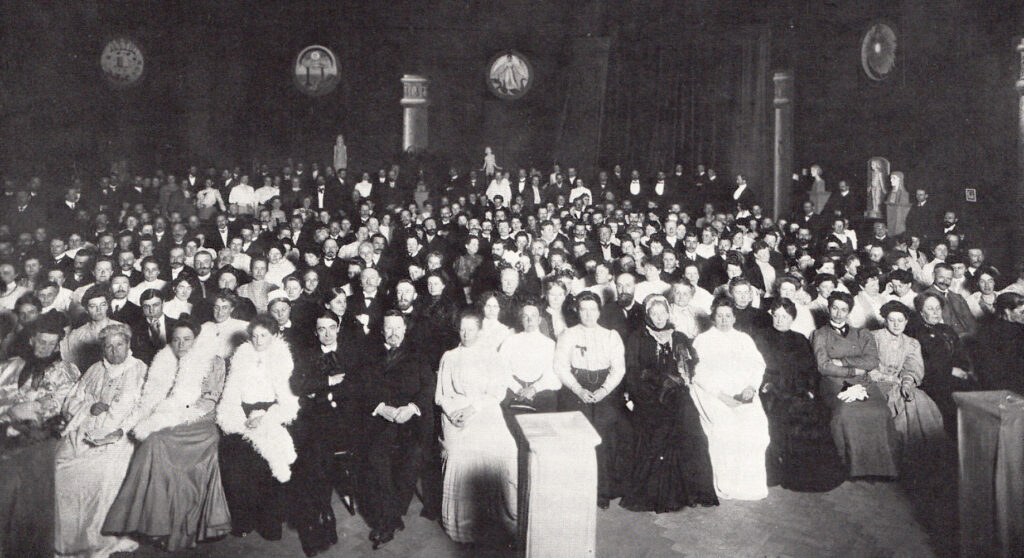
You lie there in the dim hush of your bedroom, the city’s distant hum fading as eyelids grow heavy, and suddenly the familiar walls dissolve—not into darkness, but into a churning sea of twilight hues, where faces from forgotten arguments leer from misty corners while a stranger’s hand, warm with inexplicable tenderness, brushes your arm. Night has stripped away the day’s rigid scaffold, the body that marched through meetings and meals now slack, adrift, and in that surrender the wanderer stirs, propelled into landscapes that pulse with the raw undercurrents of what you call compassion and malice, realms where the mental body filters thoughts like fractured prisms and the causal body, that immortal vault, whispers fragments of divinity through veils too thin to hold them back. Arthur Powell, in his 1927 synthesis The Astral Body, maps this nocturnal exodus with unflinching precision: the astral form, that churning vehicle of passions and desires, bridges the physical husk to the mind’s subtler currents, yet few grasp its reins consciously, tumbling instead into its tempests unaware.
Picture it—not as some esoteric diagram, but as the life you half-remember from those fevered slumbers when rage from a slight surges not in your chest but across an endless plain, where malice takes shape as coiling serpents that pursue you through fog-shrouded forests, their hisses echoing the grudges you nursed at dawn. Powell describes this astral plane as vaster than the physical, a realm of fluid matter where emotions congeal into forms, changeable and vast, extending beyond the earth’s crust into dimensions that mock the limits of waking sight. Here the mental body intervenes, that higher sheath of concrete thoughts and abstract yearnings—manas, as the ancient Sanskrit terms it—acting as sentinel, sifting the chaos. In average souls, it encloses the mind like a shell during sleep’s detachment, allowing vague function but no mastery, so dreams erupt as sensuous whirlwinds, the desire-body’s elemental essence stirring visions of lust or loss that feel more real than the pillow beneath your head. Yet malice is no mere phantom; it feeds on the astral matter’s peculiar properties, drawing from impressions etched across lifetimes, where low desires block the flow, constraining the self’s evolution as Powell warns.
Deeper still, beyond the mental’s vigilant weave, the causal body endures—an immortal persistence through incarnations, woven from monads, those “fragments of divine life” that Powell evokes in his 1972 elaboration on The Causal Body. Every fleeting spite, every unguarded pang of empathy, imprints its atoms, vibrating outward to tint the astral tempests and mental currents alike, until the ego’s throne— that fragile construct of personality, fusing body, kama’s desires, and lower manas—trembles under the weight. Annie Besant, charting man’s sevenfold nature in her early 20th-century expositions, likens these vehicles to carriages, ships, aeroplanes: tools varied by their element, yet the real man, the thinker, remains unchanged, wielding them or enslaved by their mutiny. In sleep’s formless depths, this battle unfolds—the “great battle of the universe,” Powell terms it, spirit clashing against matter at incarnation’s nadir, now reversed in nightly ascent. Compassion emerges not as sentiment but as higher intuition, buddhi’s unity piercing the veils, while malice clings to the terrestrial dregs, the personality’s unrefined churn of vital energies and concrete mind.
You have felt this, haven’t you?—the wanderer brushing against a luminous council in dream-halls, where causal whispers urge discernment, only for astral malice to drag you into brawls with shadow-selves, the mental body straining to reconcile the discord. Powell insists evolution demands congruence: physical acts, emotional tides, thoughts aligned, lest selfishness warp the causal vibrations, stunting the cosmic unfoldment. C.W. Leadbeater, mapping astral descents in his contemporaneous probes, notes how the living haunt these planes unconsciously, their desire-bodies roaming graves or grudges, shells lingering post-death until devachan claims them. Yet awareness dawns not through force but yielding: yoga’s spirillae quickened, as Powell suggests, attuning the causal core to steer the descent and rise. In that midnight drift, the ego’s throne cracks open—what if those whispers from the formless, filtering immortal shards through mortal gauze, reveal not just peril but the self’s own hand in forging the storm?
Threads of Prana and Deception

Her fingers hover above the faded ink of his letter, the one he sent from that distant city where promises dissolve like smoke. The paper crinkles under her touch, not from the pressure of her hand, but from the invisible surge that races up her arm—a thread of prana, that relentless vital force Blavatsky described in The Secret Doctrine as the breath of cosmic life, coursing through the etheric double to fan the embers of jealousy into astral flame. She doesn’t see it, this subtle scaffolding of her being, the linga sharira born with the fetus itself, as Helena Petrovna Blavatsky warned in 1888, a mold around which the physical body congeals, yet forever prone to betrayal by its own hungers. The tremor in her hand is no mere nerve twitch; it’s prana diverted, the five vayus—prana upward in the chest tightening like a vise, apana downward churning in her gut, udana rising bitter in her throat—twisting through the nadis, those thousands of energy channels threading the subtle body like roots seeking poisoned water.
In that moment, she feels alive, ablaze, the lover’s words igniting kama, the desire-principle coiled in the astral body, what Theosophists call the vehicle of prana’s lower manifestations, ensnaring the self in degradation’s spiral. Arthur Powell, in The Etheric Double from 1925, mapped it precisely: prana builds the minerals of flesh, controls the chemico-physiological alchemy in protoplasm, projecting an etheric aura inches from the skin, the health halo now flickering red with unchecked fire. She paces the room, heart pounding, imagining his arms around another, and the spleen chakra—the distribution hub Blavatsky’s followers pinpoint as prana’s gateway from subtle to gross—pumps vyana through her veins, samana stoking the inner furnace, not for clarity but for torment. This is the deception: prana, the universal life-force akin to the Greek pneuma or Chinese qi, promises elevation, yet in the untrained vessel, it spirals downward, feeding the astral double’s whims, birthing phantasms that feel more real than the lover’s departed scent.
Recall the man who wakes drenched in sweat, convinced of his wife’s infidelity from a dream-glimpse of shadowed forms entwined, only to find her asleep beside him, innocent. His etheric field, that intermediary between dense flesh and astral realms, has absorbed prana through the chakras—root for the grounding fear, sacral for the seething pleasure denied—and projected it outward, coloring the mental sheath with suspicion. Blavatsky dissected this in Isis Unveiled, 1877, noting how the astral body, woven at conception, clings through life, a double that deceives by mimicking the higher self, drawing prana into loops of degradation: jealousy births revenge, which summons elementals—those thought-forms Powell called astral parasites—fattening on the vital flow until the physical withers. Data from yogic texts like the Upanishads, echoed in Theosophy, quantify it: nineteen subtle elements—five senses, five actions, four inner faculties, five pranas—interlock in the sukshma sharira, the subtle body bridging gross sthula and causal karana, yet vulnerable to kama-rupa’s grip, where prana’s vibratory power underlies all manifestation but twists into chains.
She crumples the letter, breath ragged, udana-vayu mangling words unspoken into curses. Fleeting elevation tempts—channel this fire into art, into will, as the solar plexus chakra might transmute it—but deception lurks: the astral fires promise ecstasy, deliver exhaustion, prana depleted not by labor but by illusion’s drain. In ancient Egypt, as Theosophical lore revives, they knew these sheaths—the food body, pranic sheath, mind-emotion layer—yet bound initiates to silence them before death scattered the etheric double. Here, in her trembling grip, prana threads the koshas—pranamaya pulsing vital air, manomaya swirling thoughts, vijnanamaya dimly protesting—yet yields to the astral’s birthright snare, born with the fetus in 1888’s Theosophical vision, now ensnaring her in jealousy’s eternal coil. What if she let it burn through, not consume? The hand stills, but the threads pull tighter, prana’s gift forever double-edged, whispering both ascent and fall.
Veils Beyond the Final Breath
In the dim glow of a hospital lamp, her hand slackens in yours, the final breath a shallow rasp that fades into the hum of machines switched off. The body lies still, skin paling like wax left too long in the chill, but something lingers—a faint warmth, an echo of motion no eye can catch. You feel it, that pull not quite severed, as if the room holds two presences: the husk cooling on starched sheets and the unseen double hovering near, reluctant to drift. This is no mere fancy; it’s the etheric mold withdrawing, lingering up to thirty-six hours before consciousness retreats fully to the astral shore. The cord snaps, prana floods back to the universal sea, and the real unraveling begins—not in the grave, but in the psychic residue that clings like mist to the bedside.
She rises there, or he, or whoever it was in that failing frame, clothed now in the desire body, that churning seat of cravings and half-formed loves. The astral form, refined by lifetimes or coarsened by them, rearranges itself instinctively: coarsest matter shells outward in concentric rings, a fortress against dissolution, buying time in Kama Loka’s murky halls. Passions flare vivid at first—regrets clawing at unfinished quarrels, lusts replaying in fevered loops drawn from the astral light’s vast tablet, where every act imprints like smoke on glass. A man murdered in his prime, body dumped in some shadowed alley, finds himself replaying the blade’s bite endlessly, trapped in the violence he craved or fled, his allotted span stretched thin across the planes because karma demands the full measure. Or the quiet suicide, pills swallowed in a locked room, whose astral shell hardens longest, passions unquenched, forcing a vigil that mirrors the years cut short.
Yet this is no eternal haunt. The shell cracks, outermost dross sloughs away as desires burn through, layer by layer, until the core softens. Intensity dictates the stay: the glutton’s feast or the lover’s ache lingers longest, while the detached mind slips free sooner. Powell glimpsed it in The Astral Body, that vehicle of emotion forged from astral matter by descending entities, molded afresh each incarnation yet stamped with prior stains. But does it persist, this causal thread, weaving unbroken through the void? Blavatsky would counter from Isis Unveiled, distinguishing the irrational soul—the astral echo, fleeting as Plato’s nephesh—from the immortal ruah, the divine spark that outlives all veils. The astral disintegrates fully, particles scattering back to their plane, while the Ego, triad of spirit, higher mind, and spiritual consciousness, ascends to the mental realm. Remnants of desire and lower thought don’t vanish; they seed the next personality, sifted by karma’s lords into fresh etheric molds.
Picture it: a widow at graveside, sensing her lost one’s confusion, drawn earthward by shared grief, or repelled upward by purified will. The brain’s final labors complete, the five principles—spirit through life-force—cluster in Kama Loka, mind torn between earthly drag and spiritual pull. Gravitate to desire, and the spiral descends; attune to the higher, and vibration lifts toward boundless One-ness. Leadbeater mapped it in The Life After Death: thoughts turn upward, dense ties loosen, the line reascends from physical dip to astral and mental expanses. But what of Powell’s causal body, that persistent envelope said to cradle the monad across rounds? Theosophy’s planes renew relentlessly—astral matter recycled, mental forms rebuilt—questioning any fixed persistence. Is it the monad’s inherent drive, that ray from the Universal, pulling through the void? Or karma’s inexorable forge, hammering veils anew from astral light’s archives, where futures already etch in determined grooves?
In lucid dreams, we’ve brushed this: body asleep, self aware on higher strata, physical forgotten yet sensed. Death mirrors sleep’s twin, siblings parted only by return’s impossibility. The adept dwells there extended, good or ill, but for most, it’s a purge, a sloughing. As the final shell fades in Kama Loka, higher principles press on—what unseen vibration tugs the monad from renewal’s churn, into the next molding’s fire?
A vision curated by a filmmaker, not an algorithm
In this video I explain our vision
🌌 Exploring Consciousness and the Inner Realms
The astral plane and subtle bodies represent a fundamental map of human consciousness within theosophical thought, revealing layers of existence beyond the physical. These related articles explore how esoteric traditions understand the architecture of being and consciousness itself.
The Theosophical Society: History, Principles and Influence on Western Culture
The Theosophical Society’s foundational principles directly inform understanding of the astral plane and subtle bodies as core elements of their cosmological framework. This article traces how the Society’s systematic investigation of spiritual philosophy provides the historical and intellectual context for mapping human consciousness across multiple planes of existence.
GO TO THE SELECTION: The Theosophical Society: History, Principles and Influence on Western Culture
Rudolf Steiner and Anthroposophy: A Guide to Modern Esoteric Thought
Rudolf Steiner’s anthroposophic teachings build upon and extend theosophical concepts of subtle bodies and spiritual development through systematic practice and observation. His work offers a parallel esoteric map of human being that complements theosophical models of consciousness and inner transformation.
GO TO THE SELECTION: Rudolf Steiner and Anthroposophy: A Guide to Modern Esoteric Thought
Universal Consciousness
Universal consciousness explored through esoteric lens directly relates to how the astral plane functions as an interconnected realm of collective human experience. This examination of consciousness itself provides theoretical grounding for understanding the subtle bodies as expressions of universal spiritual principles.
GO TO THE SELECTION: Universal Consciousness
Esoteric Movies to Watch
Esoteric cinema offers visual and narrative explorations of consciousness, spiritual planes, and inner worlds that cinematically represent concepts like the astral plane and subtle bodies. These films serve as artistic interpretations of the theosophical map of human being, making abstract spiritual concepts accessible through the medium of film.
GO TO THE SELECTION: Esoteric Movies to Watch
Discover More on Indiecinema
Dive deeper into esoteric cinema and independent explorations of consciousness, spirituality, and human transcendence by discovering curated collections on Indiecinema streaming. Find films that illuminate the mystical dimensions of being and invite you into contemplative journeys through the subtle realms of existence.
👉 EXPLORE THE CATALOG: Watch Indie Films in Streaming
A vision curated by a filmmaker, not an algorithm
In this video I explain our vision

