
The Photograph You Cannot Remember Taking
You find it by accident, the way these things always happen — at the bottom of a drawer you opened looking for something else, tucked behind receipts and dead batteries and the accumulated debris of a life that kept moving without keeping records. A photograph. And the person in it is wearing your face.

That is the precise moment the ground shifts. Not horror, not nostalgia exactly, but something more unsettling: a complete failure of recognition. The clothes belong to a decade you remember inhabiting but cannot locate inside yourself. The posture carries a certainty, almost an arrogance, that you have no memory of ever feeling. The eyes are looking at something outside the frame with an expression you could not reproduce today if your life depended on it. You turn the photograph over, looking for a date, a name, some external confirmation that this was you, because the internal confirmation has gone entirely silent.
This is the experience Annie Ernaux begins from, and never stops excavating. The Years, published in French in 2008 and arriving in English in Sandra Smith‘s translation in 2017, is built entirely on this vertigo. But Ernaux does something more radical than most writers who have circled the same sensation. She refuses to pretend that the person in the photograph and the person holding it are connected by anything as stable or flattering as a continuous self. The thread, she insists, was always an illusion we constructed in retrospect, a narrative imposed on what was actually a sequence of strangers occupying the same body across time, each one certain they were the final, true version.
This is not memoir in any form the word usually conjures. There is no “I” in The Years. Ernaux performs the most radical act available to an autobiographer: she excises herself as subject. She writes in the third person plural, in the collective “we,” in the impersonal pronoun, circling the woman who is somehow herself from the outside, the way an archaeologist circles a dig site. What emerges is less a life story than an autopsy of collective time, with personal remains used as evidence.
The philosopher Paul Ricoeur, in his 1985 work Time and Narrative, argued that the self is not a substance but a story, what he called narrative identity, an identity constituted through the act of telling rather than through any essential, persistent core. The self coheres, Ricoeur suggested, only to the degree that it can be narrated, organized into something with the shape of a plot. What Ernaux does in The Years is deliberately, methodically destroy the conditions under which that coherent narration becomes possible. She fragments. She lists. She catalogs the phrases people used in a given decade, the songs that leaked from radios, the textures of political shame and collective enthusiasm, the way language itself shifted, carrying new assumptions in its changed vocabulary. And inside all of this historical sediment she places the photographs: images of a woman at various stages who shares her biography but whose interiority has been lost completely.
Maurice Halbwachs, the sociologist who theorized collective memory before his death in Buchenwald in 1945, argued that individual memory is never truly individual, that we remember only within social frameworks, through the scaffolding provided by the groups we belong to. When those groups dissolve, when the shared references disappear, the memories they supported become inaccessible, orphaned. Ernaux literalizes this thesis across three hundred pages. The photographs do not unlock private feeling. They are public artifacts. They document a woman shaped by her era as much as by her choices, formed by forces she did not choose and often did not see until she was already somewhere else, holding the evidence of who she had been.
The person in that photograph at the bottom of your drawer did not disappear. They were replaced. And they did not leave a forwarding address.
Trench
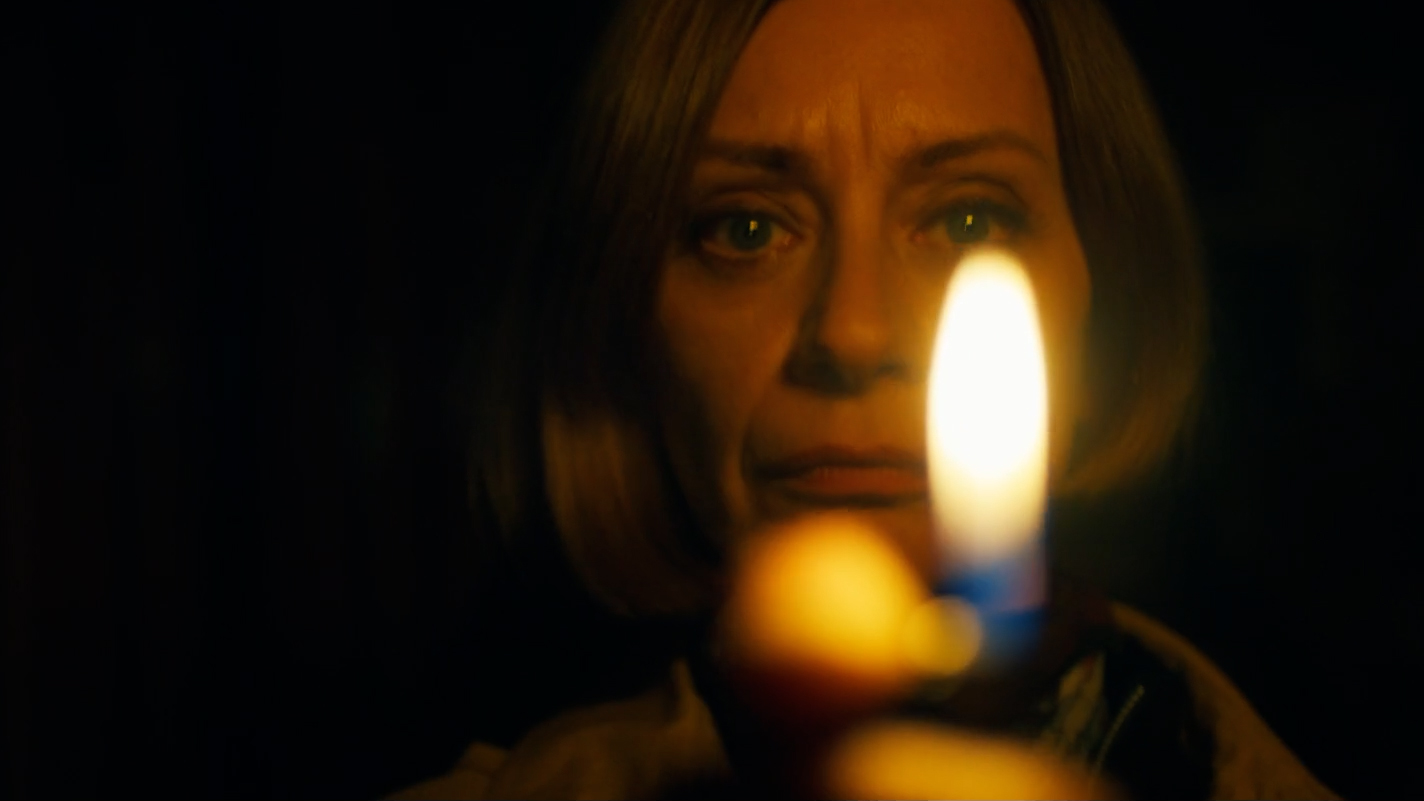
Thriller, Mystery, by Serge Turgeon, Italy, 2023.
In Venice, an art historian realizes that her brilliant mind will not be enough to solve the mystery surrounding the disappearance of an unknown woman. In addition to regaining trust in her intuition and her heart, she will need the help of a series of colorful characters from her community.
The idea behind Trench is to tell, through a detective story, the journey of an intellectual woman who suffered while growing up in a working-class district of Venice, where she never felt truly valued. In order to solve a mystery, she must face danger and rely on the help of the “non-intellectual” members of her community, rediscovering along the way her resourcefulness, her Venetian identity, and her true self.
LANGUAGE: Italian
SUBTITLES: English, Spanish, French, German, Portuguese
A Memory That Belongs to Everyone and No One
There is a box somewhere in almost every home — cardboard, slightly crushed at one corner, smelling of paper and old adhesive. Inside it, photographs of people whose names you half-remember, or don’t remember at all, faces that belong to a lineage you inherited without consent. You open it not because you want to, but because someone died and now the box is yours. This is where Ernaux begins, in a sense, though her box is not cardboard. It is the entire century.
The formal decision at the heart of The Years is one of the most quietly radical acts in contemporary European literature. Ernaux refuses the first person singular. She does not write “I remember.” She writes “one” and “we,” distributing memory across a body that is simultaneously hers and no one’s specifically — a generation, a gender, a class formation that moved through decades of French social life without ever fully owning its own story. The self becomes a pronoun that dissolves at the edges. What looks like autobiography is actually something stranger: a collective sediment, layered and impersonal, in which you recognize your own face as if in water.
Maurice Halbwachs understood this long before it became a literary method. In Les cadres sociaux de la mémoire, published in 1925, he argued that memory is never a private archive. There is no solitary act of remembering. Every memory you believe to be yours was constructed inside a social framework — language, family, class, religion, the shared rhythms of communal life — and without those frameworks, the memory would simply not exist. Halbwachs died in Buchenwald in 1945, which gives his ideas about collective memory a weight that cannot be aestheticized. He was right in the way that people who pay for their ideas with their bodies are right.
Ernaux applies this not as theory but as texture. The memories in The Years arrive already worn by many hands. A particular way of setting a Sunday table. The specific silence that fell over certain conversations about money. The bodily shame attached to regional accents and working-class kitchens when you found yourself in bourgeois rooms. These are not Ernaux’s memories in any exclusive sense. They are yours, if you came from the same social coordinates, and they were always already social before they were ever personal.
The woman sits on the floor of a storage room, pulling a reel of Super 8 film from its canister and holding it to the light from a bare bulb. She feeds it through a borrowed projector and watches the images move on the wall — a garden she recognizes, a table covered with food, people she must have known because she is there among them, a small figure in the corner of the frame, mouth open in what might be laughter. There is no sound. There never will be. She watches herself laughing at a joke she cannot hear, surrounded by people whose presence she felt at the time as completely normal, completely permanent. The footage is evidence. It proves something happened. It does not tell her what.
This is not nostalgia, which is always a falsification, a sweetening of what was genuinely difficult or merely banal. This is something colder and more honest — the recognition that the past is a place you inhabited collectively and remember individually, which means you remember it wrong, or rather incompletely, which means the same thing. Paul Connerton, in How Societies Remember, published in 1989, extended Halbwachs’s framework to argue that social memory is encoded not only in narrative but in bodily habit, in gesture, in the repeated performances of daily life. The body remembers what the mind has already begun to revise.
Ernaux’s “we” is exactly this. It is the body of a generation before the mind of any single woman got to it.

What the Supermarket Knows About You
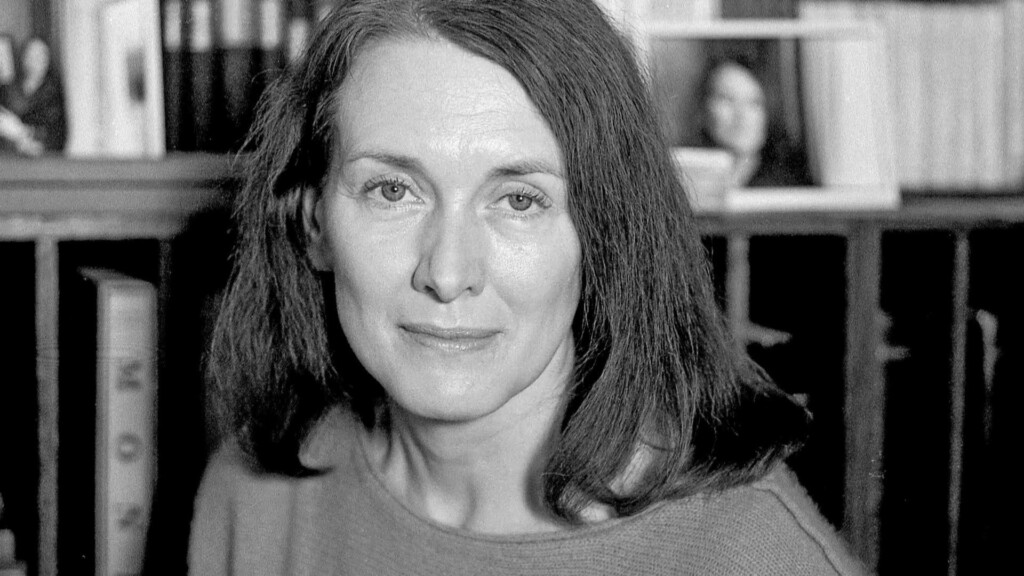
There is a moment you recognize without wanting to. You are at someone else’s dinner table — a colleague’s house, a partner’s family, a friend from a different part of town — and you become suddenly, acutely aware of your hands. Not because you have done anything wrong, but because the way you are holding your fork feels wrong, feels observed, feels like a confession you did not intend to make. The wine bottle on the table is a brand you do not recognize, which means it costs more than you know how to calculate. The father of the house cuts his jacket in a way that suggests the jacket has never been a concern, has always simply been there, the way walls are simply there. You say something and hear, half a second after saying it, the particular vowel that gives you away.
Pierre Bourdieu spent decades naming what happens at that table. In Distinction, published in 1979, he argued that taste — the whole system of preferences, aesthetics, manners, and material choices that constitute a life — is not personal. It is structural. Habitus is the word he chose for the set of dispositions absorbed so deeply into the body that they no longer feel like choices at all. They feel like you. The way you eat, the music that moves you, the clothes you reach for without thinking, the silence you keep or break at the wrong moment — these are not expressions of individuality. They are coordinates. They locate you with sociological precision on a map you were never shown but have been living inside since birth.
Annie Ernaux understood this before she had the vocabulary for it, and The Years is the evidence. What she does in that book is something most writers would never dare: she catalogues. She lists the brand names, the television programs, the political slogans, the kitchen appliances, the textures of wallpaper, the cuts of meat that appeared on particular tables in particular decades. She does this not out of nostalgia and not out of irony. She does it because she knows that every object in a domestic space is a class document. The Moulinex mixer. The bottle of Côtes du Rhône. The particular way a certain generation of French women wore their hair in 1968, in 1974, in 1981. These are not decorations. They are a sentence about who you are and what you were given and what you managed, or failed, to escape.
What makes Ernaux’s method devastating is that she turns this forensic gaze without any softening on herself. She does not exempt her own life from the archaeology. She catalogs her own upward trajectory — from the working-class grocery in Yvetot to the agrégation in literature, from one accent to another, from one set of dinner tables to entirely different ones — with the same pitiless precision she applies to the culture at large. She does not romanticize the origin or celebrate the ascent. She treats both as evidence. She is, in her own text, a specimen.
This is what Bourdieu means when he writes that the body is the site where class is inscribed most durably, most invisibly. The body does not forget where it came from even when the mind has built an elaborate story of self-transformation. Ernaux’s great contribution is to refuse that story. She shows the seam, the point where the habitus of origin meets the acquired habitus of education and social mobility, and she shows it without suturing it. The woman at the new dinner table, aware of her fork, aware of her vowels — that woman does not disappear when she learns the right wine. She learns to perform the disappearance. And Ernaux is the one who writes down what that performance costs.
Time as a Social Illness
There is a room full of people watching a screen. A political announcement is being made — something that will be remembered, that will appear in textbooks, that future generations will name as a turning point. The faces turned toward the light are not exactly watching. They are being watched, or rather, they are being written upon. Something is passing through them that they will never fully identify, the way radiation passes through a body leaving no immediate sensation but a long alteration in the tissue.
This is what Ernaux understands about historical time that most writers do not: it does not arrive as event. It arrives as atmosphere. It does not knock. It seeps. The movement from the Liberation through the postwar consumption years, through the adolescent rupture of May ’68, through the long moderate disappointment of the Mitterrand era, through the acceleration of the digital present — none of these are presented in The Years as political history, as causes producing effects, as dates producing meanings. They are presented as pressure systems, invisible climate shifts that rearrange interior furniture without anyone noticing the furniture has moved.
Walter Benjamin wrote in his Theses on the Philosophy of History, completed in 1940 just months before his death at the Spanish border, about what he called Jetztzeit — now-time — a concept deliberately opposed to the smooth, progressive, additive notion of historical continuity. For Benjamin, history does not flow. It erupts. The present is always saturated with the compressed energy of every past moment that was suppressed, diverted, left unfinished. Jetztzeit is the moment when that pressure becomes legible, when the past flashes briefly into the now before being smoothed over again by the victors’ narrative. Ernaux’s method is almost a novelistic translation of this: she does not write history as sequence but as sudden condensation, as those moments when a phrase someone used at a dinner table in 1963 suddenly carries the entire weight of what that decade was doing to people’s bodies, their desires, their capacity for shame.
The faces in that room watching the announcement — they believe they are witnessing history. This belief is itself the trap. Because what is actually happening is that history is quietly rewriting them, rearranging what they are capable of hoping for, narrowing certain possibilities while opening others that they will take to be purely personal choices. The man who decides, in the months following a certain political outcome, to stop talking about certain things at work — he does not think of this as a political act. He thinks of it as prudence, as maturity, as having grown up. But the silence that settles into him is not personal. It was manufactured at scale, distributed through the atmosphere, absorbed without consent.
Ernaux renders this collective absorption through the “we” that is her most radical formal choice. Not I, not they — we. The we that cannot be reduced to a single consciousness, that carries its contradictions without resolving them, that includes people who voted differently and slept in different beds and nevertheless breathed the same historical air and were altered by it in ways that rhyme even when they do not match. The Liberation’s mixture of relief and unacknowledged guilt. The postwar prosperity that felt like arrival but was already the beginning of a new captivity, the captivity of objects, of the refrigerator and the washing machine that Barthes was already analyzing in Mythologies in 1957 as the new grammar of social aspiration. The way May ’68 opened a window and then, very slowly, the window was closed, not by force but by the gradual accumulation of practical life — mortgages, children, fatigue — until the generation that had stood on barricades found itself, two decades later, wondering what all that urgency had actually been about.
This is what time does as a social illness. It does not erase. It metabolizes. It turns the revolutionary moment into nostalgia, and nostalgia into identity, and identity into the very thing that makes the next revolutionary moment unthinkable.
The Body as Historical Document
There is a moment when you stop looking at your reflection and start reading it. The shift is almost imperceptible — one morning the mirror is no longer a tool of preparation but a kind of ledger, and you are doing what accountants do: noting what has been added, subtracting what is gone. Not with grief exactly, and not with vanity. With the flat attention of someone taking stock of a warehouse they did not choose to manage.
Ernaux does this on the page with a precision that feels almost forensic. The body in The Years is not a site of confession or redemption. It is evidence. Menstruation arrives in the text as a historical event, locatable in time, carrying the specific social weight of the decade in which it began — the silence around it, the euphemisms, the particular shame that was not personal but atmospheric, inhaled from every direction at once. Desire is recorded with the same neutrality, not as revelation but as data: this is what the body wanted, this is what the body was permitted, this is the distance between those two facts. The abortion — her abortion, the pronoun blurring deliberately between singular and collective — lands in the prose not as trauma narrative but as political timestamp. It happened in 1964, before the Veil law of 1975 that finally decriminalized abortion in France, in a country where thousands of women underwent the same procedure in the same clandestine conditions, and Ernaux refuses to separate her body’s experience from that legal and historical context. To confess would be to privatize what was structurally produced.
Simone de Beauvoir wrote in 1949 that the female body is never simply lived from the inside. It is always already interpreted, always arriving pre-annotated by a gaze that precedes the woman herself. The girl does not discover her body; she discovers what her body means to others, and that meaning settles into her perception of herself like sediment. Beauvoir’s argument in The Second Sex was not merely philosophical but phenomenological — she was describing the actual texture of inhabiting a body that the world has already decided to read before you have had a chance to feel it. Ernaux extends this insight across decades. The aging body in The Years is not Beauvoir’s abstract woman; it is a specific woman photographed at specific intervals, the photographs themselves becoming a kind of archive, each one dated by the cut of a dress, the particular way hair was worn in that year, the expression that was considered appropriate for a woman of that age in that era.
There is a scene that stays with you — a woman standing before a mirror not with the languid attention of someone admiring but with the deliberate, almost clinical gaze of someone completing an inventory. She runs through the catalogue without sentimentality: the stomach that carried children and was then rearranged by time, the skin that began to tell a different story than the one she remembered starting, the face that is still recognizably hers but now contains other faces, older faces, faces she did not ask to inherit. It is not vanity because there is no pleasure in it, and it is not grief because there is no resistance. It is the administrative work of time, and she is simply the clerk.
Ernaux refuses both available exits. She will not perform shame — the old contract that asked women to apologize for having bodies that aged, that bled, that wanted — and she will not perform the redemptive arc that contemporary culture offers as replacement, the narrative in which the aging woman discovers she is finally free, finally herself. Both are falsifications. The body simply accumulates. It is, as she renders it, a dated object: real, specific, belonging to a particular historical moment the way a newspaper belongs to the day it was printed.
A vision curated by a filmmaker, not an algorithm
In this video I explain our vision
The Violence of Forgetting and the Ethics of the Trace

There is a moment when you return to a place you once knew completely — a street, a neighborhood, a particular corner of a city that once held an entire world — and you find not ruins but something far more violent than ruins. Ruins at least preserve the shape of what was lost. What you find instead is a shopping center. Glass and steel and piped music, a food court where the smell of industrial fryers has replaced decades of machine oil and sweat. You walk through the entrance and there is nothing — not a shadow, not a residue, not even a wrong note in the architecture to suggest that men once entered a building on this exact ground at six in the morning, that your father’s hands were shaped by the repetition of labor performed here, that an entire class of people organized their bodies and their time and their sense of dignity around this site. The building has not been destroyed. It has been replaced by something that makes the very question of what was here before sound eccentric, almost embarrassing, like grief for something no one else remembers needing.
This is not merely physical transformation. It is ontological erasure. The shopping center does not simply occupy space — it actively renders the previous life unimaginable, archives it out of existence not by suppressing it but by making it seem impossible that such a life could have occurred in this particular place, on this particular ground. The violence is clean. It leaves no bruise.
Paul Ricœur, in his dense and necessary work of 2000, drew a distinction that cuts to the center of what Ernaux understands about her own project. For Ricœur, forgetting is not a single phenomenon but two radically different operations wearing the same name. There is forgetting as erasure — the deletion of traces, the annihilation of marks left by past experience, memory simply gone. And then there is forgetting as reserve — a latency, a depth below the threshold of consciousness, where what has been lived is not destroyed but suspended, waiting for the conditions under which it might be retrieved. The first forgetting is loss. The second is a kind of underground existence, a survival beneath the surface of the sayable.
What Ernaux confronts is the social and ideological machinery that converts the second into the first. Forgetting as reserve implies that retrieval remains possible — that someone, someday, might descend into the latency and bring something back. But ideology works precisely to exhaust that possibility, to ensure that the conditions for retrieval never arrive, that the vocabulary for what was stored there is quietly retired, that the people who carried that knowledge in their bodies age and die and are replaced by generations for whom the factory, the particular form of labor, the specific texture of a working-class life, has no more reality than myth. Ideology does not need to burn the archive. It needs only to make the archive irrelevant, then inaccessible, then incomprehensible, then gone.
Ernaux writes against this. Not nostalgically — she is far too clear-eyed about what that life also contained in the way of constraint and humiliation and foreclosed possibility — but forensically. The Years is a prosecution in the strict sense: it assembles evidence, establishes what actually happened, insists on the reality of what the dominant narrative has every structural interest in rendering invisible. She writes against the shopping center. She writes against the clean replacement that leaves no bruise. She insists that the reserve must be opened before the erasure is complete, that the latency has a right to speech, that the lives which ideology has rendered unimaginable were lived in full, with weight and consequence and the entire complexity that belongs to any human existence permitted to be seen.
Language Eats Its Own Children
There is a moment when you realize that a word you once used with total conviction has become unintelligible — not because you have forgotten it, but because the world in which it meant something has quietly dissolved beneath your feet. You try to explain it, this word, to someone twenty years younger, and you watch their face arrange itself into a polite attentiveness that is the closest thing to absence. The word was charged. It carried heat, risk, the smell of something burning. Now it sits in the mouth like a coin from a discontinued currency, still marked with a face, still technically a thing, but accepted nowhere.
Ernaux tracks this with the patience and the coldness of a forensic scientist. Across the decades that The Years assembles, she follows language not as backdrop but as protagonist — the slogans that saturated the air of the early 1970s and then vanished so completely that by the 1990s they sounded almost comic, the political vocabulary that once named a felt reality and then became either archaic or co-opted, the advertising phrases that entered the bloodstream so thoroughly that people repeated them without noticing they were not their own thoughts. She is documenting something that Roland Barthes identified in 1957 with surgical precision: the mechanism by which a historically produced set of meanings disguises itself as nature, as common sense, as simply the way things are. Myth, Barthes argued in Mythologies, does not deny things; it purifies them, gives them a natural and eternal justification. Language is the primary vehicle of that purification. When a word shifts meaning, when its charge is neutralized or its danger domesticated, what has actually happened is that the historical conditions which generated that charge have been quietly buried. The funeral is never announced. The burial is the disappearance of the word itself.
A woman is trying to explain to her adult daughter what a particular word meant in 1968. Not its dictionary definition, which the daughter already knows, but its weight. The way saying it in a certain context was a declaration, almost a physical act. The way it could change the temperature in a room. The daughter nods, genuinely trying, and the mother watches the nod and understands that she is failing, that no amount of context or historical anecdote can reconstruct the felt reality of a word inside the moment that made it necessary. The semantic gulf between them is not a failure of communication. It is the proof that they have lived inside different versions of the real.
Ernaux understands this as something close to a form of death — repeated, unacknowledged, continuous. Every ideological cycle produces its own vocabulary, and when the cycle ends, the vocabulary does not survive intact. It either disappears or it survives as parody, as nostalgia, as a kind of costume that can be worn but not inhabited. The words of May 1968 became, within two decades, either museum objects or ironic quotations. The advertising language of the 1980s, those sleek conjugations of desire and aspiration, became the embarrassing evidence of a particular kind of manufactured dream. No one held a funeral for any of this. No one marked the moment when the word stopped meaning what it had meant. The change happened in the ordinary traffic of days, buried in the noise of new slogans arriving to replace the old ones.
What Remains When the ‘We’ Dissolves
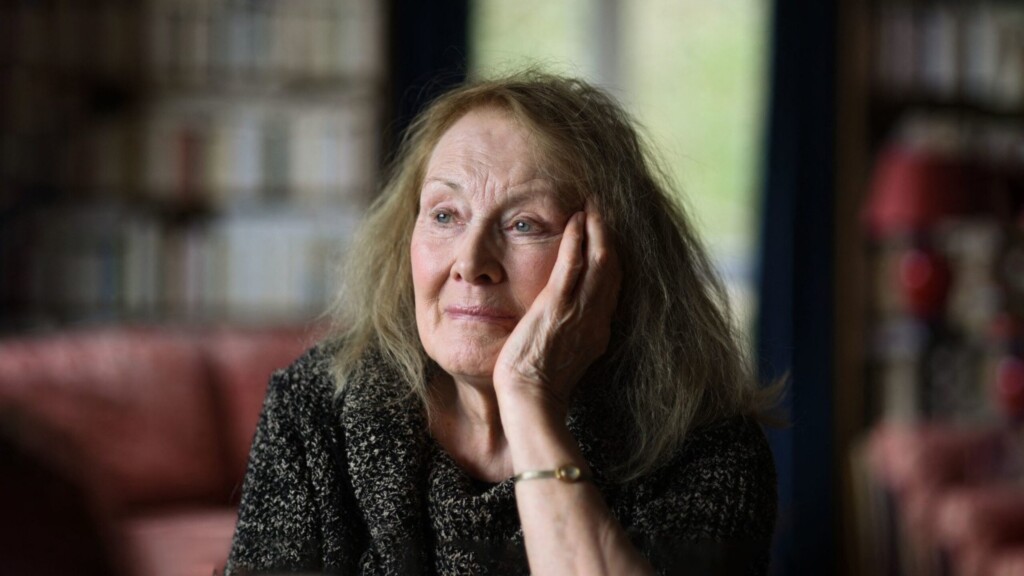
There is a woman in a garden, late afternoon, the light already thinning toward dusk. She is burning letters. Not in anger, not in grief exactly, but with the deliberate calm of someone who has decided which version of herself will be the one that remains. She feeds the pages one by one into a small metal bin, and the smoke rises without ceremony into a sky that registers nothing, remembers nothing, cares nothing for what is being unmade. What she is doing is not destruction. It is editing. The final, irreversible kind.
Ernaux does not burn. She transcribes. And yet the question that accumulates across every page of The Years, never stated but always present like a pressure behind the eyes, is whether these two gestures are as different as they appear, or whether transcription is simply a more elaborate, more socially celebrated form of the same disappearance.
Hannah Arendt, writing in The Human Condition in 1958, placed at the center of human existence what she called natality — not the biological fact of birth but the capacity to begin, to introduce something new into the world that would not have existed without this particular person, this particular act. For Arendt, the deepest human need is not survival but trace. We do not primarily fear death; we fear dying without having left something that outlasts the body, something that testifies to the fact that we were here and that our being here changed the shape of things, however slightly. Action and speech, she argued, are the media through which a person inscribes themselves into the shared human world, and that world is what holds the trace after the body is gone.
Ernaux’s entire project is an Arendtian act performed under Arendtian anxiety. She is trying to rescue not herself — she is ruthless about her own particularity, almost systematically self-dissolving — but the collective trace of a generation that moved through the second half of the twentieth century leaving behind photographs nobody labels, memories nobody archives, a whole texture of lived experience that the official record does not know how to hold. She gathers the fragments: the smell of a particular soap, the vocabulary of a particular political season, the specific weight of silence at a family table in 1962 versus a family table in 1974. She is building, in other words, a vessel for a “we” that has no other vessel.
But the tension the book cannot resolve, and does not try to, is this: the “we” she constructs is assembled by an “I” that knows itself to be temporary and partial. The consciousness doing the salvage work is itself subject to the same erosion it is documenting. Every act of remembering is also an act of selection, which is to say an act of forgetting. Every sentence that survives is surrounded by the silence of sentences that didn’t form, memories that didn’t surface, voices that receded before she could reach them. She is aware of this. The book is saturated with the awareness of it. There is a man in a home movie, already confused, who watches footage of himself as a young father and does not know that face, cannot find himself in it, smiles politely at a stranger who happens to be him. The gap between the self that lived and the self that remembers is not a technical problem. It is the condition.
The “we” Ernaux spent four hundred pages constructing is real while you are inside it. It has weight and texture and the specific gravity of the true. But then you close the book. And you return to your own life, your own forgetting, the particular erosion underway in your own body and your own memory. And the question that remains, the one the book was always quietly asking, is whether it made it across, whether the trace held, or whether the smoke from that garden fire and the words on these pages are simply two different speeds of the same vanishing.
🌊 Memory, Time, and the Writing of a Life
Annie Ernaux‘s The Years stands as one of the most ambitious experiments in collective autobiography, weaving personal memory into the fabric of historical time. The articles gathered here explore the philosophical, literary, and cultural currents that illuminate Ernaux’s project — from the philosophy of memory and consciousness to the feminist tradition that shaped her voice.
Paul Ricœur: Life and Philosophy of Memory
Paul Ricœur‘s philosophy of memory offers one of the most rigorous frameworks for understanding how individuals and communities narrate their past. His concept of narrative identity — the self as a story told across time — resonates deeply with Ernaux’s attempt to dissolve the boundary between personal and collective history. Reading Ricœur alongside The Years reveals the deep philosophical stakes of writing a life through recovered traces.
GO TO THE SELECTION: Paul Ricœur: Life and Philosophy of Memory
Pierre Nora and the Sites of Memory
Pierre Nora‘s notion of ‘lieux de mémoire’ — sites of memory — describes how modern societies anchor collective identity in symbolic objects, rituals, and places when living memory begins to fade. Ernaux’s The Years can be read as a literary enactment of this very process, cataloguing the material and sensory residues of postwar French life before they disappear entirely. Nora’s framework helps explain why Ernaux’s book feels simultaneously intimate and monumental.
GO TO THE SELECTION: Pierre Nora and the Sites of Memory
Virginia Woolf: Life and Works
Virginia Woolf‘s life and work represent a foundational chapter in the history of women’s writing and the experimental novel, both of which Ernaux explicitly inhabits and transforms. Woolf’s exploration of feminine subjectivity, the fragmentary nature of experience, and the challenge of writing the self across time prefigures many of Ernaux’s central preoccupations. Understanding Woolf deepens our appreciation of the literary tradition against which Ernaux measures and defines her singular voice.
GO TO THE SELECTION: Virginia Woolf: Life and Works
Stream of Consciousness in Literature and Cinema
The technique of stream of consciousness in literature and cinema offered twentieth-century artists a way to render the continuous, elusive flow of inner experience in formal terms. Ernaux draws on this tradition while radically collectivizing it — her ‘stream’ is not one mind but an entire generation moving through decades of change. Exploring how this technique evolved from Joyce and Woolf to contemporary authors illuminates the innovative narrative architecture of The Years.
GO TO THE SELECTION: Stream of Consciousness in Literature and Cinema
Discover Cinema That Tells the Truth About Time
If Ernaux’s exploration of memory, identity, and historical time moves you, independent cinema holds an equally rich archive of films that ask the same urgent questions. On Indiecinema streaming you will find a curated selection of auteur and documentary works that, like The Years, refuse easy answers and trust the viewer’s intelligence — come explore them.
👉 EXPLORE THE CATALOG: Watch Indie Films in Streaming
A vision curated by a filmmaker, not an algorithm
In this video I explain our vision

