
The Alarm Goes Off and You Are Already Lost
The alarm goes off and before you are awake, your hand has already moved. Not because you decided to reach for the phone. Not because some conscious self weighed the options and concluded that checking the time was the rational first act of the day. Your hand moved because that is what hands do at 7 a.m. in 2024, and you are already inside the day before the day has even formally begun.

You brush your teeth in the order you always brush them. You open the same three applications in the same sequence. You stand on the same section of the platform, wedge yourself into the same approximate position on the train, and arrive at work having made, in any meaningful sense, almost no decisions whatsoever. The machinery of your life has carried you forward with a precision that would be impressive if it were not so total. You functioned. But did you exist?
This is not a moral accusation. It is not an invitation to slow down, be present, or practice mindfulness before breakfast. Those prescriptions belong to a different and considerably more comfortable conversation. The question being raised here is harder and older and has no therapeutic application. It is the question that a German philosopher spent several decades preparing to ask, and when he finally asked it in 1927, in a book of almost incomprehensible density that he called Sein und Zeit, it cracked the foundations of Western philosophy in a way that is still reverberating. The question is simply this: what does it mean to be?
Not what does it mean to be happy, or successful, or good. Not what should you do with your life. What does it mean that there is something rather than nothing, that you are here at all, standing on a train platform with coffee in your hand and a mild anxiety you cannot locate? What is the nature of that being, and why have you never once stopped to interrogate it?
Martin Heidegger argued that the entire history of Western philosophy had forgotten this question. Not avoided it, not deferred it, but genuinely forgotten it, the way you forget something so obvious it stops registering as remarkable. Philosophy had spent two and a half thousand years asking what things are made of, how we can know them, what we ought to do with them, and had systematically neglected to ask what it means for anything to exist in the first place. Being and Time was his attempt to begin the work of remembering.
What makes the book so strange, and so strangely recognizable once you find your footing inside it, is that it does not start with abstract metaphysics. It starts with you. With the specific, irreducible, always-already-in-progress character of human existence. Heidegger called this Dasein, a German word meaning roughly being-there, chosen because it resists easy translation and because that resistance is itself part of the point. You are not a subject contemplating an object. You are not a mind housed in a body, surveying a world from behind glass. You are thrown into a situation, already oriented, already caught up in practices and meanings and relationships you did not choose and cannot simply step outside of.
That moment when the alarm goes off and your hand moves without you, that is not a failure of consciousness. That is structure. That is what being human looks like from the inside when no one is watching, including yourself. Heidegger wants you to watch. Not to change what you see, not necessarily, but to see it at all. Because most of what philosophy has told you about yourself has been, he believed, a very elegant and very thorough way of not seeing it.
This is where the reading begins. Not in a lecture hall. On the platform, with the coffee going cold, already late, already somewhere else entirely.
Don Barry: A Quixotic Exploration

Docufiction, Experimental, by Paul Smart, Mexico, 2026.
Don Barry: A Quixotic Exploration is a debut feature that places the biography of an eighty-year-old experimental filmmaker and artist, Barry Gerson, within the metanarrative of Miguel de Cervantes’ Don Quixote. Don Barry was filmed in the city of Guanajuato during the 51st edition of the Cervantino Festival, as well as during the vibrant Day of the Dead celebrations held in the city’s UNESCO-listed tunnels. The film honors the director’s long friendship with artist Barry Gerson, drawing inspiration from Cervantes’ Don Quixote. Paul Smart’s directorial choices create something new that celebrates life and goes beyond conventional storytelling. A search for magic in our real lives. A moving film about the meaning of life, art, and death. Not to be missed.
Paul Smart is a proud outsider filmmaker with a long history of film screenings. In the 1980s, he emerged in New York’s vibrant youth art scene, working in theater production and later filmmaking, before retreating to rural upstate New York, in the Catskill Mountains, where he made a living writing and screening independent films in old parish halls for rural audiences, many of whom had never seen a film.
LANGUAGE: English
SUBTITLES: Spanish, French, German, Portuguese
A Book That Was Never Meant to Be Finished
There is a particular kind of book that arrives on your shelf already broken, already mid-sentence, already aware that it cannot say everything it set out to say. You open it expecting a system and find instead a construction site — scaffolding visible, certain wings of the building sealed off, the architect nowhere to be found. Most readers experience this as frustration. They are wrong to.
Being and Time appeared in 1927 in the Jahrbuch für Philosophie und phänomenologische Forschung, the journal Edmund Husserl had founded and still edited. Heidegger was thirty-seven years old, teaching at Marburg, and under the kind of institutional pressure that academia has always been particularly skilled at generating: publish something substantial or lose the prospect of a full professorship in Berlin. The manuscript he submitted was incomplete by his own reckoning. He knew it. Husserl knew it. The academic machinery did not care. What emerged into the world was roughly two-thirds of the book Heidegger had architecturally planned — Division One and Division Two, without the crucial third division that was supposed to complete the temporal analysis and without the entire second half of the projected work, which would have turned back to dismantle the history of ontology from Kant through Aristotle.
The missing sections were not lost. They were abandoned, or rather set aside, and the reasons for that abandonment say more about the project than any completion could have. Heidegger later admitted, in the 1949 introduction to the essay “What Is Metaphysics?”, that the third division was withheld because “the language failed” — because the conceptual vocabulary available to him was still too contaminated by the metaphysical tradition he was trying to escape. You cannot dismantle a house using only the tools you found inside it. He had reached the edge of what inherited philosophical language could carry.
This is not a minor biographical footnote. It is the whole point. The philosopher who argued that human existence is fundamentally characterized by incompleteness, by being always ahead of itself, always projected toward a future it cannot fully grasp, wrote a book that structurally enacts that very condition. Dasein — Heidegger’s term for the kind of being that we are, the being for whom its own being is a question — is never finished either. It completes itself only in death, which is precisely the moment it ceases to be. The book and its subject share the same formal fate.
Heidegger had arrived at Marburg in 1923, coming from Freiburg where he had been Husserl’s assistant since 1919 and had absorbed phenomenology with the intensity of someone who already knew he was going to betray it. Husserl’s project, laid out in the Logical Investigations of 1900 and radicalized through the Ideas of 1913, was to ground all knowledge in the pure structures of consciousness — to describe experience as it presents itself to a transcendental subject stripped of all historical and worldly entanglement. Heidegger’s entire counter-move was to insist that there is no such subject. There is only Dasein, always already thrown into a world it did not choose, entangled in practices and moods and relationships before it ever gets around to reflecting on anything. The gap between teacher and student was not a disagreement about method. It was a disagreement about what human beings fundamentally are.
The lectures Heidegger gave at Marburg between 1923 and 1928 — now available in the Gesamtausgabe, the collected works that span over a hundred volumes — show a mind working at extraordinary velocity, testing arguments in front of students before committing them to the page. Being and Time is not a finished product that emerged from a study. It is the sediment of years of spoken thinking, pressed into print before the thinking had reached its own conclusion.
Which means that reading it requires a different kind of patience than most philosophy demands.

Dasein: You Are Not a Subject, You Are a Situation

You are sitting in a café in a city whose alphabet you cannot read. The signs outside are shapes, not words. The conversations around you are sound, not meaning. You reach for the small habitual gestures that normally anchor you — ordering confidently, reading the menu, understanding a joke overheard at the next table — and find nothing there. What you discover in that moment is not that you have lost information. You have lost yourself. Not dramatically, not in crisis, but in a quiet, vertiginous way: the self you thought you carried around like a passport turns out to have been the city all along.
This is precisely what Heidegger is pointing at when he refuses the word “subject” and replaces it with Dasein. The German is almost insultingly plain: Da means “there,” Sein means “being.” You are not a consciousness that happens to be located somewhere. You are the location. Being-there is not a description of your position in space; it is a description of what you fundamentally are. You do not have a situation. You are a situation.
The philosophical tradition that Heidegger is dismantling had spent roughly three centuries building an increasingly elaborate architecture around the idea of the subject as an interior space — a chamber of consciousness from which the individual peers out at an external world and attempts to make reliable contact with it. Descartes had installed the cogito as the one unshakeable foundation: doubt everything, but you cannot doubt that there is a doubting happening, and that doubting is you. The entire epistemological project that followed — from Locke‘s empiricism to Kant’s transcendental idealism — is essentially an attempt to bridge the gap between that inner chamber and the outer world, to establish the conditions under which knowledge is possible across that divide.
Charles Taylor, in Sources of the Self published in 1989, traces this lineage with extraordinary care, showing how the modern identity came to be built around the idea of inwardness, of a moral and cognitive interior that is the true locus of the self. Taylor’s project is in many ways sympathetic to the tradition he describes; he wants to recover its moral sources, not abandon them. But his very thoroughness in mapping the inner architecture of modern selfhood makes the contrast with Heidegger vivid and almost vertiginous. Where Taylor shows you the house that was built, Heidegger tells you the house was always already the street, the neighborhood, the language spoken on the corner.
Geworfenheit — thrownness — is the word Heidegger uses for the condition you discovered in that foreign café. You did not choose the language you think in, the body you think through, the historical moment you were born into, the cultural assumptions that feel to you like common sense rather than assumptions at all. You were thrown into all of it, already in motion before any deliberate act of self-construction could begin. The “I” that feels like the author of your life arrived late, narrating a story that had already started several chapters back, in a language it did not select.
This is not pessimism. Heidegger is not telling you that you are trapped or determined. He is telling you something stranger and more destabilizing: that the very tools you would use to examine your situation — your concepts, your questions, your sense of what counts as an answer — are themselves part of the situation. You cannot step outside Dasein to evaluate it from neutral ground. There is no neutral ground. There is only the there, and you are always already in the middle of it, the way you are always already in the middle of a sentence when you realize you have forgotten how it began.
The subject was a flattering fiction, a way of granting the self a kind of sovereignty it does not actually possess.
The World Is Not Around You — You Are Inside It
You are not a mind peering out at a world that surrounds you like water around a fish. That image, so deeply lodged in ordinary language and ordinary assumption, is precisely the illusion Heidegger spends the first half of Being and Time dismantling with something close to surgical patience. The world is not a container. You are not its contents. The relationship is nothing like that, and the moment you actually attend to how you move through a Tuesday afternoon — not philosophically, just actually — you begin to feel the architecture of his argument before you can name it.
Think of the last time you fixed something with your hands. Not repaired it conceptually, but physically worked on it — a stuck drawer, a jammed lock, the chain slipping off a bicycle in the rain. At some point in that process, if you were genuinely absorbed, the wrench in your hand disappeared. Not literally, obviously. But it ceased to be an object you were aware of holding and became simply the forward edge of your intention. Your attention passed through it the way attention passes through a word you are reading rather than stopping at the ink. The tool, in that moment of absorption, is what Heidegger calls zuhanden — ready-to-hand. It has receded into use. It has become transparent to purpose. You and it and the task form a single operational field, and the boundaries between your body, the instrument, and the problem dissolve into something that has no clean name in ordinary language.
Then the wrench slips. Or the bolt shears. Or the chain breaks in a way you did not expect, and suddenly the tool is there again — heavy, separate, an object with edges and weight and a specific spatial location in your visual field. It has become vorhanden, present-at-hand. And this shift, which feels like nothing more than a minor frustration, is actually a phenomenological event of the first order. The breakdown does not merely interrupt the task. It reveals the structure that was functioning invisibly while everything worked. The world, which had been seamlessly available, becomes suddenly visible — and in becoming visible, becomes faintly strange.
Heidegger published Being and Time in 1927, and this analysis of tools and breakdown is among the most quietly devastating passages in twentieth-century philosophy, because it turns an entire tradition on its head. The tradition — running through Descartes, through empiricism, through most of what passes for common sense about minds and things — assumes that observation is primary. You look at the world, you register its properties, you then act. Heidegger insists the sequence is inverted. Acting is primary. Involvement comes before observation. You are already inside the world, already handling it, already oriented by its demands, before any theoretical stance toward it becomes possible. Observation is not the ground of experience. It is a deficient mode of it — what happens when the normal flow of absorbed engagement breaks down.
Maurice Merleau-Ponty, writing in his Phenomenology of Perception in 1945, extended this insight into the body itself with a precision that makes it almost impossible to dismiss. The blind man’s cane, he wrote, does not end at the handle. The experienced user does not feel the cane as an object in the hand but feels the ground through the cane — the tip has become a sensory organ, an extension of the body schema rather than a foreign instrument. This is not metaphor. It is a description of how the nervous system actually integrates tools into its map of the body’s boundaries, a description neuroscience has since confirmed through research into what are called peripersonal space and tool-use plasticity. The body is not a fixed container either. It expands into what it habitually uses. It contracts when those things are taken away.
And so being-in-the-world, for Heidegger, is not a spatial description but an existential one — a way of saying that there is no version of you that exists prior to your entanglement with things, tasks, other people, and the meanings they carry.
The Lost Poet
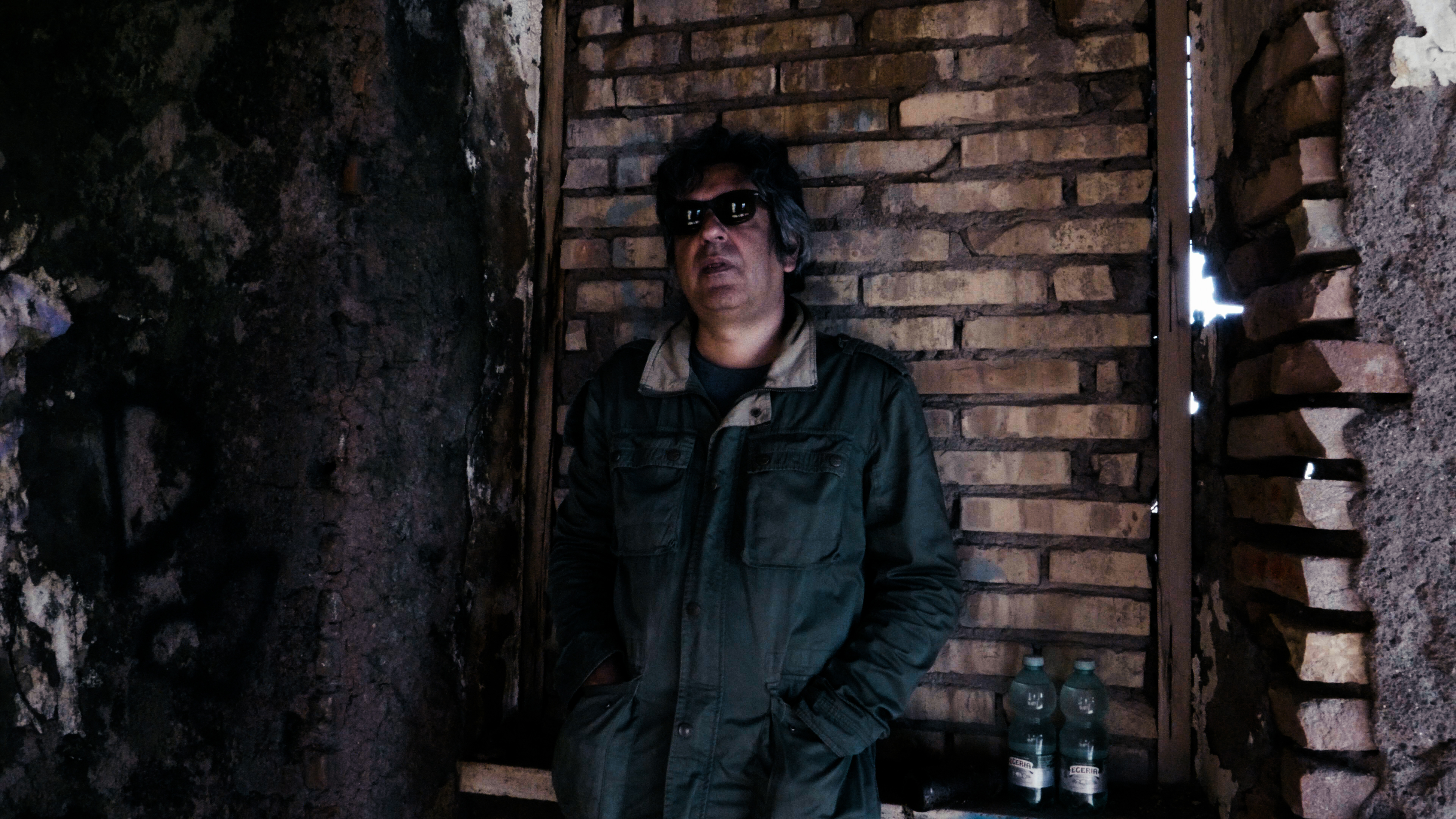
Drama, by Fabio Del Greco, Italy, 2024.
Dante Mezzadri wants to see an old friend, nicknamed the Iguana, whom he has lost sight of for many years, and who has managed to turn their shared youthful passion for poetry into a job, becoming a famous writer and poet. The man escapes from his bourgeois life and his wife to live homeless on the Roman coast, printing and trying to sell his poetry collections. At night he sleeps in a park of old carnival floats, inside a papier-mâché tank, and waits for the opportunity to meet his old friend, who however never shows up for appointments in the places they frequented when they were young, now in ruins. Dante's poetry books do not interest anyone and to support himself he is forced to "change product": he starts selling the infamous "cannibal pill" on behalf of young drug dealers, a new drug that sells like hot cakes and causes sensory and consumerist ecstasy. However, he realizes that this powerful drug is very dangerous for those who take it, he comes into conflict with his ethical conscience and throws all the pills into the sea. However, the dealers want to collect their money.
Shot over a period of 2 years, the film is a reflection on the cultural and artistic rubble of the society in which the protagonist lives, in an increasingly mechanized, consumerist and arid world. Dante Mezzadri is yet another human being who has renounced his inspiration and his creativity, but unlike many he is not willing to give his life to a system that distances him from his true identity. The physical world around him, however, seems constructed in such a way that it seems impossible to escape from this "invisible cage". The enthusiasm of the people he meets is ignited only by sensory gratification, by unreal visions of personal affirmation and success, by "metaverses" that offer an escape into an illusory and destructive reality. The poet's house on the coast, where he met with his friends as a young man, is just a pile of abandoned rubble. What happened to all those who wanted to become poets and ended up becoming something else? Are there internal forces with which that house can be "rebuilt"?
LANGUAGE: Italian
SUBTITLES: English, Spanish, French, German, Portuguese
The They-Self and the Slow Erasure of Who You Are
You are at the table, laughing. Someone has said something mildly clever and your face does exactly what faces are supposed to do in that moment. You reach for your glass at the right time. You offer an opinion about something — politics, a recent film, the neighborhood — and the opinion fits the room so perfectly that no one, including you, could say with any certainty where it came from. Not from reading, not from experience, not from anything you suffered or chose. It arrived pre-formed, like a dish someone else cooked and set in front of you, and you ate it and called it your own hunger.
This is what Heidegger means by das Man. Translated awkwardly as “the They” or “the one” — as in “one does not do that,” “they say this is how it goes” — it names not a group of people but a structure of existence. It is the anonymous authority that governs the vast majority of what you do, say, want, fear, and find acceptable. You do not know who they are. No one does. That is precisely the point. Das Man is impersonal by design, and its power comes entirely from that impersonality. You cannot argue with it, locate it, or hold it responsible, because it has no face. It is the accumulated weight of the obvious, pressing down without a source.
In Being and Time, published in 1927, Heidegger insists that this is not a moral failure or a social pathology. It is ontological. It is the default structure of Dasein, the name he gives to human existence as such. We are always already thrown into a world that has pre-interpreted everything before we arrive. Language speaks us before we speak it. Conventions answer questions we haven’t yet asked. The They-Self — das Man as the subject of your existence — is not a corruption of some purer selfhood beneath. It is what you are most of the time, and the illusion that you are otherwise is itself one of das Man’s most reliable products.
David Riesman, writing in 1950 in The Lonely Crowd, arrived at something strikingly adjacent from a completely different direction. His sociological study, based on demographic analysis of mid-century American society, identified what he called the “other-directed” personality type as the dominant character structure of an emerging consumer culture. Where earlier generations had been “inner-directed,” guided by internalized values installed in childhood like a gyroscope, the new American was “radar-directed,” perpetually scanning the social environment for signals about what to feel, desire, and become. Riesman estimated that this shift was not marginal. It tracked the transition from a production economy to a consumption economy, from a world that needed people who persisted to one that needed people who adapted. The numbers behind his argument were demographic projections tied to population curves and urbanization rates, but what he was really describing, without using the word, was das Man operating at the level of an entire civilization.
The resonance is not accidental. Both Heidegger and Riesman are pointing at the same erasure, one philosophically, the other empirically. The self does not disappear violently. It disperses. It becomes, in Heidegger’s precise language, “leveled down” — averaged into what is publicly acceptable, smoothed of any edge that might distinguish it from the ambient norm. You do not lose yourself in a dramatic crisis. You lose yourself at dinner parties, in small agreements, in the slow accumulation of responses you never quite chose.
The terrifying thing is not that this happens. The terrifying thing is how comfortable it feels. Das Man does not oppress. It relieves. It takes the unbearable weight of having to be someone specific and dissolves it into the warm anonymity of being like everyone else, which means being no one in particular, which means the question of who you actually are never has to be faced at all.
A vision curated by a filmmaker, not an algorithm
In this video I explain our vision
Anxiety Is Not a Problem to Solve — It Is the Signal

You wake at three in the morning and nothing is wrong. That is the precise problem. The apartment is exactly as you left it, the street outside carries its usual indifferent sounds, no one has called with bad news, no bill has arrived, no relationship has fractured overnight. And yet something has opened beneath you, some floor you did not know you were standing on has simply ceased to be there, and you lie in the dark with your chest tight around a dread that has no address, no name, no face to accuse.
This is not fear. Fear, Heidegger insists, always has a specific object — the diagnosis, the argument, the figure approaching on a dark street. Fear points outward at something definite, which is also why fear can in principle be managed, avoided, defeated by information or distance. What arrives at three in the morning is categorically different. It is Angst, anxiety in the strict philosophical sense, and its peculiarity is that it refuses to coalesce around any particular thing. When you try to locate what is threatening you, the threat dissolves and the dread remains. It is not that something terrible might happen. It is that you are here at all, that existence has no cushion beneath it, no cosmic guarantee, no underwriting institution that has agreed to make things mean something.
Kierkegaard had already felt this with extraordinary precision in 1844, in a book that Heidegger openly credited as essential ground. In The Concept of Anxiety, Kierkegaard described anxiety as the dizziness of freedom — not the fear of falling, but the vertigo of realizing that you could. Freedom, for Kierkegaard, is not primarily liberating. It is first of all destabilizing, because it confronts you with the groundlessness of your own choices. There is no nature, no fixed essence, no divine script that has already decided who you are. Heidegger inherits this insight and strips it of its theological residue, returning it to the bare structure of existence itself.
What anxiety reveals, in Heidegger’s account in Being and Time, is Unheimlichkeit — a word that carries, in its bones, both the uncanny and the not-being-at-home. Unheim: not-home. The everyday world, that dense and reassuring fabric of tasks and roles and small talk, is what makes us feel heimlich, at home, settled, certain that the next sentence will follow naturally from the one before. Das Man — the anonymous collective voice, the they-self — is precisely the machine that produces this feeling of settledness. You do things because one does them. You feel about things the way people feel about them. You sleep through your existence because the collective hum is loud enough to drown out the silence underneath.
Anxiety turns the volume off. And in that silence you discover that the settledness was borrowed, that the home was never really yours, that beneath the furnished rooms of social identity there is nothing guaranteed. This is not a pathology. This is, in Heidegger’s rigorously counterintuitive claim, a form of disclosure. Anxiety does not distort reality — it strips away the distortion that ordinarily passes for reality. The three-in-the-morning feeling is not lying to you. The daylight feeling, the feeling that everything is organized and continuous and safe, is the one that edits out too much.
Think of someone sitting in an empty house after a long marriage has ended, not crying, not even particularly sad, just sitting, aware for the first time in years of a silence that has always been there under the noise. Nothing in that room is objectively threatening. But existence itself is suddenly audible, its contingency no longer cushioned by routine. That is Angst doing its work.
The signal anxiety sends is not that something must be fixed. It is that you are being called back — from the they-self, from the borrowed life, toward something that cannot be delegated.
Being-Toward-Death: The One Thing That Cannot Be Delegated
There is a moment in the hospital corridor — you have probably stood in one, or you will — when the smell of antiseptic and something underneath it, something warmer and more final, reaches you before any thought does. A woman walks toward her father’s room knowing he is dying, knowing it as a fact she has carried for weeks, a piece of information filed alongside the parking ticket and the grocery list. Then she pushes open the door and sees the particular way afternoon light falls across his hands, and something in her chest rearranges itself without asking permission. Not grief, not yet. Something more structural. The sudden, bodily certainty that she, too, will die. Not someday in the abstract. Now, as a fact already folded into this afternoon, this light, this smell. She does not think it. She is changed by it. The corridor on the way back looks different. Every subsequent choice, even the trivial ones, carries a weight it did not carry an hour ago.
This is precisely the territory Heidegger is mapping in the central sections of Being and Time, and he is mapping it with a precision that most philosophical language cannot reach because it refuses the language of mere information. Death, for Heidegger, is not an event that will happen to you. It is a structural possibility that constitutes who you are right now. It is the possibility of the absolute impossibility of existence, as he writes in section 50, and what that formulation means viscerally is that death is not something that befalls Dasein from outside but something Dasein already carries as the outermost horizon of its being. You are not a person who will eventually die. You are a being whose existence is always already shaped by that non-negotiable limit.
He identifies four characteristics of death understood this way, and each one strips away a consolation. Death is ownmost, meaning no one can die your death for you. It is non-relational, meaning in dying you are absolutely cut off from every relation that normally constitutes you. It is certain, not as a statistical probability but as the only absolute certainty your existence contains. And it is indefinite, meaning the when remains structurally unknowable, which is precisely what gives it its force — if you knew the date, you could postpone the reckoning until the appropriate time. The indefiniteness is not a gap in your knowledge. It is the condition that makes every moment a moment in which death is already possible.
The contrast with how Western modernity actually organizes itself around death is devastating. Philippe Ariès spent decades tracing the long historical shift in attitudes toward dying, and his monumental L’Homme devant la mort, published in 1977, documents with extraordinary archival care how death moved from being a public, familiar, communal event — the tame death of medieval culture, faced in full view of family and neighbors — to something increasingly sequestered, professionalized, and invisible. By the twentieth century, dying had been relocated to institutions, stripped of ritual, surrounded by a language of euphemism and technical management that serves primarily to insulate the living from any encounter with what Heidegger would call the call of conscience. You do not die at home surrounded by the people who have known you. You die in a room that smells of antiseptic, managed by strangers, in a building designed precisely so that most people passing through it can maintain the illusion that what is happening there has nothing to do with them.
Heidegger calls the everyday evasion of death das Man’s tranquilization. The they-self reassures you that death is something that happens to one, neutralizing it into a known occurrence that does not require any transformation of how you live today. The woman leaving her father’s room, unable to restore the afternoon to what it was an hour ago, has been yanked out of that tranquilization by something that cannot be unfelt.
The Sands

Science fiction, by Noah Paganotto, Argentina, 2022.
In an undetermined location on planet Earth, in an unknown time, Zoilo lives with his family in a wasteland surrounded by ruins. They live uprooted, without mothers, knowing that pregnancy for women is synonymous with death. For them there is only one collective routine; keep the fire alive. Only Zoilo escapes this logic, observing, intrigued, details that others do not see and therefore do not appreciate. Zoilo's personal search for answers will increase the differences with his relatives, increasingly revealing an empty world of interiority.
Avant-garde film that burns slowly in the first part and then reveals in the second the profound conflicts of a family prisoner of archaic beliefs. It is a dystopian and visionary work, with wonderful photography and images of rare power that allow us to grasp the depth of the story and its poetic potential. The faces of the actors, especially the protagonist boy, are perfect. The Sands metaphorically represents the world we live in: an alienated society, where what keeps us alive is demonized and blamed for death. In opposition to the fast pace of the typical mainstream film, The Sands is a meditative journey into the depths of images. The film was shot in natural environments in the city of Necochea, Buenos Aires province, Argentina.
LANGUAGE: Spanish
SUBTITLES: English, Spanish, French, German, Portuguese
Temporality: The Past Is Not Behind You
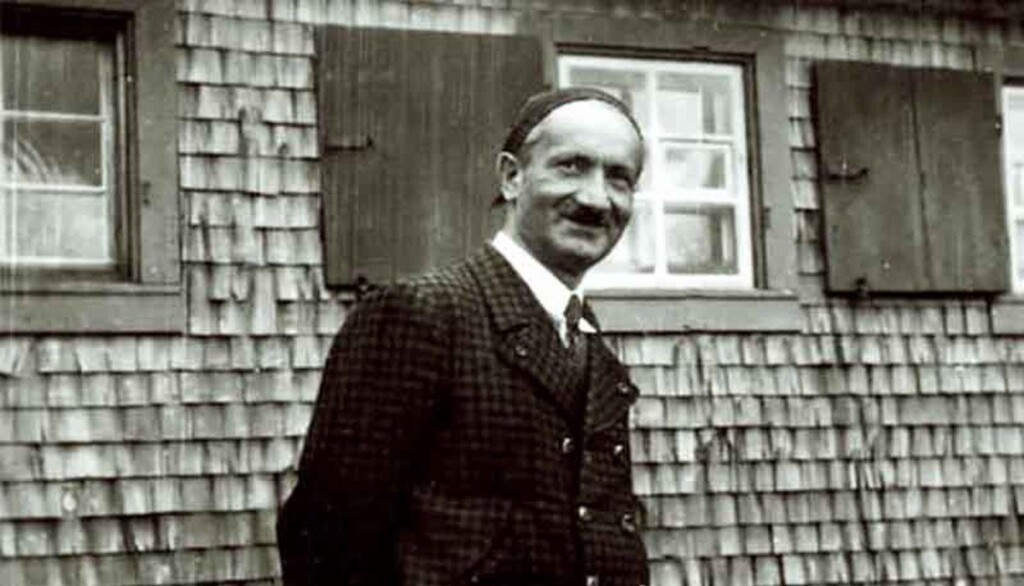
You stand in the doorway of the house where you grew up and something happens that no theory of memory adequately explains. It is not that you remember. It is that the past is suddenly structural, load-bearing, present in the walls and the particular angle of afternoon light in a way that reorganizes how you stand, how you breathe, what you think is still possible for you. The past is not behind you. It is underneath you, holding the floor.
This is what Heidegger means when he refuses the ordinary picture of time as a line of nows flowing from past through present into future, each moment dissolving as the next arrives. That picture, which feels so natural it seems almost biological, is for him a profound distortion — a flattened representation of something far stranger and more intimate. Authentic temporality, as he develops it in the final movement of Being and Time, is not sequential. It is unified. The having-been, the present, and the coming-toward do not follow one another. They constitute one another simultaneously, and together they constitute the structure he calls care, Sorge, the deep grammar of what it means to be Dasein at all.
Care had appeared earlier in the text almost as an existential punchline: Dasein is always already thrown into a world it did not choose, always already projecting forward toward possibilities it cannot fully master, always already fallen into the interpretations and distractions of das Man. But the full weight of that structure only becomes legible once temporality is understood as its ground. Thrownness is the having-been pressing on every present moment. Projection is the coming-toward that gives meaning to what you are doing right now. Fallenness is the present as absorption, as the forgetting of both. Care is the unity of all three, and temporality is the ontological condition that makes such unity possible.
Paul Ricoeur, in his monumental Temps et récit published across three volumes between 1983 and 1985, would later argue that human time is fundamentally narrative time, that we only gain access to this temporal unity through the stories we tell about ourselves. He was reading Heidegger carefully, and also pushing back gently, insisting that the lived structure of temporality needs narrative mediation to become intelligible to the one who lives it. There is something important in that friction. Heidegger himself never quite resolves how Dasein is supposed to own its temporality without some act of interpretation, some telling of what has been toward what is coming.
Resoluteness, Entschlossenheit, is the name he gives to the mode in which authentic Dasein takes up this temporal unity as its own. Not a decision made once and held forever, but a continuing readiness to exist without illusion, to run forward into death and return to the having-been with open eyes rather than the anesthetic of the they-self. Standing again in that doorway, you do not escape the weight of what that house made you. Resoluteness does not mean liberation from the past. It means inheriting it without letting it foreclose the future, choosing from within the thrown situation rather than pretending you arrived here from nowhere.
But Heidegger opens something he cannot fully close. If every moment of authentic existence requires holding together having-been, present, and coming-toward in a unity that the ordinary mind constantly unravels back into sequence, then the question of whether such ownership is ever stable — ever more than a momentary achievement before das Man reclaims you — never receives a satisfying answer. The structure of care is described with extraordinary precision. What it feels like to sustain it, whether anyone does, whether the very concept of sustained resoluteness is itself a form of self-deception dressed in philosophical rigor, remains the open nerve at the center of the book.
🌀 Corridors of Existence: Philosophy and the Human Condition
Heidegger’s Being and Time does not stand alone — it emerges from and speaks into a vast conversation about existence, anxiety, mortality, and meaning. These related explorations illuminate the philosophical terrain that surrounds and enriches Heidegger’s central questions. Follow the corridors deeper.
Camus’s The Stranger: Meaning and Analysis
Camus’s The Stranger confronts the reader with a radical sense of alienation and absurd existence, themes that resonate deeply with Heidegger’s analysis of thrownness and inauthentic being. Meursault’s emotional detachment and confrontation with death echo the Heideggerian call to face one’s ownmost possibility. Reading both thinkers together reveals how twentieth-century philosophy grappled urgently with what it means to be alive.
GO TO THE SELECTION: Camus’s The Stranger: Meaning and Analysis
Camus’s Myth of Sisyphus: The Absurd Explained
Camus’s Myth of Sisyphus constructs a philosophical response to the absurd — the gap between human longing for meaning and the universe’s silence — which parallels Heidegger’s notion of anxiety as the mood that discloses the groundlessness of Dasein. Both thinkers force us to stand before existence without the comfort of illusions. Together they map the existential landscape of modern consciousness.
GO TO THE SELECTION: Camus’s Myth of Sisyphus: The Absurd Explained
Hannah Arendt: the Philosopher Who Unmasked the Banality of Evil
Hannah Arendt was one of Heidegger’s most brilliant students and, for a time, his intimate companion, and her philosophical trajectory cannot be fully understood without the shadow of Being and Time behind it. Her concepts of natality, plurality, and the public realm can be read as a critical response to Heidegger’s solitary, death-oriented Dasein. Exploring Arendt’s thought opens a powerful dialogue with and against the master she both admired and ultimately transcended.
GO TO THE SELECTION: Hannah Arendt: the Philosopher Who Unmasked the Banality of Evil
Schopenhauer: Life and Philosophical Thought
Schopenhauer’s vision of the Will as a blind, striving force underlying all existence anticipates many of the existential anxieties that Heidegger would later articulate through the language of Being and care. His insistence on confronting suffering and impermanence without metaphysical consolation laid crucial groundwork for the existentialist tradition. Understanding Schopenhauer enriches the reader’s grasp of the philosophical inheritance Heidegger both absorbed and transformed.
GO TO THE SELECTION: Schopenhauer: Life and Philosophical Thought
Discover More on Indiecinema
Philosophy lives not only on the page but also on the screen — and Indiecinema streaming is home to films that ask the very questions Heidegger devoted his life to exploring: Who are we? What does it mean to exist? Browse our curated selection of existential, philosophical, and independent cinema and let the maze continue.
👉 EXPLORE THE CATALOG: Watch Indie Films in Streaming
A vision curated by a filmmaker, not an algorithm
In this video I explain our vision
Mystery of an Employee
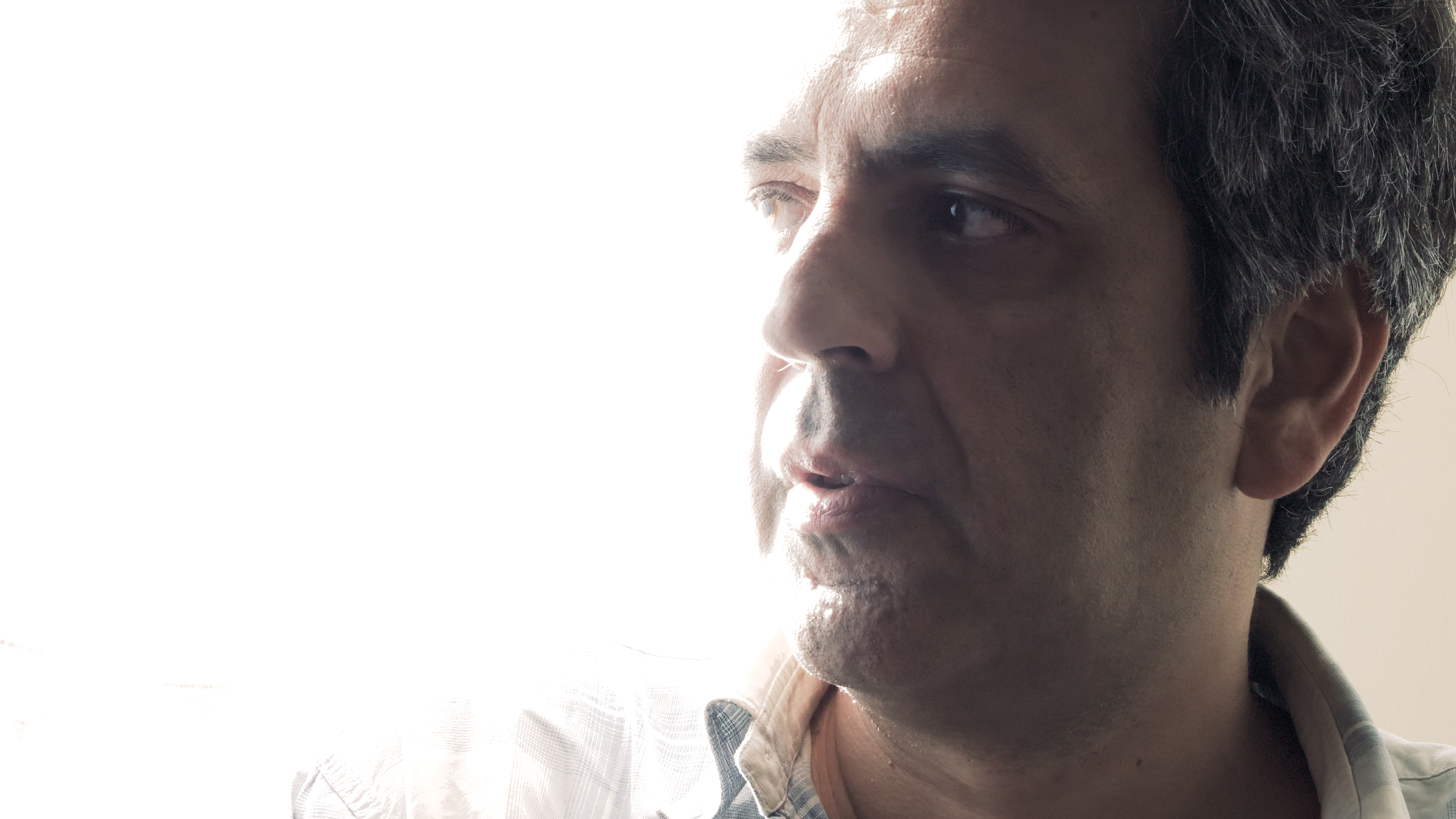
Drama, thriller, by Fabio Del Greco, Italy, 2019.
Someone wants to control the life of the employee Giuseppe Russo: the products he buys, his political and religious faith, his private life, even his dreams. But he will do anything to escape control and find his true self. Giuseppe is a man of around 45, married, with a stable job and a home of his own. His life flows seemingly peacefully when he meets a mysterious tramp who gives him some old VHS video cassettes. Giuseppe begins to see video tapes in which he is filmed in some moments of his life since he was a child, then as a teenager and as a young man. Who shot those videos that he remembers nothing about? Giuseppe has the strange sensation of being constantly observed and begins to investigate what is happening. Through his investigation of him, he begins to rediscover his true identity and become aware of who he truly is.
Employee's Mystery is a film that highlights the danger of social control and shows a society where everyone is constantly monitored and conditioned in their deepest selves. The film is also an analysis of human nature and identity. Fabio Del Greco, who plays Giuseppe, gives an engaging performance. Equally good is Chiara Pavoni, in the role of Giada Rubin and Roberto Pensa in the role of the tramp. Employee's Mystery is a film that addresses important themes in an original way, a psychological thriller that keeps the viewer glued to the screen until the end: a metaphor for contemporary society, in which people are increasingly monitored and conditioned by the media and technologies . It is a courageous and provocative work, which addresses important themes in an original way.
LANGUAGE: Italian
SUBTITLES: English, Spanish, French, German, Portuguese

