
The Body Before the Thought
You wake before you know where you are. The smell reaches you first — wet earth, something fungal and ancient, the particular cold that lives inside moss. Your body has already made several decisions: the muscles along your spine have begun to contract against the chill, your lungs have deepened without your instruction, your fingers have curled inward toward your palms. All of this happens before the word “forest” arrives. Before any word arrives. There is a full second, maybe two, in which you are purely a body receiving a world, and that interval — brief, unremarkable, forgotten almost immediately — is the most philosophically significant moment of your day.

We spend the rest of our waking hours reversing it.
Edmund Husserl spent the better part of four decades trying to articulate why that reversal costs us something essential. Beginning with his Logical Investigations in 1900 and culminating in the unfinished manuscript that would become The Crisis of European Sciences and Transcendental Phenomenology, published posthumously in 1936, Husserl kept returning to the same wound: that Western thought had developed an extraordinary talent for abstracting away from lived experience and then mistaking the abstraction for the real thing. Science, he argued, had built a magnificent palace of mathematical idealization and then quietly forgotten that the foundation was made of human bodies, human hands, human perception. The “lifeworld” — Lebenswelt — was not a primitive stage to be transcended by reason. It was the ground. Everything else was built on top of it and remained secretly dependent on it, no matter how strenuously it pretended otherwise.
But Husserl, for all his revolutionary insistence on returning to “the things themselves,” still tended to treat consciousness as the primary site of experience. He was, in the end, a philosopher who reasoned from the inside of a thinking subject outward. It was Maurice Merleau-Ponty who understood that this left something enormous unaddressed: the body itself, not as an object among objects, but as the very medium through which a world becomes possible at all.
Merleau-Ponty’s Phenomenology of Perception, published in 1945, opens a door that cannot be closed once you have walked through it. His argument is deceptively simple: you do not have a body the way you have a coat or a car. You are your body. The distinction sounds semantic until you sit with it long enough to feel what it actually means. When your hand reaches for a glass of water in a dark room, it does not calculate distance and trajectory and then execute a motor command. It already knows where the glass is. The knowledge is in the reaching, not behind it. Merleau-Ponty called this the “motor intentionality” — the body’s own form of understanding, which precedes and partially exceeds the understanding of the reflective mind.
This is what those two seconds in the forest are made of. Before you have decided anything, before you have narrated anything to yourself, your body has already entered into a relationship with the wet ground, the cold air, the particular quality of light filtering through branches. It has already begun to respond, to orient, to belong — provisionally, tentatively, but unmistakably — to that place. Phenomenology begins here, in that belonging, not in the subsequent act of labeling it.
The trouble is that we are trained, systematically and from very early, to distrust exactly this kind of knowing. We learn to treat the body’s intelligence as mere sensation, as raw material that only becomes meaningful once the mind has processed and categorized it. The forest becomes a concept. The cold becomes a data point. The smell becomes a memory filed under an appropriate heading. And something — not dramatic, not tragic, just quietly significant — is lost in the filing.
Eve of the Irises
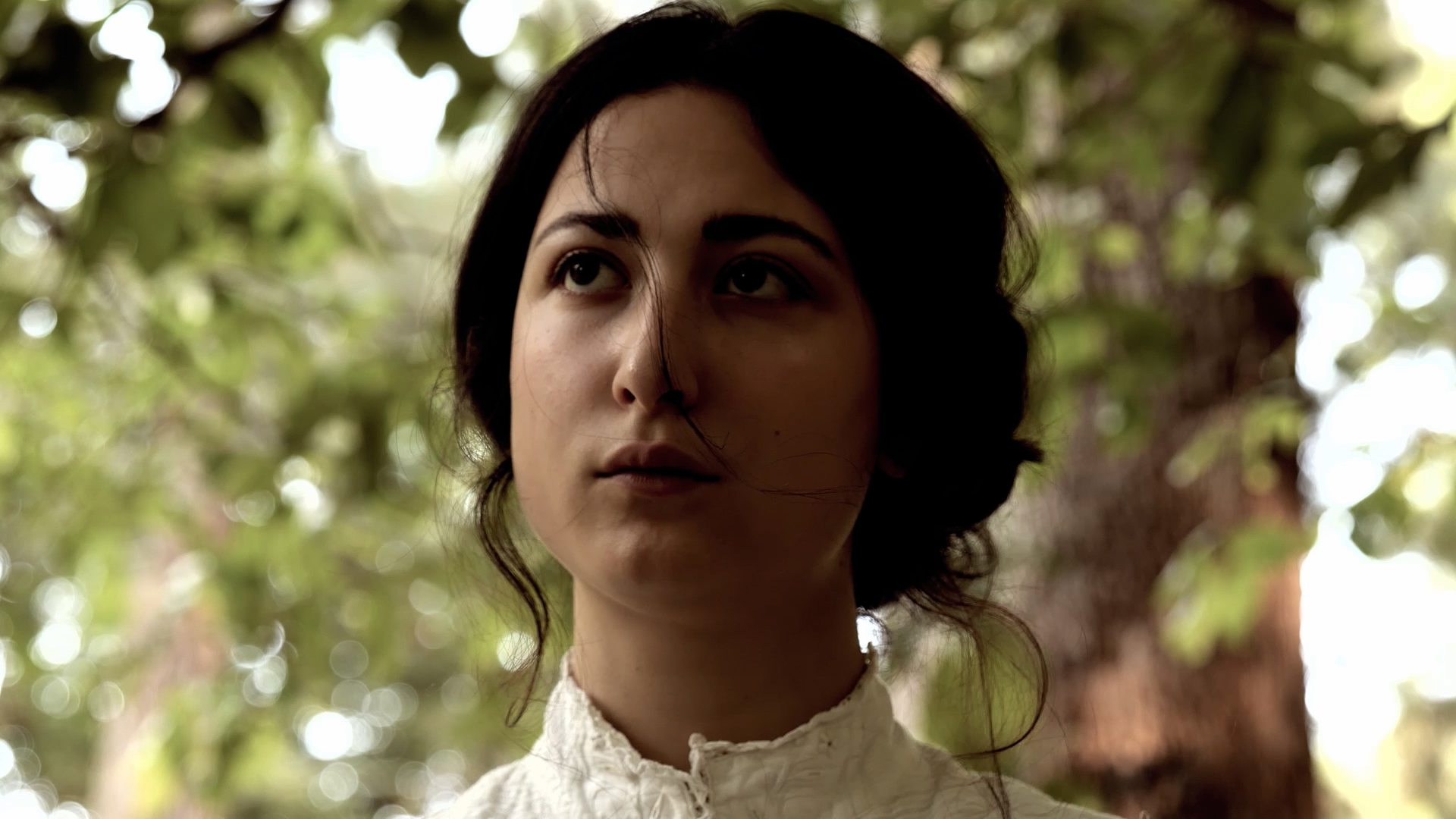
Documentary, by Isabel Russinova, Rodolfo Martinelli Carraresi, Italy, 2026
Eva of the Irises is a historical biographical docu-film about the scientist Eva Mameli Calvino, a botanist and pioneer of environmentalism in Italy, mother of the writer Italo, born in Sassari in 1886. The film, based on a multidisciplinary approach that combines several genres—such as theatre, documentary, cinema, and research—moves between memories, reflections on life, as well as the goals and missions the scholar still wished to achieve.
The multifaceted artistic sensibility of Isabel Russinova is expressed across many fields, from writing to acting, from directing to civic engagement, and finds one of its highest expressions in the docu-film Eva of the Irises, created with Rodolfo Martinelli Carraresi. The film blends scientific rigor and poetic refinement to portray the extraordinary figure of the botanist Eva Mameli Calvino, mother of Italo Calvino but above all an independent protagonist of 20th-century scientific culture. It is told through a combination of archival materials, interviews, and evocative staging capable of elegantly and profoundly conveying her intense human and professional story.
LANGUAGE: Italian
SUBTITLES: English, Spanish, French, Portuguese
Husserl’s Wound: The Crisis of a World Forgotten
There is a moment — you have had it, even if you have never named it — when you return to a place you once knew completely, and something in you goes still. Not the place that has changed, though it has. The street where you played as a child now runs under different names, new facades, a pharmacy where a bakery once breathed its warmth into the cold. You stand on the pavement and you look, and what you feel is not nostalgia exactly. It is something closer to vertigo. The coordinates are still there geometrically, but the world — the lived, weighted, textured world that gave those coordinates their meaning — has been quietly evacuated. You are standing inside an abstraction.
This is precisely where Edmund Husserl found himself in 1936, not on a childhood street but inside the entire edifice of European civilization. The Crisis of European Sciences and Transcendental Phenomenology, published that year and left unfinished at his death in 1938, is not, despite its academic gravity, a technical treatise. It is the confession of a man who looked at the triumphant march of Western rationality and recognized in it the symptoms of an enormous forgetting. Science had become extraordinarily precise and extraordinarily empty. It could calculate the trajectory of planets, decompose matter into its elemental architecture, model the behavior of markets and populations — and it had entirely lost the ability to say what any of it meant for the person who wakes up in the morning, who suffers, who loves, who dies. Husserl called this the “life-world,” the Lebenswelt: the pre-scientific, pre-theoretical stratum of experience that is always already there before any formula is applied to it. And his diagnosis was that modernity had not built upon the life-world. It had replaced it with its own shadow.
The epoché — the methodological suspension Husserl had been refining since the Logical Investigations of 1900 — takes on an entirely different register here. In its early formulations it reads as a controlled philosophical procedure, a bracketing of assumptions to expose the structures of pure consciousness. But by 1936, with Husserl barred from German universities under the racial laws of a regime that would shortly destroy everything he had hoped rationality might protect, the epoché is no longer just method. It is the shock of waking up inside a world you did not choose and realizing that its self-evidence was always borrowed, always constructed, always a kind of collective agreement masquerading as bedrock.
Think of a man standing at the center of a city that was rebuilt after the war. The buildings are taller, the signs are digital, the streets have been widened to accommodate velocities that did not exist when he was young. He stands there and he is not moved by loss in the ordinary sense. He is moved by something more radical: the discovery that what he took to be the ground was always a layer. The city he remembers was itself a construction, laid over an older one, which was laid over one older still. There is no original street. There is only sedimentation, layer after layer of human decision crystallized into stone and habit and called reality. His stillness is not mourning. It is the first genuinely philosophical moment of his life, because for the first time he cannot move through the world on autopilot. The natural attitude — Husserl’s term for the unreflective trust we extend to the world as simply given — has cracked open.
And what is revealed underneath is not nothing. It is not nihilism. What is revealed is that the world was always being constituted, always being made, by a consciousness embedded in a body, in a history, in relations with other embodied, historical beings. The abstraction that Husserl mourned was not merely an intellectual error. It was an act of violence against experience itself.

Nature Is Not a Backdrop

You have walked through a flooded field before thinking about it. Not metaphorically — literally. The water came up past your ankles, the ground beneath it shifting between firm clay and soft collapse, and your body adjusted without consulting you. Your weight redistributed, your arms lifted slightly, your pace slowed in ways you did not decide. There was no map. There was no word for what you were doing. There was only the ongoing negotiation between flesh and terrain, a conversation so old it predates language by several hundred million years.
This is not a minor detail. This is the thing that three centuries of Western philosophy have been working very hard to make you forget.
Descartes did not simply divide mind from body. He divided the knowing subject from the known world, and in doing so, he handed nature a role it has never fully recovered from: that of passive matter, extended stuff, a stage on which the human drama of consciousness unfolds. Res extensa waiting to be measured, categorized, and explained. The landscape as backdrop. The flood as obstacle. The body as inconvenient vehicle for the real action happening upstairs, in the transparent theater of the cogito.
Edmund Husserl spent decades trying to find his way back from this inheritance without abandoning rigorous philosophy. By the time he delivered his lectures on the crisis of European sciences in the 1930s, published posthumously as Die Krisis der europäischen Wissenschaften und die transzendentale Phänomenologie, he had located the problem with devastating precision. The natural sciences, he argued, had abstracted a mathematical idealization of the world and then quietly substituted that idealization for the world itself. We forgot that beneath every equation, beneath every measurement, beneath every theoretical construct, there was a prior stratum of lived experience that made all of it possible and from which none of it could be legitimately separated. He called this stratum the Lebenswelt — the lifeworld — and his insistence on it was not nostalgic romanticism. It was a philosophical emergency.
The Lebenswelt is not nature romanticized. It is nature as it appears before we have finished abstracting it. It is the flooded field as you actually move through it: resistant, textured, responsive, full of affordances and warnings that your body reads before your mind has formed a sentence. Husserl understood that science’s extraordinary power came at a cost — the erasure of this ground floor, the pretense that the world is most truly known when it is most thoroughly formalized. What gets lost in that transaction is precisely what the man moving through floodwater without a map knows intimately: that the world is not waiting to be categorized. It is already doing something. It is already shaping you as you move through it.
Somewhere in the middle of that crossing, a decision gets made — not by you, exactly. The body leans toward the firmer ground before the mind registers the difference in resistance. The foot pulls back from a sudden cold that signals depth. These are not instincts in the reductive sense. They are the accumulated dialogue between a body and an environment that have been in conversation long enough to develop a kind of grammar. The landscape authors the movement as surely as the mover does.
This is what the Cartesian frame cannot accommodate without breaking. A backdrop does not author. A stage does not participate. Matter that is merely extended does not negotiate. But the flooded field negotiates constantly, and your body knows this even when your philosophy does not. The conceptual violence of treating nature as passive scenery is not only an intellectual error. It is a kind of practiced inattention to something happening right now, at the level of your feet, in the gap between what the ground offers and what you reach for.
Merleau-Ponty and the Flesh of the World
You press your palm flat against the bark of an old tree and something strange happens. Not strange in the way that surprises you, but strange in the way that reminds you of something you had forgotten you knew. The bark presses back. Not with force, not with intention, but with a kind of answer. Your hand is touching the tree and the tree, in whatever way a tree can, is touching your hand. There is no clean line here. There is no moment where sensation stops being yours and starts being the world’s.
This is not poetry. This is the problem Maurice Merleau-Ponty spent his life trying to think through with the rigor of a scientist and the patience of someone who knew the answer kept sliding away from language.
In the Phenomenology of Perception, published in 1945, Merleau-Ponty broke with the Cartesian inheritance that had organized Western philosophy for three centuries. Descartes had placed the thinking subject on one side and the extended world on the other, and the problem of how they communicated had haunted every subsequent system. Merleau-Ponty did not solve the problem. He dissolved it by relocating consciousness in the body before it could be located anywhere else. Perception, he argued, is not a mental act performed on sensory data. It is something the body does, and the body does it by already being in the world, already oriented, already implicated in textures and distances and temperatures that it did not choose and cannot fully represent to itself. You do not see and then understand. You see with a body that already knows how to move through what it sees.
But the deeper radicalism came later. In The Visible and the Invisible, left unfinished at his death in 1961 and published posthumously in 1968, Merleau-Ponty pushed toward something he called the flesh, and here the word requires rescue from its ordinary meaning. The flesh is not skin. It is not the surface of the body or the softness of living tissue. It is the element, as he called it, in which perceiver and perceived are woven from the same fabric. When you touch something, you are touchable. When you see the world, you are visible within it. The hand that presses the bark belongs to the same ontological tissue as the bark itself. There is a reversibility here that is not mysticism but structure.
A man walks through a landscape of flooded fields after a loss he cannot name yet. He does not observe the water. He does not think about the water. The grey of the sky and the stillness of the surface enter him the way the grief entered him, without announcement, without clear boundary. Later, he will not be able to say whether the landscape made the grief heavier or whether the grief made the landscape appear that way. The question is wrong. Merleau-Ponty’s point is that the question is wrong. Subject and world do not contaminate each other from outside. They emerge from the same flesh, the same reversible medium in which visibility and the visible are not opposites but folds of one another.
This is why the concept could never be a metaphor for him. A metaphor implies two separate things brought into comparison. The flesh is not a comparison. It is a name for the fact that separation was always already incomplete. Erwin Straus, the phenomenological psychologist, had noted in 1935 that landscape and mood share a common physiognomy, that the world wears the face of how we find ourselves within it. Merleau-Ponty radicalized this: it is not that the world resembles our inner states. It is that inner and outer are terms borrowed from a geometry that never applied to lived experience in the first place.
The bark is still under your palm. You are still pressing. Something is still pressing back.
The Trap of the Gaze: How Modernity Taught Us to Watch Instead of Inhabit
You have seen it happen, or you have done it yourself. The phone rises before the body moves. The frame is found before the question is asked. There is a dying bird on the pavement, wings half-spread, beak opening and closing in a rhythm that already belongs to the past, and the first instinct — the one that arrives before conscience has time to object — is to capture it. To make it an image. To place it at the correct distance where it becomes bearable, meaningful, shareable. The approach is never made. The hand never extends. The screen becomes the membrane between you and the event, and somehow this feels not cold but natural, even appropriate, as though witnessing from behind glass were the most honest form of respect.
This is not a moral failure. It would be too easy to call it that, too comfortable to locate the problem inside individual character and let the structure walk free. What you are enacting in that moment is something far older than smartphones, far more deeply sedimented than any recent technology. You are performing what Michel Foucault, in The Order of Things published in 1966, identified as the epistemic rupture of the classical age — the moment when Western thought reorganized itself around the figure of a sovereign observer, a subject positioned outside the world, cataloguing it, ordering it, naming it into submission. The naturalist’s table, the taxonomic grid, the botanical illustration rendered with obsessive precision: these were not merely scientific tools. They were the material infrastructure of a new kind of self, one that understood knowledge as distance and clarity as separation. To know a thing was to not be it. To understand nature was to stand apart from it and look.
Linnaeus published the first edition of Systema Naturae in 1735 and gave the modern world its fantasy made permanent: a nature that could be fully contained in names, ranks, and categories, a living world converted into a legible archive. The observer was not inside this archive. The observer wrote it. And in the writing, in that act of sovereign denomination, something was foreclosed that phenomenology would spend the next two centuries trying to recover — the sense that the body knowing and the body known are caught in the same field of becoming, that there is no view from nowhere, that the eye looking at the bird is itself a piece of the same world the bird is dying inside.
Timothy Morton pressed this further in Ecology Without Nature in 2007, arguing that the very concept of nature as something we appreciate, observe, preserve and photograph is itself the trap — that the aesthetic distance through which modernity constructed its relationship to the nonhuman world is precisely what prevents any real contact. Nature becomes a stage set. We become its audience. And the more passionately we perform our appreciation, the more completely we enact our separation. The environmentalist gazing reverently at wilderness is, in this sense, performing the same gesture as the conquistador gazing at new territory: both are looking from the outside in, both are positioning themselves as the subject for whom this spectacle exists.
A man walks through a forest and sees it as a resource. Another man walks through the same forest and sees it as sublime. Foucault might tell you these are different ideologies. Morton would suggest they share the same grammar. Merleau-Ponty would ask what it would mean to walk through the forest without seeing it as anything at all — to simply move inside it, following the logic of your own body’s adjustments to root and gradient and shadow, belonging to it before you have had time to name it, the way your hand already knows a surface before your mind has decided what to call it.
The dying bird is still on the pavement. The image is already uploaded somewhere. And somewhere between those two facts lives the entire history of what we have been taught to call knowing.
A vision curated by a filmmaker, not an algorithm
In this video I explain our vision
Reversibility: The Hand That Touches Is Also Touched

You enter the water before the light has fully decided what it wants to be. The cold hits the chest like a hand pressing flat against the sternum, and for a moment the body registers something that is neither pain nor pleasure but pure announcement: I am here, and so are you. You do not think this. It happens before thought, in the half-second before the nervous system translates sensation into narrative. The arms begin to move. The water closes behind each stroke and opens ahead of each reach, and somewhere in the third or fourth minute of swimming, the boundary you arrived with — the one between your skin and the river, between the warmth you carried from sleep and the cold that receives you — stops being a boundary and becomes something more like a conversation.
This is not poetry. This is data.
Merleau-Ponty spent years trying to name what happens in moments exactly like this, and the name he eventually arrived at — reversibility — is one of the most precise and underappreciated concepts in the entire tradition of Western philosophy. The argument, developed most fully in his unfinished final work “The Visible and the Invisible,” published posthumously in 1968, is deceptively simple: the hand that touches is always also touched. When your right hand takes hold of your left, you do not merely have a toucher and a touched. You have two simultaneous modes of the same flesh, each capable of inverting into the other. The sensing body is never outside what it senses. It is made of the same stuff. Merleau-Ponty calls this the chiasm, borrowing the term from neurology, where it describes the crossing of nerve fibers — a structure that is not a meeting of two separate things but the folding of one thing back upon itself.
What this dismantles is not trivial. The entire Cartesian architecture of the observing subject standing before a passive world requires that the observer be fundamentally separate from what they observe. The body, in that framework, is a sophisticated instrument — a vessel for the mind’s gaze. Reversibility refuses this. It says: you were never separate. The world was always already touching you back.
James Gibson, working from within experimental psychology rather than phenomenology but arriving at a remarkably consonant conclusion, argued in his 1979 work “The Ecological Approach to Visual Perception” that perception is not a matter of the brain processing inputs from a neutral environment. Perception is relational. What an organism perceives are affordances — possibilities for action that exist in the relationship between a body and its surroundings, not in either term alone. The river does not offer swimming to a stone. It offers swimming to this body, with this musculature, at this temperature threshold. The affordance is neither in the water nor in you. It is in the between. Gibson did not use Merleau-Ponty’s vocabulary, but he was describing the same structure from the other side of the disciplinary fence.
Embodied cognition research has since accumulated considerable evidence for what both thinkers described. Studies in sensorimotor contingency theory, particularly the work of Kevin O’Regan and Alva Noë in the early 2000s, demonstrate that perceptual experience is not a matter of internal representations but of mastery over the dynamic relationship between body and world. To see is not to receive an image. To see is to know how movement and sensation co-vary — to be embedded in a loop that has no clean beginning or end.
Back in the water, the arms are still moving. The cold has become something you wear rather than something that touches you, and the distinction between wearing and being touched has quietly collapsed. There is a man swimming, and there is the river moving, and at some point between the entry and this stroke, the grammar of that sentence — the subject, the verb, the object — has started to feel like a problem imposed from outside rather than a description of what is actually happening.
Nature as Time: What Husserl’s Retention and Protention Mean Outside the Classroom
There is a moment you know intimately, even if you have never named it. You return to a place — a hillside, a river bend, a particular stand of trees at the edge of a field — and something in your body registers the wrongness before your mind has caught up. The trees are fewer. The river runs lower, the color slightly off, a brownish tinge where there was once clarity. You stand there holding two landscapes simultaneously: the one your nervous system learned years ago and the one your eyes are being given now. This is not nostalgia. It is something far more structurally precise, and Edmund Husserl spent the better part of his philosophical career trying to describe exactly what is happening in your body in that moment.
In his 1928 lectures on the phenomenology of internal time-consciousness, Husserl identified what he called the living present as a tripartite structure: the primal impression, which is the raw now of experience; retention, which is the just-past held still alive in consciousness, not remembered but trailing like a comet’s tail into the present moment; and protention, the forward lean of experience, the anticipation that shapes every instant before it arrives. These are not three separate moments. They are one continuous movement, a temporal arc that constitutes how anything is experienced as having duration, as belonging to a world that persists. Without retention, each sensation would be atomized, disconnected, meaningless. Without protention, there would be no such thing as hearing a melody, watching a bird complete its arc across the sky, or understanding that a season is ending.
What Husserl could not fully anticipate was how devastatingly this structure applies to the experience of ecological time. David Abram, in The Spell of the Sensuous from 1996, pushed Husserl’s framework outward into the living world, arguing that the body’s temporal consciousness is not sealed inside the skin but is calibrated by and with the rhythms of the animate earth. The seasons are not external backdrops to human time-consciousness. They are, in Abram’s reading, the very medium through which retention and protention operate at their deepest register. You do not merely observe autumn. Your body retains every previous autumn it has lived through, and each new one arrives into that accumulated trailing edge, already weighted with everything that came before.
This is precisely why ecological loss produces what psychologists and climate researchers now call solastalgia — the grief that arises not from leaving a place but from watching it change around you while you remain. The philosopher Glenn Albrecht coined the term in 2003, but the phenomenological architecture of the experience is Husserlian. What grief of this kind actually consists in is a catastrophic disruption of the protentional structure. The landscape your body learned to anticipate — the swallows arriving in early April, the particular quality of light through leaves that your nervous system associates with summer’s deepest stillness — no longer arrives as expected. The world fails its own promise.
A man sits at the window of a house he has lived in for forty years. Beyond the glass, a valley that was once covered in dense forest is now half-bare, the trees taken by beetle and drought, the hillside showing its bone. He is not watching a landscape. He is watching his own temporal structure become unmoored. The retentional trail stretching back through his decades of living there holds a world that his protention still, stubbornly, half-expects. And what arrives instead falls into that gap between them like something falling into cold water.
What Remains When the Natural Attitude Cracks
You stand at the gate of a house you knew before you knew yourself, and nothing is where it should be. The garden path has disappeared beneath something that is not quite forest and not quite garden — the roses have gone feral, climbed and strangled and bloomed anyway, the stone steps are split by roots that did not ask permission, and the whole structure of the place refuses the word ruin because ruin implies defeat, implies that something lost. Nothing here has lost. Something has simply continued without you, indifferent to the categories you brought with you in the car, in your memory, in the organizing grammar of before and after.
This is precisely the moment Husserl spent decades trying to name without quite reaching. In the unfinished manuscripts collected posthumously, the ones he wrote in the last years before his death in 1938, texts that Merleau-Ponty would later read with the attention of someone searching for a map to terrain he already recognized, Husserl kept returning to the question of what he called the breakdown of the natural attitude. Not its destruction, not its refutation, but its cracking. The natural attitude is the mode in which you move through the world without questioning the world’s being-there — the unreflective confidence that the floor will hold, that the word means what it meant yesterday, that the home you left is waiting in the form you left it. When that attitude cracks, you do not become a philosopher. You become, first, simply disoriented. You stand at the gate.
Merleau-Ponty, working through his late notes toward what would become The Visible and the Invisible, published incomplete in 1968 seven years after his sudden death, pushed Husserl’s question into territory that Husserl’s framework could not fully contain. He introduced the concept of the flesh — chair, in French — not as a metaphor for embodiment but as an ontological category: the reversibility of the sensing and the sensed, the fact that the hand that touches is also touched, that perception is not a relationship between a subject and a world but a folding of the world within itself. When the house you remember refuses to be what memory made it, what cracks is not your idea of the house. What cracks is a whole way of being continuous with things, the invisible suturing of self and world that you had not noticed because it never hurt before.
The vegetation that has swallowed the garden is not chaos. It follows its own coherence, its own temporality, one that was always running parallel to yours without your awareness. What the phenomenological tradition, at its most honest, admits is that the natural attitude was never a transparent relationship with reality — it was a practical achievement, maintained through repetition and shared convention, fragile in ways that only become visible at the gate of a changed place. Erwin Straus, whose 1935 work on the primordial landscape anticipated much of what Merleau-Ponty would formalize, understood that our primary relation to environment is not cognitive but pathic — felt, toned, inhabited before it is understood. The strangeness you feel standing there is not a failure of understanding. It is understanding arriving through the body before the mind has framed a question.
The crack in the natural attitude, then, is not a problem that phenomenology solves. It is what phenomenology, at its most rigorous, asks you to stay inside. Husserl never finished the manuscripts. Merleau-Ponty never completed the book. The rose that grew through the stone step bloomed in a color slightly wrong for what you remember, brighter or darker, insisting on a present tense that your memory cannot accommodate, and the threshold between what was continuous and what has become strange is exactly where the inquiry lives, refusing resolution, holding you there in the texture of not-quite-knowing what kind of world you are standing in.
🌿 The Living World: Perception, Nature, and Philosophical Thought
Phenomenology, as developed by Husserl and Merleau-Ponty, invites us to rediscover the world through lived experience and embodied perception. These related articles trace the deep philosophical and scientific roots of our encounter with nature, from classical metaphysics to ecological thinking. Each path opens a new dimension of understanding between the human being and the living world.
Philosophy of Nature: From Aristotle to Today
From Aristotle’s hylomorphism to contemporary environmental philosophy, the philosophy of nature has always sought to understand the living world beyond mere mechanistic reduction. This article offers a panoramic journey through the major thinkers who shaped our understanding of nature as a meaningful and dynamic reality. It serves as an essential companion to the phenomenological approach of Husserl and Merleau-Ponty, grounding their insights in a longer intellectual tradition.
GO TO THE SELECTION: Philosophy of Nature: From Aristotle to Today
Martin Heidegger: Life and Philosophical Thought
Martin Heidegger’s philosophical thought stands in close dialogue with phenomenology, particularly through his concepts of Being-in-the-world and the critique of technological domination over nature. His exploration of dwelling, care, and attunement to the earth resonates deeply with Merleau-Ponty’s emphasis on embodied perception and the primacy of lived experience. Understanding Heidegger is essential for anyone seeking to grasp the broader existential and phenomenological landscape from which the philosophy of nature emerged.
GO TO THE SELECTION: Martin Heidegger: Life and Philosophical Thought
Deep Ecology: History and Philosophy
Deep Ecology, founded by Norwegian philosopher Arne Næss, extends phenomenological intuitions about the relational nature of existence into a radical environmental ethics. By questioning the anthropocentric worldview, it echoes Merleau-Ponty’s idea that human perception is always already intertwined with the flesh of the world. This article traces the philosophical genealogy and practical implications of an ecological vision that places nature at the center of being.
GO TO THE SELECTION: Deep Ecology: History and Philosophy
Arne Næss: Life and Ecological Philosophy
Arne Næss dedicated his life to articulating a philosophy in which the boundary between the human self and the natural world dissolves into a profound ecological identity. His concept of the ecological self finds unexpected resonances with Merleau-Ponty’s notion of the body as the very medium through which we belong to the world. This profile illuminates how phenomenological thinking and ecological activism can converge into a coherent and transformative philosophical vision.
GO TO THE SELECTION: Arne Næss: Life and Ecological Philosophy
Discover the Cinema That Asks the Deepest Questions
If these philosophical reflections have stirred something within you, Indiecinema streaming invites you to continue the journey through independent films that explore perception, consciousness, and our place in the living world. On Indiecinema you will find visionary works that cinema rarely dares to present, films that think alongside you and open new horizons of experience.
👉 EXPLORE THE CATALOG: Watch Indie Films in Streaming
A vision curated by a filmmaker, not an algorithm
In this video I explain our vision

