
The Plaque on the Wall
You take the photograph. You already know, in the half-second before you press the button, that you will never look at it again with any real attention. The plaque is bronze, or something that resembles bronze, fixed to a stone wall at approximately chest height, and it bears an emblem you recognize without quite knowing why — a kind of stylized eye inside a shape that suggests both a building and a wave, ancient and modern at once, formal and somehow urgent. You take the photograph because something in you understands that this place has been declared important by people who know more than you do about importance. And then you walk on.

This is not a failure of imagination. It is something more structural than that, more honest. The plaque exists precisely in the gap between what a civilization decides to value and what any individual human being can actually feel standing in front of a wall on a Tuesday afternoon with sore feet and a vague hunger and a phone that is running low on battery. The gap is not incidental. It is, in many ways, the entire story.
The United Nations Educational, Scientific and Cultural Organization formally adopted the Convention Concerning the Protection of the World Cultural and Natural Heritage in November 1972, in Paris, at a moment when the post-war consensus about international cooperation still carried genuine idealism within it. The convention was not born from abstraction. It emerged from a specific and dramatic emergency: the flooding of the Nile valley caused by the construction of the Aswan High Dam in Egypt threatened to submerge the temples of Abu Simbel, monuments carved from rock by order of Ramesses II more than three thousand years earlier. The international campaign to physically dismantle and relocate those temples, completed between 1964 and 1968, cost approximately forty million dollars and involved engineers and archaeologists from fifty countries. It was, by any measure, an extraordinary act of collective human will. And it produced, as a kind of institutional residue, the idea that some things belong to everyone and to no one at the same time.
By 2024, the World Heritage List includes over one thousand one hundred sites spread across one hundred and sixty-eight countries. Each one arrived on that list through a process of nomination, evaluation, and inscription that can take years, sometimes decades, and involves committees, technical advisories, state parties, and documents that run to hundreds of pages. The criteria are elaborate and serious. A site must represent a masterpiece of human creative genius, or bear exceptional testimony to a cultural tradition, or be an outstanding example of a type of building or landscape that illustrates a significant stage in human history. The language is careful because the stakes are understood to be real.
And yet. You are standing in front of the plaque, and the gap remains. Walter Benjamin, writing in 1935 in his essay on the work of art in the age of mechanical reproduction, described what he called the aura of an object — its presence in time and space, its unique existence at the place where it happens to be, the accumulation of history in its surface. His argument was that reproduction destroys aura, that when something is copied endlessly, the original loses precisely the quality that made it irreplaceable. What he could not have anticipated was the inverse problem: the over-designation of aura, the bureaucratic conferral of significance onto objects that the human body, standing close enough to touch them, simply cannot absorb on command.
Because significance is not a property of stone. It is a relationship between stone and the person looking at it, and that relationship cannot be legislated. It can be invited, maybe. It can be interrupted, certainly. But the plaque on the wall is not the thing itself. It is a sentence about the thing, and sentences require a reader who is actually present.
A Convention Born from Rubble
You are standing in a city that no longer exists. Not metaphorically — literally. The streets you walk were drawn by someone else, after the original ones were pulverized. The cathedral you photograph was reconstructed from photographs and memory, because the stones themselves were dust by 1945. Warsaw. Dresden. Coventry. The rubble was not incidental to the war; it was part of the strategy. You do not only defeat an enemy by killing soldiers. You defeat them by erasing the places where they understood themselves to belong.
This is where the entire architecture of international cultural heritage protection begins — not in a committee room, not in the mind of a benevolent diplomat, but in the deliberate, systematic destruction of built memory. When Allied and Axis forces targeted cathedrals, libraries, and historic city centers, they were not making tactical errors. They understood, with a clarity that peacetime tends to forget, that a people’s monuments are a people’s proof of existence. Destroy the proof, and you begin to destroy the claim.
The philosopher Paul Connerton, in his 1989 work “How Societies Remember,” argued that collective memory is not stored in minds but in bodies, rituals, and places. When the places are gone, the memory does not simply migrate elsewhere — it frays, loses coherence, becomes vulnerable to replacement by someone else’s narrative. The bombers knew this. The ideologues who ordered the burning of libraries knew this. The international community, surveying the wreckage of Europe in 1945, was forced to know it too.
UNESCO itself was founded that same year, in London, with a constitution that opens with a sentence that still carries the weight of fresh catastrophe: since wars begin in the minds of men, it is in the minds of men that the defences of peace must be constructed. The organization was born understanding that culture is not decoration. It is the terrain on which identity is contested and sometimes annihilated.
But the decisive moment that transformed principle into legal mechanism came not from Europe’s ruins, and not from any act of war. It came from water. In 1960, Egypt announced the construction of the Aswan High Dam, a project of modernization and national sovereignty that would flood the Nile Valley and submerge, permanently, the temples of Abu Simbel — monuments carved from living rock under Ramesses II around 1264 BCE, nearly three thousand years of human presence about to disappear beneath a reservoir. UNESCO launched an international campaign, mobilizing fifty countries and raising approximately eighty million dollars, to physically cut the temples apart and reassemble them on higher ground. Between 1964 and 1968, over three thousand stone blocks, some weighing up to thirty tons, were relocated with surgical precision. The temples survived. But the campaign exposed something that nobody had previously been forced to confront as a practical problem: some things belong, in a meaningful sense, to everyone, and their loss diminishes everyone, regardless of citizenship, regardless of geography.
This was the conceptual rupture that made the 1972 Convention Concerning the Protection of the World Cultural and Natural Heritage possible. Not admiration for the past. Not aesthetic sentiment. The recognition, arrived at through catastrophe, that certain places encode something irreplaceable about the human story — and that the nation-state, however sovereign, is not a sufficient guardian of what exceeds its own borders and its own timeline. The Convention created the World Heritage List and established the World Heritage Committee, but more fundamentally it encoded into international law a principle that runs against every instinct of national sovereignty: that a government does not own its own history absolutely.
Heritage protection was never about preserving beautiful things. It was always a response to the discovery, made in violence and loss, that some forms of destruction cannot be undone.

Who Decides What Is Sacred
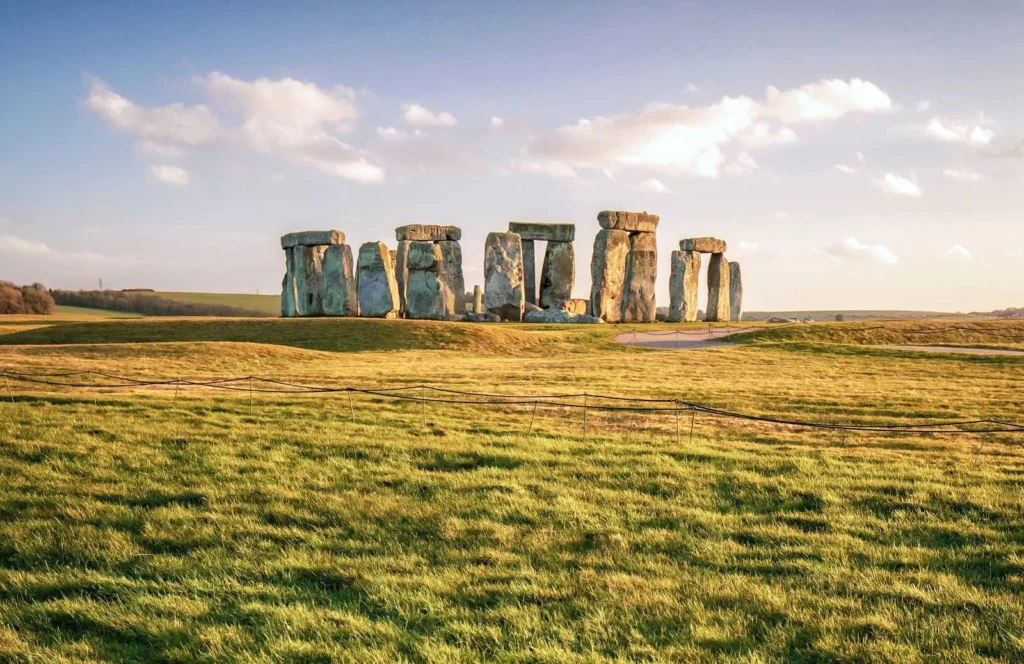
You are standing in front of a cathedral that has been explained to you since childhood as the apex of human achievement. The stones are old, the light through the glass is genuinely beautiful, and you feel something. But notice what you are not standing in front of. Notice the absence, which has no plaque, no official coordinates, no number in any registry.
By 2024, the World Heritage List carries 1,199 inscribed sites. Of these, Europe and North America account for roughly half, with Italy alone holding 58 entries — more than the entire African continent proportionally represents when measured against the civilizational density and temporal depth of its traditions. Sub-Saharan Africa, home to millennia of architectural, oral, and ritual heritage of extraordinary complexity, remains systematically underrepresented. The Nok terracotta culture of central Nigeria, whose sculptural tradition predates the Common Era by centuries, has no equivalent institutional visibility. The great earthwork cities of the Monumental Mounds builders along the Mississippi — civilizations that organized tens of thousands of people across landscapes over generations — exist at the margins of what the world has officially agreed to call sacred.
Michel Foucault, in The Archaeology of Knowledge published in 1969, argued that the real exercise of power is not in what gets said but in what gets permitted to count as knowledge in the first place. The archive is not a neutral storage facility. It is a system of exclusion operating through the appearance of inclusion. Every act of preservation is simultaneously an act of selection, and every act of selection contains within it a silent act of erasure. UNESCO’s List does not merely celebrate heritage. It performs a global archaeology in precisely Foucault’s sense: deciding which sediments of human time are legible, which are noise.
Edward Said, writing in Orientalism in 1978, described something adjacent and equally corrosive: the West’s habit of constructing the non-Western world as object of study rather than subject of history. The gaze that classifies is never innocent. When a committee of predominantly European-trained experts convenes to evaluate whether a site possesses “outstanding universal value” — the precise legal language embedded in the 1972 Convention — they are not applying a neutral metric. They are applying a historically specific aesthetic and philosophical framework that emerged from eighteenth-century European romanticism, from the Enlightenment’s particular obsession with monuments, ruins, and the visible trace. The universal, as Said would have recognized immediately, is always someone’s particular wearing a borrowed coat.
There is a man who watched his grandmother’s village shrine demolished without ceremony, without archive, without anyone arriving with a camera. The shrine was alive in a way that no European cathedral has been alive for centuries — tended daily, spoken to, embedded in an unbroken practice of meaning-making that connected the living to the dead without the mediation of tourism. It was not on any list. It qualified for no emergency protection. It disappeared, and its disappearance left no official silence, because it had never been officially heard.
The 1972 Convention’s language of “outstanding universal value” was drafted overwhelmingly by Western nations at a moment when decolonization was politically achieved but epistemically incomplete. The criteria embedded in that document — integrity, authenticity, monumental scale, the separation of the sacred from the functional — are not universal human values. They are specific inheritances of a tradition that learned to look at the past through the glass of a museum vitrine, to value what can be isolated, stabilized, and displayed. Living heritage, intangible heritage, heritage that refuses to sit still and be photographed — these categories only entered UNESCO’s formal vocabulary decades later, partially, grudgingly, as addenda to a framework that had already drawn the map.
And the map, once drawn, teaches people what to see when they open their eyes.
The Story That Ruins Tell
You return to a place you once knew and something is immediately wrong, though you cannot name it. The streets are intact. The fountain still runs. The stones of the old church have been cleaned, the mortar repointed, the square repaved with careful attention to historical accuracy. Everything is there. And yet what meets you is not a place but a replica of one — a body after the soul has already left, maintained at precisely the temperature of life, dressed in its best clothes, but gone.
This is not a metaphor. A man walks back into a village where he was born and the houses stand as he remembers them, but the people who lived in those houses — who fought in those kitchens, who hung laundry between those windows, who buried their children in the cemetery behind the church — are absent in a way that no absence by death can explain. They were not lost. They were removed. The architecture remained as evidence of a life that has been officially concluded, and what he walks through is less a village than a diorama, less a memory than a controlled exhibit of what memory used to feel like. The difference destroys him quietly, over several days, in ways he cannot articulate to the people who ask how the trip went.
Aleida Assmann, in her foundational work Cultural Memory and Western Civilization published in 2011, draws a distinction that cuts through everything the heritage industry has spent decades avoiding: the difference between functional memory and storage memory. Functional memory is living, inhabited, contested, embodied in the practices and conflicts and daily rituals of people who carry it forward. Storage memory is archived, preserved, held in place — maintained precisely because no one is using it anymore. The moment a site becomes heritage, Assmann implies, it risks crossing from one category to the other. It is moved from the breathing to the embalmed.
UNESCO’s own definition of Outstanding Universal Value, the criterion that governs inscription on the World Heritage List since the 1972 Convention, already contains this tension without acknowledging it. A site must demonstrate integrity and authenticity — two concepts that sound alive but function as taxidermy. Integrity means the site retains its attributes in a sufficiently complete state. Authenticity means it remains close to its original form. Both criteria reward the frozen over the evolving, the preserved over the inhabited. A city that changes because its people need it to change loses points. A ruin that stays perfectly ruined gains them.
The geographer David Lowenthal, in The Past Is a Foreign Country from 1985, observed that heritage is not history. History asks what happened and how. Heritage asks what we want to feel about it. These are radically different operations, and conflating them is one of the most effective ways a society has ever found to control what its citizens believe is worth grieving.
What the man walking through his emptied village understands without words is that the preservation of the buildings was not neutral. It was a statement about what mattered. The stone mattered. The community that made the stone meaningful did not, or mattered only as a historical footnote, as context, as a placard fixed beside the door. Preservation, in this reading, is not memory. It is the management of memory’s corpse — arranging it so that the wound looks like a monument, so that loss can be visited on a schedule, documented with photographs, included in a guidebook that tells you which direction to stand to get the best shot of the light.
The question Assmann’s framework forces into the open is one the heritage institutions have never answered directly: when you institutionalize memory, who decides which version survives? And the version that survives — does it serve the people who lived it, or does it serve the people who now have the authority to name it?
Heritage as Weapon
There is a particular kind of silence that falls over a landscape after something irreplaceable has been removed from it. Not the silence of emptiness, but the silence of a wound that the surrounding air does not yet know how to fill. You have felt something adjacent to this, perhaps, when a building from your childhood was demolished and you drove past the gap it left — that vertiginous sense that not just a structure but a coordinate of your own existence had been subtracted from the world.
Now scale that feeling to fifteen hundred years.
The two Bamiyan Buddhas, carved into the sandstone cliffs of the Hindu Kush in the sixth century, were not merely large. They were 55 and 38 meters tall respectively, visible from miles across the valley, and they had survived the armies of Genghis Khan, the Mughal emperor Aurangzeb’s artillery, and two millennia of earthquake and erosion. They were destroyed in March 2001 by deliberate detonation over the course of several weeks, because a decree had been issued declaring pre-Islamic statues to be idols, and idols an offense. The international community protested. The demolition continued. By the time it was over, what remained were two enormous rectangular niches in the cliff face — negative space where presence had been, the architectural equivalent of an extraction.
This was not an aberration. It was a demonstration.
What the destruction of Bamiyan revealed, with terrible clarity, is that the logic of heritage preservation and the logic of heritage destruction are not opposites. They are the same logic running in opposite directions. If a site concentrates identity — if it anchors a people’s sense of temporal continuity, of having existed before and therefore of existing now — then destroying it is not merely vandalism. It is a surgical operation on collective memory. It severs a population from its own past with the precision of someone cutting the roots of a plant they intend to watch die slowly in the soil.
Paul Connerton, in his 2009 work How Modernity Forgets, argued that modern societies have developed systematic mechanisms for rendering the past inaccessible — not through dramatic erasure but through the quiet reorganization of space, habit, and attention. But what happened at Bamiyan, and what happened at Palmyra in 2015 when ISIS demolished the Temple of Bel, the Arch of Triumph, and executed the 82-year-old archaeologist Khaled al-Asaad who had spent his life cataloguing its treasures — these events represent something Connerton’s framework must be stretched to accommodate. This was not forgetting engineered through indifference. This was amnesia by detonation, willed and announced, performed for cameras and transmitted globally. The destruction was the message.
Connerton’s earlier and more foundational argument, from How Societies Remember in 1989, is perhaps more directly relevant here. He demonstrated that what a community holds as memory is not stored primarily in archives or monuments but in bodies, in practices, in the habitual gestures of daily life. Monuments do not merely commemorate memory — they provide the spatial anchor that allows memory to persist across generations who have no direct experiential link to the original event. Remove the anchor and the memory does not simply float free. It begins to dissolve.
This is what the destroyers understood. They were not ignorant of history. They were fluent in it — fluent enough to know exactly which threads, once cut, would cause the largest unraveling. The Hazara people of Afghanistan had maintained a connection to the Bamiyan valley that predated Islam in the region. The Buddhas were not their religious objects, but they were their landscape, their proof of duration. A people who cannot prove they existed before a certain date become, in the political imagination of their enemies, a people who have no claim to exist at all.
And UNESCO had, in a sense, already named the stakes. By declaring sites as heritage of outstanding universal value, it had drawn a map of what, if destroyed, would constitute an injury to humanity itself.
A vision curated by a filmmaker, not an algorithm
In this video I explain our vision
The Resident Who Was Not Consulted
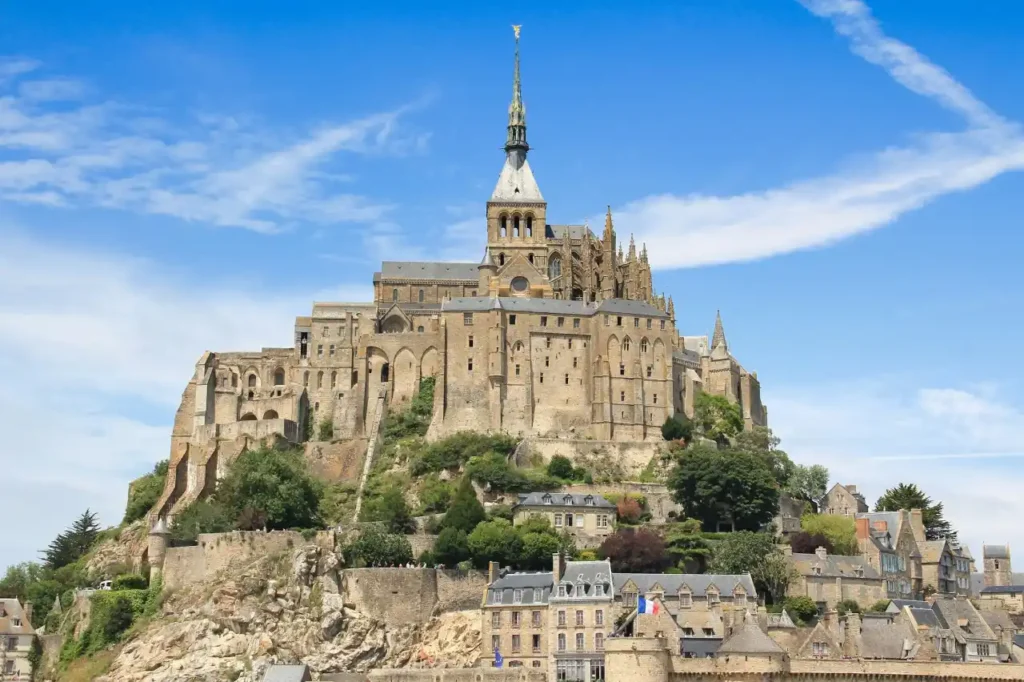
Your grandmother’s kitchen smells like cumin and wet plaster. You know this not because you remember it but because she told you, every time she described the house where she was born, where she learned to read sitting on the windowsill, where she once fell asleep during a thunderstorm listening to water run down the interior courtyard’s ancient stone. That house still stands. The walls are intact, the carved cedar woodwork has been restored to a precision it perhaps never had in life, and tourists file through it on guided tours between ten in the morning and five in the afternoon. The bedroom where she slept is behind a velvet rope. A small placard describes the architectural period. Her childhood has become an exhibit, and she was not asked.
This is not metaphor. It is the operational reality of living inside a UNESCO World Heritage Site, and the distance between the designation’s noble language and its human consequence is one of the more quietly brutal gaps in contemporary cultural policy. The Medina of Fez was inscribed in 1981, among the earliest sites recognized on the List, celebrated for its extraordinary medieval urban fabric, its tanneries, its labyrinthine alleys, its density of religious and civil architecture accumulated over more than a thousand years. What the inscription did not preserve was the community’s ability to stay. Property values shifted under the pressure of international attention. Restoration projects, often funded by foreign governments and international bodies, raised the cost of maintenance beyond what ordinary families could absorb. The logic was circular and merciless: the more beautifully the place was preserved, the less affordable it became for those who had made it what it was.
David Harvey, in his 2001 essay collection “Spaces of Capital,” articulates the mechanism with surgical clarity. He describes how capital transforms place into commodity, how the moment a location acquires cultural or aesthetic value legible to an external market, it begins to be consumed by that market in ways that systematically exclude the people whose labor and daily life generated that value in the first place. The inscription of heritage, Harvey’s logic implies, is not a neutral act of recognition. It is an act of economic valorization that re-assigns the benefits of a place’s cultural depth to those who can afford to access it, while the original inhabitants absorb the costs of their own displacement. The velvet rope does not protect a memory. It prices a memory into a new market.
Venice has lost more than half its resident population since the 1950s, dropping from roughly 175,000 inhabitants to under 50,000 today, a demographic hemorrhage so severe that locals have staged funeral marches through the city carrying a symbolic coffin. Dubrovnik’s Old Town, inscribed in 1979 and expanded in 1994, now counts more tourist arrivals per year than some mid-sized European nations receive in total, while its permanent residential population has dwindled to a fraction of what it was before the designation cemented the city’s image as an obligatory destination. The preservation is immaculate. The life is gone.
There is something deeply paradoxical in an institution devoted to preserving humanity’s living heritage that must reckon with the evidence that its own interventions accelerate the removal of the humans from that heritage. The word “outstanding” in UNESCO’s criteria for inscription refers to universal value, value that transcends any single community or generation. But universal value, operationalized through tourism economies and real estate markets, does not distribute itself universally. It concentrates. It prices. It displaces. And the woman who grew up behind what is now a museum entrance, who carries in her body the sensory memory of that courtyard in the rain, was never invited to the committee meeting where her home became the world’s.
Memory, Myth, and the Useful Past
You are standing in front of a stone arch, and your father is speaking. He is not lying to you, exactly. He is doing something more complex and more necessary than lying — he is making the past usable. He says: this is where our people stood, this is what they defended, this is what it cost. He does not say: the historical record is fragmentary, the narrative was consolidated two centuries after the fact, and the figure we are celebrating served interests that would make you uncomfortable if I named them. He says: remember this. And you do. That is the mechanism. That is how it works.
David Lowenthal, writing in 1985 in what remains the most honest demolition of our relationship to the past ever committed to academic prose, drew a line that most institutions still refuse to acknowledge. History, he argued, is an attempt — always imperfect, always contested — to understand what actually happened. Heritage is something categorically different. Heritage is the past processed for emotional and political consumption. It is history that has been filtered, polished, dramatized, and delivered back to a community as confirmation of what they already need to believe about themselves. Lowenthal’s distinction is not cynical. It is anatomical. He is not saying heritage is bad. He is saying we should know what it is.
UNESCO’s List, in this light, becomes something more intricate than a catalog of protected structures. It is a global architecture of usable pasts, legitimized by international consensus, which makes the selection process not a scholarly exercise but a political one conducted in the language of scholarship. When a site receives inscription, it does not simply gain protection. It gains narrative authority. The story attached to it hardens. The contested interpretations soften into background noise. What was once a site of disputed meaning becomes a monument to settled significance.
Nietzsche saw this with ferocious clarity more than a century before Lowenthal formalized it. In his 1874 essay on history’s uses and disadvantages for life, he distinguished between three orientations toward the past: the monumental, which mines history for heroic models; the antiquarian, which venerates the past out of loyalty rather than truth; and the critical, which puts the past on trial. He was not advocating for the critical at the expense of the others. He was insisting that life requires all three, and that the monumental and antiquarian are dangerous precisely because they feel so natural, so right, so warm. They make us who we are. They also prevent us from seeing what we are.
The child at the stone arch walks away with a story. It is a story that will structure how they interpret belonging, sacrifice, continuity, pride. It is not a neutral transmission. Somewhere in the gap between what the stones actually witnessed and what the father’s voice made them mean, an identity was manufactured. This is not a tragedy. It is the condition of being a person who exists inside a culture rather than outside it. What Lowenthal demands — and what the UNESCO framework quietly resists — is that we remain conscious of the manufacture. That we treat heritage not as recovered truth but as performed identity, and ask, always, who benefits from this particular performance, and who disappears inside it.
Because the usable past is never equally usable for everyone standing in front of the same monument. The arch that represents liberation for one family represents defeat for another. The world heritage site that anchors one nation’s pride sits on ground where another people’s memory was deliberately buried. The story the father tells his child at the monument is complete and true and necessary. It is also, in ways neither of them can fully see from where they are standing, a choice about what to make visible and what to let the stone keep silent.
What Survives When Nothing Is Left
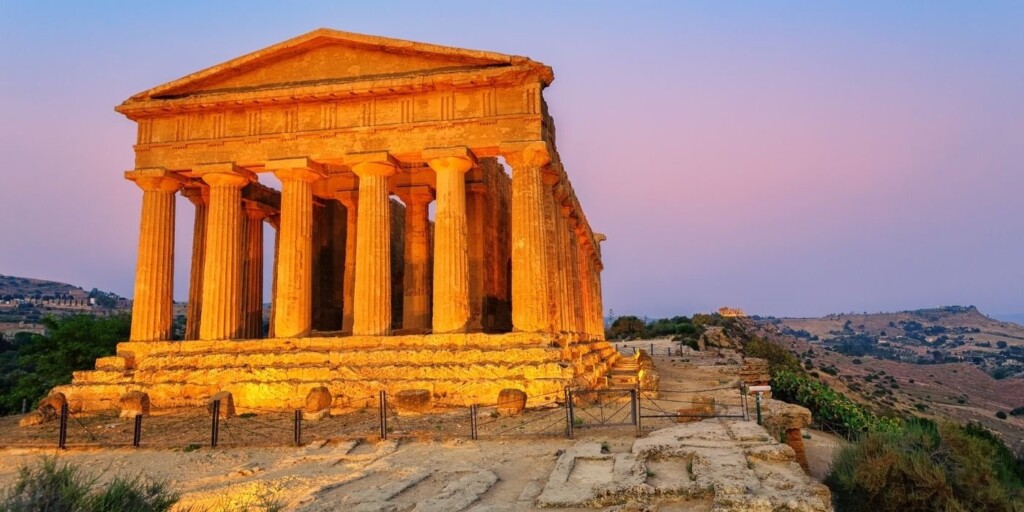
There is a city that was rebuilt from photographs. After the bombs stopped falling and the silence settled over rubble that had once been cathedrals and market squares and the kind of narrow streets where children learn to ride bicycles, the surviving inhabitants gathered every image they could find — postcards, tourist snapshots, architectural drawings, the casual documentation of a life that had not known it was about to disappear — and they used those images to reconstruct, stone by stone, what had been annihilated. The facades rose again. The cobblestones returned to their original patterns. From a distance, standing at the edge of the square, you cannot tell the difference between what was and what was manufactured in the image of what was.
This is where the question lives, not in the abstract corridors of international law or the committee rooms where experts debate criteria, but here, in this square, in front of a wall that looks exactly like the wall that burned.
Henri Bergson understood memory not as a storage system but as a creative act, a continuous reconstruction that the mind performs on the raw material of the past, shaping it according to the needs of the present. What the rebuilt city does is simply externalize that process, make it visible, render it in mortar and stone instead of synaptic connections. But Bergson also knew that reconstruction always introduces something new, that the act of remembering is never neutral, never purely recuperative. You do not bring back what was. You build something that resembles it, and then you decide, collectively, to call it the same thing.
The UNESCO plaque on a reconstructed wall carries within it this unresolved tension at its very core. It is simultaneously an act of extraordinary fidelity — the commitment to refuse erasure, to insist that a place and its meaning will not be simply swallowed by destruction — and something more troubling, a kind of authorized forgetting, in which the catastrophe is aesthetically absorbed into the reconstruction so thoroughly that the wound becomes invisible. The wall looks whole. The plaque certifies its value. The disaster is acknowledged in the documentation and then quietly concealed behind the fresh mortar.
Paul Connerton, in his 2009 essay on the modes of forgetting, identified what he called “repressive erasure” but also its counterpart, a forgetting that operates through the very act of preservation, through the construction of monuments and memorials that paradoxically allow societies to feel they have honored the past precisely so they can stop living inside it. The rebuilt square permits a kind of emotional closure that the ruins never would. Ruins demand something from you. They hold you in an uncomfortable present-tense relationship with destruction. The reconstruction releases you.
A man walks home after years of absence, across a bridge he knows by heart, toward a house whose address he has carried in his body like a second skeleton. The house is there. The proportions are right, the color is almost right, the door is in the correct place. But something in his hands, reaching for the handle, knows before his mind does that this is not the same door. Heritage protection cannot resolve this. No plaque can close the gap between the place that formed you and the place that resembles it.
What survives, in the end, when nothing material is left, is not the building but the need for the building — the human insistence on locating oneself in time and space, on saying this is where I come from, this is what shaped the particular weight of my silence and the particular direction of my longing. Whether that need is genuinely answered by a reconstructed facade certified by international consensus, or whether the plaque on the new wall is the most elegant form of unacknowledged grief ever devised by a civilization that cannot bear to sit with its own losses, is a question that the square, in its perfect and terrible resemblance to itself, continues to ask without answering.
🏛️ Roots of Memory: Heritage, Art and Cultural Identity
UNESCO Cultural Heritage is not just a list of protected monuments — it is a living map of humanity’s deepest values, symbols, and collective memory. To fully understand what makes a site or tradition worthy of preservation, we must explore the broader cultural and artistic currents that shaped it. These articles offer essential context for anyone curious about the layers of history beneath the designation.
Medieval Abbeys and Monasteries: History and Architecture
Medieval abbeys and monasteries are among the most frequently UNESCO-listed architectural ensembles in the world, embodying centuries of spiritual life, artistic patronage, and communal identity. Their stone corridors and illuminated manuscripts represent a form of cultural heritage that transcends religion and speaks to the universal human need for meaning. Understanding their history helps us grasp why preservation of such spaces remains a global priority.
GO TO THE SELECTION: Medieval Abbeys and Monasteries: History and Architecture
Medieval Art: History and Meaning
Medieval art is a vast and richly symbolic visual language that shaped the aesthetic foundations of European heritage for over a thousand years. From devotional paintings to monumental frescoes, each work carried layers of theological and cultural significance that communities recognized as their own. Studying its history and meaning illuminates why so many medieval sites are considered irreplaceable by UNESCO and the international community.
GO TO THE SELECTION: Medieval Art: History and Meaning
Mexican Muralism: History and Protagonists
Mexican Muralism was not only an artistic revolution but a powerful act of cultural reclamation, placing indigenous history and popular identity at the center of public life. Artists like Rivera, Orozco, and Siqueiros transformed walls into monuments of collective memory, many of which have since been recognized as part of Mexico’s intangible and architectural heritage. Their legacy demonstrates how art can itself become a form of cultural preservation deserving of protection.
GO TO THE SELECTION: Mexican Muralism: History and Protagonists
Day of the Dead: History and Meaning
The Day of the Dead is one of the most emblematic examples of living intangible heritage recognized by UNESCO, inscribed on its Representative List in 2008. Rooted in a blend of pre-Hispanic traditions and Catholic influences, this ritual transforms grief into celebration and memory into communal identity. Exploring its history and meaning reveals how UNESCO’s mission extends far beyond monuments to protect the invisible yet vital fabric of human culture.
GO TO THE SELECTION: Day of the Dead: History and Meaning
Discover Culture Through Independent Cinema
The stories behind cultural heritage — its struggles, its beauty, and its threatened survival — have inspired some of the most powerful works of independent cinema. On Indiecinema, you can explore films that go beyond the surface of history and bring these living traditions to the screen with honesty and artistic depth. Join us and let cinema be your guide through the world’s most fascinating cultural landscapes.
👉 EXPLORE THE CATALOG: Watch Indie Films in Streaming
A vision curated by a filmmaker, not an algorithm
In this video I explain our vision

