
The Altar You Never Built
You stand at the edge of a grave and you do not know what to do with your hands. Someone has placed flowers already, someone else has said the right words, and now there is only the particular silence of a cemetery on a weekday morning, the kind that presses against your ears like cotton. You feel something, certainly, but you cannot be sure it is grief. It might be the performance of grief, which is a different thing entirely, a bodily posture learned from funerals attended since childhood, from films watched in darkened rooms, from the cultural script that tells you how a person looks when they are remembering the dead. You bow your head slightly. You stand for what feels like the appropriate duration. Then you leave, because leaving is also part of the script, and because the living world pulls at you with its appointments and its noise, and because somewhere in the architecture of the modern mind there is a partition wall, thick and carefully maintained, that separates the space where you keep the dead from the space where you actually live.

This is not a personal failing. It is a civilizational project, centuries in the making.
Philippe Ariès, the French historian who spent decades reconstructing the Western attitude toward mortality, argued in his 1981 work “The Hour of Our Death” that death underwent a fundamental transformation between the medieval period and modernity. What had once been a tame, communal, almost domesticated event, something that happened in the bed at home with the family gathered and the neighbors informed, became by the twentieth century what he called “the invisible death,” sequestered in hospitals, managed by professionals, removed from the sight and smell and texture of ordinary life. The dead were processed efficiently, commemorated briefly, and then expected to remain where they had been put. Grief acquired a timetable. Mourning became, in the sociologist Tony Walter’s phrase, something to be “recovered from” rather than inhabited.
Against this backdrop, the tradition that emerges every year on the first and second of November in Mexico, in the Nahua and Zapotec and Mixtec communities that carried it forward across five centuries of colonial pressure, looks less like a regional custom and more like an act of civilizational resistance. The Día de los Muertos is not a day of mourning in any sense that the modern West would recognize. It is not solemn. It is not brief. It does not observe a timetable. It is a return, a literal and logistical homecoming of the dead, who are expected to travel back along the marigold paths their families have laid for them, to sit at tables laden with their favorite food and drink, to hear their names spoken without apology or hushed reverence, to be, once again, present.
The ofrenda, the altar built for this return, is not a memorial. Memorials are for the living, constructed to manage loss, to translate the unbearable into marble and inscription. The ofrenda is an address. It is built with the assumption that someone will receive it, that the dead are not gone so much as elsewhere, that the boundary separating their world from this one is, on these two days, permeable. You do not stand at a distance from an ofrenda the way you stand at the edge of a grave. You lean into it. You place the dead person’s glasses on the shelf next to their photograph. You pour mezcal into a cup they will drink from in some register you cannot fully explain but do not require to explain.
The ancient Nahua conception of Mictlan, the underworld that the dead traverse across nine levels before reaching rest, was not a place of punishment or abandonment. It was a destination. The dead were going somewhere. And the living sent them off with provisions, and waited for them to visit, and set a place at the table.
You have never done this. But some part of you already knows how.
Don Barry: A Quixotic Exploration
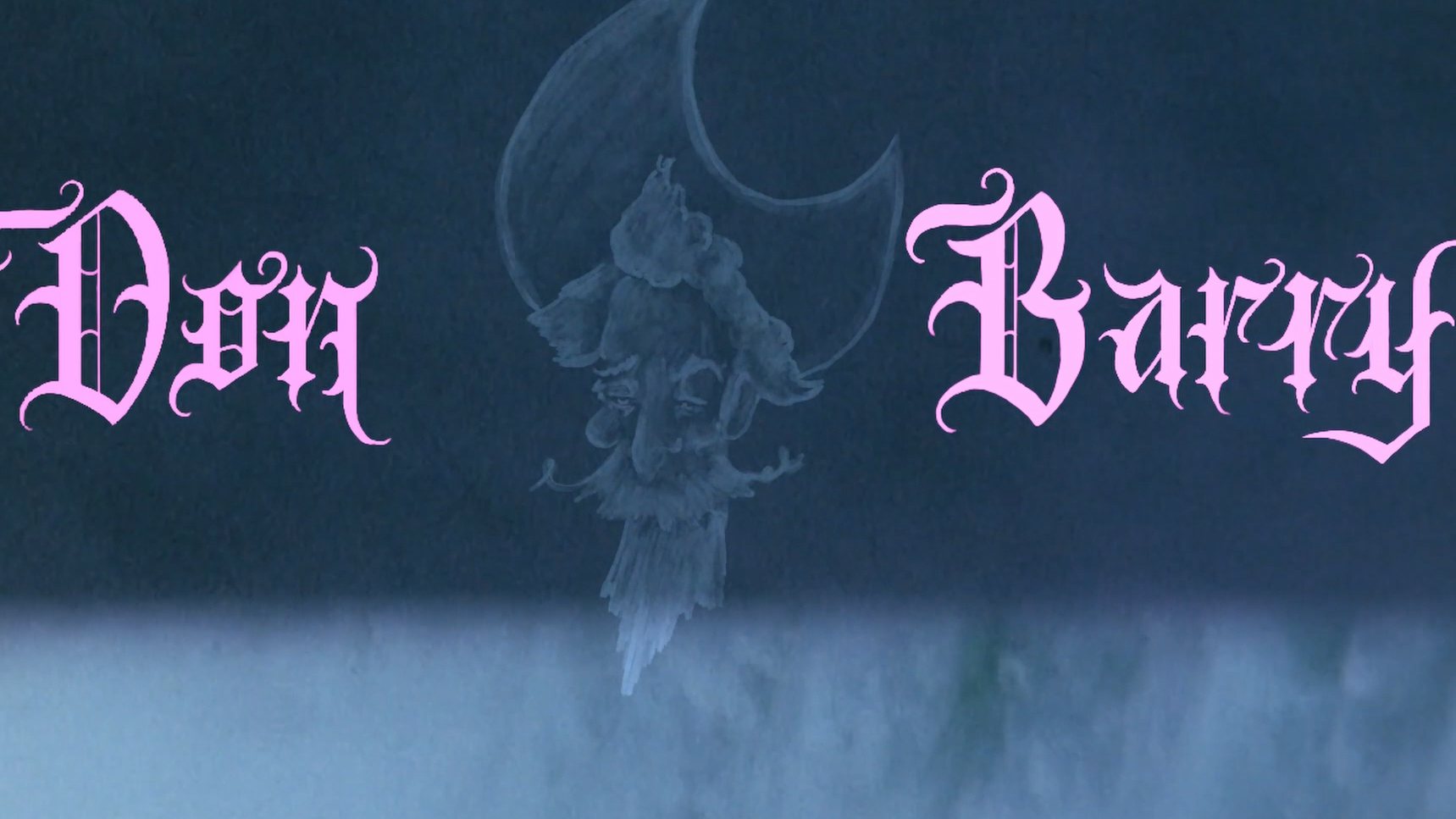
Docufiction, Experimental, by Paul Smart, Mexico, 2026.
Don Barry: A Quixotic Exploration is a debut feature that places the biography of an eighty-year-old experimental filmmaker and artist, Barry Gerson, within the metanarrative of Miguel de Cervantes’ Don Quixote. Don Barry was filmed in the city of Guanajuato during the 51st edition of the Cervantino Festival, as well as during the vibrant Day of the Dead celebrations held in the city’s UNESCO-listed tunnels. The film honors the director’s long friendship with artist Barry Gerson, drawing inspiration from Cervantes’ Don Quixote. Paul Smart’s directorial choices create something new that celebrates life and goes beyond conventional storytelling. A search for magic in our real lives. A moving film about the meaning of life, art, and death. Not to be missed.
Paul Smart is a proud outsider filmmaker with a long history of film screenings. In the 1980s, he emerged in New York’s vibrant youth art scene, working in theater production and later filmmaking, before retreating to rural upstate New York, in the Catskill Mountains, where he made a living writing and screening independent films in old parish halls for rural audiences, many of whom had never seen a film.
LANGUAGE: English
SUBTITLES: Spanish, French, German, Portuguese
When the Church Tried to Swallow the Bones
When the Spanish arrived in Tenochtitlan in 1521, they did not simply conquer a city. They attempted something far more ambitious and far more violent: they tried to conquer time itself. Specifically, they tried to erase the way an entire civilization understood what happened after you died.
The Aztec calendar had carried two full months dedicated to the dead, one honoring children who had departed, one honoring adults. These were not somber occasions. They were noisy, physical, drenched in marigold and copal smoke, full of food offerings left for souls who were understood to return with genuine appetite. The dead were not elsewhere. They were inconveniently, beautifully present. Franciscan missionaries watching these rituals in the decades after the conquest saw something they could not translate except as idolatry, and idolatry had only one ecclesiastical prescription.
What followed was not simply prohibition but a systematic architectural replacement. The Spanish church did not always demolish indigenous temples and leave rubble. More often it built directly on top of them, laying Christian foundations into Aztec stone. Bernardino de Sahagún, the Franciscan friar who paradoxically documented Nahua culture with extraordinary precision in his Florentine Codex of the 1570s, understood that you could not dismantle a belief system without first knowing exactly what you were dismantling. His ethnographic impulse was genuine and his destruction no less real for it. He compiled twenty-two years of interviews into twelve volumes describing Mexica ritual life, and the church used that knowledge to calibrate its suppression.
The forced fusion with All Saints‘ Day on November 1st and All Souls’ Day on November 2nd was not a compromise. It was an attempt at substitution through proximity. The logic was theological but the mechanism was colonial: place a Christian observance so close to the indigenous one, in calendar terms and in emotional texture, that the indigenous one would gradually become absorbed, renamed, de-fanged. Antonio García de León and other historians of New Spain have documented how missionaries deliberately scheduled Christian feasts to overlap with pre-existing indigenous ones precisely because they understood that embodied ritual is harder to uproot than doctrine. You can ban a belief. You cannot so easily ban the body’s memory of when to grieve.
What the missionaries did not anticipate, or perhaps could not admit, was that the Mexica were not passive recipients of this substitution. They performed it. They accepted the Christian calendar on its surface and quietly, stubbornly, inserted their own dead into the cracks. The marigolds did not disappear. The food offerings did not disappear. The understanding that the dead return with genuine need did not disappear. It simply migrated, wearing new vocabulary while carrying old meaning beneath it the way a river carries sediment that no one on the surface can see.
This is what the sociologist James C. Scott called, in his 1990 work Domination and the Arts of Resistance, the “hidden transcript” — the record of what subordinated people actually believe and practice beneath the performance of compliance. The Mexica did not resist the Spanish church through open confrontation after the catastrophic defeat of 1521. They resisted through the most durable weapon available to any culture facing erasure: they remembered with their hands, their calendars, their kitchens, their cemeteries. They remembered by doing, which is the only form of memory that survives long enough to matter.
By the time the colonial period hardened into mestizo Mexico, the fusion was so complete that untangling what was Aztec from what was Iberian Catholic became genuinely difficult, which is precisely the point. Difficult to untangle means difficult to target. A tradition that cannot be clearly named cannot be cleanly condemned. The bones had been swallowed, yes. But something in them refused to dissolve.

Mictlan Was Not Hell
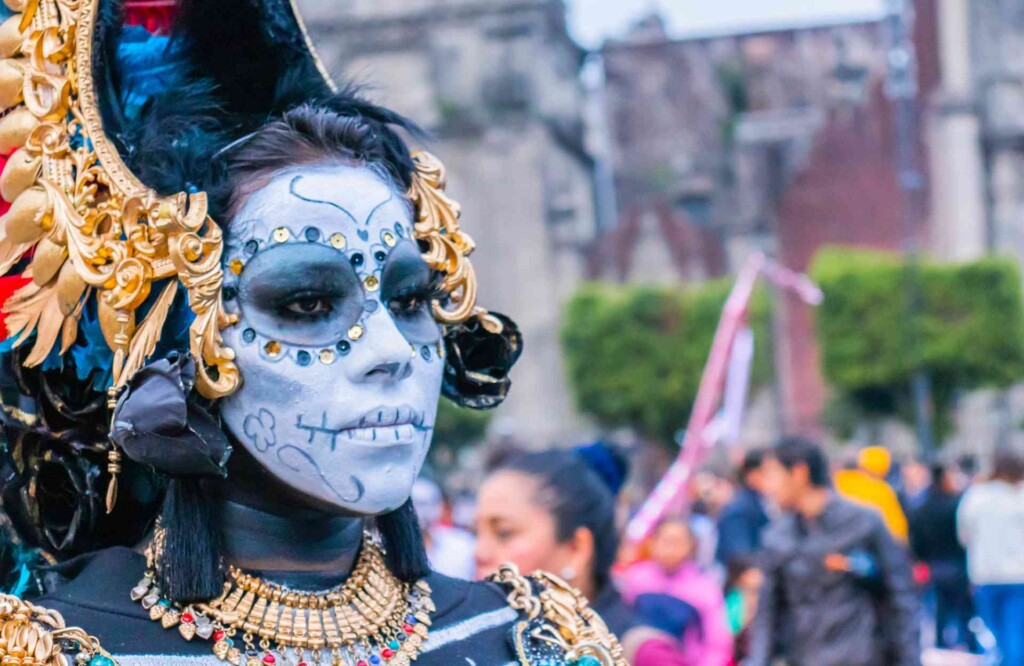
The dog was not a pet. It was a guide, a psychopomp, a creature who already knew the way through water and darkness because dogs had always known things humans pretended not to need. When someone died in the Aztec world, a dog — often sacrificed, often the same hairless Xoloitzcuintli that had slept beside them in life — was placed at the burial so that the soul would not cross the wide black river of Apanohuaia alone. This was not superstition in the pejorative sense we have learned to assign to everything that predates our own certainties. It was geography. The underworld had nine distinct levels, each with its own terrain, its own obstacle, its own specific trial, and you needed four years to traverse them all before arriving at Mictlan proper, the deepest place, where Mictlantecuhtli and Mictecacihuatl — lord and lady of the dead — presided not as judges but as receivers. They were not waiting to condemn you. They were waiting to receive what had always been coming.
This distinction matters more than it might seem, because the entire architecture of terror that Christianity later installed into the Western imagination depends on death as verdict. You lived, you were weighed, you were found worthy or you were not, and the afterlife was the courtroom in which all your secret deeds were finally read aloud. Hell was not a destination in the neutral sense — it was punishment, and its existence required a God who punished, a soul that deserved punishment, and a life lived in the shadow of that deserving. The French historian Philippe Ariès spent decades tracing precisely this transformation in his monumental work “The Hour of Our Death,” published in 1981, documenting how medieval Christianity gradually converted death from a communal, relatively familiar passage into an increasingly individualized, moralized, terrifying event. By the twelfth century, the Last Judgment had migrated from the end of time to the moment of each individual death, meaning every person now carried their own private apocalypse inside them, ticking.
Mictlan did not tick. It had no countdown, no divine ledger of sins. What determined your journey through the nine levels was not how morally you had lived but how you had died. Warriors who fell in battle, women who died in childbirth, those struck by lightning — they went to different paradises entirely, not because they were better people but because their deaths had a specific cosmic function. The Aztec universe was not organized around virtue rewarded and sin punished. It was organized around cosmic debt, reciprocity, the maintenance of a world that required human participation to keep turning. Death was not the consequence of a fall from grace. Death was structural. Death was already inside the design.
When the Spanish missionaries arrived in the sixteenth century, they did not encounter a people without eschatology. They encountered people with a different and, in many ways, more sophisticated one — and they found it intolerable. The theological war that followed was not merely political. It was ontological. What is death? What does it mean? What do you owe to it and what does it owe to you? The missionaries saw the offerings made to the dead, the continuation of relationships across the threshold, the absence of punishment and hellfire in the indigenous cosmology, and they interpreted this not as a different answer to the same question but as evidence that the question had never properly been asked. They brought the terror with them in their texts and their architecture, building churches directly on top of temples, as if one answer could simply be pressed down hard enough to make the other stop breathing.
But cosmologies are more durable than stone. What gets buried tends to grow.
The Marigold Path and the Logic of Return
There is a moment, somewhere between sleeping and waking, when a child follows a ribbon of orange light through the dark. Not running, not afraid — just following, the way water follows a groove in stone, as if the path were already known before the feet ever touched it. The petals are everywhere, thick and warm-smelling, bruised to release something ancient from inside them. The child does not ask where they lead. The question does not arise. There is only the following, the brightness against the black, the sense that something ahead is waiting without impatience.
And somewhere else, at three in the morning, a man is arranging photographs on a wooden surface. He has been awake for hours. The candles are lit. He places a glass of water, a plate of food gone slightly cold, a pair of worn shoes that belonged to someone who no longer needs them. He does not feel ridiculous doing this. He feels, if anything, accompanied. The room is full of a presence that has no weight, no outline, and yet takes up space the way grief takes up space — not as absence, but as a kind of density.
Henri Bergson, in Matter and Memory published in 1896, argued against the dominant model of memory as storage, as an archive of the past filed away in discrete locations of the brain. Memory, for Bergson, was not a warehouse. It was duration — la durée — the continuous, living flow of time in which past and present are not separated chambers but interpenetrating movements. The past does not disappear; it contracts and coexists with the present, pressing against it, infiltrating it. To remember is not to retrieve. It is to allow what never stopped existing to surface through the density of lived time.
This is not a metaphor. Bergson meant it structurally. The living body moves through a present that is always already saturated with the past it carries, not as memory-images filed and retrieved, but as accumulated time folded into the very tissue of perception. You do not remember your dead the way you remember a fact. You remember them the way your hands remember a gesture they learned from watching someone else’s hands, years ago, without knowing they were learning.
The marigold path — cempasúchil, the flower of twenty petals, the flower the Aztec people called zempoalxóchitl, its scent believed to guide the dead back through the veil — operates on exactly this logic. It does not summon anyone. It illuminates a passage that already exists. The dead return on Día de los Muertos not because the living have built a temporary bridge, but because the wall between presence and absence has always been more porous than the living dare to believe the rest of the year.
The man at the ofrenda at three in the morning is not performing a ritual. He is acknowledging something that requires no performance: that the person he lost has not stopped pressing against the present. That duration, as Bergson understood it, does not sort the living from the dead into separate temporal bins. What has been lived accumulates and continues. The dead exist inside the duration of those who loved them with an almost unbearable specificity — in the smell of a particular dish, in the way a door sounds when it closes, in the shape a body makes on a mattress that never quite returned to its original form.
The child following the petals through the dark is not being led somewhere new. The child is being led somewhere continuous — back along the thread of accumulated time, toward what has always been there, patient and luminous in the orange dark, waiting not to be resurrected but simply to be recognized as having never entirely left.
What the Skull Is Really Saying
The skulls are everywhere and nobody looks away. They are on the bread, on the children’s faces painted in white and black, on the altars, on the candy you put in your mouth and dissolve on your tongue. You have seen this and felt, perhaps, a faint discomfort you could not quite name — not fear exactly, but something adjacent to it, the reflex of a culture that has trained you to look elsewhere when death appears in the room.
That reflex has a history. Philippe Ariès spent decades tracing it in his monumental work “The Hour of Our Death,” published in 1981 after nearly twenty years of research, and what he found was a slow, deliberate concealment. Western modernity did not simply become more rational about death; it became phobic. It moved dying into hospitals, grief into private rooms, and the corpse into the custody of professionals whose entire function is to make the dead look as if they are merely sleeping. By the twentieth century, Ariès argued, death had become what he called “the invisible death” — the one taboo that secular society, having dismantled so many others, could not bring itself to touch. The skull, in this context, is not merely a symbol. It is a provocation.
José Guadalupe Posada understood this perfectly, and he weaponized it. Working in Mexico City in the 1890s and early 1900s, printing broadsides and illustrated pamphlets that circulated through the streets for a few centavos, he drew skeletons in the clothing of the living — generals, priests, dandies, ladies of fashion. His most famous image, the Catrina, is a female skull wearing an elaborate European hat, the kind of hat that Mexican women of the aspiring class wore to signal their distance from indigenous identity. The joke was not about death. It was about pretension. The skull was not saying: you will die. It was saying: you are already ridiculous, and death will not improve your posture.
This is the distinction that gets lost when the calavera is exported, sanitized, turned into Halloween merchandise or tattoo flash. The sugar skull is not morbid. It is satirical. It belongs to a tradition in which the dead are granted the freedom to say what the living cannot, to cut through the performances of status and seriousness that organize daily existence. In the market, on the night of the second of November, you can watch a group of musicians playing under a canopy of marigolds while articulated skeleton figures are made to dance along the stalls. The vendors keep selling. Children point and laugh. Old women ignore the whole spectacle and argue over the price of chiles. There is no reverence and no horror. There is only a kind of cheerful familiarity, as if death were a neighbor who shows up every year, loud and a little ridiculous, and is simply given a chair.
Ariès’s analysis illuminates precisely why this scene looks transgressive to a Western eye. It violates the fundamental rule of modern death-management: that mortality must be kept at a distance, aestheticized into painlessness or hidden entirely. The calavera refuses that distance. It puts the skull in your mouth, on your child’s face, in the hands of a figurine doing a cumbia in the middle of a crowded square. It insists that you sit with the image, laugh at it, eat it.
But what it is really doing, beneath the laughter, is something more unsettling. It is mocking the living. Every elaborately dressed skeleton in Posada’s etchings is a mirror held up to someone who believed their clothing, their class, their carefully maintained dignity made them something other than temporary. The sugar skull does not grieve the dead. It grins at you.
And you are the one it is grinning at.
A vision curated by a filmmaker, not an algorithm
In this video I explain our vision
UNESCO Made It a Brand

There is a particular kind of erasure that arrives dressed as celebration. You have seen it happen in real time, perhaps without naming it: the moment a living thing is framed, labeled, and mounted on a wall for others to admire. The glass case preserves the specimen. It also kills it.
In 2008, UNESCO added Día de los Muertos to its Representative List of the Intangible Cultural Heritage of Humanity. The intention was protection. The effect was something more complicated. When an institution as vast and visible as UNESCO points at a practice and says this matters, it simultaneously says this is available, this is legible, this belongs to the world. The designation does not steal anything outright. It simply opens a door through which everything can eventually pass.
Think of what followed. Within years, the image of a skull-painted face became a Halloween costume sold in chains across North America and Europe, stripped of its specific geography, its grief, its Nahua and Aztec roots reaching back to a ritual that pre-Columbian sources suggest was observed for an entire month, presided over by Mictecacihuatl, lady of the dead, centuries before Spanish missionaries compressed it into the Christian calendar of November first and second. The image became a tote bag, a phone case, a cocktail garnish. A Pixar film released in 2017 grossed over eight hundred million dollars worldwide by building a luminous, architecturally spectacular version of the afterlife that millions of children in forty countries now recognize as the authoritative shape of a Mexican family’s most private ritual. The film is not malicious. It is something more insidious than malicious: it is sincere, well-researched, emotionally generous, and it still transforms a ceremony of mourning into content.
Erving Goffman wrote in 1959 about the way performance and authenticity become indistinguishable once an audience is present. The family at the altar is no longer only a family at the altar once someone is watching them with a camera. They become performers of their own grief, whether they consent to that role or not. Dean MacCannell, in his 1976 work The Tourist, pushed this further, describing how the tourist’s quest for authentic experience inevitably destroys the conditions that made that experience authentic in the first place. The search is self-defeating by its own logic.
You have seen the scene. A woman stands beside a carefully assembled altar in Oaxaca — marigolds arranged in dense orange corridors, photographs of her mother and grandmother ringed by copal smoke, a glass of mezcal left for someone who no longer drinks. She is praying, or something close to praying, her lips moving in a way that has nothing to do with performance. Three feet away, a tourist in hiking sandals raises a phone and photographs the altar. Not the woman. Just the altar. As though grief, properly composed, could be separated from the person who carries it.
Oaxaca’s state tourism revenue tied to Día de los Muertos has grown into a significant economic engine, with hotels booking solid throughout the first days of November and tour packages that include guided cemetery visits, mezcal tastings, and workshops on building your own altar. The workshops are not inherently cynical. Some are led by community members who see them as a form of transmission. But transmission and exhibition are different gestures, and the line between them moves depending on who is paying and who is watching.
What happens to a ritual when it is watched instead of lived is not a hypothetical question. It is a process already underway, visible in the way a ceremony designed to collapse the distance between the living and the dead becomes, under sufficient photographic attention, a spectacle that reinforces exactly the distance it was meant to dissolve.
Grief Is Not a Stage, It Is a Conversation
There is a woman arranging a plate of food on a table where no one will sit. She places it with care — the tortillas folded just so, the mole still steaming, a glass of water set beside it as though the thirst of the dead were a thing worth honoring. Someone watching this from the outside, someone trained in the vocabulary of healthy grieving, might feel a quiet alarm. They might reach, almost involuntarily, for a framework. They might begin, internally, to count stages.
The five-stage model that entered Western consciousness in 1969, when Elisabeth Kübler-Ross published On Death and Dying, was never meant to be a prescription. She drew it from interviews with terminally ill patients, not from the bereaved, and she insisted repeatedly that the stages were descriptive, not sequential, not universal. None of that stopped the model from becoming doctrine. By the 1980s it had colonized hospital corridors, therapy manuals, popular culture, and the implicit moral grammar of how grief was supposed to move. Denial. Anger. Bargaining. Depression. Acceptance. The arc was teleological — it pointed somewhere, toward a resolution, toward a moment when the dead were finally, cleanly, released. To linger was to fail. To set a plate was to be stuck.
George Bonanno spent decades dismantling this with empirical rather than polemical tools. His 2009 work The Other Side of Sadness drew on longitudinal studies of bereaved individuals to demonstrate that the majority of people who lose someone close do not follow the Kübler-Ross sequence at all. Many show what he called resilience — not the absence of pain, but the absence of prolonged dysfunction — and this resilience was not pathological numbness. It was a legitimate human response that the dominant model had no category for, and therefore rendered invisible or suspicious. Bonanno’s data challenged not just the stages but the underlying assumption: that grief has a correct destination, and that destination is severance.
The woman with the plate is not in denial. She knows perfectly well that he is dead. The knowledge sits in her like a stone in still water — it doesn’t move, it doesn’t dissolve, but the water continues to exist around it. What she is doing is something more precise than what the clinical language allows: she is maintaining a conversation. The dead, in this understanding, do not become objects of memory. They remain subjects of relationship. They are still addressed, still consulted, still fed. The anthropologist Renato Rosaldo wrote about grief as a form of force in his 1989 essay Culture and Truth, describing his own devastation after the death of his wife as something that revealed to him what he had failed to understand in the Ilongot headhunting rituals he’d spent years studying — that grief is not a passive interior state but an active, relational, almost violent engagement with absence.
This is precisely what the Day of the Dead encodes structurally. The annual return is not a metaphor. It is a scheduled appointment. The dead are expected, and the expectation is not delusional — it is contractual. You come back. We will be here. We will have remembered what you loved to eat. The ofrenda is not a monument to the past; it is infrastructure for an ongoing exchange. The relationship is not over. It has changed form.
What the Western grief model calls acceptance, this tradition would recognize as a kind of violence — a unilateral termination of something that was, by its nature, mutual. You do not get to decide alone when a relationship ends. The dead, who cannot speak their objection, have nonetheless left their presence everywhere: in the tilt of a daughter’s laugh, in a craving that arrives without explanation every November, in the weight of a name that still rises to your lips before you remember that calling it serves nothing. Except that it does. It keeps something open that closure, for all its clinical dignity, would simply seal.
You Already Know How to Do This
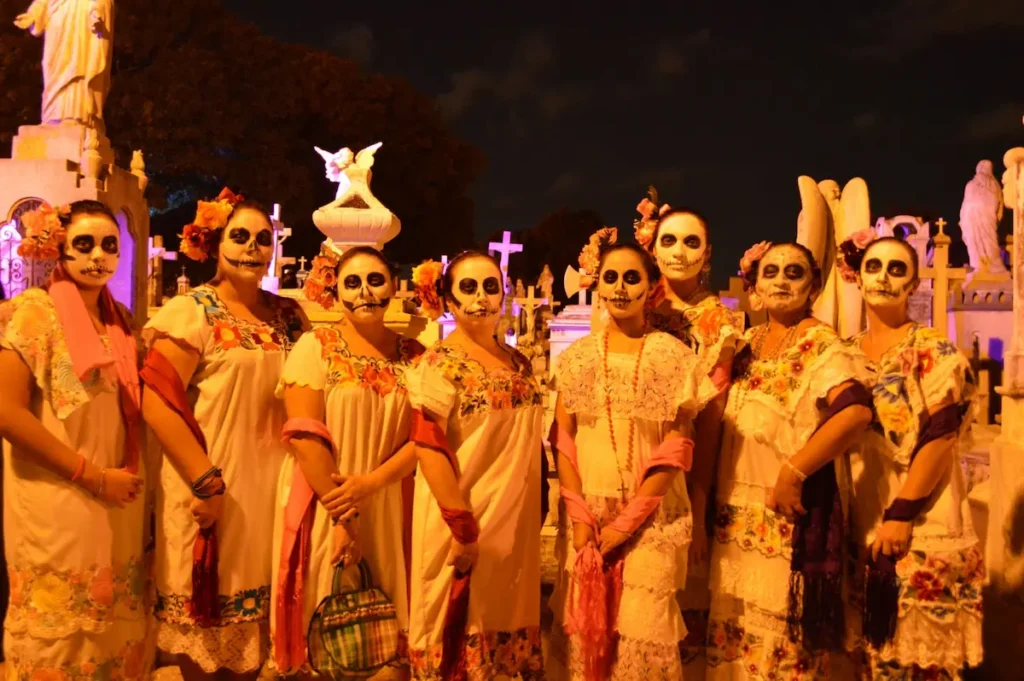
You have not deleted the voicemail. You know exactly which one. The voice on it belongs to someone who no longer exists in any form you can reach, and yet you have protected that audio file across three phone upgrades, transferred it carefully, made sure it survived. You have told yourself it is because you are not ready. But the truth is closer to this: that thirty-second recording is a ritual. It is the closest thing you have to an altar.
Ernest Becker argued in 1973, in the work that would win the Pulitzer Prize the year after his death, that the entire architecture of human civilization is essentially a defense mechanism against the knowledge that we will die. Not a celebration of life, not a triumph of culture — a defense. Every institution, every ambition, every ideology is, at its foundation, a way of not looking directly at mortality. Becker called it the denial of death, and he meant it literally: we have built a world specifically designed to keep that knowledge at the periphery of consciousness, where it cannot paralyze us. The problem is that the periphery is not the same as the gone. The fear does not dissolve. It accumulates.
This is why the discomfort that some secular Western observers feel when encountering Día de los Muertos is not, as it is often framed, a matter of cultural distance. It is not unfamiliarity. It is recognition. What the marigold-covered altars and the laughing skull imagery and the families eating beside graves reveal is not a foreign practice but a mirror held up to the thing you have been doing alone, in private, in ways you have never named as ritual because your culture gave you no framework in which to name them.
The photograph you have kept in a drawer rather than displayed, because displaying it would mean something you cannot yet articulate. The chair at the table that no one sits in and that no one has suggested removing. The anniversary you mark internally every year while appearing to those around you as simply quiet on that particular day. These are not the absence of ritual. They are ritual stripped of community, stripped of permission, stripped of the collective acknowledgment that what you are doing is not pathology but the most human thing there is.
A man sits in a half-empty apartment going through his dead father’s belongings, holding a coat that still carries the shape of the shoulders that wore it, and he cannot put it down. Not because he is weak or unresolved. Because he is performing, without ceremony, without witness, without any cultural script that honors what he is doing, the same act that an entire family performs together in Oaxaca on the second of November, with candles and food and the names of the dead spoken aloud into the night air. The difference is not in the grief. The difference is in whether anyone told you that this was allowed.
Becker’s argument does not end in despair. It ends in something more demanding than despair: the suggestion that a culture which cannot integrate death cannot fully integrate life either. That what is repressed does not disappear but deforms. That the grief carried silently and the love expressed only in secret to a voicemail recording and the chair nobody moves become, over decades, a kind of internal architecture of the unfinished — a house full of rooms you have stopped being able to enter.
You already know how to speak to the dead. You have been doing it since the day they left. What you were never given is the dignity of doing it in the open, in daylight, with other people who understand that this is not madness but fidelity — the oldest and most human form of it.
💀 Between Worlds: Death, Spirit, and the Sacred
The Day of the Dead is more than a celebration — it is a threshold where the visible and invisible worlds meet, where memory becomes ritual and mortality becomes meaning. To truly understand its depth, one must explore the broader currents of spiritual thought, esoteric symbolism, and the cultural imagination of the afterlife that have shaped human consciousness across centuries.
Must-see Movies about the Afterlife
The afterlife has haunted human imagination since the first fires were lit in ancient caves, and cinema has long served as its most vivid mirror. This collection of must-see films explores death not as an ending but as a passage, much like the ancestral logic that animates the Day of the Dead itself.
GO TO THE SELECTION: Must-see Movies about the Afterlife
Universal Consciousness
Universal Consciousness invites us to consider that the boundary between the living and the dead may be far more permeable than our rational minds allow. In traditions like Día de los Muertos, the collective spirit of a people reaches across that boundary, weaving the departed back into the fabric of the living world.
GO TO THE SELECTION: Universal Consciousness
The Astral Plane and the Subtle Bodies: the Theosophical Map of Human Being
Theosophy’s detailed mapping of the subtle planes of existence offers a fascinating parallel to indigenous beliefs about the soul’s journey after death. The idea that consciousness persists beyond the physical body is central both to the Theosophical worldview and to the profound spiritual architecture underlying Day of the Dead rituals.
GO TO THE SELECTION: The Astral Plane and the Subtle Bodies: the Theosophical Map of Human Being
Spirituality: Movies to Watch
Spirituality, in its most essential form, is the human refusal to accept that love and meaning dissolve with the body. The films gathered in this collection approach sacred themes with the same reverence and wonder that families bring to their altars on the night of November 2nd, lighting candles to guide their beloved dead home.
GO TO THE SELECTION: Spirituality: Movies to Watch
Discover the Sacred Through Independent Cinema
On Indiecinema, the journey into the deeper dimensions of life and death continues through a curated selection of independent and art-house films that dare to ask the questions mainstream cinema avoids. Explore our streaming platform and let independent cinema be your lantern in the dark.
👉 EXPLORE THE CATALOG: Watch Indie Films in Streaming
A vision curated by a filmmaker, not an algorithm
In this video I explain our vision

