
The Noise Inside Before the First Word
It is three in the morning and you are not asleep. You know this not because you have checked the time but because the quality of the silence has changed — it has become louder, somehow, more insistent, as though the absence of external noise has given the interior noise permission to expand. Your mind is doing something you did not authorize. It is talking. It is moving through the argument you had six years ago with someone who may no longer remember your name, then without transition it is calculating whether you turned off the stove, then it is replaying a sentence someone said at dinner not with the words they actually used but with a new intonation that suddenly makes it mean something else entirely, something worse, and before you can examine that thought it has already dissolved into a memory of a kitchen from your childhood and the particular yellow of its curtains, and you are nowhere near sleep, and the remarkable thing — the thing no one says plainly enough — is that this is not a malfunction. This is the mind doing exactly what the mind does when no one is making it perform.

What happens in that darkness before language organizes itself into sentences you would say out loud is not chaos, or not merely chaos. It is the actual texture of consciousness. It has rhythm, even when that rhythm is broken. It has logic, even when that logic is associative rather than sequential. William James, who named it in 1890 in his Principles of Psychology, was careful to say that thought is a stream, not a chain — that the metaphor of links connected one to another was already a falsification, already a tidied-up retrospective account of something that in the moment of its living had no such neat joints. He wrote that consciousness “does not appear to itself chopped up in bits,” that it flows, that even its apparent gaps are part of its continuity. What you experience at three in the morning is precisely what James was describing: not the absence of thought but thought in its unedited state, before the editorial intervention of daylight and social necessity.
The extraordinary thing is how long it took anyone to write it down honestly. For centuries, literature represented the interior life as something far more orderly than it ever actually is. Characters in novels thought in complete sentences. They reached conclusions. They moved from premise to observation to feeling in trajectories that resembled argument more than experience. Even when they suffered, their suffering was grammatically coherent. The conventions of narration imposed on the represented mind the same forward momentum, the same causal tidiness, that narration imposes on plot. And readers accepted this not because it felt true but because they had no alternative, no text that showed them what they already knew their own minds to be doing.
The recognition, when it finally came in literature and later in cinema, was not the recognition of something new. It was the recognition of something withheld. When a reader first encounters a page that moves the way their own thoughts move — that breaks mid-sentence not for dramatic effect but because that is how attention actually abandons one thing for another — the sensation is not aesthetic pleasure in the conventional sense. It is closer to relief. Someone has finally told the truth about the inside.
That truth was always there, available to any honest witness of their own experience. The stream of consciousness as a literary mode did not invent interiority. It did not discover the mind’s nonlinear grammar. It simply stopped pretending. It looked at what was actually happening in the space behind the eyes and refused, for the first time with any real commitment, to clean it up before showing it to anyone else.
The Mirror and the Rascal
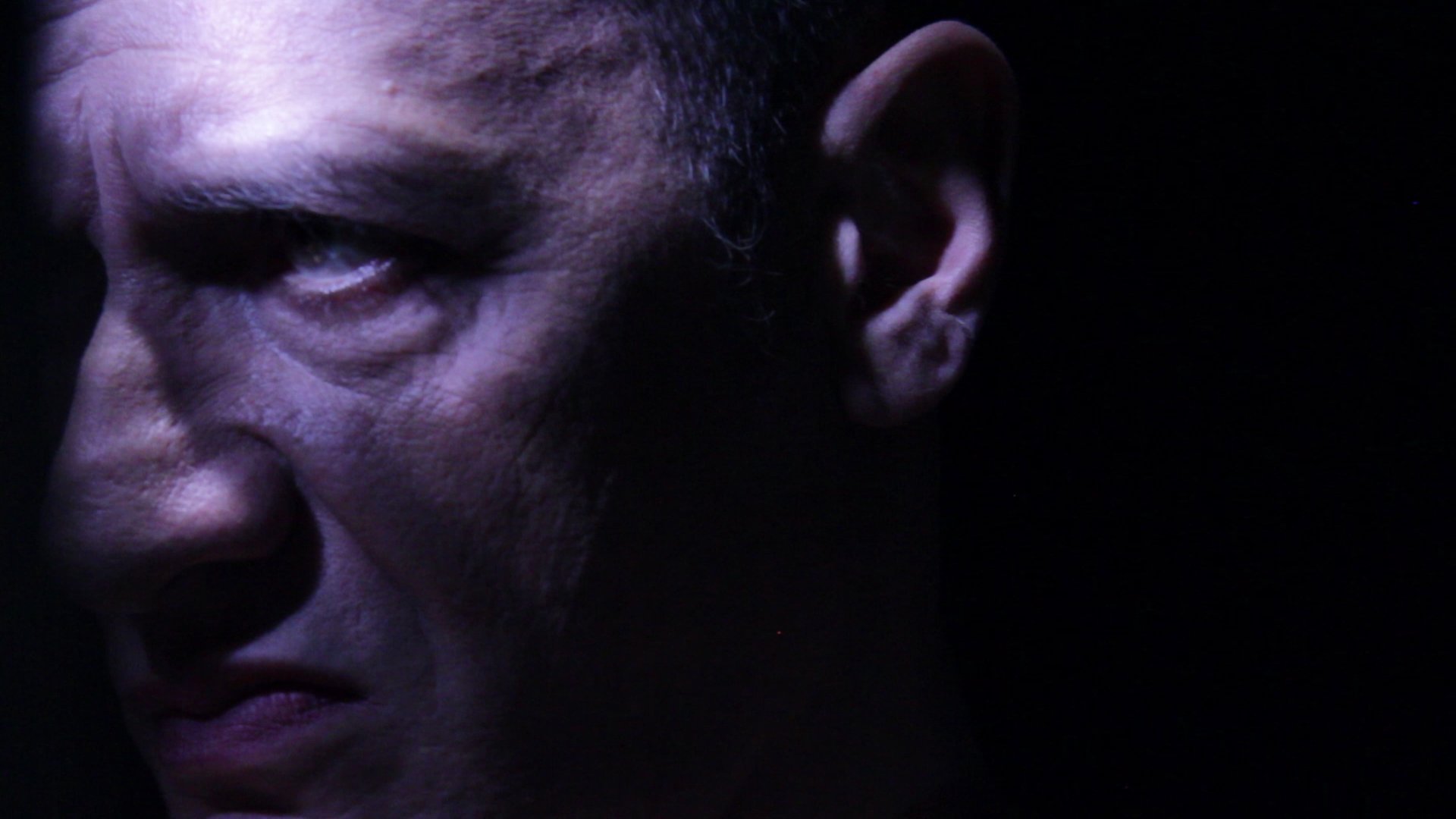
Drama film, by Valerio De Filippis, Italy, 2019.
The mirror and the rascal is an experimental film based on the tragedy "Richard III" by William Shakespeare. It tells the delirium of contemporary power in an author's reinterpretation of cinema, video art and music. The protagonist, Richard Duke of Gloucester, brother of King Edward IV, through a long series of crimes eliminates all the obstacles that stand between him and the throne of England.
Valerio de Filippis, a well-known painter who has been following his research path for a long time, investigating the relationship between light, corporeality and the psyche. The mirror and the rogue and the cinematographic equivalent of Valerio De Filippis' painting, his figurative style is in fact very recognizable looking at his paintings. But cinema is a new way where the artist can also be involved as an actor and performer, with an original mix between acting and singing. Staging the dark side of the human soul, the film is a surreal and disturbing interpretation of a great classic. The director says: "The first suggestion was musical: I was interested in transforming the text of Shakespeare's tragedy Richard III into notes. I love cinema and at a certain point I felt that the time had come to combine research on the image of painting to my love for cinema and music. When the film is finished I realize that I have remained faithful to painting: every frame of the film appears to me like a painting: the same light, the same colors, the same atmosphere ". The mirror and the rascal is a kind of psychoanalytic session that the painter does while hiding behind the mask of Richard III. Behind this ferocious and unscrupulous character we find a path of self-analysis by De Filippis, who is mainly interested in the more violent and turbid aspects. An experimental film in which, with great courage, the author gets involved completely, fragmenting the images in an unconventional montage, which is at the same time a flow of consciousness and spectacle.
LANGUAGE: English
SUBTITLES: Italian
Before It Had a Name, It Had a Body
There is something almost violent about the moment a name arrives for something that has always existed. Before William James wrote the word “stream” in 1890, the interior life of human beings did not suddenly become more chaotic, more associative, more contradictory — it had always been that way. What changed was only that someone had looked directly at the flood and refused to call it a river.
James’s formulation in The Principles of Psychology was deceptively simple: consciousness, he argued, does not proceed in units, does not arrive in discrete packets of thought neatly separated from one another. It flows. It doubles back. It carries debris from years ago alongside the perception of a sound happening right now. The word “stream” was not a metaphor chosen for elegance — it was a weapon aimed at the dominant epistemological assumption of his era, which held that the mind was essentially a logical machine, that thought followed thought the way a syllogism follows its premises. James called that model a fiction, and he was right to be furious about it.
Three years before James published his landmark work, a French writer named Édouard Dujardin had already built a novel entirely from the inside of a skull. Les Lauriers sont coupés, published in 1887, was largely ignored — partly because it was ahead of its moment, partly because Dujardin himself was not yet the kind of name that carried weight. The novel follows a young man through a single evening in Paris, and it does so without ever stepping outside his consciousness to offer the reader the comfort of an external narrator. There is no one standing above the material, organizing it, assuring you that events are proceeding in a meaningful sequence. You are inside, and inside is where sequence dissolves.
Joyce would later credit Dujardin directly for the technique he deployed in Ulysses — that massive eruption of 1922 that made the single day of an ordinary man in Dublin into something that felt more like geological time than chronological time. But what Joyce did with the method, and what Virginia Woolf did in Mrs Dalloway three years later, and what William Faulkner compressed into the broken, layered voices of The Sound and the Fury in 1929, was something beyond technique. It was a philosophical insurrection. Each of them understood, with different degrees of explicitness, that the tidy narrative arc — event, consequence, resolution — was not a neutral form. It was an ideology. It encoded a particular vision of what human beings are: rational agents moving through time with purpose, their inner lives subordinate to the legibility of their actions.
The rupture these writers enacted said something simpler and more devastating: that is not what it feels like. That is not what it has ever felt like. The mind does not wait for the right moment to produce a relevant thought. It produces Clarissa Dalloway buying flowers for a party while simultaneously dying a partial death in memory, while simultaneously feeling the city around her as a kind of bodily extension of herself. It produces Benjy Compson registering the world not through language at all but through sensation and grief that has no timeline because grief does not respect timelines.
Naming the stream was itself a form of resistance — not against darkness or irrationality, but against the narrative convention that had for centuries quietly insisted the interior life was manageable, mappable, safe to represent in ordered sentences. What James named and what these writers bodied forth in prose was precisely the opposite of that: consciousness as the one place where the Western faith in neat causality simply cannot hold its ground.
And once you see that, you cannot unsee the violence of every story that pretends otherwise.

What the Novel Had to Break to Get There
There is something deeply political about a story that has a beginning, a middle, and an end. Not political in the pamphlet sense, not in the sense of parties and platforms, but political in the older, more dangerous sense: it tells you how reality is organized, and by telling you, it makes you believe it. The well-made novel of the nineteenth century — Trollope’s parliamentary arcs, George Eliot‘s moral resolutions, the entire Dickensian machinery of coincidence rewarded and vice punished — was not merely entertainment. It was a technology of reassurance. It confirmed that experience accumulates toward meaning, that identity holds its shape under pressure, that the self which begins a story is recognizably the same self that ends it. This is not an innocent claim. It is, in fact, one of the most consequential lies ever told in prose.
What Woolf understood, sitting with the manuscript of Mrs Dalloway in 1923 and 1924, was that the traditional protagonist was a social fiction before it was a literary one. The coherent character — the one who knows what he wants, moves toward it, and either achieves it or is instructed by his failure — mirrors the bourgeois subject of Enlightenment philosophy: rational, bounded, sovereign over his own inner life. She didn’t write an essay against this. She did something more disruptive. She let Clarissa Dalloway’s mind move the way minds actually move, and the prose had to break open to accommodate it. “She had a perpetual sense, as she watched the taxi cabs, of being out there, out, out, far out to sea and alone; she always had the feeling that it was very, very dangerous to live even one day.” That sentence does not advance a plot. It does not develop character in the Victorian sense. It dissolves the membrane between self and world, and in dissolving it, exposes how artificial that membrane always was.
William James had named the thing in 1890, in his Principles of Psychology, when he wrote that consciousness is not a chain of discrete thoughts but a river, or better, a stream — continuous, never exactly still, never quite the same water twice. But naming it and rendering it are entirely different acts. Faulkner rendered it by going further than any novelist had dared, which is to say he went into the mind of Benjy Compson and refused to translate. The Sound and the Fury opens in a place where time has already collapsed, where a thirty-three-year-old man experiences his sister’s departure from childhood and from the present as a single undifferentiated wound. The syntax does not stammer because Faulkner wanted to be difficult. It shatters because a coherent sentence, with its subject doing something to its object in an orderly sequence of tenses, would be a lie about how grief and damage actually inhabit a consciousness.
This is what the fracture costs, and what it wins. When you break syntax, you are not being experimental. You are refusing to let the form of language betray what language is supposed to be conveying. The psychoanalyst Christopher Bollas wrote about the “unthought known” — experience that is registered in the body and the nervous system before it ever reaches articulate thought, knowledge that we carry without knowing we carry it. The stream-of-consciousness novel was the first literary form built to house this. Not to explain it, not to resolve it into meaning, but to give it the same page space that plot had always monopolized.
And the reader who encounters this for the first time feels something odd: not confusion exactly, but a kind of vertiginous recognition. Because you have always lived this way. You have always thought in fragments and associations and time-jumps and the inexplicable return of a smell or a voice at the exact wrong moment. What you have never been told is that this is what experience actually is, and that the orderly story was never describing your life.
The Camera That Could Not Look Away
There is a man walking through a city, and the camera refuses to let him simply walk. It follows him with a kind of obsessive fidelity, not to his body but to his attention, and his attention is everywhere at once. A woman crossing the street ahead of him becomes, for a fraction of a second, someone he once loved — and the editing does not mark this transition with any formal signal, any dissolve or fade to indicate that we have left the present. We have not left the present. That is the entire point. The woman on the street and the memory of the other woman occupy the same moment, the same weight, the same ontological register. The image does not distinguish between what is happening and what is being remembered because the man’s mind makes no such distinction either.
This is not a stylistic flourish. This is a discovery about what time actually is.
Henri Bergson spent a significant portion of his philosophical life arguing against what he called the spatialization of time — the common tendency to think of duration as a sequence of discrete moments laid out like beads on a string, each separate, each following the last in orderly procession. In his 1889 dissertation, later published as Time and Free Will, he introduced the concept of durée, lived duration, insisting that consciousness does not move through time the way a hand moves across a clock face. It pulses, accumulates, folds back on itself. Past and present are not positions. They coexist, continuously, in the same living instant. The man on the street is not remembering the woman he loved. He is, in the most precise sense Bergson could offer, experiencing her again — because she never entirely stopped.
Gilles Deleuze, writing in Cinema 2: The Time-Image in 1985, found in certain filmmakers what he believed Bergson had intuited but could not fully demonstrate: that cinema, uniquely among art forms, had the technical capacity to show time as it is actually lived rather than as it is conventionally narrated. He called these time-images, and he distinguished them sharply from movement-images, the dominant mode of Hollywood storytelling where cause precedes effect and the past is always safely past. In the time-image, he argued, the distinction between the actual and the virtual — between what is present and what is remembered, imagined, or anticipated — begins to collapse. Not because the director has lost control, but because they have achieved something closer to precision.
The camera following that man through the city achieves exactly this. It is not telling a story about memory. It is enacting the structure of a mind that cannot experience the present without it being simultaneously saturated with everything that has formed it. A doorway he passes carries the ghost of a different doorway. A particular quality of afternoon light does not remind him of something — it is that something, pressing forward into the now with all its original weight. Neuroscientists studying episodic memory in the early twenty-first century would eventually produce data suggesting precisely this: that the hippocampal processes involved in recalling past events are structurally identical to those involved in perceiving the present, which is why traumatic memory can feel more real than reality, and why grief can make a city feel haunted by someone who is no longer in it.
What these filmmakers found, intuitively, through the pressure of form rather than through laboratory conditions, is that the mind is not a sequence. It is a simultaneity. The editing that refuses to stabilize time is not experimental in the sense of being strange or difficult. It is experimental in the original sense: it is testing something, running a controlled demonstration of what looking honestly at a single moment of human consciousness actually requires.
The Self as Unreliable Narrator of Its Own Life
You catch yourself mid-sentence sometimes, explaining something to someone else, and realize you have no idea where the words came from. They arrived fully formed, already grammatically correct, already persuasive, and you claimed them as your position only after they left your mouth. The “you” that spoke was not consulting some inner parliament before acting. It was discovered in the act of speaking, assembled by the speech itself.
This is not a metaphor. Antonio Damasio spent years mapping the neuroscience of consciousness and arrived at something that should have been more disturbing than it turned out to be. In The Feeling of What Happens, published in 1999, he argued that the self is not a stable entity that generates experience but a narrative construction that the brain performs continuously, after the fact, to create the impression of a unified subject. The “I” that seems to be living your life is something the brain produces in real time to make sense of processes it did not consciously initiate. You are, in Damasio’s framework, something closer to a story the body tells itself than a mind steering a body from above.
Stream of consciousness literature understood this before the neuroscience could confirm it. What Woolf and Joyce and Faulkner discovered through the discipline of extreme attention to interior language was that the voice narrating from inside is not the author of what it narrates. It is a character who arrives slightly too late, who finds events already unfolding, who must interpret rather than direct. The stream does not belong to the self. The self belongs to the stream.
There is a woman standing in front of a bathroom mirror. She has been staring for several minutes. Her interior voice is producing confident assertions about who she is, what she wants, what she has decided. The voice is fluent, self-aware, articulate in the particular way of someone who has learned to perform interiority convincingly even to herself. And yet every visible thing about her contradicts what the voice is saying. Her posture is that of someone waiting for permission. Her eyes do not confirm the declaration of certainty. Her hands are doing something involuntary, touching her own face with a tentativeness the narrating voice would never admit to. The gap between what she thinks she is narrating and what her body is silently living is not a moment of dramatic irony inserted for an audience. It is the ordinary condition of being a self at all.
William James, who coined the phrase “stream of consciousness” in 1890 in his Principles of Psychology, described consciousness not as a thing but as a process, specifically as something that flows rather than accumulates in fixed units. He was trying to capture the continuity and the selectivity of mental life, the fact that attention moves and shifts and backtracks. But embedded in that image of flow is a question James did not press hard enough: who is the one watching the stream? If consciousness is a river, the self that observes it cannot be standing on the bank, because the bank is also part of the water.
Jean-Paul Sartre wrote in Being and Nothingness that consciousness is always consciousness of something, never a thing in itself, never an object it can grasp directly. The self that tries to know itself must always catch itself from behind, already in motion, already committed to something it chose before awareness arrived to supervise the choice. This is not a philosophical curiosity. It is the mechanism by which people repeat the same patterns while genuinely believing they are acting freely, how someone can narrate themselves as decisive while their hands betray hesitation to the only mirror willing to hold still.
The stream of consciousness technique in literature is precise about this betrayal. It does not show a mind in control of language. It shows language in control of a mind that has not yet realized the distinction.
A vision curated by a filmmaker, not an algorithm
In this video I explain our vision
When Society Demands a Coherent Story
There is a particular kind of exhaustion that comes not from living your life but from narrating it. You feel it in job interviews, in therapy intake forms, in the way someone at a dinner party asks how you ended up doing what you do, and you watch yourself assembling the answer in real time — selecting, sequencing, smoothing over the gaps — until what comes out sounds like a story with a beginning, a turning point, and a lesson learned. The self you present is coherent. It has direction. It has earned its conclusions. And somewhere underneath that performance, the actual texture of how you became who you are sits untranslated, too tangled and recursive and contradictory to survive the telling.
This is not accidental. The demand for a coherent life story is one of the most successful ideological operations in modern Western culture, and it has a very specific origin point. When Wilhelm Meister wandered through Goethe’s 1795 novel learning from his mistakes, accumulating experience, and arriving finally at social belonging, he was not simply a character. He was a template. The Bildungsroman — that form which tracks a protagonist from confused youth to integrated adulthood — did not merely reflect how lives were shaped in bourgeois Europe. It trained readers to expect that shape, to recognize it as natural, to feel that a life without that arc was somehow incomplete or failed. Franco Moretti, in The Way of the World published in 1987, argued precisely this: that the genre performed a kind of ideological labor, reconciling the individual to the social order by making that reconciliation feel like personal growth. You do not submit to the system. You mature into it.
The violence of this is subtle because it wears the face of development. By the time Freud was constructing the talking cure in the 1890s, the assumption was already deeply embedded that the healthy psyche was a narrable one — that making sense of your past, stringing it into causality and meaning, was itself the work of sanity. Michel Foucault would later identify in Discipline and Punish, published in 1975, the broader mechanism: modern power does not primarily coerce. It produces subjects who monitor and narrate themselves, who internalize the demand for legibility. The confession, the case history, the curriculum vitae — these are all versions of the same technology.
What stream of consciousness literature and cinema do, structurally and politically, is refuse to deliver a self that fits this technology. A man stands in a Dublin street letting his mind move through sensation and memory and fantasy and hunger without subordinating any of it to a lesson. A woman drifts between a present conversation and the insistent pressure of a past she cannot resolve, and the text refuses to decide which is more real. These are not stylistic choices made for difficulty or prestige. They are acts of non-compliance. The self rendered in interior monologue cannot be easily governed because it cannot be easily summarized. It resists the intake form. It would fail the job interview. It cannot be conscripted into a narrative of progress because it does not believe, at the level of its own syntax, that progress is the shape of experience.
This threatens something real. A population that cannot produce a coherent account of itself is harder to market to, harder to mobilize, harder to hold responsible within systems designed for legible subjects. The advertising industry requires a self with stable desires and an aspirational trajectory. The state requires a citizen with a history that can be verified and a future that can be predicted. Even the therapy industry, for all its genuine care, often works toward the same end: the well-narrated life, the integrated story, the wound with a name and a sequence.
What stream of consciousness insists on is that the wound may have no clean sequence, and that this is not pathology.
The Violence of Being Understood Too Quickly
There is a particular kind of exhaustion that arrives not from being misunderstood but from being understood too quickly, too cleanly, too confidently by someone who has not earned the right to your interior. Someone looks at you across a table and says, “I know exactly what you mean,” and something in you recoils, contracts, goes quiet in a way that has nothing to do with gratitude. Because what they understood was the translation, the surface-level emission of a signal that had to pass through so many lossy compressions before it reached the air between you that what arrived bore almost no resemblance to what departed. And you smiled and nodded, because what else do you do with someone who has just reduced you to a comprehensible sentence.
This is the wound that stream of consciousness keeps returning to press, not gently. It is not interested in dramatizing the grand failures of communication — the screaming matches, the final declarations, the slammed doors that cinema loves so much because they are legible, because they resolve. It is interested in the quieter violence: the moment two people sit in the same room and one of them realizes, with a cold and settling certainty, that the gap between what they are experiencing and what they are capable of expressing is not a technical problem but a structural one. That no amount of better words would close it.
Wittgenstein wrote in the Tractatus Logico-Philosophicus, published in 1921, that the limits of my language mean the limits of my world. He meant it with the austerity of a logical proposition, but lived from the inside it becomes something closer to a sentence. If you cannot say it, it does not exist in the shared world. It exists only in the sealed interior, pressing against walls that language built and language maintains and language will not dissolve simply because you need it to.
There is a scene — two people, a long silence at a kitchen table, coffee going cold, and between them an entire war that neither can name because naming it would require agreeing on what it is, and they do not agree, they cannot agree, because they are not fighting about what appears to be on the surface. The silence is not empty. It is unbearably full. It contains years of accumulated translation failures, every moment when one of them offered the approximate word and the other accepted it as exact, every substitution that seemed close enough and was not. What passes between them in that silence means everything and nothing simultaneously, because meaning requires at least two points of contact and they have both retreated so far behind their respective interiors that the gap is now topographical.
Stream of consciousness, in its most honest formal ambition, is an attempt to smuggle the unspeakable past the border that Wittgenstein identified but did not mourn. Where conventional narrative compresses inner experience into legible event — she felt betrayed, he understood too late — the stream refuses the compression. It gives you the associative cascade before the feeling is named, the sensory fragment before the emotion is assigned its social label, the thought that arrives sideways and departs without resolving because actual thinking does not resolve, it continues, it interrupts itself, it circles back with different weather.
Virginia Woolf understood this as a formal problem with ethical stakes. To render consciousness accurately was to refuse the violence of premature legibility. Mrs. Dalloway, published in 1925, does not tell you what Clarissa feels. It places you inside the movement of feeling before it has been translated for external consumption, which means before it has been slightly falsified, as all translation slightly falsifies.
And so the reader of a stream-of-consciousness text is put in an unusual position. They are not being understood. They are being shown what understanding costs, and what it leaves behind when it moves on satisfied with itself, certain it has arrived.
The Stream Does Not Stop When the Page Does
There is a sound happening right now beneath these words. Not the words themselves, but the layer underneath them — the half-formed thought about something you need to do later, the residue of a conversation that ended badly three days ago, the small physical awareness of where your body is sitting, the question of whether you are actually reading or merely scanning. This is not metaphor. This is the condition in which you are receiving every sentence on this page, and it has always been the condition in which human beings receive everything. The stream does not pause for the text. It runs beneath it, around it, sometimes drowning it entirely.
William James named it in 1890 in his Principles of Psychology, that continuous flow of thought he called the stream of consciousness, and what he meant was not a literary technique but a biological fact. Thought is not a sequence of discrete beads on a wire. It floods, it doubles back, it arrives already contaminated by what came before. Woolf understood this. Joyce understood this. What they built on the page was an attempt to honor the actual texture of being inside a mind rather than reporting on it from outside. The attempt was always partial, always a translation, always a compression of something that cannot be fully rendered. But the attempt was honest about its own impossibility, and that honesty was the thing that made it feel like recognition.
What is happening now is different. The algorithmic feed has studied the stream. It has mapped its associative logic, its hunger for the incomplete, its tendency to latch onto the emotionally charged image before the rational one, its preference for novelty and unresolved tension. It has built an interface that mimics the movement of thought without containing any. The scroll is designed to feel like consciousness because consciousness is what it has reverse-engineered. The jump from image to text to outrage to nostalgia to advertisement to grief to humor reproduces the texture of the associative mind while systematically evacuating the interiority that gives association its meaning. You are handed the rhythm of your own thinking as a delivery mechanism for something that has nothing to do with you.
Byung-Chul Han, in The Transparency Society published in 2012, wrote about how late capitalism produces a compulsive positivity, a demand for constant exhibition that destroys the negativity necessary for genuine thought. But what has arrived since is more precise than that. It is not just the demand to exhibit. It is the simulation of depth. The feed does not ask you to perform thinking. It performs thinking for you, in your own associative idiom, personalized to your specific triggers, and then presents the result as if it were the movement of your own interior life. The stream appears to be flowing. But you are standing still.
Proust spent fifteen years writing a novel in which a man attempts to recover the truth of his own experience against the falsifications of habit and social performance. The madeleine is famous, but what matters is not the image. What matters is the argument beneath it: that the self is always leaking away from its own present moment, and that genuine consciousness requires an almost violent act of recovery. What he could not have imagined was a technology that intercepts the leak before the recovery can begin, that offers the sensation of involuntary memory without the labor of actually having lived through something.
The stream has always been the most honest thing about being human, the proof that consciousness is not a position but a passage, not a thing you have but a movement you are inside. And now something outside the human has learned to speak in its rhythm, to replicate its logic, to arrive in the voice of your own interior before you have had the chance to hear yourself think. The question is not whether you can reclaim the stream. The question is whether you can still recognize, in the noise of everything that imitates it, which current was ever actually yours.
🌊 The Inner Flow: Mind, Memory, and Narrative
Stream of consciousness is more than a literary technique — it is a philosophy of perception, a way of mapping the uncharted waters of subjective experience. From Virginia Woolf’s fluid prose to the fragmented rhythms of avant-garde cinema, this mode of expression dissolves the boundaries between thought, time, and sensation. The articles below offer essential context for understanding how the inner life has been rendered visible across art and culture.
Virginia Woolf: Life and Works
Virginia Woolf is perhaps the defining figure of stream of consciousness in literature, transforming the novel into an instrument for capturing the ebb and flow of inner life. Her works dissolve conventional plot in favor of sensory impressions, fleeting thoughts, and the layered texture of memory. Understanding her life and aesthetic vision is indispensable for anyone exploring this narrative mode.
GO TO THE SELECTION: Virginia Woolf: Life and Works
The Unconscious and its Relationship With Cinema
The relationship between the unconscious mind and cinema reveals how filmmakers have long sought to replicate the non-linear, associative logic of interior experience on screen. From surrealist montage to the dreamlike sequences of auteur directors, cinema becomes a mirror of the psyche’s hidden architectures. This article traces that profound dialogue between psychological theory and moving images.
GO TO THE SELECTION: The Unconscious and its Relationship With Cinema
Paul Ricœur: Life and Philosophy of Memory
Paul Ricœur’s philosophy of memory offers a rigorous framework for understanding how consciousness reconstructs the past through narrative — a process central to stream-of-consciousness writing. His exploration of time, identity, and recollection illuminates why the literary interior monologue feels simultaneously personal and universal. Ricœur’s thought bridges phenomenology and storytelling in ways that resonate deeply with both literary and cinematic practice.
GO TO THE SELECTION: Paul Ricœur: Life and Philosophy of Memory
The Avant-Garde Cinema: Movies to Watch
Avant-garde cinema has consistently pushed the boundaries of narrative time and subjective perception, making it the natural cinematic heir to stream-of-consciousness literature. Films in this tradition reject causal storytelling in favor of sensory immersion, associative editing, and the representation of thought itself as spectacle. This curated selection guides viewers through the essential works that defined this radical approach to the moving image.
GO TO THE SELECTION: The Avant-Garde Cinema: Movies to Watch
Explore the Cinema of the Inner World on Indiecinema
If stream of consciousness has awakened your hunger for cinema that dares to go inward, Indiecinema’s streaming platform offers a curated world of independent and experimental films that explore the depths of human subjectivity. From meditative slow cinema to daring narrative experiments, you’ll find works that think, feel, and remember alongside you. Join Indiecinema and discover a different way of watching — and being.
👉 EXPLORE THE CATALOG: Watch Indie Films in Streaming
A vision curated by a filmmaker, not an algorithm
In this video I explain our vision

