
The Weight of a Stone Underfoot
There is a moment, crossing the threshold of an old church or stepping into a piazza whose stones have been worn concave by five hundred years of footfall, when something shifts beneath you that has nothing to do with balance. The floor gives slightly — not structurally, but perceptually. You feel, in the soles of your feet before the thought reaches your mind, that you are walking across accumulated time, that the material beneath you has been shaped by an almost biological pressure, the slow insistence of human bodies moving through the same space across generations. The stone has learned the shape of people. And for a fraction of a second, before the tourist’s instinct reasserts itself, before you raise the camera or consult the guidebook, you have the uncanny sensation that the building is telling you something.

That sensation is not mysticism. It is not the residue of religious feeling or romantic projection. It is, if you are willing to stay with it rather than photograph it away, a form of reading. What you are encountering is a text written not in language but in material decision — in the choice of this stone over that one, in the depth of this carved relief, in the way light enters through an arch whose proportions encode a particular understanding of what human beings are and what they deserve. John Ruskin understood this with a ferocity that modern architectural theory has spent a century and a half trying to either dismiss or domesticate.
Published between 1851 and 1853, The Stones of Venice arrives not as a history of Venetian architecture but as something closer to an autopsy and a warning. Ruskin was thirty-two when the first volume appeared, already the most famous art critic in England after Modern Painters, and already convinced that the way a civilization builds is inseparable from the way it thinks about labor, value, and the human soul. The book runs to three substantial volumes, hundreds of pages of measurement, theological argument, aesthetic close-reading, and moral polemic, all organized around a central claim that most of his contemporary readers found either inspiring or unhinged: that the decline of Venice was not a political or economic event but an architectural one, that it could be read in the stones themselves, and that England, in the industrial middle of the nineteenth century, was committing the same error.
That error, in Ruskin’s diagnosis, was the separation of thinking from making. The moment a civilization decides that the worker who executes a design need not understand it — need not bring to it any personal intelligence, any deviation, any sign of individual human variation — it has made an architectural choice that is simultaneously a moral one. The perfectly smooth surface, the mechanically reproduced ornament, the column capital that looks identical to every other column capital in the building: these are not stylistic preferences. They are confessions. They testify to what a society believes about the people it employs and, by extension, about the people it governs.
Most of us move through buildings the way we move through language we have forgotten we learned — fluently, unconsciously, missing almost everything. We have been trained to look at architecture as backdrop, as atmosphere, as the scenery through which the actual drama of life is conducted. Ruskin’s intervention, and it remains one of the most radical interventions in the history of aesthetics, was to insist that the backdrop is the drama, that what is built around us is not neutral, that the stones underfoot are making an argument whether or not we are equipped to hear it.
The question that The Stones of Venice poses, and that we have not answered, is whether we have lost the capacity to read that argument — or whether we have simply decided, for reasons we prefer not to examine, to stop trying.
Venetian Arcanum
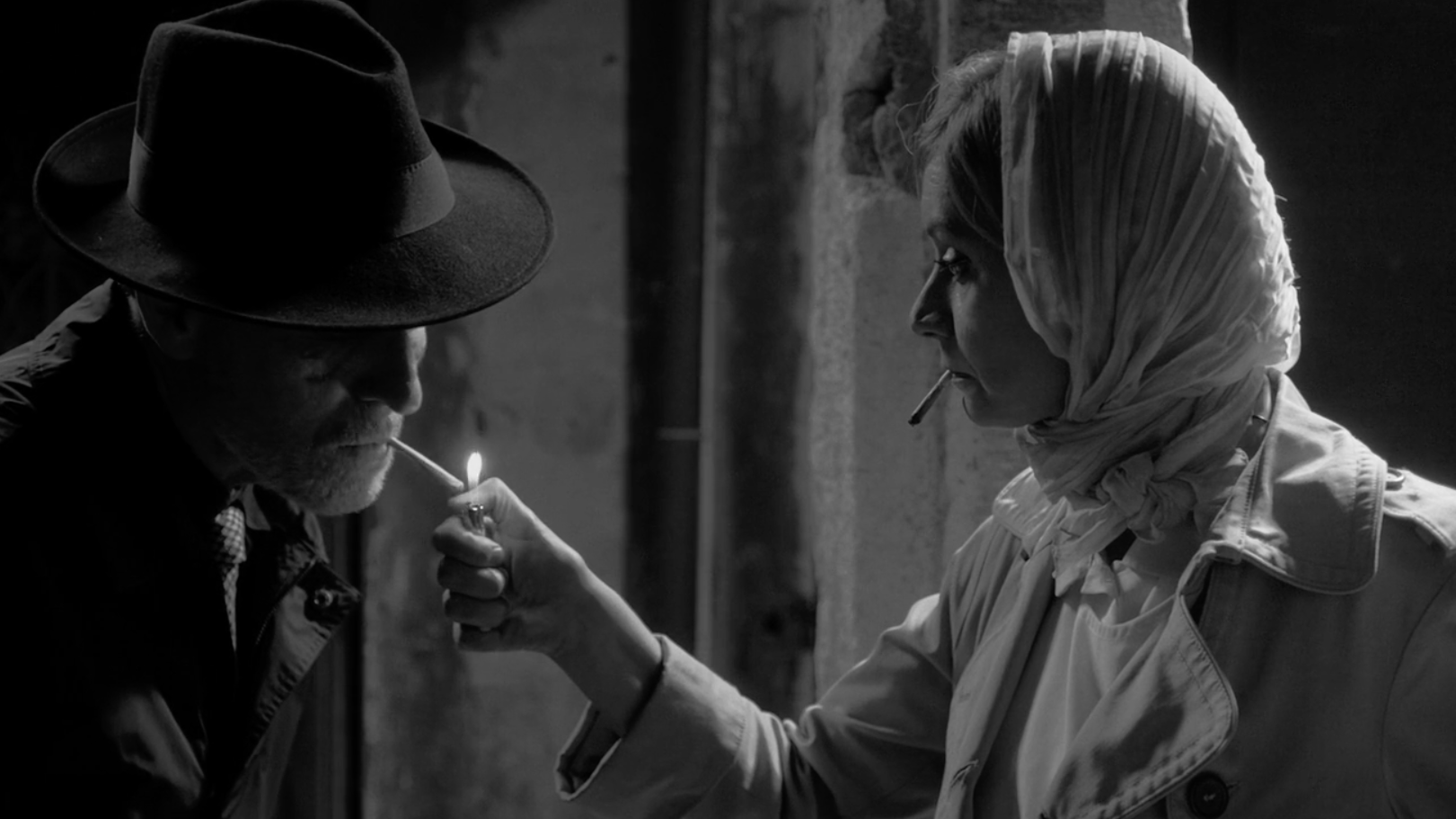
Thriller, by Serge Turgeon, Italy, 2025.
In Venice, a mysterious presence appears once every century or two, haunting the canals and hidden corners of the city. Driven by a sense of destiny, a woman decides to search for it. Following its elusive traces, she is drawn deeper and deeper into the city’s arcane secrets. Reality and myth begin to blur, and Venice itself transforms into a labyrinth of dangers.
LANGUAGE: Italian
SUBTITLES: English
Ruskin’s Venice as a Crime Scene
He arrived with measuring tape and sketchbooks, not with the romantic gaze of a tourist. The year was 1849, and John Ruskin was thirty years old, already constitutionally unable to look at anything without wanting to account for it with a precision that bordered on obsession. Venice was sinking — not metaphorically, not yet, but architecturally, institutionally, stone by stone — and Ruskin sensed that he was watching something disappear before anyone else had noticed it deserved to be saved. He spent months there, and then returned, and then returned again, measuring cornices with the seriousness of a forensic examiner cataloguing wounds. His wife Effie wrote letters home describing a man who could spend entire days on a single capital, crouching in the damp shadow of a loggia, drawing what no one else thought worth drawing.
This is not the behavior of a critic. It is the behavior of someone who believes a crime has been committed and is determined to reconstruct it from the physical evidence left behind.
The three volumes of The Stones of Venice, published between 1851 and 1853, are the result of that obsession. They run to nearly fifteen hundred pages across their complete form. They contain appendices of architectural measurements so detailed that modern restoration teams have used them as primary documentation. They also contain some of the most ferocious cultural diagnosis written in the nineteenth century, delivered in prose that moves between the register of a sermon and the register of a police report. Ruskin himself described his method as reading buildings the way a geologist reads rock strata — each layer of stone encoding not just aesthetic choices but moral ones, not just the taste of an era but its entire relationship to labor, faith, and collective meaning. The building does not lie. The building cannot lie. It holds the truth of the civilization that raised it, even when every other document has been lost or falsified.
What Ruskin was doing, before the vocabulary existed to name it, was what Michel Foucault would later call archaeology — the excavation of epistemic structures buried beneath surfaces that seem natural, inevitable, decorative. Foucault’s archaeology sought to uncover the hidden rules governing what a culture could think and say. Ruskin’s was more tactile, more intimate: he was uncovering the hidden rules governing what a culture could build, and therefore what it could feel. The two projects are not as different as they appear. Both proceed from the conviction that surfaces are not superficial. That the visible carries the weight of everything invisible that produced it.
The organizing thesis of the work was announced without apology: the fall of Venetian architecture was the fall of Venetian virtue, and the fall of Venetian virtue was caused by a specific historical event — the Renaissance. Not the Renaissance as liberation, as the standard nineteenth-century narrative celebrated it, but the Renaissance as catastrophe. As the moment when craftsmen stopped thinking and started executing, when the individual imagination of the worker was subordinated to the abstract correctness of the design, when Gothic freedom was replaced by classical tyranny. Ruskin dated this fall with the precision of a coroner establishing time of death. The year 1418, he argued, marked the beginning of the end. The Ducal Palace’s Porta della Carta, completed in 1442, was among the last true expressions of the Gothic spirit. Everything after was, to varying degrees, evidence of the crime.
To read this argument now is to feel the full strangeness of Ruskin’s position. He was writing in the middle of industrial England, surrounded by factories that were doing to living workers exactly what he claimed the Renaissance had done to Venetian craftsmen centuries before. The autopsy was not really about Venice at all.

The Lamp That Burns the Architect
There is a moment you may recognize: someone places before you an object of extraordinary craft — a carved doorframe, a hand-thrown bowl with a slight warp in its lip, a cathedral façade where no two leaves in the stone foliage are identical — and you look at it, and you feel almost nothing. Not hostility, not boredom exactly, but a kind of atmospheric blankness, as though the object is emitting a frequency your nervous system has been quietly recalibrated to ignore. You nod. You say something about the detail. You move on. This is not stupidity. This is training. And Ruskin, writing in 1853, was already performing the autopsy on the body that had not yet finished dying.
The chapter he placed at the heart of his second volume — the one that would be extracted, reprinted, handed to labor organizers, read aloud in working men’s institutes across Britain — is not, despite its architectural subject, primarily about buildings. It is about what happens to a human being when they are required to produce without inventing, to repeat without deciding, to make without thinking. He called it, with a precision that still cuts, the degradation of the operative into a tool. Not a metaphor. A clinical observation about what the division of labor actually does to the person divided.
What Ruskin saw in Gothic — in its asymmetries, its grotesque capitals, its figures with misshapen hands and faces that don’t quite resolve into classical proportion — was not failure. It was evidence. Evidence that the man who carved the stone was present in the carving, that his uncertainty was recorded there, that his particular and unrepeatable way of seeing a leaf or a face had been permitted to survive in the material. The imperfection was the signature of a consciousness. And this, he argued, was not incidental to Gothic architecture’s beauty. It was the source of it. You were not looking at a finished product. You were looking at a record of human effort that had been allowed to remain human.
The philosopher who would later give this intuition its sharpest theoretical edge was William Morris, but the wound was Ruskin’s. And the diagnosis extended outward from stone into everything. Because what the industrial system had perfected, by 1853, was the elimination of exactly this residue. The smooth ceramic tile, the identically stamped iron railing, the glass panel with no bubble, no variation, no trace of the hand — these were not neutral improvements in technique. They were, in Ruskin’s framework, a form of erasure. The worker had been removed from the product. And then, almost inevitably, the capacity to read the worker’s presence in a product began to atrophy in the viewer as well.
This is the circuit that closes so quietly you barely hear it. A man is led through a room full of extraordinary things — chairs made by a single craftsman over months, joinery where the grain of the wood has been read and followed, textiles where the irregularity is the pattern — and he feels the absence of a response in himself as a personal failing, a gap in his education, a deficiency of taste. He does not consider that the feeling he cannot locate may have been methodically removed from him. That the training he received — in how to want things, in what constitutes quality, in what the relationship between a maker and a made object is supposed to feel like — was itself a curriculum with an agenda.
Marx, in the 1844 Manuscripts, described alienation as the condition of the worker estranged from the product of their labor. Ruskin’s contribution, the one that remains underread in the history of that idea, is the complementary diagnosis: the estrangement of the viewer from the product’s humanity. Both losses happen together. The numbness on your face when you stand before the carved stone is not a coincidence. It is the other half of the same wound.
The Craftsman’s Trembling Hand as Political Act
There is a man whose job is to attach the same small bracket to the same panel of a refrigerator, eight hundred times a day, five days a week, forty-seven weeks a year. His hands know the motion so completely that he can do it while thinking about something else entirely — and this, it turns out, is the precise catastrophe. The thing he makes does not know he exists. The refrigerator will arrive in someone’s kitchen carrying no trace of him, no hesitation, no evidence that a consciousness passed through its assembly. He has worked and left nothing of himself behind.
Ruskin would have recognized this man as a casualty of something he spent three volumes trying to name. The argument at the heart of The Stones of Venice is not primarily aesthetic, however much the critics of his time reduced it to taste. It is an argument about ontological presence — about whether a human being, in the act of making something, is permitted to exist inside that thing. When Ruskin looked at the carved capitals of the Ducal Palace, what moved him was not their perfection but their imperfection: the small asymmetries, the lines that waver, the ornament that does not quite repeat itself. These irregularities were, for him, the signature of a consciousness that had been allowed to remain conscious while working. The craftsman’s trembling hand was not a defect in the stone. It was a person.
He wrote, in the chapter he called “The Nature of Gothic,” that to banish imperfection is to banish the effort that produced the work, and that effort is the evidence of a soul. This is not metaphor. Ruskin meant it with the precision of a geologist reading strata: the mark left by an uncertain hand is a historical fact, the compressed record of a human being’s engagement with resistant material, with difficulty, with choice. To smooth it away, to standardize it into mechanical regularity, was to erase testimony. It was, in a very specific sense, to make the worker disappear.
What is extraordinary — and what history has largely failed to hold together in a single frame — is that Karl Marx, writing his Economic and Philosophic Manuscripts in 1844, arrived at an almost identical wound from the opposite direction. Ruskin never read Marx. There is no evidence Marx read Ruskin. They occupied different intellectual universes, different political vocabularies, different centuries in spirit even if not in calendar. And yet in Marx’s description of alienated labor — the worker who externalizes their life force into an object that then becomes alien to them, that confronts them as something hostile and independent — you find the same severing that Ruskin was describing in stone. For Marx, the product of labor becomes “an alien power over” the worker who produced it. The object absorbs the human and gives nothing back. What the hand touches, the system owns. What the mind imagined, the market anonymizes.
Think of a woman bent over a loom in a textile factory sometime in the 1840s, her fingers moving with inhuman speed across a pattern she did not design, producing a fabric she will never touch again once it leaves the frame. There is a moment where she looks up, briefly, at nothing in particular — not resting, not thinking, simply surfacing from the automatism for a second before the motion recaptures her. That moment of surfacing is exactly what Ruskin was trying to protect. That involuntary pause, that flicker of a person inside the labor, is what the system’s demand for regularity was designed to eliminate.
Both men understood that what was being lost was not beauty in any decorative sense. It was the capacity of work to bear witness to the worker. The trembling hand was not weakness. It was the last piece of evidence that someone had been there at all.
Venice as Mirror, Venice as Warning
There is a city you have walked through that felt wrong in a way you could not name. The streets were clean, the buildings intact, the cafes full. Nothing was missing. And yet something fundamental had evacuated the premises, the way a body can be technically alive while the person inside it has already gone somewhere unreachable. You kept looking for the source of the wrongness and found only surfaces that reflected your gaze back at you without depth.
This is what Ruskin diagnosed in Venice, and his diagnosis was not architectural. It was moral, which for him meant the same thing. The city did not fall because it was conquered or bankrupted or outmaneuvered on the trade routes, though all of those things happened. It fell because it stopped believing in its own language and began borrowing someone else’s. The precise moment he identifies is the early sixteenth century, when Venetian builders turned away from the Gothic forms that had grown organically from the city’s particular relationship with labor, faith, and material, and began dressing their buildings in the borrowed grammar of Roman classicism. The Doge’s Palace stands for him as the last great utterance of a civilization still speaking in its own voice. What came after was, in his word, corruption, not moral corruption in the simplified sense, but something closer to what happens when a culture begins performing itself rather than living itself.
Jean Baudrillard would arrive at a related conclusion four centuries later, though through different coordinates. In Simulacra and Simulation, published in 1981, he described a condition in which the copy precedes the original, in which representation no longer refers to any reality but only to itself. Ruskin was not writing semiotics, but he was describing the same rupture from the inside of a historical wound still warm. When Venetian craftsmen began reproducing Roman columns not because Roman columns expressed anything true about their own experience but because Roman columns signaled authority and civilization and prestige, they were no longer building. They were quoting. And a civilization that can only quote itself has already begun its long interior disappearance.
Think of a man who has spent twenty years in a marriage, performing the gestures of love so consistently and so correctly that he cannot locate the moment when performance replaced feeling. He brings flowers on anniversaries. He says the right things at the right times. From the outside, nothing is missing. From the inside, the whole architecture is hollow, and the hollowness has become so familiar it no longer registers as absence. Ruskin would recognize this man immediately. He spent three volumes explaining how an entire city became him.
What makes this unbearable as a diagnosis is that the imitation was not cynical. The Renaissance architects who turned Venice toward classicism were not frauds. They were genuinely convinced that they were elevating their culture, reaching toward something higher, more refined, more universal. This is perhaps the most devastating detail Ruskin offers: the corruption entered through the door of aspiration. Venice did not abandon itself in a moment of weakness or despair. It abandoned itself in a moment of ambition, convinced that the old forms were provincial and that the new ones were the future.
Contemporary culture performs this same movement with such speed that the interval between authentic form and its evacuation has compressed to almost nothing. A neighborhood develops a particular character, and before that character has fully formed, it is already being packaged and sold back to itself. A musical style emerges from a specific human condition, and within eighteen months it has been reproduced so many times by people who share none of that condition that the original is indistinguishable from its replicas. Venice took a century to hollow out. We have accelerated the process considerably.
A vision curated by a filmmaker, not an algorithm
In this video I explain our vision
What We Call Beauty and What We Mean by It
There is a moment when someone is made to stand in front of something they have been avoiding. Not a painting, not a monument — just a room. A room in a house they have lived in for years, seen every day, walked past without stopping. And then one day, for reasons that cannot quite be explained, they stop. They look. Really look. The peeling plaster along the baseboard. The watermark above the window that has been there since a storm three winters ago. The way the light falls on a wall that was painted the wrong color by someone who is no longer there. Their face, in that moment, does something involuntary. It does not soften into appreciation. It tightens, then opens, then goes still in a way that is closer to grief than pleasure. That is not the face of someone encountering beauty as we usually define it. And yet something true has entered them.
Ruskin’s argument in The Stones of Venice is built around exactly this kind of encounter, and its force depends on our willingness to accept that beauty has almost nothing to do with pleasure. What he proposes is more demanding and far less comfortable: that beauty is the visible expression of a living moral order, that it is inseparable from the conditions under which a thing was made and the kind of attention that was given to it. A smooth surface can be hideous. A broken one can be luminous. The difference is not formal. It is ethical, in the oldest sense of that word — concerning how a life was lived and whether the hands that made something were allowed to be human while they made it.
Simone Weil, writing in the early 1940s in her notebooks collected posthumously as Gravity and Grace, described attention as a form of love — not sentimental, not comforting, but rigorous, demanding, almost violent in its requirement that you see what is actually there and not what you wish were there. She was writing about prayer and about learning, but the structure she described is identical to what Ruskin demands of the person standing before a Gothic capital, before a Byzantine mosaic, before the Ducal Palace with its irregular colonnades and its frank, unashamed imperfection. To look at these things properly is not to admire them. It is to be altered by them. Weil’s attention evacuates the self so that something real can enter. Ruskin’s aesthetic theory requires the same evacuation.
Theodor Adorno, in Aesthetic Theory, published in 1970, the year after his death, argued that a work of art’s truth content is not its message or its beauty in any decorative sense, but the way it holds open a tension that the rest of culture tries to resolve or suppress. Art that truly works does not please; it disturbs the settled categories through which we make the world manageable. It has what Adorno calls a shudder — a moment of recognition that something is at stake that we had agreed, collectively, not to examine. Ruskin had no access to Adorno’s vocabulary and would have rejected much of his framework, but the structure of the claim is eerily similar: beauty that matters is beauty that costs something, that implicates you, that refuses to let you remain a spectator.
What we call beautiful in the consumer present is almost always familiar. It is the shape we have already seen, the surface that has already been validated, the design that tells us nothing we didn’t already expect. What we call ugly is often simply honest — the mark of a hand, the irregularity of a decision made in time, the evidence that something was made by someone who could fail. The word beautiful has been quietly emptied of everything Ruskin meant by it, and filled instead with the residue of repetition.
The Restoration That Kills
There is a canal in Venice where the plaster on a palazzo wall has been freshly repointed, the mortar a slightly different shade of cream than the stone beside it, and you stand there knowing immediately, without being able to explain why, that something has been murdered. Not damaged. Not altered. Murdered. The building is technically more intact than it was before the scaffolding went up. It will survive another fifty years. And yet the thing that made it speak — that particular silence of accumulated time, the way eight centuries of salt air and human proximity had written themselves into the surface — is gone. What remains is a facsimile. A very expensive, very well-intentioned lie.
Ruskin understood this with a ferocity that bordered on grief. In The Seven Lamps of Architecture, published in 1849, four years before The Stones of Venice was complete, he had already laid the philosophical groundwork for what would become one of his most radical arguments: that the age of a building is not incidental to its value but is its value. The Lamp of Memory illuminates this with extraordinary precision. He writes that the greatest glory of a building is not its architecture but its having stood for centuries. The stones do not merely record time passing — they are the passage of time, made material. To restore them is not to preserve that record but to erase it and substitute your own handwriting in its place. It is, in his terms, a lie from the first stone replaced to the last.
The Victorian impulse he was fighting against was not cynical. That is what makes his argument so uncomfortable even now. Eugène Viollet-le-Duc in France, the great restorer of Notre-Dame and Carcassonne, believed sincerely that he was saving what history had left incomplete — finishing what the medieval builders had intended, correcting what time had corrupted. Ruskin saw this as a category error of almost theological proportions. You cannot finish what someone else began across a gulf of six hundred years. The intention died with them. What you are finishing is yourself.
There is a scene that lives somewhere in the memory as though it actually happened to you: a woman moves through a grand house that has been meticulously restored to its eighteenth-century condition — every chair in its original position, every portrait rehung, every surface cleaned to a gleam that no eighteenth-century surface ever actually had — and she cannot feel it. The house is a tomb dressed as a drawing room. The curators have removed every trace of the people who suffered there, aged there, marked the walls with their living, and replaced it with an idea of what those people should have looked like from a comfortable historical distance. She walks through rooms that have been saved and understands she is walking through an erasure.
This is the paradox that Venice has become, and Ruskin could not have predicted it, though he predicted everything that made it inevitable. The city today is the most thorough monument to his thesis in the world. A population that stood at around 175,000 in the 1950s has fallen below 50,000 permanent residents, hemorrhaging at a rate of roughly two families a day through the 1980s and 1990s. What remains is infrastructure without metabolism. The buildings are preserved. The city is not. Heritage tourism, that vast and well-meaning industry, has achieved what centuries of floods and plague could not: the complete evacuation of ordinary life from the stones Ruskin loved precisely because ordinary life had saturated them.
Another scene surfaces, this one in an empty piazza at a hour when no tourist arrives — the light coming flat and grey across the water, a man crossing alone, his footsteps audible because there is nothing else, and you realize that the silence is not the silence of a living place at rest but of a place that has been curated into stillness.
The Sentence the Stone Is Still Speaking
There is a step worn hollow by feet that no longer exist. You have walked past it, or over it, perhaps hundreds of times without registering what it is: a biography compressed into stone, the accumulated pressure of lives that wanted something badly enough to erode the material world reaching toward it. The hollow is not damage. It is a sentence. And like most sentences written in materials rather than words, it has outlasted every person who contributed a syllable to it, waiting with the patience of the inanimate for a reader who might still arrive.
Ruskin understood that we live inside a library we have forgotten is a library. The walls of a city, the proportions of a window, the way a cornice meets the sky — these are not neutral decisions preserved in stone. They are arguments, compressed into calcium and silica, about what human beings believed they owed one another, what they thought the world was for, what kind of permanence they imagined was possible. The Stones of Venice, published in three volumes between 1851 and 1853, is above all an instruction in this kind of reading. Not the reading of texts but the reading of surfaces. Not interpretation but recognition — the visceral, almost anatomical recognition that a building is a moral document before it is anything else.
The philosophical thread running beneath this instruction was never merely aesthetic. Ruskin drew on a tradition that understood form as the externalization of inner life, but he radicalized it: the outer life of a society, its public surfaces, its shared architecture, tells you what the inner life actually is, not what it claims to be. John Stuart Mill, writing in roughly the same decade, worried about the tyranny of custom, the way inherited forms enforce compliance without anyone noticing the enforcement. Ruskin’s worry was adjacent but sharper: what happens when the forms themselves begin to lie, when the ornament is mechanically reproduced and therefore carries no human memory, when the surface is smooth because no living hand shaped it imperfectly? The lie becomes structural. The building stands, apparently fine, and the society inside it cannot quite locate the source of its own hollowness.
There is a man who walks through a city he built, or helped to build, or administered the building of, and he looks at the facades with something that is not pride and not shame but a kind of estrangement, as though the stone has stopped recognizing him. The glass is clean. The lines are exact. Everything is maintained. And yet something in the proportion, in the absence of shadow, in the refusal of the surface to bear any mark of contingency, produces in him a discomfort he cannot name. He is living inside Ruskin’s thesis without having read a word of it.
Walter Benjamin, writing nearly a century after The Stones of Venice, argued that every document of civilization is simultaneously a document of barbarism — that you cannot separate the monument from the labor, from the erasure, from the historical violence that made the building possible. Ruskin arrived at a parallel recognition from a different angle: every document of civilization is simultaneously a document of that civilization’s self-understanding, and that self-understanding can be generous or diminished, can honor the human hand or systematically deny it. The crack running through the wall that no one has repaired is not merely neglect. It is evidence that the relationship between the society and its own surfaces has become administrative rather than intimate.
What Ruskin produced in those three volumes was not a work of architectural criticism. It was a device for producing discomfort in readers who had learned to be comfortable inside a world that was quietly, structurally, building the wrong sentences. The discomfort has not been resolved. The stones are still speaking it.
🏛️ Stone, Beauty, and the Spirit of Architecture
Ruskin’s The Stones of Venice is far more than an architectural study — it is a moral and aesthetic meditation on how civilizations express their inner life through built form. These related articles explore the broader currents of cultural criticism, art theory, and the philosophy of heritage that give Ruskin’s work its lasting resonance.
Alois Riegl: Life and Theory of Conservation
Alois Riegl redefined how we think about the value of historical monuments, introducing the concept of ‘age-value’ that echoes Ruskin’s reverence for the patina of time on stone. His theoretical legacy shapes every modern debate about what we choose to preserve and why. Understanding Riegl is essential for anyone who wants to move beyond Ruskin into the full landscape of conservation philosophy.
GO TO THE SELECTION: Alois Riegl: Life and Theory of Conservation
Cultural Heritage Restoration: History and Methods
The history of cultural heritage restoration is inseparable from the moral arguments Ruskin made in The Stones of Venice, where he famously declared that restoration is the worst form of destruction. This article traces the long and contested evolution of methods and ideologies that govern how humanity tends to its architectural past. From Viollet-le-Duc to contemporary practice, the tension Ruskin identified has never been fully resolved.
GO TO THE SELECTION: Cultural Heritage Restoration: History and Methods
Medieval Art: History and Meaning
Medieval art provides the visual and spiritual context without which Ruskin’s analysis of Venetian Gothic cannot be fully understood. His argument that the medieval craftsman worked with a freedom and organic vitality denied to the industrial worker rests on a deep reading of medieval aesthetic values. This article offers a comprehensive foundation for grasping what Ruskin saw and mourned in the stones of Venice.
GO TO THE SELECTION: Medieval Art: History and Meaning
Spengler’s The Decline of the West: Analysis
Spengler’s The Decline of the West shares with Ruskin’s work a conviction that architecture is the supreme expression of a civilization’s soul, and that its decay signals a deeper spiritual exhaustion. Where Ruskin lamented the Gothic’s eclipse by Renaissance rationalism, Spengler constructed an entire morphology of cultures through their monumental forms. Reading the two together reveals a powerful tradition of cultural pessimism rooted in the philosophy of art.
GO TO THE SELECTION: Spengler’s The Decline of the West: Analysis
Discover Cinema That Thinks About Art and Civilization
If these ideas about beauty, memory, and cultural decline move you, independent cinema offers some of the most powerful visual explorations of the same themes. On Indiecinema streaming you will find films that question what we build, what we lose, and what it means to look deeply at the world around us — just as Ruskin did.
👉 EXPLORE THE CATALOG: Watch Indie Films in Streaming
A vision curated by a filmmaker, not an algorithm
In this video I explain our vision

