
The Examined Timetable
You wake up and the first thing you do is check your phone. Not for messages, not for news — for the time. You have already, before your eyes have fully adjusted to the light, begun measuring. The day has a shape you did not invent, and you are already falling slightly behind it. Breakfast must happen within a certain window. The commute has a known duration, and any deviation from it carries a small but genuine anxiety. You have optimized this. You have, over months or years, refined the sequence of morning actions into something approaching efficiency, and you experience this refinement as a form of personal achievement — the feeling that you are, at last, managing your life well. The invisible question, the one that does not announce itself, is who decided what managing your life well was supposed to look like.

This is not a trivial question, and it was not treated as one by John Stuart Mill, born in London on the twentieth of May, 1806, into a household that was itself a kind of experiment in human optimization. His father, James Mill, was a historian and philosopher and a devoted disciple of Jeremy Bentham, the architect of utilitarianism — the doctrine that the correct measure of any action is the greatest happiness of the greatest number. The younger Mill began learning Greek at three years old. By eight he had read the major dialogues of Plato in the original. By twelve he had worked through logic, political economy, and the Latin classics. There was no childhood in the ordinary sense, because childhood, in Bentham’s framework and in James Mill’s application of it, was simply an inefficiency — a period of unchanneled time that could be converted into productive capacity if the correct inputs were applied early enough. John Stuart Mill was, in this sense, the first scheduled person of the modern era, the prototype of an optimization project applied to a human being from birth.
What makes this biographical fact more than a curiosity is that Mill himself eventually recognized something had gone catastrophically wrong with it. In 1826, when he was twenty years old, he experienced what he would later describe in his Autobiography, published posthumously in 1873, as a mental crisis — not a breakdown in the clinical sense, but something more philosophically devastating. He looked at the entire structure of beliefs and purposes that had been installed in him, the utilitarian program, the measurable goods, the rational improvement of society, and felt nothing. The machinery was running, but there was no one inside it. He wrote with unsettling precision that if all the objects of his ambitions were fully realized, the realization would bring him no happiness. This was not depression as modern culture tends to use the word. This was the discovery that a life built entirely from the outside in — calibrated against external standards of productivity, social utility, and rational improvement — can hollow a person out completely, leaving a perfectly functioning schedule and nothing behind the eyes.
The recovery, if it can be called that, came not through philosophy but through poetry, specifically through reading Wordsworth, whose verse reintroduced Mill to something the optimization project had quietly eliminated: the experience of feeling something for its own sake, not as a means to a measurable end. This is worth sitting with, because what Mill was describing in that moment — and what he spent the next several decades trying to articulate in political and philosophical terms — was a structural problem, not a personal one. The emptiness he encountered was not a failure of character. It was the logical endpoint of a particular way of organizing a human life, one that measures time against productivity, action against consequence, and selfhood against usefulness to others.
You check your phone again. The morning is already seven minutes older than it should be.
Slow Life

Drama, comedy, thriller, by Fabio Del Greco, Italy, 2021.
Lino Stella takes a period of vacation from his alienating job to devote himself to relaxation and his passion: drawing comics. But he did not foresee certain disturbing elements: the intrusive administrator of the building where he lives, the postman who delivers crazy fines and tax bills, an overbearing security guard, a very enterprising real estate agent, the old lady downstairs who raises the feline colony of the condominium. These characters will make his vacation hell.
Food for thought
The larger a social group is, the more rules and bureaucracy are needed, which often do not respect the individual. You have to learn to live with annoying people, but sometimes the social pressure and arrogance can become intolerable. The only laws that always come to our aid are the laws of Nature.
LANGUAGE: Italian
SUBTITLES: English, Spanish, French, German, Portuguese
The Collapse That Became a Philosophy
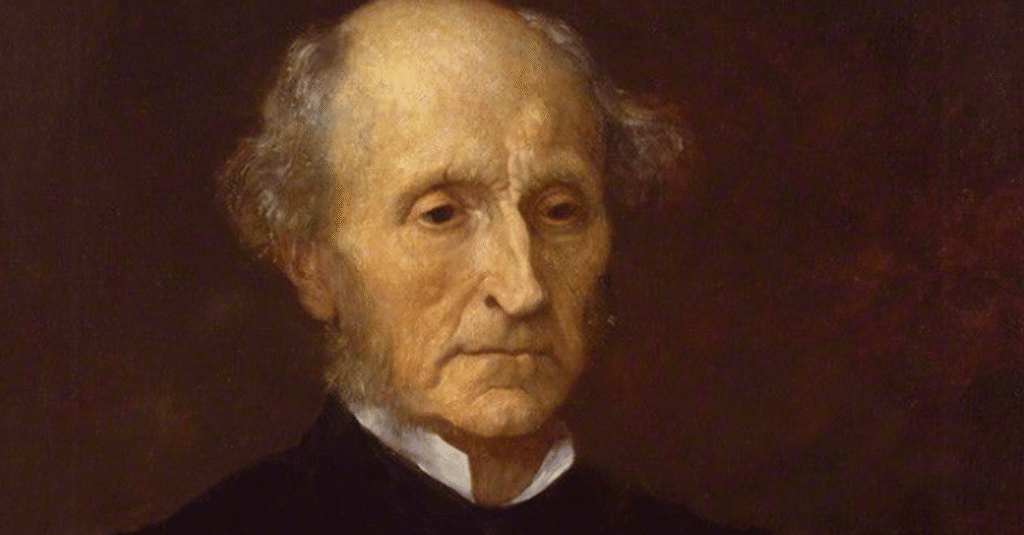
You already know the feeling, even if you have never had a name for it. You are doing everything right. You are productive, competent, admired by people who matter, moving efficiently through a life designed to generate the maximum measurable good. And then one morning you sit down and the machinery stops. Not dramatically. No collapse, no fever, no visible wound. Just a quiet and total absence where motivation used to be. The question arrives without warning: if I achieved everything I was trained to achieve, would it make any difference to me at all? For most people, that question fades by afternoon. For John Stuart Mill in the autumn of 1826, it did not fade for two years.
He was twenty years old. He had already completed the education James Mill and Jeremy Bentham had designed as a proof of concept, a demonstration that a human mind shaped entirely by rational instruction could become a reliable instrument for social improvement. He could read Greek at three. By his early teens he had consumed more classical and philosophical literature than most scholars encounter in a lifetime. He was editing Bentham’s papers, writing for the Westminster Review, organizing the intellectual infrastructure of utilitarian reform. From the outside, the experiment had succeeded. From the inside, something had hollowed itself out. In his Autobiography, published posthumously in 1873, he describes the moment with a clinical precision that is more devastating for its restraint: he asked himself whether the achievement of all his objectives, the reform of institutions, the spread of utilitarian principles, the measurable increase of human happiness, would bring him any personal joy. The answer that came back was no. And with that answer, he writes, the whole foundation on which his life had been constructed crumbled.
What Mill encountered in that silence was not depression in the modern clinical sense, though contemporary readers might reach for that word. It was something more structurally revealing. Bentham’s calculus, the felicific calculus articulated in the Introduction to the Principles of Morals and Legislation in 1789, treated pleasure as a measurable quantity: intensity, duration, certainty, propinquity, fecundity. The good life was an optimization problem, and Mill had been optimized. But the calculus had no mechanism for asking whether the person doing the calculating wanted to feel anything at all. It could measure pleasure but not desire. It could count happiness but not recognize that a man trained from infancy to produce it might never have been given the space to want it for himself. Mill had been engineered to serve a theory before he had developed the capacity to inhabit a self.
The recovery, when it came, arrived not through reason but through reading a passage in the Mémoires of Jean-François Marmontel, a minor French writer, in which a son weeps over the death of his father and discovers in himself an unexpected reserve of feeling. Mill cried. He does not explain why that particular passage, at that particular moment. He does not need to. The body registered something the argument could not. And from that involuntary response, he began to rebuild his philosophy from the inside out, toward what he would later distinguish as the quality rather than the quantity of pleasure, the famous declaration in Utilitarianism, published in 1863, that it is better to be Socrates dissatisfied than a fool satisfied. That sentence is not a footnote. It is a structural rupture in the utilitarian framework he had inherited, because it introduces an irreducible and unquantifiable subject, the one who knows both conditions, the one whose inner life cannot be collapsed into arithmetic.
What the crisis revealed was not that Bentham was simply wrong but that utilitarianism without a theory of individuality is a tool that eventually turns on its user. The system had no category for the person inside the system, no vocabulary for what it costs a self to be fully subsumed into a function. Mill would spend the rest of his life building that vocabulary, and the work would carry the specific texture of someone writing not from certainty but from the memory of an almost total disappearance.

On Liberty and the Tyranny of Opinion
You already know what it feels like. You have an opinion — sharp, inconvenient, privately held — and you feel the moment before you speak it, that brief muscular hesitation, the half-second calculation of social cost. You do not censor yourself because a law forbids you. No government official stands in the room. The pressure is invisible, atmospheric, and entirely sufficient. John Stuart Mill knew this sensation with a precision that should unsettle anyone who assumes that freedom is primarily a legal problem.
When On Liberty appeared in 1859, Mill was fifty-three years old, and the book carried the weight of a life’s argument finally spoken aloud. He had begun drafting it with his wife Harriet Taylor, whose intellectual influence on the work he described as so thorough that it was “as much hers as mine” — a claim the Victorian intellectual establishment found either baffling or embarrassing, and largely chose to ignore. The book opens with a statement of purpose that reads less like a philosophical preface and more like a warning: the subject is not the relationship between a citizen and a sovereign, but “the nature and limits of the power which can be legitimately exercised by society over the individual.” The distinction matters enormously. Mill was not primarily interested in what governments could legally do to you. He was interested in what your neighbors, your colleagues, your community, and your own internalized social expectations were doing to you continuously, without a single law being passed.
The harm principle, which Mill articulated with a clarity that has never been improved upon, states that the only legitimate reason for society to interfere with the liberty of any individual is to prevent harm to others. Not offense. Not discomfort. Not deviation from the majority’s sense of what a well-lived life looks like. Harm to others. Everything short of that threshold belongs to the individual, absolutely. The principle sounds simple, even obvious, until you realize how radically it indicts the texture of ordinary social life. Mill was not describing an edge case involving government censorship or criminal prosecution. He was describing the mechanism by which conformity operates as a force more penetrating than any law — what he called “the tyranny of prevailing feeling,” the despotism of custom, the way in which the opinions of the many crush the opinions of the few not through formal prohibition but through social unbearability.
What Mill identified in 1859 has not weakened. It has metastasized. The sociologist Erving Goffman, writing a century later in The Presentation of Self in Everyday Life (1956), would map the theatrical labor individuals perform to remain acceptable to their social audience — the costumes, the scripts, the managed impressions. But Mill had already diagnosed the deeper wound: not merely that people perform conformity, but that they come to believe in their performance, that the suppression of thought precedes its expression so thoroughly that the original thought is never quite formed. This is the mechanism Mill feared more than censorship. A banned book remains a book. A thought that never reaches articulation because its thinker has preemptively calculated its social cost is gone in a way that no index or prohibition can reproduce. The tyranny of opinion does not leave evidence. It operates in the space before language.
Mill believed, with a ferocity that the genteel surface of his prose barely contains, that individuality was not a personal preference but a social necessity. A civilization that homogenizes its members does not merely deprive those individuals of their peculiarity — it impoverishes itself, severs itself from the only mechanism by which inherited error can be corrected: the disruptive, friction-generating presence of someone who thinks otherwise. He had watched Harriet Taylor think otherwise her entire life and seen what the social machine did with that. The half-second hesitation you feel before speaking is not a personal weakness. It is the machine working exactly as designed.
Harriet Taylor and the Thought That Was Never Solely His
You have read his name on the spine of the book, and that is where it ends — the illusion of solitary genius, intact and untouched. You did not read hers. Almost no one did, not for a long time, and that omission was not accidental. It was the ordinary operation of a culture that had already decided, before the ink dried, who counted as a mind and who counted as an influence, which is to say, who counted as a person and who counted as a condition.
John Stuart Mill met Harriet Taylor in 1830, at a dinner party in London. She was twenty-three, already married to a merchant named John Taylor, and already thinking at a depth that most of the men in that room would never reach. He was twenty-four, the product of his father James Mill’s ferocious educational regime, fluent in Greek at three, trained in logic and political economy before adolescence, and yet, by his own admission, emotionally and intellectually incomplete in ways he could not name until he encountered her. What followed was twenty years of friendship, intellectual collaboration, and an intimacy that scandalized their social circle while producing some of the most consequential arguments in the history of liberal thought. They married in 1851, two years after John Taylor’s death. She died in 1858, in Avignon, and Mill bought a house near her grave so he could be close to what he had lost.
He said, in his Autobiography published posthumously in 1873, that she was the primary author of the ideas most people attributed to him. He said it clearly, without ambivalence, calling her a thinker whose abilities surpassed his own. Scholars spent the following century deciding he was being sentimental. The consensus, repeated with the confidence that comes from never having had to prove it, was that Mill was exaggerating out of grief. The possibility that he was simply telling the truth was structurally inconvenient, because it would require reclassifying a woman as a philosopher at a moment when the discipline had already written its canon in exclusively male names.
The Principles of Political Economy, published in 1848, went through seven editions during Mill’s lifetime. The arguments it contains about the position of women in labor, about the moral distortions produced by economic dependence, and about the relationship between domestic life and political freedom bear the marks of sustained collaborative thinking. So does The Subjection of Women, published in 1869, eleven years after her death, a text Mill described as having been jointly written during the years they spent together. The argument at the center of that book — that the legal subordination of women is not natural but constructed, maintained by force and custom rather than by any demonstrable difference in human capacity — was not a position Mill had arrived at alone. It was, by his own account, a position they had built together, tested against each other’s objections, refined through the kind of intellectual friction that only happens between equals.
What the historical record did with that account is instructive. Credit functions, as the sociologist Robert Merton observed in his work on the normative structure of science, as the primary currency of intellectual life. To withhold credit is not merely an oversight. It is a redistribution of value along lines that were already drawn by power. Harriet Taylor Mill wrote an essay on the enfranchisement of women in 1851 that appeared in the Westminster Review. It appeared under no name. The ideas in it circulated, were absorbed, shaped debate, and were eventually folded into arguments attributed to her husband. The vessel disappeared and the water remained, and no one was required to explain where it had come from.
There is a particular violence in this kind of erasure, because it does not look like violence. It looks like scholarship. It looks like rigor. Someone is simply following the evidence, and the evidence, conveniently, was never organized to include her.
The Subjection of Women as Economic Argument

You already know what it feels like to watch someone’s competence go unacknowledged in a room full of people who will never name why they are looking away. The talent is visible. The dismissal is reflexive. Nobody calls it what it is. Mill called it exactly what it was, and he did so not by appealing to conscience or decency but by treating the arrangement as an economist treats a market failure: as a structure that wastes resources, concentrates arbitrary power, and reproduces itself through the very mechanisms it claims are natural.
The Subjection of Women, published in 1869, arrived in a world that had spent centuries packaging the legal non-existence of women as a product of innate difference rather than deliberate design. Mill dismantled that packaging in the opening pages with a single methodological move that remains devastating to read: he noted that no society had ever actually tested whether women were naturally suited to subordination, because the system had never permitted the experiment. The entire edifice of “natural” female inferiority rested on observations made under conditions of total coercion. You do not learn what a mind is capable of by studying it in chains and then citing its confinement as evidence of limitation. The circularity was so complete it had become invisible, which is precisely how the most durable social fictions survive.
What made Mill’s argument structurally different from the moral appeals of his contemporaries was his insistence on framing the problem as a question of political economy and institutional power. He had spent his professional life at the East India Company, had absorbed Ricardo and Bentham, had written the Principles of Political Economy in 1848, and he brought that entire analytical apparatus to bear on the marriage contract. What he found was a legal structure indistinguishable in its operating logic from chattel slavery. A married woman in mid-nineteenth-century England could not own property, could not sign contracts, could not retain her own earnings. Her legal identity was absorbed into her husband’s at the moment of marriage. Mill pointed out, with the precision of someone reading a balance sheet, that this was not a private arrangement between individuals but a state-enforced redistribution of labor, autonomy, and economic agency from one class of people to another on the sole basis of birth. He had made the same argument against inherited aristocratic privilege in On Liberty a decade earlier, and he was making it again, following the logic wherever it led, regardless of whose comfort it disturbed.
The economic waste he identified was not rhetorical. He argued that excluding half the population from professional, civic, and intellectual life represented an objective loss to society, not merely an injustice to individuals. Every woman steered away from medicine, law, philosophy, or governance was a calculation made by a system optimizing for male monopoly rather than collective capacity. This was not sentiment. It was the same utilitarian arithmetic he applied to free trade, to colonial administration, to franchise reform. The greatest happiness of the greatest number was simply arithmetically impossible while half the numbers were disqualified from the equation before it began.
What made the work dangerous rather than merely progressive was its refusal to treat marriage as an exception to political analysis. Mill read the household as a political institution, a site where power was exercised daily without accountability, where one person’s will was structurally superior to another’s not because of demonstrated merit but because of legal arrangement. He wrote that the family as currently constituted was a school of despotism, and that men who practiced arbitrary authority at home could not be expected to reason differently in public life. The private was not separate from the political. It was its rehearsal space, its training ground, the place where the habits of power were formed before they were exported into every other institution that shaped the world outside the door. And if that sentence makes you think of a specific room, a specific dynamic, a specific silence you have either kept or been kept in, then Mill has already done his work.
A vision curated by a filmmaker, not an algorithm
In this video I explain our vision
Utilitarianism Reloaded: Where the Greatest Good Becomes a Weapon
There is a moment, familiar to almost anyone who has sat in a hospital waiting room or stood at a government counter, when a stranger with a clipboard explains, in the flattest possible tone, that the system cannot accommodate your particular situation. Not because your situation is unimportant, but because the system was designed around the aggregate, around the statistical person, around the greatest good calculated at scale, and you, in your specificity, fall outside the curve. You nod. You accept it. What you do not do, in that moment, is recognize that the logic being applied to you has a genealogy, a precise intellectual origin, and that the man most responsible for softening and humanizing that logic also, inadvertently, gave it the philosophical credibility it needed to become machinery.
When Mill published Utilitarianism in 1863, he was attempting a rescue operation. Jeremy Bentham, whose 1789 Introduction to the Principles of Morals and Legislation had launched the utilitarian project, had built a framework of terrifying mathematical neutrality: pleasure and pain reduced to calculable units, every moral question answerable by arithmetic. Bentham’s felicific calculus made no distinction between the pleasure of poetry and the pleasure of a game of pushpin, a comparison he made explicitly and without embarrassment. Mill found this intolerable. He introduced the hierarchy of pleasures, the famous distinction between higher and lower satisfactions, insisting that it is better to be Socrates dissatisfied than a fool satisfied. He gave the theory a soul, or at least the appearance of one. What he could not anticipate was that in doing so, he made utilitarianism intellectually respectable enough to survive, and survival, in the history of ideas, is always a double-edged inheritance.
The mechanism Mill refined did not remain in philosophy seminars. It migrated. By the mid-twentieth century, welfare economics had absorbed it entirely, most visibly in the cost-benefit analysis frameworks developed by figures like Nicholas Kaldor and John Hicks in their 1939 papers on economic welfare, which proposed that a policy could be judged beneficial if those who gained could theoretically compensate those who lost, whether or not that compensation ever materialized. The suffering of the few was not denied; it was discounted. The individual became a variable in a function whose output was collective welfare, and the function, once installed in institutional logic, became nearly impossible to challenge from the inside. By the time Daniel Kahneman and Amos Tversky were mapping cognitive biases in the 1970s, the groundwork was already laid for a new generation of practitioners who would use behavioral science not to liberate human judgment but to architect it, to nudge populations toward outcomes predetermined by aggregate modeling. The 2008 work by Richard Thaler and Cass Sunstein, Nudge, made this explicit and cheerful, presenting the redesign of choice environments as a form of benevolence. Mill’s concern that the individual conscience not be submerged in collective calculation had, by this point, been fully inverted: the most sophisticated application of utilitarian logic was now the engineering of individual behavior for collective ends, dressed in the language of freedom.
What runs beneath all of this, and what Mill could not have foreseen because the technical apparatus did not yet exist, is that the aggregation problem scales. An algorithm processing welfare outcomes across millions of cases is not doing something categorically different from Bentham’s calculus; it is doing it faster, at greater resolution, and with the added authority of apparent objectivity. When a predictive model determines that a neighborhood is high-risk, or that a patient is unlikely to benefit from an expensive treatment, or that a loan applicant falls below a threshold of statistical trustworthiness, it is executing a utilitarian calculus in which the individual’s interior life is not a variable. Mill argued in On Liberty, published just four years before Utilitarianism, that the worth of a state is ultimately the worth of the individuals composing it.
The Open Question He Left Standing
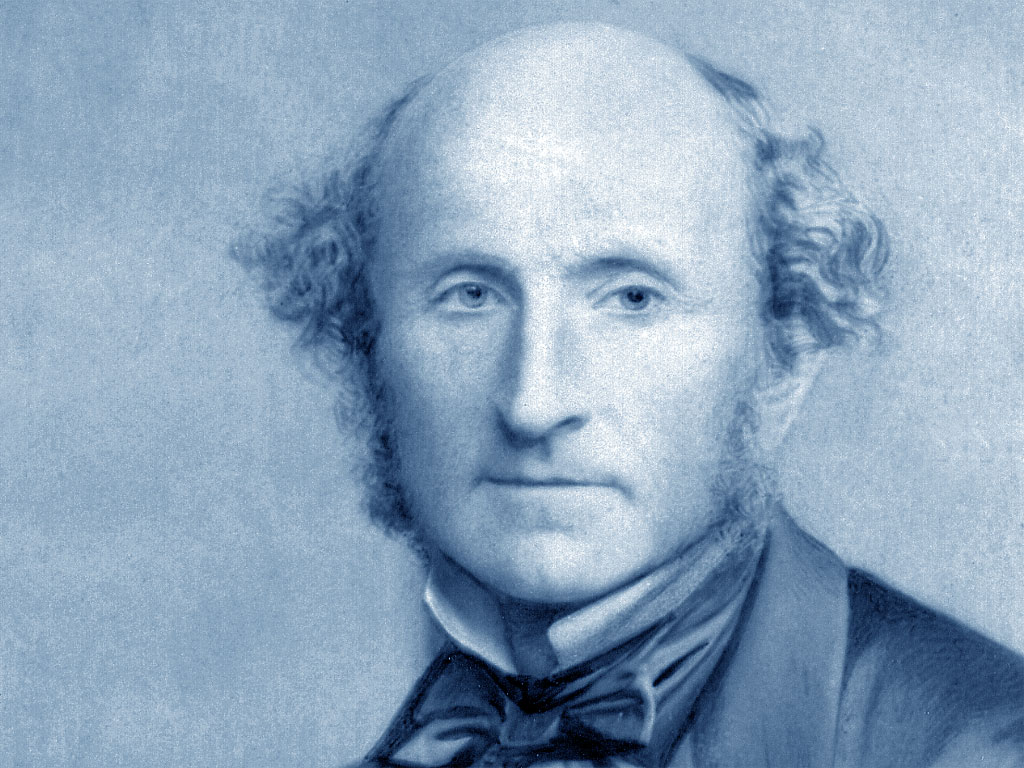
There is a moment, familiar to anyone who has sat long enough with a difficult decision, when you realize that no principle you hold will survive contact with the specific case in front of you. You believe in freedom, until your freedom costs someone else theirs. You believe in the greatest good for the greatest number, until you are the one being sacrificed to the arithmetic. Mill lived inside that moment for most of his adult life, and what is extraordinary is not that he tried to escape it but that he refused to pretend it could be resolved by fiat, by a neater formula, by one more philosophical adjustment.
The tension between liberty and utility was not a flaw he failed to correct before death. It was the honest structure of the problem itself. In On Liberty, published in 1859, he constructed the strongest possible case for individual sovereignty, grounding the harm principle in the idea that society has no legitimate jurisdiction over any act that does not damage others. But utility, the master framework he inherited from Bentham and reworked across his entire career, is fundamentally social. It asks what maximizes collective welfare, and collective welfare is indifferent, at the mathematical level, to whether the person being outweighed is you. Mill knew this. He spent years trying to reconcile the two, arguing that a society which respects individual liberty will, in the long run, produce more utility than one that crushes it. It is a compelling argument. It is also, and he understood this, a wager rather than a proof.
Isaiah Berlin, writing a century after Mill in his 1958 essay Two Concepts of Liberty, named this tension cleanly: negative liberty, the freedom from interference, and positive liberty, the capacity to actually live a self-determined life, do not always point in the same direction. Berlin credited Mill as the most serious English-language thinker to grapple with the first, while noting that his utilitarian commitments kept pulling him toward the second. What Berlin described as a philosophical tension was, in Mill’s own life, biographical. The man who wrote the most celebrated defense of individual freedom was also the man who spent decades at the East India Company administering a colonial empire, who believed, in writings he never fully disavowed, that certain peoples were not yet ready for the liberty he championed. The contradiction was not a lapse. It was a symptom of what happens when you apply a universal principle inside a historical world that has never been universal in its distribution of power.
His essays on women, on labor, on representative government all circle the same gravitational problem: freedom requires conditions, and conditions require intervention, and intervention is the thing freedom is supposed to protect you against. In The Subjection of Women, written in 1861 and published in 1869, he argued that no one could know what women were truly capable of because no society had ever allowed the experiment to run without constraint. That argument is structurally identical to the one any serious reformer must make, which is that liberty is sometimes downstream of equality, not upstream of it. And once you accept that, the harm principle becomes far more demanding than it first appeared, because harm is not only the blow that lands but the architecture that forecloses the possibility of a life.
What Mill left standing, ultimately, was not a contradiction to be ashamed of but a map drawn at the exact scale of the problem. Every political system since has tried to solve it by choosing a side, amplifying either the individual or the collective until the other disappears from view, and every such system has eventually produced the precise suffering it claimed to prevent. Mill refused that simplification, not out of indecision, but because he had read enough history and lived enough life to know that the refusal was itself a form of intellectual honesty that the problem deserved.
🧩 Liberty, Reason, and the Examined Life
John Stuart Mill’s thought does not exist in isolation — it emerges from a rich tradition of liberal, empiricist, and moral philosophy that stretches across centuries. These articles illuminate the intellectual landscape that shaped Mill’s concerns with freedom, utility, government, and the nature of the self.
John Locke: Life and Works
John Locke is one of the foundational figures without whom Mill’s liberalism is simply incomprehensible. His theory of natural rights, consent, and limited government planted the seeds that Mill would later cultivate into a fully developed philosophy of individual liberty. Reading Locke alongside Mill reveals how deeply the empiricist tradition shaped the moral and political imagination of the modern West.
GO TO THE SELECTION: John Locke: Life and Works
Locke’s Second Treatise of Government: Analysis
Locke's Second Treatise of Government is among the most consequential political texts ever written, arguing that legitimate authority derives from the consent of the governed and must protect natural rights. Mill inherited and transformed these arguments, pushing them toward a utilitarian framework that still placed the individual at the center of political life. This analysis offers an essential bridge between Lockean liberalism and Mill’s own groundbreaking contributions.
GO TO THE SELECTION: Locke’s Second Treatise of Government: Analysis
Mary Wollstonecraft: Life and Works
Mary Wollstonecraft was a direct intellectual predecessor of the feminist arguments Mill would later advance in The Subjection of Women, insisting that reason and moral agency belong equally to both sexes. Her passionate critique of the social and educational systems that kept women subordinate resonates powerfully with Mill’s own calls for equal liberty. Understanding Wollstonecraft is indispensable for tracing the radical liberal tradition that Mill helped define.
GO TO THE SELECTION: Mary Wollstonecraft: Life and Works
Thomas Hobbes: Life and Political Thought
Thomas Hobbes represents the great counterpoint to the liberal tradition in which Mill stands — a thinker who saw sovereign power not as a threat to liberty but as its very precondition. Mill’s entire philosophy of freedom, harm, and the limits of authority can be read as a sustained engagement with the Hobbesian vision of human nature and political order. Exploring Hobbes sharpens our understanding of what was genuinely at stake in Mill’s defense of individual rights against the encroachment of both state and society.
GO TO THE SELECTION: Thomas Hobbes: Life and Political Thought
Discover Independent Cinema on Indiecinema
The great ideas explored in these articles — liberty, reason, justice, and the examined life — find vivid and unexpected expression in independent cinema. On Indiecinema streaming you can discover films that push beyond the mainstream to ask the same bold questions that Mill and his fellow thinkers dared to pose. Explore our catalog and let independent cinema challenge your mind the way philosophy always has.
👉 EXPLORE THE CATALOG: Watch Indie Films in Streaming
A vision curated by a filmmaker, not an algorithm
In this video I explain our vision

