
The Lagoon as a Mirror That Distorts
You step off the train at Santa Lucia and the city does not greet you. It simply appears, across a stretch of water that has no business being there, shimmering with a kind of chemical insistence, as though the light itself has been rehearsed. You expected arrival. What you get instead is confrontation. The facades across the Grand Canal stare back at you with the particular blankness of things that have been looked at too long, and something in your chest contracts — not with beauty, exactly, but with the suspicion that you are less substantial than the reflection you are already casting on the surface below. The gondolas move too slowly. The whole city moves too slowly. It is performing patience at you, and you are not sure you deserve it.

This is not a romantic unease. It is something more diagnostic. Venice does not make you feel small the way mountains do, through sheer geological indifference. It makes you feel illegible. As though the city is a text written in a language you almost speak, and the almost is doing enormous damage.
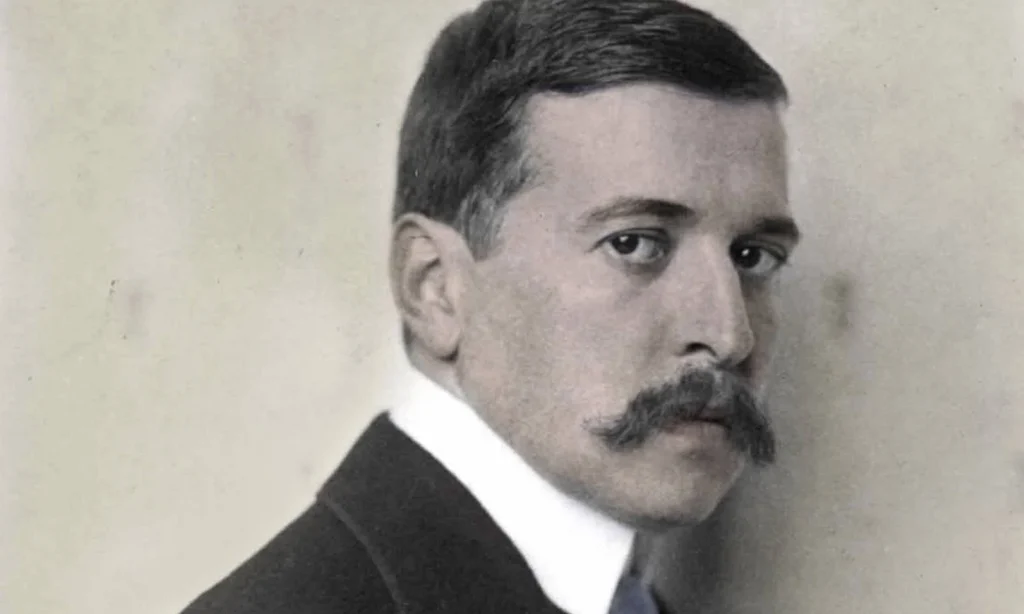
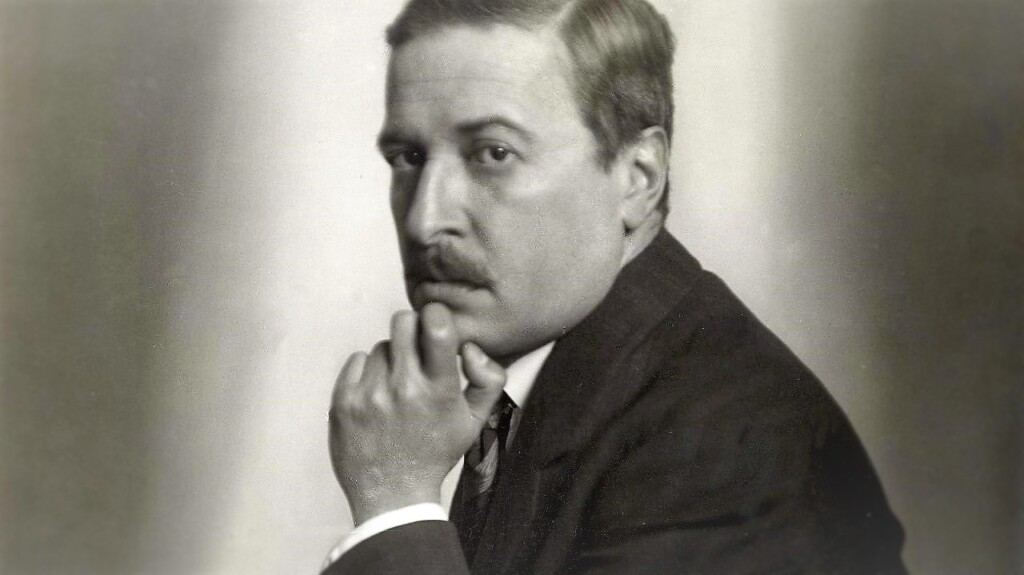
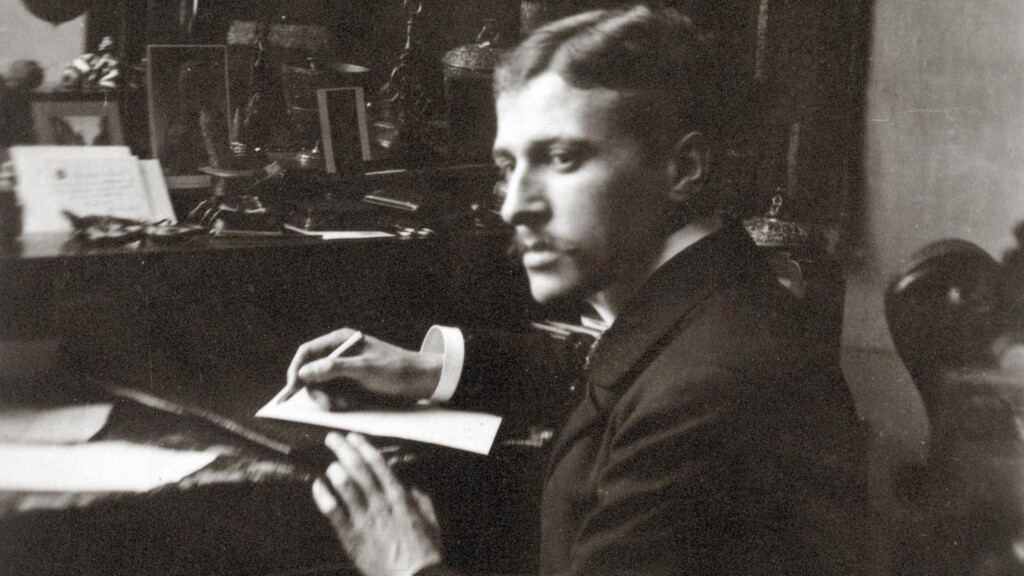
Hugo von Hofmannsthal arrived in Venice for the first time in the 1890s, when he was barely past adolescence and already famous in Vienna for poetry that critics refused to believe a teenager could have written. He was seventeen, eighteen, moving through a world that had already decided he was extraordinary, and Venice received him the way it receives everyone — with complete, aristocratic disregard. The city had been dying for centuries by then, and had perfected dying into an art form more compelling than anything the living were producing. The Austrian Empire, which technically administered the Veneto until 1866, had left its bureaucratic fingerprints on the streets, but Venice had absorbed and outlasted that too. By the time Hofmannsthal stood at the edge of the lagoon, the city was already a myth that had swallowed its own historical body and was now subsisting entirely on the dreams of visitors.
What he felt was not wonder. The letters and early prose fragments make this clear. What he felt was something closer to vertigo — the specific vertigo of someone who looks into a mirror expecting confirmation and receives instead a slight, horrible distortion. The reflection is almost right. The jaw is almost yours. But something in the angle, something in the way the light falls, reveals that the face looking back is not reporting the present tense. It is reporting something older, something that has already been decided about you before you arrived.
Ernst Mach, whose work on the instability of the self was circulating through Viennese intellectual life precisely during these years — his Analysis of Sensations appeared in 1886 — had argued that the ego is not a fixed entity but a practical fiction, a bundle of sensations provisionally organized around a center that does not truly exist. Hofmannsthal read this, or breathed it in through the atmosphere of a city where such ideas were not academic positions but felt emergencies. Vienna in the 1890s was a civilization beginning to suspect that its confidence had been a very elaborate form of not looking. Venice, older and more honest in its decrepitude, had no such illusions left to offer.
What Venice gave instead was the mirror that distorts just enough to be truthful. You see yourself there, but you see yourself as duration rather than presence — as something that has already happened, already receded, already begun the long gorgeous process of becoming a ruin. For a young man who had published his first poems under a pseudonym because the maturity in them seemed indecent for his age, this was not a poetic conceit. It was a recognition that landed somewhere behind the sternum and did not leave.
Venetian Arcanum
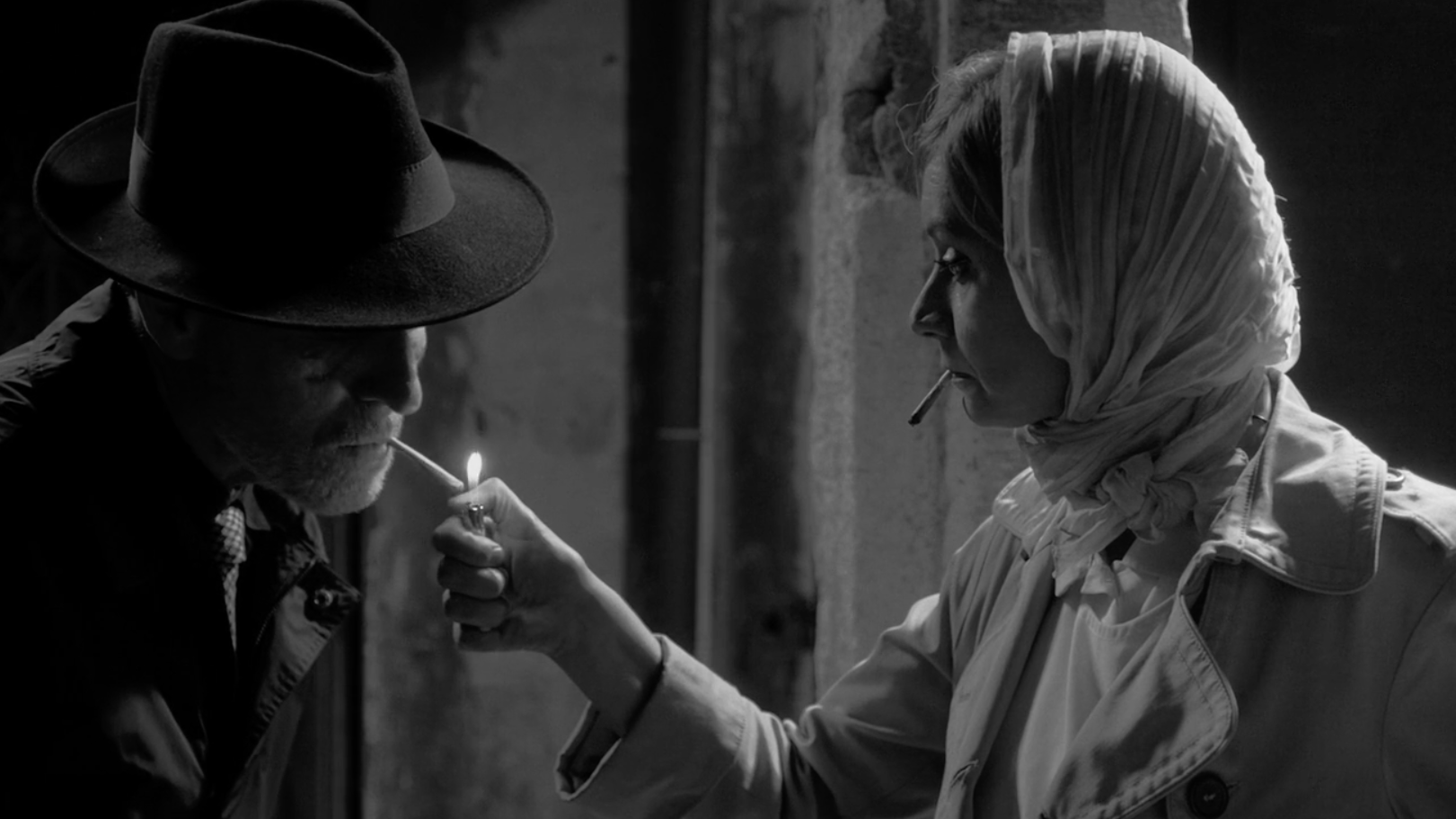
Thriller, by Serge Turgeon, Italy, 2025.
In Venice, a mysterious presence appears once every century or two, haunting the canals and hidden corners of the city. Driven by a sense of destiny, a woman decides to search for it. Following its elusive traces, she is drawn deeper and deeper into the city’s arcane secrets. Reality and myth begin to blur, and Venice itself transforms into a labyrinth of dangers.
LANGUAGE: Italian
SUBTITLES: English
The Adolescent Who Wrote Like a Dead Man
There is a particular kind of silence that belongs to cities before they wake — not the silence of absence but the silence of suspended time, the pause between one breath and the next that a city takes without knowing it takes it. You have walked through it, almost certainly, in some place that carries its own weight differently than other places do. The stones underfoot feel older than the morning. The light arrives but doesn’t quite illuminate. And something in you, without warning, recognizes this grammar, this syntax of emptiness, as if you had spoken it once before in a language you cannot now name.
Hugo von Hofmannsthal knew this sensation before most people have time to develop a self at all. He published his first poems at sixteen under a pseudonym, Loris, because no one would have believed that a teenager was writing verses of such completed, almost sepulchral beauty. When the literary Vienna of the 1890s finally discovered who Loris was, the reaction was less admiration than a kind of unease. Hermann Bahr, one of the central figures of Jung Wien, described the experience of reading those early poems as encountering something that had already happened, already concluded itself, before the reader had a chance to participate. The poet was nineteen and writing, critics said, like a dead man. Not morbidly, not with the theatrical darkness of adolescent posturing, but with the calm authority of someone who had already survived their own ending.
This is the precise condition Walter Benjamin identified in his notion of the dialectical image — that crystalline moment in which past and present collide so violently that time appears to stand still, where what has been and what is now exist in the same flash of recognition. Benjamin developed this idea across his unfinished Arcades Project, the manuscript he carried in a single briefcase when he fled Paris in 1940, the manuscript he valued above his own life and lost to the Spanish border all the same. For Benjamin, certain images do not belong to historical sequence. They erupt transversally, cutting across it, and in that cut they reveal the structure of time itself as something other than linear.
Venice was, for Hofmannsthal, exactly this kind of image. Not a city to be visited but a city already existing in its own afterlife, already posthumous to itself, already on the other side of its own conclusion. Every canal reflected a sky that seemed to come from another century. Every palazzo facade carried the calcium deposit of dissolved empires. Walking through Venice was not walking through a place that had aged; it was walking through a place that had chosen, or been chosen, to embody the condition of having-already-occurred. The present tense was merely a formality there. The real tense was the pluperfect: everything had already been.
When Hofmannsthal wrote the Chandos Letter in 1902, he gave this condition its most precise and devastating articulation. The fictional Lord Chandos writes to Francis Bacon to explain why he has stopped writing entirely, why language has collapsed into a series of sounds that no longer cohere into meaning. But the crisis he describes is not linguistic in any narrow technical sense. It is ontological. Words have become autonomous objects that refuse to refer, that spin in place, that illuminate nothing beyond their own spinning. Chandos experiences the world as a series of isolated presences, each one absolute, each one sealed. A watering can in a courtyard. A rat dying in a cellar. These things surge into meaning so total and so wordless that no sentence could survive the encounter.
This is the same grammar you recognized in those stones at dawn. Not the grammar of communication. The grammar of irreducible presence, which is always already a grammar of loss.

Decay as Aesthetic Doctrine
You stand before a palazzo on the Riva degli Schiavoni and watch a crack travel slowly down its facade, following some ancient seam in the plaster, and what you feel is not sorrow. It is relief. The wall is doing what walls do when they are honest, when they stop pretending that time has not moved through them. You feel, absurdly, grateful.
Hofmannsthal felt this. Not as a tourist’s picturesque sentiment, not as the cultivated melancholy that fashionable Viennese aesthetes imported from Venice like a luxury good, but as something closer to a metabolic necessity. Decay, for him, was not a condition to be observed and catalogued. It was the only atmosphere in which certain kinds of truth could breathe.
John Ruskin had arrived at something adjacent to this, though from a very different direction. In the three volumes he published between 1851 and 1853, he made an argument that scandalized industrial England precisely because it refused the progressive logic of the age: that Gothic imperfection, the irregular stone, the asymmetrical arch, the surface worn by centuries of salt water and human touch, was morally superior to the clean, machined perfection coming out of the factories. The Gothic worker, Ruskin insisted, had been allowed to think, to err, to leave the trace of a human hand in the material. The industrial worker was merely an extension of the machine, producing surfaces that were perfect and therefore inhuman. Venice, for Ruskin, was the great argument made in stone. Its beauty was inseparable from what it had suffered.
Hofmannsthal absorbed this, but he did something Ruskin never quite managed. He stopped mourning. Ruskin’s entire project was elegiac. He was trying to save something, to convince England not to destroy what Venice represented. There is a photograph of him in later life that captures the exhaustion of a man who has spent decades grieving in public. Hofmannsthal had no such rescue project. He was not interested in preservation. He was interested in what decay revealed once you stopped fighting it.
This is the psychological distinction that matters. The man who watches the palazzo crack and feels relief is not a nihilist, not someone indifferent to beauty. He is someone for whom beauty has become legible only through its dissolution. Walter Pater, whose influence on the Viennese fin-de-siècle was enormous and whose 1873 “Studies in the History of the Renaissance” had essentially handed a generation the vocabulary of sensory immediacy, had written that to burn always with a hard gem-like flame was the only success in life. But Pater’s flame was still burning. Hofmannsthal’s aesthetic imagination was drawn to the ember, the thing that has burned and holds its heat invisibly, that gives warmth without light.
In the prose sketches he wrote in his early twenties, Venice appears not as a city but as a state of consciousness. The water does not reflect; it dissolves. The stones do not stand; they lean, they settle, they accommodate. There is a scene he describes, and you recognize it immediately because you have stood there yourself even if you have never been to Venice, in which a man walks through a calle at dusk and feels the walls pressing in not with menace but with intimacy, as if they are confiding something they have been holding for centuries. The decay is not what prevents the experience. The decay is the experience.
This is what separates Hofmannsthal from the merely nostalgic. Nostalgia requires a belief that the past was better, that something has been lost. What he found in the crumbling facades and silting canals was not loss but density, the accumulated weight of time made tactile and navigable. The crack in the plaster was not a wound. It was a sentence finally completed.
The Language That Broke Inside Him
There is a moment you recognize even if it has never happened to you. A man sits in a crowded café, coffee going cold beside him, and he stops mid-sentence. Not because he has forgotten what he meant to say. Not because he is distracted. He stops because the word he needs — a perfectly ordinary word, a word he has used ten thousand times — has suddenly become opaque to him, a stone in the mouth, a sound that refers to nothing he can actually locate in the world. The people around him keep talking, their voices layering into a texture that feels almost aggressive in its confidence, and he sits there with the unfinished sentence hanging in the air between him and whoever was listening, and he cannot continue. He simply cannot continue.
This is not a failure of intelligence. It is something far more vertiginous. It is the moment when language reveals its own artifice, when the contract between word and world snaps open and you fall through the gap.
Hofmannsthal wrote his way into that gap in 1902, in the form of a fictional letter composed by a fictional English nobleman, Philip Lord Chandos, addressed to Francis Bacon. The letter is an apology and an explanation. Lord Chandos explains that he can no longer write, that he can no longer think coherently about anything, that abstract words have crumbled in his mouth like rotting mushrooms. He describes how language has ceased to function as a transparent medium and has become instead an impenetrable surface — beautiful, perhaps, but sealed against meaning. He had once planned grand literary projects. Now he cannot name a thing without feeling the name betray the thing. The word dog kills the dog. The word melancholy murders whatever actual darkness it was supposed to carry.
Wittgenstein would reach the outer wall of the same problem twenty years later in the Tractatus Logico-Philosophicus, published in 1921, when he wrote that the limits of my language mean the limits of my world, and then, in the book’s devastating final proposition, that whereof one cannot speak, thereof one must be silent. What makes Hofmannsthal’s crisis different, and in some ways more unbearable, is that he refuses that silence. Lord Chandos cannot speak but he writes a letter about his inability to speak, which means the crisis is not resolved by silence but lives, convulsing, inside language itself. He does not reach the limit and stop. He reaches the limit and keeps pressing against it, which is a different kind of suffering entirely.
Venice enters here not as backdrop but as the structural logic of the collapse. A city built on water that does not appear as water, whose foundations are invisible and whose surfaces are everything — Venice embodies exactly the epistemological condition Lord Chandos describes. You walk on stone and the stone floats. You look at a palazzo and what you see is reflection and ornament, a language of facades with nothing solid behind them. Paul de Man, writing on the rhetoric of temporality much later in 1969, described allegory as a mode that reveals the gap between sign and meaning, the impossibility of transparent reference — and Venice is the allegorical city par excellence, where every surface gestures toward something that is not there, where the representation has consumed the thing represented.
Hofmannsthal had moved through Venice precisely when this understanding was becoming unbearable to him. He had loved the city’s beauty with the hunger of someone who suspects beauty might be the last thing left when meaning fails. But Venice does not comfort that suspicion. It confirms it. Every gilded surface in San Marco whispers the same message Lord Chandos wrote to Bacon: I cannot tell you what this means. I can only show you that it glitters.
Masks, Carnival, and the Violence of Beauty
There is a figure standing absolutely still in the middle of the square. Everyone else is moving — the crowd surges and eddies around it like water around a stone — and this stillness is so complete, so deliberate-seeming, that you cannot look away. The white mask it wears reveals nothing. Or rather: it reveals everything precisely because it conceals the face. You watch it for a long moment, waiting for the chest to rise, for the head to tilt, for any signal that what stands before you is inhabited. And the horror that begins to collect at the base of your throat is not the fear of the mask. It is the fear that you cannot tell the difference between stillness and paralysis, between a performance of absence and an actual one.
Hofmannsthal understood this distinction as one of the central metaphyses of his age, and he returned to Venice’s carnival tradition obsessively because Venice itself could not resolve it. The city of masks was also the city of terminal performance, a place where the staging of identity had been refined over centuries into something indistinguishable from identity itself. Erving Goffman, writing in 1959, would eventually give this dynamic its sociological skeleton: in The Presentation of Self in Everyday Life, he argued that the mask is not concealment but revelation, that the performed self is not a distortion of the authentic self but its truest available form. What we show is what we are, because there is no backstage self untouched by the demands of the front. Hofmannsthal arrived at something very close to this a half-century earlier, not through sociology but through the particular pressure Venice’s carnival put on his imagination — the way the mask does not hide the face so much as it forces the face to admit that it was already wearing one.
His theatrical collaborations with Richard Strauss press precisely on this nerve. The world of powder and ceremony and ritualized gesture that fills their shared work is not nostalgic decoration. It is an anatomy. When a young man dresses as a woman to deliver a silver rose, when identities slide across one another like silk over silk, the comedy being staged is also a diagnosis: that the self is always already costumed, that sincerity is a costume worn more convincingly than irony. The Viennese baroque setting breathes Venetian air. The masks are different, the century is different, but the epistemological condition is the same: you cannot locate the authentic beneath the performed because the performed is the site where whatever is authentic gets made.
What gives this its violence — and Hofmannsthal was never unaware of the violence in beauty — is that the carnival mask does not merely permit performance. It demands it. Put the mask on and you are no longer permitted to be uncertain, hesitant, formless. The mask is a commitment. It is, paradoxically, less flexible than the bare face, which can flinch and contradict itself and signal its own insufficiency. The mask holds its expression absolutely. It does not negotiate. And this is why the figure standing still in the moving crowd is so unbearable to watch: because the stillness inside that absolute expression might be chosen or it might be imposed, might be mastery or might be collapse, and the mask will not tell you which.
The beauty of Venice, for Hofmannsthal, operates by the same logic. It holds its expression absolutely. It does not flinch. And somewhere inside that perfected surface — the light on the water, the impossible persistence of the stones, the city that should have sunk and hasn’t — there is something that might be will and might be the end of will, and the two have become, over centuries of magnificent performance, completely, terrifyingly identical.
A vision curated by a filmmaker, not an algorithm
In this video I explain our vision
Austria’s Last Poet and Europe’s Dying City
There is a particular kind of death that takes decades to complete, that requires witnesses, that almost seems to need an audience before it can truly end. Venice understood this before Vienna did. When Napoleon entered the city in May 1797 and the last Doge, Ludovico Manin, removed his ducal cap and handed it to a servant with the words that he would not be needing it again, something more than a republic died. A thousand years of institutional memory dissolved in an afternoon, and what remained was the architecture, the canals, the pigeons, and the tourists who would soon arrive to mourn what they had never known. The city did not fall. It was preserved, which is a more insidious fate.
Hofmannsthal knew this distinction viscerally because he was living inside its Viennese equivalent. The Habsburg Empire did not collapse in a single dramatic rupture but rather underwent what Hannah Arendt, in her analysis of imperial disintegration in “The Origins of Totalitarianism” published in 1951, described as the bureaucratic absorption of political meaning — a process by which institutions survive the ideas that once animated them, becoming elaborate shells that continue to function precisely because no one has yet had the courage to declare them empty. Vienna in 1900 was this shell at its most ornate. The Ringstrasse, completed in the 1870s as Franz Joseph’s monument to liberal confidence, had already become a theatrical backdrop for a drama whose script had been lost. People performed civic life on a stage built for civic life, which is not the same thing.
Karl Kraus saw this with a clarity that was almost pathological in its precision. His journal Die Fackel, which he essentially wrote alone from 1911 onward, diagnosed Viennese cultural life as a system in which the appearance of thought had entirely replaced thought itself, in which the feuilleton — that elegant, decorative, self-regarding form of newspaper culture — had become the dominant mode of consciousness. He was not wrong, and Hofmannsthal knew he was not wrong, which made the relationship between the two men a sustained, unspoken torment. Because Hofmannsthal was precisely the kind of artist Kraus described: exquisite, melancholy, culturally saturated, producing beauty from the materials of a civilization that was already composting itself.
Venice in its long annexation — Austrian from 1815 to 1866, then Italian, always essentially occupied by its own past — offered Hofmannsthal not an escape from this condition but its perfect geographic expression. Two cities, two empires, two systems of meaning that had outlasted their justifications. When he walked along the Zattere or stood in the Frari before Titian’s Assumption, he was not visiting a foreign culture. He was visiting an earlier version of his own. The Venetian oligarchy had once believed, as the Habsburgs believed, that tradition itself was a form of governance, that the accumulated weight of ceremony and protocol could substitute for political vitality. Both were wrong in the same way and at approximately the same historical speed, separated only by a century.
Two mirrors facing each other produce not reflection but infinite regression — each image smaller and more distorted than the last, receding toward a vanishing point that is never quite reached. This is what Venice and Vienna became for Hofmannsthal: not symbols of each other but recursive images of the same impossibility. The impossibility of sustaining culture as compensation for the collapse of the political forms that made that culture possible. Arendt understood that empires do not simply end. They produce a specific kind of human being first — someone formed entirely by institutions that are already hollow, whose entire inner life is an archaeology of something that no longer exists above ground.
Hofmannsthal was this person. And he kept returning to the city that had been this person for a hundred years longer than he had.
The Threshold That Cannot Be Crossed
There is a door in the Dorsoduro that opens directly onto the canal. No step, no landing, no gradation between stone and water — just a threshold, and then the green-black surface moving two feet below. You stand there and you understand, with a physical certainty that no argument could produce, that to open this door with any intention of going somewhere is already to have made a mistake. The door is not a passage. It is a declaration of impossibility. And yet people have lived behind it for centuries, opening it every morning, looking out at the water, closing it again. The threshold as the entire architecture of a life.
Hofmannsthal called it Praexistenz — pre-existence — and the word is stranger and more precise than it first appears. It does not mean nostalgia, though nostalgia feeds on it. It does not mean anticipation, though anticipation is one of its symptoms. It means something more disorienting: the sense that the most vivid, most fully inhabited life is always the one adjacent to the one being lived. The life about to begin. The life just closed. The self on the other side of the threshold, looking back at you through the water-dark glass of an unreachable moment. In his 1902 essay “The Poet and This Age,” Hofmannsthal described the modern condition as one of radical discontinuity, of a self that cannot accumulate experience into wisdom because it cannot hold experience long enough to know it. The present dissolves before it can be possessed. What remains is the feeling of what was almost lived, what was nearly grasped — the pre-existence of a fullness that the actual living keeps failing to deliver.
Venice’s entire spatial logic is built for this feeling. The city moves you constantly through thresholds — sotoporteghi that compress you into darkness before releasing you into sudden light, bridges that place you briefly above the city’s circulatory system before returning you to its level, doors that open onto water where doors should open onto streets. These are not architectural failures or historical accidents. They are the grammar of a city that refused to pretend that arrival and departure are simple. Every entrance in Venice is also an acknowledgment of what cannot be entered. Every door is also a record of hesitation.
The man standing at that water door in the Dorsoduro — you have been him, you have been her — stands there in the full consciousness of Praexistenz without having a word for it. The water below is not inviting. It is not threatening. It is simply there, indifferent, its surface reading back whatever light falls on it. Behind him is the room he has been living in, familiar and slightly insufficient. Ahead is the canal, the city, the day — everything he imagined would feel more real once he stepped into it. And here, exactly here, in the six inches between the door frame and the open air, is the only place where both are simultaneously possible. Step out and the possibility collapses into the merely actual. Step back and it collapses into memory. The threshold is the only location where Praexistenz can be inhabited without being destroyed.
This is what Hofmannsthal found in Venice that he could not find in Vienna, or in language, or finally in theatre: a city that had architecturalized the very condition he spent his life trying to write. Erik Erikson, theorizing the identity crisis decades later in his 1968 work “Identity: Youth and Crisis,” described the threshold state as one in which the self remains genuinely open — not because it is weak, but because it has not yet been forced to choose between competing versions of itself. Hofmannsthal’s Praexistenz is something like the permanent election of that state, the refusal to step off the threshold into the diminished real.
What Venice knows, and keeps knowing, is that the water will not come to meet you.
What the Water Does Not Return
There is a moment, and you have lived it even if you have never been to Venice, when you understand that something beautiful is already consuming you in the act of your looking at it. Not metaphorically. The consumption is literal, cellular, a slow drafting of something from your interior toward the surface of experience, where it will be spent and not returned. Hofmannsthal knew this before he had the language for it, and Venice gave him the language only by first taking the thing itself.
What the city extracted from him was not innocence — that is too simple, and Hofmannsthal was never innocent in the ordinary sense. What it took was the possibility of believing that beauty and the person who receives it can both survive the encounter intact. He arrived in Venice with the assumption, shared by nearly every Northern European artist of his generation, that the aesthetic encounter was essentially benign, that to perceive the sublime was to be enlarged by it. Venice dissolved that assumption the way the lagoon dissolves the foundations of its own buildings: slowly, invisibly, until one day the wall simply opens.
Susan Sontag, in her 1977 work On Photography, made an argument that still has the force of a diagnosis: to photograph something is already to mourn it, because the act of preservation contains within it the announcement of loss. The image is taken, she writes, and the verb is not accidental — something is taken from the world at the moment it is fixed. Hofmannsthal was doing something structurally identical with language. Every poem, every lyric fragment he produced under the pressure of Venetian experience was an act of preservation that confirmed the impossibility of keeping. He wrote the canal and the canal receded further. He wrote the light on the water and the light became precisely the light he could no longer simply see, because now it was literature, fixed, killed into permanence.
This is the paradox that Venice does not resolve but endlessly restages. The city exists as the world’s most elaborately maintained ruin, a place that has been preserved so thoroughly that the preservation has become the subject, not the thing preserved. And anyone who stays long enough — not as a tourist but as someone the city is actually working on — begins to feel this in themselves. You are being preserved too. Archived. Translated into something that will outlast the warmth in you.
There is a smell that comes from the Venetian canals at low tide, when the water pulls back and exposes the stone beneath the waterline. It is the smell of centuries of organic matter compressed into mineral fact, the smell of what was once alive and has become the substrate of something that looks like permanence. It is not a pleasant smell, but it is not simply unpleasant either. It is, more precisely, accurate. It tells you the truth about the beautiful surfaces above the waterline, about the palaces and the reflections and the golden afternoon light on the facades. It tells you what all of it is resting on.
Hofmannsthal carried that smell with him. Not literally, but structurally — the knowledge of what lay beneath the beauty he had consecrated his early work to, the exposed foundation that no amount of aesthetic refinement could re-submerge. It changed the temperature of everything he wrote afterward, introduced a coldness that his admirers sometimes mistook for maturity and his detractors mistook for failure, when in fact it was simply the truth of what Venice does to those it genuinely touches, as opposed to those it merely dazzles.
Whether he ever actually left is a question his work refuses to answer, because the work itself is still there, still circling the same waterlogged center, still listening for the sound of something returning that the canal, in its patience, has already decided to keep.
🌊 Decadence, Beauty, and the Labyrinth of the Soul
Hugo von Hofmannsthal’s relationship with Venice is inseparable from the broader currents of European decadence, the tension between art and dissolution, and the fin-de-siècle obsession with beauty as both salvation and abyss. These articles trace the intellectual and aesthetic threads that wind through Hofmannsthal’s world, from the philosophy of decline to the mysticism of language and form.
Johann Wolfgang von Goethe: Life and Works
Goethe stands as the towering precursor to the German-language tradition in which Hofmannsthal was deeply immersed, and his relationship with Italian culture—including Venice—shaped a model of aesthetic pilgrimage that later writers would endlessly revisit. Hofmannsthal saw in Goethe a way of reconciling classical form with modern sensibility, a tension that animated his entire career. The journey southward, toward beauty and dissolution, finds in Goethe one of its most enduring archetypes.
GO TO THE SELECTION: Johann Wolfgang von Goethe: Life and Works
Spengler’s The Decline of the West: Analysis
Spengler’s monumental meditation on the decline of Western civilization provides an essential philosophical backdrop for understanding Hofmannsthal’s melancholic vision of Venice as a city already sinking into its own magnificent past. Both thinkers shared a sense that European culture had entered an irreversible twilight, where beauty and death were inextricably intertwined. Hofmannsthal’s Venice is, in many ways, a living emblem of the Spenglerian decline: ornate, exhausted, and hauntingly luminous.
GO TO THE SELECTION: Spengler’s The Decline of the West: Analysis
Titian: Life and Works
Titian’s Venice is the visual world that haunts Hofmannsthal’s prose and poetry, a city of golden light, sensual surfaces, and the inexorable passage of time captured in paint. Titian’s late works in particular, with their loose brushwork and autumnal palette, embody the same aesthetic of beautiful decay that Hofmannsthal found so compelling in the lagoon city. To understand Venice through Hofmannsthal is also to see it through the eyes of its greatest painter.
GO TO THE SELECTION: Titian: Life and Works
Schopenhauer: Life and Philosophical Thought
Schopenhauer’s philosophy of will, renunciation, and aesthetic contemplation permeated the fin-de-siècle Viennese milieu in which Hofmannsthal came of age, shaping his understanding of Venice as a place where desire and its negation exist in perfect, terrible equilibrium. The idea that art offers a momentary escape from the blind striving of the will resonates deeply with Hofmannsthal’s use of Venice as a space of suspension between life and death, presence and absence. Schopenhauer’s aesthetics thus provide an indispensable key to the Venetian dreamworld of the Austrian poet.
GO TO THE SELECTION: Schopenhauer: Life and Philosophical Thought
Discover Independent Cinema on Indiecinema
If these labyrinthine connections between art, place, and the philosophical imagination have captured your attention, Indiecinema streaming is your next destination. Our curated selection of independent and auteur films explores exactly this territory—where culture, beauty, and meaning collide beyond the boundaries of the mainstream. Come and get lost in the films that think.
👉 EXPLORE THE CATALOG: Watch Indie Films in Streaming
A vision curated by a filmmaker, not an algorithm
In this video I explain our vision

