
The Young Man Who Refused to Become What They Made Him
You know the feeling. You are sitting at a table that was set for you before you were born, eating food you did not choose, in a role that was tailored to your measurements without anyone bothering to ask if you wanted to wear it. The silverware is heavy. The conversation is heavier. Everyone around you speaks with the quiet authority of people who have already decided what your life means, and you sit there nodding, because the cost of not nodding is a kind of exile you are not yet ready to pay.

This is not a metaphor. This is a dining room in Frankfurt, sometime in the early 1760s, where a boy with an exceptional mind and an even more exceptional restlessness is learning to perform obedience while something underneath him quietly refuses. Johann Caspar Goethe, the father, was a man of frustrated grandeur — a lawyer who never practiced law, an imperial councillor by purchased title, a man who had organized his entire existence around the idea that his son would achieve what circumstance had denied him. He had the time, the money, and the temperament to supervise every detail of young Johann Wolfgang’s education personally, which meant the boy grew up inside a project he had not authored.
When Goethe was born on August 28, 1749, in Frankfurt am Main, the city was a free imperial city — prosperous, self-important, stratified with the precision of a legal document. His family home on the Großer Hirschgraben was substantial, the household ordered with Germanic thoroughness. By the time he was a child, he had been given tutors in Latin, Greek, French, Italian, English, drawing, dancing, fencing, and music. Not because anyone asked what he desired, but because a man of a certain station required certain ornaments, and Johann Caspar intended to produce one. Erik Erikson, writing in the 1950s about identity formation and the crisis of young adulthood, described the peculiar violence of being handed a complete self before you have had the chance to discover one. Goethe’s childhood was precisely that: a finished product delivered to someone who was still in the middle of becoming.
At sixteen, he was sent to Leipzig to study law. Leipzig was cosmopolitan, lively, full of intellectual friction — and Goethe attended law lectures the way a man attends the reading of a will in which he does not appear. His real hunger was elsewhere. He was drawing obsessively, writing poetry that no one had assigned, falling into the kind of consuming and impossible love that young people fall into when the official channels of their energy have been blocked. He became seriously ill in 1768, returned to Frankfurt haggard and changed, and was eventually sent to Strasbourg to complete what he had not finished. It was in Strasbourg, in 1770 and 1771, that something shifted. He encountered Johann Gottfried Herder, older and acid-tongued and brilliant, who tore apart everything Goethe thought he admired about French neoclassicism and replaced it with something rawer and more demanding — the idea that literature must grow from the soil of actual life, actual language, actual feeling.
There is a particular kind of relief that comes when someone destroys your inherited tastes, because it means you were right to find them insufficient. Goethe had been performing refinement. Herder showed him that refinement was another cage. This is the moment, not the birth date or the law degree, where the real biography begins — not in the accomplishment of what was expected, but in the first clean fracture between the life that was planned and the life that was actually lived. The father’s project was already beginning to collapse under the weight of the son’s reality.
Eve of the Irises
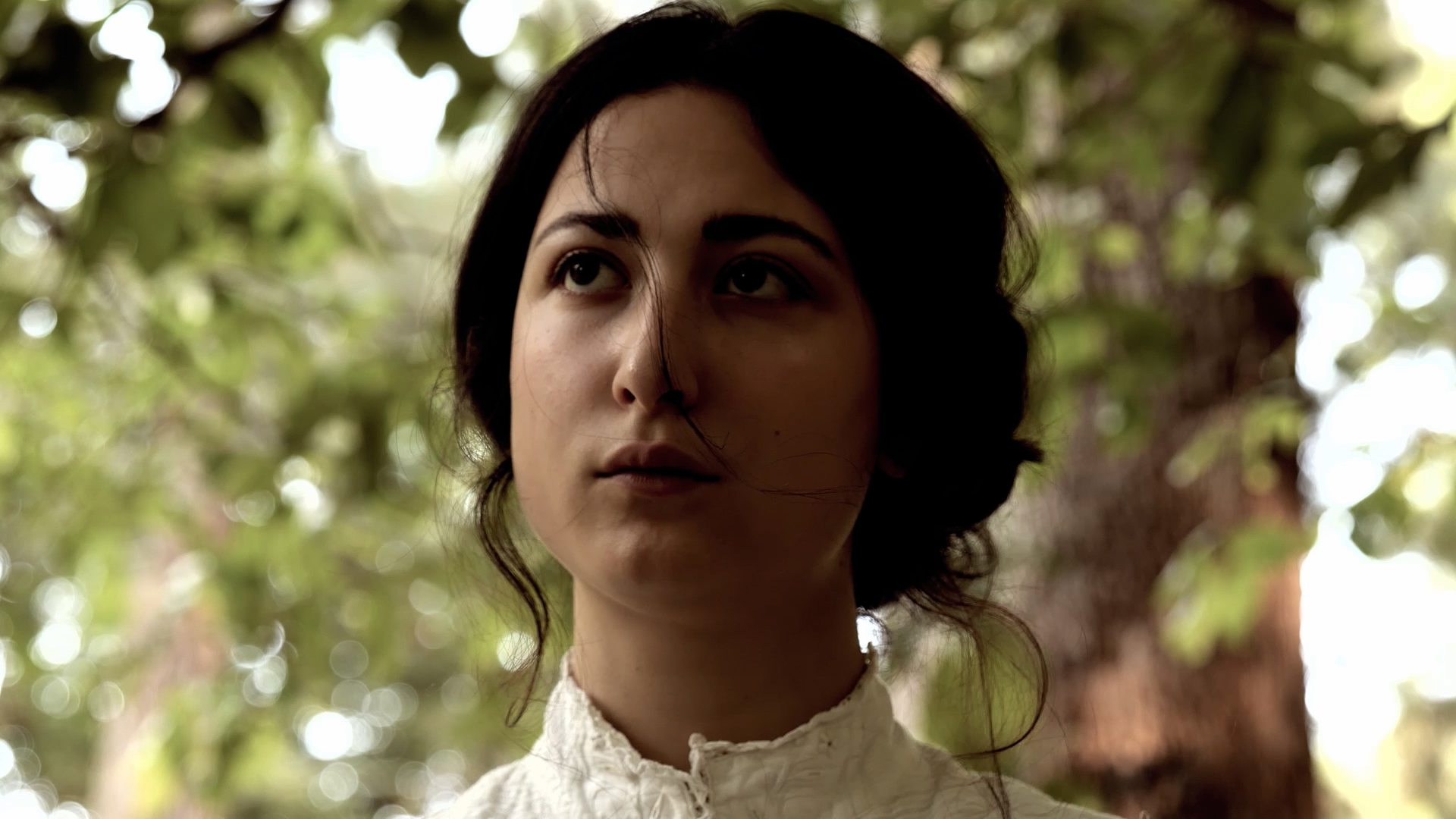
Documentary, by Isabel Russinova, Rodolfo Martinelli Carraresi, Italy, 2026
Eva of the Irises is a historical biographical docu-film about the scientist Eva Mameli Calvino, a botanist and pioneer of environmentalism in Italy, mother of the writer Italo, born in Sassari in 1886. The film, based on a multidisciplinary approach that combines several genres—such as theatre, documentary, cinema, and research—moves between memories, reflections on life, as well as the goals and missions the scholar still wished to achieve.
The multifaceted artistic sensibility of Isabel Russinova is expressed across many fields, from writing to acting, from directing to civic engagement, and finds one of its highest expressions in the docu-film Eva of the Irises, created with Rodolfo Martinelli Carraresi. The film blends scientific rigor and poetic refinement to portray the extraordinary figure of the botanist Eva Mameli Calvino, mother of Italo Calvino but above all an independent protagonist of 20th-century scientific culture. It is told through a combination of archival materials, interviews, and evocative staging capable of elegantly and profoundly conveying her intense human and professional story.
LANGUAGE: Italian
SUBTITLES: English, Spanish, French, Portuguese
Werther’s Fever and the Lie We Call Civilization
You know this feeling. You have felt something so acutely, so without permission, that you began to suspect there was something wrong with you rather than with the world around you. Not the feeling itself — the intensity of it. The way it refused the boundaries everyone else seemed to honor without effort. You kept it quiet, mostly. You learned.
In 1774, something slipped through the gates. A young man named Goethe published a short epistolary novel — barely more than a collection of letters — and within weeks two thousand copies had vanished from the shelves of Leipzig and Frankfurt booksellers. Within months it had been translated across Europe. Within a year, young men were dying in rooms where the book lay open beside them, dressed in the blue coat and yellow waistcoat of its protagonist, a pistol placed with almost ceremonial precision. The Werther effect, as it would come to be named by the sociologist David Phillips in his landmark 1974 study in the American Sociological Review, established one of the most disturbing and durable patterns in the sociology of imitation: that publicly narrated suffering becomes a template, that the visible form of another’s anguish gives shape to an anguish that had previously lacked one.
Napoleon Bonaparte carried this book on his Italian campaign. He claimed to have read it seven times. There is something in that number that should make you pause — not the obsession of a general with a sentimental novel, but the question of what a man building an empire needed to return to, again and again, in the middle of conquest.
What Werther exposed, and what society immediately set about containing, was the gap between the emotional life that human beings actually live and the emotional life that civilization permits them to narrate. Werther does not fail because he loves Charlotte too much. He fails because he cannot perform the lie that everyone around him has mastered — the lie that desire is manageable, that loss is recoverable, that the self can be parceled into socially acceptable portions. He writes letters. He walks in nature. He paints. He does all the things a sensitive young man of the late eighteenth century was supposed to do with his excess, and it changes nothing, because the excess is not a problem to be solved but a truth to be survived.
Goethe himself understood this with almost clinical clarity. He would later write in his autobiography, Dichtung und Wahrheit, that he composed Werther in a kind of trance, that it saved his own life by giving form to an inner turbulence he could not otherwise discharge. The book was, for him, a controlled detonation. What he could not have anticipated was that the detonation would travel.
The philosopher Max Scheler, writing nearly a century and a half later in his 1912 treatise on ressentiment, described how modern societies develop a particular hostility toward those who feel openly and intensely — not because feeling is dangerous in itself, but because it makes visible the emotional suppression that everyone else is practicing in silence. Werther does not die because civilization is cruel. He dies because civilization is envious. It cannot tolerate the spectacle of someone refusing to pretend.
And yet — and this is the part that should unsettle you — civilization could not stop consuming that spectacle. The same society that produced the Werther suicides also produced the Werther merchandise: the porcelain figurines, the perfumes, the fashionable silhouettes. Grief packaged as luxury good. Suffering sold as aesthetic experience. The boy drowning in feeling became a brand, and no one seemed to notice the particular violence of that transformation, or if they noticed, they bought the figurine anyway.
The question Goethe left open was not whether Werther was right to feel what he felt. It was whether there has ever existed a civilization that did not ultimately prefer its sensitive young men dead and decorative.

Weimar, Power, and the Trap of Respectability

He arrived in Weimar in November 1775, twenty-six years old, already famous in a way that unsettles more than it confirms. The young Duke Karl August had invited him, and Goethe accepted — not naively, not without knowing what acceptance means when power extends its hand with a smile. You know that moment. When the institution opens its door and you step through it telling yourself you will remain free, that the arrangement is temporary, that you are merely using them as they are using you. The door closes behind you so quietly you barely hear it.
For ten years, Goethe administered mines in Ilmenau, organized military conscription, supervised road construction, managed the finances of a small duchy with the diligence of a man who believes that competence is its own form of integrity. He was not wrong, exactly. But he was not entirely right either. Max Weber, writing in “Politik als Beruf” in 1919, drew the distinction between living for politics and living off politics — but there is a third condition Weber barely touched: living inside politics, where the boundary between the two dissolves so gradually you cannot identify the moment it happened. Goethe lived inside Weimar for a decade in precisely this way.
There is a man who spends years building a career within a system he privately despises, performing the rituals of belonging with such convincing thoroughness that one morning he looks in the mirror and cannot locate the distance anymore between performance and person. The despair is not dramatic. It arrives as competence. As productivity. As the quiet satisfaction of a meeting well-run, a problem elegantly solved, a superior pleased. Goethe won the confidence of Karl August completely. He was made a privy councillor, eventually ennobled — “von Goethe” — in 1782. The “von” is not a small thing. It is the visible mark of what you have traded and what the trade has made permanent.
The literary production of this decade is telling not so much for what it contains as for what it withholds. “Iphigenie auf Tauris” begins in prose during these years, stiff with moral restraint, almost architectural in its refusal of excess. It is the work of a man who has learned to govern his own interior the way he governs a duchy: efficiently, with minimum waste, suppressing whatever threatens the smooth operation of the whole. Friedrich Schiller, who would become Goethe’s most important intellectual companion later, recognized something airless in this period’s work — a controlled beauty that keeps the reader at a distance the way formal gardens keep you on the gravel path, admiring but never touching.
The psychoanalyst D.W. Winnicott, working a century and a half later, described the “false self” as a structure that develops precisely to protect something genuine and irreplaceable — but which, when it succeeds too completely, ends by substituting itself for the thing it was meant to protect. The false self does not feel false from inside. It feels like adulthood. It feels like responsibility. It feels like the only reasonable response to the world as it actually is, rather than as you once imagined it might be.
Goethe felt it. In 1786, he left. Not publicly, not with declarations — he slipped away to Italy almost clandestinely, without proper farewell, as if he feared that a formal departure would give the institution one final opportunity to negotiate him back into its logic. He was thirty-seven. The Italian journey lasted nearly two years. He would describe it later as a rebirth, and the word is accurate — not because Italy gave him something new, but because it returned to him something Weimar had been slowly administering toward extinction. The question worth sitting with is not why he left. It is why it took him ten years to understand that the door he thought he’d left open had, in fact, been locked from the outside all along.
Italy as Rupture, Not Escape
He left before anyone could stop him. Not through a door that had been opened for him, but through one he forced himself through in the dark, alone, with a false name in his pocket and two years of accumulated suffocation pressing against his ribs. He was thirty-seven years old, held one of the most enviable administrative positions in a German principality, was beloved by a woman who had shaped the architecture of his inner life, and he ran. Not toward something, at least not at first. Away. The distinction matters enormously.
The journey south through the Brenner Pass in September 1786 was not a grand tour in the eighteenth-century sense, not the aristocratic ritual of cultural confirmation that young English lords performed as a finishing flourish. It was closer to what a man does when he realizes, at the precise moment of suffocation, that he has been building his cage beam by beam for a decade. Weimar had given him titles, responsibilities, proximity to power. It had also given him a version of himself he no longer recognized as viable. The poems were slowing. The science was fragmenting into administrative minutiae. Charlotte von Stein, whose letters filled thousands of pages across eleven years, had become something between muse and prison warden, not through any failure of hers but through the particular cruelty of being loved so completely that you begin to disappear inside it.
He traveled under the name Johann Philipp Möller. The false name is not a trivial detail. It is the whole thesis in miniature. To encounter something real, he first had to stop being officially himself.
What Italy gave him was not warmth or beauty or liberation in any simple sense. What it gave him was the shock of classical form encountered as a living force rather than a scholarly abstraction. Standing before the temples at Paestum, or tracing the proportions of the Roman amphitheaters, something registered in him that could not be filed under education or aesthetic pleasure. It was more violent than that. Nietzsche, writing nearly a century later, described the Apollonian impulse not as serenity but as the imposition of form upon chaos through an act of will so severe it resembles aggression. The sunlit clarity of Greek art, in Nietzsche’s reading in The Birth of Tragedy from 1872, is not calm. It is the dream that the will constructs to survive the terror of the Dionysian underneath. Goethe in Italy was doing something structurally identical. The classical world was not giving him peace. It was showing him, with a precision that felt almost cruel, how much formlessness he had been tolerating in himself, mistaking it for depth.
The Italian Journey as he later compiled it, published between 1816 and 1817 from letters and diaries, carefully reconstructs the experience into something more coherent and triumphant than it probably felt in real time. Diaries do this. Memory does this. But the fractures show through. His encounters with visual art, particularly with Palladio’s architecture in Vicenza, read less like appreciation and more like confrontation. He was not admiring proportion. He was being measured by it.
Rome becomes the central theater of this self-reconstruction. He arrives in late October 1786 and stays, in two separate residences, for nearly two years total across the whole journey. He draws obsessively, studies anatomy, reconsiders the theoretical foundations of his color work, and begins to shed the Sturm und Drang emotional maximalism that had made him famous. Werther was written by a man in crisis who believed the crisis was the truth. Rome was written on, into him, as a counter-argument. Not that feeling is false. That form is not the enemy of feeling but its only possible survival.
Faust, or the Man Who Could Not Stop Wanting
You know the feeling. You took the safer job, not the one that terrified you with its possibility. You signed the lease on the apartment that made sense rather than the one that made your chest tighten with something uncomfortably close to joy. You chose the relationship that was stable over the one that was alive. And somewhere in the transaction, quiet as a notary stamping a document, something was surrendered. You did not notice the exact moment. You rarely do. The pact is always signed in installments.
Goethe spent sixty years writing Faust. He began circling the material around 1772, when he was barely in his twenties, and he sealed the manuscript only in 1831, months before his death at eighty-two. No other work in the Western literary tradition carries that kind of biographical weight — not because of its length or its philosophical ambition, but because of what it reveals about the relationship between a civilization and its own hunger. This is not a story about one man who wanted too much. It is the autobiography of an entire way of being in the world, the mode of existence that decided progress was worth any price and then spent centuries pretending the bill had not yet arrived.
Faust is already old when we meet him. He has mastered every discipline available to his era — philosophy, jurisprudence, medicine, theology — and arrived at the end of knowledge feeling not fulfilled but emptied. This is the detail that most readings sentimentalize away: Faust does not make his pact out of ignorance. He makes it out of an excess of knowing. The learned despair of a man who has read everything and understood that understanding, alone, changes nothing. Mephistopheles does not seduce an innocent. He finds someone already halfway across the threshold, someone who has already traded decades of living for the cold satisfaction of being correct.
Max Weber, in his 1917 lecture Science as a Vocation, gave this dynamic its clinical name. The defining bargain of Western rationalism, he argued, is disenchantment — the Entzauberung der Welt, the removal of magic from the world in exchange for legibility. We chose to understand the forest rather than to fear it, to measure the river rather than to pray to it, and in doing so we gained enormous power and lost something that cannot be catalogued because it resisted cataloguing. Weber was not mourning this. He was diagnosing it. The Faustian man is not a villain. He is a structural inevitability, the human form that a certain kind of civilization produces when it decides that mastery is the highest value.
What Goethe saw — and what makes the second part of Faust, completed in extreme old age, so strange and so underread — is that the pact does not end in damnation in any simple sense. Faust keeps wanting. Even at the edge of death, he imagines a future project, land reclaimed from the sea, a people building something worthy of their freedom. He dies mid-vision. Mephistopheles, who has waited a lifetime to collect, loses the wager on a technicality of divine mercy that reads less like theological resolution and more like Goethe’s own refusal to grant the story a clean ending. Because the story does not have one. The wanting does not stop. The negotiations do not conclude.
This is what you recognize in it, even if you have never read a line of the text. The restlessness that arrives the morning after you finally achieve what you said you wanted. The small Mephistophelian voice that reframes every compromise as strategy, every surrender as wisdom, every silenced desire as maturity. You did not sell your soul in a single dramatic gesture. You leased it, repeatedly, in very reasonable-sounding increments, always with the intention of renegotiating the terms later, when the moment was right.
A vision curated by a filmmaker, not an algorithm
In this video I explain our vision
The Science Nobody Wanted Him to Have

There is a moment when you are looking at a shadow and you realize, with a kind of slow vertigo, that the shadow is not simply the absence of light but has its own color, its own warmth, its own life. Not a subtraction. A presence. This is not a poetic observation. This is what Goethe spent decades trying to prove, and what the scientific establishment of his time — and, largely, ours — refused to accept, not because he was wrong, but because being right in the way he was right made the entire apparatus of modern science slightly uncomfortable.
In 1784, while dissecting a human skull, he identified the intermaxillary bone, the small bone in the upper jaw that connects the two halves of the palate and that anatomists had declared absent in humans, using that absence as one of the anatomical markers separating mankind from the animals. Goethe found it. He was twenty-four years old and had no formal scientific training, which was precisely the point. He saw what trained eyes had been taught not to see, because trained eyes had been trained to find a particular answer. The discovery was largely ignored for years. When it was finally accepted, the credit moved elsewhere with the quiet efficiency that institutions always manage when absorbing inconvenient truths.
But it was the Theory of Colors, published in 1810, that constituted his real provocation. He spent more than twenty years on it, longer than he spent on any single literary work, and what he produced was not merely a disagreement with Newton’s optics but a fundamental challenge to the epistemological method Newton represented. Newton had taken a prism, isolated a beam of light, and declared color to be a property of light itself, measurable, decomposable, reducible to wavelengths. Goethe looked at the same prism and saw something different: color arising at the boundary between light and darkness, color as a relational phenomenon, something that exists only in the encounter between a perceiving organism and a world that resists pure quantification. He was not anti-science. He was anti-dismemberment.
Walter Benjamin, writing more than a century later, developed the concept of the dialectical image to describe a form of thinking that refuses to resolve its contradictions into synthesis, that holds opposites in tension without collapsing them into a single clean answer. Goethe’s scientific method was something close to this before Benjamin had language for it. He called it Anschauung, a kind of disciplined, active seeing that refuses to separate the observer from the observed, the phenomenon from the context that gives it meaning. His morphology, the study of living forms and their transformations, was built on the idea that nature thinks in types that metamorphose, that the leaf becomes the petal becomes the stamen in one continuous gesture of becoming. To understand this you cannot kill the specimen and pin it to a board. You have to watch it move.
This is what made him threatening. Not because his data was wrong — in many cases it was not — but because his method implicitly accused the emerging scientific orthodoxy of a kind of violence. Johann Gottfried Herder had already argued in his Ideas on the Philosophy of the History of Humanity, published between 1784 and 1791, that humanity could not be understood apart from the natural and cultural world that shaped it. Goethe extended this intuition into nature itself: you cannot understand a living thing by removing it from the conditions of its living. The scientist who dissects is not discovering the organism. He is discovering what the organism looks like when it is no longer an organism.
The orthodoxy won, as orthodoxies do. But there is something in the color of a shadow that still refuses to be reduced.
Love as a Recurring Wound He Never Stopped Seeking
He was seventy-four years old when he saw her, and something in him that should have calcified decades ago caught fire instead. She was young enough to be his granddaughter. He wrote poems about her that scholars would later call among the most devastating in the German language. He asked for her hand. He was refused. He sat in a carriage traveling away from the spa town of Marienbad and composed verses that shook with a grief so raw it embarrassed even his admirers. And this was not a young man’s folly. This was a pattern that had been running for over half a century.
Think about what that means. Not the romance of it — forget the romance. Think about what it costs, and what it reveals, to spend an entire long life falling into the same wound, dressing it in different names, different faces, different epistolary languages, and calling each instance something new.
The first time her name was Charlotte, and she was engaged to someone else. He spent months near her in Wetzlar in 1772, absorbing every detail of her presence, transforming that proximity into fiction so precisely autobiographical that a young man in Jerusalem, whom he had barely known, had to lend his suicide to the story’s ending. The Sorrows of Young Werther was published in 1774 and it made him famous across Europe in a manner that would not be equaled until Byron — but what it really did was convert a private incapacity into a public mythology. He could not have Charlotte Buff. So he made her eternal.
Then came another Charlotte, von Stein this time, and for nearly a decade she received letters from him with a frequency and intensity that bordered on the liturgical. He was a man of immense ambition and public responsibility, already famous, already powerful, and yet he wrote to her like a man who needed to confess something he could not name. Simone de Beauvoir, in The Second Sex published in 1949, identified this mechanism with uncomfortable precision: the man who mythologizes the woman he desires is not really seeing her. He is using her as a mirror, a surface upon which to project the self he cannot otherwise examine. The beloved becomes a philosophical instrument. She carries the weight of his unresolved questions about meaning, transcendence, creativity — everything he cannot hold in his own hands without dropping.
That is not love. Or rather, it is a kind of love that is also a kind of violence, quiet and unintentional and therefore harder to name.
Christiane Vulpius was different in texture. She was working class, uneducated by the standards of Weimar society, and she lived with him for eighteen years before he married her in 1806 — a marriage he formalized, notably, the day after she had helped protect his house during the chaos of Napoleon’s troops occupying the city. She bore him a son. She was mocked, excluded, condescended to by the very intellectual circle he commanded. He loved her in a more bodily, less symbolic register, and the poems he wrote for her, collected in Roman Elegies, have an erotic directness that his other love-writing studiously avoids. But even here, even in what looked most like ordinary human attachment, he was reaching for something behind her — some confirmation, some answering signal from the universe.
De Beauvoir’s point cuts deeper than biographical critique. When a man perpetually falls in love with the idea of a woman rather than her actual presence, he is protecting himself from a confrontation he cannot survive sober: the confrontation with his own incompleteness. Goethe wrote more than he lived, and he lived more than he felt, and what he felt was always slightly displaced onto whoever stood nearest.
Which raises a question his biographers tend to sidestep: what was he actually searching for, in all of them?
The Old Man Who Saw Everything Coming and Said Nothing Direct
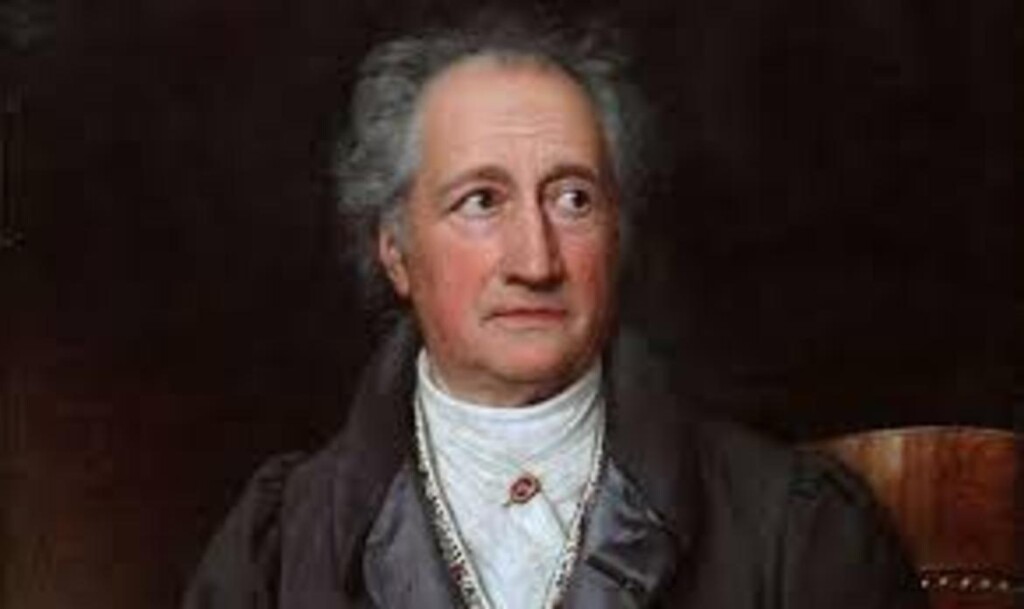
There is a kind of old age that looks like serenity from the outside and functions, from the inside, as an almost surgical refusal. Not the refusal of a man who has given up, but of one who has understood so much that committing to any single position feels like an amputation. In his final decades, Goethe occupied this condition with something that his admirers called wisdom and his detractors called cowardice, and both were probably right.
He watched Romanticism swell around him like a tide he had partly summoned and then declined to ride. He had given the young poets their storm and stress, their Werther, their aching subjectivity, and then he turned away from what he had seeded, calling their excess a sickness and their darkness a failure of clarity. He watched the revolutions — 1789, 1830 — with the cold fascination of a naturalist observing weather patterns he cannot stop and will not pretend to celebrate. When nationalism began coagulating into something that would reshape Europe’s face entirely, he offered only the concept of Weltliteratur, world literature, as if to say: the nation is too small a container for what human beings actually are.
His conversations with Eckermann, recorded between 1823 and 1832 and published in stages after his death, are one of the strangest documents in all of Western intellectual life. Johann Peter Eckermann was thirty years younger, deeply devoted, and constitutionally incapable of pushing back hard enough. What emerged from their exchanges is a hall of mirrors in which Goethe’s pronouncements shimmer with authority and yet, when you press on them, reveal their strategic indirection. He speaks of great men, of nature, of poetry, of immortality — and always with the precision of someone who knows exactly how much he is withholding. The philosopher Hans-Georg Gadamer, in Truth and Method published in 1960, would later argue that interpretation is never neutral, that the horizon of the reader shapes the horizon of the text. Reading Eckermann’s Goethe, one suspects that Goethe understood this four decades before Gadamer named it, and exploited it deliberately.
There is a man, very old, sitting at a window that overlooks a garden he has tended for forty years. He knows every plant by genus and failure. A younger man sits across from him asking questions, and the old man answers them with stories that seem to answer but do not quite close. You leave the room feeling instructed, enlarged even, and only later, walking home in the dark, do you realize you never received the direct thing you had come for. That was not an accident.
Goethe finished the second part of Faust in 1831, sealed the manuscript, and died the following year on March 22, 1832. He was eighty-two years old. The work had taken sixty years to complete, from the early fragments of the 1770s to that final sealed envelope. What he delivered was not resolution. Faust is saved not through merit but through divine mercy and feminine intercession, a conclusion that satisfies theology and undermines morality simultaneously, and which has allowed every subsequent reader to extract from it whatever they most needed to find. That, too, was probably intentional.
The sociologist Max Weber would later describe the tragedy of the modern intellectual as the tension between the ethic of conviction and the ethic of responsibility — knowing what you believe and knowing what believing it out loud will cost. Goethe lived this tension for eighty years and resolved it by never resolving it, by making ambiguity itself the final argument, the most honest position available to someone who had seen too much to pretend that certainty was anything other than a performance for people who had not yet paid close enough attention.
🌿 The Spirit of German Thought and Its Roots
Goethe’s life and works cannot be fully understood without exploring the rich intellectual and cultural soil from which they emerged. From Romantic philosophy to natural science, from alchemy to literary transformation, these articles trace the deeper currents that shaped and surrounded his world.
Alchemy in Literature: From Dante to Goethe
Alchemy left a profound mark on Western literature, and Goethe was no exception — Faust himself is steeped in the imagery of the Great Work and hermetic transformation. This article traces the thread of alchemical thought through centuries of literary imagination, from Dante’s symbolic descent to Goethe’s dramatic vision of the soul’s redemption. It is an essential companion for anyone seeking to understand the esoteric undercurrents running through Goethe’s masterwork.
GO TO THE SELECTION: Alchemy in Literature: From Dante to Goethe
Alexander von Humboldt: Life and Works
Alexander von Humboldt was a close contemporary of Goethe and shared with him a passionate vision of nature as a living, interconnected whole rather than a mere collection of measurable facts. Their intellectual friendship shaped the way both men approached science and art as inseparable pursuits. Reading about Humboldt illuminates the Romantic scientific spirit that pervades Goethe’s botanical studies, his Theory of Colors, and his literary explorations of the natural world.
GO TO THE SELECTION: Alexander von Humboldt: Life and Works
Schopenhauer: Life and Philosophical Thought
Schopenhauer emerged from the same German philosophical tradition that Goethe inhabited, and his vision of the world as driven by an insatiable, irrational Will resonates deeply with the restless striving at the heart of Faust. Though Goethe and Schopenhauer had a famously ambivalent relationship, their ideas circled around many of the same existential questions. This article provides essential philosophical context for understanding the darker, metaphysical dimensions of Goethe’s thought.
GO TO THE SELECTION: Schopenhauer: Life and Philosophical Thought
Philosophy of Nature: From Aristotle to Today
Goethe was not only a poet and playwright but a serious natural philosopher who contributed original work on plant morphology and optics. This article traces the long history of philosophy of nature — from Aristotle through the Renaissance to modernity — placing Goethe’s scientific intuitions within a rich and enduring tradition. Understanding this context reveals how deeply Goethe believed that poetry and the study of nature were two expressions of the same fundamental quest for truth.
GO TO THE SELECTION: Philosophy of Nature: From Aristotle to Today
Cinema as a Living Work of Art
If the depth of Goethe’s vision — where art, science, and the search for meaning converge — resonates with you, then independent cinema offers a kindred experience. On Indiecinema you will find films that share that same courage to explore the human soul without compromise. Discover a world of cinema that thinks, feels, and transforms.
👉 EXPLORE THE CATALOG: Watch Indie Films in Streaming
A vision curated by a filmmaker, not an algorithm
In this video I explain our vision

