
The Commute and the Hidden Rebellion
You are standing on the platform again. The time is the same as yesterday, the same as last Tuesday, the same as most mornings for years now. The train arrives with a sound you no longer hear consciously, a mechanical exhale that has sunk so deep into your nervous system it no longer registers as noise but as permission to move. You step aboard, find the gap between bodies, reach for the overhead bar with the automatic precision of someone who has rehearsed this gesture so many times it has ceased to be a choice. Around you, dozens of others do the same. The route was laid down before you were born. The schedule was written by people you will never meet. The stops were decided in offices whose existence you have never considered. And yet here you are, moving through a world built entirely without you, obeying its rhythms with a compliance so complete it feels like freedom.

This is not a critique of public transportation. It is an observation about something far more pervasive and far more intimate: the condition of living inside structures you did not design, following logics you did not author, inhabiting a civilization that arrived fully assembled before you had any say in its architecture. The city, the workplace, the supermarket, the hospital, the school — these are not neutral containers. They are, in the most precise sense of the word, strategies. Systems built by institutions to organize, predict, and in some measure control the movements and desires of the people who pass through them.
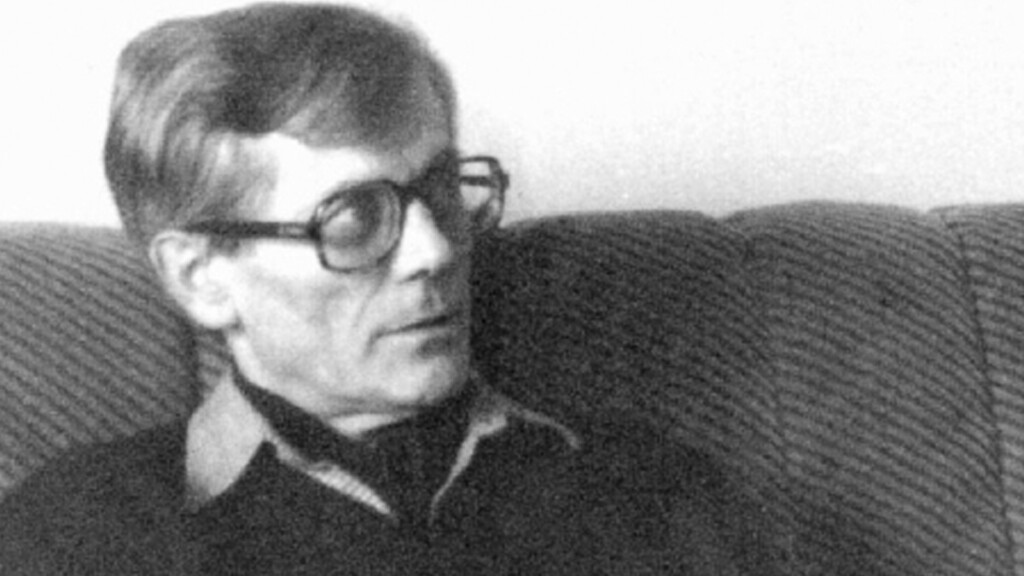
What Michel de Certeau noticed — and this is what makes him unusual among the thinkers of his generation — is that people are not simply obedient to these systems. They bend them. They reroute themselves through prescribed spaces in ways that leave no visible trace but that constitute, in their accumulation, a form of resistance so quiet and so ordinary that power structures rarely bother to suppress it. De Certeau was a French Jesuit priest, a historian, a cultural theorist, born in 1925 in Chambéry, trained in philosophy and theology before the upheaval of 1968 pulled his attention toward the streets and toward the question of what ordinary people actually do with the world as they find it. His major work, L’Invention du quotidien, published in 1980, begins not with theory but with an image: a man looking down at Manhattan from the top of the World Trade Center, watching the city from above, seeing it as a grid, a plan, a legible totality. And then de Certeau asks: what about the people down there, inside it, who cannot see the grid, who navigate by feel and habit and improvisation? What are they doing, exactly?
The answer he spent his career developing is that they are practicing. Not performing a script written for them, not merely consuming what the city offers, but using the city’s own materials — its streets, its signs, its schedules — in ways that were never intended, that serve ends the system did not anticipate. He called these practices tactics, and he distinguished them carefully from strategies, which belong to institutions with fixed places, stable identities, resources, and plans. A tactic has no such base. It operates in the enemy’s territory, borrowing the tools of power for purposes power never sanctioned.
You are doing this already, and you have probably never named it. The shortcut you take that saves four minutes and feels like small sovereignty. The book you read on the commute that makes you momentarily ungovernable by the schedule around you. The way you look out the window at a particular stretch of elevated track where the city suddenly opens and something in you opens with it, briefly, before the tunnel swallows everything again.
De Certeau saw this. He thought it mattered enormously.
A Jesuit Who Watched People Walk
He was born in Chambéry in 1925, in the French Alps, in a city that feels like a geographic parenthesis between two larger worlds — not quite Italian, not quite Parisian, suspended in mountain light and provincial habit. There is something fitting about that origin. His entire intellectual life would be spent attending to exactly those in-between spaces, those places where official maps stop making sense and actual human movement begins.
He entered the Society of Jesus and trained as a historian of mysticism, which is not the career path one associates with a theorist of subway shortcuts and supermarket detours. But the connection is not incidental. The Jesuits formed him in a particular discipline of attention: the capacity to read the invisible within the visible, to detect presence in absence, to find theological weight in what appears ordinary or marginal. The mystics he studied — figures like Jean de Labadie and the sixteenth-century Spanish tradition — were people who encountered the sacred precisely where institutions could not contain it, in the cracks of official doctrine, in bodily experience, in silences that the Church had not yet codified. De Certeau spent years learning to take those silences seriously as data.
That training did something irreversible to his gaze. When he turned away from the archives of mystical theology and began watching contemporary life, he brought with him the same hermeneutic patience — the same conviction that what appears negligible is often load-bearing. A theologian trained to find God in the margins does not easily dismiss the margins as meaningless. He watches them. He wonders what they are doing that the center cannot do.
The pivot came through the rupture of May 1968. De Certeau was already a formed intellectual, in his early forties, and the eruption of student and worker revolt across France struck him not as chaos but as revelation. He wrote about it almost immediately, in a text called La Prise de parole, arguing that what had happened was not a failed revolution but an irruption of speech — a moment when ordinary people had seized the right to name their own experience. The institutions had not collapsed; but something had cracked in the assumption that institutions spoke for everyone. He never forgot that crack.
L’Invention du quotidien appeared in 1980, two volumes, the first written by de Certeau and the second by Luce Giard and Pierre Mayol. The French title matters more than the English translation that arrived later. Invention, not practice. The quotidien is not managed or navigated — it is invented, actively, continuously, by people who have no idea they are inventing anything. This was his provocation, and it remains one.
What makes him a figure rather than simply a credential is precisely this combination of formation and displacement. He was a man of institutions — the Society of Jesus, the École des Hautes Études en Sciences Sociales, later the University of California San Diego — who spent his intellectual energy theorizing the lives of people who move through institutions without belonging to them. He understood power structures from the inside, having inhabited several of them, and that inside knowledge made his empathy for tactical resistance something other than romanticism. He knew exactly what strategies looked like, and he knew the difference between those who deploy them and those who must work around them.
He died in Paris in 1986, before the full reception of his work had time to form around him. He left behind a body of writing that ranges from dense theological history to something almost novelistic in its attention to gesture and routine. The mystic’s patience, it turns out, is excellent preparation for watching how a woman reorganizes her kitchen in ways her landlord never intended, or how a city dweller reads a map while walking a route the map does not contain.

Strategies and Tactics: The War Nobody Named
There is a moment when you realize the building you work in was not designed for you. Not hostile exactly, but not yours either. The layout of the corridors, the placement of the cameras, the timed locks on certain doors — all of it speaks a language decided elsewhere, by someone who drew a blueprint before you arrived and will revise it after you leave. You navigate this space every day, and yet you have never once controlled it. What you control is something far smaller and far stranger: the gap between the plan and the moment.
This is where Michel de Certeau plants his flag. In The Practice of Everyday Life, published in French in 1980, he draws a distinction so precise it feels almost surgical — between strategies and tactics. A strategy, in his framework, belongs to any subject with what he calls a “proper place”: a headquarters, a territory, a position from which to see the field and calculate moves in advance. Institutions operate strategically. Corporations, states, universities, hospitals — anything with an address, a budget, a long-term plan. The strategy is the language of those who own the ground they stand on. It projects, accumulates, disciplines time into a sequence it controls.
A tactic is something else entirely. It belongs to those who have no proper place, who must operate within territory that belongs to someone else. De Certeau calls this operating inside “enemy territory,” and the word enemy is not rhetorical flourish — it is conceptually precise. The weak do not have the luxury of planning across time. They have only the moment, the opportunity, the gap that opens briefly in the logic of the stronger. A tactic seizes that gap and then vanishes, leaving no monument behind. It is a raid, not a settlement.
Michel Foucault had already mapped the architecture of power with devastating clarity. In Discipline and Punish, published in 1975, he showed how modern institutions — prisons, schools, barracks, clinics — do not merely repress bodies but produce them, shape them, make them legible and manageable through surveillance and normalization. The panopticon was not just a building; it was a diagram of how power works when it no longer needs to be exercised because it has been internalized. Foucault’s analysis is brilliant and, in its way, almost totalizing. The subjected subject barely twitches.
This is precisely where de Certeau breaks. Not to dispute Foucault’s description of power’s mechanisms, but to insist that description is incomplete. Foucault sees what the institution does to people; de Certeau asks what people do inside the institution once the institution thinks it has finished with them. The answer is: they do something irreducible. They reroute. They repurpose. They introduce into every system a friction the system did not plan for and cannot fully absorb.
Think of a man crossing an open square in a city he has fled to after years of confinement — a place where he knows no one, where the language is not entirely his, where every institution reads him as a problem to be processed. He walks through that square not as a citizen with rights but as someone improvising an existence from materials not intended for him. He stops at a particular bench not because a sign directed him there but because the angle of the light, the proximity of a fountain, the rhythm of people passing — something in the accumulation of small sensory facts told him: here, now, this. Nobody designed that moment for him. He manufactured it from the wreckage of a designed world. That is a tactic. Not resistance in any heroic sense, not rebellion, not even refusal — simply the exercise of a creativity the system forgot to prohibit because it forgot that creativity could live this small.
De Certeau calls this the “art of the weak,” and the word art is not softening. It means something made. Something that did not exist before and will not persist after, but was, for a moment, entirely real.
The City Seen From Below and From Above
From the hundred and tenth floor, the city stops being a city. It becomes a diagram. The grid of Manhattan spreads below like a circuit board waiting for current, and the people on the streets — if you can see them at all — are reduced to the status of variables, moving particles in a system that was designed without them in mind. This is the view that planners love, that architects dream in, that urban theorists have historically mistaken for knowledge. To see everything from above is to believe you understand what is happening below. It is one of the most elegant and persistent delusions of modernity.
Michel de Certeau understood this with unusual precision. In The Practice of Everyday Life, published in French in 1980, he takes that god’s-eye view — what he calls the view from the World Trade Center, the totalizing perspective — and identifies it not as clarity but as a kind of blindness. The planner who sees the city as a grid sees the city as a text that has already been written. What he cannot see, what his altitude systematically erases, is the act of reading. And the act of reading, for de Certeau, is where everything actually happens.
Henri Lefebvre had already opened this territory six years earlier, in The Production of Space, when he drew his now-canonical distinction between conceived space — the space of planners, maps, and abstractions — and lived space, the space as it is actually inhabited, modified, and experienced by bodies moving through it. Lefebvre wanted to recover the body, the sensory, the political charge of everyday spatial practice. De Certeau inherits this move entirely, but he pushes it somewhere Lefebvre did not quite go. For Lefebvre, lived space is a kind of resistance, a fullness that precedes and exceeds the plan. For de Certeau, the relationship is more subtle and more unsettling: the walker does not escape the grid. She moves through it. The streets were built before she arrived. The sidewalks are not hers to design. And yet — and this is the pivot that makes de Certeau irreplaceable — the walker inflects. She chooses this block over that one, shortcuts through a courtyard, lingers at a corner that was built to be passed. Her walk is a sentence spoken in a language she did not invent, but spoken in her own syntax, with her own hesitations and accelerations.
Think of the man who crosses a city at three in the morning, not because he has anywhere to go, but because something in him needs to move. He knows every shortcut and ignores half of them. He takes the long way past the lit window of a bakery not because it is efficient but because it is his. No one designed that walk. No planner anticipated it. And yet it happens inside a city that was entirely planned, on streets whose widths were calculated, under lights whose positions were engineered. This is what de Certeau means by the pedestrian speech act: a use of inherited structure that is at once constrained and genuinely, stubbornly creative.
Or think of the woman who arrives in a foreign city and within two days has found routes no guidebook describes — a narrow passage between markets, a bench in a square that locals use as an informal meeting point, invisible to tourists because it requires the slow, attentive walk rather than the purposeful stride. She has not changed the city. She has read it differently. And that reading is, in de Certeau’s terms, a form of making.
The grid remains. The skyscraper view remains. But underneath it, billions of individual trajectories are being traced and erased every day, an enormous illegible text written in footsteps on surfaces built to be indifferent to them. The city as designed has never been the city as lived, and the distance between those two things is precisely where ordinary people have always stored their freedom.
Reading as Poaching
There is a woman on a park bench on a Tuesday afternoon. She has forty minutes before she needs to be somewhere else. She opens a novel she bought six months ago and never started, chosen because the cover reminded her of a color she loved as a child. She does not read it the way its author imagined. She skips passages, slows at sentences that have nothing to do with the plot but everything to do with a conversation she had last Thursday, re-reads a paragraph three times not because it is difficult but because something in it refuses to release her. By the time she closes the book and walks away, she has taken what she needed. The author’s intended architecture, the carefully constructed arc, the thematic argument built across three hundred pages — she has walked through all of it like someone crossing a field to reach the single tree they wanted, and she has left no trace of her passage.
This is what Michel de Certeau means by reading as poaching. The metaphor is deliberate and precise. A poacher does not own the land. They enter it, take what they came for, and disappear. The landowner — the author, the publisher, the cultural institution — retains possession of the text as object, but something has been extracted that was never theirs to control. De Certeau understands this not as misreading, not as a failure of comprehension, but as the fundamental structure of reading itself. Every reader is a poacher. Every act of reading is a covert operation.
Roland Barthes declared the death of the author in 1967, arguing that the moment a text is released into the world, the author’s intentions become irrelevant — meaning is produced by the reader, not deposited by the writer. It was a liberating theoretical gesture, and it changed how literary criticism understood itself. But de Certeau, characteristically, is not interested in the theory. He is interested in what the Tuesday afternoon woman on the bench is actually doing, the specific mechanics of her appropriation, the lived texture of how ordinary people consume cultural production and make it serve lives the producers never imagined.
Think of a man who has memorized every lyric of a record that was supposed to be a political document about a context entirely foreign to his own, a record made in a country he has never visited about a history he never lived, and yet he plays it on the mornings when he needs to remember that resistance is possible, that the voice can refuse. The musician did not write for him. The musician did not know he existed. And yet the music has become his, folded into the private mythology he uses to navigate days the musician never anticipated. This is not cultural appropriation in the political sense. This is something more fundamental — it is the irreducible freedom of the receiver, the gap between production and consumption that no amount of authorial control can close.
De Certeau published “The Practice of Everyday Life” in 1980, and the theory of reading he develops there is inseparable from his broader argument about tactics. The reader who poaches is practicing a tactic. They do not confront the text’s authority directly. They do not reject the book, burn it, write a manifesto against it. They work within its territory, accept its surface conditions, and silently extract what they need. There is something both humble and radical in this — the complete absence of declaration combined with the complete transformation of the object.
What dismantles the passive consumption model is not that readers are secretly subversive intellectuals. It is that subversion requires no consciousness of itself to function. The woman on the bench is not theorizing. She is simply living inside a Tuesday afternoon, inside forty stolen minutes, inside a text she has already made unrecognizable to anyone but herself.
A vision curated by a filmmaker, not an algorithm
In this video I explain our vision
Cooking, Walking, Talking: The Unarchived Resistance

You have done it. You know you have. You swapped the expensive spice the recipe demanded for something cheaper, something you actually had, and the dish came out better — or at least yours. You took the corridor behind the service elevator because it was faster, because you figured out that the building had a logic it never intended to share with you, and you used it anyway. You stayed twenty minutes past the end of your lunch break finishing a drawing, a letter, a small repair for your own home, using the company pen and the company quiet. Nothing dramatic. Nothing that would hold up in a court as resistance. And yet.
Michel de Certeau spent years looking precisely at these moments, the ones that evaporate before they can be named, and he understood them as a form of warfare conducted without weapons, without manifestos, without the dignity of being recognized as warfare at all. What he called la perruque — literally “the wig,” a French slang term for the practice of workers diverting company time and materials toward their own ends — was not theft in any meaningful sense. It was something more destabilizing: a quiet refusal to surrender the entirety of one’s labor-time to the logic of production. The worker who spent an afternoon fabricating a small wooden toy for their child using the factory’s tools was not stealing the toy. They were stealing back a portion of themselves.
This is the granular level at which de Certeau operated, and it is the level where most social theory refuses to go, because it looks too small. It looks like nothing. Pierre Bourdieu mapped the structures of power with enormous precision, but his habitus tends to reproduce itself, tends to close around the body like a mold. De Certeau wanted to know what happened in the cracks, in the moments where the mold did not quite fit and the person inside it improvised anyway. His concept of tactics, as opposed to strategies, rests entirely on this distinction: the powerful operate through strategy because they have a place, a base, a home terrain from which to plan and to watch. The ordinary person operates through tactics because they have no such place. They must act within the enemy’s territory, in borrowed time, using borrowed tools.
He did not arrive at these conclusions in a vacuum. The events of May 1968 in France electrified him and then, more importantly, troubled him in ways that the celebratory accounts missed entirely. When he published La Prise de parole that same year, just weeks after the barricades, he made an argument that most of his contemporaries found almost perverse: the revolution had not happened in May. The revolution had been happening all along, in the ordinary speech acts and daily practices of people who had never read a pamphlet and had no intention of occupying a faculty building. The barricades were merely the moment when something already present became briefly visible. And then the visibility ended, the streets were cleaned, and what remained went back underground, back into the kitchen, back into the corridor behind the service elevator.
Think of a woman who has made the same dish every Sunday for thirty years. The recipe exists somewhere, written down in a book she may not even own anymore. But what she makes is not the recipe. It is an accumulation of substitutions, corrections, refusals, and inventions that the recipe never anticipated and would not recognize. She has rewritten it in practice while leaving it intact on paper. The text submits. The cook does not.
A man navigates a city he did not design, that was not designed with him in mind, and finds lines through it that the planners never drew. His itinerary, walked daily, is a kind of authorship. De Certeau called this rhetorical, in the deepest sense: the city is spoken by those who walk it, and what they say is never quite what the city intended to mean.
The Mystical Roots of the Ordinary
There is a moment you may recognize: you are sitting somewhere unremarkable — a train compartment, a hospital waiting room, a kitchen at three in the morning — and something shifts. Not dramatically. No light falls differently, no voice speaks. But for a few seconds you understand something you cannot name, something the language you were given does not have a word for, and you know with absolute certainty that no institution on earth — no church, no university, no therapy, no political party — authorized this understanding or could have. It arrived outside of every system. And then it passed, and you went back to your life carrying it like an object you had no pocket for.
Michel de Certeau spent decades thinking about that moment. And almost everyone who reads The Practice of Everyday Life forgets, or never knew, that he arrived there through a completely different door.
Before he wrote about the tactics of ordinary people in consumer society, de Certeau was a historian of Christian mysticism. He was a Jesuit, ordained in 1956, and for years his primary scholarly obsession was the emergence in sixteenth and seventeenth-century Europe of what he called “the mystic” — not mysticism as a doctrine or institution, but as a particular kind of speech, a particular demand. The Mystic Fable, published in 1982, traces this emergence with the precision of an archaeologist and the unease of someone who suspects he is also excavating himself. The book begins from a startling thesis: mysticism as we know it was born from a rupture, from the moment when the Christian institutional apparatus — the Church, its hierarchy, its sacramental monopoly on divine contact — ceased to be self-evidently legitimate. Mystics arose at the crack.
Teresa of Ávila and John of the Cross did not seek God through the institution. They sought God against it, or at least around it, in a space the institution could not map. Teresa’s Interior Castle, written in 1577, describes an inward architecture of the soul that no bishop could enter. John’s dark night of the soul is precisely a space evacuated of every inherited form, every received image of the divine. What de Certeau recognized in these figures was not piety. It was epistemological insurrection. They were claiming that the real — the most real thing imaginable — was accessible only through direct, unverifiable, irreducibly individual experience. The system could not produce it. The system could only threaten to suppress it.
Think of a woman in a small room who has not spoken in years, not because she is mute but because everything she might say has already been classified, absorbed, answered by a language that was built before she arrived. And then one afternoon, alone, she speaks a single sentence to no one, and the room changes. Not the walls. Something in the air. She does not know what to do with what just happened. There is no form for it. The Church would have called it a vision and tried to regulate it. The psychiatrist would call it dissociation. Neither would be lying, exactly. Both would be completely wrong.
This is what de Certeau found in the mystics, and this is what he then recognized — transformed, secularized, stripped of its theological vocabulary but structurally identical — in the tactics of everyday life. The consumer who routes around the grid of the city, the reader who poaches meanings from the text, the worker who invents small dignities within the factory’s time: these are not, for de Certeau, merely sociological phenomena. They are the secular heirs of Teresa’s interior castle. They are people producing meaning in a space the system cannot authorize, cannot see, cannot contain.
Michel de Certeau was not a sociologist who happened once to have studied religion. He was a mystic who found that the mystical problem — how does the individual encounter the real when every institution claims to mediate it — was the central problem of modernity itself.
What the System Cannot Catalog
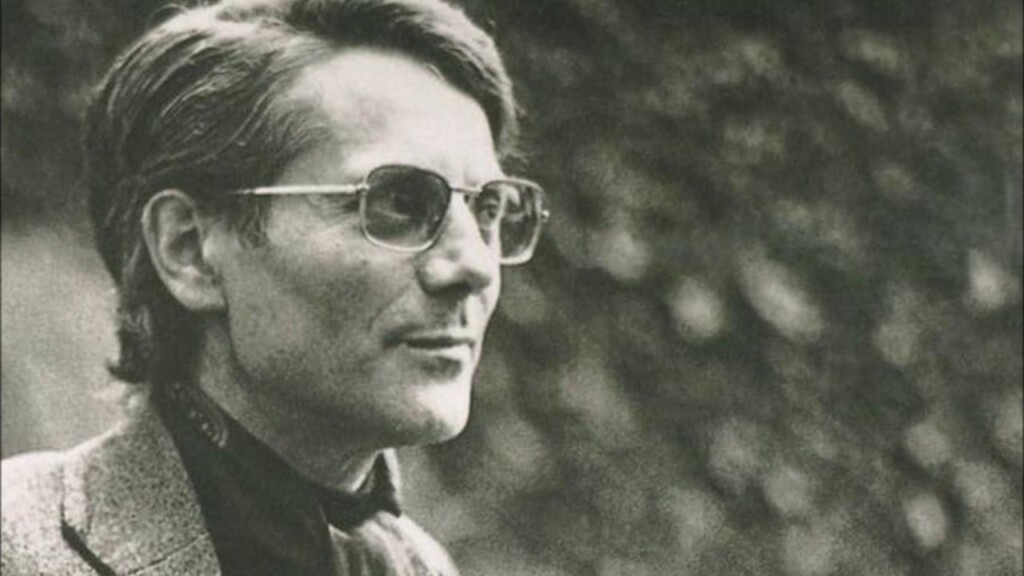
There is a paradox buried at the heart of everything de Certeau built, and it is not a small one. The entire architecture of his thinking rests on the claim that tactics are precisely what cannot be captured, cataloged, or stored — that the art of the weak derives its power from disappearing the moment you try to hold it still. And yet he wrote a book. A dense, extensively footnoted, academically published book, distributed through university presses, assigned in syllabi, indexed and cross-referenced and institutionalized with remarkable efficiency. The Practice of Everyday Life appeared in French in 1980 and in English translation in 1984, and it promptly became one of the most cited works in cultural studies, media theory, urban sociology, and at least four other disciplines that would have made de Certeau smile uncomfortably. The resistance, once named, became curriculum.
This is not a trivial contradiction to wave away. It is the contradiction, the one that lives at the center of the project like a structural crack. The moment you write the word “tactic,” you begin transforming it into a category. The moment you describe the pedestrian’s deviation from the prescribed urban path as an act of ungovernable selfhood, you have already started to prescribe it. Readers learn to recognize their own wandering as politically meaningful, which is to say they learn to perform it with a new kind of self-consciousness. The escape route becomes a marked trail.
Pierre Bourdieu, working at almost exactly the same historical moment, was building a framework that understood this problem differently. His Outline of a Theory of Practice, published in 1972, gave us the concept of habitus — that deep, largely unconscious disposition through which social structures reproduce themselves inside the bodies and choices of individuals. For Bourdieu, the gap between rule and practice was real, but it was largely the site of reproduction rather than resistance. People improvise, yes, but they improvise within ranges already shaped by their class position, their education, their accumulated social capital. The improvisation looks free from inside the body performing it. From outside, it traces predictable arcs. What feels like selfhood is, more often than not, the internalized voice of the social order speaking through you in the first person.
De Certeau found this insufficiently attentive to the genuine remainder — the thing that does not quite fit even within Bourdieu’s generous account of structured improvisation. He insisted that the gap between prescription and practice harbored something genuinely ungovernable, something that social reproduction could not fully account for. Not because people are metaphysically free, but because the system, however powerful, generates more friction than it can process. The everyday is not just a theater of reproductive improvisation. It is also the accumulation of ten thousand micro-refusals that leave no trace, prove nothing, and matter anyway.
Think of a man at a kitchen table in the early morning, before anyone else in the house is awake, doing something that has no name — not reading, not eating, not resting exactly, just occupying a small pocket of time that belongs to no schedule and answers to no purpose. He is not protesting anything. He is not even aware, in any reflective sense, that he is doing something. The stillness around him is his, briefly and completely, in a way that no sociological framework has ever quite managed to hold without the thing itself slipping through the description and disappearing.
This is what de Certeau was after. Not the heroic resistance, not the legible subversion, but the irreducibly small and unarchivable fact of a life being lived from inside, in the space between what the system asks and what the body, obscurely and stubbornly, does instead. The question that remains — and it remains with the particular insistence of questions that already know their answer is somewhere inside you — is what exactly you are doing, right now, when you think you are simply living your life.
🗺️ Walking, Power, and the Tactics of Everyday Life
Michel de Certeau’s thought unfolds at the crossroads of social practice, cultural resistance, and the philosophy of daily existence. The articles below trace the intellectual landscape that surrounds and illuminates his ideas, from the sociology of taste and distinction to the politics of space and the critique of mass culture.
Bourdieu’s Distinction: Taste and Social Class
Pierre Bourdieu’s Distinction examines how cultural tastes function as markers of social class, revealing the hidden hierarchies embedded in everyday choices. Like de Certeau, Bourdieu was fascinated by the logic of practice, though where de Certeau emphasized the subversive creativity of ordinary people, Bourdieu focused on the reproduction of power through habitus. Together, their perspectives form a rich and productive tension at the heart of cultural sociology.
GO TO THE SELECTION: Bourdieu’s Distinction: Taste and Social Class
Mass Social Homologation Today
The phenomenon of mass social homologation sits at the very center of de Certeau’s concerns: how do individuals navigate, resist, or succumb to the standardizing forces of modern consumer society? This article explores the mechanisms through which contemporary culture tends to flatten difference and enforce conformity, offering an essential backdrop for understanding why de Certeau’s concept of ‘tactics’ remains so urgent. Reading both together sharpens our awareness of the battlefield that is everyday life.
GO TO THE SELECTION: Mass Social Homologation Today
Karl Marx and Alienation: Economic and Philosophical Manuscripts
Karl Marx’s early writings on alienation provide a foundational philosophical framework for understanding why thinkers like de Certeau felt compelled to reclaim the agency of the ordinary subject. The Economic and Philosophical Manuscripts describe a world in which human beings are estranged from their own activity, their products, and each other — a condition de Certeau sought to counter by revealing the creative resistance hidden within mundane practices. Tracing this lineage helps situate The Practice of Everyday Life within a broader emancipatory tradition.
GO TO THE SELECTION: Karl Marx and Alienation: Economic and Philosophical Manuscripts
Jan Assmann and Cultural Memory
Jan Assmann’s theory of cultural memory explores how societies preserve, transmit, and transform their shared past through rituals, texts, and institutions — themes that resonate deeply with de Certeau’s interest in history as a practice of writing and forgetting. Both thinkers interrogate the power relations embedded in the production of knowledge and the construction of collective identity. This article opens a comparative path between memory studies and the critique of everyday life.
GO TO THE SELECTION: Jan Assmann and Cultural Memory
Discover Independent Cinema on Indiecinema
If de Certeau’s vision of life as a field of creative resistance and hidden tactics has sparked your curiosity, Indiecinema is the streaming platform where those same ideas come alive on screen. Independent cinema has always been the art of the tactical — films made outside the logic of the spectacle, true to the complexity of lived experience. Explore our catalog and find the films that walk the streets de Certeau mapped.
👉 EXPLORE THE CATALOG: Watch Indie Films in Streaming
A vision curated by a filmmaker, not an algorithm
In this video I explain our vision

