
Social networks have truly been an epochal revolution, but not because they have connected people to each other and have fostered personal growth. Rather because they revealed who we are, something we were absolutely unaware of until the late 1990s, creating an mass homologation epochal. It is now normal to go to see a movie at the cinema but spend most of the time ignoring the images on the screen and staying with your eyes on your smartphone: the sacredness of the show, massacred first by television and remote control, then by the internet, is now a distant memory.

In the 90s, in my naive mind as a teenager without an internet, there was another world, another society made up of people with wide horizons. Then the web was born and grew, slowly focusing on a picture that I never expected, thanks above all to social networks. The real world, what people seek and want, was very different, and there was nothing to do but take it slowly awareness, trying to understand its dynamics.
Start watching movies with a free trial
What is Mass Homologation Really?
The mass homologation and the total lack of critical spirit, the complete inability of the human being to evaluate and choose with his own head. At the root of the lack of critical spirit is the success of the most popular brands. Without this homologation of thought they could not have the great success and almost total monopoly of the market that they now have.
The success of large monopolistic companies occurs through mass approval, the advertising of fashions, tastes and lifestyles. Fashion is one of the main tools for homologating human beings and making them all somewhat similar to each other.
The approval takes place through an avalanche process. At the heart of the process is basically a lack of personality. By personality, however, we do not mean those people with high self-esteem, who talk continuously, who seem to know everything, who know how to impose themselves with their character on others, in work and in private life. Personality is the presence of a rich inner world, of an awareness that lives on more levels of existence.
Without our original inner world, in the course of our life we are filled with values and thoughts that come from without. It is a long process that begins in the first days of school and for many it lasts a lifetime. Our beliefs, our values and our thoughts align with the stimuli that come to us from the outside world.
The Lost Poet
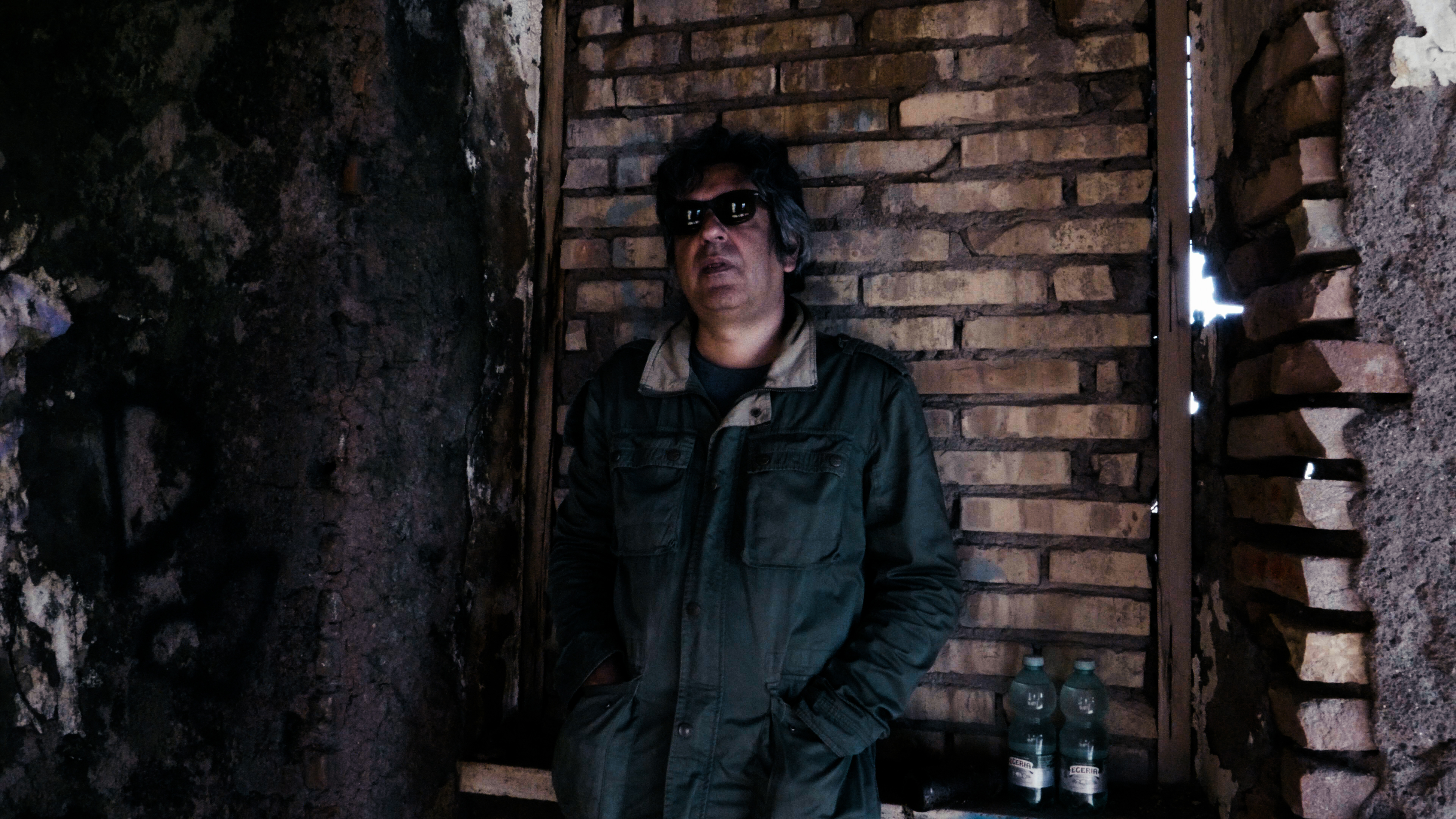
Drama, by Fabio Del Greco, Italy, 2024.
Dante Mezzadri wants to see an old friend, nicknamed the Iguana, whom he has lost sight of for many years, and who has managed to turn their shared youthful passion for poetry into a job, becoming a famous writer and poet. The man escapes from his bourgeois life and his wife to live homeless on the Roman coast, printing and trying to sell his poetry collections. At night he sleeps in a park of old carnival floats, inside a papier-mâché tank, and waits for the opportunity to meet his old friend, who however never shows up for appointments in the places they frequented when they were young, now in ruins. Dante's poetry books do not interest anyone and to support himself he is forced to "change product": he starts selling the infamous "cannibal pill" on behalf of young drug dealers, a new drug that sells like hot cakes and causes sensory and consumerist ecstasy. However, he realizes that this powerful drug is very dangerous for those who take it, he comes into conflict with his ethical conscience and throws all the pills into the sea. However, the dealers want to collect their money.
Shot over a period of 2 years, the film is a reflection on the cultural and artistic rubble of the society in which the protagonist lives, in an increasingly mechanized, consumerist and arid world. Dante Mezzadri is yet another human being who has renounced his inspiration and his creativity, but unlike many he is not willing to give his life to a system that distances him from his true identity. The physical world around him, however, seems constructed in such a way that it seems impossible to escape from this "invisible cage". The enthusiasm of the people he meets is ignited only by sensory gratification, by unreal visions of personal affirmation and success, by "metaverses" that offer an escape into an illusory and destructive reality. The poet's house on the coast, where he met with his friends as a young man, is just a pile of abandoned rubble. What happened to all those who wanted to become poets and ended up becoming something else? Are there internal forces with which that house can be "rebuilt"?
LANGUAGE: Italian
SUBTITLES: English, Spanish, French, German, Portuguese
Approval and the Media
The company bombards us continuously 24 hours a day, 365 days a year. It tells us how we should dress, what we should consume, what are the shows and films to see. What is right and what is wrong, what is good and what is bad. What we need to be afraid of and what we can trust. Unfortunately most of the people did not understand that this stream of information that we are subjected to throughout our existence is almost totally false.
Through i mass media, it is possible to create totally artificial societies and manipulate the lives of millions of people. Also because mainstream information and shows spread with a kind of domino effect. It is the same people or independent media who advertise and echo the mainstream, thinking they are riding the wave and making a profit.

Social Homologation and Loneliness
At the base of all this mechanism, expertly orchestrated by the leaders of each sector, there is an archaic fear of the human being, so deep-rooted and profound as to influence every choice. This is the fear of being alone, marginalized from the rest of the world. If I don’t behave as others do, I remain isolated, I no longer have any value for the society in which I live.
Most people, at such an idea, are literally terrified. The idea of remaining without a job within the traditional mechanism, the idea of no longer having friends, the idea of not being able to socialize with others because they have not seen the same shows, the same news. The idea of looking like a loser because she doesn’t dress in fashion.
Obviously the adolescents and young people are much more exposed to these misinterpretations of the world in which they live. In the world of youth we often witness incredible and grotesque mass homologation phenomena. But as the years go by, we focus more and more on who we are and drift away from the flock. But it doesn’t happen for everyone. Some continue the false script of a life built by someone else even in their 50s, 60s or 80s.
Unfortunately, these people are going in the wrong direction. The meaning of each existence and individual, each life has a unique meaning that everyone can only find within himself. An objective rule can be affirmed with certainty: the more we move away from the standards and stereotypes that are proposed to us from the outside, the more we are able to glimpse the most essential thing, the one that answers all the questions: Who are we?
No one could ever have dared to go so far with the imagination, not even the pessimistic Pasolini of the last period. The mass standardization is no longer a social or political issue. Mass social homologation have become the same thing. Indeed, the company is only a small part of the standardization which then has its roots in the depth of individual souls.
But most people are completely unaware of the abyss in which they live. Perhaps today Pasolini would write his poems on social networks and would be quickly dismissed as one of the many controversial conspiracy theorists, one of the many crazy keyboard lions.
The Sands

Science fiction, by Noah Paganotto, Argentina, 2022.
In an undetermined location on planet Earth, in an unknown time, Zoilo lives with his family in a wasteland surrounded by ruins. They live uprooted, without mothers, knowing that pregnancy for women is synonymous with death. For them there is only one collective routine; keep the fire alive. Only Zoilo escapes this logic, observing, intrigued, details that others do not see and therefore do not appreciate. Zoilo's personal search for answers will increase the differences with his relatives, increasingly revealing an empty world of interiority.
Avant-garde film that burns slowly in the first part and then reveals in the second the profound conflicts of a family prisoner of archaic beliefs. It is a dystopian and visionary work, with wonderful photography and images of rare power that allow us to grasp the depth of the story and its poetic potential. The faces of the actors, especially the protagonist boy, are perfect. The Sands metaphorically represents the world we live in: an alienated society, where what keeps us alive is demonized and blamed for death. In opposition to the fast pace of the typical mainstream film, The Sands is a meditative journey into the depths of images. The film was shot in natural environments in the city of Necochea, Buenos Aires province, Argentina.
LANGUAGE: Spanish
SUBTITLES: English, Spanish, French, German, Portuguese
Employee's Mystery
Giuseppe Russo leads a totally approved life: a permanent job, a wife chosen in the worst possible way, a series of products of which he is a faithful buyer. But something shakes him deeply. It is the meeting with a strange tramp who gives him old VHS tapes, in which Giuseppe was filmed as a teenager. Who filmed those magnetic tapes that I don’t remember anything about? Who is the strange wanderer?
Employee’s Mystery is a film about the extreme homologation of the human being in the era of digital control. There is no doubt that technologies now have the possibility to pervasively enter our lives. But what is the limit between reality and dystopian movie? What is the price to pay to find out who we really are?
Watch Employee’s Mystery
No one could ever have dared to go so far with the imagination, not even the pessimistic Pasolini of the last period. The mass standardization is no longer a social or political issue. Mass social homologation have become the same thing. Indeed, the company is only a small part of the standardization which then has its roots in the depth of individual souls. But most people are completely unaware of the abyss in which they live. Perhaps today Pasolini would write his poems on social networks and would be quickly dismissed as one of the many controversial conspiracy theorists, one of the many slightly out of his mind keyboard lions.
Social Homologation and Materialism
More we have comfortable technologies that make our life easier, the more human beings seem inclined to support their homologation to social norms, fashions and has what more audience. The web is full of millions of articles all the same, written in a way to satisfy what users like, what is trendy. Culture slowly becomes a mass of photocopies of photocopies of photocopies. Social approval beyond any tolerable threshold.
The materialism of a society devoid of dreams, of art that inspires, is the main reason for social homologation and the decline of civilization. Through materialism, for example, people of a certain social class ghettoize themselves in certain circles: they attend the same parties, the same gyms, they do not intend to be confused with the humbler classes. The idea of a more comfortable material life, the pride of having more money than others leads them towards a path with no way out: that of the most ridiculous social homologation possible, the social homologation of those who believe in a life made only of matter. All this is told in an extraordinary way by Luis Bunuel in the film The Exterminating Angel.
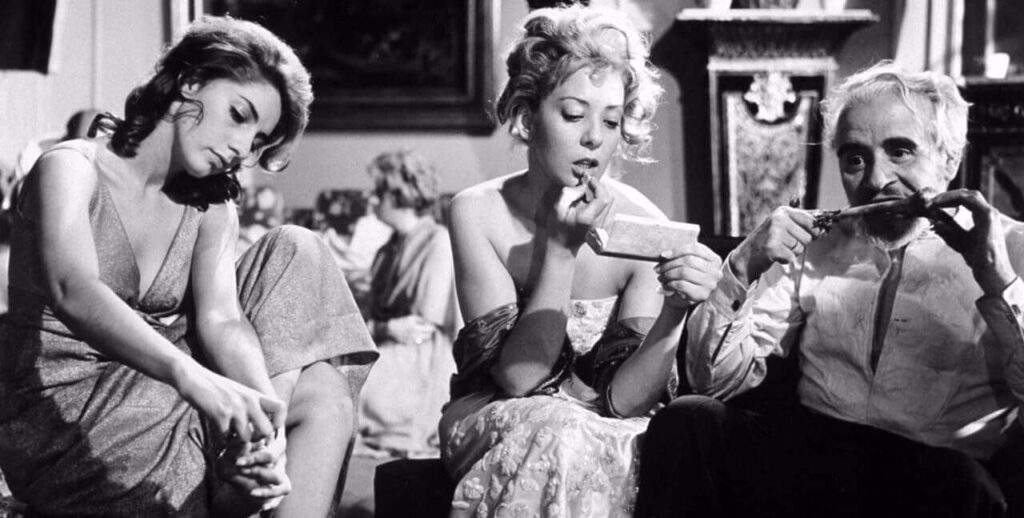
Even children get used to competitiveness, the struggle of opposing factions, conflict. It is through conflict that the human being regresses, is homologated and does not adapt to a greater development plan. Because the big plan foresees, as a necessary and obligatory condition, that a social agreement is found. Not a social homologation.
Authority can even impose certain strict rules of behavior, punished in certain cultures with torture and death. Those who do not adapt and try to be themselves are condemned to loneliness, marginalization, to be used as an object and nothing more.
Mystery of an Employee
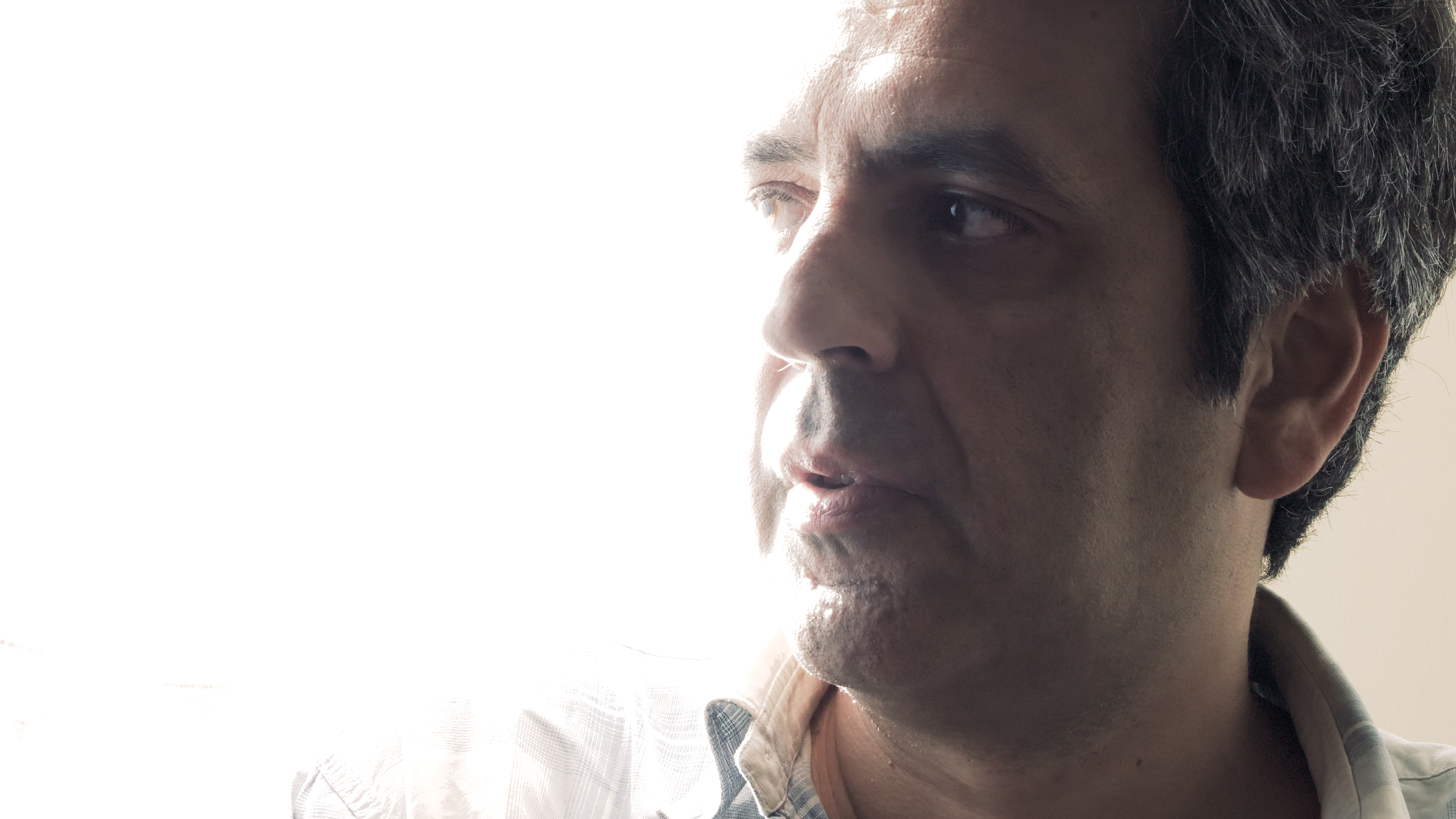
Drama, thriller, by Fabio Del Greco, Italy, 2019.
Someone wants to control the life of the employee Giuseppe Russo: the products he buys, his political and religious faith, his private life, even his dreams. But he will do anything to escape control and find his true self. Giuseppe is a man of around 45, married, with a stable job and a home of his own. His life flows seemingly peacefully when he meets a mysterious tramp who gives him some old VHS video cassettes. Giuseppe begins to see video tapes in which he is filmed in some moments of his life since he was a child, then as a teenager and as a young man. Who shot those videos that he remembers nothing about? Giuseppe has the strange sensation of being constantly observed and begins to investigate what is happening. Through his investigation of him, he begins to rediscover his true identity and become aware of who he truly is.
Employee's Mystery is a film that highlights the danger of social control and shows a society where everyone is constantly monitored and conditioned in their deepest selves. The film is also an analysis of human nature and identity. Fabio Del Greco, who plays Giuseppe, gives an engaging performance. Equally good is Chiara Pavoni, in the role of Giada Rubin and Roberto Pensa in the role of the tramp. Employee's Mystery is a film that addresses important themes in an original way, a psychological thriller that keeps the viewer glued to the screen until the end: a metaphor for contemporary society, in which people are increasingly monitored and conditioned by the media and technologies . It is a courageous and provocative work, which addresses important themes in an original way.
LANGUAGE: Italian
SUBTITLES: English, Spanish, French, German, Portuguese
A vision curated by a filmmaker, not an algorithm
In this video I explain our vision
Social Approval and Social Networks
Thanks Facebook for having opened this window: now the world is no longer the same. Indeed, it is more accurate to say that it appears for what it really is. Mass social homologation has emerged more and more with the internet and in particular with social media, to show itself shamelessly to the whole world. Google trends searches speak for themselves: the most searched terms every year are related to football, to Friends of Maria De Filippi, to inept politicians on duty, to the latest nonsense of mainstream culture. Many would cut a finger to follow their favorites, without even the slightest awareness that they are only puppets and brands in the hands of a great puppeteer.
Chiara Ferragni is not only a model for girls who do not know what kind of underwear to wear in the morning, but also a business model for men and institutions who want to build the society of the future. The real gurus are no longer those who write books, taking months or perhaps years, but those who have an approximate tutorial on the web or on social networks for every question of human knowledge. Mass homologation, with the growth of superficial communication in the age of social media, grows exponentially, and becomes homologation of the whole society.
Lack of Critical Conscience
What leaps to the eyes of the world of social networks and search engines is the absolute lack of any individual critical spirit that can guide their life choices, instead dramatically shaped by the powers, uses and pre-made costumes. Who knows by whom, who knows where, who knows when and who knows why. Social media are the new point of reference for choosing and walking the path of life.
The controversy as an end in itself for pure outburst that recalls the famous “hour of hate” by Orwell in 1984. The destructive criticisms, the selfies, the apps for teenage dances, the great industry experts who want to teach “how to”. Children who at the parties of their peers do not even get up from the table to continue to stay with their heads immersed in the smartphone. Whole populations that now mark their existence by scrolling the Facebook feed on the phone without a purpose, in the streets, in cinemas, in bars, everywhere, like crazy pinball balls in search of any kind of entertainment. They are just the tip of the iceberg of a universe of dramatic social homologation on which we should take some time to reflect seriously.
But no one seems to notice, indeed, these speeches are annoying today. They distract from fashionable lifestyle, materialistic, with no prospects of transcendence. The impression is that the survival instinct, the aesthetics and the more superficial appearance of life dominate the world. For example, mediocre, improvised makeup tutorials that once even the worst of local TV stations would have doubted to broadcast have a following of millions and millions of followers around the world.
Because, once again, behind this seemingly free ocean flow, the ultimate goal is to make money or proselytize. What we see in any square of any city in the world are dozens of heads bent towards that small screen that we always hold in our hands: the smartphone is the new Messiah and the large corporations that are inside the Holy Spirit.
Fortunately, Nature, even if it is severely tested, is always there, firm, imposing, immortal. Once again Nature will save the world. But even if this happens, those who live in the homologation will not be able to live it. When you feel emptied of an existence that does not belong to us the only way is to become aware of it and decide to change your life.
A vision curated by a filmmaker, not an algorithm
In this video I explain our vision

