
The Nephew Who Rewired the World
You are standing in your kitchen in 1924, and you do not yet know that the bacon on your plate was placed there by a publicist. The eggs beside it were not a natural pairing, not a culinary tradition passed down through generations, not a discovery made by American housewives over decades of experimentation. They were the result of a deliberate campaign commissioned by Beech-Nut Packing Company, executed by a man who understood something most of his contemporaries had not yet articulated: that desire is not born, it is manufactured, and the distance between a human want and a human need can be collapsed by someone who knows exactly where to press.

That man was Edward Louis Bernays, born in Vienna on November 22, 1891, into a family whose intellectual gravity was almost comically overdetermined. His mother was Anna Freud, sister of Sigmund. His father’s sister would also marry Sigmund Freud. He was, by two separate lines of family architecture, the nephew of the man who had just proposed that beneath the rational surface of human beings ran an engine of drives, fears, and unconscious compulsions too volatile to be addressed directly and too powerful to be ignored. The uncle spent the rest of his life trying to give patients tools to understand these forces from within. The nephew would spend his own life learning how to operate those same forces from without.
Bernays emigrated to the United States as an infant, and the country he grew up in was not yet aware of itself as an object to be shaped. The Progressive Era was producing its own mythology of rational citizenship, of the informed voter, of democratic participation as the natural expression of human reason. Walter Lippmann, writing in Public Opinion in 1922, had already begun dismantling that mythology with something closer to surgical honesty, arguing that most people navigate the world through simplified mental pictures he called stereotypes, cognitive shortcuts that have almost nothing to do with actual conditions. Bernays read Lippmann. He also read his uncle’s The Interpretation of Dreams, published in 1899, and the later Psychopathology of Everyday Life. But where Lippmann arrived at anxiety and Freud arrived at therapy, Bernays arrived at opportunity.
What he produced from that reading was not a theory but a technology. In 1923 he published Crystallizing Public Opinion, the first book ever to articulate the practice of public relations as a professional discipline with defined methods and a coherent intellectual framework. Three years later came Propaganda, a text that announced its own intentions with a directness that later practitioners of the same craft would learn to disguise. In it, Bernays wrote with undisguised confidence that the conscious and intelligent manipulation of the organized habits and opinions of the masses was not a corruption of democracy but its necessary operating condition. Invisible governors, he called them, the small number of people who understand the mental processes and social patterns of the public and pull the wires that control the public mind. The phrasing carries no apology.
The intellectual move Bernays made was precise and almost elegant in its ruthlessness. Psychoanalytic theory had located the irrational at the center of human behavior and treated that irrationality as a wound requiring care. Bernays accepted the same diagnosis but rejected the therapeutic conclusion entirely. If people were not rational actors moved by reasoned argument, then reasoned argument was simply the wrong tool for moving them. The correct tools were symbols, associations, emotional triggers, the strategic linkage of products and policies to deeper hungers that had nothing to do with the products or policies themselves. He was not the first person to manipulate public sentiment, but he was the first to write a manual for doing so, to claim professional standing for the act, and to present it as a form of social management indistinguishable, in his framing, from governance itself.
Torches of Freedom and the Architecture of Desire
You are standing on Fifth Avenue in New York City on Easter Sunday, 1929, watching a group of well-dressed women light cigarettes in full public view and keep walking. Something about the scene feels spontaneous, even defiant. It is not. Every match struck that morning had been choreographed weeks in advance by a man sitting in an office who understood, with surgical precision, that the most powerful thing you can sell is not a product but a permission.
George Washington Hill, president of the American Tobacco Company, had a problem that no advertising budget could straightforwardly solve. Women represented roughly half the potential market for Lucky Strike cigarettes, and a powerful social taboo kept them from smoking in public. The taboo was not merely polite convention — it was enforced, viscerally, as a marker of female respectability. Hill turned to Bernays, who did not ask how to sell cigarettes to women. He asked something more dangerous: what does a cigarette mean?
He went to Abraham Arden Brill, one of the first psychoanalysts practicing in the United States and a translator of Freud’s work into English, and posed the question directly. Brill told him that cigarettes functioned, in the female psyche, as symbolic torches — extensions of phallic power that men had long monopolized. The act of smoking in public, Brill suggested, could be coded as an assertion of equality, a seizure of something that had been withheld. Bernays did not find this disturbing. He found it operational.
He contacted debutantes and society women, framing the march not as a commercial promotion but as a feminist gesture. He suggested they were carrying “torches of freedom.” The phrase did not appear in any advertisement — it was planted in the minds of journalists who covered the event as news. The women who participated likely believed, at least partially, that they were doing something meaningful. The newspapers reported it as a cultural moment. The sales figures for Lucky Strike climbed.
What Bernays had constructed was not a lie, exactly, but something more insidious than a lie: a symbol that carried genuine emotional weight and was simultaneously being deployed as a delivery mechanism for corporate revenue. The women’s desire for equality was real. The taboo against public smoking was a real instrument of control. Bernays simply inserted a product into the gap between those two forces and let the energy of authentic resentment do the work of advertising. He described this method openly in his 1928 book Propaganda, arguing that the conscious and intelligent manipulation of the organized habits and opinions of the masses was a necessary feature of democratic society, not a corruption of it.
The philosopher of science Ian Hacking, writing much later about how categories shape the behavior of people placed within them, called this process “dynamic nominalism” — the idea that naming something changes what it is and how it is lived. Bernays understood this intuitively, decades before the language existed. By naming the cigarette a torch of freedom, he did not merely describe a pre-existing symbolic value; he manufactured that value and deposited it into the object, knowing that once the association lodged in the culture, it would operate autonomously, without his further intervention.
What makes this more than a historical curiosity is the structure it reveals. The 1929 march was not an anomaly — it was a proof of concept. It demonstrated that you could take the most intimate architecture of human longing, the desire to be seen as free, as equal, as uncontrolled, and use it as scaffolding for a commercial transaction. The customer believes they are expressing themselves. They are, in fact, being expressed by someone else’s design. The product becomes incidental; what has been sold is the feeling of agency, carefully manufactured by a man who had none of his own feelings about tobacco, only about the mechanics of persuasion.

Crystallizing Public Opinion and the Birth of a Profession
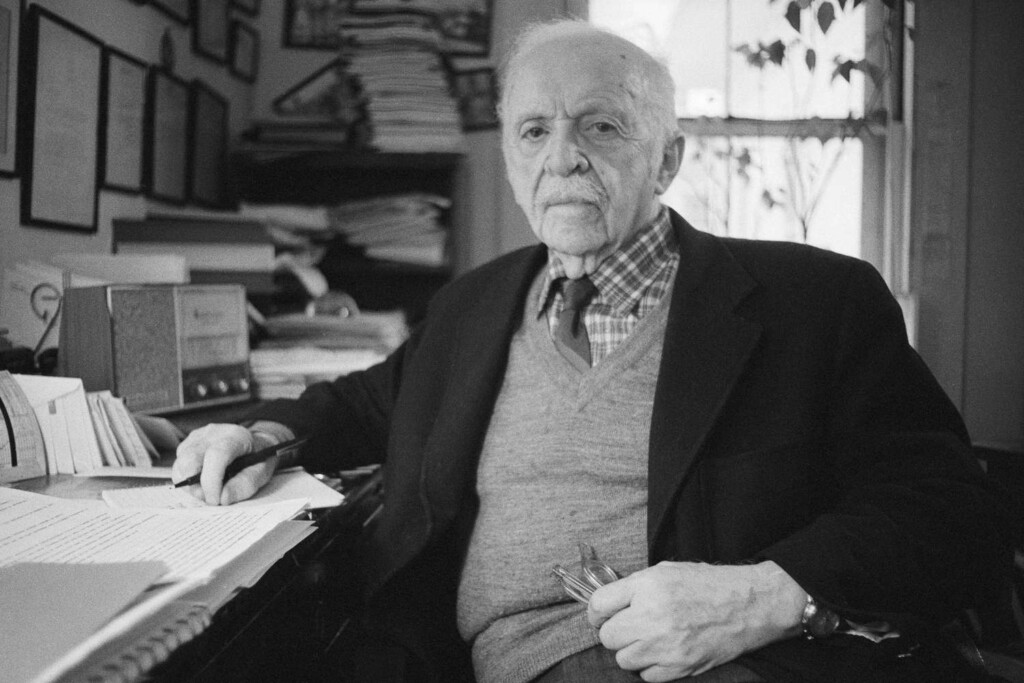
You are standing in a bookstore in 1923, and a thin volume is sitting on a shelf between treatises on advertising and manuals on rhetoric, and you pick it up not because you know it will outlast nearly everything else on that shelf, but because the title promises something practical. Edward Bernays had just turned thirty-one, had already run influence campaigns for the United States government during the First World War as part of the Committee on Public Information under George Creel, and had decided that the scattered techniques of persuasion he had witnessed and practiced deserved a formal architecture. What he produced in Crystallizing Public Opinion was not merely a how-to manual. It was a philosophical claim dressed in professional language, and the claim was this: the public cannot be left to form its own conclusions.
The argument Bernays constructed was sophisticated enough to avoid sounding authoritarian. He drew on the work of Walter Lippmann, whose Public Opinion had appeared just one year earlier in 1922, and whose concept of the “pseudo-environment” — the mental map we mistake for reality — gave Bernays the theoretical scaffolding he needed. But where Lippmann remained largely a diagnostician of democratic fragility, Bernays made the pivot from diagnosis to prescription. If the public lives inside a manufactured picture of the world, then someone must be the manufacturer, and that someone should be trained, credentialed, and paid. This was the birth move of a profession: converting a problem of epistemology into a commercial service offering.
What made the book dangerous was precisely its reasonableness. Bernays argued that public relations counsel — his preferred term for the practitioner he was in the process of inventing — functioned like a kind of social engineer, identifying latent desires and anxieties within mass audiences and attaching them to specific products, causes, or political positions. He described the public not as a sovereign force but as a collection of overlapping group psychologies that could be mapped, targeted, and redirected. The language was clinical. The implications were that representative democracy was, at its operational core, a system that required stewardship from above, because the average person lacked the cognitive architecture to process complex social questions without assistance.
Corporations absorbed this framework faster than governments did, and by the late 1920s and into the 1930s, companies like General Electric, Procter and Gamble, and the American Tobacco Company were retaining public relations counsel as a standard business function. Bernays himself worked with Dodge Motors, Cartier, and the United Fruit Company, among dozens of others. The profession grew around his template with remarkable speed. By 1945, the Public Relations Society of America had been founded, and the discipline had moved from the margins of business culture to its institutional center. What Crystallizing Public Opinion seeded in 1923 had become, within two decades, a permanent feature of how organizations understood their relationship to the public.
The subtler violence of the book lies in the word “crystallizing” itself, which implies that public opinion already exists in solution, waiting to precipitate into solid form, and that the task of the practitioner is merely to provide the right conditions for it to do so naturally. This metaphor does enormous ideological work. It makes manipulation appear indistinguishable from facilitation. It frames the management of mass belief as a kind of service to the public rather than a procedure performed on it. And it gave generations of practitioners a professional self-image that absolved them of the ethical weight of what they were actually doing — not clarifying what people already thought, but deciding what they would come to think, and engineering the path by which they would arrive at it feeling as though they had walked there freely.
What a profession requires, above all else, is a story about its own necessity.
Propaganda, the Honest Book Nobody Wanted to Read
You already know the ending before you open the book. That is the most unsettling thing about sitting with Bernays’s 1928 volume, because it does not pretend to be anything other than what it is: a manual and a manifesto at once, written by a man who had already spent a decade doing the thing he was now describing in plain sentences. He did not bury the argument in footnotes or soften it with academic hedging. The first paragraph announces that an invisible governing class consciously and continuously manipulates the habits, opinions, and decisions of the masses, and that this manipulation is not a corruption of democracy but its actual operating mechanism. He called it “the engineering of consent” before that phrase became a polite euphemism. In 1928, he just called it what it was.
The intellectual scaffolding he drew on was not obscure. Walter Lippmann had published Public Opinion in 1922, arguing that the modern citizen was structurally incapable of processing the complexity of the world and required mediating elites to manufacture simplified images of reality. Wilfred Trotter had published Instincts of the Herd in Peace and War in 1916, treating human social behavior as fundamentally instinctual and crowd-bound. And Bernays’s own uncle had, by 1928, already given the world a vocabulary for unconscious drives that no one fully understood yet but everyone was beginning to use. What Bernays did in Propaganda was not synthesize these thinkers academically. He operationalized them. He translated the theory of mass irrationality directly into a set of techniques available to any corporation, government, or institution with sufficient resources and ambition.
What makes the book historically strange is not its content but its reception. It was not suppressed, not banned, not quietly shelved by embarrassed publishers. It was reviewed. It was purchased. It was read by the people it was about. The institutions Bernays named as beneficiaries of professional manipulation — corporations, political parties, public health bodies, trade associations — absorbed its lessons into their standard operating procedures over the following two decades. Joseph Goebbels kept a copy and annotated it. The United States government would later replicate its exact architecture during wartime information campaigns. The book’s survival was not accidental: it survived because power found it useful, not because the public found it clarifying.
There is something almost clinical about Bernays’s prose, and that coldness is itself a rhetorical strategy. He writes about the manipulation of twenty million people in the same register one might use to describe the lubrication of a mechanical part. The consumer, in his framing, is not a citizen to be persuaded but a system to be managed. He was not the first to think this. He was simply the first to say it in a book available at any decent American bookshop, with his name on the cover, and to face no meaningful consequence for saying it.
Consider what that absence of consequence actually means. When a confession of this magnitude produces no scandal, no legislative inquiry, no mass refusal, the silence itself becomes data. It tells you that the people most directly described in the book — the ones being managed, guided, and redirected without their conscious knowledge — either did not read it, did not believe it applied to them personally, or read it and decided that someone competent running things was preferable to the alternative. All three responses are equally useful to the system Bernays was describing. None of them threaten it.
The honest book nobody wanted to read stayed on the shelf not because it was too radical but because it was too accurate, and accuracy about one’s own condition has always been the most comfortable thing in the world to postpone. Propaganda did not need to be hidden. It only needed to be published at the exact moment the reader was not quite ready to recognize themselves in it.
Goebbels’s Library and the Feedback Loop of History
You are standing in a room full of books that were never meant to be read this way. Among the volumes documented in Joseph Goebbels’s personal library, researchers found copies of Edward Bernays’s work — “Crystallizing Public Opinion,” published in 1923, and the broader corpus of techniques Bernays had spent the 1920s systematically codifying. Goebbels did not read them as curiosities. He read them as instruction manuals, and the annotation marks, if they existed, would have been the most damning marginalia in the history of applied psychology.
This detail is not metaphorical. It is archival. And it forces a confrontation that most histories of advertising and public relations would prefer to sidestep: the same intellectual architecture that sold Americans on the idea that women should smoke cigarettes, that the public needed professional intermediaries to translate corporate interests into democratic language, could be lifted wholesale and deployed toward the manufacture of genocidal consent. The techniques did not change. Only the destination changed. This is not a minor qualification — it is the structural horror embedded in the entire project of value-neutral persuasion science.
Bernays himself, to his credit, was reportedly disturbed when he learned of this. He was Jewish. He lived to see what his methods, or methods structurally identical to his, had enabled. But disturbance is not the same as accounting for the logic that made such an application not only possible but, in a grotesque sense, inevitable. When you build a technology of influence and insist its ethical valence depends entirely on who wields it, you have not created a neutral tool — you have created an argument for whoever holds power. The neutrality claim is itself a political act, always serving the most organized and least squeamish actor in the field.
Walter Lippmann had identified the underlying problem as early as 1922 in “Public Opinion,” arguing that citizens receive reality pre-filtered through symbolic representations they never chose and rarely interrogate. What Lippmann diagnosed with some ambivalence, Bernays operationalized without apology. But neither of them reckoned sufficiently with what happens when the filter is seized not by a paternalistic liberal technocrat who at least imagines himself acting in the public interest, but by a state apparatus with explicit eliminationist ideology. The feedback loop closes at that point, and it closes badly.
The machinery of modern propaganda that Goebbels built between 1933 and 1945 — the mass rallies engineered as total sensory environments, the coordination of press, radio, and film into a single emotional frequency, the manufacture of threat perception through repetition — bore the structural fingerprints of American public relations theory, including Bernays’s foundational insight that you do not argue with people’s conscious beliefs, you engineer the subconscious terrain on which those beliefs grow. The Reichsministry of Public Enlightenment and Propaganda was not an aberration from modernity. It was one of its most rigorous applications.
What this genealogy exposes is the moral vacuum at the center of behavioral science when it divorces itself from any binding ethical framework. The practitioners of the early twentieth century who built these tools believed, with genuine conviction, that expertise should govern the irrational masses — a belief shared across the political spectrum from progressive reformers in Boston to fascist ideologues in Berlin, differing in execution but not in the fundamental contempt for unmanaged human judgment. Hannah Arendt would later locate the horror of totalitarianism not in its irrationality but in its chilling administrative rationality — and she was describing, among other things, the logical endpoint of a world in which persuasion had been fully professionalized and ethics had been fully privatized.
What no one building these systems in 1923 was prepared to answer — and what no one has satisfactorily answered since — is why a technique that works should be used, and for whom the working is supposed to be good.
A vision curated by a filmmaker, not an algorithm
In this video I explain our vision
The Freudian Inheritance Turned Inside Out

You are standing in a department store in 1929, not buying a coat because you need one, but because something has shifted in you that you cannot name — a pressure that arrived before you walked through the door, installed by a campaign you half-remember seeing in a magazine three weeks ago, designed by a man who understood your desires better than you articulated them to yourself.
The relationship between Sigmund Freud and his nephew Edward Bernays was not merely familial. It was architectural. Freud spent thirty years constructing a method — psychoanalysis, formalized in texts from The Interpretation of Dreams in 1900 through The Ego and the Id in 1923 — whose central ambition was to drag unconscious material into the light of conscious recognition, so that the patient, seeing clearly what had been driving them from below, might recover some measure of genuine agency. The therapeutic encounter was fundamentally an act of translation: rendering the hidden legible so the self could govern itself with less self-deception. It was, whatever its limitations, an emancipatory project in structure, even when the content it unearthed was disturbing.
Bernays took the same architecture and walked it in the exact opposite direction. Where his uncle sought to illuminate what moved beneath rational awareness, Bernays recognized that bypassing rational awareness entirely was far more efficient than engaging it. His 1928 book Propaganda states this without disguise: the conscious and intelligent manipulation of the habits and opinions of the masses is an important element in democratic society. He did not present this as a scandal. He presented it as engineering. The unconscious, in Freud’s clinic, was something to be known by the patient. In Bernays’s campaigns, it was something to be known only by the operator — a lever, not a light.
What gave this inversion its intellectual scaffolding was not only Freud but Walter Lippmann, whose 1922 work Public Opinion introduced a concept that reframed the entire problem of political life. Lippmann argued that human beings do not respond to their actual environment but to a pseudo-environment — a representation of the world constructed from symbols, stereotypes, and images that arrive before direct experience does, shaping perception in advance. The maps precede the territory. People do not first see, and then define; they define first, and then see. This was not, for Lippmann, a celebration. It was a warning about the structural impossibility of true democratic participation in a world too complex for any individual to perceive directly. He was worried.
Bernays read the same diagnosis and treated it as an instruction manual. If the pseudo-environment was already inescapable — if the picture in the head was always a construction — then whoever controlled the construction controlled the behavior that followed. The conclusion was not that manipulation was acceptable in some narrow emergency sense, but that it was simply the operational reality of modern public life, and the only question was whether it would be done consciously and professionally or accidentally and badly. He industrialized what Lippmann had described as a cognitive fact of modern existence.
The deeper violation here is not cynicism — cynicism at least involves clear-eyed recognition of what one is doing. The deeper violation is the erasure of the distance between persuasion and manufacture. Classical rhetoric, from Aristotle’s Rhetoric onward, assumed an interlocutor capable of being reached by argument — a person whose reason was the target, even when emotion was the pathway. The Bernays model does not address the interlocutor. It goes around them. It plants the conclusion in the environment before the person arrives, so that when they arrive, they believe they are choosing freely precisely because they cannot see the choosing has already been done for them. The coat feels like desire. The cigarette feels like liberation. The president feels like destiny. And the man who arranged all three has already left the room, which is why the room feels, to everyone still inside it, entirely like their own.
The Consent Factory and Its Invisible Operators
You are already inside it. Not occasionally, not when you turn on the television or scroll through a feed, but structurally, the way you are inside grammar when you speak. The architecture was built before you arrived, and the man who drafted its blueprints understood something that most of his contemporaries were still too squeamish to admit: that democracy, left unmanaged, was not a system of self-governance but a system of noise. What Bernays offered was not propaganda in the crude sense of the word. It was engineering — the quiet, precise calibration of what a population believes it wants.
The laboratory for this engineering was not a private office. It was a war. When Woodrow Wilson established the Committee on Public Information in April 1917, placing the journalist George Creel at its head, the United States had a problem that no army could solve: a population that did not want to fight. Millions of German-Americans, Irish-Americans, socialists, pacifists, and isolationists had no emotional investment in a European conflict that felt distant and dynastic. Within eighteen months, that same population was buying war bonds with violent enthusiasm, turning neighbors in for speaking German in public, and cheering for casualty lists. Creel’s committee deployed 75,000 speakers — the Four-Minute Men — into movie theaters, churches, and union halls across the country, delivering synchronized emotional charges timed precisely to the length of a reel change. Bernays worked within this apparatus, and what he absorbed from the experience was not tactical but structural: the discovery that mass sentiment is not found but manufactured, and that the manufacturing process is most effective when it is invisible.
The postwar pivot was immediate and, in retrospect, almost obscenely logical. The industrial capacity mobilized to produce weapons and uniforms now needed consumers. The psychological techniques refined to sell a war were redeployed to sell cigarettes, automobiles, soap, and political candidates. Bernays himself orchestrated the 1929 “Torches of Freedom” march, convincing women to smoke publicly by linking the cigarette to suffragette defiance — a piece of emotional judo that collapsed the distinction between liberation and brand loyalty. The technique was not persuasion. It was the manufacturing of a symbolic environment in which a specific choice felt inevitable, even courageous.
What Bernays understood intuitively, Noam Chomsky and Edward Herman would later formalize with sociological precision. Their 1988 Manufacturing Consent: The Political Economy of the Mass Media did not present a conspiracy theory. It presented something far more unsettling — a system that requires no conspiracy because its filtering mechanisms are structural. The five filters they identified — ownership concentration, advertising dependence, elite sourcing, flak, and anti-communist ideology — were not inventions of the late twentieth century. They were the normalized residue of exactly the institutional relationships Bernays had spent decades cultivating: the alignment between corporate interests, media platforms, and the expert class whose credibility he had spent his career constructing and lending out. Chomsky and Herman gave the architecture a name and a diagram, but Bernays had already built it room by room.
The most disturbing feature of this system is not that it lies. Lying is detectable, correctable, occasionally prosecuted. The system works precisely because it does not need to lie — it needs only to determine which truths are amplified, which silences are comfortable, and which questions never achieve the dignity of being asked in public. A population that believes it is choosing freely, that its preferences emerged organically from individual experience, is a population that will defend its own management with genuine passion. Bernays understood this not as cynicism but as social science. He had read his uncle’s work on the unconscious and concluded that the unconscious was not a private theater but a public one, and that someone was always, already, choosing the program.
The operators were never visible. That was the entire point.
When the Engineer of Consent Looked in the Mirror
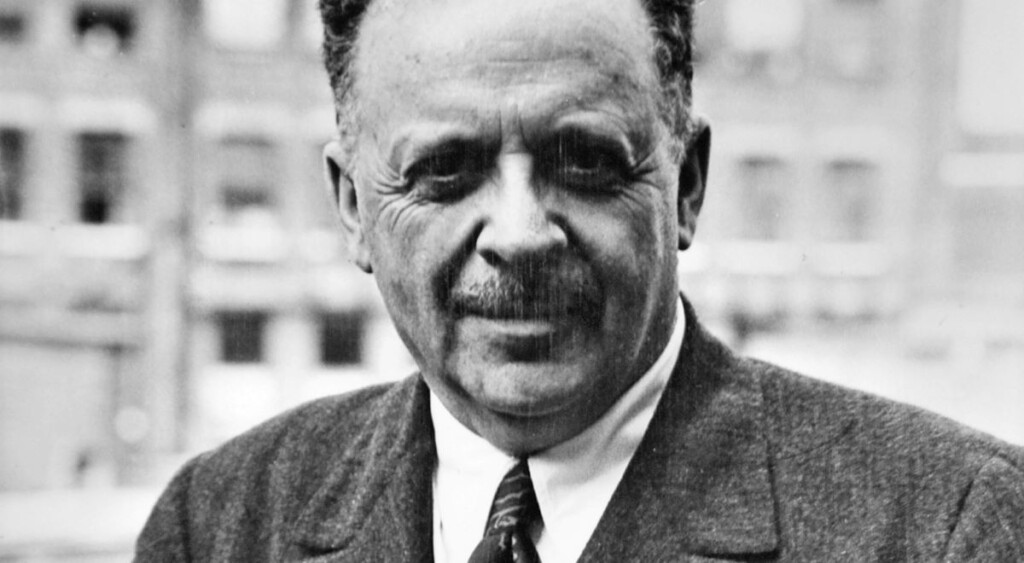
You are sitting with an old man’s book in your hands, and something about the tone unsettles you before you can name why. Biography of an Idea, published in 1965 when Edward Bernays was seventy-three, carries the mild, retrospective warmth of a man surveying a life well constructed. He recounts clients, campaigns, the architecture of persuasion assembled brick by brick across half a century. And then, almost parenthetically, almost as though he is mentioning weather, he notes his horror upon learning that Joseph Goebbels had kept his books in the Reich Ministry of Public Enlightenment and Propaganda, had studied them, had used them. Bernays registers this as a wound. What he never does is follow the wound to its source.
The structure of that evasion is philosophically precise. Bernays had built his entire professional identity on the claim that public relations and propaganda were neutral instruments, that their moral value was entirely a function of who wielded them and toward what end. This is the classic tool argument, and it survives in nearly every defense of every technology that has ever been turned toward atrocity. The knife does not choose the throat. The printing press did not choose the pamphlet. The technique does not choose the regime. But Jacques Ellul, writing in La Technique in 1954, had already dismantled this comfort with meticulous patience, arguing that technological systems are not neutral containers for human intention but active shapers of it, that a sufficiently powerful technique reorganizes the social environment in ways that make certain uses not merely possible but structurally probable. Bernays never engaged with this argument, perhaps because engaging with it would have required him to look at his own reflection with entirely different eyes.
What he had actually built was not a tool but a grammar, a complete syntax for manufacturing desire and belief at scale, and grammars are not neutral. They make certain sentences easy and certain sentences nearly impossible. The grammar of consent engineering, as Bernays refined it across decades of work for the American Tobacco Company, the United Fruit Company, and the Eisenhower administration’s covert public relations campaign in Guatemala in 1954, was a grammar optimized for asymmetry: one voice speaking to millions who did not know they were being spoken to. That asymmetry does not wait politely for virtuous operators. It recruits toward power, because power is always looking for exactly that leverage and has the resources to acquire it first.
There is something almost tragic in the specificity of his discomfort. He did not express generalized anxiety about manipulation; he expressed horror at particular regimes, particular industries, the tobacco companies whose campaigns he had himself designed now producing mortality statistics measurable in the hundreds of thousands. He drew moral lines with evident sincerity, and those lines stopped precisely at the boundary of his own biography. This is not hypocrisy in the vulgar sense. It is something more structurally interesting: the inability of a creator to perceive the full ontology of what he has created, because perceiving it would require dissolving the self that created it.
The philosopher Hannah Arendt, in The Origins of Totalitarianism published in 1951, observed that modern propaganda succeeded not primarily by lying but by constructing alternative realities so coherent that the population lost the cognitive tools to distinguish them from lived experience. Bernays had not built totalitarianism, but he had helped normalize the architecture that made such construction thinkable as a peacetime enterprise. The distance between a cigarette campaign and a Reich is enormous in moral scale and negligible in technical method, and it is exactly that gap, vast in feeling but thin in practice, that Biography of an Idea never crosses.
He died in 1995 at one hundred and three, the last survivor of the world he had helped design, and the question he left open is the one no memoir can close: whether a mind that teaches the world to dream on command can ever fully wake itself.
🧠 Minds That Shaped Modern Manipulation and Consent
Edward Bernays, the father of public relations, built his career on the systematic engineering of public opinion, drawing on psychology, sociology, and mass media. His work sits at a fascinating crossroads of power, persuasion, and social control — themes explored across philosophy, sociology, and political thought. These related articles illuminate the intellectual landscape that surrounds Bernays’s legacy.
Mass Social Homologation Today
Mass social homologation is one of the most visible consequences of the propaganda techniques that Bernays helped to pioneer. This article explores how modern societies produce conformity at a cultural and behavioral level, flattening individual difference into managed consensus. Understanding homologation is essential to grasping the long-term effects of the public relations machine Bernays set in motion.
GO TO THE SELECTION: Mass Social Homologation Today
Shoshana Zuboff: Surveillance Capitalism
Shoshana Zuboff’s concept of surveillance capitalism reveals how the logic of behavioral modification — latent in Bernays’s early work — has been amplified to an unprecedented scale by digital platforms. Her theory shows how human experience itself has become raw material for prediction and influence, extending the Bernaysian dream of controlling mass behavior into algorithmic territory. This article is an indispensable companion for anyone tracing the genealogy of manufactured consent.
GO TO THE SELECTION: Shoshana Zuboff: Surveillance Capitalism
The Psychology of Power: History and Theory
The psychology of power examines how authority is constructed, maintained, and internalized by those who are subject to it — a dynamic that Bernays exploited masterfully in his campaigns for corporations and governments. This article traces the theoretical history of power from classical political philosophy to modern social psychology. It provides the conceptual vocabulary needed to fully assess Bernays’s place in the architecture of modern influence.
GO TO THE SELECTION: The Psychology of Power: History and Theory
The Surveillance Society: History and Theory
The surveillance society article maps the historical and theoretical development of systems designed to monitor, classify, and direct human behavior — systems whose ideological roots connect directly to the Bernaysian management of public consciousness. From Bentham’s panopticon to digital tracking, this piece charts how visibility became a tool of social control. Reading it alongside Bernays’s biography reveals how consent and coercion often operate as two faces of the same project.
GO TO THE SELECTION: The Surveillance Society: History and Theory
Explore the Cinema of Ideas on Indiecinema
If these themes of power, persuasion, and the shaping of human consciousness fascinate you, Indiecinema’s streaming platform offers a curated selection of independent and documentary films that interrogate the very forces Bernays helped unleash. From political documentaries to avant-garde explorations of media and identity, there is a film waiting to deepen every question these articles have opened. Dive into independent cinema and let it challenge what you think you know.
👉 EXPLORE THE CATALOG: Watch Indie Films in Streaming
A vision curated by a filmmaker, not an algorithm
In this video I explain our vision

