
The Newspaper on the Table
You pour the coffee, unfold the paper, and for a moment something settles in you — a quiet, almost physical satisfaction, the sensation of a person who is keeping up. The headlines arrange themselves in order of importance, the photographs confirm what the words already told you, and by the time you reach the bottom of the front page you have formed opinions about a war, an election, a financial crisis, and a man you will never meet who has apparently done something unforgivable. You set the cup down. You feel informed. That feeling is the trap.

Walter Lippmann understood this with a precision that still disturbs, which is perhaps why Public Opinion, published in 1922, is cited endlessly in academic footnotes and almost never genuinely reckoned with. He was thirty-two years old when he wrote it, already a former advisor to Woodrow Wilson, already disillusioned by what he had watched happen to public discourse during the First World War — the deliberate manufacture of consent, the careful cropping of reality into digestible shapes. He had seen journalism not from the outside, as readers do, but from inside the machinery, and what he saw there was not a mirror held up to the world but a construction site. His argument was surgical and, for its time, nearly heretical: the citizen does not encounter reality. The citizen encounters a representation of reality that has already been assembled by someone else, according to priorities the citizen did not set and may not even be aware of.
The word Lippmann used for this was “pseudo-environment” — the interior picture of the world that each person carries and mistakes for the world itself. It is not a hallucination, not a lie in the simple sense. It is a map drawn by other hands, colored by institutional interests, editorial assumptions, and the brute mechanical fact that the world is too large, too fast, and too complex for any individual to apprehend directly. By the time an event in a distant country becomes a paragraph on a front page, it has passed through a chain of translations so long that the original signal is nearly unrecoverable. A battle becomes a dateline. A famine becomes a statistic. A political movement that took decades to build becomes a single noun.
What makes this genuinely unsettling is not that the press lies — though it sometimes does — but that the most effective distortions require no malice whatsoever. The columnist who has never visited the country she writes about is not deceiving you intentionally. She is working within a system of conventions, deadlines, editorial assumptions, and available sources that pre-select what is visible before she ever touches the keyboard. The French sociologist Pierre Bourdieu, writing in Sur la télévision in 1996, would describe a structurally identical process in television journalism: the field itself imposes invisible constraints, and the journalist who believes she is exercising independent judgment is often executing the field’s logic with perfect unconscious fidelity. The trap does not announce itself. It presents itself as professional practice.
And so the sensation you felt at the breakfast table — that settling, that quiet competence — was not produced by contact with events. It was produced by contact with a form. The newspaper has a shape: headlines descend in order of presumed importance, columns run vertically, photographs are captioned to instruct the eye on what it is seeing. That shape is not neutral. It trains attention, implies hierarchy, and most powerfully of all, generates the feeling of comprehension independent of whether comprehension has actually occurred. You read about the war and you feel you understand the war. The feeling and the understanding are not the same thing, and Lippmann’s entire project begins at exactly that gap — the space between the world outside and the pictures we carry inside our heads, which he named as the central problem of democratic life and which no subsequent century has come close to solving.
Altin in the City
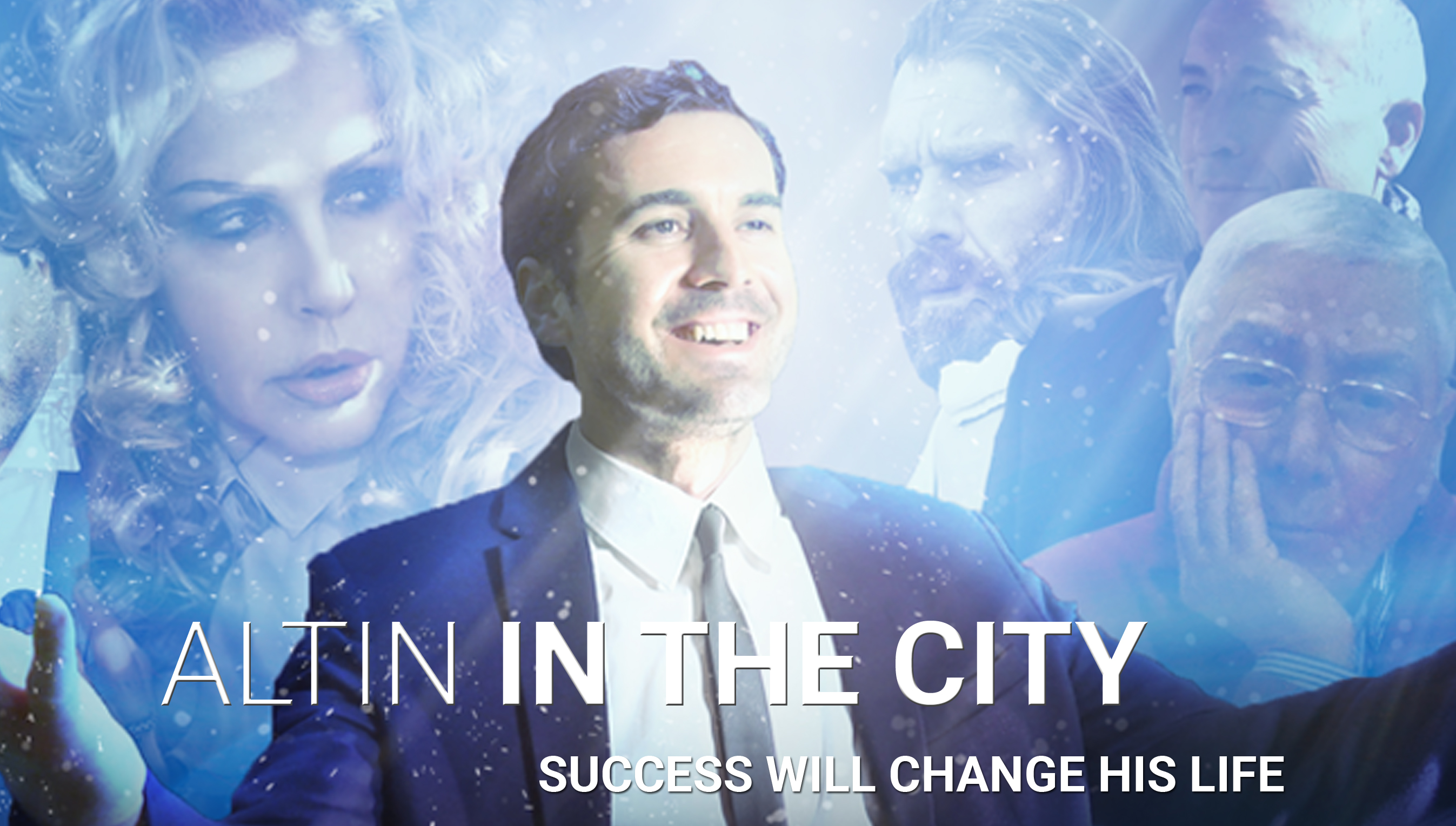
Drama, thriller, by Fabio Del Greco, Italy 2017.
Altin, aspiring Albanian writer arrived in Italy aboard a large ferry in the 90‘s, works in a butcher shop when he’s selected to audition for a reality of writers and finally sees a chance to be successful with his book “the journey of Ismail.” Unfortunately, this is the begin of the adventures which will lead him to learn about revenge, loneliness and extreme poverty, to the dark side of wealth and success.
The theme of Altin in the City should not lead to the assumption that it is merely the story of a young immigrant trying to integrate. In reality, it is a tale where greed, thirst for power and success, cynicism, and ambition intertwine, creating a sort of modern-day Faust and a new "pact with the devil" belonging to the 22nd century, which we could summarize as: show business. The reality show becomes the Mecca, the keystone, and the springboard for those who wish to achieve success without effort. Del Greco presents this world with subtle irony, characterized by kitsch nuances and parodic tones. However, success without effort comes at a price: Altin has sold his soul to the devil and, from being an easy prey of television showbiz, will soon become a victim of himself.
LANGUAGE: Italian
SUBTITLES: English, French, Spanish, German.
Lippmann’s Diagnosis in 1922
You are reading a newspaper at a kitchen table in 1919, somewhere in Ohio or Pennsylvania or a town whose name no one outside it knows, and on the front page there is a map of a country you will never visit, describing the motives of a government you will never meet, explaining the causes of a war that killed people whose faces you will never see. You believe it or you don’t, but either way you act on it — you vote, you donate, you hate, you mourn — and the distance between that printed page and whatever actually happened in some chancellery or trench in Europe is a distance no individual human mind was ever designed to cross.
Walter Lippmann understood this not as a scandal but as a condition. When he published Public Opinion in 1922, he was thirty-two years old, already a journalist of consequence, and he had watched at close range what the United States government had done with information during the First World War. The Committee on Public Information, organized in 1917 under George Creel, had deployed a machinery of persuasion unprecedented in American history — 75,000 speakers called Four Minute Men delivering synchronized patriotic addresses in movie theaters, churches, and union halls; posters designed by professional artists to make German soldiers look like apes carrying off white women; news managed, censored, shaped into a single emotional frequency. Lippmann himself had worked briefly in the orbit of this apparatus, contributing to psychological warfare efforts for the Wilson administration. He was not a naive observer.
And yet his diagnosis in Public Opinion is not primarily a denunciation of propaganda. It is something more unsettling: an argument that manipulation is almost beside the point, because the fundamental problem predates and exceeds any particular manipulator. The world, he wrote, is too large, too complex, too fast, and too distant for any person to experience directly. What each of us carries in our heads is not reality but what he called a “picture” — a simplified, selective, emotionally loaded representation of an external environment we can never fully access. He named this the pseudo-environment, and he argued that human behavior is a response to it rather than to the world itself.
This was not a metaphor. It was a structural claim rooted in what cognitive science would later begin to confirm, though Lippmann arrived at it through journalism rather than laboratory work. By 1922, mass literacy in America was only a few decades old as a genuine social fact — the illiteracy rate had fallen from roughly 20 percent in 1870 to around 6 percent by 1920 — and the industrial press had expanded to fill that new reading public with volumes of information no individual could verify or contextualize. The scale of modern information had outrun the scale of individual experience, and no amount of civic education or press freedom could close that gap. A farmer in Ohio reading about Bolshevism was not ignorant or stupid; he was simply operating at a distance from the events themselves that made direct knowledge impossible.
What Lippmann introduced with devastating precision was the concept of the stereotype — not in the narrow sense of ethnic caricature, but as the cognitive mechanism by which the mind economizes contact with a world too dense to process raw. Stereotypes, in his account, are not errors to be corrected by better information; they are the prior framework through which information is received and sorted in the first place. They precede perception rather than follow it. A person does not see the world and then form a stereotype; they carry the stereotype into the act of seeing, and it shapes what registers as real, what as irrelevant, what as threatening. This inverts the Enlightenment assumption that more information produces more accurate understanding — and it does so not through cynicism but through careful attention to how minds actually work under conditions of scale and complexity.
The question this opens — and that Lippmann himself could not fully answer — is what democratic governance is supposed to mean when the citizens it depends on are structurally incapable of the direct knowledge that democracy was always assumed to require.

The Picture Inside the Head
You wake up already knowing what kind of day it is. Before the first word has been spoken to you, before the news has loaded, before your eyes have fully adjusted to the light, you have already assembled a version of the world — its mood, its threat level, its likely demands on you — from almost nothing. That assembly is not perception. It is retrieval. You are not reading the morning; you are confirming a manuscript you wrote years ago.
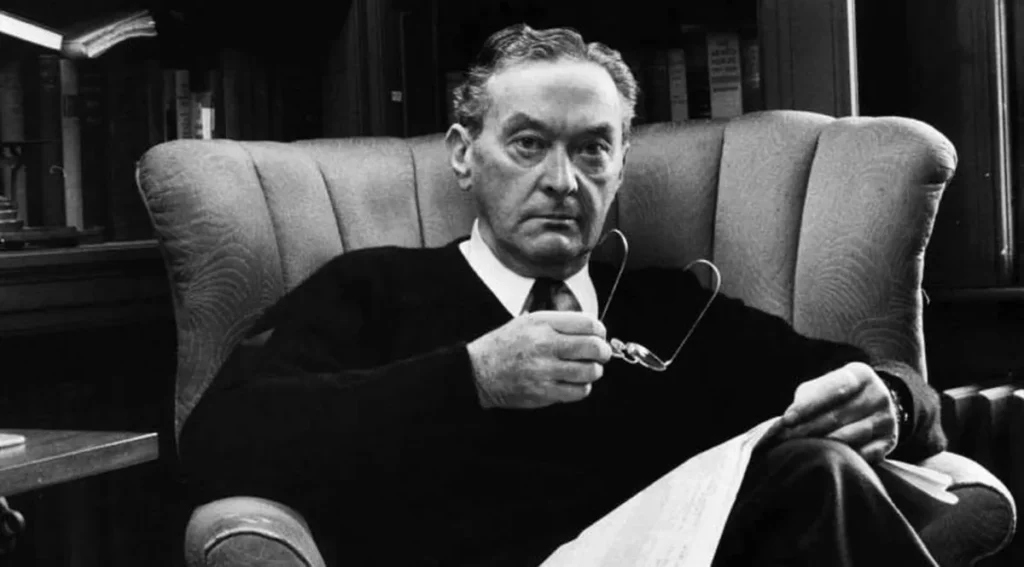
Walter Lippmann named this manuscript in 1922. In Public Opinion, he argued that what governs human behavior is not the world as it exists in any verifiable sense, but what he called the “pictures in our heads” — an internal representation of reality that is partial, selective, and almost entirely inherited from sources we never chose. He called the gap between this picture and the actual environment the pseudo-environment: a middle term, inserted between the person and the world, through which all stimulus must pass before it becomes response. The pseudo-environment is not a mistake made by the ignorant. It is the structural condition of all human thought. The man of affairs, the journalist, the philosopher, and the factory worker all navigate by maps they did not draw.
What makes this more than a literary metaphor is that neuroscience eventually confirmed it with the kind of precision that metaphors rarely survive. The visual cortex, it turns out, does not simply receive light — it predicts it. The brain generates a model of what the eye is about to see and then updates that model only when the incoming data deviates meaningfully from the prediction. Perception is largely error-correction on a pre-existing hypothesis. This is not a flaw in the system; it is the system. To process every photon as raw data would require computational resources no organism possesses. The brain shortcuts. It has to.
Daniel Kahneman’s work on dual-process cognition, culminating in Thinking, Fast and Slow published in 2011, gave this shortcutting its most widely distributed contemporary vocabulary. System 1 — fast, automatic, associative — operates below the threshold of deliberate attention and constructs a coherent narrative from incomplete information with alarming confidence. It does not flag its own assumptions. It does not pause to ask whether the category it just applied actually fits. It moves forward because the cost of hesitation, across hundreds of thousands of years of evolutionary pressure, was higher than the cost of occasional error. Lippmann was writing about politics and press; Kahneman was writing about psychology experiments. The architecture they describe is the same room.
What Lippmann grasped — and what makes Public Opinion stranger and more unsettling than its reputation as a founding text of media criticism suggests — is that the pseudo-environment is not simply ignorance waiting to be corrected by better information. The pictures in the head are not temporary placeholders. They are functional. They allow action. A man who had to perceive each situation from scratch, without the scaffolding of stereotype and prior classification, would be paralyzed. The pseudo-environment is the condition of possibility for any engagement with a world too vast, too fast, and too densely interconnected to be seen whole. Lippmann writes that “the analyst of public opinion must begin… with the triangular relationship between the scene of action, the human picture of that scene, and the human response to that picture.” The triangle is the point. Reality, representation, and reaction are never the same thing, and they are never fully synchronized.
The dangerous moment is not when the picture is wrong. The dangerous moment is when the picture is convincing enough that the question of its accuracy never arises — when the map feels so familiar underfoot that you forget you are not walking on ground.
The Expert Class as Necessary Fiction
You are standing in a government briefing room, year unspecified, watching a man with precise credentials explain to elected officials what is actually happening in a country none of them have visited. The maps are detailed. The data is real. The officials nod. Democracy, in this moment, looks exactly like its opposite.
This is the arrangement Walter Lippmann genuinely believed in. Having diagnosed the pseudo-environment — that interior theater of stereotypes and manufactured impressions through which every citizen navigates a world too vast to directly experience — he did not conclude with despair. He concluded with a remedy, and the remedy was expertise. In “Public Opinion” (1922) and even more explicitly in “The Phantom Public” (1925), Lippmann argued that a specialized class of social scientists and intelligence analysts should stand between raw reality and democratic deliberation, processing the complexity of modern affairs into actionable intelligence. The citizen could not be trusted to perceive accurately. Therefore, someone else would perceive on their behalf.
The philosophical violence in this answer is not immediately obvious, because it wears the face of competence. Plato had already constructed the same architecture in the Republic around 380 BCE, erecting the philosopher-king not as a tyrant but as a servant — the one rare soul whose vision had adjusted to the light outside the cave, now obligated to descend and govern those still watching shadows. The Platonic move, which Lippmann’s technocracy quietly inherits, is to convert an epistemological inequality into a political one. The fact that some people know more becomes the justification for some people deciding more. This feels reasonable right up until the moment you ask who certified the philosopher, who monitors the analyst, and whose definition of “accurate” the entire apparatus is calibrated to serve.
The historical record of expert classes is not reassuring. Robert McNamara and the Pentagon’s “Whiz Kids” deployed systems analysis across the Vietnam War with extraordinary technical precision and catastrophic political blindness, generating quantified optimism — body counts, pacification percentages, hamlet security ratings — that bore essentially no relationship to what was occurring on the ground. The expertise was real. The map of reality it produced was lethal fiction. What Lippmann’s framework could not account for is that the expert class does not stand outside ideology; it merely administers ideology with greater procedural sophistication, lending it the moral authority of neutrality.
There is something psychologically seductive about the idea that clarity exists somewhere, that someone in a well-lit room with sufficient data has actually seen through the fog. This seduction runs deeper than politics. It is the same impulse that makes people defer to financial analysts before markets collapse, to intelligence agencies before invasions that produce the opposite of their stated objectives, to economists whose models failed to register the 2008 crisis until it was already restructuring the global order. The fantasy is not that experts are infallible — most people nominally acknowledge they are not — but that the alternative to expert mediation is chaos so absolute that the question of mediation’s quality becomes secondary. Better a flawed guide than no guide. This is how consent to the arrangement is continuously renewed without ever being consciously given.
What Lippmann could not see — or chose not to see — is that the demand for a mediating class capable of processing reality is itself a symptom of the same problem he diagnosed. A society that has lost the institutional and educational architecture to cultivate widely distributed critical judgment will inevitably hunger for someone to substitute for that judgment. The expert class is not a solution to democratic incapacity; it is the form that incapacity takes when it becomes organized, funded, and given an office with good lighting. And once the office exists, the first thing it produces is the justification for its own existence — which is, in every meaningful sense, exactly the kind of pseudo-environment Lippmann warned against.
Dewey’s Refusal
You are sitting in a meeting where everyone is nodding, where the conclusions were written before the questions were asked, where participation is the ceremony that ratifies the decision already made in a smaller room. You know this. You nod anyway. Not from cowardice exactly, but from something more structural than that — from the quiet recognition that your dissent would require a different world to land in, and that world is not available this afternoon.
John Dewey read Lippmann’s Public Opinion in 1922 and felt something that is difficult to name as simple disagreement. What he felt was closer to recognition combined with refusal — the refusal not of a man who thinks you are wrong, but of a man who cannot afford for you to be right. By 1927, in The Public and Its Problems, Dewey had worked his way toward a counter-argument, though calling it that flattens what it actually was. It was a different diagnosis of the same disease. Where Lippmann looked at the gap between citizens and complexity and concluded that expertise must bridge it, Dewey looked at the same gap and argued that the problem was not cognitive but ecological: the public had not failed to think clearly, it had failed to find itself, to cohere into anything capable of collective recognition.
Dewey’s argument was essentially that a public exists only when the consequences of transactions between people extend beyond those directly involved and those affected become aware of that extension. By 1927, the machinery of modern industrial life had generated consequences so vast, so diffuse, so mediated by distance and abstraction, that the people suffering them could not trace them back to their sources. The Great Society — his term, borrowed from Graham Wallas — had produced interdependencies that outran the local face-to-face communities within which democratic life had historically been practiced and within which it still made psychological sense. People could not govern what they could not perceive as a coherent thing. The public was not ignorant. It was eclipsed.
What makes this more than an academic quarrel between two progressive intellectuals is the shared terror underneath it. Lippmann in 1922 and Dewey in 1927 were both staring at the same structural problem: that the conditions under which democratic self-governance was theorized — the Jeffersonian township, the informed citizen deliberating on legible choices — had been overtaken by conditions those theories were never designed to address. Neither man was arguing that democracy had been corrupted by villains. Both were suggesting something more uncomfortable, that the architecture itself might be mismatched to the civilization it was supposed to govern. Lippmann’s experts and Dewey’s revitalized local communities were different prescriptions written in response to the same prognosis, and neither prescription has ever been convincingly filled.
What history did to both of them is instructive. Lippmann’s technocratic instinct got absorbed into the permanent machinery of modern governance — the think tank, the policy brief, the expert consensus that travels from institution to institution while the public watches from outside, invited to ratify outcomes it did not shape. Dewey’s communitarian hope got refracted through decades of community organizing theory, civic education initiatives, and deliberative democracy experiments, most of which produced results that were locally meaningful and structurally marginal. The great irony is that Lippmann was proven more predictively accurate about how power would actually organize itself, while Dewey retained the moral high ground about what democracy would need to mean if it were to mean anything at all. These two outcomes do not reconcile. They simply coexist, producing the specific quality of modern civic despair — the sense that you understand exactly what is wrong and that understanding changes nothing about what is possible.
Neither man ever quite said that democratic self-governance might be permanently beyond reach. But both built arguments that made it very difficult to see where exactly it was supposed to happen.
A vision curated by a filmmaker, not an algorithm
In this video I explain our vision
The Stereotype as Infrastructure

You walk into a room and you have already decided who is dangerous, who is competent, who is worth listening to. The decision arrived before the handshake, before the first word, before any fact entered the picture. Walter Lippmann named this process in 1922 with a clinical precision that most readers found uncomfortable enough to immediately misread: stereotypes, he argued in Public Opinion, are not failures of intelligence or symptoms of malice. They are the architecture of perception itself, the prior construction through which experience is filtered before it can register as experience at all. The picture in our heads, his phrase, is not a distortion of reality — it is the precondition for what we are capable of calling real.
This was a far more radical claim than it appeared, and its radicalism was systematically softened by the decades that followed. The popular appropriation of the word “stereotype” reduced it to a synonym for prejudice, which in turn reduced it to a moral failing, which in turn made it something to be corrected through better intentions. Lippmann’s actual argument pointed elsewhere: toward something structural, prior to intention, built into the cognitive economy of a mind that cannot process the world in its totality and must therefore process it in advance. The stereotype is not what you think about people you already distrust. It is the invisible lens installed before trust or distrust becomes possible.
Gordon Allport arrived at this territory thirty-two years later with The Nature of Prejudice, armed with experimental methodology where Lippmann had used journalism and philosophy. What Allport demonstrated across that 1954 volume was that categorization is not an aberration of thought but its most fundamental operation — that the human mind sorts before it sees, groups before it distinguishes, and that the affective charge loaded into categories cannot be separated from the categories themselves. Allport gave the research community a framework it could test, and test it did: by the late 1960s and through the 1970s, the accumulated evidence from social cognition laboratories had made Lippmann’s original intuition empirically undeniable, even if his name rarely appeared in the citations.
The consequences were not abstract. Identical resumes sent to corporate hiring managers in the early 2000s — the audit studies conducted by Marianne Bertrand and Sendhil Mullainathan and published in 2004 in the American Economic Review — revealed a callback rate nearly fifty percent lower for names coded as Black than for names coded as white, controlling for every other variable. The resume was identical. The picture in the head of the person reading it was not. The stereotype did not announce itself. It operated as infrastructure operates: invisibly, beneath the level of conscious decision, as the condition of the decision rather than its content.
Sentencing data tells a structurally parallel story. Research published across multiple jurisdictions through the 1990s and into the twenty-first century documented that darker-skinned defendants received longer sentences than lighter-skinned defendants convicted of equivalent crimes, with equivalent criminal histories, before equivalent judges. The judge did not experience this as prejudice. The judge experienced it as judgment. That is precisely what Lippmann meant, and what makes the theory so difficult to absorb: the stereotype presents itself as perception, not as interpretation.
Medical diagnosis extended the same logic into spaces where the stakes were measured in survival. Studies of pain assessment published in journals including the Journal of the American Medical Association in the 2010s documented systematic underestimation of pain in Black patients relative to white patients presenting identical symptoms — a disparity traced in part to implicit beliefs about biological difference that had no grounding in physiology. The cognitive shortcut was doing infrastructural work, routing clinical information through a prior construction that the clinician could not see because it was, in Lippmann’s original sense, the thing they were seeing with.
What the Screen Replaced
You are sitting in a waiting room. The chairs are bolted to the floor in rows that face a screen mounted high on the wall, angled slightly downward, the way an altar is positioned to be seen from every pew. The screen shows footage of a flood in a country whose name appears in white text at the bottom of the frame for three seconds before dissolving. A woman beside you glances up, registers something — concern, perhaps, or its aesthetic equivalent — and looks back at her phone, where a different screen is showing her something else entirely. You have not moved. You have not been asked to move. The room has been designed so that you do not need to.
Walter Lippmann’s central insight, developed across the 427 pages of Public Opinion in 1922, was that human beings do not act upon the world as it is but upon a picture of the world constructed inside their heads. He called this the pseudo-environment, and he was careful to frame it as a structural problem rather than a moral failure. The flood you just watched on the waiting room screen — you know nothing about the soil conditions, the upstream dam policy, the specific political history that determined which neighborhoods flooded first. What you received was a sequence of images edited for emotional legibility, and that sequence is now the flood, for all practical purposes, inside your cognitive life. Lippmann wrote this about newspapers in the decade after the First World War, when he had watched governments manufacture consent through controlled information with a facility that disturbed him. He could not have anticipated the architectural completeness of what would follow.
Guy Debord published The Society of the Spectacle in 1967, forty-five years after Lippmann, and the distance between those two texts is the distance between a diagnosis and an autopsy. Where Lippmann still believed the pseudo-environment was a gap — something that existed between reality and perception, a distortion that could in principle be corrected by better journalism or more rigorous public education — Debord argued that the gap had closed. Not metaphorically. The spectacle, in his account, was not a collection of images but a social relationship between people mediated by images, which meant it had become the connective tissue of collective life itself. There was no longer a reality standing behind the representation waiting to be recovered. The representation had become the only terrain on which social existence was conducted.
What makes this more than a theoretical distinction is that it describes something material, something you can measure in the physical organization of space. The waiting room with the bolted chairs is not an accident. The screen at the departure gate, the monitor above the hospital bed, the display cycling through news in the lobby of a government building — these are not conveniences. They are the spatial expression of a social contract that has been renegotiated without a vote, without a debate, without anyone being asked to sign. The environment has been redesigned around the premise that unmediated experience is either insufficient or threatening, and the screen is the architectural solution.
Lippmann worried about the citizen who could not form accurate pictures of distant events. What the decades between his writing and the present have produced is a citizen for whom the picture has become prior to the event — not chronologically but ontologically. The image does not arrive after something happens; it constitutes the happening. A crisis that is not screened is not, in any politically meaningful sense, occurring. A flood that does not produce footage does not generate the category of responses — donations, policy pressure, international attention — that a screened flood does. The screen did not replace reality. It replaced the category of the real with something that functions more efficiently, more consistently, and with far greater geographic reach than reality ever managed on its own, which is precisely what makes it so difficult to name as a loss.
The Consent You Never Withheld
You voted. You signed the petition. You shared the post with the caption that felt, in the moment, exactly right — the one that located you on the correct side of history. And if someone asked you when you first decided that the war was just, or that poverty was a personal failure, or that the protesters were dangerous, you would search for the memory and find only the opinion itself, fully formed, with no origin story attached.
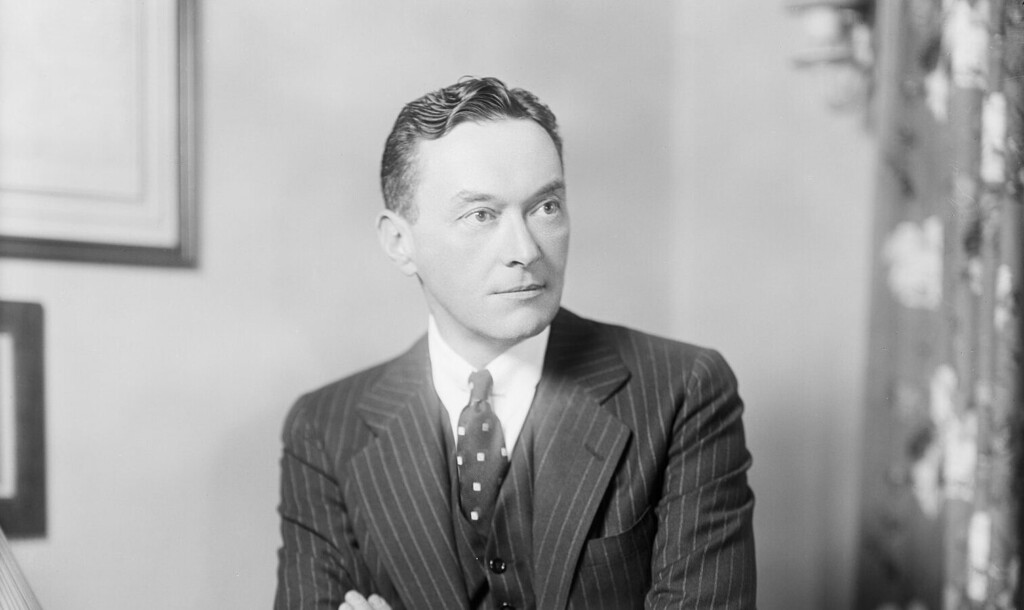
Lippmann named this before it had a name anyone feared. In Public Opinion, published in 1922, he described the press not as a mirror held up to reality but as a beam of light that decides, in advance, which parts of the room exist. The phrase “manufacture of consent” appears in that book, in that year, three decades before the machinery it described had reached its full industrial scale. He was not issuing a warning so much as making an observation, almost clinical, about how democratic publics actually function — not through deliberation but through the management of what deliberation is even permitted to touch.
The word “manufacture” carries the whole weight of what he meant. Manufacturing implies a factory, a process, inputs and outputs, quality control. It implies that somewhere upstream, decisions were made about what the finished product would look like before the raw material — your attention, your anxiety, your desire to belong to the right side — was fed into the machine. What emerges is not your conclusion. It is a conclusion that has been made to feel like yours, which is a different and far more durable thing. A belief you arrived at through visible argument can be dislodged by counter-argument. A belief that arrived without a traceable entrance has no door through which it can be expelled.
The political consequence Lippmann feared was not propaganda in the crude sense — not the poster of the enemy drawn with fangs, not the slogan painted on a wall. He understood that the sophisticated version left no fingerprints. It worked through omission more than commission, through the steady narrowing of what felt thinkable rather than the loud prohibition of specific thoughts. By 1946, when Bernard Cohen was laying the groundwork for what would become agenda-setting theory — later formalized in his 1963 work on the press and foreign policy — the mechanism was already embedded in the architecture of how democratic citizens experienced the world. The press, Cohen would write, may not tell people what to think, but it is stunningly successful in telling them what to think about. The boundary of the conversation is the most powerful editorial decision ever made, and it is the one that announces itself as no decision at all.
There is a particular violence in this that statistics capture only badly. In the months before the Iraq War in 2003, a PIPA study found that 60 percent of Americans believed Saddam Hussein was personally involved in the September 11 attacks — a claim no official evidence ever supported. The belief did not come from a single lie. It came from a pattern of adjacency, from the way two names were placed near each other in enough sentences that the brain, doing what brains do, collapsed the distance into causation. No one installed the belief at a specific moment. It assembled itself from the atmosphere, the way a body absorbs a toxin not through one massive dose but through years of ordinary exposure.
What Lippmann feared most was not that citizens would be deceived. It was that they would be shaped so completely that deception would become unnecessary — that the pictures in their heads would match the pictures their governors needed them to hold, and that they would defend those pictures with the full passion of people who had chosen them freely, never suspecting that freedom, in this case, was the most sophisticated part of the design.
🌐 The Manufactured Mind: Media, Power, and Public Perception
Walter Lippmann’s ‘Public Opinion’ dissects how media shapes the mental images citizens hold of the world, revealing the gap between reality and representation. These related articles explore the broader landscape of surveillance, propaganda, democratic theory, and the social machinery that governs collective thought. Follow the maze of influence to understand who shapes what we believe.
The Surveillance Society: History and Theory
The surveillance society is the institutional twin of Lippmann’s ‘pseudo-environment’: both describe systems that mediate reality before citizens can experience it directly. This article traces the historical and theoretical development of surveillance as a form of social control, from Bentham’s Panopticon to digital-age data harvesting. Understanding surveillance illuminates the structural conditions under which public opinion is manufactured and maintained.
GO TO THE SELECTION: The Surveillance Society: History and Theory
Putnam’s Bowling Alone: Analysis
Robert Putnam‘s ‘Bowling Alone’ documents the erosion of social capital and civic participation in contemporary democracies, a crisis Lippmann anticipated when he questioned the capacity of the atomized citizen to engage meaningfully with complex public affairs. The collapse of community bonds weakens the very deliberative infrastructure that democratic opinion-formation requires. This article provides essential sociological context for understanding why the ‘phantom public’ Lippmann described has only grown more spectral.
GO TO THE SELECTION: Putnam’s Bowling Alone: Analysis
Hannah Arendt and The Human Condition: Public and Private Space
Hannah Arendt‘s analysis of public and private space offers a philosophical counterpoint to Lippmann’s media-focused pessimism, insisting that the public realm retains genuine political potential when citizens act in concert. Where Lippmann doubted the competence of the masses, Arendt located democratic hope in the irreducible plurality of human action. Together, these two thinkers map the contested territory between manipulation and authentic political life.
GO TO THE SELECTION: Hannah Arendt and The Human Condition: Public and Private Space
Mass Social Homologation Today
Mass social homologation is the cultural outcome that Lippmann’s theory of stereotype and manufactured consent makes structurally predictable: when the same media images circulate universally, individual judgment converges toward a standardized norm. This article examines how conformity is produced and normalized in contemporary consumer societies, erasing the diversity of perspectives that genuine public debate requires. It serves as a vivid, present-day illustration of the dynamics Lippmann first identified in 1922.
GO TO THE SELECTION: Mass Social Homologation Today
Explore the Cinema That Refuses to Be Managed
If Lippmann’s analysis of manufactured opinion leaves you hungry for images that resist the dominant narrative, Indiecinema is your way out of the maze. Our streaming platform curates independent and avant-garde films that challenge the pseudo-environments built by mainstream media, offering unfiltered visions of reality from filmmakers who think for themselves. Come and discover a cinema that asks you to form your own opinion.
👉 EXPLORE THE CATALOG: Watch Indie Films in Streaming
A vision curated by a filmmaker, not an algorithm
In this video I explain our vision

