
The Artist Who Believes in Pure Talent
You are standing in a white room that smells of fresh paint and cheaper wine than the glassware suggests, and across from you a young man is being described as feral, untamed, a force of nature that simply erupted onto canvas without being taught. The woman speaking has silver jewelry and a very specific way of tilting her head when she says the word “instinct,” as though she is confiding a secret about the universe. The young painter stands nearby, receiving this. He receives it well. His posture is loose but controlled, the particular looseness of someone who learned in adolescence that tension is vulgar. He holds his wine at the stem, not the bowl. When he speaks, he speaks slowly, leaving gaps that invite others to fill them with admiration. He uses the word “visceral” once, and “process” twice, and he never says what his father does for a living.

You watch this and something itches at the back of your mind that you cannot quite name. Not cynicism, not envy. Something more like the sensation of a word on the tip of your tongue, a recognition that the story being told in this room is not false exactly, but is missing most of its own body.
The myth of pure talent is one of the most durable pieces of social fiction that Western culture has ever produced. It serves everyone in the room. It serves the painter, who gets to exist as a phenomenon rather than a product of circumstances. It serves the collectors, who get to feel they are rescuing something wild and rare from obscurity. It serves the critics, who get to position themselves as the ones sensitive enough to have seen it first. And it serves the culture at large, which gets to believe that art floats above the machinery of class, inheritance, and accumulated advantage, that the canvas is the one place where the playing field flattens and only the soul speaks.
Pierre Bourdieu spent decades dismantling this belief with the patience of someone who found it genuinely dangerous. In The Rules of Art, published in 1992, and in the earlier work The Field of Cultural Production, he built a systematic argument that artistic genius is not a natural eruption but a social construction, one that requires specific conditions to become visible, legible, and valued. What we call talent is inseparable from the habitus, that dense sediment of dispositions, tastes, reflexes, and ways of moving through the world that is deposited by early experience and social position. You do not simply have talent. You have a body and a history, and the body moves through the world in ways that read as talent to those trained to recognize it, which is to say, to those who share enough of the same history to see it as natural rather than acquired.
This is not a comfortable thought, and Bourdieu never intended it to be. He was not writing consolation. He was writing anatomy. The romantic myth of the artist born with a gift, arriving from nowhere, bypassing the social order through sheer force of inspiration, is precisely the story that makes the social order invisible. If genius is natural, then its distribution is not unjust, merely uneven, the way lightning is uneven. You cannot argue with lightning. You can only marvel at where it strikes.
But you are standing in this white room watching a young man who went to a certain kind of school, who grew up in a certain kind of apartment, who learned before the age of ten that culture is something you inhabit rather than visit, and the lightning metaphor begins to feel like something else entirely. It begins to feel like a curtain.
The Lost Poet
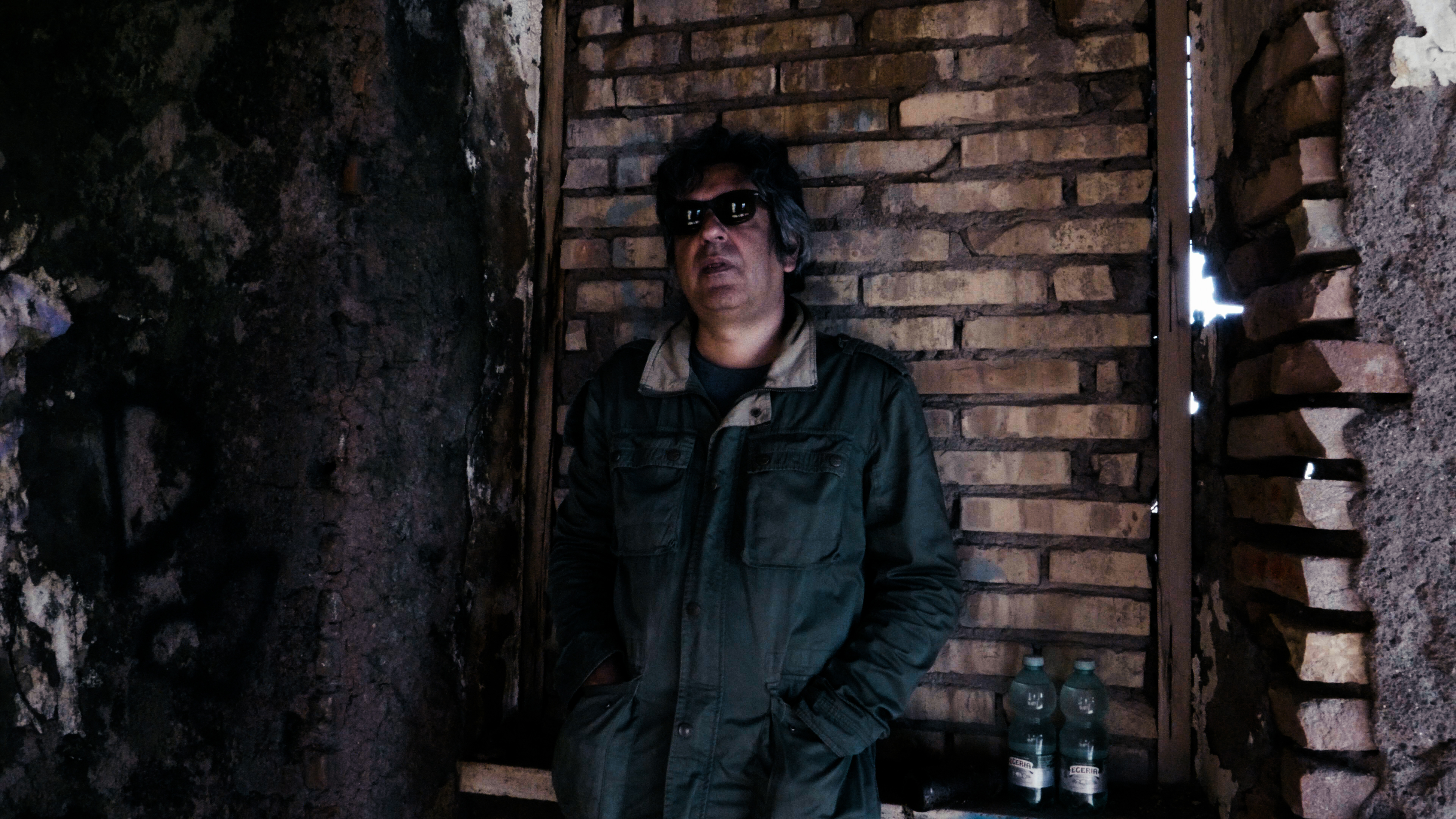
Drama, by Fabio Del Greco, Italy, 2024.
Dante Mezzadri wants to see an old friend, nicknamed the Iguana, whom he has lost sight of for many years, and who has managed to turn their shared youthful passion for poetry into a job, becoming a famous writer and poet. The man escapes from his bourgeois life and his wife to live homeless on the Roman coast, printing and trying to sell his poetry collections. At night he sleeps in a park of old carnival floats, inside a papier-mâché tank, and waits for the opportunity to meet his old friend, who however never shows up for appointments in the places they frequented when they were young, now in ruins. Dante's poetry books do not interest anyone and to support himself he is forced to "change product": he starts selling the infamous "cannibal pill" on behalf of young drug dealers, a new drug that sells like hot cakes and causes sensory and consumerist ecstasy. However, he realizes that this powerful drug is very dangerous for those who take it, he comes into conflict with his ethical conscience and throws all the pills into the sea. However, the dealers want to collect their money.
Shot over a period of 2 years, the film is a reflection on the cultural and artistic rubble of the society in which the protagonist lives, in an increasingly mechanized, consumerist and arid world. Dante Mezzadri is yet another human being who has renounced his inspiration and his creativity, but unlike many he is not willing to give his life to a system that distances him from his true identity. The physical world around him, however, seems constructed in such a way that it seems impossible to escape from this "invisible cage". The enthusiasm of the people he meets is ignited only by sensory gratification, by unreal visions of personal affirmation and success, by "metaverses" that offer an escape into an illusory and destructive reality. The poet's house on the coast, where he met with his friends as a young man, is just a pile of abandoned rubble. What happened to all those who wanted to become poets and ended up becoming something else? Are there internal forces with which that house can be "rebuilt"?
LANGUAGE: Italian
SUBTITLES: English, Spanish, French, German, Portuguese
The Field as Invisible Architecture
You already know this place. You have walked through it without ever seeing its walls.
Someone you know makes work. Real work, the kind that costs something — years of learning a craft, accumulated failures, a specific way of seeing that belongs entirely to them. The work is good. You know it is good because it does something to you when you encounter it, something you cannot immediately articulate. And yet it goes nowhere. No reviews, no residencies, no institutional acknowledgment of any kind. Meanwhile, something else circulates — work that does not do that thing to you, work that feels somehow pre-approved, already legible to the people who decide what counts — and it moves through galleries, critics, prize committees, international fairs, with a smoothness that resembles inevitability. You tell yourself it must be connections, or money, or luck. What you are not yet naming is the structure.
Pierre Bourdieu spent a significant portion of his intellectual life trying to name exactly that structure, and his 1992 work The Rules of Art stands as one of the most unsettling maps of the territory. What he called the artistic field is not a metaphor, not a loose description of how things tend to go. It is an actual architecture — invisible, self-reproducing, and ruthlessly effective at sorting human beings into positions that feel like destiny. The field is a system of objective relations between positions, and those positions exist independently of whoever happens to occupy them at any given moment. You do not invent your place in the field. You are placed.
To understand what this means in practice, Bourdieu turned to Flaubert — not as a literary example but as a case study in structural positioning. Flaubert was not simply a writer with a particular style. He occupied a specific location in the mid-nineteenth-century French literary field, one defined by his double refusal: against the dominant bourgeois taste for moralistic fiction, and against the political engagement demanded by the social art movements of his time. L’Education Sentimentale, published in 1869 and misunderstood by nearly everyone who read it, was not a failure of communication. It was the product of a position. The field generated the work as much as the individual did. This is the destabilizing core of Bourdieu’s argument — the artist’s subjectivity, their choices, their aesthetic convictions, are themselves shaped by the objective space they inhabit.
The field operates through capital, but not only the economic kind. There is cultural capital — the legitimate knowledge, references, and tastes that circulate as currency. There is social capital — the networks, the relationships, the right introductions at the right moments. And above all, for the artistic field specifically, there is symbolic capital: the accumulated prestige, the recognition granted by those already recognized, the slow legitimation that transforms a name into an authority. These forms of capital determine not just who succeeds but who is even visible, who gets to be read as serious, who gets the particular attention that looks, from the outside, like simple merit.
Think about who gets reviewed in the journals that matter to the people who matter in your particular corner of the art world. Think about which names appear on the syllabi, which galleries receive the institutional loans, which artists get the retrospectives and which ones get the group shows in cities no one travels to for art. The distribution is not random and it is not purely about quality — a category that Bourdieu would treat with enormous suspicion in any case, since the very criteria for what counts as quality are produced and reproduced by the field itself. The field does not discover excellence. It manufactures the definition of excellence and then awards prizes to whatever best fits that definition.
This is the architecture you move through every day. Its walls are invisible precisely because they are everywhere.

Capital That Doesn’t Look Like Money
You walk into the room already knowing which battles you have lost. The producer sits across the table with the particular stillness of someone who has already decided, and you watch him register everything before you have spoken a single word — the brand of your bag, the way you pronounce the names of your influences, whether you hesitate at the right moments or the wrong ones. You could arrive with a brilliant idea and leave with nothing, not because the idea failed, but because you carried it incorrectly.
This is not paranoia. This is the artistic field operating exactly as it was designed to operate.
Bourdieu spent years building the vocabulary to describe what everyone in a pitch room already knows in their bones but cannot say aloud without sounding bitter. In Distinction, published in 1979, he assembled one of the most unsettling sociological documents of the twentieth century — a study of French taste that revealed, through meticulous survey data covering thousands of respondents across class positions, that what we call aesthetic preference is almost never innocent. The capacity to appreciate a certain kind of cinema, to name the right architects, to display the correct hesitations before praising something popular — these are not personal quirks. They are inherited coordinates. They arrive with your childhood, your parents’ bookshelves, the dinner table conversations that taught you which enthusiasms were embarrassing and which were sophisticated.
Cultural capital, in Bourdieu’s framework, is the accumulated legitimacy that a person carries without necessarily being aware they are carrying it. It is not money, but it purchases things that money alone cannot buy — access, credibility, the benefit of the doubt, the sense that you belong in a room before you have proven that you do. A painter applying for a grant writes in a register that either signals membership or announces its absence. The committee reading the application does not consciously think about class. They think about quality, seriousness, potential. But the vocabulary the painter uses, the references they deploy, the particular way they frame their uncertainty as productive rather than paralyzing — all of this is legible to people who were trained, usually without knowing it, to read exactly these signs.
There is a scene that stays in the mind: a writer at a literary dinner, surrounded by people who have known each other’s work for decades, who share a shorthand built from the same journals, the same prizes, the same summer residencies. The writer says something genuine and watches it land wrong — not because it was false, but because it arrived in the wrong syntax. The room continues. The conversation moves. And the writer understands, with a clarity that has nothing to do with self-pity, that the dinner was not about literature. It was about confirming who already belonged.
Bourdieu called this symbolic capital — prestige, recognition, the consecrated authority that transforms one artist’s work into the reference point against which others are measured. Symbolic capital is particularly vicious in artistic fields because it disguises itself as pure judgment. When a critic says that a filmmaker lacks rigor, or that a painter’s work feels derivative, they are often translating a structural position into an aesthetic verdict. The filmmaker may lack not rigor but the right educational pedigree, the right network of endorsements, the right pattern of influences cited in the right proportion of obscure to canonical. Rigor, in these contexts, is frequently a euphemism for legibility to a specific class of evaluators.
What makes this machinery so durable is that it recruits the very people it excludes into policing its borders. The artist who finally gains entry learns the codes, internalizes them, and begins — often without any conscious intention — to apply them to the next person standing outside the door. The field reproduces itself not through conspiracy but through the sincere convictions of people who genuinely believe they are making judgments about art.
The Consecration Machine
There is a painting that hung for eleven years in the back room of a provincial auction house, stacked against dozens of others, facing the wall. No one asked about it. The staff walked past it every morning. Then a curator from a major institution passed through, paused, and said something quietly to a colleague. Within eighteen months, that same canvas was the centerpiece of a retrospective, reproduced in three catalogues, and cited in academic papers as a “rediscovered voice of singular importance.” The painting had not changed. Not a single brushstroke had been added or removed. What changed was its position — and position, in the world Bourdieu mapped with such clinical precision, is everything.
This is not a story about art. It is a story about a machine.
Bourdieu’s concept of the field of cultural production, developed most systematically in his 1993 collection of that name, describes the artistic world not as a space of free creative expression but as a structured battlefield where agents compete for the authority to define what counts as legitimate culture. The field has its own logic, its own hierarchies, its own forms of capital — and crucially, its own institutions of consecration. Critics, museums, prizes, academies, prestigious galleries: these are not neutral witnesses to artistic value. They are its manufacturers. They do not discover importance. They produce it, stamp it, and circulate it until enough people have accepted the stamp that the question of its origin disappears entirely.
The cultural intermediary is the key figure here. Bourdieu identified these agents — curators, critics, editors, gallerists, prize committees — as occupying a structurally ambiguous position: they hold no creative authority of their own, yet they possess enormous power over whose creativity gets elevated and whose gets buried. A critic who writes six hundred words in the right publication does not merely describe a work. He performs an act of transformation. He moves the object from one category of existence to another. The work enters the room of the consecrated. Nothing about the object justified this transit. The critic’s institutional position did.
Consider how this plays out concretely: a musician who has been making records for a decade, selling modest numbers, playing mid-sized venues, suddenly receives a certain award or is profiled in a particular magazine. The music does not change. But the audience changes, the booking fees change, the academic attention changes, the way other musicians speak about the work changes. This is not recognition in any honest sense of the word. Recognition would imply that something pre-existing was finally seen clearly. What actually occurred is manufacture — the creation of a new social fact through an institutional speech act. John Austin might have called it performative. Bourdieu called it symbolic violence, the power to impose meaning while concealing the power relations that make the imposition possible.
There is a man in a committee room, reading a shortlist. He does not know most of the names. He defers to the colleague beside him, who studied under someone who studied under someone who set the terms of this conversation forty years ago. The genealogy of taste is rarely examined because examining it would expose taste as inheritance rather than judgment, as reproduction rather than discovery. Pierre Nora wrote about the way memory is institutionally constructed, how what gets commemorated is never simply what was important but what institutions had reasons to preserve. The same logic governs artistic consecration. The archive is not neutral. The retrospective is not innocent.
And so the painting travels from the back room to the white walls of the gallery, and everyone stands before it differently now. The silence in the room is different. The distance people maintain from the canvas is different. They are not looking at the painting. They are looking at the institution’s decision to call it art.
The Illusion Called Vocation
You know the moment. Someone close to you — a cousin, a former colleague, a friend from university — announces that they are leaving. Leaving the stable job, the predictable salary, the career that had already begun to take shape. They say it with a particular light in their eyes, something between terror and relief, and they use words that belong to the vocabulary of conversion: they felt called, they could not ignore it any longer, something inside them finally spoke clearly. The sacrifice is described in almost liturgical terms. They are giving up security for truth. They are choosing themselves. The people around them either admire the courage or quietly predict failure, but almost no one asks the question that would destabilize everything: who taught you to want this?
Bourdieu would ask it. Not cruelly, not to deflate the gesture, but because the question is the most serious one available. In The Logic of Practice, published in 1980, he develops the concept of illusio — a term he derives deliberately from the Latin root of illusion, though he insists on a precise distinction. Illusio is not deception in the vulgar sense. It is the fundamental investment in the game, the collective belief that the stakes are worth pursuing, that what happens here matters. Every field generates its own illusio, its own form of enchantment that makes participation feel necessary, urgent, personally inevitable. The artistic field is perhaps the most powerful generator of this enchantment in modern Western culture, precisely because it disguises social production as individual destiny.
The young person who leaves their stable career believes they are responding to an inner voice. What they are actually responding to is a long and thorough socialization that has taught them, through films and biographies and cultural mythology and dinner table conversations and a thousand small aesthetic encounters, that the authentic life is the artistic one, that the soul willing to sacrifice material comfort for creative expression is a soul that has understood something the others have not. This is not cynicism. The feeling is real. The desire is genuine. But the content of that desire, the specific form it takes, the particular vocabulary in which it arrives — called, chosen, driven — all of this has been constructed by the field itself, which reproduces its own logic by making that logic feel like revelation.
This is what Bourdieu means when he describes how fields reproduce themselves. They do not need external enforcement. They do not need ideology handed down from above. They operate by producing in their participants the disposition to find the field’s stakes naturally compelling, to experience the game’s demands as personal imperatives. The aspiring artist who feels they cannot live without making work is not wrong about the intensity of that feeling. They are simply misreading its origin. They believe they are discovering themselves. They are, in a more precise sense, being recognized by a field that has already prepared a place for certain kinds of people to feel this way.
There is a particular cruelty in this, which Bourdieu does not fully name but which hovers at the edges of his analysis. The illusion of vocation falls unevenly. It lands most heavily on those who have been exposed most intensively to the cultural apparatus that transmits it — who have grown up in homes where art was discussed seriously, who attended institutions where aesthetic sensitivity was rewarded, who accumulated, without knowing they were accumulating, the very cultural capital that makes the artistic field legible and desirable as a destination. The first-generation worker’s child who feels no calling toward the artistic life is not less sensitive or less capable. They simply were not schooled in the particular enchantment. And the one who abandons their career to follow the call rarely pauses to ask why the call arrived in the language it did, why it felt so uniquely theirs, so impossible to refuse.
A vision curated by a filmmaker, not an algorithm
In this video I explain our vision
Autonomy and Its Discontents

There is something almost too neat about the artist who refuses. You have seen them, or you have been them: the one who will not submit the grant application, who declines the residency sponsored by a bank, who insists that taking the commission would compromise the work. The refusal arrives with a particular quality of moral clarity, a kind of clean feeling in the chest, as though integrity were a physical sensation. What Bourdieu noticed, and what takes a moment to fully absorb, is that this refusal is not outside the game. It is one of the game’s most powerful moves.
The logic runs like this. The artistic field, as Bourdieu describes it across his 1992 study of cultural production, operates according to what he calls an anti-economic economy — a system that inverts the ordinary rules of exchange. Where financial markets reward immediate profit, the artistic field rewards the disdain for profit. Disinterestedness becomes the supreme currency. The artist who visibly needs money, who prices their work pragmatically, who talks openly about sales, loses symbolic capital at precisely the rate they gain economic capital. The one who refuses, who suffers, who insists on purity at personal cost, accumulates the prestige that the field runs on. The refusal is not a withdrawal from the economy of the field. It is a deposit.
This is the paradox that most discussions of artistic freedom prefer not to examine directly. A filmmaker spends years outside the industry, working without studio support, financing each project through a combination of luck and privation, shooting in formats the market ignores. The work is genuinely difficult, genuinely uncompromising, and the uncompromising quality is also, simultaneously, a position within a hierarchy that values exactly this kind of difficulty. The suffering is real. The martyrdom is also strategic, even when no strategy was consciously chosen. Bourdieu is careful here: he is not accusing artists of cynicism. He is describing a structure so thoroughly internalized that its operations feel like personal conviction.
The committed artist believes they have stepped outside the field’s logic by taking a political position, by making work that serves a cause larger than art itself. Sartre’s famous formulation — that the writer must be engaged, must speak to their historical moment — reads like the opposite of aestheticism, like a break from art for art’s sake. But Bourdieu, writing in the decades after existentialism had itself become a cultural institution, points out that committed art and pure art are two poles of the same space. Both define themselves against commercial production. Both accumulate symbolic capital through that definition. The engaged filmmaker who refuses to make entertainment and the formalist painter who refuses to make meaning are playing the same anti-economic game from different corners of the board.
What makes this uncomfortable is the question it raises about where genuine artistic freedom might actually live, if it exists at all. Bourdieu does not answer this question. He is not in the business of offering exits. What he provides instead is a kind of structural X-ray: once you have seen how the skeleton is arranged, you cannot unknow it. The sense of clean moral clarity that accompanies refusal does not disappear, but it becomes more complex, more inhabited by ambiguity. You can still make the refusal. You will simply no longer be able to make it while believing you have left the room.
There is a man standing in front of his own retrospective, looking at forty years of work hung on the walls of an institution he spent those forty years refusing to legitimize. He is dressed badly on purpose. He is exactly where the field always intended him to be, and the tragedy is not that he was manipulated. The tragedy is that it was never that simple.
The Body That Learned to See
You walk into the museum because someone told you it was important. Maybe a colleague mentioned it, maybe a date suggested it, maybe some residual guilt about culture dragged you through the door on a Sunday afternoon. The rooms are white and high-ceilinged and very quiet in the way that certain institutions are quiet — not peacefully, but as a form of pressure. You stop in front of a large canvas. It is mostly grey. There are some marks that might be intentional and some that might not be. A placard beside it uses words like “interrogates” and “liminal” and “the post-industrial sublime.” You read it twice. You feel nothing except the slow, spreading warmth of inadequacy, and then, because you are human and therefore ingenious at self-protection, you feel a small pulse of contempt — for the painting, for the placard, for whoever hung it here and decided it mattered.
Then you notice someone else standing nearby who is not reading the placard. They are simply looking. Their body is still in a particular way, attentive without effort, and their face carries that expression you recognize immediately as belonging to people who are at home somewhere you are not. You leave before you meant to.
What happened in that room was not an aesthetic failure. It was a social fact. Bourdieu spent considerable energy insisting on exactly this, and the insistence still carries the discomfort of something true. The habitus — that system of durable, transposable dispositions that he developed most rigorously in “The Logic of Practice” in 1980, though its architecture was already present in his Algerian fieldwork a decade earlier — is not a set of opinions or preferences consciously held. It is the body itself, organized by history. It is the posture you adopt in a formal room, the speed at which you speak when someone with authority addresses you, the silence that descends on you when confronted with a form of cultural expression that was never meant to include you.
In 1966, Bourdieu and Alain Darbel published “The Love of Art,” a study of museum attendance across European countries that remains one of the most quietly devastating pieces of empirical sociology ever produced. The findings were not subtle. Museum attendance correlated with educational capital in a curve so steep it barely deserved to be called a correlation — it was almost a threshold. Those who had received extended formal education, particularly in the humanities, attended museums regularly and moved through them with ease. Those who had not, largely did not attend, and when they did, they experienced exactly what you experienced in that white room: a sense of being in the wrong place, of not having been given the key that everyone else apparently holds naturally. What Bourdieu and Darbel argued, and what the data confirmed with the cold patience of numbers, is that the “love of art” presented by bourgeois culture as a natural gift, an innate sensitivity, a personal spiritual capacity, is in fact a competence. It is learned. It is transmitted. And its transmission is so thoroughly embedded in family environments, in early educational experiences, in the casual aesthetic saturation of certain childhoods, that by the time it arrives in the adult body it feels like instinct.
This is the cruelest part of the mechanism. Not that some people are excluded, but that the exclusion is experienced as personal inadequacy. You did not fail the painting. The painting was never built for you. But you will carry the shame of that afternoon as though the fault were yours, as though you simply lacked whatever quality of soul the grey canvas demanded. The body that learned to see in certain rooms will always feel foreign in others, and it will interpret that foreignness not as historical violence but as private deficiency.
When the Field Eats Its Own
There is a moment, somewhere in a grand hall draped with institutional gravity, when an artist walks to a podium to accept a prize worth two hundred thousand euros — a prize awarded by the very establishment their entire body of work has spent fifteen years dismantling. The acceptance speech is elegant, self-aware, even wry. They acknowledge the irony. The audience laughs appreciatively, because the audience, too, is self-aware, and this shared self-awareness becomes its own form of comfort, a way of neutralizing the contradiction without actually resolving it. Everyone in the room knows what is happening. And because everyone knows, no one has to feel troubled by it.
This is the field eating itself, and finding the meal delicious.
Bourdieu identified this with uncomfortable precision in The Rules of Art, published in 1992, where he described how the artistic field generates a specific form of capital around the performance of its own negation. The artist who attacks the institution becomes, through that attack, a new kind of institutional figure. The gesture of refusal is legible only within the field’s grammar — it requires the field’s existence to mean anything at all. Andy Warhol understood this instinctively, which is why his entire career was less a critique of commodity culture than a demonstration of how thoroughly commodity culture and artistic prestige had become indistinguishable. The joke was always that there was no outside from which to throw the stone.
Think of the filmmaker who spends a decade making searingly political work about the violence of borders, the disposability of migrant bodies, the machinery of state indifference — work that screens at Cannes, wins prizes in Berlin, gets acquired by streaming platforms for distribution in forty countries. The work is genuine. The suffering it documents is real. And yet something happens in that translation from raw wound to cultural object. The suffering becomes legible, becomes beautiful in the way that art makes things beautiful, becomes something that the Parisian intellectual and the Brooklyn gallerist and the festival programmer can consume with a clean conscience, even a sense of moral enrichment. Bourdieu called this the euphemization of violence — the process by which art transforms what is unbearable in life into what is bearable, even pleasurable, in representation. The critique arrives already domesticated.
The cruelest version of this trap is that sincerity offers no escape from it. You can mean every word, bleed into the canvas, make work from genuine outrage and genuine grief, and the field will still metabolize it according to its own logic, convert it into symbolic capital, and redistribute that capital in ways that reinforce the very hierarchies you were attacking. Luc Boltanski and Arnaud Esquerre’s work on enrichment economies, published in 2020, extends Bourdieu’s analysis to show how contemporary capitalism has become extraordinarily skilled at absorbing critique as content, at turning the gesture of refusal into a product category. The transgressive artist is now a market segment.
What makes this so difficult to sit with is that the alternative — silence, withdrawal, refusal to participate — is not available to most people who need the field’s resources to survive, and is available as a romantic gesture only to those with enough economic security to perform it. The artists who can afford to refuse prizes are precisely those who have already accumulated enough capital to make the refusal legible as a meaningful act rather than simple obscurity. Even the refusal circulates. Even the withdrawal accumulates. A man stands at a podium holding an award for work that argues no one should be standing at podiums holding awards, and he knows this, and he says something clever about it, and the applause is genuine and warm, and in that warmth is everything Bourdieu ever meant when he wrote that the most successful ideological operations are those that require no enforcement because everyone, willingly and with full awareness, agrees to forget what they know.
🎭 Art, Power, and the Social Life of Culture
Pierre Bourdieu’s theory of the artistic field invites us to see art not as a pure expression of genius but as a contested space structured by power, capital, and distinction. The following articles explore the philosophical, sociological, and historical dimensions of that space, tracing how artists, institutions, and ideas compete for legitimacy.
La Bohème: History and Myth of the Poor Artist
The myth of the poor artist and the bohemian lifestyle is not simply a romantic fantasy but a structural position within the artistic field that Bourdieu analyzed with precision. To be bohemian is to accumulate symbolic capital while renouncing economic capital, a gamble on future consecration. This article traces the historical roots of that myth and the social conditions that made it so enduring.
GO TO THE SELECTION: La Bohème: History and Myth of the Poor Artist
Herbert Marcuse and Art: The Aesthetic Dimension
Herbert Marcuse‘s aesthetic theory offers a radical counterpoint to Bourdieu’s sociology by arguing that art retains an emancipatory power irreducible to social reproduction. Where Bourdieu sees the field as a space of distinction and domination, Marcuse sees it as a site of utopian negation. Reading the two thinkers together opens a richer understanding of what art can and cannot do within capitalist society.
GO TO THE SELECTION: Herbert Marcuse and Art: The Aesthetic Dimension
Mass Social Homologation Today
Bourdieu’s concept of cultural capital finds one of its most visible expressions in the phenomenon of mass social homologation, where dominant tastes and habits are universalized and presented as natural. This article examines how contemporary culture industries produce conformity while appearing to celebrate individuality. It is an essential complement to any reading of Bourdieu’s critique of distinction.
GO TO THE SELECTION: Mass Social Homologation Today
The Cursed Poet: History and Figures
The figure of the cursed poet is one of the most powerful symbolic constructions within the artistic field, representing a form of value that inverts economic failure into aesthetic triumph. Bourdieu devoted considerable attention to how this figure functions as a position within the literary field, consecrating suffering as proof of authenticity. This article explores the history and sociology of that tragic archetype across French and European literary culture.
GO TO THE SELECTION: The Cursed Poet: History and Figures
Discover the Cinema That Dares to Think
If Bourdieu’s ideas about art, power, and cultural legitimacy speak to you, Indiecinema is your natural next step: a streaming platform dedicated to independent and auteur cinema that refuses the logic of the dominant field. Explore films that challenge, provoke, and transform — because great cinema, like great thought, always begins at the margins.
👉 EXPLORE THE CATALOG: Watch Indie Films in Streaming
A vision curated by a filmmaker, not an algorithm
In this video I explain our vision

