
The Moment Before You Noticed
You are sitting across from someone who makes you feel unusually understood. They ask questions that seem to land exactly where you live — not on the surface of your preferences or your opinions, but somewhere lower, in the soft tissue of your doubts. You answer more than you intended. You hear yourself say things you have not said to anyone else, and some part of you registers this as intimacy, as the rare luck of finding someone who actually sees you. By the time you leave, you have agreed to something. You are not entirely sure when that happened.

What is strange is not that you were influenced. Influence moves through every human exchange like current through water — invisibly, constantly, without announcement. What is strange is how thoroughly the experience felt like freedom. You made a choice. You chose it with your own reasoning, your own emotions, your own sense of what mattered to you. Except the terrain on which you were reasoning had been quietly prepared by someone else, the emotional temperature of the room had been calibrated before you arrived, and the values you consulted were ones that had been gently foregrounded over the previous weeks without your ever noticing the work being done.
This is not the manipulation of bad films and obvious villains. It does not arrive with a sinister score. It arrives as warmth, as attentiveness, as the particular flattery of being taken seriously. Robert Cialdini spent years cataloguing its mechanics in Influence: The Psychology of Persuasion, first published in 1984, and what disturbed readers most was not the exotic strangeness of the techniques he described but their absolute familiarity. Reciprocity, commitment, social proof, liking — these were not dark arts practiced by specialists. They were the grammar of ordinary social life, and almost anyone was already using them, consciously or not, every day.
The more uncomfortable recognition is that the line between influence and manipulation is not drawn where most people imagine it. We tend to locate manipulation in intent — the manipulator knows what they are doing and wants something they are not admitting to. But intent is almost impossible to verify from inside the experience, and it turns out to be nearly irrelevant to the neurological and psychological mechanisms at work. The brain does not have a manipulation detector. It has a threat detector, a reward system, and a powerful drive toward cognitive coherence — and all three can be captured by someone who does not even think of themselves as manipulative, someone who has simply learned, through years of survival or attachment or professional necessity, exactly which emotional levers to press and when.
What makes this genuinely difficult to sit with is that it implicates not just the people who have acted on you, but the entire architecture of how identity is formed. You did not arrive at your convictions in a vacuum. The psychologist Solomon Asch demonstrated in his conformity experiments of the early 1950s that a significant proportion of people will state something they can plainly see is false rather than contradict the apparent consensus of a group. Not because they are weak or stupid, but because the social pressure to align with others is registered at a level prior to conscious reasoning — it arrives before the judgment, not after it. The implication is that many of the positions you hold most firmly, the ones that feel most authentically yours, were assembled under conditions of social pressure so normalized that they produced no alarm, no resistance, no memory of the pressure at all.
This is where the history becomes necessary, because the mechanisms did not appear out of nowhere, and the cultures that perfected them left records. The question underneath all of it is not whether you have been shaped by forces outside your awareness — you have, everyone has, the evidence for this is now overwhelming — but whether that shaping was random or directed, accidental or designed.
A Better Life
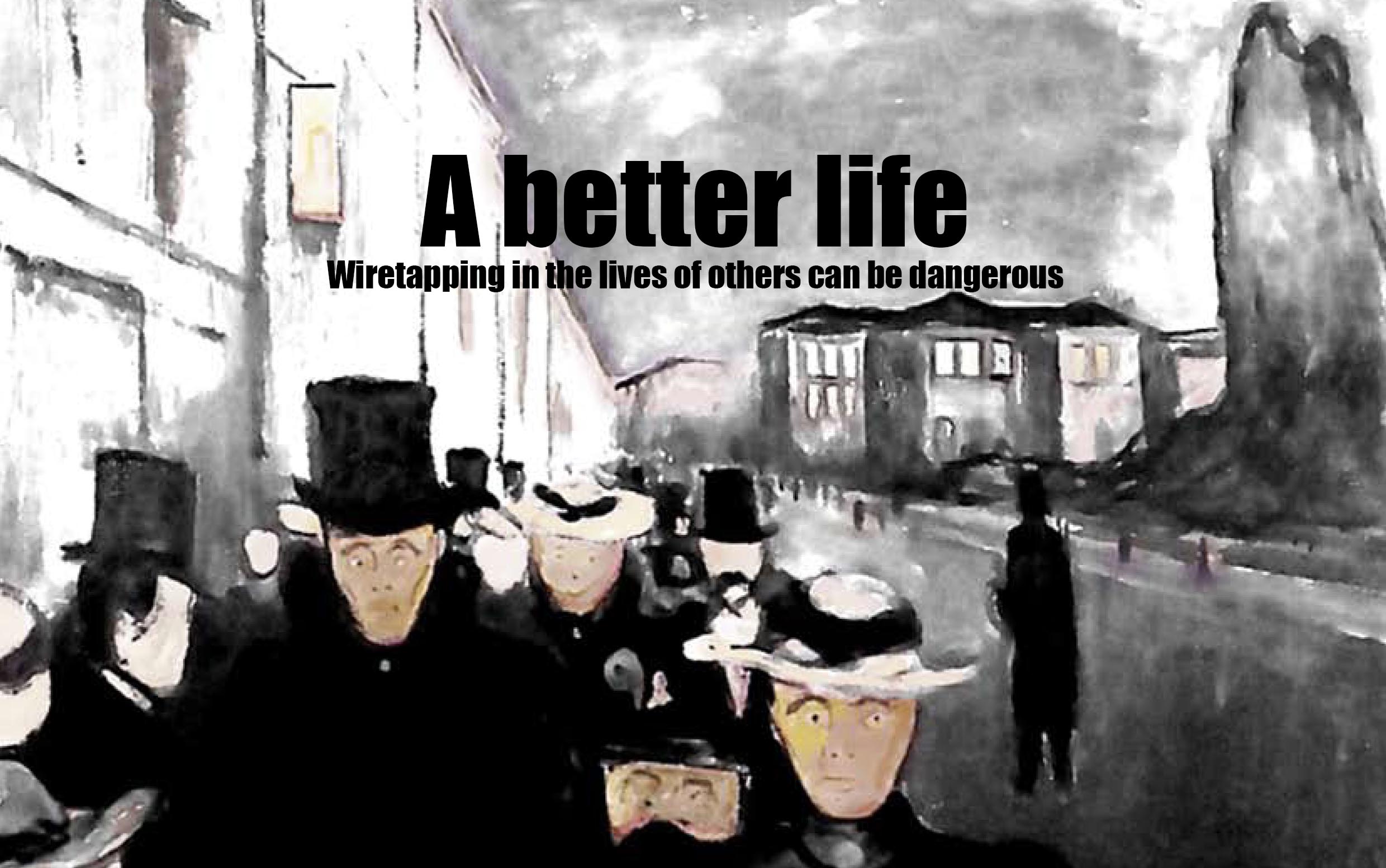
Drama, thriller, by Fabio Del Greco, Italy, 2007.
Rome: Andrea Casadei is a young investigator specializing in audio wiretapping who conducts investigations commissioned by husbands betrayed by their wives, or by parents worried about what their children are doing outside the home. But what interests him most is understanding the human soul, listening to casual conversations in the streets, knowing what people think. He often meets in Piazza Navona with his friend Gigi, a frustrated street artist obsessed with success at all costs, with whom he shares a passion for wiretapping. Shocked by the mystery of the disappearance of Ciccio Simpatia, another street artist common friend, Andrea decides to abandon the commissioned works to seek a better life and reflect on his own and others' existence. He will meet the actress Marina and with a bug he will slowly enter her life until he discovers her most unthinkable secrets. The film deals with an important theme of contemporary Western society: the lack of love. The mysterious and tormented figure of Marina is reflected in a gloomy and soulless Rome.
Director Fabio Del Greco declared about his film: "Perhaps this film is a reflection on the art of observing, of listening, in short, of what one does when one leaves the real world to tell about it. Perhaps he wants to talk about the subtle relationship between the mirages of success touted by today's society, power and the most authentic human relationships.A 'dark cloud' hangs over the city: it is engulfing everyone in a sort of indistinct, uniform mass, where everyone thinks the same things, where everyone they are more alone. Where is the truest part that makes us unique? Maybe you can try to intercept it only secretly."
LANGUAGE: Italian
SUBTITLES: English, Spanish, French, German, Portuguese, Dutch.
Manipulation as Ancient Technology
You are sitting in a theater that was built two thousand years before Freud was born, watching a man die on stage, and you are weeping. You did not know this man. He never existed. And yet something in your chest has cracked open — not because you were tricked, but because someone designed the conditions for your emotion with the precision of an engineer. The Greeks called it catharsis, but behind that word was a technical manual, a systematic understanding of how to enter a human being through the aperture of feeling and rearrange what they find there.
Aristotle’s Rhetoric, composed around 350 BCE, is not a philosophy text in any gentle sense. It is an operational document. Aristotle identified three modes of persuasion — ethos, pathos, logos — not as abstract categories but as levers, each calibrated to a different vulnerability in the audience. Ethos exploits the human tendency to trust the credible-seeming source before evaluating the claim. Pathos bypasses rational assessment entirely by flooding the listener with emotion before the mind can organize its defenses. Logos provides the structure that makes the other two feel like reason. Together, they describe a system that does not argue with people so much as it repositions them, and Aristotle wrote it down with the neutrality of a man describing irrigation.
What is remarkable is not that this knowledge existed but that it was considered respectable civic knowledge. Rhetoric was a core discipline in Athenian education, taught alongside mathematics and music. This means that the deliberate engineering of other people’s beliefs was not hidden in shadow — it was institutionalized, refined, passed between generations as a mark of cultivation. The modern instinct to frame manipulation as something deviant, something that happens to people from the outside and against their nature, was entirely alien to the classical world. Influence was infrastructure.
Rome took this inheritance and scaled it. The Roman state understood, with a clarity that would embarrass most modern governments, that spectacle was governance. The phrase panem et circenses, recorded by Juvenal in the late first century CE, is usually quoted as satire, but Juvenal was describing policy. The Colosseum, completed in 80 CE under Titus, could seat between fifty thousand and eighty thousand people. It was not entertainment in the contemporary sense of the word — it was a managed emotional environment, a machine for producing loyalty, awe, and a particular relationship to power. When an emperor funded a hundred days of gladiatorial games, he was not being generous. He was buying the physiological experience of his subjects, enrolling their nervous systems in the project of his legitimacy.
The deeper mechanism at work in Roman spectacle was what the sociologist Émile Durkheim would later call collective effervescence — the way shared emotion, produced at scale, dissolves individual critical capacity and creates a group body that thinks as one. Durkheim described this in The Elementary Forms of Religious Life in 1912, locating it in ritual, but the Roman engineers of public experience had been exploiting it for centuries without needing a name for it. They knew that a crowd that had been made to feel something together was a crowd that could be directed, that the shared intensity of watching something terrible created a bond between spectators and the institution that provided the experience.
What this history dismantles is the comfortable idea that manipulation is a symptom of modernity — a product of advertising, of mass media, of some recent corruption of an otherwise dignified human relationship to truth. The architecture of influence is older than Christianity, older than the Roman Empire, older than the alphabet in its Latin form. It was not invented by cynics in the twentieth century. It was refined by philosophers who were also considered the most serious moral thinkers of their age, which raises a question that the history of ideas has never satisfactorily answered: whether the knowledge of how to move people was ever truly separate from the knowledge of how to think.

The Enlightenment’s Blind Spot
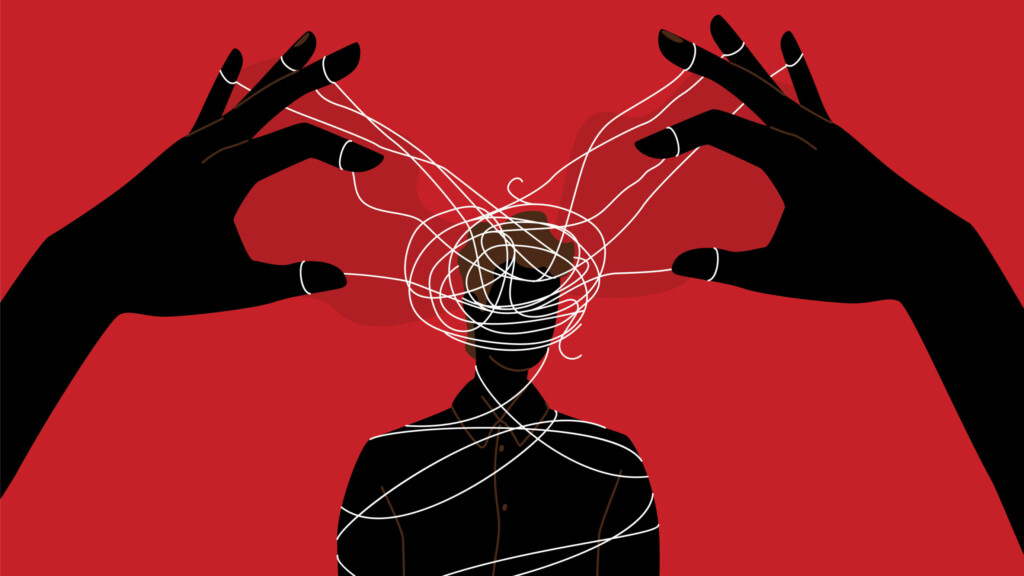
You are sitting in a lecture hall in 1784, and a man you have never met is telling you that you are free. Not free in the political sense — the king still exists, the church still collects — but free in a deeper, more seductive sense: free to reason your way to truth without the guidance of any authority outside your own mind. The argument is elegant, almost irresistible. And that is precisely where the trap closes.
Immanuel Kant’s answer to the question “What is Enlightenment?” published that same year, proposed that humanity’s self-incurred immaturity was a failure of courage rather than capacity. Sapere aude — dare to know. The individual, properly exercised in reason, could arrive at universal moral law through the categorical imperative: act only according to that maxim by which you can simultaneously will that it become a universal law. It is a magnificent architecture. It is also a system that works only if the individual reasoning subject is, in fact, reasoning — rather than being furnished with the premises of their reasoning by an external party who has already decided the destination.
What Kant could not fully account for, or perhaps refused to, was that the machinery of covert influence does not announce itself as an obstacle to reason. It arrives dressed as reason. The manipulator does not say: abandon your judgment. They say: here is the evidence, here are the facts, here is what any rational person would conclude. The subject, primed by Enlightenment culture to believe in their own rational sovereignty, experiences the conclusion as self-generated. The very confidence instilled by the doctrine of autonomous reason becomes the medium through which suggestion travels undetected.
Sociologist Robert Merton, writing in the mid-twentieth century on the unintended consequences of purposive social action, observed that the frameworks cultures adopt to solve problems frequently generate secondary dysfunctions invisible to those inside the framework. The Enlightenment’s insistence on rational individuality solved the problem of ecclesiastical and monarchical authority over thought. Its unintended consequence was a subject so convinced of their internal freedom that they became structurally resistant to acknowledging the degree to which their cognition was being shaped from outside. You cannot be manipulated if you are a rational autonomous agent. Therefore, if something is happening to you, it is not manipulation — it is your own conclusion.
This dynamic was not lost on those who studied mass persuasion in its most industrialized forms. Edward Bernays, in his 1928 work Propaganda, wrote with almost clinical directness that the conscious and intelligent manipulation of the organized habits and opinions of the masses was an important element in democratic society — and that those who manipulated this mechanism constituted an invisible government. What is remarkable is not the cynicism of the observation but the historical moment in which it was made: barely a century and a half after Kant’s proclamation of rational self-determination, a practitioner of influence was describing, in print and without embarrassment, the infrastructure built precisely where Kant had placed his faith.
The wound is not that Enlightenment ideals were wrong. The wound is that they were right enough to be weaponized. A person who has been told they are sovereign does not look for the wires. A culture that celebrates critical thinking as its founding myth is particularly vulnerable to persuasion systems that wear the costume of critical thinking — that offer data, argument, structured reasoning, the appearance of dialogue. The slave who believes they are free does not pull at the chain. They explain, in full sentences, why the chain is actually a choice.
What followed was not a simple corruption of Enlightenment ideals from outside. The most sophisticated manipulation of the modern era grew from within the very epistemological conditions those ideals established — conditions in which the manipulated subject is always already convinced that what is happening to them is impossible.
Freud’s Uncomfortable Inheritance
You are standing in a grocery store in 1929, reaching for a can of something you did not know you needed until three weeks ago, when a newspaper campaign told you that your body was deficient, your habits were backward, and the modern American had already moved on without you. The product is new. The need is not — it was manufactured in an office in New York by a man who had read his uncle’s letters and understood, with the cold clarity of an engineer, that the unconscious was not a therapeutic problem. It was a lever.
Edward Bernays never hid what he was doing, which is perhaps the most unsettling thing about him. In 1928, he published a book called Propaganda in which he stated plainly that the conscious and intelligent manipulation of the organized habits and opinions of the masses was a necessary element of democratic society. He used the word “manipulation” without apology. He used “propaganda” before it had been soiled by the decade that followed. His argument was not a confession — it was a theory of governance, and it borrowed its architecture directly from Sigmund Freud’s model of the psyche: the idea that human behavior is driven not by rational deliberation but by subterranean forces that can be redirected, channeled, and exploited without the subject ever becoming aware of the operation.
What Bernays grasped, and what most of his contemporaries in advertising and politics had not yet formalized, was that you do not sell a product by describing it. You sell it by attaching it to an anxiety that already exists and then positioning the product as its resolution. When he worked for the American Tobacco Company in 1929, he did not run advertisements about cigarettes. He organized a group of women to march in New York’s Easter Sunday parade while visibly smoking, having coordinated with journalists in advance to frame the cigarettes as “torches of freedom” — a deliberate echo of suffragette symbolism. Cigarette sales among women increased dramatically within months. No argument had been made. No fact had been presented. An image had been inserted into the circulatory system of a cultural moment, and the body politic had absorbed it without noticing the injection.
The philosophical sleight of hand Bernays performed was to collapse the distinction between persuasion and manipulation by redefining both as forms of engineering. He drew on Gustave Le Bon’s 1895 work The Crowd, which argued that individuals in a group regress to a more primitive psychological state and become susceptible to suggestion, symbol, and repetition rather than logic. He combined this with Walter Lippmann’s concept of “the manufacture of consent,” introduced in Public Opinion in 1922, which acknowledged that modern democratic publics were too large and too complex to govern through genuine deliberation. What Bernays added was the operational dimension: if consent must be manufactured, then the manufacturer requires tools, and psychoanalytic theory provides the blueprint.
What no one asked in 1928 — and what the century since has quietly avoided asking — is what happens to a political subject who has been engineered. Not deceived in the old sense, not lied to about facts, but restructured at the level of desire itself, taught to want things in response to anxieties that were introduced specifically to produce that wanting. Bernays understood that the most durable form of control is one the controlled population experiences as freedom. A woman who reaches for a cigarette because she associates it with independence is not being coerced. She is expressing herself. The manipulation has already completed its work before the choice appears, which means the choice itself — the moment of apparent sovereignty — is the final product of the operation, not its beginning.
The architecture of that system did not stay in advertising. It migrated.
The Laboratory Discovers the Ordinary
You are in a small room, maybe ten feet by twelve, seated in front of a panel of switches. A man in a gray lab coat stands nearby — calm, institutional, unremarkable. He tells you that science requires this. And so you continue, increment by increment, pulling levers that you believe are sending electrical current into the body of a stranger you cannot see, whose screaming you can only hear through a thin wall. You do not think of yourself as cruel. That is precisely the point.
In 1963, Stanley Milgram published the results of what became the most disturbing mirror social psychology had ever held up to ordinary American life. Sixty-five percent of participants in his Yale obedience studies administered what they believed were 450-volt shocks to a fellow subject — the maximum level on the panel, labeled not with a number but with the words “Danger: Severe Shock” and then, beyond that, simply “XXX.” They did not do this because they were sadists. They did it because someone in a position of apparent authority told them the experiment required it, and because stopping meant accepting that they had already done something wrong. The architecture of the situation did the work that no torturer could have managed with threats or ideology alone.
What Milgram exposed was not a pathology but a mechanism. Authority does not need to be legitimate to be effective. It needs only to be legible — to wear the right clothes, speak the right register, appear in the right institutional frame. The gray coat is not a disguise. It is a grammar. And when that grammar is fluent enough, it short-circuits the very faculty that might otherwise interrupt the behavior: the individual’s capacity to locate moral responsibility in themselves rather than in the person giving the order. Milgram called this the “agentic state” — the condition of feeling oneself an instrument rather than an author. The manipulator’s art, then, is not to break the will but to relocate it.
Leon Festinger had already been working on the internal counterpart to this external pressure. His 1957 work “A Theory of Cognitive Dissonance” introduced a concept that has since been diluted by repetition into near-uselessness, which is unfortunate because the original formulation is genuinely alarming. Festinger’s insight was that the human mind cannot tolerate holding two contradictory beliefs simultaneously, and that when forced to, it will not choose truth over comfort — it will choose whichever resolution costs less. This is not weakness. It is architecture. The mind is not a court but an economy, perpetually running a kind of psychic cost-benefit analysis that has almost nothing to do with accuracy and almost everything to do with the preservation of a coherent self-image.
The implications for manipulation are not incidental. If you can get someone to perform an action — any action, even small, even seemingly trivial — that action begins to reshape their belief system retroactively. Festinger’s follow-up research demonstrated that people paid less to lie about a boring task rated it as more interesting than those paid more, because the underpaid subjects needed to justify their compliance to themselves and had no external excuse to fall back on. The lie became the belief. This is why sophisticated manipulation rarely begins with the large ask. It begins with the small one, and then lets the mind close the distance on its own.
What the laboratory had found, in rooms smelling of antiseptic and humming under fluorescent lights, was not a secret about exceptional circumstances. It was a portrait of the ordinary week, the ordinary workplace, the ordinary family conversation in which someone agrees to something they do not believe because the alternative — revising everything they have already agreed to — costs more than the truth is worth. The experimental apparatus was just a way of making the invisible visible. The switches were already everywhere.
A vision curated by a filmmaker, not an algorithm
In this video I explain our vision
A Second Scene: The Institution That Smiles

You arrive at the appointment early, sit in the waiting room with its soft lighting and a plant that someone waters. The receptionist knows your name before you say it. A person in a lanyard brings you coffee without being asked and calls you by your first name with a warmth that feels, almost immediately, like something you owe back. The room is designed to make you relax, and you do relax, and that relaxation is precisely the mechanism. By the time anyone asks you to sign anything, you are already inside a relationship, already embedded in a social debt you did not choose to incur.
The most resilient forms of institutional control have never required the whip. Michel Foucault, writing in Discipline and Punish in 1975, traced the shift in Western governance from spectacular public punishment to something far more intimate and far more efficient: the normalization of the watched self, the subject who monitors his own compliance because the institution has taught him that compliance is identical to health, productivity, and belonging. The dungeon was replaced not by freedom but by the open-plan office, the wellness check-in, the employee of the month plaque. Cruelty announces itself and therefore creates resistance. Warmth disarms the very faculty that would generate it.
What makes benevolent framing so durable is that it recruits the target’s own self-image into the machinery of control. If you believe you are a reasonable, cooperative, grateful person — and most people do — then resisting an institution that presents itself as caring feels like an act of ingratitude or paranoia. The sociologist Arlie Hochschild documented this structure with forensic precision in The Managed Heart, published in 1983, where she showed how flight attendants were trained not merely to perform warmth but to feel it, to colonize their own emotional lives in service of corporate presentation. The labor being extracted was not just time or skill but the interior life itself, repackaged as sincerity and sold back to the passenger as genuine care.
This is the structural genius of institutional benevolence: it makes the cost invisible by making the interaction feel like a gift. A medical system that addresses you by first name, that speaks of your journey and your goals, has not thereby relinquished any of its power to determine your treatment, bill your insurer, or discharge you on a timeline that serves its own throughput metrics. The warmth is real in the sense that the people delivering it often believe it. That is not an exculpation. A prison guard who genuinely likes the prisoners is still a prison guard. The sincerity of the individual actor does not alter the architecture of the institution they inhabit.
What changes in you, under sustained benevolent pressure, is not your behavior first but your categories. You stop experiencing the institution as something external to be negotiated with and begin experiencing it as a relationship to be maintained. Adam Smith noted in The Theory of Moral Sentiments, long before his economics, that human beings will go to extraordinary lengths to be thought well of, to avoid the shame of appearing ungrateful or uncooperative. Institutional designers have always known this, whether or not they read eighteenth-century moral philosophy. The performance review that begins with praise, the termination letter that expresses genuine regret, the debt collector who asks how your weekend was — these are not departures from the logic of control. They are its refinement.
The cruelest thing about this architecture is that it makes dissent feel like a personal failure. To name the manipulation is to appear paranoid, to wound someone who was only trying to help, to be the difficult one in a room full of reasonable people. And so the person in the waiting room drinks the coffee, softens, signs, and carries home not just whatever the institution wanted from them but a faint, unexamined residue of having chosen it freely.
Robert Cialdini and the Normalization of Technique
You are sitting in a seminar room sometime in the mid-1990s, a decade after a book changed the architecture of persuasion forever, and the man at the front of the room is not teaching you how to resist influence. He is teaching you how to use it. The language is clinical, the PowerPoint slides are clean, and nobody in the room seems to notice that what is being transmitted is a complete operational manual for treating other human beings as systems to be triggered rather than persons to be addressed.
Robert Cialdini published Influence: The Psychology of Persuasion in 1984 after spending years embedding himself inside sales organizations, fundraising operations, and advertising agencies — observing practitioners of compliance not from the outside but from within their own rituals. What he documented was not new behavior. Reciprocity, commitment and consistency, social proof, authority, liking, scarcity: these had been operating in human social life long before anyone gave them names. What was new was the naming itself, the taxonomic act of lifting informal techniques out of the dark craft traditions where they had lived and presenting them in the language of social psychology with the clarity and portability of a user manual. The book sold over three million copies in its first two decades. By the time the sixth principle of unity was added in the 2021 edition, it had reached five million. These numbers are not incidental. They are the measure of a demand.
The demand reveals something uncomfortable about the century’s relationship to knowledge. There is a long tradition in Western thought of assuming that understanding a mechanism produces immunity to it. Francis Bacon’s idols of the mind, described in Novum Organum in 1620, operated on exactly this premise: name the cognitive distortion and you begin to escape its gravity. Sigmund Freud’s entire clinical architecture rested on the same faith — that making the unconscious conscious dissolved its power over behavior. Cialdini’s work was framed, at least in its original rhetoric, within this tradition: know the weapons of influence and you can defend yourself against them. But the market that absorbed the book did not primarily purchase it for defense. It purchased it for offense.
This is the precise point where a moral boundary dissolved so gradually that almost no one registered the moment of its passing. The distinction between describing manipulation and teaching it depends entirely on who is reading and what they intend, but once a technique is codified, compressed into named principles, and circulated through MBA programs and sales training workshops, the framing no longer controls the application. The scarcity principle — the psychological tendency to assign greater value to opportunities perceived as diminishing — is a neutral observation about human cognition when written in a research paper. It becomes a deployment strategy the moment a sales trainer explains exactly how to manufacture false scarcity in a retail environment. The knowledge is identical. The moral content has been surgically removed.
What Cialdini’s influence ultimately normalized was not manipulation itself, which had always existed, but the professional comfort with conscious, deliberate manipulation as a legitimate skill set. Hannah Arendt, writing about the bureaucratic structures of violence in Eichmann in Jerusalem in 1963, identified something she called the banality of evil — the capacity of ordinary people to participate in harmful systems by focusing on technical competence and procedural correctness rather than moral consequence. The sales professional who deploys social proof consciously, who times the introduction of scarcity language to a specific moment in a negotiation, is not a monster by any ordinary social measure. He is competent. He is effective. His company rewards him. His colleagues respect him. The harm he does is distributed, invisible, ambient — felt by the people across the table who leave the interaction having agreed to something they would not have chosen freely, but who will rarely be able to identify the mechanism that moved them, because the mechanism has a friendly face and a clean suit and speaks in the fluent, reassuring register of
The Self That Was Never Fully Yours

You are standing in front of a mirror before an important meeting, adjusting something — your collar, your expression, the angle of your jaw — and the adjustment feels entirely natural, entirely yours. But the performance you are rehearsing did not originate with you. The gestures were absorbed from watching others be taken seriously. The voice you will use was calibrated over years to land within the acceptable range of authority without triggering the penalties reserved for those who overstep. The self you are preparing to present is a construction so old and so thoroughly internalized that dismantling its origins would feel less like self-discovery and more like structural collapse.
Erving Goffman published The Presentation of Self in Everyday Life in 1959 and spent nearly three hundred pages demonstrating something that should have caused widespread existential crisis but was instead absorbed politely into the academic canon: that ordinary social interaction is a continuous theatrical performance governed by shared scripts, backstage regions, and the constant management of impressions. What Goffman described was not deception in the moralistic sense. It was the fundamental mechanics of selfhood in a social world — the way identity is not expressed but enacted, not discovered but produced in real time under the quiet surveillance of others. The disturbing implication, which most readers handle by treating it as sociology rather than personal indictment, is that sincerity itself is a performance style, chosen because it works.
Michel Foucault pressed further into the architecture beneath that performance. His analysis of disciplinary power, developed through Discipline and Punish in 1975, located control not in the spectacular violence of kings but in the minute organization of bodies, timetables, examinations, and spatial arrangements. The school, the hospital, the prison, the factory — each institution produces a subject who monitors himself because he has internalized the gaze of authority so completely that the authority no longer needs to be physically present. The prisoner in the Panopticon cannot see whether he is being watched, and so he behaves as though he always is. What Foucault understood, and what makes his work genuinely difficult to sit with, is that this process does not feel like domination from the outside. It feels like maturity. It feels like becoming a person.
The techniques of manipulation that historians trace through propaganda campaigns, advertising science, and political conditioning are not aberrations grafted onto a naturally free self. They are intensifications of a process that was already underway the moment a child learned which emotional displays produced warmth and which produced withdrawal. The family, long treated as the protected interior where authentic selfhood develops, is also the first laboratory of behavioral shaping — where approval and its removal teach the organism what version of itself is viable. By the time any external manipulator arrives with refined instruments, they are working on material that has already been pre-shaped to receive exactly this kind of influence.
What becomes genuinely difficult to hold is the question of where, inside all of this, agency actually lives. Not the performed agency that satisfies social requirements — the confident decision, the declared preference, the authored life — but something more fundamental, more prior. The history of manipulation is partly a history of techniques applied to subjects from outside, but it is also a record of how deeply the outside has always already been inside, structuring desire before desire knows it has a name. Edward Bernays understood in 1928 when he wrote Propaganda that manufactured consent is most effective when the consenting subject cannot locate the manufacture. What he did not say, perhaps because it would have undermined the entire premise of his profession and possibly of civilization, is that the self doing the consenting was shaped by forces just as invisible, just as interested, and just as old — and that the line between the manipulated and the sovereign has always been a matter of degree rather than kind.
🌀 Labyrinths of the Mind: Control, Identity & Illusion
Psychological manipulation operates through the same mechanisms as the greatest literary and philosophical labyrinths: disorientation, constructed realities, and the erosion of the self. The works gathered here explore how identity, memory, and narrative can be weaponized or distorted. From ancient epics to postmodern fictions, these articles illuminate the deeper architecture of mental and symbolic control.
Jorge Luis Borges and the Labyrinth of Identity
Borges built entire fictional universes around the labyrinth as a metaphor for identity under siege, where characters lose themselves in infinite corridors of meaning and self-deception. His work anticipates many modern theories of psychological manipulation, particularly the way constructed narratives trap individuals in loops of false perception. Exploring Borges through the lens of manipulation theory reveals how literature has long understood the mechanics of cognitive entrapment.
GO TO THE SELECTION: Jorge Luis Borges and the Labyrinth of Identity
Jorge Luis Borges: Life and Works
The life and work of Jorge Luis Borges stand as a foundational reference for understanding how storytelling can manipulate reality and bend a reader’s sense of truth. His literary universe is populated with mirrors, doubles, and infinite regressions — all classic instruments of psychological disorientation. Studying Borges provides crucial insight into how symbolic systems can be used to obscure, control, and rewrite identity.
GO TO THE SELECTION: Jorge Luis Borges: Life and Works
In Search of Lost Time by Proust: Analysis
Proust’s monumental novel is itself an act of psychological excavation, exposing how memory is not a neutral archive but a deeply manipulated and self-serving reconstruction of the past. The narrator’s obsessive re-examination of relationships reveals the subtle coercive dynamics of love, social performance, and emotional dependency. Reading Proust alongside theories of psychological manipulation uncovers the invisible power structures embedded within personal memory.
GO TO THE SELECTION: In Search of Lost Time by Proust: Analysis
Homer and the Odyssey: Nostos and the Archetype of Return
Homer’s Odyssey frames the hero’s return as a gauntlet of psychological trials, from the enchantments of Circe to the seductive paralysis imposed by Calypso — each a form of identity manipulation designed to erase Odysseus’s sense of self. The concept of Nostos, or homecoming, becomes a struggle not just of geography but of resisting the psychological rewiring imposed by external forces. This foundational text reveals how ancient cultures already understood manipulation as an assault on one’s deepest narrative of selfhood.
GO TO THE SELECTION: Homer and the Odyssey: Nostos and the Archetype of Return
Discover More on Indiecinema
If these explorations of psychological labyrinths and the architecture of the mind have sparked your curiosity, Indiecinema is the streaming platform where cinema goes deepest. Discover a curated selection of independent films that challenge perception, deconstruct identity, and refuse easy answers — exactly the kind of cinema that mirrors the intellectual journeys explored here. Join Indiecinema and let the maze continue on screen.
👉 EXPLORE THE CATALOG: Watch Indie Films in Streaming
A vision curated by a filmmaker, not an algorithm
In this video I explain our vision

