
The Man Who Watched America Forget Itself
You walk into a library — not a metaphorical one, but a real place with fluorescent hum and the faint smell of aging paper — and you pull a biography off the shelf. The face on the cover is familiar before you’ve read a word. You know the name, the rough outline of the career, the handful of anecdotes that circulate so reliably they have worn grooves into the culture. You put the book back without opening it, because you feel, without quite articulating it, that you already know. That feeling — comfortable, self-confirming, quietly catastrophic — is exactly what Daniel Boorstin spent a career trying to pry open with both hands.

Boorstin was born in Atlanta in 1914 and grew up in Tulsa, Oklahoma, in a household saturated with the immigrant ambition of parents who understood America as a project still under construction. He absorbed that faith without inheriting its innocence. He went to Harvard, then to Balliol College at Oxford as a Rhodes Scholar, then read law, then history, and emerged not as a celebrant of American civilization but as something rarer and more unsettling: its diagnostician. His first serious historical work, The Americans: The Colonial Experience, published in 1958, was not a story of ideological triumph. It was a meticulous excavation of how practical necessity, not grand philosophy, shaped the earliest Americans — how the absence of feudal traditions freed colonists to improvise in ways that Europe, weighed down by its own intellectual inheritance, could not.
That trilogy — completed by The National Experience in 1965 and The Democratic Experience in 1973, which won the Pulitzer Prize — established something that most readers absorbed as patriotic history but that contained, embedded in its praise, a quiet indictment. Boorstin’s America was a place defined by what it lacked: ancient hierarchies, rigid theology, received wisdom. The freedom that generated was genuine, but it also produced a culture with an unusual appetite for substitutes. When you have no aristocracy, you manufacture celebrities. When you have no inherited truth, you manufacture consensus. The machinery for doing this was already humming by the time Boorstin was writing, and he named it with a precision that still feels violent when you encounter it fresh.
The concept arrives in 1962 with The Image: A Guide to Pseudo-Events in America, a book that should have aged into irrelevance and instead has aged into prophecy. Boorstin introduced the term pseudo-event to describe happenings staged not because they are significant but because they will be reported. A press conference is not news; it is the performance of news. A celebrity is not famous for doing anything in particular; they are famous for being known. The distinction between the real and the fabricated had not collapsed — it had been replaced by something more insidious: a culture that no longer required the distinction to function, that had learned to run perfectly well on images that referred to other images, endlessly, without a referent anchoring the chain.
What made Boorstin unusual among mid-century American intellectuals was that he did not deliver this diagnosis with the reflexive contempt for popular culture that marked so many of his contemporaries. He was not performing superiority. He was performing grief. He had genuinely loved the America he found in the colonial archives — its improvisation, its rejection of inherited pretense — and he watched with something close to personal heartbreak as that culture of makers became a culture of watchers, as the settler who built a house was replaced by the consumer who purchased the image of a lifestyle.
He spent forty years at the University of Chicago teaching, arguing, provoking. He served as the Librarian of Congress from 1975 to 1987, presiding over the largest repository of recorded human knowledge in the world while writing books about how thoroughly a society could be buried alive beneath its own representations of itself. That irony was not lost on him.
A Better Life
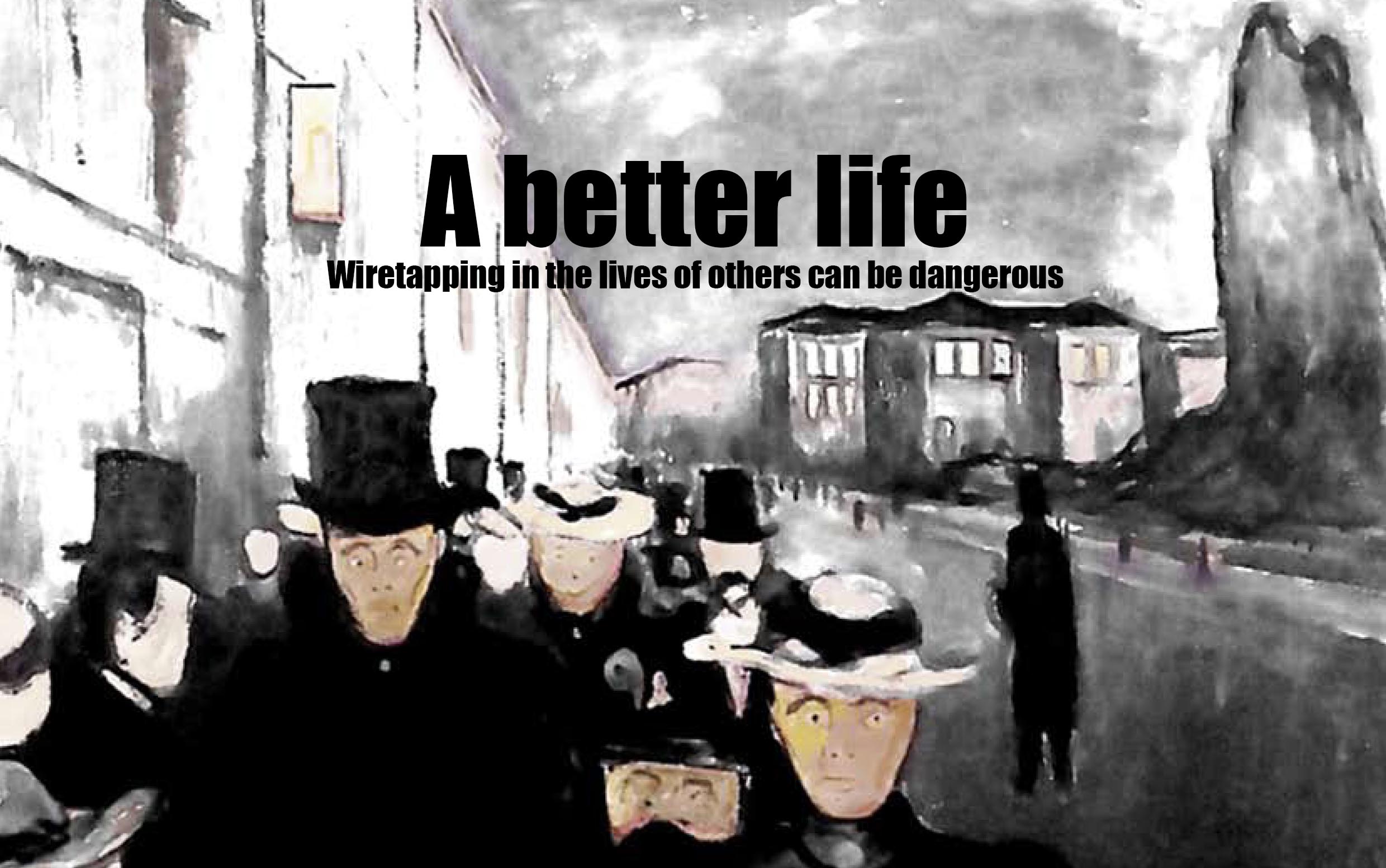
Drama, thriller, by Fabio Del Greco, Italy, 2007.
Rome: Andrea Casadei is a young investigator specializing in audio wiretapping who conducts investigations commissioned by husbands betrayed by their wives, or by parents worried about what their children are doing outside the home. But what interests him most is understanding the human soul, listening to casual conversations in the streets, knowing what people think. He often meets in Piazza Navona with his friend Gigi, a frustrated street artist obsessed with success at all costs, with whom he shares a passion for wiretapping. Shocked by the mystery of the disappearance of Ciccio Simpatia, another street artist common friend, Andrea decides to abandon the commissioned works to seek a better life and reflect on his own and others' existence. He will meet the actress Marina and with a bug he will slowly enter her life until he discovers her most unthinkable secrets. The film deals with an important theme of contemporary Western society: the lack of love. The mysterious and tormented figure of Marina is reflected in a gloomy and soulless Rome.
Director Fabio Del Greco declared about his film: "Perhaps this film is a reflection on the art of observing, of listening, in short, of what one does when one leaves the real world to tell about it. Perhaps he wants to talk about the subtle relationship between the mirages of success touted by today's society, power and the most authentic human relationships.A 'dark cloud' hangs over the city: it is engulfing everyone in a sort of indistinct, uniform mass, where everyone thinks the same things, where everyone they are more alone. Where is the truest part that makes us unique? Maybe you can try to intercept it only secretly."
LANGUAGE: Italian
SUBTITLES: English, Spanish, French, German, Portuguese, Dutch.
Born Into a Country Still Inventing Itself
You are born in Atlanta in 1914, which means your first conscious memories arrive just as the country is learning to believe its own mythology at industrial scale — the assembly line is barely two years old, the moving picture has just discovered narrative, and American confidence has the clean, slightly dangerous shine of something that has never yet failed at anything large.
His family moved to Tulsa, Oklahoma, while the city was still being invented, a raw petroleum boomtown where fortunes appeared and collapsed with the geological luck of whoever happened to own which patch of red dirt. Samuel Boorstin, his father, was a lawyer, and in that environment law was not merely a profession but a kind of improvised architecture — the formal scaffolding thrown up around commerce that hadn’t yet decided what it was. Daniel absorbed something from that context that no curriculum could have taught: the awareness that institutions are constructed things, that the rules governing a society are arrived at rather than revealed, that legitimacy is a performance sustained by collective agreement rather than a property inherent in any structure.
Harvard received him in the 1930s, and Harvard in the 1930s was a particular kind of pressure chamber — intellectually serious, socially stratified, and saturated with a liberalism that was confident enough to mistake itself for neutrality. He graduated summa cum laude in 1934, which means he had mastered the machine well enough to be recognized by it, and that mastery is never epistemically innocent. The institutions that reward you most completely are precisely the ones hardest to see clearly afterward, because clarity about them risks looking like ingratitude, and ingratitude in elite American culture carries a faint but persistent social cost. What is remarkable about Boorstin is not that he escaped this difficulty but that he found a way to work productively inside it rather than pretending it wasn’t there.
Oxford came next, as a Rhodes Scholar, and the Rhodes experience in that era deserves a moment of honest attention. Cecil Rhodes died in 1902 leaving a fortune built on South African mining and a scholarship program explicitly designed to produce Anglo-American ruling class solidarity — men who would feel at home in the corridors of power on both sides of the Atlantic because they had been shaped in the same rooms. To pass through that system is to be socialized into a particular relationship with authority: comfortable enough with it to be effective, distant enough from its origins to feel clean. Boorstin studied law at Balliol College, the most intellectually ambitious of the Oxford colleges, in a period when European historical scholarship was wrestling seriously with how civilizations justify themselves to themselves — a question that would become the structuring obsession of his entire career.
He returned to take a law degree at Yale, completed in 1941, by which point he had accumulated credentials that functioned less as knowledge than as a kind of passport — documents proving he had been processed by the finest institutions the English-speaking world produced. But credentials of that density create a peculiar cognitive condition. Having been formed entirely within the apparatus of Western intellectual achievement, he could not step outside it to achieve the anthropologist’s clean distance. What he could do, and what he eventually did with sustained brilliance, was treat American culture the way a structurally minded historian treats any civilization: as a system of beliefs that are functional precisely because they are not examined, that generate coherence precisely by suppressing the questions that would destabilize them.
The tools he received from Harvard, Oxford, and Yale were tools designed to celebrate the civilization that produced them. The fact that he turned those same tools toward analysis rather than celebration is not a betrayal of his formation but its most honest possible extension — the moment when the education finally taught him something its architects had not intended to teach.

The Pseudo-Event and the World It Made
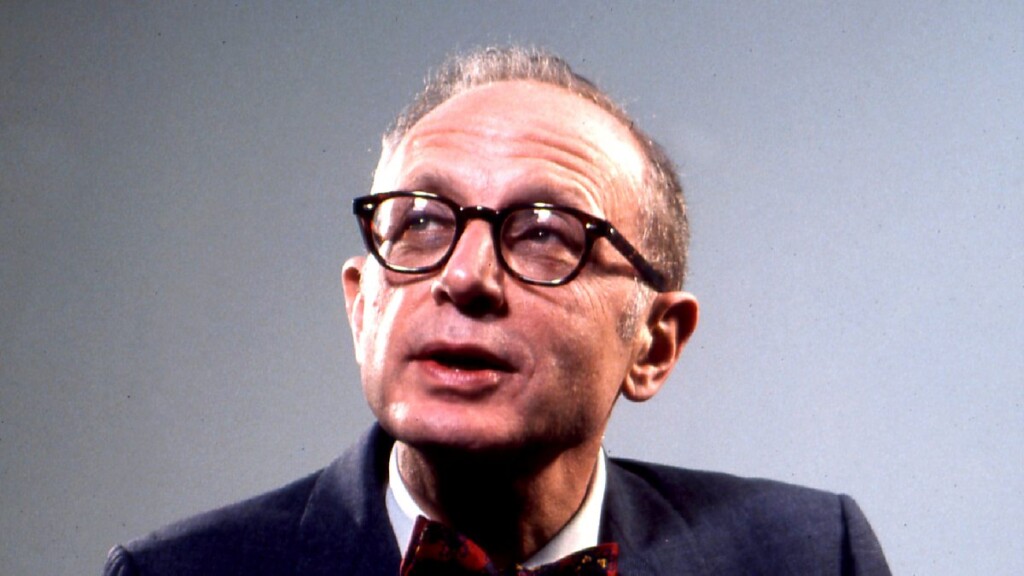
You are watching a press conference, and something in you already knows, before a single question is asked, that nothing here will be surprising. The journalists have been briefed. The answers have been rehearsed. The moment was scheduled not because something happened, but so that something could be reported as having happened. You feel, dimly, the sensation of witnessing an event, and you are wrong. What you are witnessing is the careful manufacture of that sensation.
This is precisely what Daniel Boorstin named and anatomized in The Image, published in 1962, a book that arrived with the quiet devastation of a diagnosis no one had asked for. The pseudo-event, as he defined it, is not a lie exactly — it does not pretend to be fictional. It is something stranger: an occurrence planned, planted, and executed for the primary purpose of being reported. It is real in the sense that it happens. It is unreal in the sense that without the apparatus of coverage, it would have no reason to happen at all. The press release exists before the action it describes. The ribbon is cut for the cameras. The interview is granted so that the interview can be said to have taken place. The event is the coverage, and the coverage is the event, and between them there is no remainder, no residue of something that was simply, stubbornly, unconstructedly there.
Boorstin was writing in a specific historical moment — the postwar American media landscape in which television had begun its full colonization of domestic time, advertising expenditure had climbed past eleven billion dollars annually, and public relations had matured from a trade into a philosophy. Edward Bernays, who had spent decades theorizing and practicing the manufacture of public consent, represented one pole of this world. But Boorstin’s target was not the manipulator. It was the manipulated, and more disturbingly, the way the two had become indistinguishable. The publicist and the journalist, the press release and the news story, the celebrity and the person — each pair had grown so intimate that the seam between them had vanished. What remained was a smooth, continuous surface that looked like reality and felt like experience.
The mechanics were not subtle once you looked directly at them. A hotel opens and holds a press event to mark the opening; the coverage of the press event generates more attention than the hotel itself would have received; future travelers choose the hotel partly because of the coverage; the hotel’s identity is now inseparable from the story of its launch, which was a story about a story. Boorstin called this the self-fulfilling prophecy of the pseudo-event, and it operates not through deception but through a kind of ontological substitution — the image takes the place of the thing, and everyone, including the producers of the image, comes to regard the substitution as natural.
What makes this more than a critique of advertising or media cynicism is the deeper claim embedded in it: that the pseudo-event restructures not just public discourse but private expectation. The tourist does not want to encounter a place; the tourist wants to have the experience of a place that matches the photographs that preceded it. The diner does not want to eat; the diner wants to be the kind of person who has eaten there. Desire itself becomes anticipatory, circular, image-saturated. You want what you have already been shown wanting. The gap between the anticipated and the encountered is not disappointing because it falls short of reality — it is disappointing because reality was never the destination.
Boorstin had watched the American character, so preoccupied in his earlier work with its restless, pragmatic energy, arrive at a peculiar inversion: a culture that had mastered the production of experience while quietly losing interest in experiencing anything at all.
Democracy and Its Discontents, Before It Was Fashionable to Say So
You are standing in a room where someone is asking you to explain what you believe, not what you do, not what you have built, not what flag you fly — but what you actually, philosophically believe. Watch yourself hesitate. Watch the words come out sideways, in anecdotes, in references to founding documents you half-remember, in gestures toward freedom and fairness that dissolve the moment they are pressed. This is not a personal failure. This is, Daniel Boorstin argued in 1953, the very source of American political genius.
The Genius of American Politics landed in Cold War intellectual culture like a stone thrown into a theology seminar. Boorstin’s central provocation was not that Americans were naive or uneducated about politics — it was that their indifference to systematic political theory was a structural feature, not a bug. Where European traditions had produced Rousseau, Hegel, Marx, and a century of ideological warfare between competing visions of the just society, America had produced something stranger and more durable: a political culture that derived its legitimacy from the given, from geography, from inherited legal arrangements, from what Boorstin called a “givenness” — the assumption that the right way to organize society had already been settled by the continent itself, by the peculiar circumstances of settlement and revolution. Ideology, in this reading, was what other nations needed precisely because they lacked what America stumbled into possessing.
This was not a comfortable argument for 1953. American intellectuals on both left and right were deeply invested in the idea that the United States stood for something articulable, something that could be translated into policy, into foreign intervention, into the architecture of international institutions. The Cold War demanded a doctrine, a counter-ideology capable of matching Soviet Marxism point for point. Boorstin said, in effect, that asking America to produce such a doctrine was asking it to become something it was not — and that the attempt would hollow out the very quality that made American political life resilient. He was not celebrated for this. The book made him suspect among liberals who wanted a muscular democratic theory and among conservatives who wanted a clear ideological banner.
What Boorstin exposed, without fully naming it as a contradiction, was the grotesque irony at the heart of mid-century American foreign policy. A nation whose political culture rested on the untranslatability of its own historical experience was simultaneously deploying military force, economic pressure, and propaganda to export that experience to societies with entirely different histories, geographies, and inherited arrangements. The Marshall Plan was announced in 1948. The CIA began covert interventions in Iran and Guatemala within a decade. Each of these operations was justified in the language of democracy — a word that, by Boorstin’s own analysis, derived its meaning in America not from philosophy but from specific, unrepeatable conditions. You cannot export a givenness. You can only create its simulacrum, a procedural shell that carries the name of the thing while being emptied of whatever made it function.
Boorstin was working in a tradition that included Alexis de Tocqueville’s observation in Democracy in America that equality of conditions produced its own tyranny — not the tyranny of despots but the softer, more penetrating tyranny of conformity and social pressure. But where Tocqueville retained an outsider’s analytical distance, Boorstin was writing from inside the culture he was describing, which gave his argument a different texture — less diagnostic, more archaeological. He was not warning Americans about what democracy might become. He was describing what it already was, beneath the rhetoric it used to explain itself to the world.
The question that his argument opened, and never closed, was this: if a political system cannot explain what it believes, only what it has inherited, then what exactly is being defended when its soldiers die in foreign soil claiming to carry its values forward into places those values were never meant to reach?
History as a Story Americans Tell About Strangers
You are standing in a general store in 1840s Ohio, and you do not know you are inside an argument. The barrels of salt pork, the bolts of calico, the catalogs stacked near the door — none of it feels like evidence of anything except daily life. That is precisely what Daniel Boorstin was counting on. His conviction, the one that drove the fifteen years he spent writing the three volumes that would eventually be called The Americans, was that the real record of what a civilization believes about itself is never stored in its founding documents or its battlefield monuments. It is stored in the objects people handle without thinking, in the habits they have stopped noticing because those habits have become indistinguishable from reality itself.
The Colonial Experience, published in 1958, opened not with the theology of the Puritans as a doctrinal system but with the pragmatic pressure that a genuinely unknown continent exerted on European minds that arrived equipped with European categories. Boorstin’s argument was almost perverse in its implications: the New World worked on settlers less by liberating them ideologically than by making their inherited frameworks useless. Legal traditions bent, religious certainties softened, social hierarchies loosened — not because Americans chose freedom in any principled sense, but because the practical demands of an ungoverned landscape kept dissolving the tools they had brought to manage it. What looked like idealism from a distance was, up close, improvisation under pressure.
By the time he reached The National Experience in 1965, Boorstin had sharpened this method into something almost anthropological. He was less interested in Lincoln and more interested in the hotel — specifically the vast, democratic, slightly disorienting American hotel of the nineteenth century, a space where strangers from incompatible social classes were pressed into temporary proximity by the logic of commerce and geography. Alexis de Tocqueville had written in Democracy in America in 1835 about the restlessness of democratic man, his inability to settle, his constant hunger for motion. Boorstin took that observation and ran it through the material infrastructure that made such restlessness physically possible: the steamboat, the railroad, the grid system of land surveying that turned the continent into a commodity that could be bought, sold, and speculated upon before anyone had even seen it. The land that became America was, in a measurable sense, financialized before it was inhabited.
The third volume, The Democratic Experience in 1973, arrived into a country that had just lived through a decade of violent disillusionment, and Boorstin aimed it squarely at consumption as the new grammar of shared life. He traced how the department store, the brand name, the nationally advertised product created a form of community that was real in its effects even if hollow in its content — people who had never met recognized each other through the same soap, the same breakfast cereal, the same mail-order catalog. This was not merely an observation about commerce. It was a claim about what replaces civic identity when civic identity becomes too contested to hold. The object fills the space that argument has evacuated.
What made this method unsettling was its refusal to locate power where people expected to find it. Boorstin had no interest in exposing villains or celebrating heroes. His history operated at the level of the structural and the habitual, which meant it implicated everyone equally and absolved no one by virtue of their good intentions. The person who participated in the catalog economy, who slept in the democratic hotel, who bought the advertised brand — that person was not a victim of power. That person was the mechanism through which power reproduced itself without ever needing to announce its presence. The archive Boorstin was building was made of ordinary choices, which is the only kind of archive that cannot be burned.
A vision curated by a filmmaker, not an algorithm
In this video I explain our vision
The Librarian Who Believed in Discovery, Not Certainty

You arrive at the Library of Congress in 1975 as the twelfth Librarian of Congress, appointed by Gerald Ford, and you are not a librarian. You have never catalogued a book, never administered a reading room, never managed the professional architecture of acquisition and preservation that the institution’s career staff has spent decades building. You are a historian, a popularizer, a man who writes about America as a civilization rather than as a series of events — and to the specialists watching your arrival, this is not a qualification. It is a provocation.
The resistance Boorstin encountered was not merely institutional friction. It was ideological, rooted in a conviction that expertise is validated by its narrowness, that the person most qualified to oversee the preservation of human knowledge is someone whose own knowledge is carefully bounded. Boorstin had made an entire intellectual career out of rejecting this premise — out of arguing that the walls between disciplines are largely administrative, that the most productive thinking happens when someone crosses into territory they were never credentialed to enter. His appointment brought that argument into a building that housed 84 million items and employed several thousand people who believed otherwise.
What he did with the Library was consistent with who he was. He expanded public programming, pushed the institution toward accessibility rather than exclusivity, and insisted that a national library belonged not to scholars but to citizens. The specialists resented this, not without reason: he was redistributing cultural authority, and the people losing it were the people who had worked hardest to earn it. There is something genuinely difficult about this tension, something that cannot be resolved by simply declaring Boorstin right. Expertise matters. Specialization matters. The person who has spent thirty years studying the incunabula of fifteenth-century northern Italy knows something that no amount of synthetic intelligence can replicate. But Boorstin’s challenge was different: he was asking whether the institution existed to protect that knowledge or to release it.
The Discoverers, published in 1983 while he still held the position, was his most sustained answer to his own question. The book runs to nearly 750 pages and covers the history of humanity’s attempts to understand time, the earth, nature, and the self — not as a chronicle of correct conclusions but as a record of productive wrongness. What drives the book is a thesis that runs against every instinct of modern intellectual culture: that the greatest obstacle to discovery is not ignorance but the illusion of knowledge, the false certainty that forecloses curiosity before it can begin. He called this the “geography of the known,” the mental map that tells you where it is and is not worth looking. Every major discovery he examines — from the calculation of longitude to the germ theory of disease — required someone willing to look precisely where the consensus said there was nothing to find.
This is not the same as anti-intellectualism, though Boorstin’s critics sometimes reached for that label when the argument became uncomfortable. He was not saying that knowledge is worthless. He was saying that knowledge, when it hardens into certainty, becomes a different kind of ignorance — one that is more dangerous because it does not recognize itself as such. The distinction is fine enough that it is easy to miss, and missing it produces a reader who walks away from the book believing Boorstin was celebrating ignorance, when what he was actually celebrating was the courage to remain in motion when every institutional signal tells you to stop.
The Creators, which would not appear until 1992 after his tenure at the Library had ended, extended this into artistic and cultural production — asking what allows a human being to make something that did not exist before. His answer was not genius, not inspiration, not the romantic apparatus of exceptional individual endowment. It was a particular relationship to uncertainty, a tolerance for not yet knowing what the thing you are making will turn out to be.
The Trap of Comfort: What Boorstin Saw That His Critics Missed
You are standing in a museum gift shop, moving past shelves of miniature replicas, tote bags printed with famous brushstrokes, coffee mugs bearing the faces of dead revolutionaries. You bought a ticket to see the paintings. You saw them. Now, somehow, this room feels more real than the galleries behind you — brighter, more navigable, more yours. Nothing here demands anything from you. You leave with a bag. You tell someone later that you love art.
This is not a failure of individual character. It is the successful operation of a system Boorstin diagnosed with uncomfortable precision in The Image, published in 1962, a book his critics never quite managed to bury despite decades of trying. The charge against him was ideological: that his nostalgia for authentic experience was a conservative’s alibi, a way of lamenting a degraded present while protecting the hierarchies that had produced it. Irving Howe and others of that critical generation saw in Boorstin’s cultural pessimism the fingerprints of someone too comfortable with the America that already existed to seriously interrogate its foundations. They were not entirely wrong about his politics. But they missed what the text was actually doing.
What Boorstin described was not a moral failing of the masses but the internal logic of a market that had learned to package the feeling of depth as a substitute for depth itself. He called these packages pseudo-events — manufactured happenings designed not to occur but to be reported, experienced not firsthand but through their own representation. The press conference, the anniversary celebration, the choreographed ribbon-cutting: each one real enough to quote, hollow enough to leave no residue. His left-wing critics, committed to the emancipatory potential of mass media and popular culture, found this analysis elitist. What they could not fully anticipate in 1962 was that the commodification of experience would accelerate not against democratic impulse but through it — wearing its language, borrowing its aesthetics, selling participation back to those who believed they were practicing it.
By the 1990s, the tourism industry alone was generating over 3.4 trillion dollars annually in global revenue, a figure that had tripled within two decades, and the architecture of that industry was organized almost entirely around the delivery of pre-authenticated encounters: the “authentic local experience” curated by a concierge, the “undiscovered” restaurant recommended by an algorithm, the wilderness retreat scripted down to its morning silence. The critics who accused Boorstin of reactionaryism had assumed that democratizing access to culture would democratize experience itself. Instead it democratized the simulacrum. Everyone could now afford the replica.
What made this harder to see was that the replica had become genuinely pleasurable, even genuinely moving. This is the trap Boorstin’s detractors built for themselves: by insisting that popular engagement with mediated culture was inherently legitimate, they foreclosed the possibility of asking what that engagement was actually doing to the capacity for unmediated encounter. Guy Debord, writing in 1967, arrived at a structurally similar conclusion from an entirely different political direction, arguing in The Society of the Spectacle that the spectacle was not a collection of images but a social relation among people mediated by images — which meant the problem was not taste or access but the reorganization of lived reality itself.
Boorstin never cited Debord. They would have made uneasy companions. But the convergence matters because it suggests the critique was not ideologically determined — it was descriptive of something happening in the infrastructure of modern attention. The optimism of Boorstin’s critics aged into something almost poignant. They had bet on consciousness, on the educability of the audience, on the power of exposure to eventually produce genuine engagement. What exposure produced instead was
A Mind That Refused the Safety of a Single Argument

You are reading a man who genuinely loved America, and that is precisely what makes him so difficult to dismiss. It is easy to file away a critic who despises the thing he examines. Boorstin offered no such comfort. He celebrated the flatboat builders, the improvisers, the communities that organized themselves around practical need rather than inherited doctrine. His 1958 work The Genius of American Politics argued that Americans had been spared the ideological rigidity that had bloodied Europe precisely because they trusted experience over theory, adaptation over abstraction. He meant it as a compliment. He meant it as a diagnosis of strength.
But something in that same celebration kept curdling into dread. The pragmatic mind that solved problems without asking too many philosophical questions about the nature of truth was also, structurally, the mind most vulnerable to mistaking a well-packaged illusion for a solution. The craftsman who built what worked and sold what sold had no interior mechanism for distinguishing between a tool that served a genuine need and a product engineered to manufacture the feeling of need in the first place. Boorstin understood this not as a moral failure of individuals but as a systemic consequence of a culture that had systematically devalued the kind of friction — religious, philosophical, class-based — that had historically forced people to argue about what things were for. When you remove the friction, you do not get freedom. You get velocity without direction.
A woman sits in a hotel room somewhere in the middle of a city she has never visited, watching a television channel devoted entirely to the hotel itself — its pools, its restaurants, its curated version of the surrounding city, filtered through the hotel’s own aesthetic. She does not feel trapped. She feels informed. This is precisely the structure Boorstin was describing in 1961 when he wrote about pseudo-events in The Image: not experiences that are obviously false, but experiences engineered to feel more coherent, more satisfying, more reliably narrative than the actual world outside the window. The danger was never the lie. The danger was the improvement.
What tears at the internal architecture of Boorstin’s entire project is that the tools he used to expose this mechanism were themselves products of the same civilizational intelligence he was critiquing. The book as a commodity. The lecture circuit. The appointment to the Library of Congress in 1975, where he served as Librarian until 1987, giving his ideas institutional authority, national distribution, a kind of prestige that transformed critique into cultural furniture. He was not unaware of this. There is something almost unbearable in his later work, a quality of a man watching his own warnings become quotable, become syllabus material, become the kind of thing that gets cited in corporate keynotes about authenticity.
The German sociologist Karl Mannheim had already mapped this trap in Ideology and Utopia in 1929, arguing that any social group, including the intellectuals who claim to diagnose collective delusion, is embedded in the very ideological structure they presume to see from outside. There is no view from nowhere. Boorstin’s celebration of American practicality and his horror at American superficiality were not opposites pulling his work apart — they were the same hand writing with different ink. The culture that produced the ingenuity also produced the emptiness, and the critic who exposed the emptiness was himself a product being distributed through the ingenuity.
What remains unresolved, and what no amount of archival recovery or scholarly reassessment will resolve, is whether a civilization possesses any capacity to receive a diagnosis of its own perceptual blindness as something genuinely disorienting rather than as simply another item in the catalogue of ideas it has learned to consume, shelve, and move past without consequence.
🌀 Labyrinths of Knowledge & Identity
Daniel Boorstin’s exploration of human knowledge, history, and the constructed nature of reality resonates deeply with a broader literary tradition obsessed with labyrinths, illusion, and the search for meaning. From the halls of history to the corridors of fiction, these works share a profound fascination with how humanity navigates complexity and uncertainty. The following articles illuminate thinkers and authors whose work converges with Boorstin’s intellectual universe.
Jorge Luis Borges: Life and Works
Jorge Luis Borges and Daniel Boorstin share a remarkable preoccupation with the nature of knowledge and its limits. While Boorstin mapped the history of human discovery, Borges constructed fictional labyrinths that interrogated the very foundations of what we can know. Together, their works form a powerful dialogue about the infinite corridors of the human intellect.
GO TO THE SELECTION: Jorge Luis Borges: Life and Works
Jorge Luis Borges and the Labyrinth of Identity
Borges’s lifelong meditation on identity and the labyrinth finds a surprising echo in Boorstin’s historical investigations into self-perception and collective myth. Both authors understood that identity is never fixed but perpetually constructed through layers of narrative and time. This article explores how Borges used the maze as a central metaphor for the endless deferral of a stable self.
GO TO THE SELECTION: Jorge Luis Borges and the Labyrinth of Identity
The Journey as a Metaphor in Literature
The journey as metaphor is central to understanding Boorstin’s narrative of human progress and discovery throughout history. Literature has long used travel not merely as physical movement but as a transformative philosophical quest that reshapes the traveler’s identity and worldview. This article examines how the voyage functions as an organizing principle across centuries of storytelling.
GO TO THE SELECTION: The Journey as a Metaphor in Literature
Homer and the Odyssey: Nostos and the Archetype of Return
Homer’s Odyssey and its archetype of the return journey offer a mythological foundation for understanding Boorstin’s broader thesis about humanity’s drive to explore and return transformed. The concept of nostos — the longing for home — mirrors the historian’s own inquiry into how civilizations seek to recover lost certainties. This ancient epic remains a cornerstone for any serious reflection on knowledge, wandering, and the human condition.
GO TO THE SELECTION: Homer and the Odyssey: Nostos and the Archetype of Return
Discover Independent Cinema on Indiecinema
If these explorations of knowledge, identity, and the labyrinthine nature of human thought have sparked your curiosity, Indiecinema streaming offers a rich selection of independent films that dive even deeper into these themes. From philosophical documentaries to bold auteur narratives, Indiecinema is your gateway to cinema that challenges, provokes, and illuminates. Join us and keep exploring the infinite maze of ideas through the art of independent film.
👉 EXPLORE THE CATALOG: Watch Indie Films in Streaming
A vision curated by a filmmaker, not an algorithm
In this video I explain our vision

