
The Sword Before the Name
You do not know the name of the man standing to your left. You have been marching beside him for eleven days and you still do not know his name, and now, in the blue-black hour before the signal fires are lit, you understand that you never will. His sandal strap broke two days ago and he bound his foot with river grass, and this is the only detail about him that will survive the morning — not in any record, not in any chronicle, but in the cavity behind your sternum where fear has been quietly constructing itself since the rice ran thin.

This is the Sengoku period, which translates with almost brutal literalness as the Age of Warring States, and it ran from roughly 1467 to 1615, from the collapse of the Onin War’s uneasy peace all the way to the final extermination of the Toyotomi clan at Osaka Castle. One hundred and fifty years of fragmentation, of daimyo turning on daimyo, of provincial lords swallowing each other across a geography of mountains and rice paddies that made every alliance a gamble and every loyalty a provisional thing. The historians who have catalogued this era — and Mary Elizabeth Berry’s meticulous work on Hideyoshi, published in 1982, stands among the most rigorous — are careful to note that the period was not simply chaos. It had its own internal logic, its own economic imperatives, its own demographic pressures. But logic is a luxury that arrives after the fact, carried in by scholars who were not standing barefoot in the mud before Nagashino in 1575, where arquebuses fired in rotating volleys tore through cavalry charges and rewrote the arithmetic of battle in a single afternoon.
The word samurai occupies a strange position in the imagination of anyone who encounters Japanese history from the outside. It arrives pre-romanticized, pre-polished, wrapped in the aesthetic vocabulary of Zen discipline and the clean geometry of a drawn blade. What that image systematically erases is the demographic reality of Sengoku warfare, in which the samurai — the mounted, name-bearing warrior of hereditary status — represented a minority within armies that were increasingly composed of ashigaru, the foot soldiers conscripted or coerced from the peasant class. By the time Oda Nobunaga was reorganizing his forces in the 1560s and 1570s, the ashigaru had become the structural backbone of military power on the archipelago. They carried the spears, they operated the guns, they died in the ratios that make historians reach for phrases like catastrophic attrition.
The social contract embedded in this arrangement was not a contract at all. It was closer to a conditional loan taken out under duress, with the body as collateral. A peasant who survived a campaign might receive land rights, a small redistribution of rice allocation, occasionally a bump in legal status that placed him closer to the warrior class. More often, he returned to a village that had been taxed into borderline subsistence during his absence, or he did not return at all, and his family received nothing because there was no institutional mechanism designed to deliver anything to the families of men whose names were not recorded. The bureaucratic apparatus for tracking individual soldiers of low rank simply did not exist in any systematic form until Toyotomi Hideyoshi’s 1591 edict on status separation began to freeze the social hierarchy in place — and even then, the edict was as much about preventing future mobility as acknowledging past sacrifice.
What the samurai myth requires, to sustain itself across centuries and across the considerable distance between medieval Japan and contemporary consumption of that image, is the suppression of this arithmetic. It needs the sword to represent individual virtue, personal honor, a spiritualized relationship between warrior and death. But a pike formation of three hundred ashigaru is not a spiritual proposition.
What the Chaos Actually Was
You have seen the image before, probably in a museum or a documentary, the kind that opens with slow shamisen strings and a narrator whose gravity implies you are about to witness catastrophe: warlords on horseback, burning villages, a country devouring itself. The frame is always disorder against some implied prior order, chaos against a stability that must have existed, must have been worth mourning.
That implied stability is the historical fiction worth examining. The Ashikaga shogunate, which had nominally governed Japan since Ashikaga Takauji seized power in 1336, was not a functioning administrative state that subsequently collapsed. Conrad Totman, in his landmark study of Japanese political structure, traced how the shogunate had never successfully converted military supremacy into genuine institutional authority. The Ashikaga depended on the cooperation of regional lords, the shugo daimyo, to enforce anything at all, which meant that every decree issued from Kyoto was already conditional, already hostage to the willingness of men who owed loyalty in theory and exercised autonomy in practice. By the mid-fifteenth century, the central government was not governing in any operative sense of the word. It was performing governance, and the performance was growing visibly thin.
The Onin War, which erupted in 1467 and consumed Kyoto for eleven years, is typically cited as the ignition point of the Sengoku period, but this framing mistakes a symptom for a cause. The war began as a succession dispute within the Ashikaga house, then metastasized into a proxy conflict between the Hosokawa and Yamana clans, eventually pulling in forces from across the archipelago. By the time it ended in 1477, Kyoto was largely in ruins and the shogunate’s pretense of central authority had been stripped away not by rebel ideology but by the sheer mechanical failure of institutions that had never acquired real load-bearing capacity. What the Onin War exposed was that the shogunate had been a legal superstructure resting on a social foundation that had already shifted beneath it.
This is the distinction that Western historiography consistently flattens when it reaches for the vocabulary of medieval European collapse — feudal fragmentation, warlordism, the dark interregnum before reunification. Those categories carry embedded assumptions about what order looks like and what its absence signifies. But the shugo daimyo who began asserting territorial control in the late fifteenth century were not dismantling something coherent. They were claiming openly what had been true quietly for generations: that power in Japan had always been local, relational, and contingent on military fact rather than administrative legitimacy. The Sengoku period made this visible. It did not invent it.
What emerged from that visibility was not simple violence but an extraordinarily rapid evolution in political technology. The new class of daimyo who consolidated power through the sixteenth century — men whose authority derived from conquest and economic reorganization rather than inherited title — developed what scholars of Japanese history call the kokudaka system, a method of measuring domain productivity in units of rice yield, which allowed lords to calculate taxation, military obligation, and administrative capacity with a precision the Ashikaga had never achieved. The chaos, in other words, was generative. It forced the invention of instruments that a stable but hollow bureaucracy had never needed to develop because it had never actually been governing.
There is something deeply uncomfortable in recognizing that institutional collapse can function as a kind of epistemic clearing, not because destruction is good but because certain kinds of order prevent the visibility of their own dysfunction until the moment they stop being able to sustain the performance. The Ashikaga shogunate had been telling Japan a story about centralized authority for over a century, and the country had organized enormous portions of its social life around that story, not because the story was true, but because the alternative —

The Economy of Violence and the Violence of Economy
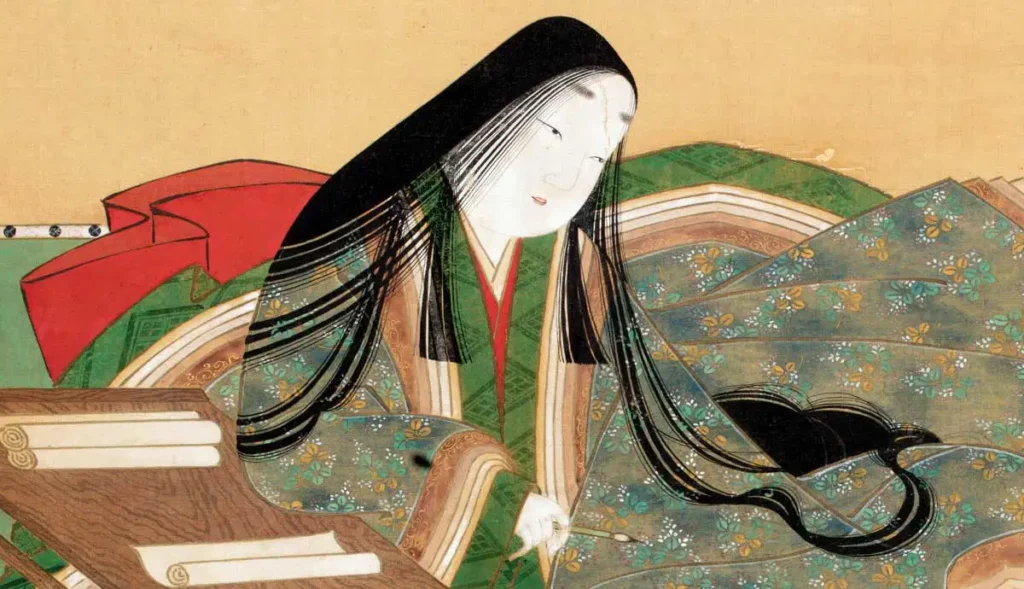
You are already living inside a system that tells you the hierarchy is natural — that those above you earned it, that the order of things has always roughly corresponded to merit or divine sanction. Sixteenth-century Japan told its people the same thing, and then the rice market quietly began to disagree.
The principle the Japanese called gekokujo, meaning literally the low overcoming the high, is typically framed in Western historiography as a kind of social pathology — a fever that gripped a civilization momentarily unmoored from its Confucian coordinates. That framing is profoundly dishonest. What actually happened across the Sengoku period, the era of warring states that convulsed the archipelago from roughly the 1460s through the 1590s, was not a collapse of moral order but the surfacing of an economic logic that the formal hierarchy had always been suppressing. When the Onin War destroyed the Ashikaga shogunate’s practical authority between 1467 and 1477, it did not create a vacuum so much as remove a lid. What escaped was already there, already pressurized.
The copper coin, imported from Ming China, had been quietly dissolving the material foundations of aristocratic permanence for decades. By the mid-fifteenth century, commercial networks in the Kinai region surrounding Kyoto had grown sophisticated enough that rice itself was no longer simply a subsistence crop or a ceremonial tribute — it was a liquid asset, convertible, transportable, and increasingly independent of the social relationships that had once made its production and distribution legible. The historian Mary Elizabeth Berry, in her 1982 study of Hideyoshi’s consolidation of power, demonstrates how the monetization of the agrarian economy in this period created conditions in which military effectiveness, rather than blood lineage, became the most reliable path to resource accumulation. When rice can be sold rather than only owed, the man who controls the road is suddenly more important than the man whose grandfather was given the land.
This is where the violence becomes structural rather than merely brutal. The ashigaru, the foot soldiers drawn from peasant stock who had always served as the disposable mass of samurai armies, discovered during the wars of the late fifteenth century that their collective indispensability translated into bargaining power — not through political theory but through the sheer arithmetic of survival. Lords who could not pay, feed, or arm their infantry lost battles. Lords who lost battles lost domains. Domains that changed hands created openings. Oda Nobunaga, who by the 1560s was consolidating power in Owari province with a ruthlessness that scandalized contemporaries, understood this arithmetic better than anyone before him: he promoted commoners based on demonstrated military competence, a practice that his peers found both effective and deeply threatening to watch.
The threat was precise. What gekokujo exposed was not that hierarchy was wrong but that it had always been contingent — maintained not by divine order or natural law but by the continuous exertion of force and the continuous performance of legitimacy. Pierre Bourdieu, writing in Distinction in 1979, described how social hierarchies reproduce themselves by converting historical accidents into the appearance of natural necessity, making the arbitrary seem inevitable. The Sengoku period was a moment when that conversion mechanism broke down publicly, and the aristocratic classes of Japan were forced to watch something that most ruling classes never have to confront directly: the made-up nature of their own elevation.
What is destabilizing about this is not the historical distance. Every market economy that claims meritocracy as its organizing principle while simultaneously protecting inherited advantage is running the same contradiction the Muromachi aristocracy ran — just with better paperwork and longer feedback loops. The copper coin does not ask who your grandfather was.
Oda Nobunaga and the Theology of Force
You wake up one morning in 1571 and the mountain is on fire. Not metaphorically — the entire complex of Enryaku-ji, three thousand buildings crowning Mount Hiei northeast of Kyoto, is burning in the actual pre-dawn dark, and the men fleeing its corridors are being cut down before they reach the tree line. Monks, acolytes, women who had sought refuge inside the walls, children — none of them are spared. The commander who ordered this is not in a rage. He is entirely composed.
This is the feature of Oda Nobunaga that most unsettles the historical record, because historians trained to read violence as a symptom of institutional breakdown cannot easily process violence deployed as institutional architecture. The burning of Enryaku-ji was not an atrocity committed in the heat of campaign. It was a prepared statement, directed at a specific audience, written in a language that audience had itself established. For over four centuries, the temple complex had operated as both a sacred institution and a private military power, its warrior-monks — the sohei — functioning as armed enforcers who extracted concessions from the imperial court and held commercial road access as leverage. Spiritual authority and coercive force had been so thoroughly fused that to challenge the one was to confront the other. Nobunaga did not attempt to separate them. He eliminated both at once, and he made the elimination maximally visible.
Mary Elizabeth Berry’s work on the period’s power structures makes a crucial distinction that tends to get lost in moralistic accounts: in the political culture of the Sengoku period, violence did not represent the absence of governance but one of its primary grammars. A lord who failed to punish with spectacular thoroughness was not read as merciful — he was read as weak, and weakness invited predation from every direction simultaneously. This was not cynicism. It was an accurate description of the environment. Berry’s reading of the era’s consolidation politics reveals that figures like Nobunaga operated inside a system where the performance of consequence was inseparable from the exercise of authority. The message sent at Mount Hiei was received clearly by every autonomous religious institution still holding military capacity: the old terms of coexistence had been unilaterally revoked.
What makes this philosophically strange rather than merely brutal is the theological dimension Nobunaga introduced into his self-presentation. He circulated an image of himself as something beyond the framework of karmic retribution that Buddhist institutional power had long used to discipline secular rulers — the implicit threat that defiance of the temple would bring spiritual consequences. Nobunaga responded to this framework not by accepting its terms and seeking absolution, but by refusing its jurisdiction entirely. Accounts from the period record him using language that positioned himself outside conventional cosmological accountability, a rhetorical move as radical in its context as the violence it accompanied. He was not claiming divine sanction. He was claiming exemption from the court of divine sanction altogether.
The Jesuit missionaries present in Japan during this period — Alessandro Valignano among them, whose observations survive in considerable detail — noted with fascination that Nobunaga showed more intellectual curiosity toward Christianity than strategic interest in it, and that his curiosity was specifically directed at its model of a singular, non-negotiable sovereign authority. What interested him was not salvation but structure: a religious system that did not generate competing armed factions, that did not accumulate land grants and toll rights and private armies under a sacred canopy. He was reading Christianity as an administrative document.
This is the thing that the word “warlord” consistently obscures when applied to the Sengoku consolidators: these were men engaged in a genuine theoretical project about what political legitimacy required, what it could absorb, and what it had to destroy in order to survive contact with a landscape where every institution, sacred or secular, had long since learned to arm itself.
The Aesthetics of Annihilation
You are standing in a room four and a half tatami mats wide, and everything in it has been chosen to remind you that you will die. The scroll in the alcove shows a single brushstroke — incomplete, deliberately so. The bowl handed to you is asymmetrical, its glaze cracked and re-fused with gold at the fractures. Outside, in the year 1587, the armies of Toyotomi Hideyoshi have reduced entire provinces to ash. Inside, Sen no Rikyu is teaching you how to drink tea.
The historical coincidence is too precise to be accidental. Rikyu formalized the principles of wabi-cha — the aesthetics of austere, imperfect, transient beauty — during the decades when Japan was experiencing its highest per-century rate of violent death. His foundational concepts, codified in texts like the Nanporoku compiled around 1593, insist on finding the complete within the broken, the whole within what cannot last. This is not a philosophy of consolation. It is a perceptual technology — a structured method for training the nervous system to remain present inside conditions of radical impermanence, rather than dissociating from them.
What is remarkable is that this training was not peripheral to the military culture around it but embedded within it. The great warlords — Oda Nobunaga, Hideyoshi himself — were obsessive collectors of tea implements, using the chado ceremony as diplomatic infrastructure and as a space where the hierarchy of the battlefield could be temporarily suspended. Nobunaga once declared that receiving a prized tea bowl from him was an honor equivalent to being granted a province. The ceremony was simultaneously an aesthetic practice, a political instrument, and a psychological ritual for men who ordered mass killings in the morning and contemplated cracked pottery in the evening. The gap between those two activities was not hypocrisy — it was the entire point.
Zeami Motokiyo had already established, roughly two centuries earlier in the late fourteenth and early fifteenth centuries, the theoretical grammar of Noh theatre in works like Fushikaden and Zeami’s treatises on the concept of yugen — the profound, shadowed beauty that exists precisely where things are about to vanish. His plays were not narratives of triumph. They were structured encounters with ghosts: warriors replaying their deaths, women trapped between grief and dissolution, figures caught at the exact moment the self begins to come apart. By the Sengoku period, Noh had become the ceremonial art form of the samurai class — men who needed, perhaps more than anything, a formal vocabulary for the experience of watching everything they knew be destroyed and rebuilt and destroyed again within a single lifetime.
The ink painting tradition operating under the influence of Zen monasteries, particularly those of the Rinzai school, pushed this further into the body of the image itself. Hasegawa Tohaku’s pine tree screens, created around 1595, show forests half-consumed by mist — not because the painter ran out of ink or space, but because the absence is the subject. The unpainted sections of those screens carry more visual weight than anything rendered. This is a precise inversion of Western Renaissance contemporaries, who were using the same decades to perfect perspective and the illusion of solid, conquerable space. Tohaku’s mist says: the space you cannot see is as real as the space you can, and your certainty about the difference is the source of your suffering.
What all three forms share — the ceremony, the theatre, the painted void — is a refusal to let the mind perform its habitual trick of treating beauty as evidence of permanence. Every aesthetic choice in this period is engineered to make that trick fail. The cracked bowl repaired with gold does not hide the damage; it illuminates it, forces you to look at exactly the place where the thing almost ceased to exist, and asks you to locate value there rather than in the undamaged surface, which is already on its way to becoming the next fracture.
A vision curated by a filmmaker, not an algorithm
In this video I explain our vision
Women, Invisibility, and the Architecture of Power

You are told, almost as an aside, that she was married at fourteen to a man she had never met, in a province she had never seen, to seal an agreement between two lords who would never once speak her name in any document that survived. The marriage treaty is archived. Her name appears in it once, as an object of exchange, grammatically equivalent to the land and the rice yield listed in the same paragraph. After that, the record closes around her like water.
The Sengoku period produced, by conservative historical count, over two hundred significant political marriages between daimyo houses between 1467 and 1615. These were not social ceremonies. They were instruments of statecraft, functioning with the same cold precision as troop deployments and castle sieges. A daughter sent across a mountain range was a living contract, her body the seal on an alliance that could be revoked the moment her father’s army grew inconvenient. Historians trained in the mechanics of war have catalogued these unions largely as footnotes to male political biography, noting them the way one notes a favorable harvest — useful context, not the subject itself.
Hitomi Tonomura, in her work on gender and power in medieval Japan, makes an argument that cuts through this habit with uncomfortable clarity: the absence of women from the standard historical record is not a neutral gap produced by a lack of evidence. It is an active, recurring editorial decision, one made first by the male scribes and chronicle-keepers of the period, then reinforced by every subsequent generation of scholars who inherited their framing without questioning its architecture. The invisibility is constructed. It takes continuous labor to maintain it across centuries.
What makes this erasure structurally sophisticated is that it operates by inclusion as much as exclusion. Women like Nene — the wife of Toyotomi Hideyoshi, who managed his political correspondence during extended campaigns, mediated disputes among his generals, and maintained the network of loyalty that kept his coalition intact — appear in the sources, but always in relation to the man beside them. Nene’s letters survive. Dozens of them. In them she adjudicates, instructs, and negotiates with a fluency that suggests not a supportive spouse but a co-administrator. The letters are real. The title that would make sense of them has never been granted.
Matsu, the wife of Maeda Toshiie, went further in one documented act than most samurai managed in a lifetime of loyalty. When Tokugawa Ieyasu’s political pressure threatened to fracture the alliance that protected her son’s claim to the Kaga domain, she voluntarily entered Edo as a hostage — not sent, not compelled by formal military defeat, but choosing the move herself as a strategic sacrifice that bought time and legitimacy. The Tokugawa sources record it as a gesture of submission. It was, by any coherent political analysis, a masterstroke of positional diplomacy that reshaped the balance of power in the years before Sekigahara. The reframing as submission is not incidental. It is the mechanism by which an act of power is converted into an act of deference in the telling.
This conversion is what Tonomura’s scholarship refuses to normalize. Every time a chronicle subordinates a woman’s decision to a man’s narrative, it does not simply describe the past — it reproduces a power relation in the present tense of reading. The reader absorbs not just what happened but the hierarchy of who is permitted to have caused it. By 1600, the ideological consolidation of the Tokugawa order would begin systematizing these hierarchies into law, codifying through the Confucian frameworks imported and adapted from the continent a vision of female subordination that was presented as natural order rather than political choice. But the choice had been made long before the law was written, in the quiet grammar of documents that listed a fourteen-year-old girl between a rice yield and a border.
The Arrival of the Outside and the Myth of Isolation
You are told, before you ever open a history book, that Japan was a world apart — an island civilization that evolved in magnificent, hermetic solitude until foreign ships broke the seal. The story is almost liturgical in its repetitions: the isolated archipelago, the insular samurai culture, the sudden rupture of contact. What no one asks is who benefits from that story, and why both the tellers and the told have needed it so badly for so long.
When Portuguese traders anchored off Tanegashima in 1543, they were not discovering a civilization frozen in amber. They were entering a trading network that already stretched across East Asia in dense, sometimes violent webs of silk, silver, and piracy. Japanese wako raiders had been terrorizing Chinese and Korean coastlines for generations. Chinese merchants, Korean diplomats, and Ryukyuan traders moved through Japanese ports with the pragmatic regularity of commerce. The archipelago was already porous in every direction that mattered economically. What the Portuguese brought was not contact — it was a specific technology, and the distinction is not minor.
The arquebus arrived at Tanegashima as a curiosity and became, within a single generation, a structural fact of Japanese warfare. The lord of Tanegashima paid an extraordinary sum for two of the weapons and immediately commissioned Japanese swordsmiths to reverse-engineer them. Within decades, Japanese craftsmen were producing firearms in quantities that rivaled European output. This is what Orientalist historiography consistently flattens: the Japanese response to the arquebus was not passive reception but aggressive technical appropriation. Oda Nobunaga understood this with the cold clarity of a man who had never confused tradition with utility.
At Nagashino in 1575, Nobunaga deployed approximately 3,000 arquebusiers in rotating volley formations against the cavalry charges of the Takeda clan, one of the most feared mounted forces in the country. The Takeda died in the open field, not because Nobunaga had superior European weapons, but because he had developed a specifically Japanese tactical doctrine around a technology he had absorbed and transformed. The battle is often cited as proof of Western influence reshaping Japan. It is more accurately proof of Japan reshaping Western technology to serve its own internecine logic.
The myth of isolation did not emerge from the Sengoku period itself. It was constructed later, retroactively, by the Tokugawa shogunate’s sakoku policies of the 1630s, which restricted foreign trade and expelled most foreign missionaries and traders. Tokugawa isolation was a political instrument, not a cultural essence. It suited the regime precisely because it could be performed as a return to some imagined original condition, when in fact it was a radical administrative intervention into a society that had been entangled with the outside world for centuries. The myth required a before, a pristine Japanese antiquity, that had never existed.
Western Orientalism and Japanese nationalist ideology arrived at the same fiction by different routes and for different reasons. For European thinkers of the eighteenth and nineteenth centuries, a sealed Japan served as a philosophical prop — the opposite of the dynamic, expansive West, a static civilization waiting to be unlocked. For Meiji-era and later nationalist historians, the myth of a pure, self-sufficient Japan provided emotional architecture for a national identity under pressure from Western imperialism. Both needed Japan to have been alone. Both were wrong about the same thing.
What Tanegashima actually reveals is something more unsettling than either narrative can absorb: that cultures under pressure do not simply receive foreign elements or reject them, but metabolize them in ways that accelerate whatever internal logic was already in motion. The arquebus did not make Nobunaga. It gave him a lever that the particular violence of the Sengoku period had already prepared him to use, in a country that was never, at any point in its medieval history, sealed from the forces that move through the world when there is profit in movement and power in the crossing of water.
The Peace That Froze the Clock
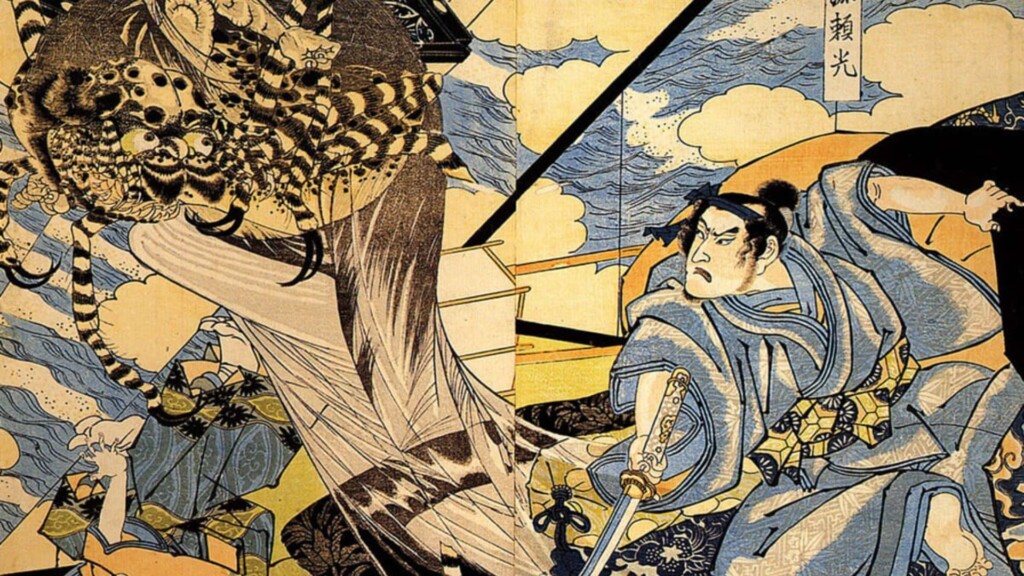
You are standing in Edo in 1635, and nothing moves without permission. The roads are full of daimyo processions — hundreds of retainers, lacquered palanquins, banners snapping in the cold air — and every single one of those processions is mandatory. Tokugawa Iemitsu has just codified the sankin-kotai system into law, requiring every feudal lord in Japan to spend alternating years in Edo and in his home domain, leaving his family behind as permanent hostages in the capital. The spectacle looks like ceremony. It is a leash dressed as protocol.
Tokugawa Ieyasu had understood something that the battlefield never taught: that killing an enemy is temporary, but exhausting him is permanent. The sankin-kotai system drained the daimyo financially by design — the cost of maintaining two residences, two administrative staffs, and the relentless theatrical expense of the processions themselves consumed fortunes that might otherwise have funded armies. By 1700, the lords of outer domains were spending between sixty and eighty percent of their annual rice revenue on compliance with a ritual that looked like honor but functioned like a tax on ambition. No rebellion requires only courage; it requires capital, and Ieyasu had made sure the capital flowed in only one direction.
The violence of the Sengoku period had at least been legible. You could see the army approaching. What replaced it after the siege of Osaka Castle in 1615 and the extinction of the Toyotomi line was a system in which coercion became architectural — built into the roads, the census registers, the dress codes, the professional classifications. The four-tier social hierarchy that the Tokugawa codified — samurai, farmers, artisans, merchants, with the eta and hinin existing beneath all formal categories — was not a description of how Japanese society already worked. It was a prescription, imposed with bureaucratic finality, that transformed contingent social arrangements into what felt like natural law. Michel Foucault would spend considerable energy in Discipline and Punish arguing that the most effective power is the kind that makes its own operation invisible, that recruits the surveilled into surveilling themselves. The Tokugawa achieved this in 1603 and sustained it for two and a half centuries without needing the argument.
Farmers were legally bound to their land and forbidden to abandon agriculture for trade, regardless of drought, debt, or desperation. Merchants, who generated much of the period’s actual wealth, occupied the lowest tier of the official hierarchy precisely because commerce was considered morally contaminating — a ranking that had almost nothing to do with Confucian ethics in any rigorous sense and everything to do with the Tokugawa need to delegitimize the one class whose power did not derive from the state. The irony that merchants in Osaka were quietly financing samurai households by the eighteenth century did not destabilize the classification; it simply produced a society that had learned to live inside the gap between its official story and its actual operation.
What the end of the Sengoku period produced, then, was not peace in any philosophically meaningful sense — not the absence of domination, not the resolution of the forces that had made a century of civil war possible. It produced stasis, which is a different thing entirely, and which requires a different kind of suffering to maintain. The swords did not disappear; they were simply reclassified as symbols, worn as markers of caste while their function was transferred to administrative registers, travel permits, and the meticulous surveillance of domain checkpoints. Norbert Elias, tracing the civilizing process in European courts, identified precisely this mechanism: the monopolization of violence by a central power does not eliminate aggression but redirects it inward, into hierarchy, etiquette, and the psychic labor of self-regulation. Japan under the Tokugawa did not end the Sengoku era so much as compress its energy into a form that could be managed, inherited, and mistaken, across two hundred and fifty years of enforced stillness, for the natural order of things.
Further Explorations
Friedrich Dürrenmatt: Life and Works
GO TO THE SELECTION: Friedrich Dürrenmatt: Life and Works
Dürrenmatt’s The Visit: Analysis
GO TO THE SELECTION: Dürrenmatt’s The Visit: Analysis
Pierre Hadot: Life and Works
GO TO THE SELECTION: Pierre Hadot: Life and Works
Roland Barthes: Life and Works
GO TO THE SELECTION: Roland Barthes: Life and Works
Stream Independent Cinema
👉 EXPLORE THE CATALOG: Watch Indie Films in Streaming
A vision curated by a filmmaker, not an algorithm
In this video I explain our vision

