
The Room Where Everything Was Too Beautiful
You have arranged the room so carefully that you cannot move in it anymore. The candles are the right height. The velvet on the chair catches the light in the one direction that makes it look like something from a painting you once saw in Vienna and never entirely recovered from. The books on the shelf are organized not by author or subject but by the color of their spines, a slow gradient from ivory to black that took you an entire afternoon to perfect and that you have not disturbed since, because to pull a book out would be to ruin the only thing in the room that still feels resolved. You are surrounded by the products of your own taste, and your own taste has become a kind of paralysis.

This is not a metaphor. It is a recognizable condition with a specific historical moment attached to it, a moment that began accumulating in European capitals sometime in the 1880s and reached such a pitch of self-awareness that it named itself. Decadentism was not primarily a literary movement, though it produced literature. It was an aesthetic philosophy that confused the refinement of sensation with the purpose of a life, and in doing so it created a very particular kind of suffering — the suffering of people for whom the world had become too loud in its beauty and too silent in everything else.
Joris-Karl Huysmans published Against Nature in 1884, and what he gave his readers was not a novel in any traditional sense but a catalog of exquisite withdrawals. His protagonist Des Esseintes retreats from Paris into a house he redesigns according to the logic of pure sensation — specific colors chosen for their effect on the nerves, a perfume organ to compose olfactory symphonies, a tortoise encrusted with jewels because the gold of its shell against the carpet produces a visual chord that nothing living and unadorned could achieve. The tortoise dies, of course, unable to survive inside an aesthetic system designed without reference to life’s actual requirements. Huysmans did not treat this as tragedy. He treated it as data.
What the decadents understood, and what their critics consistently misread, was that they were not celebrating excess for its own sake. They were performing a philosophical position about the relationship between civilization and vitality, arguing through their art objects and their ruined health that the further culture travels from its biological origins, the more exquisitely sensitive it becomes, and the less capable of enduring ordinary experience. Walter Pater had already laid the theoretical groundwork in his 1873 Studies in the History of the Renaissance, concluding in his famous Preface that the aim of experience was to burn always with a hard, gem-like flame, to maintain a state of heightened receptivity against the dulling pressure of habit. To a generation already temperamentally inclined toward exhaustion, this read less as an invitation than as a diagnosis.
The peculiar grammar of decadent aesthetics operated on a central inversion: illness became the proof of sensitivity, and sensitivity became the only remaining aristocracy. In a century that had industrialized production and democratized access to manufactured beauty, the decadents responded by making their beauty sick, strange, and demanding. Oscar Wilde’s 1890 preface to The Picture of Dorian Gray announces that there is no such thing as a moral or immoral book, only well-written or badly written ones, a statement that sounds like provocation but functions as a defensive wall around a very specific claim about art’s autonomy from consequence. The room arranged for its own perfection and not for habitation.
The person inside it, unable to reach for a book without destroying the composition, is not a character invented for argument. That person is a structural product of what happens when the cultivation of sensation is treated as sufficient orientation for a human life, and when the beautiful object is granted more reality than the living body among the objects.
When the Symptom Became the Style
You are sitting alone in a room you have spent years making perfect — the light exactly right, the objects chosen with a precision that exhausts everyone who visits. They call it taste. You know it is something closer to armor.
The late nineteenth century produced a type of person the medical establishment could not quite classify and the art world could not stop celebrating: someone whose nervous system had become both the wound and the instrument. When Joris-Karl Huysmans published À Rebours in 1884, he did not invent this figure — he formalized it. His protagonist Des Esseintes, a hypersensitive aristocrat who retreats from the world into a hermetically controlled interior, was not a cautionary tale. He was an aspiration. The novel sold its readers a complete architecture of the self in which the inability to tolerate ordinary life was reframed as proof of extraordinary perception. Pathology, here, was not something to be cured. It was the credential.
This was the hinge on which Decadentism turned, and it was far more philosophically audacious than it looked. The dominant medical language of the 1880s and 1890s — drawn from Benedict Morel’s 1857 treatise on degeneration and amplified by Max Nordau’s Degeneration in 1892 — held that artistic excess, nervous sensitivity, and deviation from bourgeois productivity were signs of biological decline, symptoms of a civilization rotting from within. The Decadentists absorbed this diagnosis entirely and then reversed its moral charge. Yes, we are degenerate, they effectively replied. And that is precisely what separates us from you. The symptom became the style not by accident but by deliberate inversion of the clinical gaze.
What made this inversion seductive rather than merely provocative was its grounding in genuine aesthetic theory. Oscar Wilde’s critical essays, particularly “The Decay of Lying” published in 1889, argued with prosecutorial elegance that nature imitates art, not the reverse — that the fog over the Thames was a Turner painting, that reality was always already a pale imitation of form. This was not whimsy. It was a systematic dismantling of the idea that health, naturalness, and sincerity were aesthetic virtues. The artificial, the cultivated, the deliberately unwell: these became the markers of a consciousness refined enough to see through the crude performance of normality. Illness, in this framework, was not what happened to you. It was what you had earned.
Baudelaire had already seeded this logic decades earlier, though his version carried more genuine anguish. The “artificial paradises” of his 1860 work — his sustained meditation on hashish and opium as technologies of perception — were not celebrations of pleasure but investigations into what perception costs when pushed beyond its natural tolerances. The addict, for Baudelaire, was not a failure of will but a philosopher who had accepted a particularly brutal tuition fee. Suffering here was not incidental to the aesthetic project; it was the mechanism by which ordinary consciousness was dissolved and something stranger and more true could briefly surface.
What solidified across these three registers — Huysmans’s hermetic interiors, Wilde’s paradoxical inversions, Baudelaire’s pharmacological phenomenology — was a new kind of subjectivity in which the self was constituted through its wounds. To feel too much, to react to what others ignored, to be destroyed by stimuli that left the healthy unmoved: these became the grammar of a particular inner aristocracy. The body in distress was evidence of a soul in excess, and excess was the only category that mattered. By the time a reader in 1890 finished À Rebours or absorbed Wilde’s aphorisms, they had been handed not just a set of aesthetic preferences but an entire logic of selfhood in which the capacity for suffering and the capacity for beauty had been fused into a single, indistinguishable faculty — and to question one was to deny the other entirely.

The Medical Gaze Turned Inward
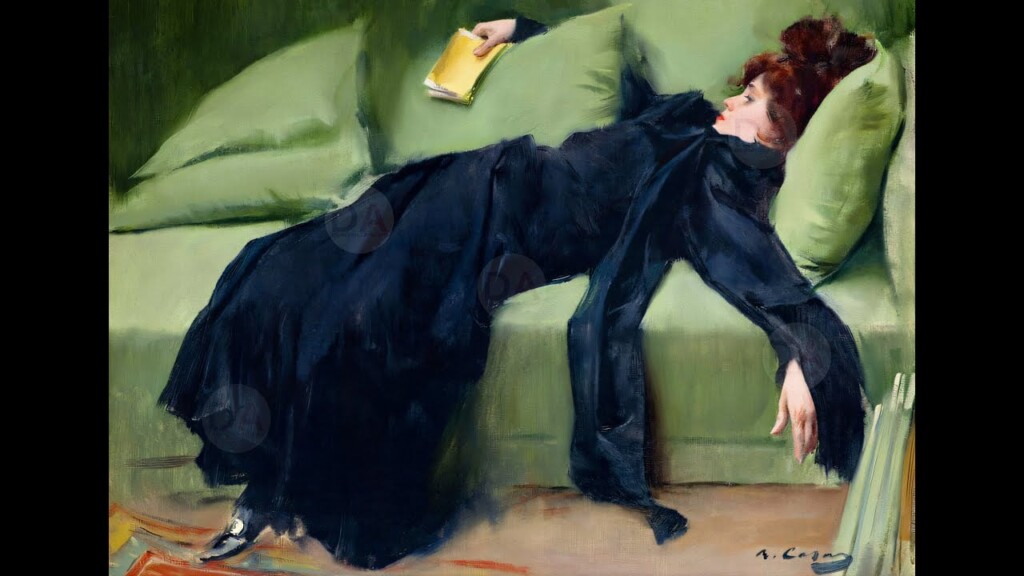
You are sitting in a consultation room in Paris, 1885, watching Jean-Martin Charcot arrange a woman’s body into an arch of impossible backward curvature for a crowd of two hundred medical students, photographers, and curiosity-seekers who have paid admission to observe what he calls a clinical demonstration. The woman does not resist. She has learned, across dozens of such performances, the precise angle of suffering that satisfies the scientific appetite of the audience. What Charcot is producing is not a diagnosis but an aesthetic event — a theater of pathology in which the female nervous system serves as both canvas and evidence.
The Decadents understood this immediately, and they refused the only lesson Charcot intended to teach. Where he saw disorder demanding classification, they saw a heightened receptivity to sensation that ordinary nervous systems could not sustain. The hysterical body, for Des Esseintes in Joris-Karl Huysmans’s Against Nature — published in 1884, one year before that Paris lecture hall reached its highest attendance — is not a broken machine but a tuned instrument, vibrating at frequencies that the healthy and the bovine simply cannot register. Huysmans did not argue this position. He dramatized it through a character whose physical deterioration correlates precisely with his capacity to perceive beauty that no one around him can access. The illness is the credential.
Max Nordau published Degeneration in 1892 as a work of psychiatric epidemiology, cataloguing artists, writers, and musicians as clinical specimens of nervous exhaustion and moral regression. He borrowed Cesare Lombroso’s framework of the born criminal and extended it upward into the cultural elite, diagnosing Baudelaire, Verlaine, Zola, and Wagner as symptoms of a civilization collapsing under the weight of industrial overstimulation. The book sold enormously and was translated into twelve languages within three years, which tells you something important about the anxiety it was feeding. Nordau needed his readers to feel that the decadent artist was a warning, a biological error, a man whose sensitivity was a defect rather than a gift.
The Decadents took Nordau’s diagnostic apparatus and wore it as a medal. If degeneration meant hypersensitivity to color, music, perfume, and the texture of language, then degeneration was precisely what distinguished the perceiving subject from the mass of the unaffected. Arthur Symons, writing The Symbolist Movement in Literature in 1899, reframed this entire clinical vocabulary into a theory of artistic election: the nervous disorder was not the sign of cultural decline but of a nervous system refined past the crude thresholds of ordinary bourgeois consciousness. The patient became the prophet. The diagnosis became the proof of distinction.
What made this inversion so structurally elegant, and so historically durable, is that it required no refutation of the medical evidence. It accepted every clinical observation and rerouted its meaning. Lombroso had argued in Criminal Man that deviance was legible on the body — in skull measurements, asymmetrical features, low foreheads. The Decadents simply agreed that the marked body was different, that difference was real, and that the entire moral valence of the framework had been installed by people who lacked the perceptual equipment to understand what they were measuring. You cannot judge a frequency you cannot hear. The physician’s inability to perceive what the patient experiences becomes, under this logic, the definitive evidence of the physician’s limitation.
This is not a romantic pose. It is a philosophical counter-move with a specific target: the Enlightenment assumption that clear perception belongs to the healthy, rational, disciplined mind. The Decadents were proposing something genuinely disturbing — that clarity is a symptom of insensitivity, that the undamaged nervous system is undamaged because it registers so little, that what medicine calls recovery might be more accurately described as the permanent extinction of a certain quality of attention.
Beauty as a Class Weapon
You are sitting in a room that took three servants to arrange. The flowers were cut before dawn by someone whose name you do not know, the fire was laid by hands that have never been idle a single morning of their life, and the particular quality of silence you now call “your solitude” exists only because an entire infrastructure of exhaustion has been organized around the perimeter of your stillness. This is not metaphor. This is the material condition of Decadent beauty, and the movement never once acknowledged it.
The Decadent pose required, at its structural foundation, the abolition of necessity — not the transcendence of it, but its total displacement onto other bodies. When Joris-Karl Huysmans published À rebours in 1884 and gave the world Des Esseintes, his hypersensitive aristocrat retreating from society into a hermetic palace of sensation, the novel was widely read as a critique of bourgeois vulgarity. What it actually was, though no one cared to say it plainly, was a fantasy of inherited capital made aesthetic. Des Esseintes could refine his nervous system because he never once had to wonder whether he could afford to. His exhaustion was a luxury good, produced under conditions of absolute economic insulation, and the servants who maintained his artificial flowers, his color-calibrated dining rooms, his gem-encrusted tortoise, appear in the text only as furniture.
Pierre Bourdieu, writing nearly a century later in Distinction: A Social Critique of the Judgement of Taste in 1979, demonstrated with sociological precision what the Decadents were performing intuitively: that aesthetic refinement is never neutral, that the capacity to declare something too coarse, too obvious, too common, is itself a class act, a form of symbolic violence that naturalizes hierarchy by dressing it in the language of sensitivity. The Decadent’s celebrated disgust at the modern world — its noise, its commerce, its crowds — was not a philosophical position. It was the registered sensory reaction of someone who had never been economically compelled to tolerate any of it.
Oscar Wilde understood the machinery better than most, which makes his participation in it all the more instructive. He was not born into great wealth and spent considerable energy constructing the appearance of effortlessness — which is to say, he understood that aristocratic ease was a performance requiring rehearsal, maintenance, and significant ongoing cost. His famous quip that he had nothing to declare but his genius was, among other things, a class claim, an assertion that his labor was invisible by virtue of being elevated, that the grinding work of wit and style should register as pure spontaneous grace. When the money ran out, as it did repeatedly, Wilde borrowed it, and when the social scaffolding collapsed entirely in 1895, the beauty he had so carefully constructed proved to have no material floor beneath it.
The women who maintained Decadent households, who laundered the aesthetic costumes, polished the antique objects, and cooked the elaborate meals described in prose as though they had materialized from pure imagination, were not merely absent from the literature. Their absence was the literature’s condition of possibility. You cannot write about the exquisite texture of idleness while accounting for the labor that produces it, because accounting is precisely what the aesthetic pose refuses. The Decadent sensibility was, in this structural sense, a deliberate act of looking away — not from ugliness, as its practitioners claimed, but from the human cost of beauty organized as private property.
The Nervous Body as Cultural Capital
You have learned, at some point in the last five years, to present your exhaustion as evidence of your seriousness. Not loudly, not crudely — but in the particular way you frame it at dinner, the half-proud mention of sleeplessness, the cultivated vocabulary of depletion. You do not claim to be lazy. You claim to be overwhelmed, which is the contemporary form of the same Victorian confession: that the machinery of your inner life runs at frequencies too high for the ordinary world to sustain.
George Beard, a New York neurologist, gave this confession its clinical architecture in 1869 when he published his first writings on neurasthenia, a condition he described as the nervous exhaustion produced specifically by modern civilization. His fuller elaboration, American Nervousness, appeared in 1881 and made the argument with remarkable sociological confidence: the telegraph, the steam engine, the newspaper press, the demands of competitive commerce — these had drained the finite reserves of nervous energy in precisely those individuals refined enough to feel them. The diagnosis was, from its inception, a class document. Laborers did not contract neurasthenia. Farmers, factory workers, women engaged in manual domestic labor — they were structurally exempt, not because their lives were easier, but because their nervous systems were, by the implicit logic of the theory, less elaborated, less sensitive, less capable of registering the overstimulation that modernity inflicted on its most developed products.
What Beard had constructed, whether deliberately or not, was a medical grammar for social distinction. The body that could not function was recast as the body that functioned at too high a register for ordinary functioning to remain possible. Proust did not simply suffer in his cork-lined room on the Boulevard Haussmann — he demonstrated, through the spectacular intricacy of his suffering, that his nervous apparatus was tuned to frequencies the healthy person would never access. The invalid posture became an epistemological credential. Herbert Spencer, whose social Darwinism dominated educated discourse in precisely these decades, had already provided the theoretical skeleton: complexity was the mark of evolutionary advancement, and the most complex organisms were simultaneously the most vulnerable to environmental disruption. Neurasthenia slid effortlessly into this framework as the wound of the superior.
The cruelty buried inside this logic is not primarily about exclusion, though it excludes ruthlessly. It is about the way it transforms incapacity into a kind of proof. If your inability to meet the demands of ordinary life is read as evidence of your extraordinary interiority, then recovery becomes suspicious. To get better is to reveal that you were never that sensitive to begin with. The cure threatens the distinction that the illness secured. Beard’s neurasthenic patients, many of them writers and intellectuals and upper-class women of the Gilded Age, were placed in a diagnostic structure that made wellness aesthetically costly.
Contemporary burnout culture has not dismantled this architecture — it has democratized it while preserving its essential grammar. The language has shifted from nervous energy to cortisol, from overstimulation to dopamine dysregulation, from civilization’s demands to hustle culture and the attention economy, but the underlying transaction remains identical: the person who burns out is, by the logic of the framework, the person who cared enough, worked hard enough, felt deeply enough to be consumed. Christina Maslach’s burnout research, which began in earnest in the 1970s and produced the Maslach Burnout Inventory in 1981, was intended as a structural critique of institutions that destroyed workers — but in the cultural absorption of her findings, the institutional critique evaporated and what remained was the individual badge. I burned out, therefore I was fully present. The suffering indexes the investment.
What no one says plainly is that this framework requires the suffering to remain legible as suffering — manageable, narratable, compatible with continued productivity after a recuperative pause.
A vision curated by a filmmaker, not an algorithm
In this video I explain our vision
A Second Scene: The Artist Who Could Not Finish

You have likely heard of Joris-Karl Huysmans, but the figure worth examining here is someone who lived the logic of his fictional creation rather than merely writing it. Count Robert de Montesquiou-Fézensac, the French poet and aesthete who served as one of the living models for Des Esseintes, published three volumes of verse between 1892 and 1898 — Les Chauves-Souris, Le Chef des Odeurs Suaves, Les Hortensias Bleus — works that sold in editions so deliberately small they functioned less as books than as relics, objects designed to be possessed rather than read. His real output, however, was himself. He spent decades orchestrating his own persona with the same obsessive attention a composer might give a symphony, and what he never finished — the definitive critical work on his own aesthetic philosophy, the magnum opus he repeatedly announced and perpetually deferred — became, in the salons of Paris, more prestigious than anything he might have actually produced.
The mechanism behind this is not vanity, or not merely vanity. Walter Pater had already theorized in Studies in the History of the Renaissance in 1873 that the highest ambition of any consciousness was to burn with a hard, gemlike flame, to sustain intensity of experience as an end in itself. The work, in this reading, becomes almost incidental — a residue of the burning, not the burning itself. Once that framework entered the cultural bloodstream of the 1880s and 1890s, it gave an entire generation of artists philosophical permission to treat incompletion not as failure but as evidence of an interiority too rich to be reduced to finished objects. The unfinished thing gestures toward an imagined totality more sublime than anything actual pages could contain.
What this produced, historically, was a peculiar inversion of artistic accountability. Lionel Johnson, the English poet and critic associated with the Rhymers’ Club in London, was celebrated throughout the 1890s as a towering intellect, his eventual 1895 collection Poems treated as merely the visible tip of a vast submerged architecture of thought. His alcoholism and increasingly fragmented existence were read not as obstacles to his work but as the conditions of its depth. The suffering authenticated the silence. When he died in 1902 at thirty-five, the brevity of his output was immediately reframed as tragic proof of an excess of sensitivity — as though the world had been too coarse an instrument to receive what he carried. Nobody asked whether the work was actually there. The absence was curated retroactively into a monument.
There is something structurally dishonest in this move, and the dishonesty has a specific direction. It protects the artist from the ordinary judgment that applies to carpenters, surgeons, and everyone else who exchanges their labor for social recognition. A carpenter who never builds a chair is not celebrated for the profundity of his unmanifested vision. The aestheticization of non-production was available only within a class of people for whom material necessity had been sufficiently suspended — either by inherited wealth, by patronage, or by the social capital of belonging to a milieu that rewarded the performance of refinement. Decadentism’s creative paralysis was, underneath its philosophical dressing, a class phenomenon wearing the costume of metaphysics.
And yet the reader who finds this entirely foreign to their own experience should pause. The contemporary tendency to describe an ambitious creative project in such precise and passionate detail that the description itself becomes the primary artifact — the novel you have been meaning to write for seven years that exists in increasingly elaborate conversation, the album sketched out in three notebooks but never recorded — is not a personal failing. It is the long shadow of a movement that taught an entire culture to mistake articulate longing for the thing longed for, and to find, in the gap between intention and execution, something that felt uncannily like depth.
The Trap of the Exquisite Self
You have rehearsed your own suffering so many times that the performance has become indistinguishable from the event. The notebook fills with elegant sentences about exhaustion. The exhaustion, meanwhile, waits in another room, patient and unimpressed.
Decadentism offered the self a peculiar bargain: abandon the external world as a legitimate source of meaning, and in exchange receive interiority as an inexhaustible aesthetic territory. The soul becomes the only landscape worth mapping, and every tremor within it becomes a subject worthy of exquisite notation. What this bargain concealed, however, was the structural demand it placed on the one who accepted it — because a self that has declared its inner life the sole valid domain of experience must perpetually produce inner life of sufficient intensity to justify that declaration. Stillness becomes a form of failure. Ordinary feeling becomes a betrayal of the premise.
Nietzsche understood this mechanism with surgical precision when he turned his attention to Wagner in 1888, diagnosing in that music something he identified as the cardinal symptom of decadence: the inability to organize energy toward a whole, a fragmentation that masquerades as depth. The phrase he used was “the tyranny of the smallest unit” — the moment, the sensation, the isolated effect — elevated above any larger coherence. What he was describing was not merely an aesthetic failure but a physiological and philosophical one, a will that had learned to feed on its own attenuation. The Decadent artist, in this reading, does not suffer from too much feeling but from a feeling that has been so refined, so repeatedly processed through the aesthetic apparatus, that it no longer refers to anything outside the processing itself.
The paradox that emerges from this is one the movement never resolved and largely refused to examine. If your credibility as a sensitive soul depends on the visibility of your dissolution, then you must dissolve — but carefully, and with style, and never so completely that you lose the capacity to record the dissolution. Des Esseintes in Huysmans’ 1884 novel exhausts every sensory refinement available to him, retreats further and further from contact with the world, and finds at each new threshold of withdrawal not peace but a more acute form of agitation. He is not escaping sensation — he is manufacturing it in increasingly controlled conditions, because unmediated experience has become intolerable precisely because the aesthetic self he has constructed cannot receive it without transforming it into material. The world, encountered directly, offers no guarantee of beauty. The self, performing its own sensitivity, offers something better: a guaranteed product.
What this produces, at a cultural level, is a subjectivity that is simultaneously hypervisible and structurally hollow. The Decadent self is always on display — in letters, in confessions, in the studied dishevelment of a public appearance — but the display requires the perpetual deferral of actual arrival. You cannot be healed, because wellness would dissolve the aesthetic category that gives you coherence. You cannot be happy, because happiness is bourgeois, which is another way of saying it is legible to people who have not paid the entry fee of suffering. The illness must be maintained, curated, occasionally dramatized for credibility.
This is not simply a historical curiosity belonging to a specific Parisian fin-de-siècle milieu. The structure reappears wherever a cultural formation makes interiority the primary site of value and simultaneously makes the performance of that interiority the condition of social recognition. The self that must prove its depth by demonstrating its wounds has not changed in architecture since Verlaine wept decoratively in a café and called it testimony. What has changed is the scale of the available audience and the speed at which the performance must be refreshed to retain its claim on attention, which means the demand on the self to produce legible suffering has not diminished but accelerated into something the nineteenth century, even at its most morbid, could not have anticipated.
What the Illness Was Actually Saying
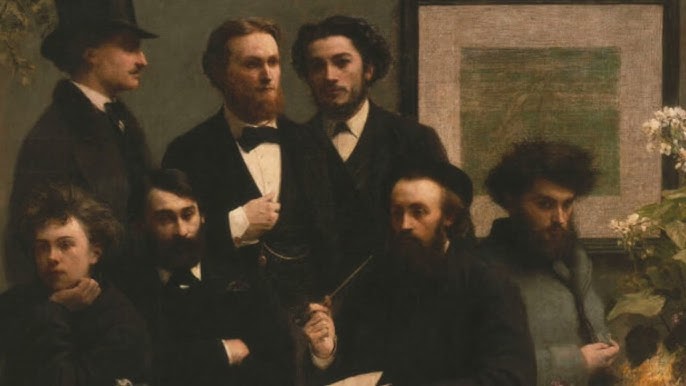
You are sitting in a gallery somewhere in Paris, it is 1891, and the man in the painting across from you is dying beautifully. His cheekbones are architectural. His pallor suggests not disease but refinement, as if the body had finally succeeded in becoming pure form, unburdened by appetite or labor. You do not think about the Congo. You are not supposed to.
That omission was never accidental. The aestheticization of suffering that defined the Decadent movement functioned not as an escape from the historical world but as a sophisticated instrument for rendering it invisible. While Huysmans was constructing Des Esseintes’s hermetic interior in À rebours in 1884, King Leopold II was engineering the administrative architecture of what would become one of the most brutal colonial enterprises in recorded history. The rubber quotas, the severed hands, the ten million dead — these did not enter the aesthete’s vocabulary. The aesthete’s vocabulary had been deliberately purified of exactly this kind of content. Susan Sontag argued in Illness as Metaphor that societies use disease to encode moral failure, but the Decadents performed the inversion: they used illness to encode moral elevation, and that elevation required an almost surgical excision of the world in which the illness was actually occurring.
The industrialization transforming European cities in the 1880s and 1890s produced a working class whose bodies were genuinely broken — not metaphorically consumed by inner fire, but physically destroyed by mills, mines, and the chemical plants multiplying along the Thames and the Rhine. Friedrich Engels had documented this in precise, clinical detail in The Condition of the Working Class in England in 1845, cataloguing the stunted spines, the collapsed lungs, the children who entered factories at six and were anatomically aged at twenty. The Decadent imagination did not aestheticize these bodies. It aestheticized only those bodies that could be framed as sensitive, as exceptional, as proof that suffering was the signature of a finer nervous system. The suffering of refinement and the suffering of extraction occupied the same historical moment and were kept in strict aesthetic segregation.
This is where the pose reveals its politics most clearly. The artist who performs illness, who cultivates languor and fragility as proof of superior interiority, is not rejecting the logic of industrial capitalism — he is reproducing it in a different register. He is, in fact, sorting bodies: these bodies suffer beautifully because they are worth something; those bodies suffer uselessly because they are merely material. The Decadent critique of bourgeois utility never extended to questioning who was being consumed to make the bourgeois world run. Oscar Wilde could indict the ugliness of Victorian commerce with genuine wit and genuine force, but the aestheticism he championed depended on leisure, on imported silk, on the global supply chain of empire that kept beautiful objects flowing toward beautiful rooms. The illness was, in part, the cost of not knowing this, or of choosing not to.
What the sick artist was actually saying, beneath the gorgeous surface of the symptom, was that the present historical order was sustainable as long as it produced sufficient beauty for those positioned to receive it. The refusal of engagement was itself a form of engagement — a vote cast in the language of exhaustion for the continuation of arrangements that made exhaustion possible only for some. Max Nordau, writing Degeneration in 1892, misread this entirely: he thought the Decadents were undermining civilization, when they were among its most elegant defenders, insisting that civilization’s highest product was the individual capable of suffering with style. The illness was not a rebellion against the world that had made it. It was the world’s self-portrait, rendered in the most flattering light available, held up by a trembling and perfectly composed hand.
🌹 Where Beauty Meets Ruin: Aesthetics and Decay
Decadentism was not merely a style — it was a fever, a philosophy of the senses pushed to the point of self-destruction. The articles gathered here explore the cultural, literary, and philosophical territories that neighbor this obsession with beauty as sickness, excess as art, and refinement as a form of dying. Follow the labyrinth inward.
La Bohème: History and Myth of the Poor Artist
La Bohème represents the foundational myth of the artist who courts poverty and illness as proof of authentic creativity. Henri Murger’s world of garrets and candlelight directly prefigures the Decadent cult of the beautiful life lived at any cost. The romanticization of suffering as aesthetic fuel is one of Bohemianism’s most enduring — and most dangerous — legacies.
GO TO THE SELECTION: La Bohème: History and Myth of the Poor Artist
The Cursed Poet: History and Figures
The Cursed Poet is the purest incarnation of the Decadent ideal: the artist as martyr to beauty, consumed by excess, alcohol, absinthe, and visionary madness. Verlaine, Rimbaud, and Corbière turned self-destruction into a poetic program, treating their own ruin as raw material for transcendence. This article traces the historical arc of a figure who embodied the idea that illness and beauty are inseparable twins.
GO TO THE SELECTION: The Cursed Poet: History and Figures
Thomas Mann and the Devil’s Pact: Doctor Faustus
Thomas Mann’s Doctor Faustus is one of literature’s most searching explorations of the pact between artistic genius and catastrophic self-dissolution. Adrian Leverkühn’s syphilitic bargain with the Devil mirrors the Decadent conviction that supreme beauty can only be purchased through physical and moral corruption. Mann transforms this motif into a meditation on Germany, modernity, and the price of aesthetic ambition.
GO TO THE SELECTION: Thomas Mann and the Devil’s Pact: Doctor Faustus
Ruskin’s The Stones of Venice: Analysis
John Ruskin’s The Stones of Venice mapped the rise and fall of an entire civilization through the moral qualities of its art and architecture. His vision of Venice as a city of gorgeous, irreversible decline made it the supreme Decadent landscape — a place where beauty and death had become synonymous. Ruskin’s aesthetic theory haunted Decadent writers from Walter Pater to D’Annunzio, who found in Venice the perfect stage for their own obsessions.
GO TO THE SELECTION: Ruskin’s The Stones of Venice: Analysis
Discover the Cinema of Beauty and Darkness on Indiecinema
If the aesthetics of Decadentism have stirred something in you — that strange hunger for beauty at the edge of dissolution — then independent cinema is the art form that carries this flame today. On Indiecinema you will find films that dare to explore the senses, the shadows, and the fever of living too intensely. Join us and let the images speak what words can only approach.
👉 EXPLORE THE CATALOG: Watch Indie Films in Streaming
A vision curated by a filmmaker, not an algorithm
In this video I explain our vision

