
The Weight of a Ledger in a Mud-Walled House
You cannot read the numbers, but you know what they mean. The moneylender sits across from you in the dim afternoon, his ledger open like a wound, and every mark on that page is another year of your labor already spent before you have spent it. The mud walls of your house hold the smell of last season’s grain, and the weight of this moment is not merely financial — it is ontological. You are being told, through columns and figures you were never taught to decipher, that you do not fully exist as a subject in the world you were born into. The shame does not arrive like anger. It arrives like weather.

This was the lived architecture of colonial rural India, and no government report, no census data from the 1901 enumeration conducted under British administration, no economic treatise captured its internal texture with the precision of a single writer who had watched it from inside the experience rather than above it. Munshi Premchand, born Dhanpat Rai Shrivastava in 1880 in Lamhi, a village near Varanasi, understood that the ledger was not simply an instrument of debt. It was a grammar of domination, and the peasant who sat before it was being forced to speak in a language deliberately designed to make him incoherent.
What separates Premchand from the reformist writers of his generation is not sympathy — sympathy was fashionable, even profitable, in the literary circles of early twentieth-century Hindi and Urdu letters. What separates him is the refusal to aestheticize suffering into something palatable for those who would never experience it. His 1936 presidential address to the Progressive Writers’ Association in Lucknow was not a manifesto about style. It was a demand that literature stop being a decoration in the drawing rooms of the literate bourgeoisie and start functioning as testimony. He called for a literature of hunger, of exploitation, of the specific and unromantic textures of dispossession.
The colonial economy of the United Provinces, where Premchand spent most of his working life as a schoolteacher and later a school inspector, operated through a system of stratified extraction that linked the zamindari landlord to the British revenue apparatus in ways that made individual cruelty almost unnecessary. The system was structural, which made it more devastating and harder to name. Between 1899 and 1902, famine conditions across the subcontinent killed an estimated one to four million people depending on which historical accounting one accepts, yet the export of grain from India to Britain continued. The moneylender in the mud-walled house was not the origin of the violence. He was its local instrument, himself often trapped in a chain of obligation and interest that climbed upward toward power he would never touch.
Premchand knew this chain intimately because he had felt its pressure at different points along its length. His father was a postal clerk, his family perpetually solvent on paper and perpetually anxious in practice. He married at the age of fifteen in accordance with social expectation, inherited debt alongside domestic responsibility, and spent years teaching in village schools where the students were the children of the exact men whose devastation he would later render in fiction. This biographical proximity is not a curiosity. It is the epistemological condition that made his realism something other than observation. He was not a journalist who had visited poverty. He was a consciousness shaped by it, writing from within the wound rather than toward it.
The Hindi short story as a modern form was, in his hands, not a borrowed European vessel awkwardly filled with Indian content. It became something structurally suited to what he needed to do: arrive quickly, refuse decoration, press on the nerve before the reader has time to distance themselves through aesthetic contemplation. In a story that takes twenty minutes to read, there is no room to look away from a man who is losing everything he was never fully allowed to own.
Premchand’s Pen as a Political Instrument
You hand in your resignation on a Tuesday, in a government office that smells of ink and damp paper, and the man across the desk does not look up when he takes the form from your hand. That is how power works at the level of the clerk — it does not need to acknowledge the gesture of defiance because it has already decided the gesture does not matter. Munshi Premchand knew this. He had worked inside the colonial bureaucratic apparatus for nearly two decades as a school inspector under the Department of Education in the United Provinces, drawing a salary that represented, in the vocabulary of 1921, a kind of survival. When he resigned in February of that year, following the call of Gandhi’s Non-Cooperation Movement, he was not performing a symbolic gesture for posterity. He was dismantling the financial architecture of his own daily existence, with a wife, children, and no institutional safety net on the other side of the decision.
What makes this act historically legible is precisely what most literary hagiography tries to soften about it: the economic violence it required. Premchand was born in 1880 in Lamahi, a village near Varanasi, into a Kayastha family of modest means. His father died when he was in his early twenties, leaving debts and dependents. He educated himself partly by tutoring children and selling his own books, including an early collection of stories, Soz-e-Watan, published in 1907, which the colonial authorities confiscated and burned because its content was deemed seditious — too close to the nerve of anti-imperial feeling. A deputy collector reportedly forced Premchand to burn the remaining copies in front of a magistrate. He was twenty-seven years old. The state had already demonstrated to him, concretely and without abstraction, what it thought of his pen. He continued writing.
The 1921 resignation, then, was not the beginning of a political consciousness but the public formalization of one that had been built through humiliation and observation across fifteen years. What distinguishes Premchand from contemporaries who theorized colonial oppression at a philosophical remove is that he had been administratively inside the machine he was critiquing. He understood how the colonial education system functioned not as a service but as a filtering mechanism — how it produced a class of Indians trained to administer their own subordination, literate enough to execute British policy, never literate enough to question its premises. Georg Lukács, writing in The Historical Novel in 1937, argued that the great realist writer does not describe society but reveals the hidden forces that produce its visible surface. Premchand’s fiction operates exactly at this threshold — not cataloguing poverty but exposing the institutional logic that manufactures it.
The stories he produced in the years immediately following his resignation, collected progressively into the volumes that would eventually form Mānasarovar, published in eight volumes between 1929 and 1938, are not parables. They are case files. The moneylender who calculates interest with the precision of a trained accountant while the borrower cannot read the contract he is signing — this is not metaphor, it is the operational structure of rural indebtedness in the United Provinces in the 1920s, where zamindari land tenure created conditions in which a family could lose multi-generational land tenure over a debt smaller than a year’s seed cost. Premchand had seen this as an inspector traveling through villages. He had spoken to the people the administration counted as units of agricultural output.
His decision to write primarily in Hindustani — specifically in a register that moved fluidly between Hindi and Urdu, accessible across a literacy spectrum that excluded neither the madrassa-educated nor the Sanskrit-schooled — was not a stylistic preference. It was a choice about who gets to be addressed by literature at all, and therefore a political position disguised as a grammatical one.

What Realism Actually Costs
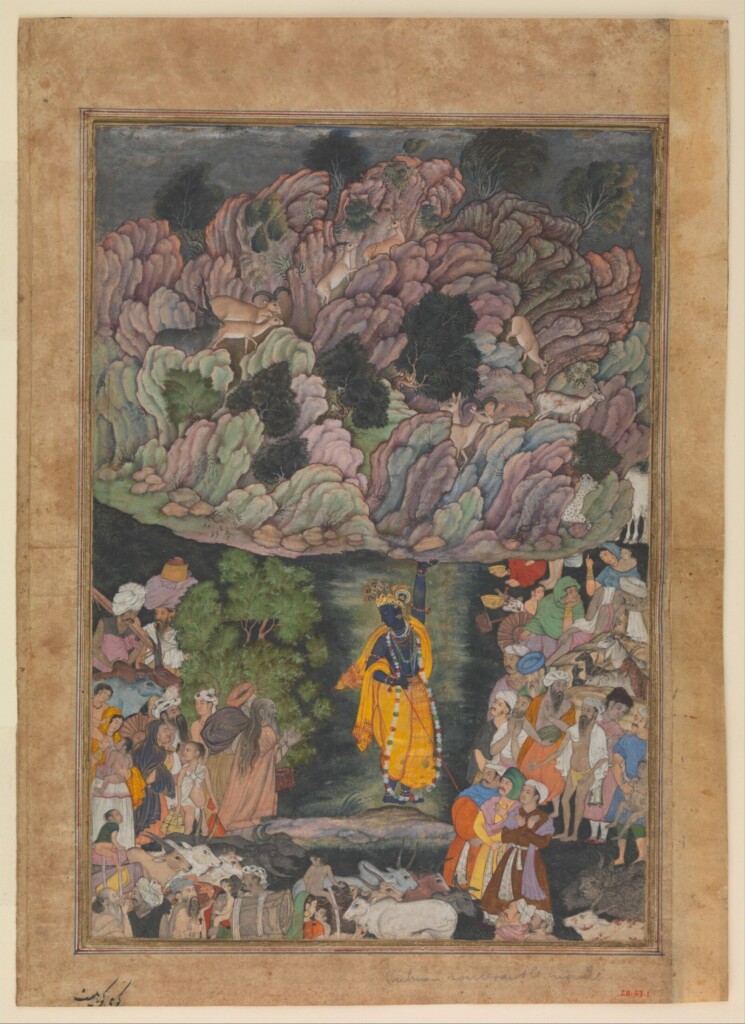
You are sitting with a novel that refuses to let you feel good about finishing it. The last pages of Godaan do not offer resolution — they offer a dead ox, a dead man, and a widow pressing a few coins into a priest’s hand because the ritual of death costs money that was never really hers to spend. Munshi Premchand published that novel in 1936, one year before his own death, and the Hindi-speaking world received it as a masterpiece precisely because it did not behave like one. There was no transfiguration. Hori, the peasant at the center of the book, does not achieve dignity through suffering. He is simply consumed by a system that needed his labor and had no use for the remainder of him.
The temptation, when reading fiction about poverty, is to locate the nobility somewhere inside the degradation — to find the pearl inside the wound. That temptation has a long literary history in the Indian tradition, where devotional and classical aesthetics trained readers to expect transcendence as the freight of suffering. Rasa theory, formalized in Bharata Muni’s Natyashastra as early as the second century BCE, organized emotional experience into states that art was meant to purify and elevate. The suffering of a character became, through aesthetic distance, an occasion for the audience’s refinement. Premchand knew this tradition from the inside. His early Urdu stories, written under colonial conditions in the first decade of the twentieth century, still carried traces of that refinement, that desire to make sorrow beautiful enough to be bearable. What he did over the following three decades was dismantle the mechanism deliberately, without announcing its demolition.
Sevasadan, published in 1919 and originally written in Urdu as Bazaar-e-Husn, followed a woman’s passage through the institutions that claimed to save her while extracting everything from her. The novel’s structure is almost architectural in how it refuses catharsis: each room she enters — the respectable marriage, the brothel, the reform organization — operates by the same logic of possession dressed in different language. Premchand was not making a metaphor. He was documenting a specific social machinery that 1910s urban India had constructed around the bodies of women who had no property rights and therefore no standing in any negotiation about their own lives.
Georg Lukács, writing in Studies in European Realism in 1950, argued that literary realism is not a stylistic choice among others but a cognitive commitment — the decision to render the totality of social contradictions rather than isolating a fragment of experience and polishing it until it gleams. For Lukács, the realist writer must hold the objective forces of history and the subjective experience of individuals in genuine tension, without resolving that tension prematurely into either despair or optimism. What he identified in Balzac and Tolstoy was precisely the capacity to portray characters who are defeated by structures they cannot see and yet remain fully human in their defeats, not symbols, not lessons, not occasions for the reader’s elevation. Premchand arrived at the same place from a different direction, working in languages and traditions Lukács never engaged, facing a colonial economy that had specific mechanisms Balzac’s Paris did not.
The cost Premchand paid for this was not metaphorical. He ran a publishing house, Hans, that was perpetually underfunded because the readership he was writing for could not always afford his books. He turned down a salaried position with the colonial government’s educational apparatus in 1907 and spent the rest of his life in financial instability that directly mirrored the conditions he was documenting. When critics in his own time accused him of wallowing in ugliness, of producing fiction that lacked elevation, they were identifying accurately what he had done — they simply misread the direction. He had not failed to achieve beauty. He had calculated the precise price that beauty extracts from those who cannot afford to pay it, and he had refused the transaction.
The Zamindari Trap and the Architecture of Inherited Shame
You are standing in a field that does not belong to you, harvesting a crop you will never eat, and somewhere behind you a man on a horse is watching — not with cruelty exactly, but with the mild, distracted patience of someone waiting for a machine to finish its cycle. The field, the horse, the watching — none of it needs to be explained to you. It has always been this way. That is precisely the point.
Premchand understood that the zamindari system’s most devastating achievement was not the extraction of labor or the seizure of land, though both were systematic and brutal across the Gangetic plains well into the twentieth century. Its deepest work was epistemological. It taught the people it crushed to narrate their own crushing as something they had earned. The zamindar did not need to be a villain in the peasant’s own story — he could remain a distant, almost mythological figure, while the peasant internalized the logic of his own subordination and passed it to his children like a dialect, like a prayer.
Pierre Bourdieu, writing in 1972 in his Outline of a Theory of Practice, named this process with a precision that still feels like a blow: symbolic violence, the imposition of a social order that is experienced not as domination but as the natural shape of the world. What makes symbolic violence so tenacious is that its operation requires the complicity of those it harms — not their conscious agreement, but something deeper and harder to dislodge, a set of dispositions absorbed through the body, through gesture, through the learned smallness of how a person occupies a room. Bourdieu was writing about the Kabyle society of Algeria, but the mechanism he described had been running in the Indian countryside for centuries before he gave it its name.
In Premchand’s story “Poos ki Raat,” a peasant named Halku makes a decision that is presented quietly, without melodrama: he surrenders the few rupees he had saved through enormous sacrifice to repay a debt to his zamindar, choosing to sleep through a brutal winter night without a blanket rather than risk punishment. The story does not ask you to judge Halku. It asks you to notice that Halku does not judge himself. The surrender feels to him like the only sane option, which is the exact texture of what Bourdieu was describing — a rationality that has been so thoroughly shaped by power that it produces its own captivity without requiring any external force in the room.
What feudal agrarian systems across South Asia accomplished between roughly the eighteenth and mid-twentieth centuries was the conversion of structural poverty into a moral taxonomy. The peasant who could not pay was not simply poor; he was irresponsible, improvident, fated. The Permanent Settlement of 1793, imposed by the East India Company across Bengal and later extended in modified forms, created a class of revenue-collecting intermediaries whose legitimacy depended entirely on the naturalization of this taxonomy. By 1947, zamindari abolition was one of the first legislative urgencies of the new Indian state precisely because everyone understood that the system had reproduced itself not only in land titles but in the psychological architecture of an entire population.
Premchand’s fiction kept insisting on a fact that reformers with blueprints and schedules often missed: that you cannot abolish a system that lives inside the person it exploits simply by changing the law. His character Hori, in the novel Godaan published in 1936, spends an entire life trying to acquire a cow — a single cow — as a symbol of dignity and sufficiency, and fails not because of one antagonist but because the entire social and economic grammar surrounding him is constructed to ensure that a man like Hori remains permanently one catastrophe away from dissolution.
The shame is not incidental to that grammar. The shame is the grammar.
A Woman Enters a Room She Was Never Meant to Survive
You watch her cross the threshold and you already know she will not make it out intact. Not because the story demands tragedy — though it often does — but because the room itself was architected against her before she was born. She is a woman of low caste in a household that belongs to neither her gender nor her birth, and the geometry of the space she moves through is not neutral. Every doorway is a test she did not agree to take.
Premchand understood something that most of his contemporaries refused to name directly: that caste and gender are not two separate burdens a woman carries in two separate hands. They fuse. They metabolize into each other until the resulting oppression is qualitatively different from either component — more volatile, more invisible, more efficiently self-enforcing. In “Godaan,” published in 1936, the women who orbit the dying peasant Hori are not incidental to the economic catastrophe unfolding around them. They are its innermost machinery. Dhania, Hori’s wife, absorbs punishment in units that have no name in standard economic analysis — not wages withheld, not land seized, but dignity systematically extracted through the daily choreography of who speaks first, who eats last, who is blamed when the harvest fails and the debt collector arrives.
Kimberle Crenshaw formalized the concept of intersectionality in 1989, writing specifically about how Black women in the United States fell through the gaps of legal frameworks designed to address either race or sex but not their compound reality. What Premchand was doing in Hindi literature forty years earlier was narratively enacting the same structural insight without the vocabulary Crenshaw would later provide. His women characters do not experience caste as a background condition against which gender discrimination plays out in the foreground. The two axes collapse into a single lived texture that cannot be disaggregated without losing the essential thing being described.
Consider what it means, in the specific social world Premchand renders, for a low-caste woman to be accused of sexual impropriety. The accusation does not merely damage her reputation in some abstract social ledger. It triggers a mechanism whereby her caste makes the accusation credible, her gender makes it irreversible, and the combination ensures that no institutional recourse exists because the institutions themselves were built to confirm exactly this kind of verdict. She cannot appeal to the logic of the community because the community’s logic was always already structured around her expendability. She cannot appeal to religious authority because religious authority installed the hierarchy she is now being crushed by. The room has no exits that were not placed there by the same hands that locked the door.
What makes this particularly destabilizing for any reader who wants to read Premchand as simply a class writer, a champion of the peasantry in the mode of socialist realism, is that his female characters frequently suffer most acutely at the hands of men from the same economic stratum. The solidarity of poverty does not automatically dissolve patriarchal entitlement. A man who is brutalized by the landlord above him can turn and brutalize the woman beside him without perceiving any contradiction — because the hierarchies operate on different registers and his subjugation in one does not require him to relinquish dominance in another. Premchand refuses the consolation of a unified oppressed class that would, if liberated from economic exploitation, spontaneously achieve gender justice. His fiction is too honest for that particular utopia.
The woman who crosses that threshold is not a symbol. She is a structural argument made flesh — evidence that the violence organized against her cannot be explained by any single theory of power that wants to hold one variable constant while examining another.
A vision curated by a filmmaker, not an algorithm
In this video I explain our vision
The Colonial Archive and the Literature It Tried to Domesticate
You are reading a colonial archive right now, even if you believe you are not — the very categories through which literature gets classified as “major” or “minor,” “universal” or “regional,” “timeless” or “sociological,” were engineered in administrative offices that also levied taxes and suppressed uprisings.
The British literary establishment in India did not simply ignore vernacular writing. Ignorance would have been safer. Instead, it developed a more sophisticated instrument: the apparatus of domestication, which worked by selectively praising certain native voices while simultaneously reframing what those voices were saying. When Premchand began publishing in Urdu and Hindi in the early decades of the twentieth century — “Soz-e-Watan” in 1907, “Seva Sadan” in 1918, the extraordinary “Godan” in 1936 — the colonial literary machinery faced a problem it could not solve by silence alone. His readership was not elite. It was not English-speaking. It was not looking to colonial institutions for validation. The machine had no lever to pull.
Frantz Fanon understood this structural predicament with unusual precision. In his 1961 argument about the three phases of colonized intellectual culture, he identified the middle phase — where the native writer returns to the people but still carries the grammar of the colonizer — as the most unstable and therefore the most politically charged. Premchand barely passed through that middle phase. He did not write in English. He did not aspire to the metropolitan literary prizes that would have required him to soften the grotesquerie of rural debt bondage into something palatable for a London drawing room. He wrote in the languages the colonized actually dreamed and argued and wept in, which meant that the first battlefield Fanon described — the battle over whose cultural forms are legible, whose stories count as stories — was already partially won before the political struggle reached its climax.
What the colonial archive attempted instead was a kind of posthumous reclassification. After independence, and particularly through the later decades of the twentieth century, Premchand began appearing in syllabi as a “social reformer” — a label that performs a quiet amputation. To call someone a social reformer is to suggest their critique had a ceiling, a set of manageable demands that could eventually be absorbed into the reforming state. It is to suggest the problem was bad customs, not structural dispossession. The peasant widow in “Kafan” — written in 1936, the year Premchand died — does not die from a bad custom. She dies from a system. Her husband and father-in-law sit outside their hut letting her labor through a fatal delivery because the logic of their own degradation has so thoroughly colonized their inner lives that grief has become a luxury they cannot metabolize. The story offers no reform. It offers a diagnosis that indicts everyone in the room, including the reader watching it happen.
Colonial literary institutions were structurally incapable of housing that kind of writing without neutralizing it, because the neutralization was the point. The Boden Chair of Sanskrit at Oxford, established in 1811 explicitly to facilitate the conversion of Indians to Christianity, tells you something about the architecture of colonial philology: the study of Indian languages was organized around the goal of making those languages legible to an empire, not around the goal of amplifying what those languages were already saying. Premchand’s Hindi and Urdu prose operated entirely outside that architecture. It did not need to be translated into a colonial logic to reach its audience. It already was its audience — a literature that arose from and returned to the people it depicted, without passing through the customs office of metropolitan approval.
This is precisely why the question of which archive holds him matters. An archive is not a neutral storage facility. It is a set of decisions about what gets remembered, in whose language, and to what end — and those decisions have always had political consequences for the writers who never asked to be archived in the first place.
The Reader Who Was Never Supposed to See Themselves
You are reading about a man who cannot read. He is bent over soil that belongs to someone else, and the story being told about him — his hunger, his humiliation, the particular way his spine curves under a debt he inherited from his father — is being read by someone sitting upright in a chair, in a room with a lamp, in a city. This is not incidental to Premchand. It is the structural condition he never fully escaped, and neither have you.
The Hindi and Urdu literary magazines that carried Premchand’s work in the 1920s and 1930s — Saraswati, Madhuri, Hans, which he founded himself in 1930 — were not circulating in the villages of Awadh or the fields outside Benares. Literacy rates in rural India during that period hovered below ten percent, and among the agricultural poor they were effectively negligible. The peasant protagonists of Godan, of Kafan, of Poos ki Raat were not the readers of those texts. They were the spectacle. And the readers — educated, urban, often upper-caste, professionally employed or aspiring to be — consumed their suffering with the particular appetite that aesthetic form makes possible: at a distance, with feeling, without consequence.
Jacques Rancière, in The Distribution of the Sensible, published in French in 2000, argues that politics is not primarily about power or institutions but about who is permitted to appear — who can be seen, heard, counted as a speaking subject rather than a mere body producing noise. Literature participates in this distribution. It can either reinforce the partition that renders certain lives invisible or it can rupture it, forcing into representation what the social order has decided does not merit a voice. Premchand believed he was doing the second. What his readership did with that rupture is a different question entirely.
There is a mechanism that aesthetic experience activates in the educated consumer of suffering: it produces recognition without redistribution. The middle-class reader of Hori’s slow dispossession in Godan — watching this man sell his cow, lose his land, absorb every indignity the village moneylender and the colonial revenue system can deliver — feels something genuine. Empathy is real. But empathy, when it terminates in the act of reading, when it converts political material into emotional satisfaction and then closes the book, functions as a pressure valve. It releases the tension that might otherwise build into something structural. The novel becomes the substitute for the confrontation it depicts.
This is not Premchand’s failure. It is the condition of all realist literature that enters a class asymmetry between author, subject, and audience. What makes his case acute is that he was entirely conscious of it. His 1936 presidential address to the Progressive Writers’ Association in Lucknow — delivered months before his death, one of the last major statements he made publicly — insisted that literature must not be merely beautiful, must not merely console, must take sides in the material conflicts of its time. He was speaking to an audience of educated writers. He knew who was in the room.
What Rancière’s framework illuminates is that the political charge of a text is not inherent to its content but is determined by the circuit through which it travels. Premchand placed the peasant at the center of serious literary attention at a moment when Indian fiction was largely preoccupied with romance, mythology, and the anxieties of the aspiring middle class. That act of placement was genuinely disruptive. But disruption absorbed by a comfortable readership as aesthetic enrichment does not remain disruption — it becomes heritage, curriculum, the kind of thing that appears on examination papers and is answered correctly by people who have never missed a meal.
The question Premchand’s work leaves unresolved is whether literature that names an injustice with precision and beauty is complicit in that injustice when the only people reading it are those who benefit from the conditions it condemns, and whether the act of being moved is indistinguishable, in its social effects, from the act of looking away.
When the Story Refuses to Redeem Anyone
You finish the story and nothing has been fixed. The widow is still hungry. The moneylender is still alive. The village is still exactly what it was when the first sentence opened. You wait for the turn, the reversal, the small mercy that literature has trained you to expect as your due — and Premchand simply does not give it to you. He closes the door quietly, without drama, and you are left holding your own discomfort with nowhere to deposit it.
This refusal is not pessimism. It is something more precise and more disturbing: it is accuracy. The sociological record that undergirds Premchand’s fiction is not imagined. The famine conditions of the United Provinces in the early twentieth century, the debt bondage that consumed generation after generation of peasant families under both Mughal administrative remnants and British revenue extraction, the caste architecture that determined who could drink from which well and who would be beaten for forgetting — these were not dramatic devices. They were the ambient conditions of millions of ordinary lives. When Premchand refuses catharsis, he is refusing to lie about the rate at which those conditions changed, which is to say he is refusing to lie at all.
What makes this structurally radical is that Western literary realism, which Premchand absorbed and then departed from, had built consolation into its very grammar. George Eliot’s moral universe always tilted, however slightly, toward the reward of sympathetic consciousness. Even Zola, whose naturalism wore suffering like a badge of scientific rigor, embedded in his cycles a residual belief in collective transformation — the crowd as embryonic force, the strike as historical engine. Premchand strips that scaffolding away. In “Kafan,” published in 1936, two men sit eating food they have begged for while the woman they were supposed to mourn lies dead inside. There is no irony deployed against them, no authorial punishment, no redemptive witness. The story simply ends in a kind of terrible neutrality that forces the reader to generate the moral charge entirely from within themselves, with no assistance from the text.
That forced interiority is the real transaction Premchand is conducting. A literature that redeems produces readers who feel they have done the work of justice by finishing the book. A literature that refuses produces readers who cannot put the book down even after they have closed it, because the unresolved weight travels with them into the next meal, the next conversation, the next encounter with someone they have been trained not to see. This is not a therapeutic model of reading. It is closer to what the critic Sylvia Wynter, working in a very different context, identified as the need to disrupt the overrepresentation of a particular kind of human as the universal — to make the reader’s habitual comfort itself the object of examination rather than the engine of the narrative.
The question of whether this production is still happening is a question about what survives translation, both linguistic and temporal. Premchand’s complete works — somewhere beyond three hundred short stories, fourteen novels, essays, plays, letters — exist in Hindi and Urdu simultaneously, a bilingual body of work produced across the communal fissures that would eventually split a subcontinent. That formal fact, the text existing in two scripts without choosing between them, is itself a kind of politics that most of his readers never consciously register. To read him in either language is already to inherit a refusal of the boundaries that later became walls and then became wars.
What endures is not the historical detail but the pressure the prose exerts on whoever is holding it: the feeling that you have been made responsible for something the story deliberately declined to resolve, that the page has handed you an obligation it has no intention of fulfilling on your behalf.
✍️ When Literature Speaks for the Voiceless
Premchand’s literary weapon—his pen raised against poverty, caste, and exploitation—resonates across cultures and centuries wherever writers have dared to confront power with truth. These four paths lead into the same labyrinth: the struggle of the marginalized, the courage of those who document injustice, and the transformative force of language as a tool of resistance.
Rabindranath Tagore: Life and Works
Rabindranath Tagore, like Premchand, rooted his literary vision in the soil and suffering of the Indian subcontinent, giving voice to the rural poor and the spiritually dispossessed. His Nobel Prize-winning poetry in Gitanjali transcends devotion to become a political and humanistic act, affirming the dignity of every human life. Reading Tagore alongside Premchand reveals the dual face of Indian literary conscience: one lyrical and cosmic, the other stark and socially urgent.
GO TO THE SELECTION: Rabindranath Tagore: Life and Works
Émile Zola and Naturalism: Social Ambition
Émile Zola forged naturalism into a scalpel for dissecting the wounds of industrial society, much as Premchand used realism to expose the open sores of colonial India. His depictions of miners, workers, and the dispossessed in novels like Germinal remain among literature’s most powerful indictments of systemic exploitation. Both writers believed that the novelist’s gaze must descend into the darkest corners of society to illuminate what power prefers to keep invisible.
GO TO THE SELECTION: Émile Zola and Naturalism: Social Ambition
Antonio Gramsci: vita e pensiero politico
Antonio Gramsci developed the concept of the subaltern—those marginalized voices systematically excluded from official culture and history—which provides a compelling theoretical frame for understanding Premchand’s literary project. His prison notebooks, written under fascist incarceration, explore how hegemony silences the poor and how organic intellectuals can restore their voice. Gramsci and Premchand share the conviction that culture is never neutral: it is always a battlefield where the fate of the oppressed is decided.
GO TO THE SELECTION: Antonio Gramsci: vita e pensiero politico
Balestrini’s We Want Everything: Analysis
Nanni Balestrini’s We Want Everything brings the raw, collective voice of the Italian factory worker to the page in an act of literary militancy strikingly parallel to Premchand’s championing of peasants and untouchables. The novel refuses aesthetic refinement in favor of urgency, letting the anger of the exploited speak without mediation or ornament. Like Premchand’s stories, it reminds us that literature can be a form of direct action—a fist raised in ink.
GO TO THE SELECTION: Balestrini’s We Want Everything: Analysis
Cinema That Fights Back
If Premchand’s pen inspires you to seek stories that challenge power and give voice to the forgotten, Indiecinema’s streaming platform is your next destination. Discover independent films from around the world that carry the same rebellious spirit—raw, honest, and unapologetically on the side of the marginalized. Join Indiecinema and let cinema continue the conversation that literature began.
👉 EXPLORE THE CATALOG: Watch Indie Films in Streaming
A vision curated by a filmmaker, not an algorithm
In this video I explain our vision

