
The Unlocked Door
You have memorized every detail of the room — the particular angle of afternoon light through the blinds, the sound of your own breathing, the exact weight of your phone in your hand with the message still unanswered. Nothing has happened yet. You are aware, with a clarity that feels almost clinical, that nothing is forcing you forward. There is no tide pulling at your ankles. There is no temporary madness dissolving your judgment into something manageable, something you could later explain to a therapist or a friend with the vocabulary of compulsion. You are standing at a door that is not locked, and you have known for several weeks — perhaps longer, if you are honest, which is the one thing you are finally allowing yourself to be — that you were going to open it.

The popular mythology of adultery depends entirely on the fiction of the overwhelmed self. Culture requires this fiction because without it, the act becomes something far more disturbing than a betrayal of another person: it becomes evidence of the ordinary human capacity for deliberate choice under conditions of full awareness. Romanticism in the nineteenth century constructed desire as a force external to the will — something that arrived, like weather, and could not be reasonably refused. This was not an innocent aesthetic preference. It was a legal and moral architecture. If passion operated like a natural catastrophe, then the person consumed by it bore the same diminished responsibility as someone struck by lightning. Stendhal, in De l’Amour published in 1822, described the process of crystallization — the way the mind encrusts another person with imagined perfections the way a salt mine encrusts a bare branch left inside it over winter. It is a beautiful image precisely because it removes the agent from the process. The branch does nothing. The salt does the work.
What Stendhal’s crystallization conceals is the branch’s prior decision to enter the mine. Long before anyone has been touched, before any confession has been made, before any boundary has been materially crossed, there is a moment of sustained attention — a choice to keep returning to the thought rather than redirect it, to answer one more message, to arrange one more encounter under the cover of ordinary life. Sigmund Freud, in his 1915 essay Thoughts for the Times on War and Death, observed that civilization is maintained not by the absence of murderous or destructive impulses but by the continuous, exhausting work of suppression. The same logic applies here. Fidelity is not the absence of wanting. It is the daily, unglamorous labor of choosing not to cultivate what is wanted. When that labor stops — not because it becomes impossible but because, at some point, the person quietly decides to stop performing it — the door is already open. The touch, when it comes, is merely administrative.
This is what the romance narrative cannot afford to acknowledge, because the entire emotional economy of the affair depends on the illusion of inevitability. If two people were simply swept together by forces larger than themselves, then the marriage or partnership they are betraying is revealed as structurally fragile — unable to contain something as elemental as human passion. That reading is tragic and, more importantly, flattering to everyone involved. But if the affair begins in a series of small, lucid, revocable decisions made over days or weeks or months, then what is revealed is something considerably less poetic: a practiced and deliberate suspension of consequence, a willingness to treat another person’s reality as temporarily irrelevant to one’s own.
The sociologist Anthony Giddens, writing in The Transformation of Intimacy in 1992, argued that modern relationships are structured around what he called the pure relationship — sustained entirely by the satisfaction it delivers to both parties, terminable at will, defined by emotional democracy rather than institutional obligation. What Giddens did not fully pursue is the particular violence this structure performs on the person who believed the relationship was something other than provisional.
Thirsty
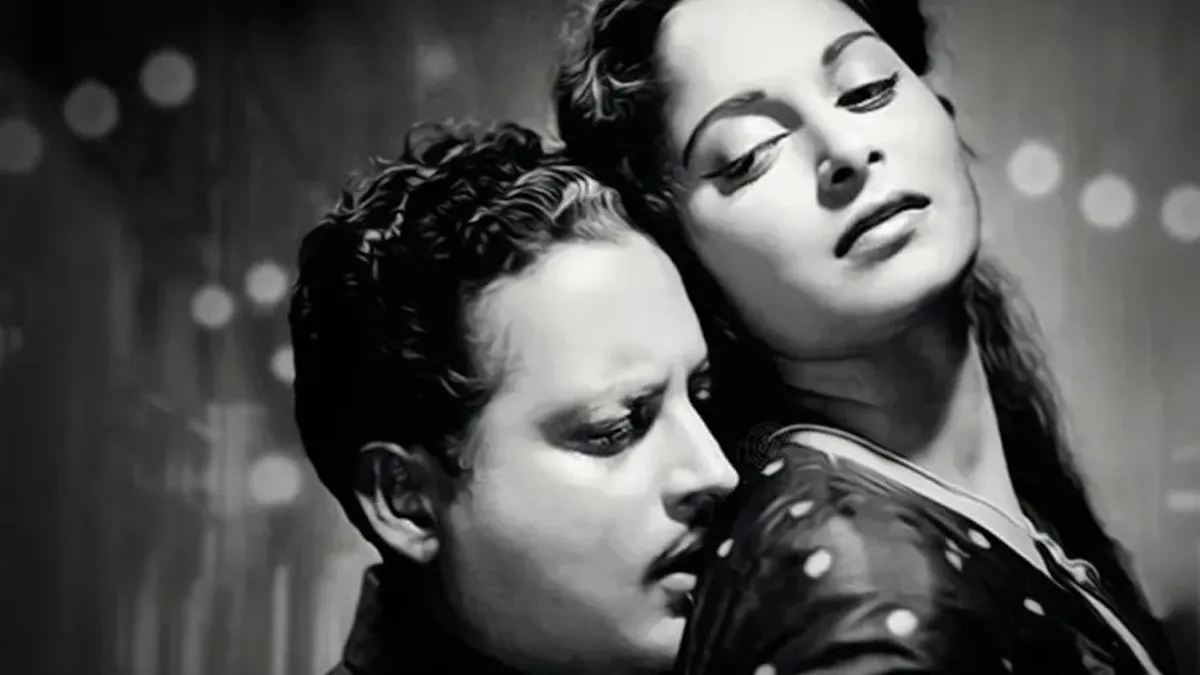
Drama, musical, by Guru Dutt, India, 1957
Thirsty is the heartbreaking story of Vijay, a young poet living in Calcutta who dreams of giving voice to the suffering and injustice of the world through his verses. Idealistic and sensitive, Vijay clashes with a society that despises his art because it is not profitable and does not cater to the tastes of the public. His brothers consider him a failure, the woman he loves leaves him for a marriage of convenience, and his poems are ignored by publishers. Only Gulabo, a prostitute with a pure heart, recognizes the beauty and truth of his words. When a misunderstanding leads everyone to believe Vijay is dead, his name and poetry suddenly become famous, exposing the hypocrisy of those who had previously rejected him.
Watching Thirsty means immersing oneself in a work that goes beyond melodrama, blending poetry, music, and imagery into a profound reflection on the human soul and the value of art. Guru Dutt, director and protagonist, creates one of the most intense and poetic films in world cinema, where black-and-white cinematography, expressive framing, and evocative lyrics produce an atmosphere of poignant melancholy. It is a film about the misunderstanding of the artist, pure love, and society’s hypocrisy, but also a universal critique of materialism and opportunism. Even today, Thirsty moves and provokes thought because it sincerely tells the story of the need to remain true to oneself in a world that measures people’s worth solely by their success.
LANGUAGE: Hindi
SUBTITLES: English, Spanish, French, German, Portuguese
The Marriage Contract as Historical Instrument
You signed something you did not read, in a language you did not choose, before witnesses who had no idea what they were ratifying. The ceremony felt like arrival, but the document underneath it was older than romance, older than the church that blessed it, older than the notion that two people might choose each other freely. What you entered was a legal structure whose original purpose had nothing to do with love and everything to do with the orderly transfer of property between men.
Roman law treated marriage primarily as a mechanism for establishing the legitimacy of heirs and securing the transmission of the paterfamilias’s estate. The woman’s body was the vessel through which patrimony passed, which is precisely why her sexual fidelity carried criminal weight while his did not. The Roman concept of stuprum — sexual violation — applied to women of citizen status and to passive male partners, but not to men who sought pleasure outside the household. The asymmetry was not a flaw in the system. It was the system’s load-bearing wall.
What the medieval church added was the vocabulary of sin, which had the peculiar effect of making the arrangement feel moral rather than economic. By the twelfth century, canon law had formalized marriage as a sacrament, which meant the state’s interest in sexual fidelity could now be dressed in the language of divine order. The political and the theological fused so completely that it became nearly impossible to distinguish where the protection of lineage ended and the protection of souls began. This confusion was not accidental — it was the medieval period’s most durable administrative achievement.
Napoleon’s Civil Code of 1804 stripped away the theological overlay and restored the naked architecture. Article 229 granted a husband the right to divorce his wife for adultery without qualification. Article 230 permitted a wife to seek divorce on the same grounds only if the husband had installed his mistress in the conjugal home — meaning the affair itself was insufficient cause; only the domestic humiliation of housing a rival under the same roof crossed the legal threshold. The Code spread across Europe through military conquest and diplomatic imitation, reaching the laws of Belgium, Italy, the Netherlands, Poland, and beyond. A single man’s administrative vision became the template for how roughly half a continent would regulate desire for the next century.
In England, the Matrimonial Causes Act of 1857 created civil divorce for the first time outside ecclesiastical courts, but encoded the same asymmetry with bureaucratic precision. A husband could dissolve the marriage on grounds of adultery alone. A wife had to prove adultery compounded by cruelty, desertion, incest, bigamy, or rape. The reasoning offered in parliamentary debate was explicit: a wife’s infidelity corrupted the bloodline and could introduce a false heir; a husband’s infidelity did no such thing. The law was not pretending to be about morality. It was articulating a biological theory of property inheritance dressed as jurisprudence.
What this history produces is a strange kind of retroactive vertigo, because the 19th-century adultery narratives that have survived as literature — the ones read in schools, adapted for film, discussed as explorations of passion and freedom — were written entirely within this legal framework. The transgressive woman was transgressive against a structure that had been designed specifically to criminalize her body’s autonomy while leaving his untouched. Her rebellion was not against love’s constraints or society’s prudishness. It was against a contractual architecture that had classified her, since Roman antiquity, as the guarantor of another man’s property rights.
The novel did not invent the fallen woman. The law invented her first, in precise statutory language, centuries before fiction arrived to make her sympathetic.

What the Faithful Spouse Actually Represents
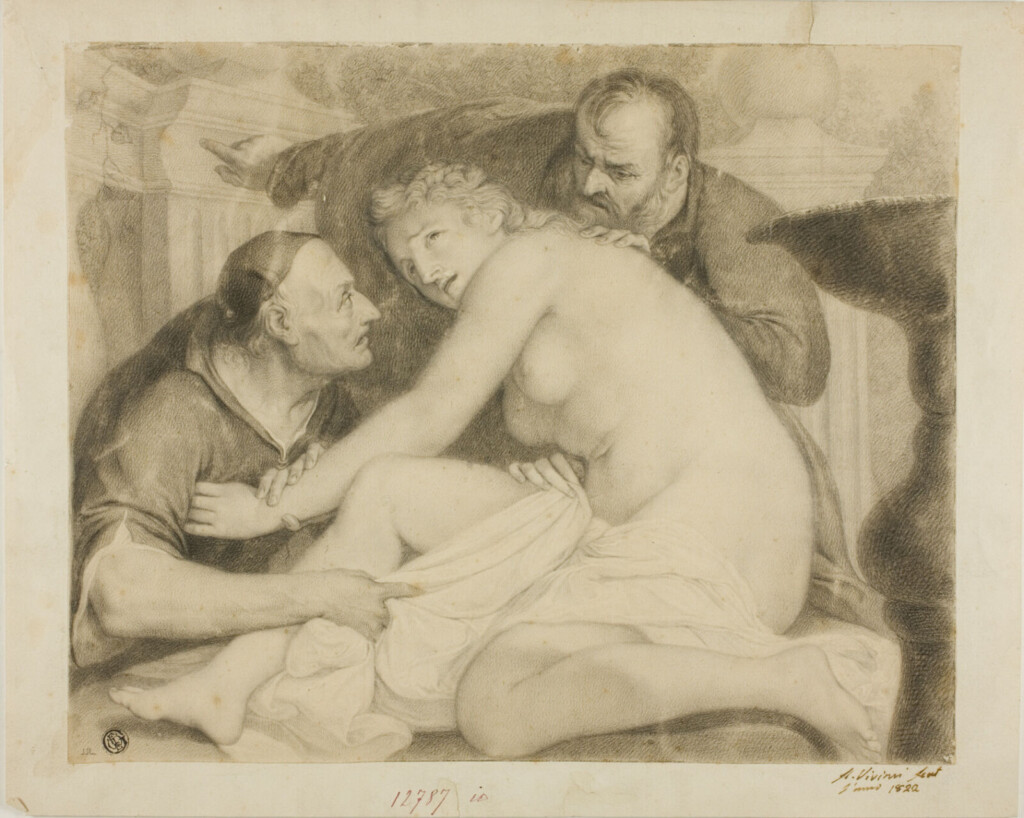
You have been faithful for eleven years, and somewhere in that faithfulness — in the shared mortgage, the remembered coffee order, the way you both know which side of the bed belongs to whom — something has calcified into infrastructure. Your spouse has not disappeared. They have become load-bearing.
The British psychoanalyst D.W. Winnicott spent much of his career mapping the territory between persons and functions, arguing in his 1965 collection “The Maturational Processes and the Facilitating Environment” that human beings require a stable background against which experience can become legible. What he called the “holding environment” was never merely metaphorical — it described the precise psychological mechanism by which another person stops being encountered as a subject and starts being inhabited as a structure. The faithful partner, in most long-term marriages, performs exactly this transformation quietly and without ceremony. They become the condition under which daily life is possible rather than one of its contents.
Sociologists have their own vocabulary for this. Émile Durkheim’s analysis of social solidarity, developed across “The Division of Labour in Society” in 1893, distinguished between bonds built on resemblance and bonds built on functional interdependence — the second category being far more durable and far less felt. When a marriage ages into this second type, the partner is no longer experienced as a chosen presence but as an assumed one, which is structurally identical to how we experience oxygen. This is not a failure of love. It is what social contract actually looks like from the inside, once the contract has fully taken hold: invisible, total, and only noticed when breached.
Object relations theory pushes further. Melanie Klein’s account of the depressive position — the developmental achievement of recognizing the other as a whole person with an independent existence — is something most adults perform selectively and intermittently, not continuously. In long marriage, the partner is frequently held in what Klein would recognize as a pre-depressive mode: not as a separate human being whose interiority is actively imagined, but as an extension of one’s own psychic furniture. What this means, practically, is that the betrayed spouse in an affair often suffers less from the loss of intimacy than from the sudden, violent return of the other’s subjectivity. They are seen again — which means they were not being seen before. The affair does not create the wound. It reveals the anaesthesia that preceded it.
This is why the cultural script around adultery so consistently frames the faithful partner as innocent, which is accurate in the legal and moral registers but functionally misleading in the psychological one. Innocence, in this framing, means passivity — the faithful spouse as a site upon which something was done rather than an active participant in the relational conditions that preceded the rupture. Judith Butler’s early work on performativity, particularly in “Gender Trouble” from 1990, offers a useful corrective: identity in relationships is not something one has but something one does repeatedly, and the cessation of that performance — the slow withdrawal into functional legibility — is itself a kind of act. The loyal partner who stops being curious about their own desire does not merely wait. They construct the walls through which the other eventually tries to escape.
What gets betrayed in an affair is therefore almost never reducible to a person in their full singularity. It is a system — a web of legibility, prediction, and social confirmation that the couple has built jointly and that both parties have used to organize their sense of who they are. The unfaithful spouse is not abandoning someone. They are defecting from a shared architecture of meaning that has, over time, required them to remain recognizable at the cost of remaining alive to themselves. The betrayal runs in multiple directions simultaneously, which is precisely why the cultural conversation around it almost never tells the whole truth about what is actually being destroyed.
Rebellion Without a Manifesto
You are standing in a kitchen at seven in the evening, and you know every sound this house makes. You know the particular creak of the third stair, the way the refrigerator hums slightly louder after nine, the rhythm of a life that has become so legible it barely requires your presence in it. And somewhere in the city, there is a phone number you have not yet called but have memorized anyway, the digits arranged in your mind like a private syntax, a language no one else in this house speaks.
What Simone de Beauvoir diagnosed in 1949 was not a personal failure but a structural one. In “The Second Sex,” she argued that women’s erotic existence had been historically organized around a fundamental asymmetry: men were permitted to be subjects of desire, women were trained to be its objects. The institution of marriage did not simply regulate sexuality, it allocated it, assigning to women the role of the desired rather than the desiring. The consequence was not merely frustration but a kind of erotic illiteracy, a condition in which a woman might genuinely not recognize her own wanting as a legitimate form of knowledge about the world.
Emma Goldman, writing forty years earlier in her 1910 essay “Marriage and Love,” arrived at a similar conclusion from a different angle. Her argument was blunt in the way that only genuine radicalism can afford to be: legal marriage kills desire by design, not by accident. The contract, she insisted, transforms a living feeling into a possession, and possession is precisely what desire cannot survive. Goldman was speaking about a mechanism, not a mood. The certificate does not cause indifference through some mystical property, it causes it by converting the beloved into a guaranteed quantity, something already obtained, already secured against the uncertainty that desire requires as its native atmosphere.
What neither analysis fully anticipated was the specific texture of the refusal that emerges from within these constraints. Political rebellion leaves documents, manifestos, organizations, demands written on paper and signed by names. The refusal that moves through adultery leaves nothing of the kind. It does not know itself as resistance. It articulates no platform. The woman who calls that number, or the man who takes a different route home, is not thinking in the language of liberation theory. They are thinking in the language of the body, which is older and less apologetic than any ideological framework constructed to contain it.
There is something philosophically significant in this illegibility. Michel Foucault’s work in the first volume of “The History of Sexuality,” published in 1976, traced how sexuality became in the modern period not a private experience but a dense transfer point for power relations, a domain saturated with discourse, confession, classification, and control. But the act that refuses its assigned position within that system does so most potently when it refuses to explain itself, when it stays below the threshold of articulable grievance. A desire that can be named, categorized, and given a proper political identity can also be managed, co-opted, or absorbed into the very structure it sought to escape.
This is why the affair does not become a movement. The energy that courses through it is real and sometimes devastating, but it cannot be organized without immediately losing the quality that made it matter. The moment adultery becomes a declared ideology, it transforms back into a form of possession, another way of owning something, another contract with different terms. What makes it structurally disruptive is precisely what makes it structurally useless as a program: it exists only in the present tense, in the unrepeatable singularity of a specific wanting that refuses to be converted into a general principle.
And yet the bodies keep making the same argument, generation after generation, in hotel rooms and borrowed apartments and the front seats of cars parked in streets where no one knows either person’s name.
The Lover as Invented Country
You meet them in a corridor, or a parking lot, or across a table at a conference neither of you wanted to attend, and for a few seconds you are no longer the person your mortgage knows. That loosening — fast, almost chemical — is not about attraction in any pornographic sense. It is about suddenly having no fixed coordinates. The self that the other person sees is not yet ruined by context. You have not yet become a role in their daily narrative. You are, briefly, unscripted.
Roland Barthes understood this not as seduction but as ontology. In A Lover’s Discourse, published in 1977, he mapped the interior landscape of loving with a precision that had almost nothing to do with the beloved and almost everything to do with the lover’s own consciousness in a state of suspension. What the lover invents, Barthes argued, is not another person — it is a site. A place that exists nowhere on any shared map, populated with meanings assembled entirely by the desiring subject. The affair does not discover a country. It builds one from scratch, at speed, using whatever materials the imagination can carry.
This is why the texture of an affair so rarely survives translation into daily life. The lover who seems to glow with intelligence and dangerous freedom, when absorbed into the ordinary grammar of shared bills and recurring arguments, does not dim because they were an illusion. They dim because the country they inhabited was constructed from precisely the absence of those structures. Move the relationship into legibility and you dissolve the territory. What looked like a person was partly a landscape — one that required incompleteness as its foundation.
Marriage, as an institution codified across most Western legal traditions by the sixteenth century and progressively loaded with emotional expectations across the nineteenth, operates on the assumption that full mutual knowledge is the goal. The project of couplehood, particularly after Romantic ideology infected it, became a kind of cartographic ambition — to know the other entirely, to be entirely known. Intimacy reframed as total transparency. But the self that is fully mapped is also, in some functional sense, finished. There is nowhere left it can surprise itself by going.
What the affair restores — and this is the specific violence of its appeal — is the experience of being an unfinished sentence. The sociologist Eva Illouz, in her 2012 study Why Love Hurts, traces how modern romantic culture simultaneously demands total emotional disclosure and then punishes the resulting ordinariness it inevitably produces. The lover outside the marriage does not know your silences, your redundancies, your precisely catalogued failures. They know only what has leaked through in charged and limited encounters. To them, you remain partially hypothetical. And the self that is partially hypothetical has room to become something it does not yet know how to name.
This is not escapism in the pejorative sense. It is closer to what the psychoanalyst D.W. Winnicott, writing in 1971, called the capacity for play — the developmental necessity of a space that is neither fully real nor fully fantasy, where identity can be rehearsed without permanent consequence. Winnicott located this capacity at the root of all creativity. The affair, in its structural logic, resembles that transitional space almost exactly: bounded by secrecy, charged with the awareness that it cannot last, and therefore free in a way that permanence forecloses.
The secrecy itself is load-bearing. Not because it adds the thrill of transgression — though it does — but because the concealed space is definitionally outside the social contract that has already assigned you. Inside the secret, you are ungoverned by the version of yourself that everyone else has already agreed upon. The person who meets you there meets someone the official record does not contain, and that encounter, however briefly, makes that uncontained self feel irrefutably real.
A vision curated by a filmmaker, not an algorithm
In this video I explain our vision
Data and the Lie We Tell About Exceptionality

You have almost certainly lied about this — not to a lover, not to a spouse, but to a pollster, to a researcher, to the anonymous form that promised confidentiality and still felt too close to confession. Alfred Kinsey understood this resistance before most social scientists were willing to name it. When his team published Sexual Behavior in the Human Female in 1953, the data on extramarital contact among American women didn’t just shock the public; it exposed the yawning distance between what people claimed to believe and what they had actually done. Kinsey’s methodology was imperfect, his sampling contested, but the essential wound his numbers opened has never fully closed: the behavior society condemns most publicly is the behavior it practices most privately.
The General Social Survey, running continuously since 1972 and considered one of the most rigorous longitudinal studies of American social attitudes, found by its 2016 wave that approximately 20 percent of men and 13 percent of women reported having sex with someone other than their spouse while married. These are the people who admitted it. The methodological literature on sensitive self-report data consistently demonstrates that actual incidence exceeds reported incidence, particularly for behaviors attached to shame. Which means the real numbers are higher, possibly considerably higher, and everyone in the field knows this, and the finding is still treated as marginal, surprising, aberrant — as though it describes a deviant minority rather than a statistically unremarkable slice of ordinary human life.
What gets suppressed in the space between the data and the cultural narrative is not prurience but consequence. If infidelity is genuinely normal — not in the moral sense, but in the statistical sense, the way hypertension is normal in aging populations — then the architecture of romantic expectation built around its impossibility becomes structurally fraudulent. The wedding vow does not become meaningless, but it becomes something other than what it claims to be: not a description of human capacity, but an aspirational declaration that most signatories will fail to honor, delivered in front of witnesses who have often failed to honor it themselves.
Esther Perel spent years conducting cross-cultural research across more than twenty countries for what became Mating in Captivity, published in 2006, and what she found was not that some cultures had solved the problem of desire within long-term commitment. What she found was that every culture had developed its own elaborate architecture of denial around the same persistent facts. The forms differed — Mediterranean tolerance for the known lover, Northern European pretense of total transparency, American oscillation between puritanical outrage and tabloid fascination — but the underlying dynamic was identical: desire exceeds the container built for it, and the culture responds not by redesigning the container but by insisting more loudly that the container is sufficient.
The insistence serves a function that has nothing to do with individual happiness. Monogamy as a legal and social institution stabilizes inheritance, simplifies property transfer, structures kinship networks, and provides the state with a manageable unit of social organization. Jack Goody traced this in The Development of the Family and Marriage in Europe in 1983, showing how the Christian Church’s aggressive promotion of monogamy from roughly the fourth century onward was inseparable from its interest in controlling the transmission of wealth and disrupting the lateral kinship bonds of pre-Christian European societies. The emotional content of the vow — the love, the fidelity, the spiritual union — arrived later and was layered over an arrangement that had always been as much administrative as it was romantic.
This means the statistical normal that Kinsey and the GSS keep quietly documenting is not a failure of civilization. It is civilization behaving exactly as the material conditions of desire predict it would, while insisting in every cultural register available that what is happening cannot be happening, that the person who did this is an exception, that you are an exception, that the numbers are an anomaly and not a mirror.
The Second Scene: What Guilt Actually Protects
She sits across from him at the kitchen table, hands wrapped around a mug that went cold twenty minutes ago, and she tells him everything. Not because he asked. Not because she was caught. She tells him because the silence of knowing has become structurally unbearable — not morally, not emotionally in any simple register, but in the specific way that a self which has discovered it can act freely becomes a self that must be governed again.
The confession is not an act of repair. It is an act of return.
What gets called guilt in these moments is almost never what it presents itself as. The phenomenology is convincing — the sleeplessness, the nausea, the compulsive rehearsal of harm done — but Fyodor Dostoevsky understood something in 1866 that psychology would spend a century and a half trying to formalize: the person who confesses is not relieving guilt so much as weaponizing it. In Crime and Punishment, the act of confession is the only mechanism by which Raskolnikov can escape not the crime but the terrifying self-knowledge the crime produced. He cannot live as a man who knows he acted outside the law that governs ordinary people. The confession restores the law by making him its subject again. The guilt is not the wound. The guilt is the cure for having been, briefly, free.
Sociologist Erving Goffman, writing in The Presentation of Self in Everyday Life in 1959, described social existence as an ongoing performance in which individuals constantly manage the impressions they produce for others. What he did not make explicit — though the architecture of his framework implies it — is that the performance serves the performer as much as the audience. When the adulterer confesses, they are not simply managing information. They are handing back the script. They are saying: here is the stage, here are the roles, here is the version of me that requires your witness to exist. Without your knowledge of what I did, I am something that cannot be contained within the theater we have built together.
The unbearable part of transgression is not the transgression itself. It is the self-knowledge it produces. In 1943, Jean-Paul Sartre argued in Being and Nothingness that human consciousness is condemned to a freedom it cannot escape, that every attempt to define the self as a fixed thing — a faithful partner, a responsible adult, a person who does not do this — is bad faith, a flight from the vertigo of open possibility. The affair breaks through that bad faith not because it is romantic or transgressive in some literary sense, but because it generates empirical evidence: you are not the person you performed yourself to be, and you cannot unknow that. The confession is the attempt to unknow it by externalizing it, by making the knowledge social rather than solitary, by converting self-knowledge back into narrative — specifically, into the narrative of a person who did wrong and is now accountable, which is a narrative the culture knows how to hold.
Accountability is readable. Freedom is not. A person who confesses adultery re-enters a legible moral grammar: wrongdoer, confessor, penitent, possibly redeemed. The culture has slots for each of these. The person who quietly carries the knowledge of their own freedom, who does not confess, who does not perform remorse, who simply sits with what they discovered about themselves — that person has no grammar. They exist in a structural gap the social order does not know how to process, and so they must process it alone, which is the one thing most people, having been trained since birth to require external validation for their own existence, genuinely cannot do.
The mug stays cold. The kitchen stays quiet. And the weight she was carrying shifts, visibly, across the table to him — which was, from the first word, the entire point.
The Trap Inside the Trap
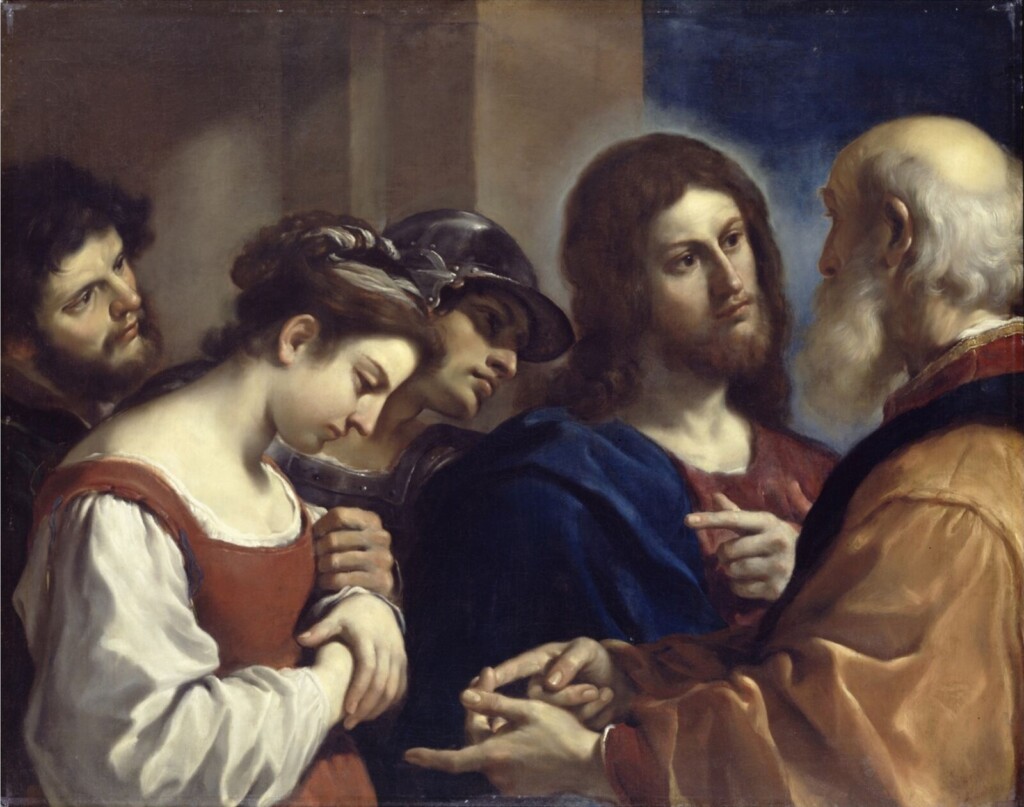
You are reading about adultery right now, which means the transgression has already been domesticated enough to sit inside an article, to be parsed, to be given a section number.
That act of naming is not neutral. The moment a behavior earns a theory, it stops being dangerous and starts being useful — useful to therapists who charge by the hour, to publishers who know that infidelity narratives outsell almost every other domestic genre, to the self-help industrial complex that repackaged the raw wreckage of betrayal into a five-stage healing framework sometime around the mid-1990s and never looked back. Esther Perel’s Mating in Captivity, published in 2006, is a genuinely intelligent book, and that is precisely what makes it worth examining here: it transformed the erotic tragedy of the trapped spouse into a problem of insufficient mystery, a design flaw in the architecture of modern coupledom. Suddenly adultery was not a rupture but a diagnostic. It told you something about your attachment style, your childhood wound, your failure to maintain separateness within togetherness. The lover became a symptom. The symptom became a curriculum.
What this therapeutic absorption accomplished was extraordinary in its efficiency: it preserved the moral infrastructure of monogamy entirely intact while appearing to interrogate it. You were not told that the institution was a cage. You were told that you had been building the cage wrong. The prescription was always more intimacy, more honesty, more intentional partnership — which is to say, more investment in the very structure the desire had tried to escape. The rebellion was metabolized and returned to the body as nutrition for the system it had briefly threatened.
Literature did the same work with greater elegance. Flaubert understood in 1857 that Emma Bovary’s desire was not simply a character flaw but an indictment of the entire social imagination available to provincial women in nineteenth-century France — yet the novel’s form, its clinical irony, its insistence on her delusion, also served to contain her. She is punished aesthetically before she is punished narratively. Her desire is given enough rope to become beautiful, and then the rope tightens. Every great adultery novel performs this double maneuver: it takes the transgression seriously enough to render it seductive, then serious enough to render it fatal. The reader exits moved, which is another word for safely returned to their seat.
The sociologist Eva Illouz, in her 2012 study Why Love Hurts, demonstrated with considerable empirical rigor that late capitalism does not suppress erotic suffering — it produces and markets it. The commodification of romantic possibility, accelerated by dating platforms that began statistically transforming human attraction into choice architecture around 2009, means that the fantasy of the other life, the unlived marriage, the road not taken, is now an industry vertical. Adultery does not happen outside the market. It happens deep inside it, lubricated by it, sometimes literally subscribed to through it.
What this leaves is a question that does not resolve into an answer by the fact of being asked. If every act of transgression contains within it the mechanism of its own reabsorption — if the affair is always already a narrative before it ends, always already a therapy session waiting to be scheduled, always already a book proposal — then the space in which genuine refusal might exist grows vanishingly small. Not because people are weak or co-opted, but because social structures are not walls you stand outside of. They are the medium through which you breathe. The institution does not need to punish the rebel. It only needs to wait until the rebel needs language to describe what they have done, and language, every time, belongs to the house.
Whether anything performed inside that house can ever be more than a rearrangement of its furniture is the question that the affair, stripped of its romance and its diagnosis, leaves open on the table.
💔 When Love Becomes an Act of Defiance
Adultery is rarely just about desire — it is a rupture in the social contract, a quiet revolution waged in the bedroom against the institutions of power and propriety. The articles below trace the cultural, literary, and psychological landscape that surrounds forbidden love, social masks, and the impossible tension between individual longing and collective moral codes.
Marriage of Convenience: When Love Is Sold to the Highest Bidder
When marriage becomes a transaction rather than a union, desire is inevitably displaced elsewhere. This article examines the institution of convenience as a social cage, revealing how economic and familial pressures transform intimacy into a form of silent coercion. The longing for genuine connection — so often crushed beneath the weight of respectability — becomes the very engine of transgression.
GO TO THE SELECTION: Marriage of Convenience: When Love Is Sold to the Highest Bidder
Social Hypocrisy: The Double Face of Respectability
Social hypocrisy is the invisible architecture that makes adultery simultaneously impossible and inevitable. Society demands fidelity in public while tolerating — even encouraging — its violation in private, creating a double standard that corrodes authentic human relations. This article dissects the mechanisms of respectability and the psychological cost of living behind a mask of moral conformity.
GO TO THE SELECTION: Social Hypocrisy: The Double Face of Respectability
Ismat Chughtai: The Writer Who Challenged India’s Modesty
Ismat Chughtai dared to write about female desire, domestic frustration, and the suffocating norms of South Asian society at a time when such honesty was considered obscene. Her work is a literary mirror to the impossible bind of women trapped between social duty and inner yearning. Reading her is to understand how rebellion can wear the quiet face of a story told in a whisper.
GO TO THE SELECTION: Ismat Chughtai: The Writer Who Challenged India’s Modesty
Saadat Hasan Manto: The Writer India Did Not Want to Read
Saadat Hasan Manto tore away the curtain of collective self-deception to reveal the raw, ungovernable truth of human desire. His stories treated sexuality and transgression not as moral failures but as symptoms of a society too afraid to look at itself honestly. Like adultery itself, his prose was judged indecent precisely because it was devastatingly true.
GO TO THE SELECTION: Saadat Hasan Manto: The Writer India Did Not Want to Read
Discover the Cinema of Impossible Desires on Indiecinema
If these themes of forbidden love, social rebellion, and the war between desire and duty resonate with you, Indiecinema streaming is the place where cinema dares to go further. Explore a curated selection of independent films that refuse easy answers and embrace the full, aching complexity of human longing. Join us — because the most honest stories are always the ones the mainstream would rather not tell.
👉 EXPLORE THE CATALOG: Watch Indie Films in Streaming
A vision curated by a filmmaker, not an algorithm
In this video I explain our vision

