
The Courtroom and the Obscene
You are sitting in a courtroom in Lahore, 1948, and the charge being read aloud is obscenity. The story on trial is called “Thanda Gosht” — Cold Meat — and the prosecutor’s voice cracks slightly when he reads the relevant passage, as though the words themselves are burning his tongue. Around you, ceiling fans push warm air in slow circles. Outside, the city is still learning to be a new country. The man in the dock, Saadat Hasan Manto, watches the proceedings with the particular stillness of someone who has already understood the joke and finds it more nauseating than funny.

The charge was that his fiction depicted sexual violence too graphically. The irony — though irony is far too gentle a word — is that the sexual violence in question had occurred, on an industrial scale, in the very months before the story was written. Historians now estimate that between 75,000 and 100,000 women were abducted and raped during the Partition of 1947, a cataclysm that displaced approximately fifteen million people across six weeks and left somewhere between 200,000 and two million dead, depending on which scholar you read and how honest they are willing to be. The state that was prosecuting Manto for writing about this had, in its foundational convulsion, participated in producing the raw material of his sentences.
This is not coincidence. It is the operational logic of official culture: the violence must happen, and then the violence must disappear. What cannot be allowed to coexist with a national birth narrative is the granular, physical record of what that birth cost in female bodies, in severed limbs, in the specific texture of what a man becomes when a border is drawn through the middle of his identity. Manto understood, with the precision of a surgeon rather than the passion of a moralist, that the obscene was not in his sentences. The obscene was in the agreement, across both new nations, to pretend those sentences described something that had not happened.
He had been tried before. In undivided India, under British colonial law, he had faced obscenity charges in 1944 for a story called “Bu” — Odor — and again in 1945 for “Dhuan” — Smoke. The British legal apparatus and the nascent postcolonial one shared, with remarkable consistency, the same instinct: fiction that placed the reader inside a body experiencing desire or degradation was more threatening to public order than the political conditions that produced that desire and degradation. Kafka had diagnosed this mechanism in 1914 in The Trial, where Josef K. is prosecuted by a system whose charges he is never permitted to fully hear, because the real function of the trial is not adjudication but humiliation — the demonstration that the individual’s perception of reality carries no legal standing.
What the Lahore courtroom was staging, in 1948, was a version of that same theater. Manto’s crime was epistemological before it was literary. He had written as though the reader’s body and the characters’ bodies occupied the same moral universe — as though suffering did not become more acceptable because it was large-scale and politically motivated. His story did not permit the distance that national mythology requires. There was no redemptive arc, no martyred purity, no villain whose foreignness conveniently quarantined the violence. There was only what had happened, rendered with the flat precision of someone who had heard the testimonies and refused to translate them into metaphor.
A society does not prosecute a writer for being wrong. It prosecutes a writer for being accurate in the wrong direction — for pointing the accurate lens at the wound that the national story requires to be invisible. The six obscenity trials Manto faced across his lifetime, three before 1947 and three after, were not failures of literary appreciation. They were a coherent political project: the management of what could be known, by whom, in language precise enough to be felt rather than merely processed.
Thirsty
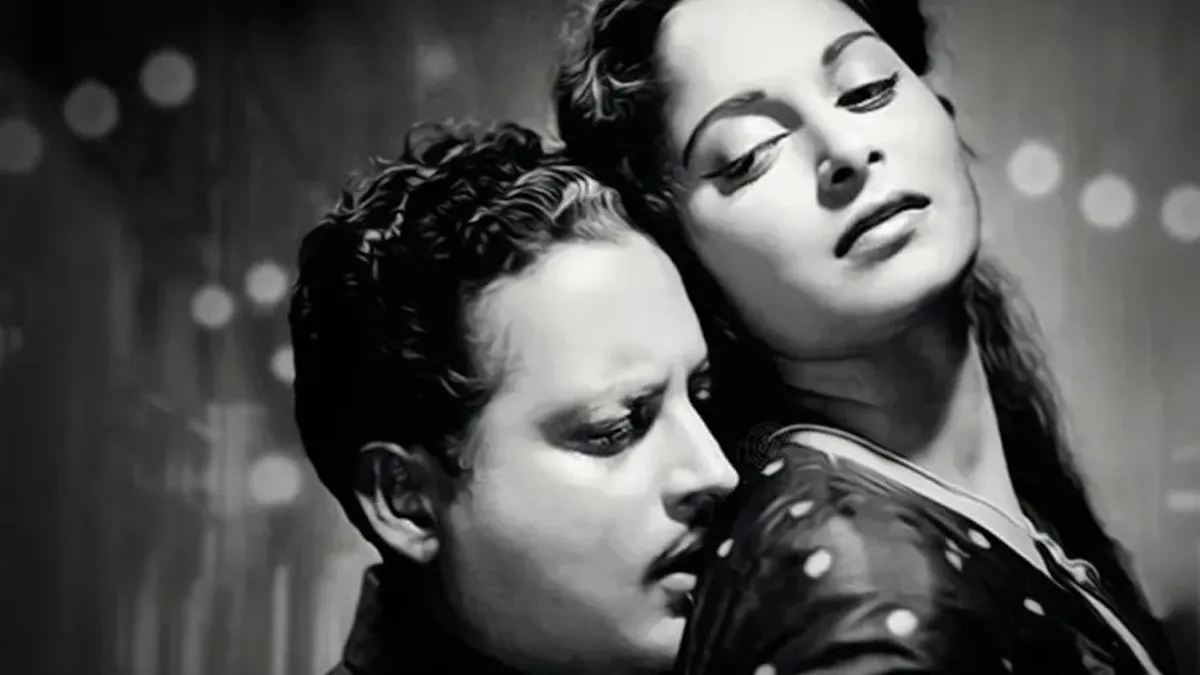
Drama, musical, by Guru Dutt, India, 1957
Thirsty is the heartbreaking story of Vijay, a young poet living in Calcutta who dreams of giving voice to the suffering and injustice of the world through his verses. Idealistic and sensitive, Vijay clashes with a society that despises his art because it is not profitable and does not cater to the tastes of the public. His brothers consider him a failure, the woman he loves leaves him for a marriage of convenience, and his poems are ignored by publishers. Only Gulabo, a prostitute with a pure heart, recognizes the beauty and truth of his words. When a misunderstanding leads everyone to believe Vijay is dead, his name and poetry suddenly become famous, exposing the hypocrisy of those who had previously rejected him.
Watching Thirsty means immersing oneself in a work that goes beyond melodrama, blending poetry, music, and imagery into a profound reflection on the human soul and the value of art. Guru Dutt, director and protagonist, creates one of the most intense and poetic films in world cinema, where black-and-white cinematography, expressive framing, and evocative lyrics produce an atmosphere of poignant melancholy. It is a film about the misunderstanding of the artist, pure love, and society’s hypocrisy, but also a universal critique of materialism and opportunism. Even today, Thirsty moves and provokes thought because it sincerely tells the story of the need to remain true to oneself in a world that measures people’s worth solely by their success.
LANGUAGE: Hindi
SUBTITLES: English, Spanish, French, German, Portuguese
What a Society Cannot Read About Itself
You are sitting in a courtroom in Lahore, 1948, and the charge against the man in the dock is that he wrote something obscene. But obscenity is never really the charge. The charge is recognition — the unbearable, suffocating recognition that what he wrote is true.
Saadat Hasan Manto faced six obscenity trials across two countries, three before partition under British colonial law and three after it under the new Pakistani state. The specific stories cited — “Thanda Gosht,” “Khol Do,” “Bu” — depicted sexual violence, communal savagery, and the degraded textures of desire among people society preferred to classify as either victims or perpetrators, never both simultaneously, never as the ordinary human beings they were. The prosecutions were not about protecting public morality. They were about protecting a public image that could not survive contact with his sentences.
Sigmund Freud, writing in 1919 in his essay “The Uncanny,” identified a specific category of dread that arises not from the foreign or the monstrous but from the familiar made suddenly strange — the German word he used, unheimlich, literally meaning “un-home-like,” the thing that should have stayed hidden inside the house of the self but has crept back into visibility. What Manto produced, story after story, was precisely this sensation. His characters were not demons imported from elsewhere. They were neighbors, soldiers, ordinary men who found themselves capable of atrocity under the right historical pressure. The horror was not that they were inhuman. The horror was that they were not.
When a community prosecutes a writer for this kind of work, something structurally stranger than moral outrage is operating. Elias Canetti, in “Crowds and Power” published in 1960, analyzed how collective bodies maintain cohesion through the expulsion of internal threats — not external enemies, but figures who expose the crowd to its own contradictions from within. The prosecuted writer functions as what Canetti called the “sting,” the dangerous remnant of something the crowd has absorbed and cannot digest. Manto had witnessed partition. He had heard the stories, seen the bodies, sat with the survivors. He wrote it all down. The trials were the crowd’s attempt to vomit out what it could not metabolize.
There is a particular violence in asking a writer to be more merciful to his readers than reality was to its victims. Both India and Pakistan, in their different ways, were engaged in 1947 and after in the construction of founding national mythologies — stories of sacrifice, liberation, and civilizational destiny. Manto’s stories were structurally incompatible with this project, not because he was cynical about those nations but because he was honest about what it cost to birth them. Every story about a woman raped by men who claimed to be protecting their community’s honor was a sentence that the myth-making apparatus had to silence or it would have to revise itself entirely.
What makes this mechanism particularly precise is that the censoring society almost never acknowledges what it is actually afraid of. The Pakistani state did not say: we are prosecuting Manto because his work makes it impossible to sustain our self-congratulatory account of partition. It said the stories were vulgar. This displacement is not cynical strategy — it is genuine psychological necessity. Naming the real threat would require admitting that the threat is real, which would mean admitting that the image being protected is false. The obscenity charge was the only available language for a fear that had no acceptable name.
The deepest irony Manto generated was structural rather than rhetorical: the very act of prosecuting him confirmed everything his fiction argued. A society that gathers its legal machinery to suppress a short story about sexual violence during communal riots is a society that has just proven, in open court, that it cannot bear to see itself.

Partition as the Unspeakable Event

You are sitting with a story you were never supposed to read, and the reason it exists is that someone refused to pretend the thing that happened did not happen the way it happened.
The displacement of fourteen million people across a border drawn in thirty-six days by a British lawyer named Cyril Radcliffe, who had never visited the subcontinent before August 1947 and left immediately after, is one of those historical facts that sounds abstract until you place a single body inside it. Radcliffe drew the Radcliffe Line between July 8 and August 17, 1947, divided Punjab and Bengal along boundaries that cut through villages, irrigation canals, and family plots, and was gone before the killing reached its full velocity. Conservative estimates place the dead at two hundred thousand. Other historians — among them Gyanendra Pandey, whose 2001 work Remembrance and the Nation examined the structured silences around Partition violence — argue the number reaches two million. Between those two figures lies a gulf that no archive can close, because the bodies were not counted. They were burned, dumped in wells, left in fields, or absorbed into the silence that both new nations immediately began constructing around what their birth had cost.
The silence was not accidental. It was the precondition for national mythology. India needed a founding narrative organized around sacrifice and liberation, Gandhi’s nonviolence, Nehru’s tryst with destiny. Pakistan needed a narrative organized around Islamic solidarity and the legitimate will of a people. Neither script had room for the specific texture of what actually occurred along the roads between Lahore and Amritsar in those weeks: the systematic abduction and rape of somewhere between seventy-five thousand and one hundred thousand women, documented decades later by historians Urvashi Butalia and Ritu Menon in their respective works, the selective killing that followed neighborhood maps, the participation of ordinary people who had lived beside their victims for generations. Horror without redemption does not build nations. It only haunts them.
Manto wrote the haunting. Toba Tek Singh, published in 1955, stages the exchange of lunatics between India and Pakistan as a direct metaphor, but its force is not allegorical — it is clinical. The story records bureaucratic absurdity with the precision of someone who understood that the greatest violence of Partition was not only physical but ontological: it erased the condition under which identity had previously been possible. A man who had been Punjabi suddenly had to be Indian or Pakistani, and the machinery that processed this transformation was indifferent to whether he survived it. The lunatic protagonist Bishan Singh, who refuses to stand on either side of the wire, dies in the strip of land between the two borders. Manto did not frame this as tragedy. He framed it as the only rational response to an irrational demand.
The stories collected in Manto Ka Pakistan and the earlier Siyah Hashiye, translated as Black Margins, work differently — shorter, harder, almost without narrative arc, more like crime-scene photographs than fiction. In one, a man who has spent days killing discovers he cannot remember which community he belongs to. In another, the detail that lands is not death but the precise and casual normalcy of someone looting a stranger’s kitchen while the stranger’s daughter hides in the next room. These were not invented textures. Manto was writing from Lahore, watching refugees pour through a city reorganizing itself around an absence, and what he saw was that violence of this scale does not produce monsters. It produces ordinary people who have been handed permission.
Neither government wanted that sentence written. Pakistan’s censors and India’s critics found different reasons to reject his work, but the rejection converged on the same refusal: a literature of national birth could not afford a witness who declined to look away from what the birth had required.
The Architecture of His Prose
You are reading a sentence about a woman’s body, and the sentence does not flinch, does not lower its eyes, does not offer you the mercy of metaphor. Manto writes the way a coroner signs a form — not because he is cold, but because coldness is the only instrument precise enough to measure what happened. His prose denies you the exit that moral commentary usually provides, the small door at the end of every difficult paragraph where the author signals: I too am horrified, we are horrified together, you may now exhale. Manto seals that door. He leaves you inside the room with the fact.
This is not minimalism in the fashionable sense, not the cultivated restraint of a writer performing detachment. It is something structurally more violent. In the 1955 collection Manto ke Afsane, assembled in the last year of his life and widely considered the most complete portrait of his method, the sentences operate by a principle of deliberate refusal. Refusal of adjective-as-verdict. Refusal of the narrator’s visible conscience. The prose renders the event and then retreats, the way a surgeon makes the incision and steps back to let the wound speak. What this produces in the reader is not aesthetic distance but its precise opposite: an enforced proximity, a removal of the buffer between you and the act described, so that the moral weight falls not on the page but on your chest, where it was always meant to land.
The story Toba Tek Singh, written in 1955 and published in that same collection, is often taught as a parable about Partition, which is accurate but insufficient, the way calling a landmine a metal object is accurate but insufficient. The narrative follows a group of lunatics in a Lahore asylum who are being sorted by officials following the 1947 Partition of the subcontinent — Hindus and Sikhs to be transferred to India, Muslims to remain in Pakistan. The bureaucratic logic of the transfer collapses almost immediately, because the lunatics cannot be reliably assigned a national identity, and the officials, confronted with this, simply proceed anyway. What Manto has constructed here is not a metaphor about madness as clarity, though that reading circulates widely. He has built a structural argument about the nature of statelessness itself: the state requires a legible subject, and the moment the subject cannot be legibly categorized, the state does not pause to reconsider its categories — it simply presses forward with the sorting, leaving the unclassifiable body in the strip of land between two borders, belonging to neither nation, administered by neither government, suspended in a geography that has no legal name.
Bishen Singh, the central figure of that story, dies in that no-man’s land. The sentence reporting his death is flat, short, and placed without ceremony. Manto does not editorialize. He does not ask you to mourn. The flatness of the sentence is itself the argument: this is what a life looks like when the administrative machinery has finished with it. The prose mirrors the indifference of the state, and by mirroring it without condemning it, forces the reader to feel the condemnation as something generated from inside their own reading body rather than imported from the author’s stated position.
This technique carries a specific political danger that his prosecutors understood, even if they lacked the critical vocabulary to name it precisely. A writer who tells you what to feel about an atrocity can be argued with, dismissed, accused of exaggeration or sentiment. A writer who simply places the atrocity in front of you, described with the accuracy of a medical chart, cannot be refuted by the same means. The only available response to Manto’s prose is to dispute the facts, and the facts, in almost every case, were not in dispute.
The Writer as Social Pathologist
You are sitting across from a doctor who tells you the truth about your body, and your first instinct is not gratitude — it is rage. Not because the diagnosis is wrong, but precisely because it is right, and rightness of that particular kind carries no comfort, only the cold weight of recognition. The body politic operates by the same reflex. What it cannot metabolize, it excretes through its legal apparatus.
Émile Durkheim argued in The Rules of Sociological Method, published in 1895, that deviance is not a malfunction in the social body but one of its necessary productions. Every society generates the figures it needs to mark its own boundaries — the criminal, the heretic, the obscene artist — not because these figures threaten the collective, but because their punishment is the ritual by which the collective re-confirms what it chooses to be. The trial is not an instrument of correction. It is a ceremony of self-definition. The accused is less a person than a mirror held up so the society can admire its own reflection in the act of breaking it.
Manto was tried for obscenity six times — three times under British colonial rule in India, three more after Partition in Pakistan — and the consistency of that number is the most revealing literary criticism ever written about his work. Governments changed, flags changed, the nation itself was surgically bisected, and yet the charges followed him across the border with bureaucratic loyalty. What was being prosecuted was never the text. The prosecution of “Thanda Gosht” in Pakistan in 1950, which described the sexual violence of Partition with a clinical flatness that horrified precisely because it refused to be horrified, was a prosecution of the act of naming. The state does not fear the wound. It fears the word for the wound.
There is a sociological precision to what Manto was doing that goes beyond literary intent. His short story “Khol Do,” published in 1948, follows a father searching for his daughter through refugee camps, and the ending — when she is found and her body’s involuntary response to a male voice reveals everything about what has been done to her — does not describe a single woman. It performs a taxonomy of mass violence in nine hundred words. The reader who objects to the ending is not objecting to its indecency. They are objecting to its accuracy. The distinction matters enormously, because accuracy in this context is itself an act of aggression against collective forgetting.
Michel Foucault‘s later work on the relationship between discourse and power illuminates what Durkheim could only sketch: the power to name a thing is inseparable from the power to determine its existence in social reality. A violence that has no official language does not officially exist. Manto gave language to violences that entire institutions — religious, governmental, nationalist — had conspired to keep languageless. His obscenity trials were therefore not literary events. They were epistemological battles over who controls the archive of what happened.
The defense Manto offered at his own trials was characteristically brutal in its simplicity. He said, in various formulations across different proceedings, that if his writing was obscene, then the society that produced the events he described was more obscene than anything he had written. This is not a clever rhetorical reversal. It is the exact argument Durkheim would have made, stripped of its academic courtesy. The pathologist does not create the disease by diagnosing it. But no one ever thanked the pathologist for being first in the room with the correct name.
What gets obscured in every subsequent celebration of Manto as a literary martyr is that the trials were not failures of the system. They were the system working as designed — metabolizing its most honest witness through the only organ it possessed for that purpose.
A vision curated by a filmmaker, not an algorithm
In this video I explain our vision
Pakistan's Inheritance of the Same Refusal

You pack what you can carry and cross a border that did not exist six months ago, and you tell yourself the geography has changed, therefore something essential has changed. Manto arrived in Lahore in January 1948 carrying the delusion that every migrant carries — that the new country would be a new reader, that the soil under a different flag might receive what the old soil had rejected. He had been prosecuted three times in India. The logic running underneath that prosecution was not about obscenity in any forensic sense; it was about what a nation in the process of constructing its own sacredness could tolerate being shown about itself. He crossed. The prosecutions followed him like a shadow that belongs to the man, not the ground.
Pakistan needed its founding myth with the same metabolic urgency that India needed its own. Every new state is also a new story, and every new story requires a protected origin — a moment of pure intention, a people who suffered and therefore deserved, a birth that was moral rather than merely political. The violence of Partition, the trains arriving on both sides filled with the mutilated dead, the number of bodies that historians like Gyanendra Pandey, in his 2001 work “Remembering Partition,” places conservatively in the hundreds of thousands — all of this had to be narrated in a way that preserved the innocence of the idea of Pakistan. Manto’s stories refused that preservation with the same indifference a scalpel has toward the feelings of the patient.
He was prosecuted three more times after Lahore. The story “Thanda Gosht” — cold meat — brought the charge. A man who has committed violence during Partition discovers, in the aftermath, that the act has destroyed something in him beyond recovery. The state of Pakistan read this as obscenity. What the state could not afford to read it as was diagnosis — a clinical account of what mass violence does to the human interior, how atrocity does not stay in the body that commits it but metastasizes into every subsequent act of intimacy, every subsequent attempt at ordinary life. The court’s discomfort was not moral; it was ontological. A nation that had been born through that specific violence could not allow its literature to trace what that violence left behind in its citizens.
What Manto understood, and what neither state could absorb, was that innocence is not a political position — it is a psychological need, and like all psychological needs it distorts perception in proportion to how desperately it is held. The sociologist Norbert Elias, writing in “The Civilizing Process” in 1939, mapped how societies progressively conceal their own violence behind thickening layers of institutional language and behavioral code, not because the violence disappears but because its visibility becomes intolerable to a self-image built on refinement. Both India and Pakistan were performing this concealment in real time, with fresh blood still on the partition walls, and Manto kept pulling the cloth away.
He died in Lahore in 1955, at forty-two, with alcohol having done to his body what the courts had not quite managed to do to his career. He left behind a body of work — the short stories collected in volumes like “Manto Ke Afsane,” the sketches of Bombay film culture, the incandescent essays — that neither country had figured out how to hold. The irony that both states prosecuted the same writer for the same essential crime is not a coincidence that reflects poorly on two governments. It reflects the structural necessity of the lie that state-formation requires: that the people who built this country were not the same people who did what happened in 1947, that nationhood is a form of moral laundering, and that the writer who refuses to launder is not a dissident but something more threatening — a witness.
The Reader Who Looks Away
You are sitting in a well-lit room, the kind where the bookshelves signal taste and the cushions signal comfort, and someone has handed you a story that is fewer than ten pages long. You read it. You arrive at the final line of “Khol Do” — in which a doctor asks a father to open a window, and the father’s daughter, conditioned by weeks of gang rape at the hands of her supposed rescuers, begins to pull down her salwar — and you close the book. Not dramatically. Quietly. You set it on the side table with a kind of deliberate gentleness, as if the violence of dropping it would confirm something about you that you are not ready to confirm.
That gesture — the book placed down, the spine facing away — is not a rejection of Manto. It is a rejection of what Manto has just made you see about yourself: that you live at a comfortable distance from events whose mechanics you benefit from not understanding too precisely. The disgust that rises in the throat reading that final image is not moral revulsion at Manto’s craft. It is the older, dirtier disgust of recognition, the kind that surfaces when you realize you already knew this was possible, that some part of you always knew, and that you have spent considerable psychic energy not knowing it consciously.
Sigmund Freud, in “Civilization and Its Discontents” published in 1930, argued that civilized life demands a continuous repression of instincts, and that this repression accumulates not as peace but as a slow pressure that finds its release in collective violence. What Manto understood, without the clinical framework, is that literature’s specific function is to short-circuit that repression for the duration of a few pages — to force the thing that has been driven underground back into the light of direct encounter. The reader who puts down “Khol Do” is not protecting themselves from Manto. They are protecting themselves from the return of what they pressed down.
This is why the charges of obscenity brought against him — six trials across Pakistan and undivided India between 1947 and 1955 — were never really about language. The state is not offended by words. The state is offended by the reader’s sudden inability to maintain the useful fiction that atrocity is exceptional, that it belongs to the category of aberration rather than policy. Manto’s prose refused that fiction with a precision that legal language could not contain, which is why the courts had to reach for obscenity law the way you reach for whatever is nearest when you need to stop something from being said.
Hannah Arendt, tracing the bureaucratic architecture of mass violence in “Eichmann in Jerusalem” in 1963, introduced the idea that evil becomes most durable not when it is monstrous but when it is ordinary, when it is processed through forms and functions and the moral vocabulary of duty. Manto was writing about this same ordinariness, but from inside the body of the victim rather than from the altitude of historical analysis. He did not explain the machinery. He put the reader inside the result of it, which is categorically more disturbing, because explanation preserves distance and Manto abolished distance as a literary principle.
The reader who looks away is not a coward in any simple sense. Looking away is, in fact, the socially rational response to literature that asks you to inhabit suffering you had tacitly agreed to keep abstract. The middle-class drawing room — its light, its cushions, its bookshelves curated to demonstrate humanity — is precisely the space that cannot absorb what Manto returns to its surface, because absorbing it would require dismantling the narrative of one’s own innocence, and that narrative is structural, not decorative.
Alcoholism, Erasure, and the Cost of Remaining Visible
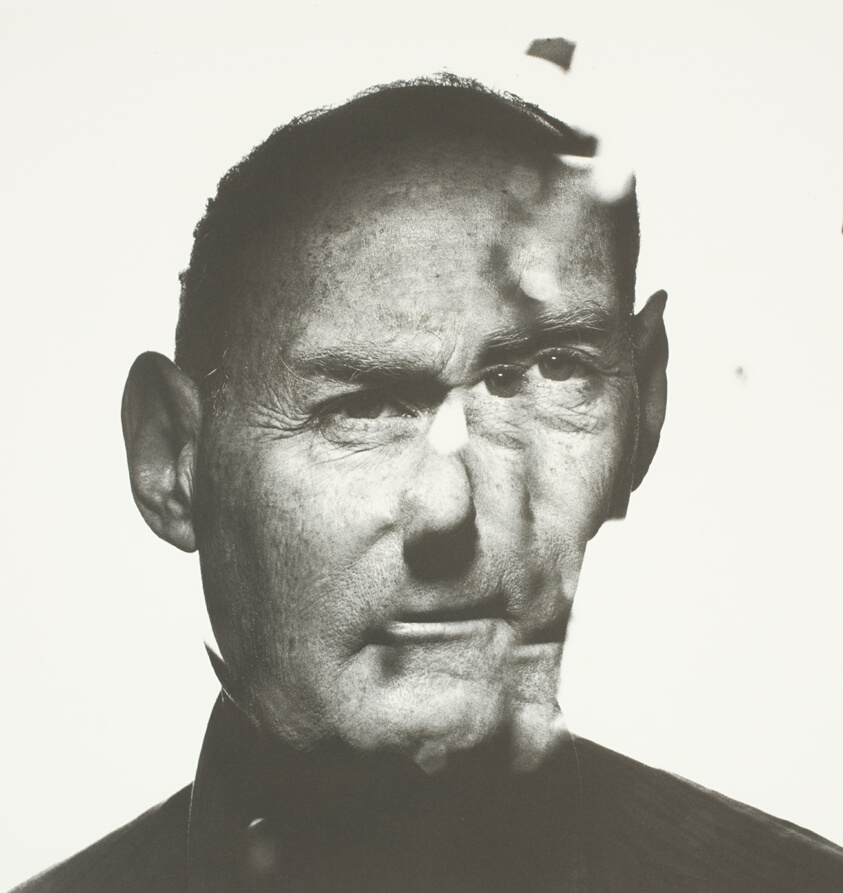
You wake up one morning and the country that was supposed to be yours has already decided you are a problem to be managed rather than a voice to be heard. That is not a metaphor for Saadat Hasan Manto — it was the precise administrative and cultural reality he navigated from 1947 until his body simply refused to continue in January 1955. He was forty-two years old, which sounds like a tragedy of youth until you understand that those final years were not really years at all but a long, grinding audit of everything he had refused to surrender.
The psychiatric ward at Lahore where Manto was institutionalized — twice, in his last years — was not a place where madness was being treated so much as a place where inconvenience was being stored. R.D. Laing argued in The Divided Self, published in 1960 just five years after Manto died, that what psychiatry classified as breakdown was frequently the only coherent response available to a person living inside an incoherent set of social demands. The person labeled unstable was often the one who had refused to perform the required fiction of normalcy, while those considered healthy were simply more practiced in their performances. Manto was not failing to cope with reality. He was refusing to pretend that the reality around him was bearable, and that refusal had a physical cost.
The alcohol was not incidental to his work during this period — it was the thermostat he used to regulate an internal temperature that had no safe setting. He was writing in the ward, producing fragments and sketches and the caustic short pieces he called his letters to Uncle Sam, addressed to the United States with a savagery that was partly political and partly the free-swinging fury of a man with nothing left to lose. These pieces were not the work of someone dissolving. They were the work of someone burning through their last available fuel with full knowledge of the gauge. The prose never lost its edge; the man holding the pen simply ran out of body.
What the literary establishment in both India and Pakistan preferred not to examine too closely was that Manto’s deterioration was not separate from his art but continuous with it. He had spent years depicting exactly what prolonged exposure to social violence does to a human nervous system — the prostitutes of Lahore, the survivors of partition riots, the men who had committed atrocities and gone home to eat dinner — and then he spent his final years demonstrating it from the inside. The obscenity trials that had followed him across two countries, six prosecutions in total across his career, had not silenced him but they had extracted something. Legal persecution does not destroy a writer all at once; it works like water on stone, wearing at the structural integrity until what looked solid from the outside is hollow at the center.
There is a particular kind of erasure that masquerades as preservation. Manto was not burned or banned into oblivion — he was anthologized carefully, his sharpest edges sanded down in translation, taught in syllabi that framed him as a document of a historical rupture rather than as a continuous accusation aimed at the present. The difference between honoring a writer and neutralizing one is smaller than most literary cultures are willing to admit, and the neutralization of Manto happened gradually, through the slow institutional work of context and category. He became Partition’s writer the way a wound becomes a scar — still visible, no longer dangerous.
What he actually left behind is something harder to contain than a historical archive: a body of work that insists the ordinary human capacity for cruelty requires no extraordinary circumstances to flourish, only the quiet permission of a society that has decided certain people are easier to erase than to see.
🌀 Voices Silenced by Borders and History
Saadat Hasan Manto wrote from the bleeding edge of partition, censorship, and collective madness — a voice too raw for comfortable societies. These related readings explore writers, thinkers, and works that similarly dared to expose what power wished to keep hidden.
Franz Kafka and Urban Alienation
Franz Kafka‘s fiction transforms bureaucratic oppression and existential alienation into suffocating labyrinths that feel disturbingly real. Like Manto, Kafka wrote from a position of marginality — Jewish, Czech, German-speaking — producing work that unsettled the very societies it emerged from. His urban nightmares remain among the most precise maps ever drawn of the individual crushed beneath invisible systems.
GO TO THE SELECTION: Franz Kafka and Urban Alienation
Luigi Pirandello: Life and Works
Luigi Pirandello dismantled the stable self with surgical ferocity, revealing identity as a fragile mask imposed by society rather than an inner truth. His work resonates deeply with Manto’s obsession with hypocrisy, the gap between moral pretense and lived reality, and the violence done to individuals in the name of respectability. Both writers were condemned and misunderstood in their own time for holding a mirror too close to their cultures.
GO TO THE SELECTION: Luigi Pirandello: Life and Works
Natalia Ginzburg: Life and Works
Natalia Ginzburg wrote about war, loss, and family in a prose stripped to the bone, refusing sentimentality in favor of brutal honesty. Her work, like Manto’s, insists on the dignity of ordinary suffering and the moral weight of daily life under historical catastrophe. She too faced a world that preferred silence over the kind of unflinching testimony she was compelled to give.
GO TO THE SELECTION: Natalia Ginzburg: Life and Works
Camus’s The Stranger: Meaning and Analysis
Camus’s The Stranger places at its center a man who refuses to perform the emotions society demands, and is ultimately condemned not for his crime but for his indifference to social ritual. This moral architecture echoes Manto’s own predicament — a writer prosecuted not for obscenity but for refusing to look away from what polite society insisted on forgetting. Both works raise the same haunting question: who is truly the stranger, the individual or the society that cannot bear his honesty?
GO TO THE SELECTION: Camus’s The Stranger: Meaning and Analysis
Discover the Cinema of Uncomfortable Truths on Indiecinema
If Manto’s unflinching gaze resonates with you, Indiecinema’s streaming platform offers a carefully curated selection of independent films that share his refusal to sanitize reality — stories from the margins, told with courage and artistic integrity. Explore a cinema that asks the questions mainstream culture would rather leave unasked.
👉 EXPLORE THE CATALOG: Watch Indie Films in Streaming
A vision curated by a filmmaker, not an algorithm
In this video I explain our vision

