The Obscenity Trial That Wasn't About Obscenity
You are sitting inside a Lahore courtroom in 1944, and the British colonial administration of India is attempting to prosecute a piece of cloth. Not literally, but close enough that the distinction barely holds. The story in question, published two years earlier in the Urdu literary journal Adab-e-Latif, describes a winter quilt, the way it moves in the dark, the shapes it makes across a woman’s body as she sleeps beneath it. That is, more or less, everything the prosecution could prove had been written. What they could not prove, and what drove the charge anyway, was what the quilt implied — what any literate adult, straining their imagination toward the domestic interior of an upper-class Muslim household, might infer was happening beneath it between two women. The author was Ismat Chughtai. She was thirty-one years old, already known for her sharp, unsparing fiction about women’s lives in confined spaces. She arrived at the trial, by her own account in her memoir Kaghazi Hai Pairahan, without a lawyer, without particular fear, and with something very close to contempt.

The charge under Section 292 of the Indian Penal Code was obscenity. The law, inherited from the British Obscene Publications Act of 1857, was never designed to protect readers from harm. It was designed to maintain a certain arrangement of silence around what could be said publicly about the body, about desire, about the textures of private life that official culture preferred to leave unnamed. When Chughtai’s contemporary Saadat Hasan Manto was charged under the same provision, also in 1944, also for stories that gave language to sexuality without apology, the symmetry was not coincidental. Two writers, both publishing in Urdu, both refusing the decorum that colonial modernity had installed as a substitute for honesty, both dragged before courts that had no real vocabulary for what they had actually done. Manto was prosecuted six times across his career, acquitted each time, and drank himself to death in 1955 at forty-two. Chughtai was acquitted as well. The law, confronted with the actual sentences on the page, had nothing concrete to hold.
What the prosecution could not name was its real grievance, which was not that Lihaaf was obscene but that it was precise. The story is narrated by a young girl staying in the household of a Nawab and his neglected wife Begum Jaan, and the genius of Chughtai’s method is that the narrator genuinely does not fully understand what she is witnessing. The desire moving through the story is registered through the child’s incomprehension, through texture and shadow and the heat of a shared bed, through what a body knows before language catches up to it. This was the literary technique that made the story prosecutable and also made it untouchable: you could not extract a single sentence and call it obscene without destroying the architecture that gave it meaning. The quilt was not a metaphor for sex. It was a structure for rendering how knowledge of forbidden things enters a child’s consciousness without announcement, without consent, without the adult world’s permission.
Every society builds a specific geography of the unspeakable, and what changes across history is not whether that geography exists but where it draws its borders. In 1944, the border ran directly through the domestic lives of Indian Muslim women of a certain class — through the zenana, the women’s quarter, the interior world that purdah was designed to make invisible to the public gaze and, more importantly, inaudible to the public ear. Chughtai had grown up inside that world in Badayun, in a household of ten siblings, with a mother who was largely absent and an older brother, the writer Azim Beg Chughtai, who had handed her books instead of supervision. She had learned to read the room before she learned to read the culture’s instructions about what the room was supposed to contain.
Thirsty
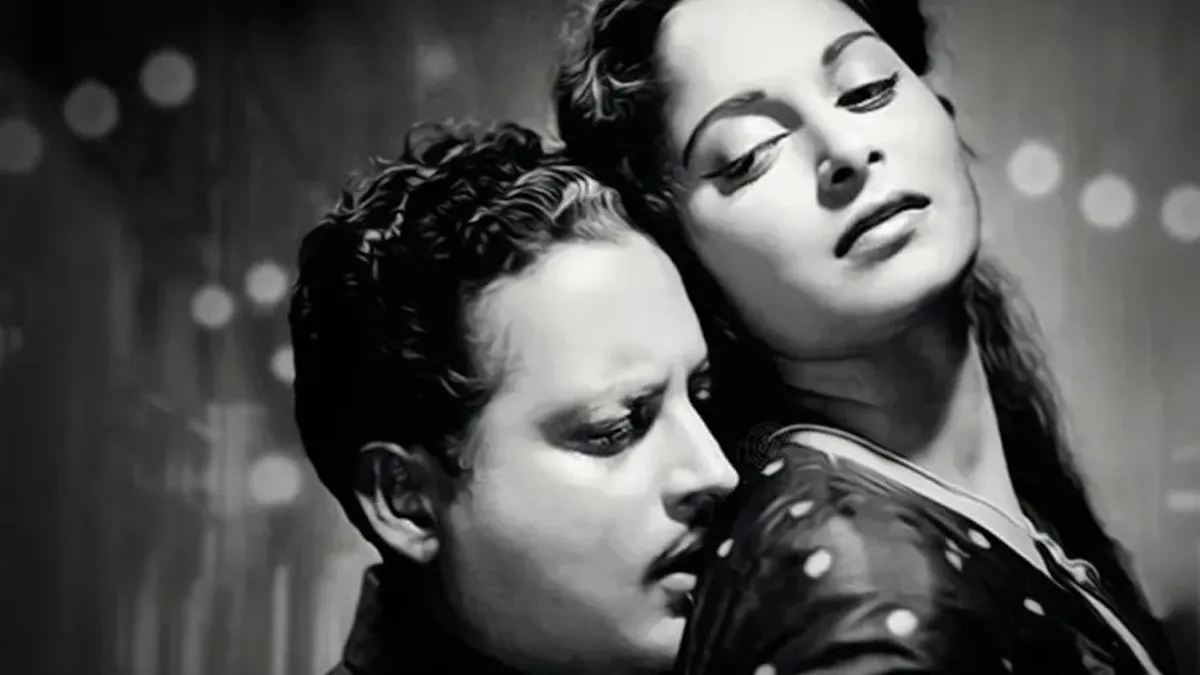
Drama, musical, by Guru Dutt, India, 1957
Thirsty is the heartbreaking story of Vijay, a young poet living in Calcutta who dreams of giving voice to the suffering and injustice of the world through his verses. Idealistic and sensitive, Vijay clashes with a society that despises his art because it is not profitable and does not cater to the tastes of the public. His brothers consider him a failure, the woman he loves leaves him for a marriage of convenience, and his poems are ignored by publishers. Only Gulabo, a prostitute with a pure heart, recognizes the beauty and truth of his words. When a misunderstanding leads everyone to believe Vijay is dead, his name and poetry suddenly become famous, exposing the hypocrisy of those who had previously rejected him.
Watching Thirsty means immersing oneself in a work that goes beyond melodrama, blending poetry, music, and imagery into a profound reflection on the human soul and the value of art. Guru Dutt, director and protagonist, creates one of the most intense and poetic films in world cinema, where black-and-white cinematography, expressive framing, and evocative lyrics produce an atmosphere of poignant melancholy. It is a film about the misunderstanding of the artist, pure love, and society’s hypocrisy, but also a universal critique of materialism and opportunism. Even today, Thirsty moves and provokes thought because it sincerely tells the story of the need to remain true to oneself in a world that measures people’s worth solely by their success.
LANGUAGE: Hindi
SUBTITLES: English, Spanish, French, German, Portuguese
Writing as a Trespass
You have been taught, without anyone ever saying so directly, that certain rooms do not produce literature. The kitchen, the inner courtyard, the space behind the curtain where women adjust their clothing and speak without performance — these places generate gossip, perhaps, or the low murmur of domestic complaint, but not art. Literature arrives from somewhere else, from the study, the battlefield, the courthouse, the philosophical salon. Ismat Chughtai walked into that assumption and did not argue with it. She simply wrote from those rooms as if the prohibition had never existed, and the effect was more destabilizing than any manifesto could have been.
Her Urdu was not the elevated, Persianized register that dominated literary respectability in mid-twentieth century South Asia. It was the language of women who had not been asked to perform their intelligence for an audience — quick, physical, thick with the textures of cloth and sweat and hunger and desire. When she described a body, she used the words that women actually used among themselves, not the decorative circumlocutions that male literary tradition had installed as the proper way to acknowledge that bodies exist. This was not stylistic preference. It was epistemological insurrection. The language of a text determines what can be thought inside it, and Chughtai’s choice of register meant that certain truths, long houseguests in women’s private speech, were suddenly legible on the page.
What made this doubly subversive was that high Urdu literature had always included women as subject matter — as beloved, as mourned, as metaphor for homeland or spiritual yearning. The ghazal tradition is saturated with the feminine. But to be subject matter is precisely not to be the speaking subject, and the distance between those two positions is the entire history of whose interiority gets treated as universal. Chughtai collapsed that distance without announcing she was doing so, which is why the collapse felt so violent to those who noticed it.
In her memoir Kaghazi Hai Pairahan, published in 1994 when she was in her eighties, Chughtai describes her own relationship to writing with a frankness that reads as almost aggressive in the context of how writers typically narrate their vocations. She does not romanticize the act of composition or reach for metaphors of divine inspiration. She describes writing as something she did because she could not stop herself, because the world she observed was constantly exceeding the containers that polite discourse had built for it. She understood, with perfect clarity, that her form and her transgression were not separable things — that the irreverence of her sentences was not incidental to what she was saying but was itself the argument. A writer who chose her subject matter but borrowed the established language would have been making a request. Chughtai was not making a request.
The memoir also reveals something that literary history tends to airbrush: the sheer institutional friction that accompanied her work. Her 1942 short story Lihaaf, which depicted female same-sex desire with a sensory precision that left no interpretive escape route, resulted in an obscenity trial in Lahore in 1944. She faced this not as a martyr but as someone who found the entire proceeding somewhat absurd, which is its own form of defiance — the refusal to grant the prosecuting logic the dignity of her fear. What the trial actually put on trial was the question of who owned the right to name what happens in the hidden rooms of respectable households, and Chughtai’s answer, delivered through her continued presence and her unaltered prose, was that she did.
There is a particular violence that gets directed at writers who refuse the available decorums, and it is not always legal. Sometimes it is the violence of being read as merely scandalous, which is a way of shrinking the work back into the category of disruption rather than allowing it to stand as vision.

The Architecture of Modesty
You have been modest your whole life without ever deciding to be. The decision was made before you arrived — in the architecture of rooms, in the distance between bodies, in the precise angle at which a woman is taught to lower her eyes when a stranger’s gaze becomes too direct. Modesty was handed to you as a virtue, but it was always something else: a set of stage directions for a performance you never auditioned for.
Erving Goffman spent years watching people in ordinary situations — waiting rooms, dinner tables, hospital wards — and in 1959 he published what amounted to a demolition of the idea that social behavior originates from within. In The Presentation of Self in Everyday Life, he argued that the self is not expressed in social life but produced by it, assembled in real time from the cues of whoever is watching. The implication is ruthless: remove the audience, and the performance collapses. What you call your character is largely a response to surveillance. What you call your values are largely habits of being seen.
This is where the usual analysis of modesty stops — at the sociological observation that it is performed rather than felt. But Goffman’s framework, applied to the specific case of women in colonial and postcolonial South Asia, reveals something sharper. The performance of female modesty was not simply social theater. It was load-bearing architecture. The entire structure of domestic respectability, caste honor, family reputation, and male authority rested on a woman’s capacity to execute the correct gestures of restraint in the correct sequence before the correct witnesses. A single failure of performance — a laugh too loud, a glance held a second too long, a body moving through space with too much ease — could bring enormous social consequences down on her head. The audience was not passive. It was punitive.
Ismat Chughtai understood this with the precision of someone who had watched the structure from inside it. What her fiction does — quietly, almost casually — is eliminate the witnesses. Her characters are not observed in the public rooms where the performance is required. They are caught in the intermediate spaces: behind closed doors, under quilts, in the humid privacy of women’s quarters where the gaze of the male authority figure does not reach. And in those spaces, the performance dissolves. Not dramatically. Not with the fanfare of transgression. It simply stops, the way an actor stops performing when the last light in the auditorium goes out.
What remains when the performance stops is not chaos or licentiousness. It is something more unsettling to a moralist: ordinary human desire, boredom, tenderness, hunger, mischief — the full texture of a person who was never consulted about the role she was assigned. Chughtai’s women do not rebel in the way that ideology recognizes as rebellion. They do not write manifestos or refuse marriages in public squares. They inhabit the gap between what they perform and what they actually are, and Chughtai simply holds the lamp steady while you look into that gap.
The scandal of her 1942 short story Lihaaf — the obscenity trial, the charge filed under Section 292 of the Indian Penal Code, the court appearance in Lahore — was officially about explicit content. But the content was not the real provocation. The real provocation was the removal of the audience. The women in that story are not being watched by anyone whose opinion holds social weight. And without that watching, without the enforcement mechanism that modesty requires to function, they become entirely themselves. That was what the court found obscene: not the acts, but the visibility of a selfhood that was supposed to remain invisible, the proof that underneath the performance of restraint there had always been a person who was simply waiting for the lights to go down.
What Freud Missed in Lucknow
You are lying on a takht in the afternoon heat, the ceiling fan rotating too slowly to matter, and every woman in the house is doing exactly what you are doing: nothing, in the most suffocating sense of that word. The courtyard is sealed. The street exists as sound only — a vendor’s cry, cart wheels on stone — and the inner rooms generate their own weather, their own pressure systems, their own catastrophes conducted entirely in glances.
Sigmund Freud published “The Interpretation of Dreams” in 1899 and spent the following decades constructing a universal architecture of the unconscious built almost entirely from Viennese bourgeois patients, their drawing rooms, their fathers. The clinical world he mapped was one of repression operating against individuated desire — the child, the parent, the triangulated guilt. What he never accounted for was a social formation in which desire does not yet possess a subject, because the subject herself has not yet been permitted to cohere. The women in Chughtai’s fiction are not repressing a desire they recognize and fear. They are moving through an erotic atmosphere that precedes naming entirely, a fog of sensation without grammar, and no Western clinical instrument had been calibrated to detect it.
The Lucknowi Muslim household of the early twentieth century operated according to a psychic economy built on proximity without autonomy. Purdah did not simply restrict women from men — it created an intensely feminized interior world where the only available bodies, voices, and gazes were other women’s and the servants who moved between registers of class and intimacy in ways that dissolved the usual borders. A young woman of the household might spend more hours with a maidservant than she would ever spend with her own husband across an entire marriage. The emotional grammar of that proximity — its tenderness, its exploitation, its hunger, its cruelty — constituted a whole relational universe that sociologists writing about the subcontinent in the 1930s and 1940s had neither the vocabulary nor the interest to chart.
Chughtai’s 1941 story “Lihaaf” — The Quilt — moved directly into this territory, and the obscenity trial it generated in Lahore in 1944 revealed precisely how disorienting that move was. The colonial legal framework could charge the story under the Indian Penal Code’s Section 292, but the charge itself exposed the conceptual poverty of that framework: it required the court to name what the story had refused to name, to produce a clinical accusation around a desire the text had deliberately kept inside the phenomenological, inside warmth and shadow and the undulating shape beneath fabric. Chughtai appeared without legal representation and asked the court to specify exactly which passage was obscene. They could not do it. The desire in “Lihaaf” existed in a register that legal and clinical language could only approach by destroying the thing they were trying to describe.
This is not simply a story about censorship or about sexuality. It is a story about epistemological jurisdiction — about which forms of knowledge are authorized to name what happens inside a particular kind of room. The mid-century Indian literary establishment was itself uncomfortable with what Chughtai was doing, not because the content was unfamiliar — the inner lives of purdah households were known to every woman who had lived inside one — but because literature was supposed to translate experience into legibility, and Chughtai kept insisting on preserving an irreducible opacity. She was not illuminating a dark corner for an outside reader. She was insisting that the darkness itself was the subject, and that the outside reader’s demand for illumination was a form of violence.
The Progressive Writers’ Movement, which Chughtai was broadly aligned with, had its own blind spots here. Founded in 1936 under the influence of Marxist frameworks imported largely through European intellectual channels, the movement prioritized class consciousness, anti-colonial resistance, the visible structures of material oppression.
The Progressive Writers' Movement and Its Blind Spots
The All India Progressive Writers’ Association arrived in 1936 with the confidence of a manifesto — Premchand’s presidential address at Lucknow declared that literature must confront hunger, poverty, and colonial subjugation, that the writer’s desk was also a barricade. The movement drew together some of the most vital minds of the subcontinent, and for a brief, charged decade it genuinely felt as though literature might reorganize the moral imagination of a people on the edge of their own independence. Chughtai joined this current naturally, not as a recruit but as someone whose fury about caste, class, and colonial hypocrisy was already scorching the page before any manifesto reached her.
Yet the Association’s radicalism had a fault line running directly through its centre, and it was the fault line of the body. The male leadership could write devastatingly about the zamindari system, about peasants broken by landlords, about the machinery of imperial extraction — but when the question turned to what happened inside a bedroom, or inside a marriage, or between two women on a hot afternoon under a quilt, the language of class solidarity became suddenly thin and evasive. The erotic was not recognized as a political category. Desire was tolerated as metaphor for liberation, never as its own subject demanding equal seriousness.
Saadat Hasan Manto understood this contradiction from a different angle. He was also a member, also prosecuted, also writing about bodies and shame and what colonialism had done to the intimate lives of ordinary people. His 1941 story “Bu” — smell, odor, the rank animal fact of a human body — was treated as obscenity precisely because it refused to elevate the physical into symbol. When both Manto and Chughtai faced obscenity trials in Lahore in 1944, the charge against “Lihaaf” running parallel to charges against several of his stories, the Progressive movement did not mobilize in their defense with the same energy it brought to protecting writers arrested for explicitly anti-colonial content. The distinction the leadership drew, however unconsciously, was clarifying: political imprisonment was martyrdom; prosecution for sexual frankness was something faintly embarrassing, a self-inflicted wound.
What this revealed was that the Association had absorbed, without examining it, the Enlightenment-derived assumption that class and labor constitute the real of history while sex and intimacy constitute the merely personal. This is not an obscure theoretical point — it is the precise mechanism by which progressive movements across the twentieth century repeatedly failed women. Simone de Beauvoir would publish “The Second Sex” in 1949, arguing that woman had been constructed as pure immanence, as body without transcendence, while man claimed history for himself. The Progressive Writers’ movement, for all its anti-imperialism, reproduced this structure internally: the woman writer who stayed within approved political registers was celebrated; the one who insisted on the sovereignty of female interiority and female flesh was managed, redirected, quietly marginalized.
Chughtai was never expelled, never formally condemned by her peers, which makes the dynamic harder to name and therefore more insidious. The pressure on her was the pressure of omission — the stories that were not championed, the discussions that changed subject when she pushed toward sexuality, the implicit hierarchy in which her work was valued for its class commentary and tolerated for everything else. She was most legible to the movement when she wrote about the domestic servant, the impoverished widow, the woman crushed by economic dependence. She was least legible when she insisted that the impoverished widow also had a body, also had hunger that was not only for food, also moved through the world with desires the movement’s vocabulary had no clean place for.
The blind spot was not accidental. It was structural, inherited from the same colonial modernity the movement claimed to oppose, and Chughtai’s insistence on writing through it rather than around it is what makes her presence in that history so permanently unsettling.
A vision curated by a filmmaker, not an algorithm
In this video I explain our vision
Partition Without Nostalgia

You are given a key to a house you no longer own, and you stand at the door not knowing whether grief or relief is the more honest response. That is the position Chughtai refused to let her readers occupy comfortably when she turned to 1947. The Partition of the subcontinent — the surgical severance of a civilization along lines drawn by a British bureaucrat in five weeks — became, almost immediately, a sacred catastrophe in the literary imagination. Poets wept in formal meters. Novelists constructed exodus as epic. The wound was real, but the aestheticization of the wound became its own kind of anesthesia, a way of experiencing horror at a bearable distance, preserved in amber and labeled tragedy so that no one had to ask who had held the knife.
Chughtai would not perform that grief. Her story “Roots,” written in the years following Partition, does something almost obscene by the standards of the era’s literary culture: it refuses elegy. The characters do not stand at train platforms weeping toward a disappearing landscape. They calculate. They negotiate. They decide which neighbor’s property might be available now, which community’s absence creates an opening, which loss can be converted into advantage. The story does not say that people are monstrous — it says something more disturbing, which is that people are ordinary, and that ordinary people, given the right conditions of chaos and sanctioned hatred, will act in ways that serve themselves while calling it survival. The communal violence of 1947 did not erupt from some ancient tribal darkness. It was navigated, managed, and in many cases profited from, by individuals who the day before had shared courtyards and feast days.
What Chughtai was doing in prose, the historian Urvashi Butalia would begin doing in archives and testimony almost half a century later. Butalia’s “The Other Side of Silence,” published in 1998, excavated the testimonies of Partition survivors — specifically women, specifically those whose experiences had been systematically excluded from the nationalist account — and found there not the clean narrative of suffering and resilience that official memory preferred, but something messier: complicity within families, violence performed by neighbors who were known by name, silence maintained not from trauma alone but from shame at what had been witnessed or done. Butalia’s methodology was oral history, academically legitimized by decades of feminist archival practice. Chughtai had arrived at the same territory through fiction, decades earlier, using only the pressure of an unsparing eye.
The difference between the two approaches reveals something about what literature can do that scholarship, for institutional reasons, cannot always afford to do first. A historian in 1950 could not have published what Butalia assembled in 1998 without professional destruction. The oral history movement required the slow accumulation of methodological permission. Fiction, because it is technically about characters who do not exist, can name truths that documentation cannot yet safely carry. Chughtai understood this not as a loophole but as the actual function of the form — the reason the story exists at all, to say what cannot yet be said in the register of fact.
Her refusal of nostalgia was also a refusal of a particular nationalist mythology that needed Partition to be exclusively a wound inflicted from outside. If the violence was purely external — the product of colonial manipulation, of Jinnah, of Mountbatten’s calendar — then no one who remained needed to examine what they had done or not done in those weeks of fire and displacement. Chughtai’s fiction denied that comfort not by offering an alternative political thesis but by simply insisting on what her characters actually did, thought, and wanted. The banality she documented was not a rhetorical strategy. It was an act of witness that the era’s literary culture found, for reasons it could not quite articulate, more threatening than any explicit accusation.
The Reader Chughtai Assumed
You already know what the story is about before you finish the first paragraph. That sensation — of recognition arriving faster than comprehension, of something clicking into place before you have consciously identified what it is — is not accidental in Chughtai’s prose. It is engineered. She wrote toward a reader she had already decided existed: a woman who has been carrying unlabeled knowledge for years, who has never needed protection from her own experience so much as she has needed someone to confirm that the experience was real.
This is the most quietly violent assumption a writer can make about an audience. Most literature written for women in the colonial and early postcolonial Indian context operated on a different premise entirely — that the female reader was a vessel requiring careful filling, a mind to be guided through propriety toward correct feeling. The domestic reform literature of the late nineteenth century, the nationalist fiction that positioned women as symbolic carriers of cultural purity, even the well-intentioned progressive writing that sought to “raise awareness” about women’s suffering — all of it shared a fundamental condescension. It assumed the reader did not yet know. Chughtai assumed the opposite, and the difference is the entire distance between literature as instruction and literature as recognition.
Roland Barthes, writing in S/Z in 1970, drew a distinction that cuts directly into what Chughtai was doing decades before Barthes found the language for it. The readerly text is one that positions its reader as passive consumer, guided through predetermined meaning toward a fixed destination. The writerly text refuses that passivity — it is incomplete by design, porous, demanding that the reader bring their own knowledge, their own unsanctioned experience, to fill the gaps the text deliberately leaves open. Chughtai’s fiction is writerly in this precise technical sense, but with a political charge Barthes’s framework, developed from Balzac and French literary tradition, does not fully anticipate. When a French male theorist describes the writerly text as intellectually demanding, he means something comparatively neutral. When a woman writing in Urdu in 1940s India constructs a text that only functions if the female reader supplies the missing knowledge from her own suppressed inner life, that is not a stylistic preference. It is a declaration that the suppressed inner life exists, has always existed, and is already sufficient to complete the work.
The famous ambiguity of “Lihaaf” — what exactly is happening beneath that quilt, what the child narrator understands versus what she reports, what the adult female reader is expected to supply — is not evasion. It is Chughtai refusing to explain to women what women already know. The obscenity charges brought against the story in 1944 were, in this light, a misreading so accurate it becomes almost clarifying: the prosecution understood perfectly that something was being communicated, but they attributed the danger to the content rather than to the assumed reader. The real provocation was not the quilt. It was the presumption that a woman reading about what happens beneath it would not need the matter spelled out.
There is a specific exhaustion Chughtai’s prose seems to address — the fatigue of being perpetually positioned as someone who must be educated about herself, informed about her own desires, guided toward understanding her own body through the lens of whoever holds the pen. Her implied reader has been managing her own knowledge in silence for a long time. She does not need a tour guide. She needs, perhaps, only a text willing to meet her where she already is, rather than where the culture has insisted she must remain.
What this produces in practice is a reader who finishes Chughtai’s stories feeling not enlarged but confirmed — and then, a moment later, understanding how much had been required of them to reach that confirmation, how much they had contributed without being asked permission.
Shame as Infrastructure
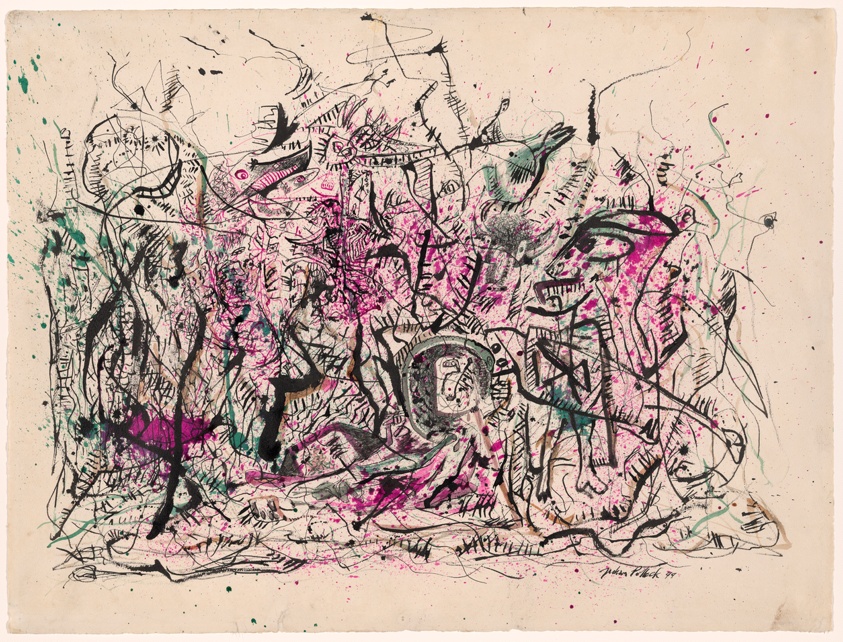
You are sitting in a room where everyone knows something unspeakable, and the architecture of that room — the arrangement of chairs, the direction of windows, the careful distance between bodies — has been designed precisely so that the unspeakable thing never needs to be named. This is not politeness. This is governance.
Silvan Tomkins, working through his monumental four-volume Affect Imagery Consciousness between 1962 and 1992, argued something that most social theorists were not ready to absorb: shame is not a secondary emotion, not a punishment administered after the fact of transgression. It is a primary affect, wired into the biological organism at the same depth as interest and enjoyment, and its function is to interrupt — to collapse the face, drop the gaze, fold the self inward at the precise moment when desire or curiosity or joy moves toward something the social order has designated as forbidden territory. Shame does not follow the breaking of a rule. It fires before the rule is even consciously registered, which is what makes it so extraordinarily efficient as a technology of control. You cannot argue with it. You cannot reason your way out of it in the moment it arrives, because it arrives faster than reason.
What this means, in the material conditions of the households Chughtai spent her entire career mapping, is that the women she wrote about were not simply prevented from speaking certain things. They were neurologically trained, through repetition and social reinforcement beginning in early childhood, to experience the impulse toward that speech as a kind of internal catastrophe — a sudden heat, a contraction, a wish to disappear. The desire and the punishment for the desire arrived as a single sensation. This is a more total form of control than any law, because laws require enforcers, courts, visible mechanisms of coercion. Shame requires only a body that has already internalized the architecture, which then carries the prison with it into every room it enters.
Chughtai’s fiction kept finding the hairline fractures in that architecture — the moment a servant girl notices something in herself she has no language for, the moment a wife reaches toward pleasure with one hand and withdraws with the other, the moment female friendship tips into a territory that the household’s spatial arrangements were specifically designed to prevent. What made the obscenity trials of 1944 so revealing was not the prudishness of the judges but the accuracy of the charge: the prosecutors understood, at some level, that she was not merely describing transgression but demonstrating that the wall could be touched, that touching it did not cause the ceiling to fall. That demonstration was genuinely dangerous, because shame as infrastructure depends on the belief that the wall is load-bearing, that removing it would bring everything down. Once a sufficient number of people have read a text that shows them the wall being touched without catastrophe, the affect loses some of its automaticity. The firing speed slows. A gap opens between the impulse and the collapse.
This is why her body of work, across four decades and dozens of stories, accumulates into something more than a literary achievement. Each successive story was another point of contact with the same architecture, and each contact was a small demonstration that the building could be examined from the inside without the roof collapsing on the examiner. She was not writing manifestos or issuing instructions. She was simply placing her characters in rooms and letting them be honest about what they felt, which in the context of that architecture was the most radical act available. The honesty itself was the argument — not an argument you could refute by citing tradition or scripture or decency, but one that had already bypassed the verbal centres entirely and landed in the body of the reader before they had time to raise their defences, which is exactly where Chughtai always aimed.
✍️ Voices That Defied Silence: Literature and Social Transgression
Ismat Chughtai’s fearless writing broke through the suffocating norms of her time, exposing the hidden lives of women with sharp wit and unflinching honesty. Her work belongs to a broader tradition of writers who used literature as a weapon against conformity, hypocrisy, and oppression. These articles explore kindred spirits who challenged the boundaries of what could be written, thought, and felt.
Virginia Woolf: Life and Works
Virginia Woolf stands as one of the most radical voices in the history of literature, transforming the novel into an instrument for exploring female interiority and the politics of creativity. Her lifelong interrogation of how patriarchal society silences and marginalizes women resonates powerfully with Chughtai’s own confrontations with censorship and moral policing. To read Woolf alongside Chughtai is to trace a shared current of literary rebellion across cultures and continents.
GO TO THE SELECTION: Virginia Woolf: Life and Works
Woolf’s A Room of One’s Own: Feminism and Writing
In A Room of One's Own, Virginia Woolf argues that financial independence and private space are preconditions for women’s artistic expression — a thesis that cuts to the heart of why voices like Chughtai’s were so difficult to sustain and so necessary to protect. Woolf dissects the institutional and domestic structures that have historically suppressed female genius with forensic elegance. This foundational feminist essay remains essential reading for anyone seeking to understand the conditions under which women’s literature has flourished or been suppressed.
GO TO THE SELECTION: Woolf’s A Room of One’s Own: Feminism and Writing
Natalia Ginzburg: Life and Works
Natalia Ginzburg carved out her place in Italian literature by writing about the intimate, the domestic, and the quietly subversive with a clarity that unsettled bourgeois expectations. Like Chughtai, she understood that the domestic sphere was not a refuge from politics but its very battleground, and her prose captured the tensions of gender, family, and identity with deceptive simplicity. Her life and work offer a compelling parallel to Chughtai’s journey as a woman writer navigating hostile literary and social institutions.
GO TO THE SELECTION: Natalia Ginzburg: Life and Works
Luigi Pirandello: Life and Works
Luigi Pirandello‘s obsessive exploration of identity, social masks, and the performance of selfhood speaks directly to the themes Chughtai raised in her portrayal of women trapped by roles assigned to them by family, religion, and society. His theatrical and narrative experiments dismantled the illusion of a fixed, coherent self at a time when such certainties were culturally enforced with considerable violence. Understanding Pirandello deepens our appreciation of how early twentieth-century literature across different traditions was grappling with the fractured nature of modern subjectivity.
GO TO THE SELECTION: Luigi Pirandello: Life and Works
Discover Rebellious Storytelling on Indiecinema
If these voices of literary defiance have stirred something in you, Indiecinema streaming is where that spirit lives on screen. Explore our curated selection of independent and art-house films that carry the same courage — stories told from the margins, about bodies, desire, and the politics of silence. Join us and let cinema continue where literature left off.
👉 EXPLORE THE CATALOG: Watch Indie Films in Streaming
A vision curated by a filmmaker, not an algorithm
In this video I explain our vision