
Detroit's Dying Machines
You are standing in a warehouse on the east side of Detroit, 1988, and the floor beneath you is vibrating at a frequency that feels less like music and more like a structural warning. The building used to make something. You can tell by the grease shadows on the concrete, the ghost outlines of machinery bolted down and then unbolted and shipped somewhere cheaper. The crowd around you is almost entirely Black, almost entirely young, and moving with a kind of urgency that has nothing recreational about it. This is not escapism. This is people dancing inside the sound of their own abandonment.

Between 1978 and 1988, Detroit lost more than two hundred thousand manufacturing jobs. The automation wave that swept through the auto industry did not merely eliminate work — it surgically removed the economic spine of a community that had migrated north over two generations precisely because the factories promised wages that the American South never would. General Motors, Ford, Chrysler: these were not just employers. They were the architecture of Black middle-class life in a city that had never been particularly generous with other entry points. When the robotic assembly lines arrived and the plants hollowed out, what remained was a city of extraordinary technical knowledge and zero institutional use for it.
Juan Atkins had grown up absorbing Alvin Toffler’s “The Third Wave,” published in 1980, a text that described the collision between industrial civilization and the information age with the cold enthusiasm of someone who would not personally be crushed by it. Atkins heard something different in Toffler’s language — not a promise but a diagnosis. He and his high school collaborator Richard Davis began making music under the name Cybotron, releasing “Alleys of Your Mind” in 1981 on their own Deep Space label, and the track did not sound like anything on American radio because it was not addressed to American radio. It was addressed to the machine itself, to the abstraction of labor, to the city as a system that had stopped pretending to need human beings.
Kevin Saunderson grew up in New York but arrived in Detroit in time to absorb its specific gravity, and Derrick May came with a mind that processed musical structure the way an engineer processes load-bearing stress. The three of them, who had met at Belleville High School in a suburb that was itself a kind of buffer zone between white flight and urban collapse, developed what later journalists would scramble to label as techno — a word that initially meant almost nothing and eventually meant everything. May’s 1987 track “Strings of Life,” released on Transmat, contained no lyrics, no vocal hook, no concession to the conventions of pop seduction. It was built from a piano riff that sounded simultaneously euphoric and mechanical, looping over a drum machine pattern that did not swing in the way that Black American music had been expected to swing since before any of them were born. That refusal was not accidental.
What Atkins, May, and Saunderson understood — and what most of the critical apparatus surrounding their work has consistently underweighted — is that the music was not a metaphor for deindustrialization. It was deindustrialization rendered as aesthetic experience. The Roland TR-909, the TB-303, the Oberheim DMX: these were instruments that had been designed for professional studios and had failed commercially, flooding the second-hand market at prices a dispossessed working-class kid could actually reach. The machines the auto industry no longer wanted had produced machines that musicians could now afford. Detroit’s economic wreckage had accidentally created its own instrument shop.
The Philosophy of the Beat
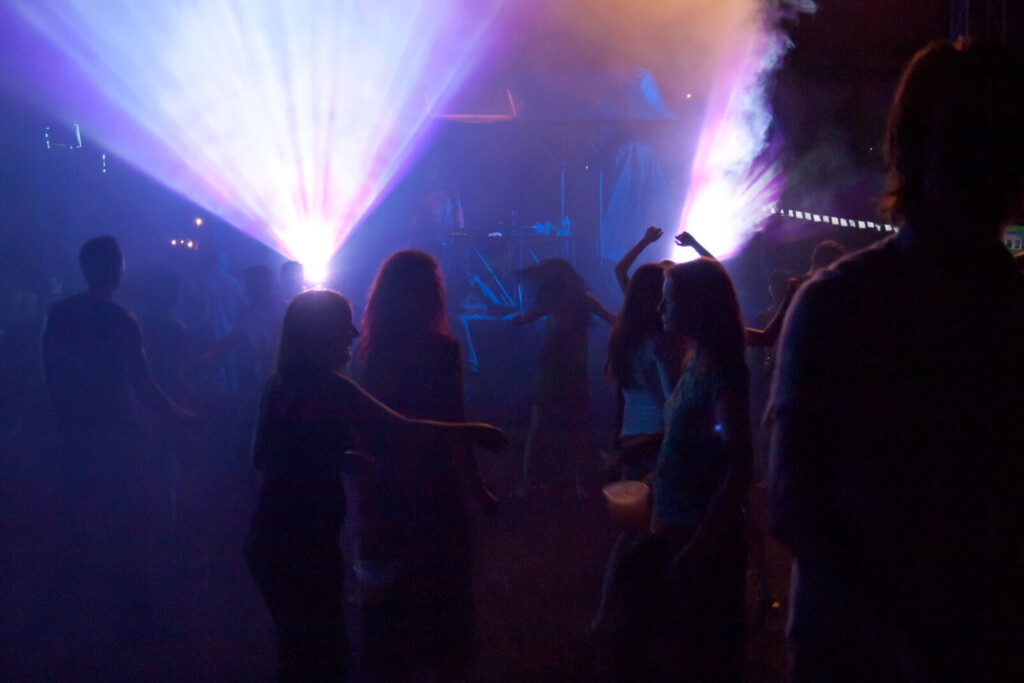
You are standing in a room where the kick drum arrives every 130 milliseconds, and somewhere around the fortieth repetition your sense of where you end and the sound begins starts to dissolve at the edges. This is not metaphor. Neuroscientist Stefan Koelsch documented in 2011 that sustained rhythmic entrainment alters limbic and paralimbic activity in ways that temporarily suspend the brain’s default mode network — the very circuitry responsible for constructing narrative selfhood. Techno does not ask you to lose yourself. It performs the operation without your consent.
Kodwo Eshun understood this not as a side effect but as the entire point. In More Brilliant Than the Sun, published in 1998, he proposed that Black sonic culture had always been engaged in what he called sonic fiction — not the production of music to accompany an existing reality, but the engineering of alternate sensory worlds that treated the future as a territory to be colonized ahead of schedule. Where mainstream critical theory was still asking whether Black artists had “access” to modernity, Eshun inverted the question entirely: these artists had already left modernity behind and were transmitting back from somewhere else. The machine rhythm of techno, in this framework, was not an imitation of industrial labor — it was its deliberate exorcism, a refusal to let the body be timed by capital’s clock by introducing a counter-temporality so insistent it overrides the original.
This matters historically because Detroit in the late 1970s and early 1980s was not merely economically depressed. It was a city experiencing what urban theorist Thomas Sugrue, in The Origins of the Urban Crisis published in 1996, described as the deliberate and racially structured dismantling of an entire working-class ecosystem. Between 1948 and 1967, Detroit lost 130,000 manufacturing jobs. The people left behind were not collateral damage — they were the intended remainder, sorted and abandoned by decisions made in boardrooms and city planning offices decades earlier. When Juan Atkins first heard Alvin Toffler’s concept of the “techno rebels” from The Third Wave in 1980, he did not hear an optimistic prediction. He heard a description of people who had already been expelled from the first wave, the second wave, and every wave before it.
Afrofuturism as a critical framework, named by Mark Dery in a 1994 essay and later radicalized by Eshun himself, proposed that Black culture had been living in the future — in the sense of precarity, displacement, and technological estrangement — since before the word “futurism” existed. The middle passage was, among its infinite horrors, a forced encounter with the inhuman logistics of industrial transport. The slave ship was a machine before the factory was. What Atkins, Derrick May, and Kevin Saunderson built in their bedrooms and living rooms with Roland synthesizers and second-hand drum machines was not nostalgia for an African past or aspiration toward an integrated American present. It was the construction of a sonic space that the present had not yet authorized and could not therefore contain or co-opt.
The philosophical weight of repetition in this context is almost unbearable when you sit with it properly. G.W.F. Hegel, in the Phenomenology of Spirit, described the repetitive labor of the bondsman as the mechanism through which consciousness first encounters itself as separate from the world — a selfhood born from alienated work. Techno takes that same repetition and strips out the product, the overseer, the clock, and the wage. What remains is the rhythm itself, cycling without resolution, pointing toward nothing, building toward no climax that the market can sell back to you.

Berlin and the Politics of the Empty Room
You are standing at the bottom of a staircase that leads into a basement that used to hold something classified, and the music coming up through the floor is so physical it reorganizes your breathing before you reach the last step. This is 1991, and the building above you was, within living memory, a surveillance state’s infrastructure. The Tresor club opens in the vaults of the former Wertheim department store on Leipziger Strasse, a space that East German security services had used for their own purposes, and the historical irony is so dense it becomes invisible — which is precisely how ideology prefers to operate.
Reunified Berlin was, in the early 1990s, a city structurally designed for appropriation. Entire districts had been emptied by division, by exodus, by the peculiar urban wound of a wall that had made whole neighborhoods economically irrelevant. When the wall fell in November 1989, it left behind not a blank slate but a scored and pitted surface — buildings no one claimed, warehouses no one heated, bureaucratic spaces whose original tenants had dissolved overnight. Into that vacuum moved a culture that had itself been shaped by vacancy: Detroit’s techno had been forged in the negative space left by industrial collapse, and Berlin received it as though the two ruins recognized each other across an ocean.
What happened in that recognition, however, was not a simple translation. The Detroit originators — Juan Atkins, whose 1981 project Cybotron had already theorized the machine-human threshold; Derrick May, who described his own music in 1988 as “George Clinton and Kraftwerk stuck in an elevator”; Kevin Saunderson, whose releases under the Inner City alias reached pop chart territory without ever softening the conceptual architecture — these were Black American men who had built a futurist art form partly as a response to being systematically excluded from the futures their country advertised. Techno was not incidentally Black. Its philosophical structure, its refusal of the organic, its insistence on the synthesized and the posthuman, was inseparable from a community’s lived experience of being treated as something less than fully human by the dominant culture. The machine was not an escape from the body. It was a response to what had been done to specific bodies.
European reception in the early 1990s performed a category error so thoroughly that it became the category. German electronic culture, with its own legitimate lineage running from Kraftwerk’s 1974 Autobahn through the kosmische movement, absorbed techno into a narrative of universal technological minimalism — raceless, historyless, a pure formal proposition about rhythm and time. When Tresor’s associated label released records and when clubs across Berlin codified an aesthetic, the acknowledgment of origins became optional, then occasional, then archaeological. By the mid-1990s, a music created as a specific Black American response to specific American conditions was being discussed in European critical writing primarily through the vocabulary of German industrial heritage and continental philosophy. The cost of this is not merely symbolic credit — it is the structural cost of having a community’s intellectual and artistic production extracted, repackaged, and returned to global markets in a form that no longer carries the address of the sender.
Sociologist Sarah Thornton’s 1995 work Club Cultures examined how subcultural capital is produced and distributed, but even that rigorous account of taste hierarchies in dance music struggled to fully name how racial erasure functions as a prestige mechanism rather than a simple oversight. When the origin becomes invisible, the copy acquires the authority of the original, and the people who built the original are left making historical claims that sound, to those who benefit from the erasure, like grievances rather than facts.
The Underground as Market Mechanism

You arrive at a door with no sign. A bouncer who does not speak looks through you rather than at you, and in that silence you understand that what is being tested is not your identity but your literacy — whether you have absorbed enough of an unwritten code to deserve passage into a room that defines itself by who it refuses. The ritual feels like the opposite of commerce. It feels like initiation, like something genuinely earned. That feeling is precisely the product being sold.
Sarah Thornton spent the early 1990s inside British club culture taking notes, and what she published in 1995 as Club Cultures remains one of the most uncomfortable mirrors ever held up to anyone who has ever believed their taste placed them outside the logic of the market. Borrowing from Pierre Bourdieu’s work on distinction, she developed the concept of subcultural capital — the accumulation of insider knowledge, rare records, obscure references, and the cultivated ability to appear indifferent to mainstream approval. The crucial insight was not merely that this capital existed, but that it functioned. It converted. It could be exchanged for status, for access, for the intangible currency of belonging that underground scenes treat as their most sacred resource.
What techno built in Detroit and Berlin was not simply a sound but an economy of scarcity dressed as philosophy. The warehouse had no sign because signs are for places that need customers. The no-phone policy does not protect the experience from documentation — it protects the brand from oversaturation. When Berghain began enforcing its door selection in the early 2000s, the rejection rate became its own form of advertisement, a mechanism by which the club produced desire in the people it turned away and exclusivity in the people it admitted. The queue outside is not incidental to the club’s identity; it is its most effective marketing surface, visible to thousands of people who will never enter and who will, for that precise reason, speak about the place for years.
This machinery depends on a story that precedes every individual encounter with it — the story that underground culture is where authenticity survives, sheltered from the contamination of the commercial world. Thornton identified how this narrative is not a spontaneous expression of subcultural values but an active production, maintained through media channels including the very niche press and radio that subcultural participants claim to distrust. The myth of the underground requires constant circulation to remain legible, which means it requires exactly the infrastructure of publicity it claims to reject. Every article describing a club as the last real place is already an act of colonization wearing the clothes of preservation.
What makes this structure durable is that it generates genuine experiences inside a false premise. The music at four in the morning, the physical dissolution of bodies in a shared dark, the temporary suspension of the social identities people carry through their daylight hours — none of this is manufactured cynicism. People feel real things in these rooms. But the architecture that frames those feelings, the selection at the door, the cultivated obscurity, the pride in not explaining oneself to outsiders, reproduces with extraordinary fidelity the hierarchies of distinction that the space claims to have escaped. The liberation circulates only among those already fluent enough in the codes of liberation to perform it correctly.
By 2013, the global electronic music industry was valued at approximately four billion dollars annually, a figure that would nearly triple within a decade. Underground culture did not survive despite this expansion; in many cases it provided the symbolic infrastructure that made the expansion legible and desirable. The rawness, the concrete walls, the deliberate ugliness — these became the aesthetic vocabulary through which a massively capitalized entertainment sector communicated the idea of authenticity to a consumer base hungry enough for the real that it would pay festival ticket prices to stand inside a simulation of a basement in 1988.
Time, Ritual, and the Body That Forgets Itself

You have been standing for six hours and you no longer know exactly when you arrived, which is not confusion but something closer to the point.
The body submitted to sustained rhythmic input at 130 beats per minute undergoes measurable neurological reorganization. Erik Kandel’s research on synaptic plasticity, developed across decades and crystallized in his 2006 work In Search of Memory, demonstrates that repetitive sensory stimulation does not merely occupy the nervous system — it restructures it, consolidating certain memory pathways while temporarily suppressing the prefrontal cortical activity responsible for self-monitoring and narrative identity. The brain, in other words, begins to release its own administrative grip. What feels like surrender is partly biochemistry, and what feels like transcendence is partly the silence left behind when the part of you that narrates your own life goes quiet.
Victor Turner, working among the Ndembu people of Zambia in the 1960s and publishing his findings in The Ritual Process in 1969, identified a category of human experience he called liminality — the threshold state in which a person has left one social identity behind and not yet assumed another. It is the space between, the passage through, the moment when the initiate is neither what they were nor what they will become. Turner observed that this condition was universally produced through communal physical endurance: fasting, sleeplessness, sustained movement, darkness, disorientation. The remarkable and uncomfortable fact is that the contemporary dancefloor reproduces these conditions with almost clinical precision, not through conscious design but through accumulated cultural instinct reaching back further than electronic music itself.
What distinguishes the techno ritual from its ancestral forms is the absence of explicit social reintegration. Traditional liminal experiences were contained within a structure that delivered the participant back into the community transformed but re-anchored — the initiate emerged with a new role, a new name, a renewed position within a collective meaning system. The warehouse at six in the morning offers no such architecture. The dissolution is real; the reconstruction is improvised. Sociologist Richard Sennett, in The Fall of Public Man published in 1977, argued that modern urban life had already evacuated the shared symbolic frameworks that once allowed individuals to locate themselves within a larger intelligible order. The dancefloor arrives into that vacancy and fills it temporarily, intensely, without promising anything about Monday.
This is where the question becomes genuinely difficult to hold. If the self that dissolves on the dancefloor is partially a social construction — the accumulated performance of identity demanded by competitive professional life, by digital self-presentation, by the exhausting maintenance of a coherent personal brand — then its dissolution is not mere escapism but a form of psychological hygiene, a controlled demolition of structures that were themselves artificial. But there is an equally serious possibility: that the repetition does not dissolve the constructed self so much as rehearse its dissolution, providing just enough relief to make the reconstruction tolerable, and therefore making the entire apparatus more sustainable rather than less. The dancer returns. The structure holds. The catharsis becomes a pressure valve rather than a rupture.
Anthropologist Michael Taussig, writing about mimesis and alterity in 1993, suggested that the act of copying a sensation or a state can produce genuine contact with what is being copied — that the rehearsal and the real are not always separable categories. If that is true of techno, then the question of whether the experience is authentic liberation or sophisticated containment may be the wrong question entirely, because it assumes the two outcomes are mutually exclusive, when the history of every ritual form humanity has ever produced suggests they were always, structurally, both at once.
A vision curated by a filmmaker, not an algorithm
In this video I explain our vision
🎛️ Sound, Rebellion, and the Underground Pulse
Techno music did not emerge from studios or record labels — it was born in basements, warehouses, and the margins of industrial cities. To understand its power, we must trace the deeper currents of sound, consciousness, and cultural resistance that run beneath its relentless beats.
New York Underground of the 1980s: Art and Culture
The New York underground of the 1980s was a crucible of radical creativity where art, music, and social marginality collided in explosive ways. Like the Detroit techno scene emerging in parallel, this world thrived in abandoned spaces and defied mainstream cultural gatekeepers. Understanding this underground matrix is essential to grasping how electronic music became a vehicle for both aesthetic innovation and political defiance.
GO TO THE SELECTION: New York Underground of the 1980s: Art and Culture
Music as an Awakening of the Unconscious
Music has long been understood as a force capable of bypassing rational consciousness and reaching the deeper layers of the psyche. Techno, with its hypnotic repetition and overwhelming physicality, operates precisely on this level — dissolving the ego and awakening something primal. This article explores the theoretical and psychological dimensions of music as a trigger for unconscious experience.
GO TO THE SELECTION: Music as an Awakening of the Unconscious
Michel Foucault and Drugs: Pleasure and Power
Michel Foucault’s reflections on drugs, pleasure, and power offer an unexpected but illuminating lens through which to examine the rave and techno culture. The dance floor, like the spaces Foucault analyzed, becomes a site where bodies escape normative control and reclaim pleasure as a form of resistance. This piece traces how desire and power intersect in the pursuit of altered states.
GO TO THE SELECTION: Michel Foucault and Drugs: Pleasure and Power
Situationist Psychogeography: The City as Lived Space
Situationist psychogeography reimagined the city as a terrain to be drifted through, disrupted, and reclaimed from the logic of capital. Techno culture inherited this radical geography, transforming forgotten urban spaces — warehouses, tunnels, parking lots — into temporary autonomous zones of sound and community. This article reconnects the theory of lived space to the practices of underground culture.
GO TO THE SELECTION: Situationist Psychogeography: The City as Lived Space
Explore the Cinema of the Underground on Indiecinema
If these cultural currents have sparked your curiosity, Indiecinema is the streaming platform where independent and avant-garde cinema keeps the underground spirit alive. Discover films that pulse with the same energy as the music, spaces, and ideas explored here — raw, uncompromising, and free from the mainstream.
👉 EXPLORE THE CATALOG: Watch Indie Films in Streaming
A vision curated by a filmmaker, not an algorithm
In this video I explain our vision

