
The Body That Wants
You pour the glass slowly, or you light it, or you swallow it with that particular quality of attention — not distracted, not compulsive, but deliberate. There is something in the gesture that belongs entirely to you, or so it feels. The body has made its decision slightly before the mind confirmed it, the way the body always does with things that matter. A small, private sovereignty. A door that opens only inward.

And yet the moment you reach for it, something else is already in the room with you. Not guilt, not yet — maybe not ever, depending on who you are, where you were born, what god your grandparents prayed to. But something older than guilt. A structure. A gaze that precedes any actual observer. The gesture is yours, but the meaning of the gesture was decided long before you were born, by people who never knew you, in institutions that will outlast you, through a chain of moral pronouncements so ancient and so thoroughly absorbed that they feel, by now, like biology.
Michel Foucault spent the better part of his intellectual life trying to name this structure. Not the specific laws, not the particular punishments, but the deeper architecture: the way power operates not through direct force but through the production of knowledge about bodies, desires, and what counts as health, deviance, normality, danger. In Discipline and Punish, published in 1975, he showed how modern societies moved from punishing the body through spectacular violence to something far more efficient — a system that makes the body discipline itself, internalize the warden, carry the prison everywhere it goes. By The History of Sexuality, the first volume of which appeared in 1976, he had turned that analysis toward desire itself, arguing that the modern obsession with cataloguing, confessing, and pathologizing sexual and bodily experience was not repression but its opposite: an incitement, a production of discourse that made the body legible and therefore governable.
Drugs fit this architecture with an almost uncomfortable precision. The substance you reach for has been classified, scheduled, named, studied, prohibited, permitted, medicalized, criminalized, and moralized across centuries of institutional effort. The opium wars of the nineteenth century were not, at their root, about morality — they were about market access and colonial control, the British East India Company flooding Chinese territory with Bengali opium to correct a trade imbalance, a commercial operation that killed hundreds of thousands and then generated, in response, the first international drug prohibition treaties of the early twentieth century, the 1912 Hague Convention, the 1925 Geneva agreements, each one encoding particular substances as civilizational threats. The chemistry of the molecule was never the point. The politics of who used it, who sold it, who was imagined to lose control under its influence — that was always the point.
What Foucault understood, and what is still almost impossible to hold in mind for more than a few seconds without it slipping back into common sense, is that the categories we use to think about drug use — addiction, recreation, self-medication, abuse, pleasure — are not neutral descriptions of existing realities. They are productions. They emerged from specific historical conjunctures, were shaped by specific interests, and they do work in the world that goes far beyond describing experience. They produce subjects. They tell you what kind of person you are based on what you reach for and why.
So when the hand moves toward the glass, the flame, the pill, it moves through all of that. Through the colonial archive. Through the psychiatric manual. Through the legal code. Through the particular history of your body’s kind of body — its class, its race, its geography — and what the state has decided that kind of body is permitted to feel.
The gesture is still yours. But it was never only yours.
Return to Planet Underground

Drama, Thriller, by Gideon Homes, Netherlands, 2025.
A former underground techno DJ working in a large and famous law firm delves into the dark side of society. With one eye on the past and one on the future, he stirs up the ashes of the true underground. The demand of society to function superficially and deliver top performance increasingly clashes with the protagonist's questioning of his own life reality and the values of his past. After being employed for almost six years and being a respected employee, Tyrel falls ill. On top of that, he witnesses a fraud within the company and asks to leave. But the illness creates a complex situation in which his employer starts playing a game of chess with Tyrel.
In "Return To Planet Underground", director Gideon Homes gives the audience a gripping insight into the Dutch underground techno scene, offering a gripping drama set in a dark world, full of intense moments and touching human tragedies. This film is not just a visual feast; it is a gripping exploration that immerses viewers in the lives of its protagonists. Set to a backdrop of thumping techno beats, "Return To Planet Underground" takes audiences on a rollercoaster ride through the highs and lows of human desires, drug-fueled escapades, societal pressures and the pursuit of perfectionism. Drawing inspiration from iconic films such as Trainspotting, Berlin Calling and Human Traffic, Gideon Homes' work stands out for its unique stylistic devices and unconventional storylines. Based on real events and personal experiences, "Return To Planet Underground" faced numerous lawsuits before finally conquering audiences around the world. Prepare yourself for an immersive dive into a world where music, morality and the human spirit collide.
LANGUAGE: English, Dutch
SUBTITLES: Spanish, French, German, Portuguese
Foucault’s Toolbox: Power Is Not a Thing, It Is a Relation
There is a moment, somewhere in your twenties or thirties, when you realize that the rules you live by were never handed to you as rules. They arrived as facts. As obvious truths. As the natural shape of things. You did not decide that certain substances alter consciousness in ways that are criminal while others alter it in ways that are pharmaceutical. You did not vote on which pleasures belong to medicine and which belong to deviance. You simply absorbed the distinction, the way you absorbed grammar, without noticing you were learning a language at all.
This is precisely the territory Foucault spent his life mapping. Not the laws written in books, but the laws written into bodies. Not the prohibitions announced from podiums, but the far more powerful prohibitions that feel like common sense.
What he discovered, or rather excavated, is that power in the modern world operates less through brute force than through the production of knowledge itself. By 1975, when he published Discipline and Punish, Foucault had traced how Western societies gradually replaced the spectacle of public punishment — the tortured body on the scaffold, punishment as theater — with something far more efficient and far more total: the surveillance of the interior. Prisons, schools, hospitals, psychiatric institutions. The body is not broken; it is observed, classified, normalized. The goal is not pain but docility. A body that monitors itself. A subject who has internalized the gaze so thoroughly that the warden can leave the room.
A year later, with the first volume of The History of Sexuality, Foucault extended this argument into the most intimate territory of all. Sex — which we imagine as the site of our most private freedom, the place where we escape power — turned out to be precisely where power was most productive. Victorian Europe, far from repressing sexuality into silence, was producing an enormous proliferation of discourse about it. Doctors, priests, educators, jurists, psychiatrists: everyone was speaking obsessively about sex, classifying its forms, naming its deviations, separating the normal from the pathological. The repressive hypothesis, as Foucault called it, was itself a myth. Power does not say no. Power says: here is what you are. Here is the name for what you do. Now live inside that name.
Biopower is the concept he coined to describe this modern form of governance, and it is worth pausing on the word’s precision. Bio. Life itself. The modern state is not primarily interested in your death — the sovereign’s ancient prerogative was to kill. The modern state is interested in your life. In managing it, optimizing it, extending it, shaping it toward productive ends. Bodies that reproduce usefully. Populations that remain healthy enough to work, to consume, to generate value. This is why the state cares so intensely about what you eat, what you smoke, what you inject, what you swallow. Not because it hates pleasure. Because it has a competing interest in your body.
What this framework makes visible — and this is where theory stops being theory and becomes almost uncomfortably concrete — is that the drug war is never simply about harm. If it were about harm, alcohol would have remained illegal after 1933, when Prohibition ended in the United States. If it were about harm, pharmaceutical companies would not hold patents on synthetic opioids that have killed hundreds of thousands of Americans since the late 1990s. If it were about harm, the scheduling of substances under the Controlled Substances Act of 1970 would correlate with their measurable danger. It does not.
What it correlates with, consistently, is who uses them. Which communities. Which bodies. Which pleasures threaten which orders. Power does not forbid pleasure arbitrarily. It routes pleasure, names it, classifies some of its forms as freedom and others as pathology. And once a body has been named pathological, everything that follows — the arrest, the clinic, the treatment program — appears not as punishment but as care.

The Invention of the Addict
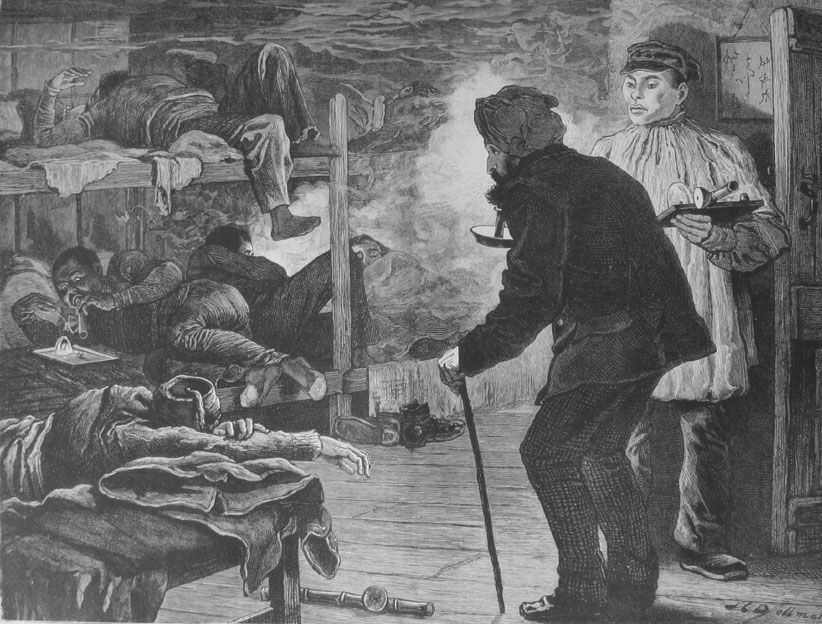
Before the word existed, the experience existed. People had always consumed substances that altered their perception, dulled their pain, sharpened their hunger, loosened the grip of time. Opium moved through the ancient world with the same casual commerce as grain and cloth. Coca leaves were chewed in the Andes for centuries before any European eye landed on the practice with alarm. Alcohol has been fermenting in human settlements for at least nine thousand years. None of this was invisible. What was absent was not the behavior — it was the category. The addict, as a specific human type, as a clinical specimen, as a moral problem requiring institutional management, did not exist until the nineteenth century invented him.
This is not a metaphor. David Courtwright, in Forces of Habit published in 2001, traces with meticulous historical precision how the convergence of industrial capitalism, global trade networks, and the pharmaceutical revolution of the 1800s produced not just wider drug circulation but a new apparatus for seeing drug users in a particular way. The scale of consumption increased, yes, but what truly shifted was the interpretive framework imposed upon it. Suddenly there was a subject to be named, classified, and managed. And once a category exists, people begin to fill it — not because they were waiting to be discovered, but because the category itself shapes what becomes visible and what kind of help or punishment follows.
Howard Becker understood this mechanism with clinical clarity. In Outsiders, published in 1963, he described deviance not as an intrinsic quality of any act but as something produced through the interaction between a behavior and a social audience equipped with rules and the power to enforce them. Deviance is assigned, not found. The marijuana smoker in mid-century America was not objectively more dangerous than the gin drinker beside him. What changed was the institutional attention directed at one and not the other, the enforcement apparatus, the journalism, the medical testimony before legislative committees. The addict was not discovered the way a virus is discovered. The addict was constructed the way a criminal type is constructed — through legislation, clinical observation, moral panic, and the slow accumulation of institutional power.
Think of a man sitting in a clinic waiting room at the turn of the twentieth century. He has come because a doctor suggested he come, or because someone in his family insisted, or because he was arrested and the court offered this as an alternative. A physician enters, opens a notebook, begins to ask questions. Each answer is transcribed, categorized, placed into a taxonomy that already exists before the man opens his mouth. His appetite becomes a symptom. His pleasure becomes pathology. His habit — which he might have described as a private rhythm, a way of managing pain or anxiety or the sheer weight of his days — is now evidence of a condition that pre-dates his awareness of it. He is told what he is. He is handed a mirror that was built by someone else.
Foucault would have recognized this scene immediately as the operation he described across his entire body of work — the moment when a person is transformed into a case. In The Birth of the Clinic, published in 1963, he showed how modern medicine did not simply treat bodies but produced subjects, organizing experience into legible units that served the needs of an institutional gaze rather than the needs of the person being gazed upon. The addict is precisely such a subject. Not someone who was there all along waiting to be found, but someone brought into being through the intersection of diagnosis, legal prohibition, media representation, and moral entrepreneurship. And the cruelty of the construction is this: once you have been named, you begin to narrate yourself in the language of the naming. You start to remember your pleasure as compulsion. You start to experience your desire as illness. The gaze has entered you, and now it looks outward wearing your own eyes.
The Lost Poet
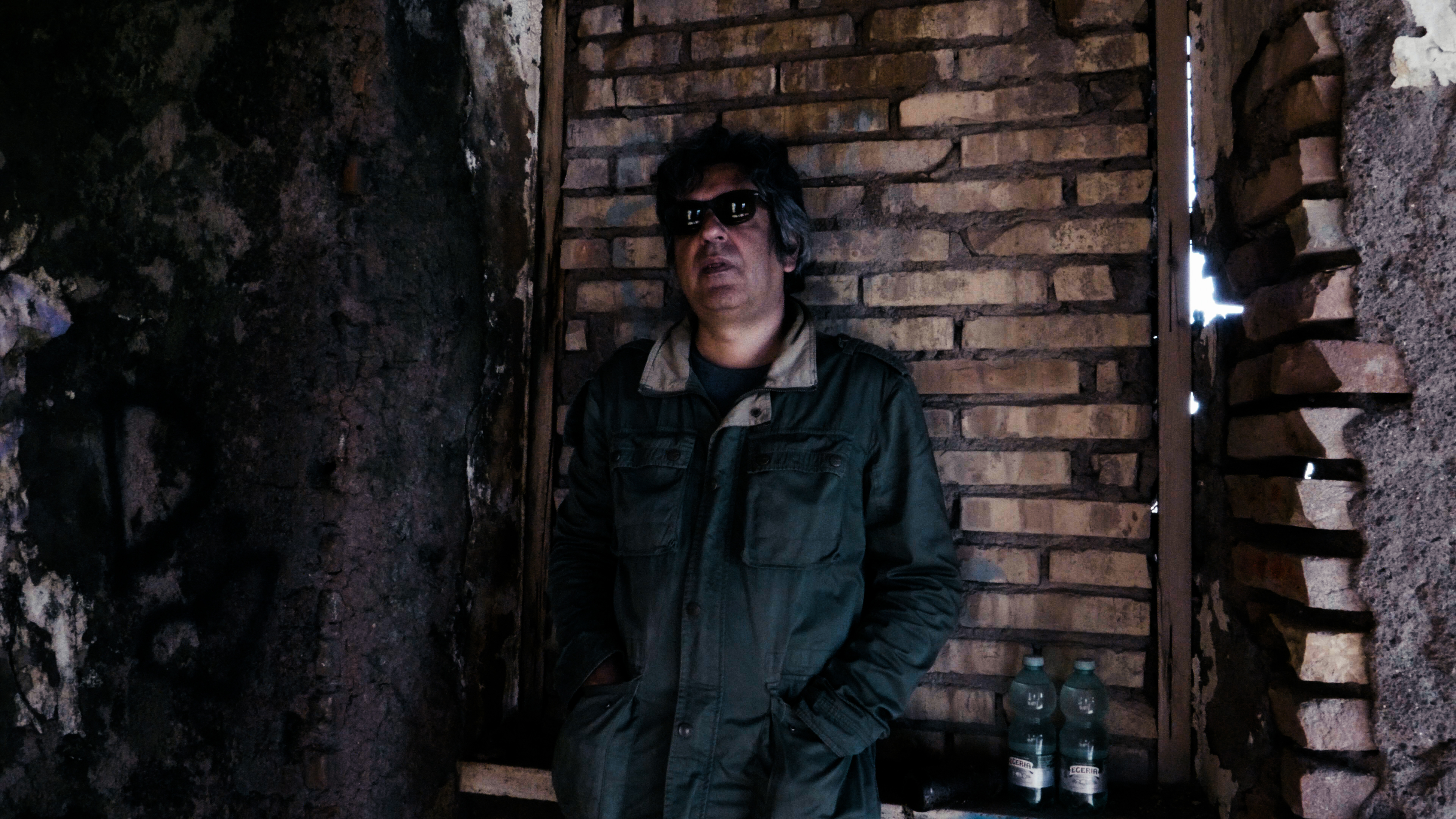
Drama, by Fabio Del Greco, Italy, 2024.
Dante Mezzadri wants to see an old friend, nicknamed the Iguana, whom he has lost sight of for many years, and who has managed to turn their shared youthful passion for poetry into a job, becoming a famous writer and poet. The man escapes from his bourgeois life and his wife to live homeless on the Roman coast, printing and trying to sell his poetry collections. At night he sleeps in a park of old carnival floats, inside a papier-mâché tank, and waits for the opportunity to meet his old friend, who however never shows up for appointments in the places they frequented when they were young, now in ruins. Dante's poetry books do not interest anyone and to support himself he is forced to "change product": he starts selling the infamous "cannibal pill" on behalf of young drug dealers, a new drug that sells like hot cakes and causes sensory and consumerist ecstasy. However, he realizes that this powerful drug is very dangerous for those who take it, he comes into conflict with his ethical conscience and throws all the pills into the sea. However, the dealers want to collect their money.
Shot over a period of 2 years, the film is a reflection on the cultural and artistic rubble of the society in which the protagonist lives, in an increasingly mechanized, consumerist and arid world. Dante Mezzadri is yet another human being who has renounced his inspiration and his creativity, but unlike many he is not willing to give his life to a system that distances him from his true identity. The physical world around him, however, seems constructed in such a way that it seems impossible to escape from this "invisible cage". The enthusiasm of the people he meets is ignited only by sensory gratification, by unreal visions of personal affirmation and success, by "metaverses" that offer an escape into an illusory and destructive reality. The poet's house on the coast, where he met with his friends as a young man, is just a pile of abandoned rubble. What happened to all those who wanted to become poets and ended up becoming something else? Are there internal forces with which that house can be "rebuilt"?
LANGUAGE: Italian
SUBTITLES: English, Spanish, French, German, Portuguese
Pleasure as Threat: Why the State Cares What You Feel
There is a moment that anyone who has ever been genuinely, overwhelmingly high will recognize — not the anxious edge of too much, but the other thing, the settling, the sudden and complete indifference to everything the day had been demanding of you. The emails unanswered. The performance review pending. The careful architecture of productivity you had been maintaining since six in the morning. All of it simply ceases to matter, not because you have decided it should not matter, but because something in your neurochemistry has quietly stepped outside the frame of urgency and is looking back at it with something close to bewilderment. You are not refusing anything. You are simply elsewhere. And that elsewhere is, from a certain angle, the most politically charged place a body can occupy.
This is what Foucault understood that most critics of drug prohibition miss entirely. The question is never really about health. Health is the alibi, not the argument. The deeper architecture of the problem is this: sovereign power, and more precisely what Foucault in his 1975-1976 lectures at the Collège de France called biopower, does not merely govern bodies by threatening them with death. It governs them by organizing their vitality, their time, their capacity for sensation, into legible and productive forms. The body that works, consumes, reproduces, and performs its social function correctly is a body that has been successfully enlisted into a vast project of utility. Foucault’s notion of the “docile body,” elaborated in Discipline and Punish in 1975, is not merely a body that obeys commands. It is a body whose very desires have been shaped to want what the system needs it to want.
Against this, consider what Herbert Marcuse argued in Eros and Civilization in 1955: that advanced industrial society demands a surplus repression beyond what civilization minimally requires, a suppression of pleasure not because pleasure is inherently antisocial but because unregulated pleasure threatens the performance principle, the governing logic that subordinates all human experience to productive achievement. Marcuse was drawing on Freud, but he was building toward something more radical — the claim that the political economy of modern societies depends on maintaining a particular relationship between bodies and desire, one in which satisfaction is always deferred, always conditional, always tied to labor and exchange.
A body in a state of chemically induced bliss is, from inside that state, perhaps the least political thing imaginable. But from outside it, from the perspective of the systems that require that body to be functional, assessable, and available, it represents something close to a structural scandal. Not because it is destroying itself, though that is always the official framing. But because it is temporarily unavailable. It has exited the economy of effort and reward. It is not producing, not consuming in the sanctioned manner, not moving through the prescribed emotional registers of ambition and exhaustion and recovery that make a person a legible economic subject. The pleasure that escapes productivity does not need to make a political argument. It simply is, and in simply being, it constitutes a kind of refusal so complete that it requires no intention.
Foucault’s notion of the “care of the self,” which he developed extensively in the second and third volumes of The History of Sexuality published in 1984, describes a practice of governing one’s own experience, one’s own pleasures, according to an ethics that is genuinely one’s own. The state’s profound investment in regulating altered states is, among other things, an investment in preventing exactly this kind of self-governance from becoming too autonomous, too private, too unaccountable to external frameworks of meaning. When the state insists on determining which pleasures are permissible and which are criminal, it is not protecting the self. It is ensuring that the self remains governable.
The Confession and the High: Talking About Your Drugs
You sit in a circle of plastic chairs and you know, before you even open your mouth, that there is a correct way to tell your story. Not correct as in true. Correct as in legible. The room has a grammar, and if you speak inside it fluently enough, something will be given to you — recognition, perhaps, or the softer currency of not being judged. You have learned the vocabulary the way you learn any foreign language: by listening to how others survive in it.
Foucault spent considerable energy in the first volume of The History of Sexuality, published in 1976, dismantling the myth that modern Western culture suppresses sexuality. His argument was almost paradoxical in its elegance: we have not silenced desire, we have made it speak incessantly, but only through channels that simultaneously produce and control the speaking subject. The confession is not liberation. It is a technology. And the confessor — priest, analyst, judge, counselor — holds the interpretive power. Your words enter the room as raw experience and exit as a diagnosis, a category, a case.
The same architecture governs the addict who must narrate. In the therapeutic session, in the court-mandated evaluation, in the twelve-step room with its fluorescent light and folding tables, there is an implicit contract. You will describe your use. You will locate its origin in damage — childhood, trauma, loss. You will demonstrate insight by speaking of yourself in the third person of pathology: I was powerless, I was sick, I was not myself. The self you were during the high must be disowned for the institutional self to be recognized as recoverable.
A man in a clinical intake interview tries to explain what methamphetamine actually felt like. Not the destruction — he knows that part of the script, he can perform it fluently. He means the other thing. The three hours at four in the morning when the mind became a precision instrument and he wrote forty pages of something he still believes was extraordinary and probably was. He begins the sentence and watches the counselor’s pen stop moving. That pause is the whole lesson. The experience he is describing does not fit the form. It will not be transcribed. It does not exist inside the treatment narrative, and so, in the only way that matters in that room, it did not happen.
This is what Foucault meant when he described the confession as productive rather than merely repressive. The apparatus does not simply forbid certain experiences. It renders them unspeakable by providing no vessel to hold them. The addict who insists on the genuine complexity of their pleasure — not despite the harm but alongside it, inseparably — finds themselves outside the grammar entirely. They sound like someone who does not understand their own condition. They sound like someone still in denial.
The sociologist Robin Room, writing in the 1990s on alcohol and drug policy, documented how the disease model of addiction, however compassionately intended, functions as a discursive frame that extracts certain kinds of testimony and forecloses others. The patient who speaks correctly receives treatment. The one who speaks incorrectly receives suspicion. The high that was real — the expansion, the duration, the sense of having briefly touched something the ordinary mind cannot reach — must be translated into symptom or erased entirely.
And the strange consequence is that the person leaving the circle, having said the right things, having been granted recognition and perhaps clemency, carries inside them an experience that has never once been named. They confessed. They were heard. And the thing they actually needed to say was never in the room at all, because the room was never built to hold it, because the room was built precisely to make sure it would not need to be.
A vision curated by a filmmaker, not an algorithm
In this video I explain our vision
Race, Class, and the Pharmacological Double Standard
The joint gets passed at a rooftop party in a neighborhood that used to be called something else before the galleries moved in. Nobody thinks twice. Someone photographs the skyline, someone else refills a cup. The smoke drifts over a city that, twelve blocks south, will produce a different story from the same gesture.
This is the architecture of biopower made visible in its most brutal simplicity: not the prohibition of a substance, but the selective enforcement of that prohibition upon particular bodies. Foucault understood power not as a force that says no, but as a force that organizes, distributes, and produces — produces criminals, produces populations, produces the very categories through which life is administered and death is permitted to happen. What the history of drug enforcement in the United States demonstrates, with a statistical precision that should be impossible to dismiss, is that this organizing principle has always been racial. Black Americans are arrested for marijuana possession at 3.73 times the rate of white Americans, according to ACLU data spanning the 2010s, despite studies consistently showing comparable usage rates across racial groups. The substance is identical. The pharmacology is identical. The body receiving the consequence of state intervention is not.
Michelle Alexander, in her 2010 work The New Jim Crow, names this structure with a clarity that many found uncomfortable: the War on Drugs, declared by Nixon in 1971 and dramatically escalated under Reagan, functioned as a system of racialized social control operating through the grammar of criminal law rather than the explicit language of race. It produced mass incarceration not as a side effect but as a mechanism — a way of marking bodies, stripping them of civil rights, rendering them permanently administerable. The crack cocaine versus powder cocaine sentencing disparity, codified into federal law in 1986, is perhaps the most transparent legislative expression of this logic. A hundred-to-one sentencing ratio between crack and powder cocaine — substances pharmacologically equivalent in effect, separated only by price point and the demographics of their users — encoded racial hierarchy directly into statute. The Fair Sentencing Act of 2010 reduced this ratio to eighteen-to-one, which is its own kind of admission that the original number was not about chemistry.
You learn, when you study Foucault on biopolitics, that the state does not simply punish. It manages. It decides which bodies are threats to the social body, which deviations require correction, which populations must be contained. In Discipline and Punish, published in 1975, he traces the architecture of this management through the prison, the clinic, the school — institutions that produce the normalized subject through surveillance and correction. What he could not have fully anticipated, though his framework predicted it, was a system in which the drug law would function as a kind of passport control for the American underclass, one that sorted bodies at birth into those who would be permitted their pleasures and those who would be punished for them.
The man who goes to treatment. The man who goes to prison. The woman who describes her weekend to her therapist as self-medication. The woman who describes her arrest record to a public defender in a room that smells like fluorescent light. These are not different stories about drugs. They are the same story told through the filter of power, which is never neutral, which has never claimed to be neutral except in the formal language of law — that great theater of equivalence that Anatole France dissected in 1894 when he observed that the law, in its majestic equality, forbids the rich as well as the poor to sleep under bridges.
Biopower concentrates. It does not distribute its gaze evenly across the social field. It has preferred targets, preferred bodies, preferred geographies. And the pharmacological double standard is not an anomaly within this system. It is the system, doing exactly what it was designed to do.
The Aesthetics of Existence: Foucault’s Own Experiments
There is something almost scandalous about a philosopher who does not merely theorize transgression but insists on living it, who treats his own nervous system as a laboratory and his own body as the first text to be rewritten. The scandal is not moral. It is methodological. It suggests that the thinker who only thinks, who remains safely behind the desk while mapping the territories of power and pleasure, is already compromised by the distance, already inside the trap they are describing.
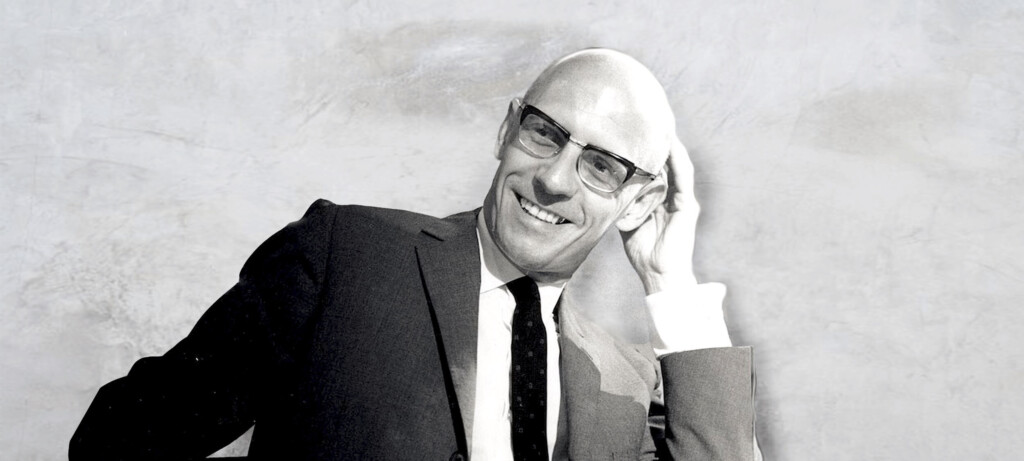
In the summer of 1975, somewhere in the bleached immensity of Death Valley, under a sky so large it erases the sense of being a coherent self, Foucault took LSD for the first time. He was fifty years old. He had already written Discipline and Punish, already dismantled the architecture of the clinic and the prison, already traced in meticulous detail how modern power works by entering the body, shaping desire, producing docile subjects. And yet the experience in that desert cracked something open that the books had circled without entering. He described it, according to James Miller‘s biography The Passion of Michel Foucault published in 1993, as one of the greatest experiences of his life. Not a confirmation of his theories. Not an illustration. Something far more destabilizing: a direct encounter with what he had been writing about from the outside.
What the desert gave him was not transcendence in any mystical sense. It was dissolution — the specific terror and relief of discovering that the self one has spent decades constructing and defending is a contingent arrangement, a habit, a story told with sufficient repetition to feel like bedrock. Didier Eribon, in his 1989 biography, traces the long arc of Foucault’s relationship with limit-experiences, the concept he borrowed and transformed from Georges Bataille, experiences whose function is precisely to undo the sovereignty of the subject. The limit-experience does not confirm who you are. It suspends that question entirely.
This is why the San Francisco leather bars mattered to him in a way that cannot be reduced to sexual tourism or biographical curiosity. He was not seeking pleasure in any simple hedonistic sense. He was seeking, as he would put it in his late lectures on the technologies of the self, a practice — an askesis in the Greek sense, not renunciation but exercise, a deliberate working on oneself that transforms what one is capable of feeling, thinking, becoming. The Greeks understood that ethics was not a set of rules to obey but a set of practices to undertake, a sustained labor on the self as raw material. Foucault extended this to every register: the body under chemical transformation, the body in extremity, the body discovering pleasures that had no name in the available vocabulary.
What makes this philosophically serious rather than merely autobiographical is the insistence that the experience must become material for thought, not something to be metabolized privately and then set aside. The philosopher’s body is not a distraction from the work. It is the first site of the work. Every claim about how power operates on desire must pass through the question of what has actually been felt, what has actually been refused, what doors have actually been opened by the simple and terrifying decision to stop managing one’s own experience and start inhabiting it.
There is a particular kind of intellectual courage required to take what you know theoretically and submit it to the test of your own flesh. Most thinkers don’t. They maintain a hygienic distance that protects both the theory and the person. Foucault collapsed that distance deliberately, repeatedly, with the full understanding that the collapse was irreversible. You do not return from certain experiments unchanged. You do not write the same sentences afterward. The body that has crossed certain thresholds carries that crossing in its subsequent perceptions, and the thought that emerges from such a body is no longer merely analytical.
When the Exit Is Also a Trap
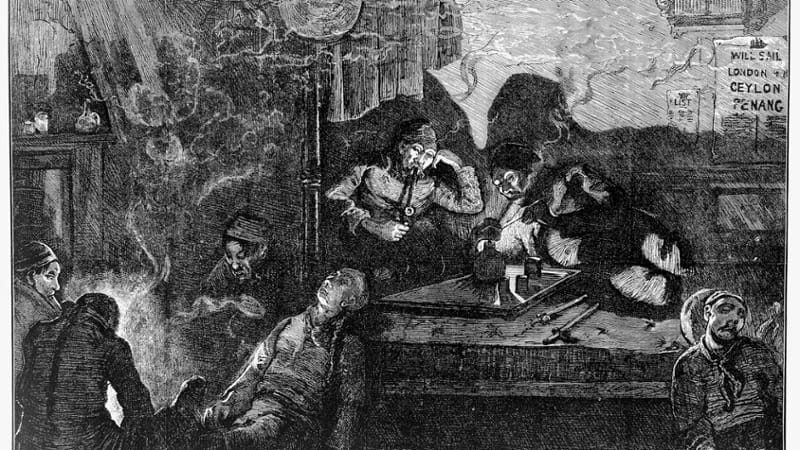
There is a moment, somewhere between the second and third hour, when the edges of things begin to soften and you feel, with absolute certainty, that you have stepped outside the ordinary machinery of your life. The room is the same room. The hands in your lap are still your hands. But something has loosened, some grip you did not know was gripping you, and for a few hours you are not a productivity metric or a quarterly review or a five-year plan. You are, simply, present. It feels like freedom. It is sold as freedom. And the question worth asking — the one that arrives only later, in the grey ordinary light of the following Tuesday — is whether freedom and the feeling of freedom are the same thing at all.
The psychedelic renaissance has a branding problem it does not know it has. Psilocybin therapy is being shepherded through clinical trials with the careful language of optimization: reduced depression scores, improved neuroplasticity, enhanced emotional flexibility. MDMA-assisted psychotherapy for PTSD received Breakthrough Therapy designation from the FDA in 2017. Venture capital has moved into the ketamine clinic. The same substances that were classified as Schedule I precisely because they threatened the consensus reality of the 1960s are now being reintegrated into the system — not despite their power, but because of it, carefully reframed as tools for making damaged workers functional again, for restoring the capacity to endure. The counterculture’s weapons have been requisitioned by the very apparatus they were aimed at.
Foucault understood this dynamic not as betrayal but as the normal metabolism of power. In The History of Sexuality, he described how resistance is never positioned outside power but always within its field, adjacent to it, sometimes feeding it. Power does not simply repress; it produces, proliferates, reroutes. The biopolitical management of populations works precisely by absorbing the energies that appear to threaten it, metabolizing them into new forms of governance. The wellness apparatus is among the most sophisticated such forms in contemporary life: it speaks the language of liberation, of self-knowledge, of healing, while quietly extending the reach of the therapeutic gaze into territories that were previously ungoverned. Silicon Valley’s microdosing culture is the clearest symptom — a practice of controlled transgression whose explicit purpose is improved performance, sharper focus, more creative output. The dose is calibrated so carefully that it never actually destabilizes anything. The point is not to exit the system but to be better inside it.
Someone sits in a clinical room with soft lighting and a trained guide and eye shades over their face, and somewhere in the middle of six hours they encounter something that feels genuinely outside the coordinates of their ordinary self. They weep. They understand something about their childhood, their patterns, their long-armored posture toward intimacy. And then the session ends, and the guide fills out an outcome measure, and the data goes into a trial, and the trial supports a pharmaceutical application, and the application produces a patented protocol, and the protocol generates a revenue stream, and the revenue stream has shareholders. The experience was real. The grief was real. The insight may last a lifetime. And it has also been converted into a product, the dissolution of the self carefully administered within a fifty-minute intake and an eight-hour session and a two-week integration program billed to insurance.
This is not cynicism. It is the recognition that Foucault named with clinical precision: the apparatus does not need to prevent the experience of liberation; it only needs to ensure that liberation leads somewhere manageable. The therapeutic gaze does not forbid the dissolution of the self. It schedules it, supervises it, measures its outcomes, and charges accordingly.
What remains open is not whether the system can absorb transgression — it clearly can, and does, with increasing elegance — but whether the wanting itself, the original reaching toward something ungovernable, carries a remainder that no protocol can fully metabolize, some residue of the unruly that persists precisely because it was never asking permission to begin with.
🌀 Power, Pleasure, and the Labyrinth of the Self
Michel Foucault’s exploration of drugs, pleasure, and power cannot be fully understood without tracing its philosophical roots and its connections to broader discourses on the body, desire, and social control. These related articles illuminate the intellectual landscape that surrounds and deepens Foucault’s provocative thinking.
The Psychology of Power: History and Theory
Power is never simply possessed — it is exercised, negotiated, and internalized through complex social mechanisms. This article traces the psychological dimensions of power from its philosophical origins to contemporary theory, offering essential context for understanding how Foucault’s ideas about pleasure and discipline intersect with the deeper structures of domination and submission that shape human experience.
GO TO THE SELECTION: The Psychology of Power: History and Theory
Herbert Marcuse and Art: The Aesthetic Dimension
Herbert Marcuse‘s aesthetic philosophy engages directly with questions of repression, liberation, and the revolutionary potential hidden within sensory experience. His concept of the aesthetic dimension as a space of resistance resonates powerfully with Foucault’s inquiry into how pleasure can both reinforce and subvert the mechanisms of power, making this article an indispensable companion for understanding radical theories of the body.
GO TO THE SELECTION: Herbert Marcuse and Art: The Aesthetic Dimension
Wilhelm Reich: Life and Psychology of the Body
Wilhelm Reich‘s psychology of the body laid the groundwork for thinking about how social repression is literally inscribed into flesh, muscle, and desire. His radical claim that political domination operates through the armoring of the body anticipates many of Foucault’s own genealogies of discipline, making his life and thought a crucial reference point for any exploration of pleasure as a site of power.
GO TO THE SELECTION: Wilhelm Reich: Life and Psychology of the Body
Mass Social Homologation Today
Mass social homologation — the flattening of individual experience into conformity — is one of the most pressing issues that Foucault’s work on power and pleasure sought to expose and contest. This article examines how contemporary culture enforces normalization through subtle yet pervasive mechanisms, directly echoing Foucault’s argument that the control of pleasure is one of modernity’s most insidious forms of governance.
GO TO THE SELECTION: Mass Social Homologation Today
Explore the Cinema of Power and Desire on Indiecinema
If these ideas about pleasure, power, and the limits of the self have ignited your curiosity, Indiecinema is the place to take the next step. Our streaming platform curates independent and avant-garde films that dare to ask the same questions Foucault posed — films that challenge, disturb, and ultimately liberate. Discover a cinema that refuses to be governed.
👉 EXPLORE THE CATALOG: Watch Indie Films in Streaming
A vision curated by a filmmaker, not an algorithm
In this video I explain our vision

