
The Body Keeps the Score Before the Mind Admits It
You are standing in a grocery store on a Tuesday afternoon, nothing unusual, fluorescent light doing what fluorescent light does, and then someone three aisles over laughs — not at you, not near you, a stranger’s laugh aimed at nothing you’re part of — and your chest closes. Not metaphorically. The sternum actually tightens, the breath shortens by half, and for a fraction of a second you are not thirty-four or forty-one or fifty-two years old. You are somewhere else entirely, and the somewhere else is not a place you chose to visit.

This is not nostalgia. Nostalgia is comfortable, curated, something you take out and handle on your own terms. What happens in the grocery store has no terms. It bypasses every conscious filter you have spent years constructing and lands directly in the tissue, the gut, the hinge of the jaw you didn’t realize you were clenching. The body received the signal before the mind had time to file an objection, and by the time rational thought arrives to explain what just happened, the damage — or the opening, depending on how honest you’re willing to be — is already done.
Antonio Damasio spent much of his career demonstrating what most people spend their lives denying: that reason does not run the operation. In Descartes’ Error, published in 1994, he documented patients with damage to the ventromedial prefrontal cortex who retained perfect logical function but lost the ability to make decisions, because decisions are not primarily cognitive events. They are somatic ones. The body casts a vote first, through what Damasio called somatic markers — physiological states that tag memories and scenarios with an emotional charge before conscious deliberation begins. The laugh in the grocery store is not a memory you retrieved. It is a marker firing, a body that remembers something the mind has classified as resolved.
The word resolved is doing enormous work in contemporary life. Therapy culture, self-help culture, the entire apparatus of psychological wellness that has expanded dramatically since the 1980s, operates on an implicit promise: that the past can be processed, integrated, filed, and ultimately quieted. That there is a version of you on the other side of sufficient introspection who will no longer be ambushed by strangers’ laughs. What Damasio’s neurological evidence suggests, and what decades of clinical observation have confirmed in ways that resist comfortable framing, is that this promise contains a category error. The past does not wait to be integrated. It is already running, continuously, underneath whatever narrative you have constructed about who you have become.
Peter Levine, working from a somatic rather than a purely neurological framework, observed in his research on trauma and the nervous system that the body stores incomplete survival responses — not memories in the narrative sense, but arrested actions, movements the organism began and never finished. A flinch that never fully released. A breath held in 1987 that the diaphragm is still, in some measurable physiological sense, holding. This is not poetry. This is the autonomic nervous system operating with a fidelity to past threat that the conscious mind finds both baffling and, once understood, quietly devastating.
What makes this devastating is not the suffering it implies. It is the precision. The body is not confused. It is not making a mistake when it contracts at a specific timbre of voice or a specific quality of afternoon light in autumn. It is doing exactly what it was shaped to do, matching present sensation to past pattern with an accuracy that should, if you sit with it long enough, make you question how much of your daily experience you are actually generating fresh, and how much you are simply replaying.
Freud's Compulsion and the Architecture of Repetition
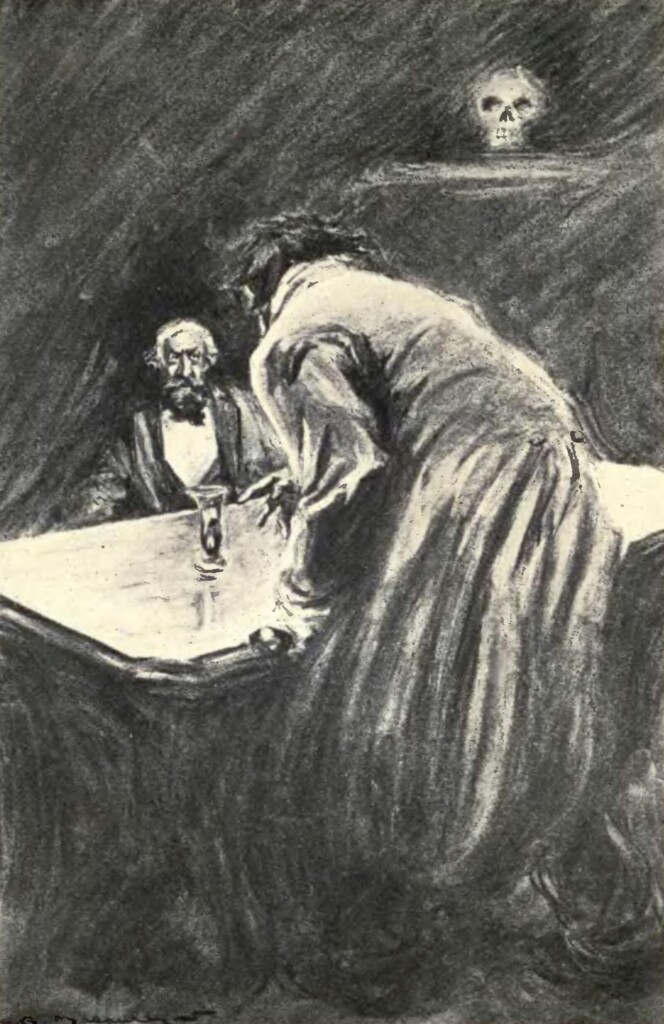
You have already left that job. You packed the box, took the plant, shook hands with HR, and told yourself that this time would be different. Eighteen months later you are sitting across from a new manager who has the same precise habit of praising your work in meetings and dismantling it in private, and you are wondering, with a creeping nausea that feels almost like recognition, how you got here again.
Sigmund Freud named this experience in 1920, in a text that unsettled even his own theoretical framework. Beyond the Pleasure Principle was not the book he wanted to write. It forced him to acknowledge that human beings do not simply seek gratification and avoid pain — they return, compulsively and with what looks almost like intention, to the situations that wounded them most. He called it Wiederholungszwang, the compulsion to repeat, and he was careful to distinguish it from habit or preference. It was something more structural, more insistent: a psychic need to re-enter an unresolved scenario not in order to suffer again, but because the mind, denied the resolution it could not produce the first time, keeps generating the same conditions in the hope that something will finally close.
The distinction matters enormously because the cultural narrative around self-destructive patterns almost always defaults to pathology or moral failure. The person who chooses the unavailable partner for the fourth consecutive time is read as broken, addicted to drama, unconsciously masochistic. What Freud was pointing toward is stranger and, in some ways, more dignified than that: the psyche is attempting repair. It is staging a rehearsal of the original injury in different costumes, with different actors, hoping that this time the script will end differently. The tragedy is not that the attempt is irrational — it is that the attempt is completely coherent and completely futile in the same gesture.
What makes this architectural rather than merely symptomatic is the precision with which the reconstruction occurs. It is rarely random. The person who grew up managing an emotionally volatile parent develops an almost sonar-like sensitivity to that particular frequency of personality — they detect it in a room before they can consciously identify it, and something in them moves toward it with the ease of a key finding its lock. Pierre Bourdieu described the habitus in 1972 as the system of dispositions that inclines a person toward certain practices without those practices ever requiring deliberate choice. The compulsion Freud mapped is what happens when the habitus has been partially formed by trauma: the groove is deep, the return to it feels like home, and home has never been safe.
The workplace reconstructions are particularly brutal in their specificity. Research in organizational psychology has documented consistently that individuals who experienced unpredictable authority figures in early life are disproportionately likely to report the same relational dynamic across multiple employers — not because they seek it consciously, but because they read neutral authority as latently threatening, and that reading shapes the micro-behaviors that then, in fact, provoke the dynamic they feared. They flinch before the blow arrives, and the flinch teaches the room what kind of room it is supposed to be. The self-fulfilling dimension of the repetition is what makes it so airless: the very vigilance that was adaptive in the original environment becomes the mechanism by which the original environment is perpetually recreated.
The philosophical weight of this lands somewhere most self-help literature cannot afford to go: the possibility that consciousness, far from being the instrument of liberation, is often the last faculty to receive news that the deeper machinery has already made its arrangements.

The Social Mirror That Fixes the Wound in Place
You are standing at a party, glass in hand, laughing at precisely the right moment. You know the laugh is real, or at least you cannot locate the exact coordinate where real ends and performed begins, and that uncertainty itself is the trap. The person across from you sees someone confident, rooted, whole. What they are actually seeing is a decades-old rehearsal that became so practiced it now passes for character.
Erving Goffman spent the better part of the 1950s watching people do exactly this, and what he concluded in 1959 was devastating in its precision: the self is not a thing you have, it is a performance you sustain, and the audience is not passive. Every approving nod, every laugh returned, every promotion granted to the version of you that showed up ready and competent — all of it acts as a vote cast in favor of the mask. The social world does not simply witness the performance; it funds it, rewards it, makes defection increasingly expensive. By the time you are forty, stepping out of the role would require not just personal courage but a kind of social death, and most people, rationally, choose to keep performing.
Pierre Bourdieu named the mechanism underneath this with a word that resists easy translation: habitus. Published across his major works from Outline of a Theory of Practice in 1972 through The Logic of Practice in 1980, the concept describes the way that early social conditions are not merely experienced but deposited into the body — into posture, reflex, appetite, the precise speed at which you defer to authority or assert yourself in a room. Habitus is not belief, it is not attitude, it is not something you can revise by reading the right book. It is a second skeleton. And the cruelty of it is that it tends to reproduce the exact conditions that produced it: the child who learned to make themselves small to survive a volatile household becomes the adult who reads every room for threat and adjusts preemptively, thereby signaling to the room a kind of anxious compliance that tends to invite exactly the dynamics they feared.
This is where the double life stops being a psychological curiosity and becomes a structural product. The gap between performed identity and lived experience is not a personal failure of authenticity. It is what happens when the scripts handed to a child by family, class, and culture are legible to the social world while the interior experience they conceal is not. The social mirror only reflects what it can recognize, which means it keeps confirming a version of the person that may have been accurate at seven years old, forged under conditions of necessity rather than choice, and has been calcifying ever since. The world keeps voting for the original performance because it is the only one that was ever staged.
What makes this particularly difficult to see is that the rewards are genuine. The career built on the competent mask is a real career. The relationships sustained by the agreeable persona contain real warmth. You cannot simply declare the external life fraudulent, because it is not — it is just incomplete, like a map that renders the coastline perfectly while leaving the interior entirely blank. The interior does not stop existing because it was never mapped. It continues to generate weather. And at some point, usually when the external structure is most stable and most demanding — the mortgage, the children, the promotion finally arrived — the interior weather system sends something through that the performance cannot absorb, and the gap becomes suddenly, violently visible to the person who has spent the longest pretending it was not there.
Dissociation as Survival Strategy Turned Prison

You have sat across from someone in a meeting — maybe it was you — who spoke in complete sentences, answered every question with precision, projected the unmistakable texture of competence, and was not there at all. The eyes tracked. The hands moved at the right moments. The voice carried authority. But behind the performance there was no one home, only the automated machinery of a person who learned, at some earlier and much more dangerous moment, that presence itself was the vulnerability.
Pierre Janet spent the 1880s and 1890s at the Salpêtrière hospital in Paris cataloguing what he called désagrégation psychologique — the mind’s capacity to split its own contents into systems that operate in parallel without communicating. His 1889 work L’Automatisme Psychologique described patients who could perform complex behaviors, hold coherent conversations, even demonstrate skill, while the central personality remained sealed off from the experience entirely. Janet saw this not as dysfunction but as ingenuity. The psyche, when overwhelmed beyond its capacity to integrate, does not collapse. It partitions. It creates a functional layer that can continue operating in the world while the unbearable material is quarantined elsewhere.
What Bessel van der Kolk documented a century later in his clinical research, synthesized in his 2014 findings on trauma and somatic memory, was that the body itself becomes the archive of what the mind could not process. The split is not merely cognitive. It is neurological, muscular, hormonal. The dissociated person does not choose to be absent — their nervous system has automated the absence as a protective reflex, and that reflex fires before conscious thought can intervene. The professional sitting in the meeting room, delivering analysis and maintaining eye contact, is not being dishonest. They are running a program that was written under conditions of genuine threat, and the program runs because it once kept them safe.
The trap is not in the creation of the split. The trap is in its persistence long after the original danger has dissolved. Survival strategies do not come with expiration dates. The child who learned that disappearing internally was the only way to endure an unpredictable parent does not automatically unlearn that disappearance when they move into a life that no longer requires it. The nervous system that was trained to detect threat everywhere continues detecting it everywhere, because threat-detection was the condition of survival, and the system has no mechanism to announce that the war is over. It simply keeps fighting the last war, on every terrain it encounters.
This is what makes dissociation so difficult to recognize from the inside. It does not feel like absence. It feels like functioning. It feels, in fact, like competence — the smooth delivery, the managed affect, the reliable performance. What it does not feel like is anything. The cost of the partition is not visible in productivity or social functioning. It is visible in the strange flatness behind the eyes of someone who cannot explain why success feels like nothing, why intimacy produces panic, why they are most comfortable alone and most alone in company. Janet’s automatism was never supposed to be permanent. It was emergency architecture, built for a crisis that has since passed, but no one sent the demolition order.
Van der Kolk’s clinical evidence points to something even more unsettling: that the body’s record of the original overwhelm does not fade the way narrative memory fades. The story can be revised, recontextualized, integrated into a coherent autobiography. But the somatic trace — the tightening of the throat, the specific quality of numbness in the hands, the peculiar blankness that descends in moments of emotional proximity — persists with a fidelity that narrative cannot match and language cannot fully reach.
The Return Is Not a Breakdown — It Is Information
You have been holding yourself together for years, and one morning the holding simply stops — not with drama, not with warning, but with the quiet mechanical failure of a system that has been running past its capacity for longer than anyone was allowed to notice.
The clinical instinct is to call this a breakdown, to locate the problem in the collapse itself rather than in the architecture that made collapse inevitable. But the psyche does not malfunction randomly. Carl Jung spent decades mapping the territory that consciousness refuses to administer, and what he found there was not chaos — it was information that had been systematically rejected. The Shadow, as he elaborated it across the Collected Works, is not the repository of a person’s worst impulses but of everything the self could not afford to be in the context that formed it. Sensitivity refused because it looked like weakness. Anger suppressed because it threatened attachment. Ambition buried because it would have made someone else uncomfortable. These are not pathological deposits; they are accurate records of what survival required, stored with a precision the conscious mind has been too busy performing to access.
James Hollis, writing in 2005 in his work on the unlived life, pressed this further into territory that feels almost uncomfortably specific: the life most people are actually living is not theirs. It is the life assembled from the negotiations of early wounding, the accommodations made to keep love available, the roles adopted to make a self legible to others. The person who collapses at forty-three was not betrayed by circumstance. They were summoned by everything they had not yet lived, and the summons arrived precisely because the gap between the performed self and the actual one had grown too wide to bridge through sheer expenditure of will.
What makes this particular form of return so destabilizing is its accuracy. The symptoms are not vague. The marriage that suddenly feels unlivable has usually been unlivable for years, but now the mechanism for not-knowing it has exhausted itself. The career that produces dread every Sunday evening was never a fit; it was a compromise that felt permanent because permanence was the price of safety. When these recognitions surface, they are not distortions produced by depression or crisis — they are readings that the crisis has finally made legible, stripped of the elaborate buffering that protected the fiction.
There is a specific cruelty in how thoroughly Western psychological culture misreads this moment. The pharmaceutical and therapeutic industries are largely organized around the premise that the goal is restoration — returning the person to the functional state they occupied before the collapse, which is to say, returning them to the conditions that generated the collapse in the first place. Stability is reframed as health, and the unbearable precision of what has surfaced gets reclassified as symptom rather than signal. The person learns, once again, to manage what they were built to feel rather than to reckon with why they feel it.
What the returning self carries is not a demand for explanation or justice. It carries something more unsettling: a direction. It knows, with a specificity that the constructed self has spent decades obscuring, what was abandoned and what the abandonment cost. Not all of it can be recovered — some unlived life remains exactly that, foreclosed by time and consequence. But the direction it points is not backward toward what was lost; it is forward toward what becomes possible the moment the performance is no longer the only available option, and that distinction is the only one that carries any weight when the architecture finally comes down.
A vision curated by a filmmaker, not an algorithm
In this video I explain our vision
🪞 When Identity Fractures and the Past Returns
The double life is not merely a biographical curiosity — it is a psychological structure rooted in dissociation, repressed memory, and the unresolved tensions between who we are and who we were. These articles trace the invisible threads connecting identity, shadow, and the past that refuses to stay buried.
Dissociation in Psychology: When the Mind Divides
Dissociation is one of the mind’s most radical strategies for surviving overwhelming experience, creating parallel selves that coexist without ever fully meeting. This article explores the psychological mechanisms behind the divided mind, from mild detachment to full identity fragmentation. Understanding dissociation is essential for grasping how a double life can feel not like a choice, but like a psychological necessity.
GO TO THE SELECTION: Dissociation in Psychology: When the Mind Divides
Forgotten Memory: When the Past Resurfaces
Forgotten memory is not truly absent — it continues to act beneath the surface, shaping behavior, relationships, and self-perception in ways the conscious mind cannot easily recognize. This article examines how repressed or dissociated memories resurface, often triggered by sensory cues, emotional crises, or life transitions. The return of the past is rarely gentle: it tends to arrive as disruption, compulsion, or uncanny recognition.
GO TO THE SELECTION: Forgotten Memory: When the Past Resurfaces
Carl Gustav Jung and the Shadow: The Dark Side We Don’t Want to See
Carl Gustav Jung’s concept of the Shadow describes the repository of everything we have refused to acknowledge about ourselves — the denied impulses, the buried wounds, the unlived lives. This article traces Jung’s foundational theory and its clinical and cultural implications, showing how the Shadow operates precisely in the gap between our public persona and our hidden interior. The double life, in Jungian terms, is often the Shadow’s way of demanding to be seen.
GO TO THE SELECTION: Carl Gustav Jung and the Shadow: The Dark Side We Don’t Want to See
Arthur Schnitzler: When the Double Reveals Who We Really Are
Arthur Schnitzler was among the first literary writers to dramatize the double as a psychological rather than supernatural phenomenon, exploring how hidden desires and suppressed identities fracture the coherent self. His works reveal characters who live simultaneously in two registers — the respectable and the forbidden — with devastating consequences. Schnitzler’s doubles illuminate exactly the terrain that modern psychology would later name dissociation and repression.
GO TO THE SELECTION: Arthur Schnitzler: When the Double Reveals Who We Really Are
Discover Cinema That Explores the Hidden Depths of Identity
If these themes resonate with you, Indiecinema offers a carefully curated selection of independent films that dare to explore the fractured self, the weight of the past, and the psychology of double lives. Step beyond mainstream narratives and discover stories that illuminate what we most prefer to keep in the dark. Visit Indiecinema and let cinema become your most honest mirror.
👉 EXPLORE THE CATALOG: Watch Indie Films in Streaming
A vision curated by a filmmaker, not an algorithm
In this video I explain our vision

