
The Mirror You Refuse to Look Into
You catch it for less than a second — a flicker of satisfaction when someone you quietly resent stumbles publicly, loses the promotion, gets the diagnosis. It moves through you like a current, warm and shameful, and before you can name it you have already buried it under a more acceptable response: sympathy, concern, the correct facial expression. The burial happens so fast you almost believe it never occurred. Almost.

Carl Gustav Jung spent the better part of his intellectual life insisting that almost is where all the real damage lives. Not in the darkness you acknowledge and wrestle with openly, but in the darkness you process so efficiently, so automatically, that you genuinely believe you are a person who does not feel such things. The Swiss psychiatrist, writing across a body of work that spans the twenty volumes of his Collected Works and reaches its most concentrated theoretical form in Aion, published in 1951, called this unacknowledged interior region the Shadow — not a metaphor, not a poetic flourish, but a structural feature of the psyche as real and consequential as any other. He meant something precise and disturbing: everything the conscious self refuses to identify with does not dissolve. It organizes. It waits.
The architecture of this idea is worth sitting with in its full discomfort. The persona — the face we construct for social presentation, the competent professional, the patient parent, the magnanimous colleague — is not built by addition alone. It is built equally by subtraction. Every quality you decided, consciously or not, was incompatible with the person you needed to become got pushed below the threshold of awareness. The child who learned that anger made adults withdraw their love did not stop feeling anger. The anger became subterranean, pressurized, emerging decades later as chronic passive aggression, inexplicable physical ailments, a disproportionate fury at strangers who display the very quality that was once forbidden in the household. The Shadow does not contain evil in any simple theological sense. It contains everything that was exiled, which means it contains much that was alive.
Jung was not theorizing from comfortable clinical distance. His own memoir, Memories, Dreams, Reflections, dictated to Aniela Jaffé and published in 1962, makes clear that his confrontation with the Shadow was autobiographical before it was professional. The years between 1913 and 1917, following his rupture with Sigmund Freud, constituted what he called his own encounter with the unconscious — a period he described without embarrassment as a descent into material he could barely hold, fantasies and figures that terrified him precisely because they felt native to his own mind rather than alien to it. The intellectual honesty in this admission is rarer than it appears. Most systems of psychology, including the one he broke from, were built to explain patients. Jung built a system that was also built to explain himself, which gives it a different kind of gravity.
What makes the Shadow so resistant to ordinary introspection is that it mimics absence. You do not feel it as a presence; you feel it as a blind spot. The person who insists with genuine vehemence that they harbor no prejudice toward any group is almost certainly not lying consciously — they have simply done a more thorough job of consolidation than most. The sincerity of the denial is precisely what signals the depth of the burial. This is why for Jung, the Shadow could never be addressed through good intentions or moral resolutions. Those tools operate entirely on the surface where the problem no longer appears to exist.
The question is not whether you contain this shadow material. The question is what it is doing while you look elsewhere.
Irene
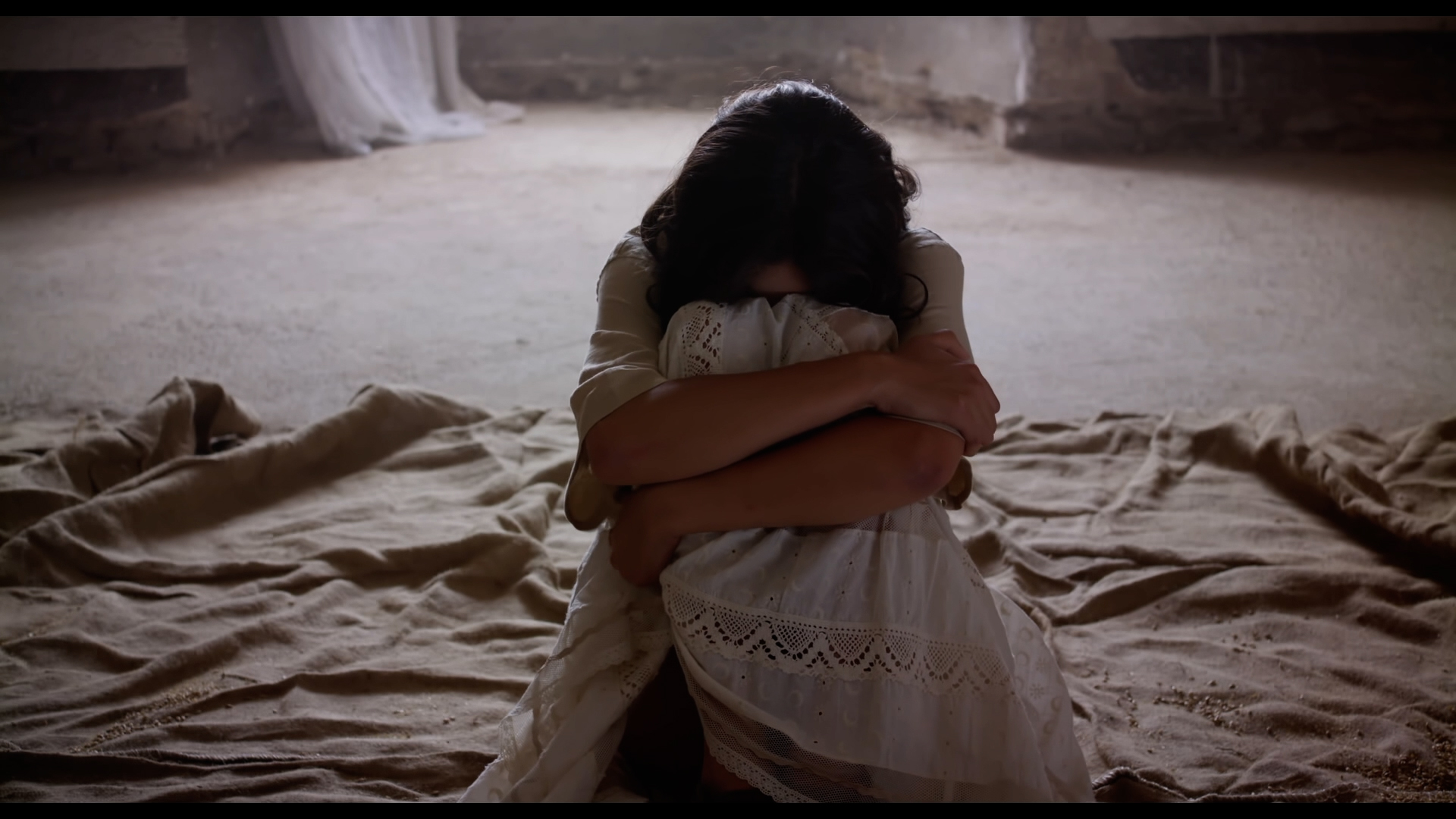
Drama, by Valerio Pampaglini, Italy, 2023.
Irene is trapped within her own unconscious, empty and ruined like an abandoned house. Through broken glass and shady figures dressed in black, a song awakens something long forgotten inside her. The film, written and directed by Valerio Pampaglini, is supported by the Rome Film Academy. It was shot in the summer of 2022 in the province of Perugia, in the municipality of Todi and at the Montenero castle.
LANGUAGE: Italian
SUBTITLES: English
What Civilization Trained You to Hide
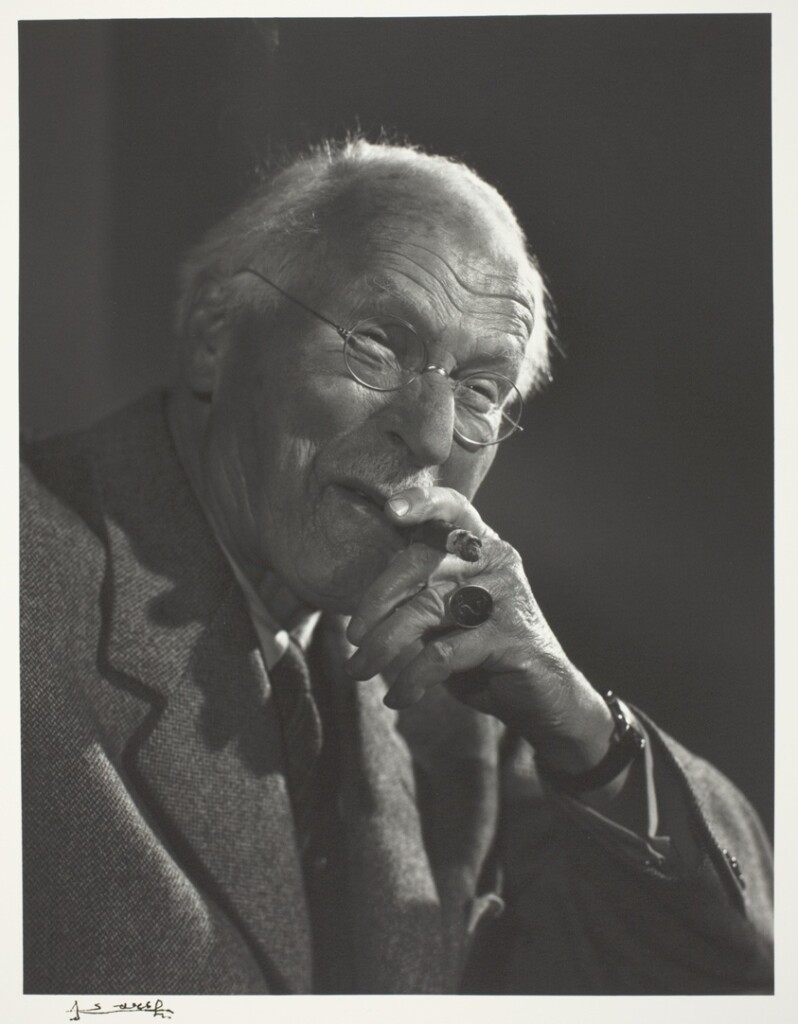
You already know which version of yourself you killed first. Not dramatically — there was no single moment of rupture — but slowly, across years of small corrections: the anger you swallowed at the dinner table because it made your mother’s face tighten, the ambition you muted because it sounded like arrogance in your family’s vocabulary, the strangeness you buried because the classroom had no room for it. By the time you were ten, you had already become an expert editor of your own interior life.
Sigmund Freud, writing in 1930, made the uncomfortable case that civilization itself is a neurosis we collectively agreed to sustain. In Civilization and Its Discontents, he argued that the entire architecture of social order — law, religion, property, manners — rests on a foundation of suppressed instinct, particularly the erotic and the aggressive. The price of living together is the permanent taxation of what we most viscerally are. Freud’s diagnosis was already radical enough to be dismissed by his contemporaries as pessimism dressed in science. But his frame remained, in one crucial sense, too narrow: he saw the repressed self primarily as a bundle of drives, biological pressures seeking discharge. What he did not fully account for was the social machinery that decides, long before the individual can resist, which parts of a person are even permitted to exist.
Jung extended the problem into territory Freud had mapped but not yet inhabited. The Shadow — as Jung developed it across decades of clinical work and theoretical writing, from the early papers collected in The Structure of the Psyche to the later, more systematic treatment in Aion published in 1951 — is not merely the reservoir of taboo desires. It is the accumulated weight of every quality, impulse, and capacity that a specific social world pronounced inadmissible. The particular contours of anyone’s Shadow are therefore not universal. They are a precise archaeological record of what their family punished, what their religion condemned, what their class found threatening, what their gender was not permitted to perform.
This specificity matters enormously, and it tends to get lost in popular accounts that treat the Shadow as a single dark thing lurking generically beneath consciousness. In reality, the Shadow of a woman raised in a mid-century Catholic household carries entirely different contents than the Shadow of a man shaped by a culture that permitted aggression but forbade tenderness. One might contain suppressed intellectual ambition, rage against confinement, a sexuality never allowed to form its own language. The other might contain grief, dependence, the need for care — everything that would have been classified, in his environment, as weakness. Neither person chose what to bury. The burial was performed on them, with great efficiency, before they had the conceptual vocabulary to notice it happening.
What the sociologist Norbert Elias tracked across the sixteenth through nineteenth centuries in The Civilizing Process was precisely this historical deepening of the machinery: the gradual internalization of external constraint, the point at which shame replaced punishment as the primary regulator of behavior. By the time Jung was seeing patients in Zurich in the early twentieth century, the process Elias described had been running for three hundred years. His patients were not simply neurotic individuals — they were the final products of a centuries-long project of psychic compression, people whose inner lives had been so thoroughly edited by inherited social grammar that they no longer recognized the editing as editing. They experienced their own mutilated selves as simply themselves.
The good child, in this light, is not a success story. The good child is a person who learned, with exceptional speed and thoroughness, to experience their own diminishment as virtue.

The Stranger Who Wears Your Face
You recognize the face before you understand why. Across a crowded room, at a political rally, in the comment section of a news article, someone appears who produces in you a revulsion disproportionate to anything they have actually done — a heat that feels like moral clarity but sits too deep in the body to be purely rational. You have mistaken your own interior for an external threat.
Jung, working through the material he would organize in Two Essays on Analytical Psychology, identified projection as the primary mechanism by which the Shadow escapes the difficult labor of self-recognition. The psyche, unwilling to own what it has buried, attributes those qualities to another person with all the conviction of genuine perception. This is not metaphor and not moral failing in the ordinary sense — it is a structural feature of how unconscious content seeks discharge. The process produces an experience indistinguishable from observation. You genuinely believe you are seeing something out there, because the force and vividness of what you feel seems to confirm an external source. The Shadow wears your enemy’s face because you dressed it that way without knowing you held the needle.
What makes this mechanism historically catastrophic is its scalability. A private projection damages a relationship. A collective projection, shared across thousands or millions of people who have never examined the same buried material, builds tribunals. The witch trials of early modern Europe — concentrated most lethally between 1580 and 1630, claiming estimates that range from forty to sixty thousand executed lives across the continent — were not primarily events of superstition. They were events of projection at industrial scale. The accusers in Salem in 1692 were communities of people whose theology demanded absolute purity and whose daily psychology made purity impossible to inhabit without cost. The cost was exported. What could not be admitted as desire, fear, or ambition inside the self was located with absolute certainty in the body of someone else, usually someone already marginal, already without the social armor to deflect the charge.
The 20th century accelerated this grammar to the speed of modern communications infrastructure. The National Socialist project in Germany — which required an entire bureaucratic civilization to function, engineers and train schedulers and census administrators alongside the ideologues — was built on the collective projection of everything a nationalist culture found inadmissible in itself: rootlessness, internationalism, financial anxiety, sexual ambiguity, intellectual self-doubt. These were real anxieties inside German modernity. They did not disappear by being assigned to Jewish people as inherent characteristics. They were instead frozen into ideology, which gave them the permanence and righteousness that private neurosis never achieves alone. Hannah Arendt, in The Origins of Totalitarianism published in 1951, traced how statelessness and superfluousness — the sense that one’s existence has no legitimate ground — were first manufactured as experiences in minority populations before they became the general condition of 20th-century political life. The bonfire illuminated its builders.
What a culture chooses to prosecute tells you more about the prosecutors than about any crime. The Roman crowd that demanded crucifixion was not mistaken about the threat — it was accurate about the threat, only wrong about its location. Every heresy trial, every purge, every border wall built on the language of contamination is a society’s attempt to surgically remove something it has already metabolized. The operation cannot succeed because the patient and the pathogen are the same organism.
There is a particular cruelty in the fact that projection intensifies in proportion to resemblance. The groups that attract the most violent collective Shadow-casting are rarely the genuinely foreign — they are the ones close enough to mirror something back.
The Virtue That Devours

You have spent years being the reliable one. Not because someone asked you to, but because the role arrived early and fit well enough that you stopped noticing you were wearing it. The help you offer is real. The sacrifice is genuine. And yet somewhere beneath the consistency there is a need so precise and so hungry that it has learned to dress itself in the language of selflessness, because that disguise is the one no one questions.
Jung observed something that most of his contemporaries preferred not to follow through to its conclusion: that the psyche does not simply hide its darkest material behind obvious failure. It hides it behind obvious success. In Aion, published in 1951, he described how the persona — the face we construct for social survival — can become so elaborated, so polished, so morally convincing that it begins to function as a wall rather than a surface. Everything the wall cannot contain gets pushed behind it. The larger and more admirable the persona, the more pressure accumulates on the other side.
The philanthropist who controls through generosity is not a hypocrite in the ordinary sense. He does not write the check and then laugh privately at the suffering he is alleviating. He feels the warmth of giving. He needs the warmth of giving, which is a different thing entirely. What he cannot tolerate is the recipient’s independence, the moment when the person he has helped no longer needs him, because that moment dissolves the very structure that makes him legible to himself. The gift is real. The grip inside the gift is also real. And the grip is the part that never gets examined because the gift keeps arriving and everyone keeps being grateful.
The sociologist Erving Goffman, in The Presentation of Self in Everyday Life published in 1959, mapped the performance logic of social interaction without fully accounting for what happens when the performer can no longer distinguish himself from the role. That gap is precisely where inflation lives. When the activist’s identity has fused so completely with moral urgency that any challenge to their position registers not as intellectual disagreement but as personal annihilation, the Shadow is not sleeping somewhere far below — it is running the operation from inside the virtue itself. The rage that erupts when they are questioned, the quiet satisfaction when a cause they champion fails without them, the way their grief for others always manages to return to their own significance: none of this is cynicism. It is what an unexamined psyche does when it has been given a perfectly respectable container.
There is a particular cruelty in what happens inside certain therapeutic relationships when the therapist needs the patient to remain symptomatic. Not consciously. The therapist believes completely in their own dedication, references their training, their years of practice, their commitment to the work. But the patient’s improvement — real, durable improvement that ends the relationship — would deprive the therapist of a structure that has organized their sense of meaning and competence. James Hollis, in Under Saturn’s Shadow published in 1994, argued that the unlived life of the parent becomes the burden of the child, but the same vector operates laterally: the unlived interior of the healer becomes a gravitational field that subtly holds the suffering person in orbit.
What makes this configuration so resistant to ordinary introspection is that virtue provides its own alibi in real time. Every moment of genuine help forecloses the question of what the help is also doing. The Shadow does not need darkness to survive. It needs a light bright enough that no one thinks to look at what the light is casting behind it.
Integration Is Not Redemption
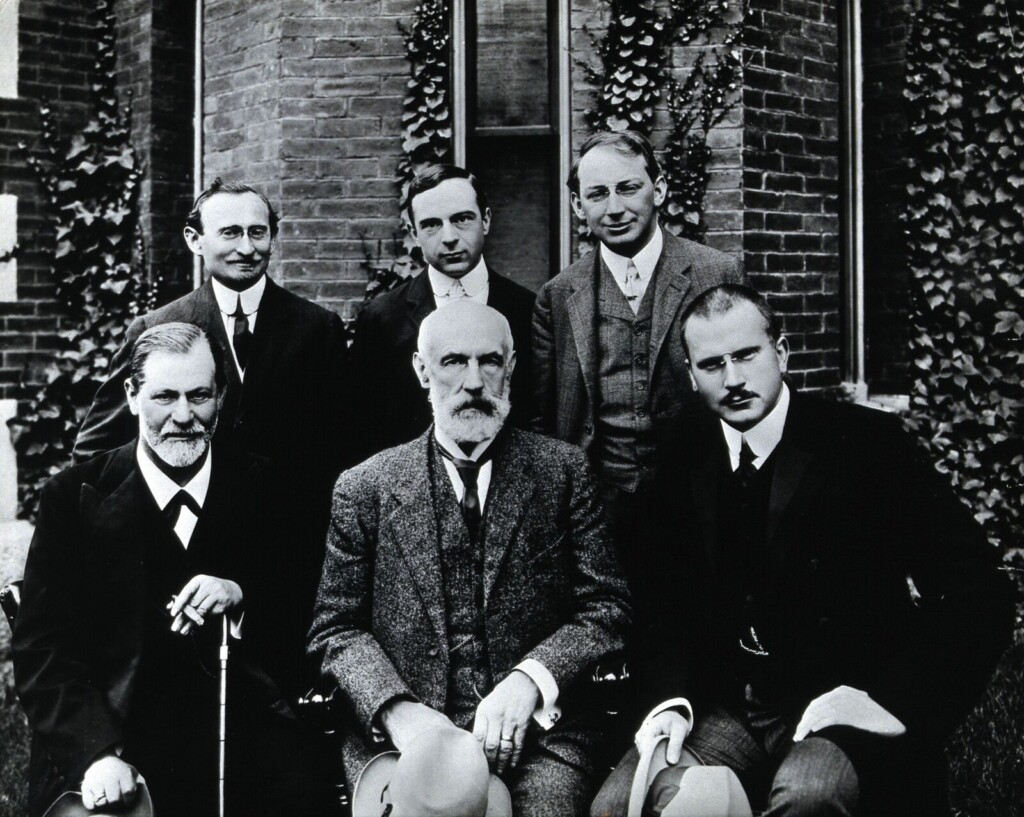
You are sitting across from someone you have known for twenty years, and somewhere in the middle of an ordinary conversation, you catch yourself performing warmth you do not feel — the nod, the laugh on cue, the careful omission of the thought that would change the temperature of the room. You notice it, and then you let it pass, because noticing it fully would cost something you are not prepared to pay right now.
That cost is exactly what Jungian individuation asks for, and why its popular reception has been so thoroughly defanged. In workshops and self-help frameworks, the Shadow gets rebranded as hidden potential, suppressed creativity, the wounded inner child waiting to be validated. The darkness is metabolized into something useful, something that will ultimately serve the narrative of personal growth. But Jung himself, writing in Aion in 1951, was precise and unsparing: integrating the Shadow does not produce moral elevation. It produces moral clarity, which is an entirely different and considerably less comfortable thing. The person who has genuinely looked at their own capacity for cruelty, manipulation, and self-serving rationalization does not become kinder as a result. They become harder to deceive — and the first person they can no longer deceive is themselves.
This distinction matters because the entire cultural apparatus around psychological self-work is built on the promise of amelioration. You do the inner labor, you emerge improved. The therapeutic contract, at its most fundamental, implies that the examined life is the better life — not just in the Socratic sense of being more fully conscious, but in the ordinary social sense of being more functional, more harmonious, easier to be around. What individuation actually threatens is far less marketable: the gradual collapse of the stories that make your current life coherent. Your generosity, examined closely, contains the need for control. Your principles, followed to their roots, reveal convenience dressed as conviction. The relationships you have described as chosen turn out to be heavily determined by patterns you inherited before you had language.
The sociologist Erving Goffman spent much of his career, particularly in The Presentation of Self in Everyday Life published in 1959, documenting the elaborate choreography by which people manage the impressions they make — not as pathology, but as the basic grammar of social existence. What he did not fully press was the question of what happens to a person who begins to see the choreography from the inside while it is still running. The performance does not stop. The social world does not accommodate someone who has decided to step out of the staging. What changes is that you can no longer take shelter in your own sincerity. You know you are performing even when you are performing authentically, and that knowledge is not relief — it is a particular kind of loneliness that has no clean resolution.
Most people, given the genuine choice and not the idealized version of it, choose the dream. Not because they are weak or unconscious, but because the alternative is not happiness. The integrated Shadow does not deliver you into freedom. It delivers you into accountability without the anaesthetic of self-ignorance — accountable for your appetites, your evasions, your complicity in arrangements that benefit you at costs you have carefully learned not to calculate. The person who has moved through individuation in any serious sense is not more at peace. They are more awake, which is not the same thing, and which no one who is truly awake would ever advertise as the reward.
A vision curated by a filmmaker, not an algorithm
In this video I explain our vision
🌑 Into the Depths: The Shadow Self and Hidden Truths
Jung’s concept of the Shadow invites us to confront the parts of ourselves we refuse to acknowledge — the repressed desires, fears, and impulses lurking beneath the surface of our conscious identity. These articles explore the psychological, literary, and philosophical dimensions of this inner darkness, tracing how the shadow manifests in masks, doubles, dreams, and the great work of individuation.
Jung and the Persona: The Mask That Becomes a Face
Where the Shadow is the dark twin we disown, the Persona is the polished face we show the world. Jung’s theory of the Persona reveals how the masks we construct to survive social life can gradually swallow our authentic self, leaving us strangers to our own depths. This article explores how the boundary between mask and face dissolves — and what we risk losing when it does.
GO TO THE SELECTION: Jung and the Persona: The Mask That Becomes a Face
Jung’s Red Book: Analysis
Jung's Red Book is the raw, visionary record of his descent into his own unconscious — a confrontation with the Shadow in its most unfiltered and terrifying form. Written over sixteen years and kept hidden for decades, it documents the inner figures, mythic encounters, and psychological revelations that would shape all of analytical psychology. To read it is to witness a mind brave enough to look into its own abyss without flinching.
GO TO THE SELECTION: Jung’s Red Book: Analysis
Jungian Individuation and the Great Work
Jungian individuation — the lifelong process of integrating the Shadow and reconciling opposing forces within the psyche — finds a striking parallel in the alchemical Great Work. The stages of nigredo, albedo, and rubedo mirror the psychological journey from darkness and dissolution toward wholeness and self-realization. This article illuminates how the ancient alchemists were, in Jung’s view, projecting inner psychological processes onto matter itself.
GO TO THE SELECTION: Jungian Individuation and the Great Work
The Strange Case of Dr Jekyll and Mr Hyde: Analysis
Stevenson’s Dr Jekyll and Mr Hyde remains one of literature’s most visceral dramatizations of the Jungian Shadow — the respectable self and its monstrous double locked in a fatal struggle for dominance. The novel anticipates Jung’s insight that the more rigorously we repress our darker impulses, the more destructive their eventual eruption becomes. This analysis unpacks the psychological and cultural layers beneath Stevenson’s gothic nightmare.
GO TO THE SELECTION: The Strange Case of Dr Jekyll and Mr Hyde: Analysis
Discover Films That Dare to Look Into the Shadow
If Jung’s exploration of the Shadow has stirred something in you, Indiecinema is where that curiosity finds its cinematic home. Our streaming platform gathers independent films that dare to explore the unconscious, the repressed, and the unseen — stories that go where mainstream cinema fears to tread. Join us and let the darkness teach you something.
👉 EXPLORE THE CATALOG: Watch Indie Films in Streaming
A vision curated by a filmmaker, not an algorithm
In this video I explain our vision

