
The Uninvited Return
You are standing in a supermarket, somewhere between the bread and the cooking oils, when a smell hits you — something between cardboard and cleaning fluid and something older underneath, something you cannot name. And before your conscious mind has time to refuse it, you are seven years old, in a hallway you had not thought about in decades, standing in front of a door you were told never to open. The fluorescent lights above you flicker. A woman with a cart apologizes for grazing your elbow. You nod, but you are not there. You are somewhere the present has no jurisdiction.

This is not nostalgia. Nostalgia is chosen, curated, performed at dinner tables when people want to seem deep. What just happened to you has no manners. It did not ask permission. It arrived with the full sensory weight of the original moment — the smell, the specific quality of the light, the low animal fear in the chest — and it did not arrive as a memory of an event but as the event itself, compressed and redeployed without warning. The psychologist Endel Tulving spent decades distinguishing between semantic memory, the archive of facts and knowledge, and episodic memory, the re-experiencing of personal time. His work through the 1970s and into his landmark 1983 book Elements of Episodic Memory established something disquieting: that remembering an episode is not retrieval but reconstruction, and sometimes that reconstruction bypasses the reconstructor entirely.
What disturbs people about involuntary memory is not the content. It is the revelation of how thin the present actually is. The self you carry through your day — the one with opinions about current events, preferences about coffee, a practiced way of entering rooms — is assembled freshly each morning from a narrative you have agreed to maintain. Sigmund Freud noticed as early as 1899, in his paper Screen Memories, that what we believe we remember most vividly from childhood is often not the significant event but a mundane substitute image hovering near it, a kind of psychic decoy. The real event, too charged to be held directly, gets displaced. The screen memory protects you from what you actually lived. What resurfaces in the supermarket hallway of your nervous system is not the decoy.
Maurice Halbwachs, the French sociologist killed in Buchenwald in 1945, argued in his posthumously completed work The Collective Memory that individual recollection is always socially scaffolded — that you remember inside frameworks provided by family, institution, language, and community. What his theory does not fully account for is the memory that escapes the scaffold entirely. The one that does not fit the family story, cannot be placed inside the sanctioned version of who you were, and therefore was never spoken, never reinforced, never given the social oxygen that would have let it calcify into narrative. These are the memories that travel underground for twenty, thirty, forty years, and surface in a supermarket.
There is a particular violence in the way the body refuses to be edited. Neuroscientists studying the amygdala’s role in emotional memory have documented since the 1990s that fear-adjacent experiences are encoded through pathways that do not pass through the hippocampal narrative-formation system with the same fidelity. Joseph LeDoux’s research on the fear circuit, detailed in his 1996 work The Emotional Brain, demonstrated that certain experiences are stored in a register that operates faster than conscious thought and is essentially inaccessible to voluntary revision. You cannot decide not to have been afraid. You cannot rewrite what your nervous system encoded before language arrived to domesticate it.
The constructed self is not a lie exactly. It is more like a working agreement between you and the version of your past you can afford to carry.
Irene
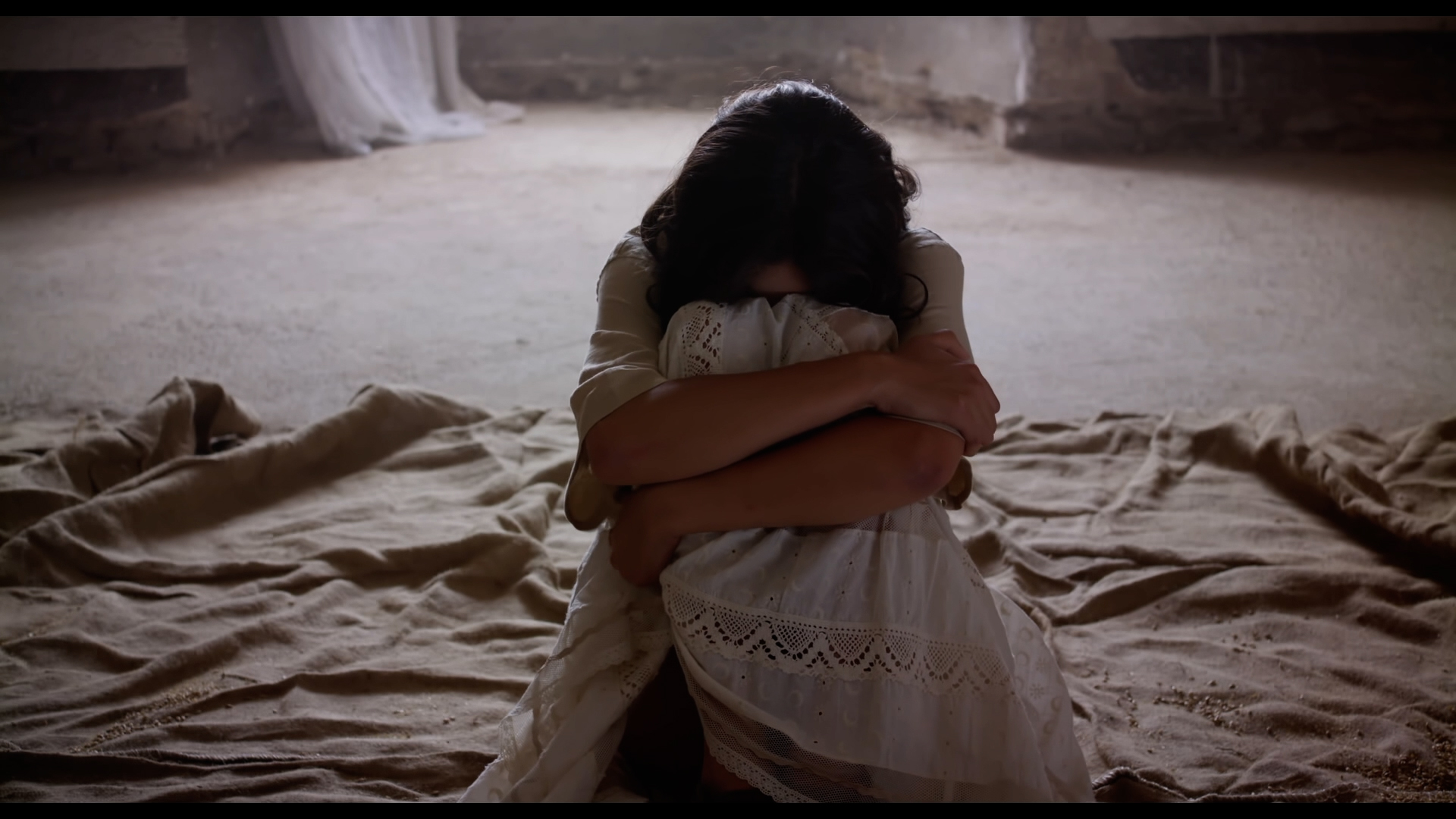
Drama, by Valerio Pampaglini, Italy, 2023.
Irene is trapped within her own unconscious, empty and ruined like an abandoned house. Through broken glass and shady figures dressed in black, a song awakens something long forgotten inside her. The film, written and directed by Valerio Pampaglini, is supported by the Rome Film Academy. It was shot in the summer of 2022 in the province of Perugia, in the municipality of Todi and at the Montenero castle.
LANGUAGE: Italian
SUBTITLES: English
Memory as Architecture, Not Archive
You remember your seventh birthday with unusual clarity — the cake, the particular yellow of the kitchen light, your mother’s voice cutting through the noise of other children. But that memory has been rebuilt so many times since the original event that what you’re accessing now is less a recording than a palimpsest, each layer slightly misaligned from the one beneath it, the whole structure held together by narrative convenience rather than factual fidelity.
Frederic Bartlett demonstrated this with uncomfortable precision in his 1932 work Remembering, a book that the psychological establishment largely ignored for decades because its conclusions were too inconvenient to absorb. Bartlett had his subjects read a Native American folk tale called “The War of the Ghosts” and then reproduce it at intervals over days and weeks. What he found was not degradation in the way one might expect from a fading photograph, not a dimming of detail while the outline held. The stories his subjects recalled were actively transformed — unfamiliar elements were unconsciously replaced with culturally familiar ones, gaps were filled with plausible inventions, and the overall shape of the narrative was bent toward what the subject already believed about how stories should go. Bartlett called this process “effort after meaning,” the mind’s compulsive drive to render experience coherent rather than accurate. Memory, in his framework, was not a library. It was a construction site.
The neuroscience that arrived seventy years later gave Bartlett’s insight a molecular basis that should have changed everything about how courts convict, how therapy operates, and how personal history is told at family dinners. When a memory is retrieved, it does not simply play back and then return to storage unchanged. The act of remembering destabilizes the neural trace, rendering it temporarily malleable — a process researchers call reconsolidation. A 2000 study by Karim Nader, Glenn Schafe, and Joseph LeDoux at New York University demonstrated in rats that blocking protein synthesis in the amygdala immediately after memory retrieval could erase a previously consolidated fear memory entirely. The implication for human cognition is not merely theoretical: every time you remember something, you are handling it with bare hands, leaving prints, and then sealing it back into storage in its altered state as though nothing happened.
What this produces, across a lifetime, is not a past but a series of retrospective fictions that feel indistinguishable from the truth precisely because they were built from real material. The emotional register of an original experience can survive long after its factual content has been silently overwritten. You may feel the weight of a grievance that is based on an event you have, without knowing it, substantially invented — not through dishonesty but through the structural logic of how memory operates. Elizabeth Loftus spent decades making this uncomfortable in legal contexts, showing through controlled experiments that eyewitness testimony, the most trusted category of human evidence for centuries, could be altered by a single leading question asked after the fact. In one landmark series of studies from the 1970s, subjects who were asked how fast cars were going when they “smashed” into each other consistently reported higher speeds and invented broken glass that was not present in the footage, compared to subjects asked the same question using the word “hit.” The verb alone rewrote the scene.
This is not a flaw in an otherwise reliable system. It is the system. The brain prioritizes coherence over accuracy because coherence is what allows a self to persist through time, to make decisions, to maintain relationships. A mind that corrected itself constantly against an unedited record of the past would be paralyzed by contradiction. So it smooths, selects, and quietly authors. The past you carry is a collaborative novel written by every version of yourself that has ever needed something from it.

The Social Contract of Forgetting
You are sitting in a civic building — a courthouse, a registry office, a town hall — and something about the architecture unsettles you in a way you cannot name. The ceilings are too high, the stone too deliberately aged, the proportions arranged to produce a specific feeling: that whatever happens here has always happened here, that the institution precedes you and will outlast you, and that your presence inside it is merely a brief permission granted by something far older and more certain than yourself. What you are feeling is not paranoia. It is the building doing exactly what it was designed to do.
Paul Connerton, in his 2008 study How Societies Forget, makes a distinction that most political theory quietly avoids: that forgetting is not the failure of social memory but one of its primary functions. Cultures do not accidentally lose track of certain events. They cultivate the conditions under which those events become unspeakable, untransmittable, experientially inert. He identifies what he calls “prescriptive forgetting” — the kind officially sanctioned after political transitions, when new regimes require populations to move forward precisely because moving forward means not looking back at who authorized the previous atrocities. The 1970 Yaoundé Agreement, the amnesties written into Chile’s 1978 Decreto Ley 2.191, the deliberate archival silences following Indonesia’s 1965 mass killings: in each case, the legal architecture of forgetting preceded the psychological one. The state did not wait for people to forget. It created the conditions in which remembering became socially illegible, professionally dangerous, privately shameful.
What makes this machinery so effective is that it never announces itself as erasure. It announces itself as healing, as national reconciliation, as the maturity required to build a future rather than remain imprisoned by grievance. The language of moving on is always the language of those for whom the past is not a wound but an inconvenience. Survivors do not forget because time has passed. They forget — or learn to perform forgetting — because the social world around them has made memory an act of bad citizenship.
The individual replicates this logic internally with a fidelity that is almost architectural. When a person cannot account for years of their own experience, when they describe entire periods of their life as blank or distant or somehow belonging to someone else, they are not simply failing to recall. They have internalized a structure of selective attention that was never entirely their own. Freud noticed this when he wrote about screen memories in 1899 — the way trivial recollections occupy the exact psychic space where significant ones have been suppressed, leaving the mind apparently furnished but actually emptied of what mattered. The screen is not chaos. It is a kind of governance.
Connerton pushes further than Freud because he is less interested in the individual mind than in the social body that trains it. He argues that bodily practices — the way people walk, greet each other, perform deference or authority — encode and transmit memories that official culture has already declared inadmissible. Entire histories survive in gesture, in the slight hesitation before a certain surname, in the particular way a community falls silent at a specific date on the calendar. The knowledge persists below the threshold of statement because statement was made impossible.
This is the pressure point that collective and personal forgetting share: both operate not through the destruction of experience but through the systematic withdrawal of the social permission to name it. A memory without language, without a listener, without a context in which its telling is legitimate, does not disappear — it migrates, it presses against the body’s daily routines, it resurfaces in reactions that seem disproportionate until you understand what they are actually responding to.
Walk Cheerfully
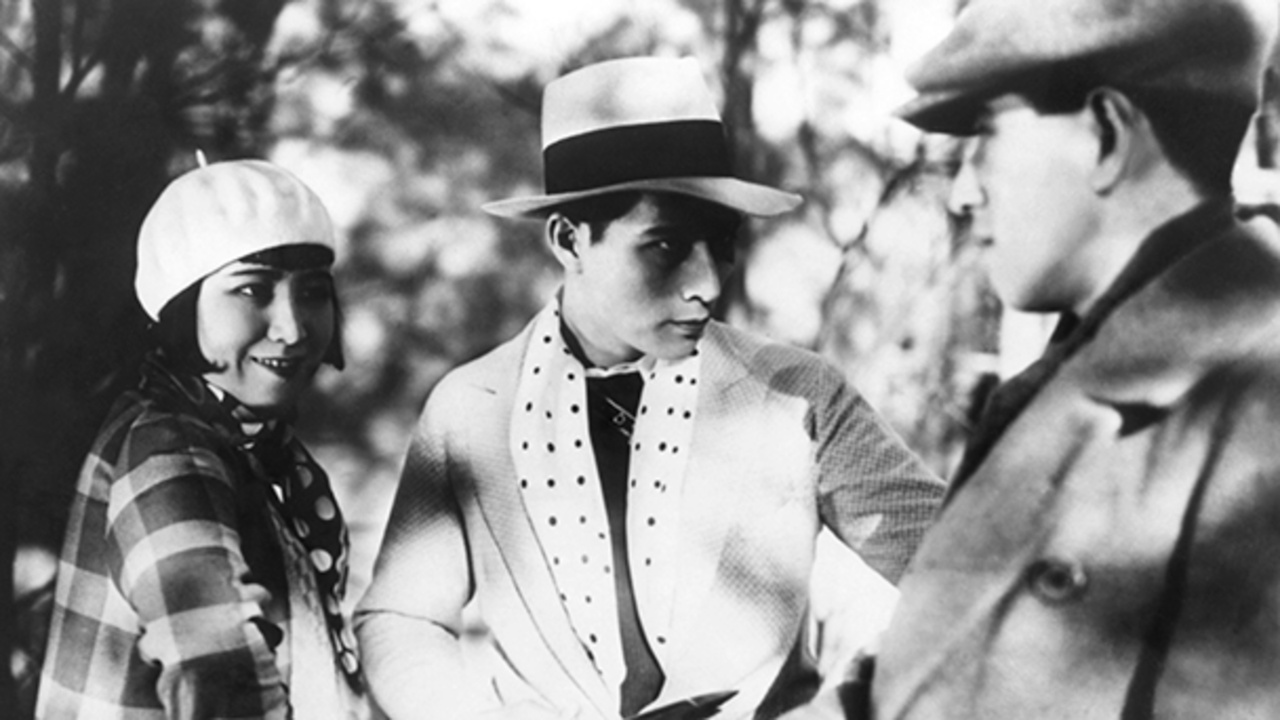
Drama, crime, by Yasujirō Ozu, Japan, 1930.
The plot of the film follows the story of Kenji, a low-ranking gangster, who decides to give up his life of crime and settle down. He falls in love with Yasue, a young car mechanic, and the two plan to get married. However, Kenji's past catches up with him when his former gang mates try to get him involved in a new criminal business. "Walk Cheerfully!" explore themes of redemption, love, and the struggle to break free from a life of crime. Like many of Ozu's works, the film delves into the complexities of human relationships and social norms.
It is a film that enchants the viewer with its emotional depth and visual elegance, through the winding roads of redemption and love, in a subtle ballet between past and future. Ozu's direction is masterful: through the skilful use of the characters' facial expressions and the dynamics of relationships, he captures the viewer's heart. Visual storytelling is a symphony of emotions and meanings that speaks directly to the viewer's soul without the need for words. "Walk Cheerfully!" it is a work that transcends time, as it explores universal themes such as the desire for redemption, the power of love and the struggle against one's past. Ozu reminds us that each of us has a chance to change and find happiness, even when it seems that fate has already written the script for us.
LANGUAGE: Japanese
SUBTITLES: English, Spanish, French, German, Portuguese
The Violence of Recognition

You are sitting across from someone you have known for years — a colleague, a friend, a person whose face has become so familiar it has stopped registering — and they say something ordinary, a passing remark about a place, a smell, a specific quality of afternoon light, and without warning you are not there anymore. Not metaphorically. The room empties of its present-tense reality and you are somewhere else entirely, inside something you believed you had finished with, something you had filed under resolved. The person across from you keeps talking. You nod. But you have already left.
What makes this moment so difficult to account for is not the memory itself but the rewriting it performs on everything that came after it. Sigmund Freud, working through the case of Emma in his 1895 “Project for a Scientific Psychology,” developed a concept he called Nachträglichkeit — deferred action, or more accurately, retroactive revision. The argument is not that trauma returns unchanged from storage. It is that the past event was not yet fully meaningful when it occurred, and a later experience — sometimes trivial, sometimes seemingly unrelated — retroactively assigns it a significance it could not have carried at the time. The first event does not cause the wound. The second event turns the first into a wound, reaching backward through time to restructure what had appeared to be settled ground.
This is a fundamentally different model of causality than the one most people carry without examining it. Linear causality insists that causes precede effects, that the past acts on the present, that what happens first determines what comes next. Nachträglichkeit inverts this entirely: the present reaches back and remakes the past, endowing earlier moments with a retroactive force they never possessed in their original occurrence. The thing you experienced at fourteen did not hurt you then with the intensity it hurts you now, because the interpretive frame that makes it legible as damage was not yet available to you. You needed to live further into your life before the earlier event could fully detonate.
This is why recognition so often arrives with a quality of violence rather than comfort. It does not feel like remembering. It feels like being struck by something that should already have landed and passed. The philosopher Jean Laplanche, who spent much of his career elaborating Freud’s concept beyond the clinical frame, argued in his 1987 “New Foundations for Psychoanalysis” that the human subject is constituted precisely by this temporal distortion — that the self is not a continuous narrative moving forward but a structure perpetually reorganized by the retroactive weight of what it thought it had already processed. To know yourself is not to recover a stable origin. It is to keep discovering that earlier versions of your experience meant something different than you believed, and that this revision is not optional.
What this means practically is that the social contexts in which memory resurfaces are rarely equipped to receive what actually arrives. The colleague who made the casual remark did not hand you a memory. They handed you a detonator. The original charge had been placed earlier, in circumstances that seemed at the time merely uncomfortable, or confusing, or simply unremarkable. Time and accumulated experience quietly loaded the mechanism. The social moment in the present supplied only the trigger. And yet the person across the table will spend the rest of the afternoon wondering if they said something wrong, because the gap between what was transmitted and what was received is total, unbridgeable from the outside, legible only to the one for whom the ground has just shifted beneath an otherwise unremarkable Tuesday.
The Self That Cannot Own Its History
You open an old photograph and feel, with complete certainty, that you remember the moment it captures — the heat, the noise, the specific texture of that afternoon. But the person holding the photograph has lived decades of subsequent experience that have silently rewritten every emotional register you bring to that image. The memory feels like retrieval. It is, in fact, construction.
Paul Ricoeur spent years circling this problem with the precision of someone who knows the wound is deeper than it looks. In Oneself as Another, published in 1992, he proposed that personal identity is not a stable core but a narrative achievement — something the self must continuously produce, not something it inherits and carries intact. He distinguished between idem-identity, the brute continuity of a body persisting through time, and ipse-identity, the interpretive coherence a person weaves from the raw material of lived experience. The terrifying implication he never fully softened is that the narrator of your life is not the character who lived it. There is no sovereign subject behind the story. There is only the telling.
This is not a metaphor designed to unsettle you in a comfortable, philosophical way. It has a clinical weight. The neurologist Antonio Damasio demonstrated in The Feeling of What Happens, published in 1999, that the autobiographical self is assembled moment by moment from core biological states — it is not housed somewhere, waiting to be consulted. Every act of remembering is also an act of rewriting, because the neural substrate doing the remembering has been physically altered by everything that occurred between the original event and the present retrieval. Memory does not pull from a fixed archive. It reconstructs from a modified brain, which means the self that claims ownership of a past it cannot access without distortion is making a claim that the evidence quietly refuses.
What keeps returning, then, is never exactly what was lost. The returning fragment carries the distortion built into the gap itself — the years of silence, the things learned afterward, the grief that accumulated around the original wound before anyone thought to name it. Trauma researchers working in the tradition opened by Pierre Janet in the late nineteenth century, and later expanded by Bessel van der Kolk in The Body Keeps the Score, published in 2014, found that the most persistent memories are precisely those that were never integrated into a coherent narrative at the moment of occurrence. They return not as stories but as sensations, postures, sudden collapses of affect — the body insisting on something the narrative self has no grammatical structure to contain. The self that cannot own its history is not failing at memory. It is failing at the fiction that memory requires.
Every culture has built elaborate institutions to manage this failure. Ritual, confession, testimony, therapy, autobiography — all are technologies for converting what the body holds into something the narrative self can claim as its own. They work, partially, and at a cost. What they produce is not recovered truth but a livable version of the past, coherent enough to support a continuous sense of who one is. Ricoeur understood this as the only kind of identity available to beings constituted in time — not a possession but a practice, always provisional, always exposed to revision by the next encounter with what it tried to domesticate.
The self that cannot fully own its history is not a damaged self. It is the only kind of self that has ever existed — built from borrowed fragments, inhabited by returns it did not authorize, sustained by a story it is simultaneously living and inventing, never ahead of the evidence long enough to call itself finished.
A vision curated by a filmmaker, not an algorithm
In this video I explain our vision
🧠 When Memory Becomes a Labyrinth of the Self
Forgotten memories do not simply vanish — they linger beneath the surface, shaping identity, distorting time, and returning when least expected. The following articles explore the philosophical, literary, and psychological dimensions of memory, loss, and the fragile boundary between past and present.
Paul Ricœur: Life and Philosophy of Memory
Paul Ricœur devoted much of his philosophical life to understanding how memory, forgetting, and narrative identity are deeply intertwined. His work reveals that remembering is never a neutral act — it is an interpretation, a reconstruction that shapes who we believe ourselves to be. For Ricœur, the past resurfaces not as a fixed truth but as a living tension between what was and what we need it to have been.
GO TO THE SELECTION: Paul Ricœur: Life and Philosophy of Memory
Proust’s In Search of Lost Time: Analysis
Proust’s monumental novel is perhaps the most radical literary exploration of involuntary memory ever written, showing how a single sensation can unlock an entire buried world. Time in Proust is not linear but stratified — the past does not disappear, it waits, encoded in smell, taste, and texture. His work remains the definitive meditation on how forgotten experience can suddenly resurface with overwhelming emotional force.
GO TO THE SELECTION: Proust’s In Search of Lost Time: Analysis
Bergson’s Matter and Memory: Time and Consciousness
Henri Bergson‘s philosophy of memory challenges the common assumption that the past is simply gone, arguing instead that every lived moment is preserved in its entirety within consciousness. His concept of duration offers a framework for understanding why forgotten memories never truly disappear but exist in a kind of suspended state, ready to re-emerge. Bergson’s thought is essential for anyone seeking to understand the deep mechanics of how the past resurfaces in the present.
GO TO THE SELECTION: Bergson’s Matter and Memory: Time and Consciousness
Joan Didion and Loss: The Year of Magical Thinking
Joan Didion‘s account of grief after the sudden death of her husband is one of the most lucid and devastating explorations of how loss disrupts the ordinary flow of memory. She shows how the mind, overwhelmed by absence, compulsively reaches back into the past in search of meaning, pattern, and a way to undo what cannot be undone. Her writing demonstrates that when the past resurfaces in the context of grief, it does so with a force that can temporarily shatter one’s grip on the present.
GO TO THE SELECTION: Joan Didion and Loss: The Year of Magical Thinking
Discover Cinema That Remembers What Others Forget
Films about memory, identity, and the return of the past are among the most intimate and challenging works in independent cinema. On Indiecinema, you can explore a carefully curated selection of independent films that dare to look inward, where the past is never truly forgotten. Join our streaming platform and discover the stories that conventional cinema leaves in the dark.
👉 EXPLORE THE CATALOG: Watch Indie Films in Streaming
A vision curated by a filmmaker, not an algorithm
In this video I explain our vision

