
The Body That Already Knows
You reach for the phone to send a message, and your thumb is already navigating to the contact before your brain has had time to issue the instruction. Then it stops. Not you — your thumb. The body aborts the gesture before the mind has formulated a single word of protest, and what follows is not sadness, not tears, not the cinematic collapse you have been bracing for since the funeral. What follows is a silence inside the motion itself, a stillness so sudden it feels structural, as if something load-bearing in the architecture of the ordinary has given way without warning.

This is where grief actually lives. Not in the eulogy, not in the condolence cards arranged on the mantelpiece, not in the long phone calls with relatives you only speak to at weddings and deaths. It lives in the reflexes. It lives in the half-second before recognition catches up with behavior, in the moment the nervous system reaches for a world that no longer contains a particular person and finds only air where solid ground used to be. The philosopher Maurice Merleau-Ponty spent much of his 1945 Phenomenology of Perception arguing that the body is not a vehicle the self rides around in but the primary medium through which reality is structured and known. The bereaved body, then, is not simply a body that feels sad. It is a body operating on a map that has not yet been redrawn, still navigating by landmarks that have been demolished.
Neurologically, this is not metaphor. The brain’s predictive processing framework, developed and elaborated extensively by Karl Friston in his work on the free energy principle, holds that the mind is essentially a prediction machine — constantly generating models of what is about to happen next and updating them against incoming sensory data. A person who has been deeply woven into your daily life represents thousands of those predictions per day: the weight of their presence in a shared bed, the cadence of their footstep on the stairs, the particular register of their voice when they say your name differently depending on whether they want something or simply want to acknowledge you. Bereavement does not delete these predictions. It simply stops confirming them, over and over, every waking hour, until the mismatch between expectation and reality accumulates into something that breaks the architecture of normal functioning.
What culture offers in response to this rupture is almost insultingly inadequate. The five stages formulated by Elisabeth Kübler-Ross in her 1969 work On Death and Dying were drawn from observations of terminally ill patients confronting their own mortality — not from bereaved survivors — and were never intended as a universal linear sequence. They became one anyway, absorbed into popular psychology with the speed and totality of a doctrine, because a numbered list offers the illusion of traversable terrain. If grief has stages, grief has an exit. The map reasserts itself over the demolished landscape. But the people who actually live inside bereavement know that there is no sequence, only weather — fronts moving in without announcement, calm intervals that feel like recovery and are not, sudden gales triggered by handwriting on an old envelope or the specific angle of winter afternoon light through a window you both used to sit near.
The word grief comes from the Old French grever, meaning to burden, to oppress, to afflict with weight. It entered English somewhere in the thirteenth century carrying the physical before the emotional, the heaviness before the feeling. That etymological memory is more clinically accurate than most therapeutic frameworks. The bereaved do not simply feel loss. They carry it in the musculature, in the disrupted sleep architecture, in the cortisol spikes that research published in journals of psychoneuroimmunology has linked directly to complicated grief states and measurable immune suppression. The body does not grieve symbolically.
Along For The Ride

Drama, Comedy, by Bryan Simon, USA, 2001.
Two brothers, Terry (Randy Batinkoff) and Vance (Dylan Haggerty), embark on a journey into the desert with the body of their recently deceased father. Their goal is to find a burial site for him, but along the way unresolved family conflicts resurface. Terry, a successful former baseball player, has always exerted a dominant influence on the younger Vance, a humble mailman. Both carry within themselves the burden of a complicated relationship with their father, Jake (J.E. Freeman), a former professional player obsessed with sports. Even after his death, Jake appears to his children in dream sequences, but instead of offering wise advice, he continues to be distant and authoritarian. The journey thus becomes not only a physical but an emotional journey, in which the two brothers confront their mutual grudges and the emotional legacy of their father.
The film, directed by Bryan Simon with a budget of 150,000 dollars, was shot in extreme weather conditions, with a screenplay adapted by Jim Moores from a work by Randall Wheatley. The film also explores the role of sport as a vehicle for communication between father and son. For many men, expressing feelings is difficult, while talking about sport is a natural and shared language. "Along for the Ride" addresses these issues with sensitivity and realism, resulting in a touching work for those who have experienced similar family dynamics. An indie not to be missed for lovers of quality independent cinema.
LANGUAGE: English
SUBTITLES: Spanish, French, German, Portuguese
The Invention of Mourning Stages
You are handed a pamphlet in the waiting room of a grief counseling center, sometime in the late 1990s, and on it is a diagram — a clean upward staircase with five steps, each labeled in calm sans-serif font: denial, anger, bargaining, depression, acceptance. Someone has drawn the steps in ascending order, as though grief were a ladder you climb and eventually exit from the top, dusting your hands, having completed the curriculum of loss. You hold this pamphlet and you feel, obscurely, that you are being lied to, though you cannot yet name what the lie is.
Elisabeth Kübler-Ross published On Death and Dying in 1969 after conducting interviews with terminally ill patients at the University of Chicago, a project she undertook partly in response to the medical establishment’s profound discomfort with dying people — with their presence, their questions, their refusal to be managed into silence. What she observed in those conversations was not a sequence. It was a vocabulary. Five recurring emotional states that dying people moved through, revisited, skipped, collapsed under, and sometimes never reached at all. She was cataloguing the weather of a particular kind of consciousness, not issuing a timetable. The distinction matters enormously, and it was almost immediately discarded.
By the 1970s and 1980s, what had been a clinical observation developed in a specific context — people facing their own imminent death — had been extracted, sanitized, and applied universally to every form of loss imaginable: divorce, job loss, the death of a pet, a miscarriage, a friendship that faded. The sociologist Tony Walter, writing in the 1990s on bereavement theory, noted how quickly grief models became prescriptive rather than descriptive, how they told people not what they might feel but what they were supposed to feel, and in what order. The therapeutic apparatus that grew around Kübler-Ross’s framework transformed a compassionate act of listening into something that functioned more like a performance rubric.
What this institutionalization produced was a particular kind of social pressure dressed in the language of healing. If you did not move through the stages in recognizable sequence, or if you lingered too long in one of them, or if you felt acceptance before you felt anger, you were implicitly failing at your own grief. The grief was no longer yours — it had been contracted out to a model. And the model’s primary function, beneath all its therapeutic packaging, was to reassure the living that loss is temporary, processable, and terminable. That somewhere on the other side of the correct emotional sequence, you would return to productivity.
The psychologist George Bonanno, whose longitudinal research on bereavement through the 1990s and early 2000s fundamentally disrupted stage theory, found that the most common response to loss among the people he studied was not prolonged depression followed by gradual recovery — it was resilience that appeared almost immediately, coexisting with grief in ways the stage model could not account for. Bonanno’s 2004 paper in the American Psychologist, “Loss, Trauma, and Human Resilience,” documented that roughly half of bereaved people showed minimal or no disruption to their functioning, which the therapeutic framework had quietly classified as pathological — labeled as denial, as avoidance, as proof that grief had not yet been properly confronted. The absence of visible suffering was reinterpreted as a symptom.
This inversion reveals something worth holding still for: a cultural system that cannot tolerate grief that doesn’t perform itself legibly, and equally cannot tolerate grief that refuses to end. The stage model offered a solution to both problems simultaneously — it prescribed visible suffering and promised its conclusion. What it could never accommodate was the grief that simply settles into a person like sediment, that doesn’t peak and resolve but restructures the landscape of an entire interior life so quietly that the person themselves might not notice until years later that they are walking differently than they used to.

What Cultures Forbid You to Feel
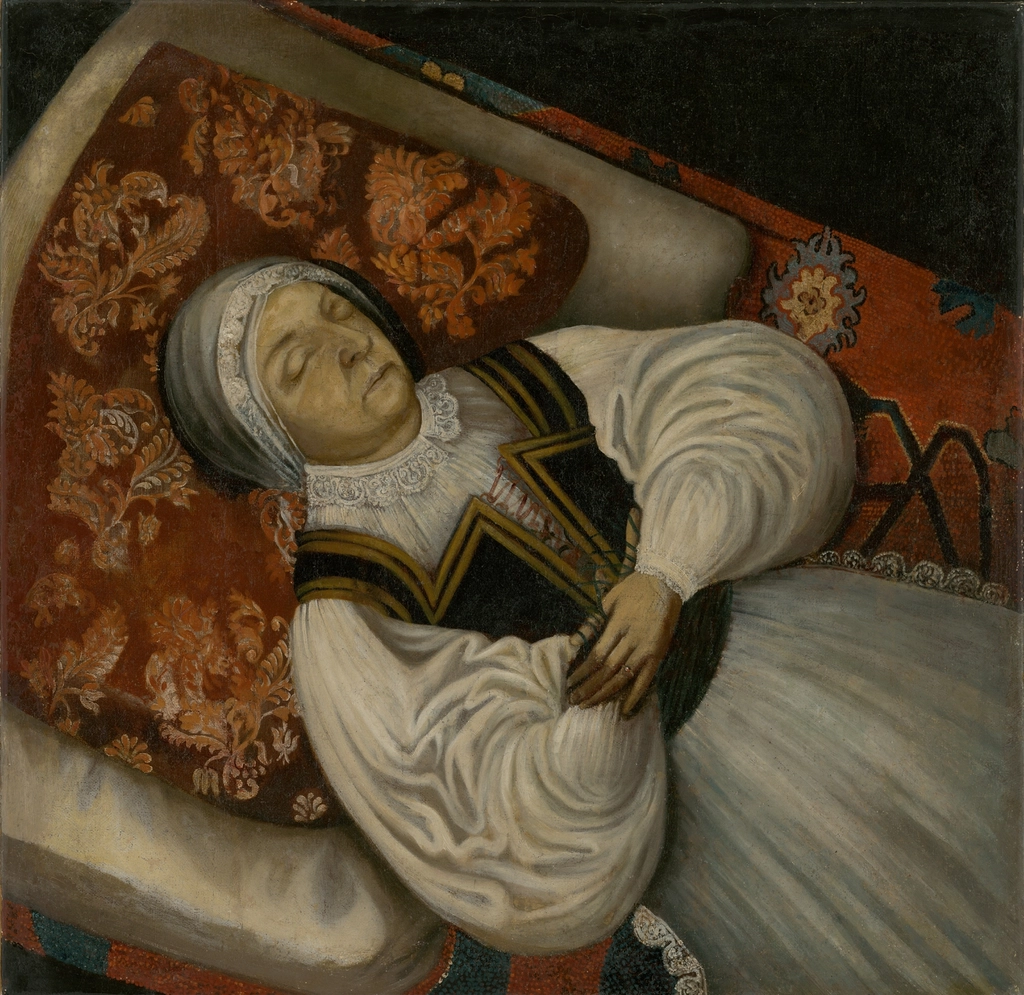
You are handed three days. Three days to fall apart, reassemble yourself, and return to your desk as though the person you loved most has simply stepped out of the room for a moment. The American bereavement leave standard — an average of three days for the death of an immediate family member, according to data compiled by the Society for Human Resource Management — is not a policy born of cruelty so much as one born of a deeper and more insidious logic: that grief is an interruption, and interruptions cost money.
This did not arrive fully formed. It was built, brick by brick, through a transformation in how Western societies organized time itself. Before industrialization restructured daily life around the factory clock, mourning in European communities was communal, extended, and embedded in the rhythms of agricultural and religious calendars. The dead were laid out at home. Neighbors came for days. The body remained visible, a fact rather than a euphemism. What the industrial revolution dismantled was not merely the pace of production but the temporal architecture that had made prolonged grief socially possible. When the factory whistle became the organizing principle of human time, any emotion that could not be completed on a schedule became, by definition, a disorder.
Victorian mourning culture responded to exactly this pressure, though in a way that has been almost universally misread as excess. The elaborate codes of widow’s weeds — the mandatory black crêpe dresses, the jet jewelry, the graduated stages of mourning that could last up to four years — were not, as they are often characterized, expressions of authentic grief given social permission. They were mechanisms of legibility and control. By externalizing grief into costume and ritual calendar, Victorian society made private suffering publicly readable and therefore governable. The widow in full mourning was not free to feel whatever she felt; she was required to perform a prescribed emotional script, visible to all, so that her community could track her, evaluate her, and eventually declare her returned to normal. Grief became a uniform. And like all uniforms, it told you what you were allowed to be while wearing it, and what you were required to stop being once it came off.
The sociologist Norbert Elias, in his 1982 work “The Loneliness of the Dying,” traced precisely how modernity sequestered death and its aftermath behind walls of embarrassment and institutional management. The dying moved into hospitals. The bereaved moved back into offices. What Elias identified was a civilizing process applied not just to bodily functions but to emotional ones — the progressive privatization of anything that reminded the social body of its own fragility. Grief became shameful not because people stopped feeling it but because the structures around them stopped having room for it.
What is rarely said plainly is that the acceptable grief window in contemporary Western culture does not merely shorten mourning — it selects for a particular kind of person. The person who recovers quickly, who returns to function, who processes loss without burdening the collective with visible distress is implicitly held up as the psychologically healthy ideal. Those who grieve longer, louder, or more visibly are labeled complicated, stuck, or in clinical need of intervention. The psychiatric establishment codified this in 2013 when the DSM-5 removed the bereavement exclusion from the diagnosis of major depressive disorder, meaning that intense grief two weeks after a significant loss could now qualify as a pathology requiring treatment. Whether that change reflects genuine clinical insight or a further medicalization of human suffering is a question the field has not settled, but the structural pressure it reflects is unmistakable: grief has a deadline, and missing it makes you a patient.
What you are forbidden to feel is not always declared. Sometimes it is simply made inconvenient enough that feeling it becomes a choice you can no longer afford.
The Pathologization of Normal Suffering
You are handed a form at the intake desk, and somewhere between the checkbox for “duration of symptoms” and the dropdown for “functional impairment,” you realize the institution has already decided how long your dead mother was allowed to matter.
The American Psychiatric Association added Prolonged Grief Disorder to the DSM-5-TR in March 2022, drawing a clinical boundary at twelve months for adults who have lost a spouse, parent, or child. Beyond that threshold, if the yearning remains intense, if the world still feels genuinely emptier, if you have not reintegrated into life’s forward motion with sufficient velocity, the suffering earns a code. F43.8, to be precise. A billable unit of pain.
What makes this boundary so revealing is not its cruelty but its confidence. Twelve months is not derived from longitudinal grief research with anything close to consensus. George Bonanno’s work at Columbia, particularly his 2004 studies on bereavement trajectories published in the Journal of Consulting and Clinical Psychology, demonstrated that grief paths are radically heterogeneous — some people stabilize quickly, others oscillate for years, and the difference correlates far more with the nature of the relationship and the conditions of the death than with any fixed calendar. The DSM’s twelve-month line is not a scientific finding. It is an administrative decision wearing the costume of one.
The distinction matters because once you medicalize a threshold, you simultaneously medicalize everyone who crosses it. The category creates the disorder as much as it identifies it. Ian Hacking, the Canadian philosopher of science, described this as “looping effects” in his 1999 work The Social Construction of What? — the idea that diagnostic categories reshape the self-understanding of people placed inside them, who then begin to experience their condition through the category’s own vocabulary. A widow who grieved for eighteen months before the DSM-5-TR existed was simply a widow who took longer. The same widow today is a widow with a disorder, and that word lands differently in the body, in the insurance negotiation, in the therapist’s treatment plan.
There is a particular cultural logic underneath this that goes unspoken in clinical settings. Capitalism has a relationship with time that is fundamentally allergic to mourning. Grief is economically unproductive. It disrupts attention, reduces output, strains workplace relationships, and resists the motivational rhetoric that keeps people performing. A society that has built its social architecture around continuous productivity cannot afford, structurally or psychologically, to treat grief as a legitimate long-duration state. So it doesn’t. It reclassifies it. What was once the natural cost of loving someone becomes, past an acceptable window, a treatable deviation from functional norms.
Philippe Ariès spent much of his scholarly life documenting the West’s shifting relationship to death, and in The Hour of Our Death, published in 1981, he traced how the twentieth century gradually moved dying and mourning out of public life and into sequestered, managed spaces — hospitals, funeral homes, therapy offices. The grief that was once wept openly at the graveside, witnessed and held by community, became something to be processed privately and concluded efficiently. The DSM-5-TR is not a rupture in this history. It is its logical endpoint: the moment when the informal social pressure to “move on” acquired a diagnostic code and a treatment protocol.
What no committee meeting at the APA can quite account for is the specific gravity of grief that refuses abbreviation. When someone mattered enough that their absence restructures your perception of time itself — when you still reach for the phone before remembering, when the news of something beautiful still instinctively turns toward the person who is no longer there to receive it — that persistence is not pathology. It is a form of fidelity. And a culture that pathologizes fidelity is not asking what’s wrong with the grieving person. It is asking what’s wrong with itself.
Attachment, Severance, and the Self That Depended on the Other
You wake one morning and reach for your phone to tell someone something funny, something small, something that would only matter to them — and then remember. That pause, that arrested gesture, is not sentiment. It is the nervous system encountering a structural absence where a living connection used to be. The hand moves before the mind catches up because the relationship had become architecture, not feeling.
John Bowlby spent decades demonstrating, through his three-volume Attachment and Loss series completed between 1969 and 1980, that the human organism does not experience relationships as optional emotional additions to an otherwise intact self. From infancy onward, the psyche literally organizes itself around reliable others — calibrating threat responses, regulating arousal, constructing a working model of reality that depends on those figures remaining present and consistent. The child is not simply fond of the caregiver. The child’s nervous system has been built in dialogue with that caregiver’s nervous system, and the architecture of the self carries the imprint of that dialogue permanently.
What Bowlby could not have fully anticipated, though his later collaborators like Mary Ainsworth began to trace it, was the degree to which adult intimate bonds replicate this structural dependency at far greater complexity. Two people who have lived together for years, or spoken daily, or worked in sustained creative partnership, do not merely know each other. They have become cognitive prosthetics for one another — finishing thoughts, holding memories the other has let slip, providing the specific quality of attention that allows the other to feel coherent. The psychologist Daniel Stern, writing in The Interpersonal World of the Infant in 1985, described something he called the evoked companion: the internalized presence of another that shapes how one experiences even solitary moments. Adults in deep attachment carry this evoked companion constantly, which means bereavement does not remove a person from one’s life so much as it removes a person from one’s cognition.
This distinction is devastating and largely unspeakable in ordinary social language. Condolence rituals are organized around loss as subtraction — someone was here, now they are gone, and the remainder is a diminished version of what existed before. But what grief actually feels like from the inside is closer to a kind of aphasia, a scrambling of the self’s operating system. The bereaved person cannot locate their own preferences as clearly. They forget what they like to eat, what opinions they hold on things that used to feel obvious, what version of themselves shows up in a room without the other person’s gaze to stabilize it. This is not depression masquerading as grief, though the two frequently intersect. It is the literal discovery that one’s identity was never as singular as the grammar of the first person suggested.
There is a particular cruelty in the cultural expectation that grief should proceed toward restoration of the prior self, since that self does not exist to be restored. The philosopher Paul Ricoeur, in Oneself as Another published in 1992, argued that selfhood is fundamentally narrative and relational — that the coherent identity one experiences as “I” is always already entangled with others who witness, interrupt, and complete that narrative. When one of those others is permanently severed, the narrative does not merely lose a character. It loses the specific mode of self-understanding that the relationship made possible. Some of who you were can only be known in the presence of someone who no longer exists to know it.
This is why the bereaved sometimes describe feeling not only sad but smaller — as though a dimension of themselves has been placed beyond reach rather than destroyed. The word loss, with its implication of misplacement, may be more accurate than anyone using it casually ever intended.
A vision curated by a filmmaker, not an algorithm
In this video I explain our vision
The Social Pressure to Recover

You are sitting across from someone who loves you, and they are watching your face with that particular attention — not the attention of grief, but of measurement. They are checking whether you are getting better. Whether the percentage of you that is still broken has decreased since last Tuesday. You can feel the calculation happening behind their eyes, and so you give them something to work with: a small smile, a mention of an activity you did, a sentence that contains the word “forward.” You are not lying, exactly. You are performing the only version of grief they are able to receive.
Arlie Hochschild spent years inside the labor structures of American emotional life, and what she found in “The Managed Heart” (1983) was not merely that people suppress feelings at work — it was that entire industries, and by extension entire cultures, generate what she called “feeling rules”: prescriptions for which emotions are appropriate, in what quantity, and for how long. The flight attendant who must smile regardless of her own interior weather is not an aberration. She is simply a legible version of what everyone around you is also demanding, quietly, in the language of concern and care. Grief has a feeling rule too, and it runs approximately as follows: acute for the first two weeks, visibly softening by the second month, substantially resolved by six months, and after that, privately managed, never again publicly aired without apology.
What this produces is not recovery. It produces a double life. The mourner learns to maintain two simultaneous realities: the one they can offer to the room, and the one they return to when alone, which has not moved at all, which is still standing in the same spot, still holding the same weight. The sociological concept here reaches beyond Hochschild — it touches what Erving Goffman in “The Presentation of Self in Everyday Life” (1959) called the front stage and the back stage, the managed performance and the unmanaged interior. For the grieving person, the backstage is not a place of authenticity sought voluntarily. It is a place of exile. They have been pushed there by the discomfort of everyone who loves them.
Resilience as a cultural value did not emerge from psychology as a neutral observation. It arrived, particularly in its late-twentieth-century American form, as an ideology — a moral position dressed in therapeutic language. The resilient person “bounces back.” The language is explicitly mechanical: you are a material, and the test of your quality is how quickly you return to your original shape. But no one who has lost something foundational returns to their original shape. The shape is permanently different. What resilience culture pathologizes, then, is not the failure to recover but the honesty about having been altered. The person who says “I am not the same and I am not sure I will be” is read as stuck, as wallowing, as someone who needs more time — or the right kind of help, administered until they produce the expected output.
The cruelty of this is not usually intentional. The people who watch the grieving face for signs of improvement are not enemies. They are afraid. George Bonanno, a clinical psychologist at Columbia University whose research on bereavement has tracked thousands of bereaved individuals since the 1990s, found genuine evidence that many people are more resilient than expected — but his work has been selectively harvested by popular culture to imply that everyone should be, that difficulty in recovery is an outlier requiring explanation rather than a normal human response to devastating loss. The data was transformed into a prescription, and the prescription transformed into a judgment.
What happens to the grief that cannot be performed away is not that it disappears. It goes somewhere interior and pressurized, finding its way out in forms that no longer announce themselves as grief at all — in a rage nobody can source, in a numbness that looks like peace.
What Is Actually Being Lost When Someone Dies
You are standing in a room that still smells like them. The coat is on the hook. The mug is on the shelf. Everything that organized their world is still here, and yet the one unbridgeable fact is this: the person who perceived this room from the inside, who woke into it every morning carrying the specific weight of their own history, will never do so again. Not in diminished form. Not elsewhere. The entire apparatus of their inner life — the particular angle at which they registered joy, the precise texture of what bored them, the half-formed thoughts they never spoke aloud — has been switched off with the completeness of a universe ending, because that is precisely what it was.
Thomas Nagel argued in his 1974 essay “What Is It Like to Be a Bat?” that subjective experience is irreducibly first-personal — that no amount of third-person description, however exhaustive, can capture what it is actually like to inhabit a particular consciousness. He was making an epistemological point about the limits of physicalist explanation, but grief forces that abstraction into the body. What you are mourning, underneath the rituals and the condolence cards and the organized meals brought by neighbors, is the permanent inaccessibility of a first-person universe that you could never fully access even when its owner was alive. Death does not create the distance. It finalizes it.
This is why grief so often carries a specific texture of futility that mourners rarely name directly: the futility of retrospective desire. You want to ask them something. Not something practical, not something that could be answered by anyone else — something that only they would have answered in precisely their way, from inside the unrepeatable configuration of memory and perception they spent a lifetime assembling. The question dissolves because the only mind that could have answered it no longer exists. What remains is the question’s echo, bouncing off a wall that wasn’t there before.
Philosophy has long distinguished between the loss suffered by the person who dies and the loss suffered by those who remain, and the distinction turns out to be more destabilizing than clarifying. The dead, on the dominant secular account, lose nothing in the experiential sense — there is no subject left to experience deprivation. Epicurus pressed this point with surgical coldness in the third century BCE, insisting that where death is, the self is not. But this logic, however airtight, does nothing to account for what the living actually feel, which is not the grief of their own anticipated death but the grief of a specific, named, irreplaceable consciousness having been annihilated. The asymmetry is the wound. You are left behind in a world that continues, holding the shape of someone who no longer has an inside.
What makes this vertigo so difficult to metabolize is that human beings are extraordinarily poor at conceptualizing absolute cessation. The psychologist Jesse Bering documented across multiple studies — compiled in his 2011 book “The Belief Instinct” — that even avowed atheists, when asked intuitively rather than reflectively, tend to attribute ongoing mental states to the dead. The mind, it turns out, cannot easily simulate the end of simulation. It keeps imagining the dead person knowing they are dead, wondering what they are experiencing now, feeling curious about the living. This is not sentimentality. It is a structural limitation of a consciousness that has never successfully modeled its own non-existence, being asked to model someone else’s.
Grief, then, in part, is the collision between two facts the mind cannot hold simultaneously: that the person was absolutely real, and that they are absolutely gone. Not absent. Not distant. Gone in the way that a perspective can be gone — entirely, with no remainder, no archive, no possible retrieval. Every memory you carry of them is yours now, filtered through your apparatus, bearing your distortions. What they actually experienced, moment to moment, in the privacy of their own perception, was never yours to keep.
The Grief That Has No Object
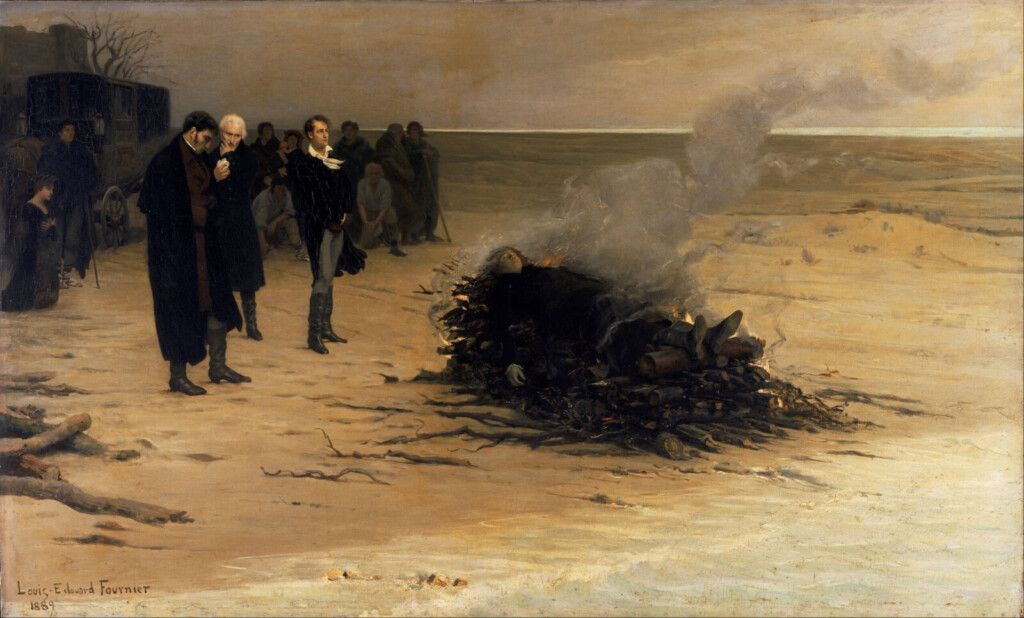
You are already grieving something you have never been allowed to name. Not a death, not a departure with a clear date and a closed door, but something more like a slow erasure — a person who is still breathing somewhere, a future that existed once as a real weight in your chest, a version of yourself that dissolved so gradually you only noticed it was gone when you reached for it and found nothing.
Pauline Boss, the family therapist who spent decades studying families of soldiers missing in action, introduced the concept of ambiguous loss in her 1999 work to describe exactly this kind of frozen grief — the mourning that cannot complete itself because the object of loss refuses to fully disappear. The wife of a man with advanced dementia who sits at the dinner table every evening but cannot remember her name. The adult child whose parent emigrated, survived, sends money, calls twice a year, and is somehow unreachable in every way that matters. Boss demonstrated that this form of grief produces uniquely destabilizing psychological effects precisely because it generates no ritual, no permission, no social architecture of recognition. Society knows what to do with a coffin. It has absolutely no script for the man sitting across from you who used to be someone else.
What the culture does not say aloud, though, is how many of its members are carrying this exact weight at any given moment. The end of a friendship that dissolved without an argument, without a scene, through sheer distance and silence until the relationship simply ceased to exist. The grief of infertility, which asks you to mourn a child who never existed, whose face you invented, whose absence has no grave. The person who left a high-control religious community and must mourn simultaneously the cosmology that organized their entire reality, the community that loved them conditionally, and the version of themselves who believed. Each of these losses is massive. None of them gets a casserole delivered to the door.
Erik Erikson’s framework of psychosocial development, particularly his account of identity formation, assumed a relatively stable cultural container in which selfhood could be constructed and revised. But the contemporary moment multiplies the versions of the self that can be lost — the career identity that evaporated in a restructuring, the political self made obsolete by events, the relational self that existed only inside a particular bond. Each version of you that circumstances have retired is a small bereavement without ceremony, and the accumulation of these unmourned micro-losses shapes behavior in ways that look to outsiders like mood, like personality, like attitude, when in fact they are sediment.
The philosopher Thomas Attig, writing on relearning the world after loss, argued that grief is not primarily an emotional state but a cognitive and existential project — the work of re-mapping a world that has been fundamentally altered by an absence. This framing is useful precisely because it refuses the sentimentalization of grief, refuses the idea that feeling sad is the whole of it. But even Attig’s account presupposes a loss that can be identified and named. The harder problem is the loss that cannot be formulated clearly enough to be worked on — the shapeless weight that sits somewhere between nostalgia and depression, between longing and low-grade despair, that the bereaved themselves sometimes cannot locate with enough precision to know what they are missing.
What cultural silence around these losses actually produces is not stoicism but a kind of dissociation — the learned habit of continuing to function inside a grief that has been declared illegitimate or invisible, carrying it not as a wound but as a feature, as though the weight were simply who you are now rather than something that happened to you and was never permitted its proper reckoning.
🌑 When Loss Becomes a Journey Within
Grief is rarely a straight path — it bends back on itself, resurfaces in dreams, and hides in the spaces between words. These related articles explore the many faces of loss: how we remember, how we mourn, and how literature and thought have tried to make sense of the unbearable. Each piece opens a door into the interior landscape that sorrow carves inside us.
Joan Didion and Loss: The Year of Magical Thinking
Joan Didion’s account of the year following her husband’s sudden death is one of the most lucid and devastating explorations of grief ever written. In ‘The Year of Magical Thinking,’ she dissects how the mourning mind constructs irrational rituals and bargains in a desperate attempt to reverse the irreversible. This article examines how Didion’s work became a landmark in understanding bereavement not as weakness, but as the logic of love pushed to its limit.
GO TO THE SELECTION: Joan Didion and Loss: The Year of Magical Thinking
C.S. Lewis and the Death of His Wife: A Grief Observed
C.S. Lewis, one of the twentieth century’s most celebrated Christian apologists, was profoundly shattered by the death of his wife Joy Davidman, and his raw grief journal ‘A Grief Observed’ stands as a testament to how loss can strip even the most articulate believer of certainty. This article explores how Lewis navigated the collision between faith and devastation, producing a text that continues to resonate with anyone who has faced the silence left by death. It is a rare document in which intellectual clarity and emotional collapse exist on the same page.
GO TO THE SELECTION: C.S. Lewis and the Death of His Wife: A Grief Observed
Grief in Childhood: When Children Lose Their Parents
Children experience grief with a particular intensity because they lack the cognitive frameworks adults use to absorb and narrate loss. This article investigates the psychological dimensions of childhood bereavement, exploring how the death of a parent reshapes identity, attachment, and the child’s developing sense of a safe world. Drawing on clinical research and literary examples, it offers a compassionate map of a grief that is often invisible to those around it.
GO TO THE SELECTION: Grief in Childhood: When Children Lose Their Parents
Forgotten Memory: When the Past Resurfaces
Memory and grief are inseparable companions: what we have lost tends to resurface not when we seek it but when we are least defended against it. This article explores the phenomenon of forgotten or repressed memory returning to consciousness, drawing on psychoanalytic theory and neuroscience to explain why the past never truly disappears. Understanding how buried memories resurface is essential to understanding why grief so often feels like an encounter with something that has always been waiting.
GO TO THE SELECTION: Forgotten Memory: When the Past Resurfaces
Discover Cinema That Dares to Face the Dark
If these reflections on grief and loss have stirred something in you, independent cinema offers some of the most honest and courageous explorations of what it means to mourn, to remember, and to slowly return to life. On Indiecinema streaming you will find films that do not flinch from the depth of human experience — stories told with the intimacy and courage that only independent filmmakers dare to bring. Come and let cinema do what it does best: remind you that you are not alone.
👉 EXPLORE THE CATALOG: Watch Indie Films in Streaming
A vision curated by a filmmaker, not an algorithm
In this video I explain our vision

