
The Silence That Passes for Love
You are twelve years old and your father is sitting across from you at the kitchen table, and something has just happened — something that cracked you open, humiliated you at school or frightened you in a way you cannot name — and you are waiting. You are waiting for him to speak. His hands are around a mug. His eyes are somewhere slightly to the left of your face. The silence stretches. And then he clears his throat, stands, and says something about dinner, or the weather, or nothing at all, and you understand in that moment, with the particular and devastating clarity of childhood, that this is all there is. Not because he doesn’t love you. But because he has nothing else to give.

What gets transmitted between fathers and sons is almost never what either of them intends. The psychoanalyst Christopher Bollas, writing in 1987 in “The Shadow of the Object,” introduced the idea of the “unthought known” — knowledge that lives in the body before it lives in language, experience that has been absorbed but never processed, never spoken, never made available to consciousness. He was describing what happens when a caregiver’s emotional absence becomes, paradoxically, a form of presence: the child learns not just that silence exists, but that silence is what intimacy looks like. The mug on the table, the averted gaze, the cleared throat — these are not failures of communication. They are a complete transmission. The son receives them perfectly.
Historians of masculinity have traced this architecture of restraint to specific cultural and economic formations. The industrial revolution did not merely reorganize labor; it reorganized affect. When the father left the domestic sphere to work in a factory or an office, the emotional pedagogy that had previously been embedded in shared physical work — farming, craft, apprenticeship — was severed. Michael Kimmel, in “Manhood in America” published in 1996, documented how the American middle-class father of the late nineteenth century became structurally defined by his absence, and how that absence was reframed as provision, sacrifice, love. The man who was not there was not failing his son. He was working for him. The silence was the gift.
What makes this particular inheritance so difficult to examine is that it does not feel like a wound. It feels like normalcy. The son who grew up in that kitchen does not, as an adult, typically describe his father as cold or withholding. He describes him as strong, or private, or “a man of few words,” and he says these things with something that resembles pride. The emotional logic is almost irrefutable from the inside: to name the silence as a deprivation would be to accuse the man who provided everything, who worked without complaint, who never asked for anything. The psychological cost of that accusation is higher than the cost of simply accepting the terms of love that were offered.
Sociologist Arlie Hochschild, in her 1983 study “The Managed Heart,” described the way emotion becomes labor when it is systematically suppressed and redirected — but she was writing primarily about women in service industries. The male version of emotional management operates differently: it is not the performance of feeling but the performance of its absence. The father who does not speak at the kitchen table is not empty. He is working. He is managing an interior life that was never given the tools of expression, passing the unspoken terms of that management directly to his son, who will one day sit across from his own child with a mug in his hands and feel the words dissolve somewhere between his chest and his throat, and interpret that dissolution not as failure but as the dignified weight of being a man.
Along For The Ride
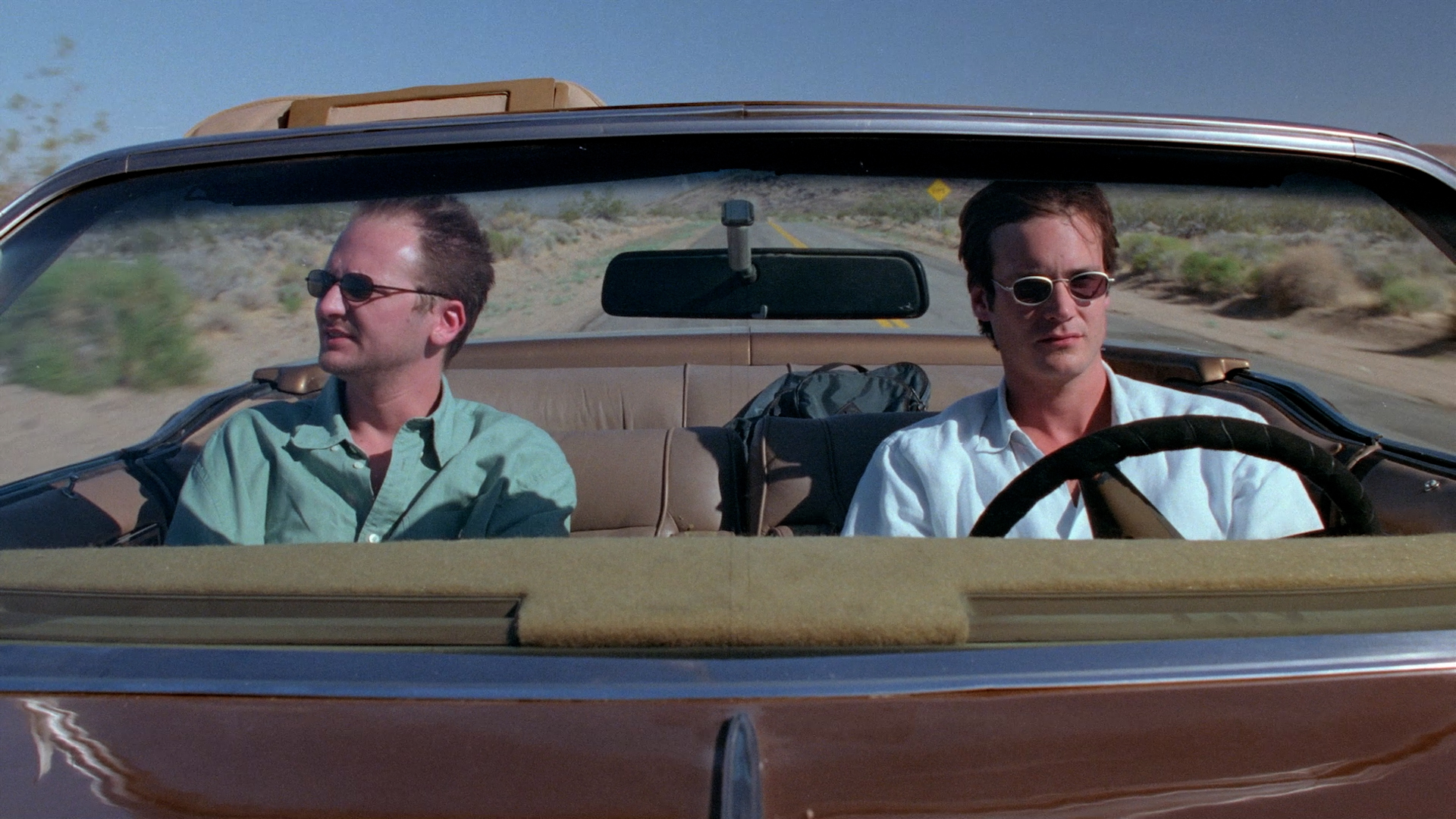
Drama, Comedy, by Bryan Simon, USA, 2001.
Two brothers, Terry (Randy Batinkoff) and Vance (Dylan Haggerty), embark on a journey into the desert with the body of their recently deceased father. Their goal is to find a burial site for him, but along the way unresolved family conflicts resurface. Terry, a successful former baseball player, has always exerted a dominant influence on the younger Vance, a humble mailman. Both carry within themselves the burden of a complicated relationship with their father, Jake (J.E. Freeman), a former professional player obsessed with sports. Even after his death, Jake appears to his children in dream sequences, but instead of offering wise advice, he continues to be distant and authoritarian. The journey thus becomes not only a physical but an emotional journey, in which the two brothers confront their mutual grudges and the emotional legacy of their father.
The film, directed by Bryan Simon with a budget of 150,000 dollars, was shot in extreme weather conditions, with a screenplay adapted by Jim Moores from a work by Randall Wheatley. The film also explores the role of sport as a vehicle for communication between father and son. For many men, expressing feelings is difficult, while talking about sport is a natural and shared language. "Along for the Ride" addresses these issues with sensitivity and realism, resulting in a touching work for those who have experienced similar family dynamics. An indie not to be missed for lovers of quality independent cinema.
LANGUAGE: English
SUBTITLES: Spanish, French, German, Portuguese
The Historical Architecture of Paternal Authority
You sign the school form and hand it back without reading it, because your name in that box has always felt automatic, inherited, something that precedes your own decision to be present at all — and that automaticity is not personal failure, it is architecture, and the architecture is very old.
The Roman pater familias held what jurists called patria potestas, a power recognized formally in the Twelve Tables of 451 BCE and elaborated through centuries of Justinianic codification: the absolute legal authority of the father over every child born within his household, including the right to expose infants, sell sons into bondage, and adjudicate disputes that would elsewhere require a magistrate. This was not metaphor. It was civil infrastructure. The father did not love his children into personhood — he conferred personhood upon them through legal recognition, a ceremony called the tollere liberum in which the newborn was literally lifted from the ground by the father’s hands, acknowledging the child’s right to exist within the family’s legal orbit. Fatherhood was not a feeling. It was a verdict.
What this produced, structurally, was a category of being that could not be a person without first being a possession. The Roman son remained under patria potestas until his father’s death, regardless of his own age or achievement, which meant that the most decorated general, the most celebrated orator, the most accomplished public figure could simultaneously hold no independent legal standing within his own household. Julius Caesar’s father died when Caesar was fifteen, and historians have speculated that this early legal emancipation was a non-trivial factor in the speed of Caesar’s autonomous political movement. The accident of a father’s death was, in Rome, the formal beginning of a son’s subjectivity.
Medieval household law did not dissolve this logic — it translated it into the vocabulary of Christian stewardship. The father ceased to be an absolute sovereign and became instead a custodial agent of God’s order, responsible for the spiritual discipline of his children in a way that still permitted, and in many canonical traditions actively required, corporeal punishment as a form of theological instruction. The household codes embedded in Ephesians 6, read through the lens of medieval exegetes like Thomas Aquinas, framed paternal correction not as cruelty but as participation in divine pedagogy. The father who struck his son was understood to be channeling a higher corrective will. What changed between Rome and the medieval period was not the father’s right to dominate but the narrative used to dignify that domination.
Then came the early modern consolidation of property law, and the father’s authority attached itself to a new mechanism of inheritance that made emotional distance economically rational. John Locke’s Second Treatise of Government, published in 1689, attempted to theorize parental authority as temporary and educative rather than permanent and possessive — but the property structures his political philosophy simultaneously defended ensured that the father’s continued control over land, title, and capital gave him a leverage over adult children that no treatise could philosophically neutralize. A son might be declared free in principle while remaining dependent in practice, which is a condition that generates precisely the psychological knot that most men who grew up in propertied households will recognize without being able to name: the performance of gratitude toward a man whose approval functions as an economic reality rather than a purely emotional one.
What the law encoded over two millennia, the culture absorbed as nature. By the time Sigmund Freud was theorizing the Oedipal dynamic in the 1900s, he was not discovering a universal psychological structure so much as he was accurately describing the psychic residue of a very specific legal history — a history in which the father’s power to grant or withhold recognition had been so thoroughly institutionalized that it had begun to feel like a feature of the unconscious rather than a product of Roman civil procedure.

Freud's Trap and the Sons Who Fell Into It
You are twenty-two years old, standing in your father’s kitchen while he tells you something you didn’t ask to hear about your future, and somewhere beneath the politeness with which you nod, something ancient and violent stirs. You don’t name it. You barely feel it as yours. But it moves through you with a familiarity that suggests it has been moving through men for a very long time.
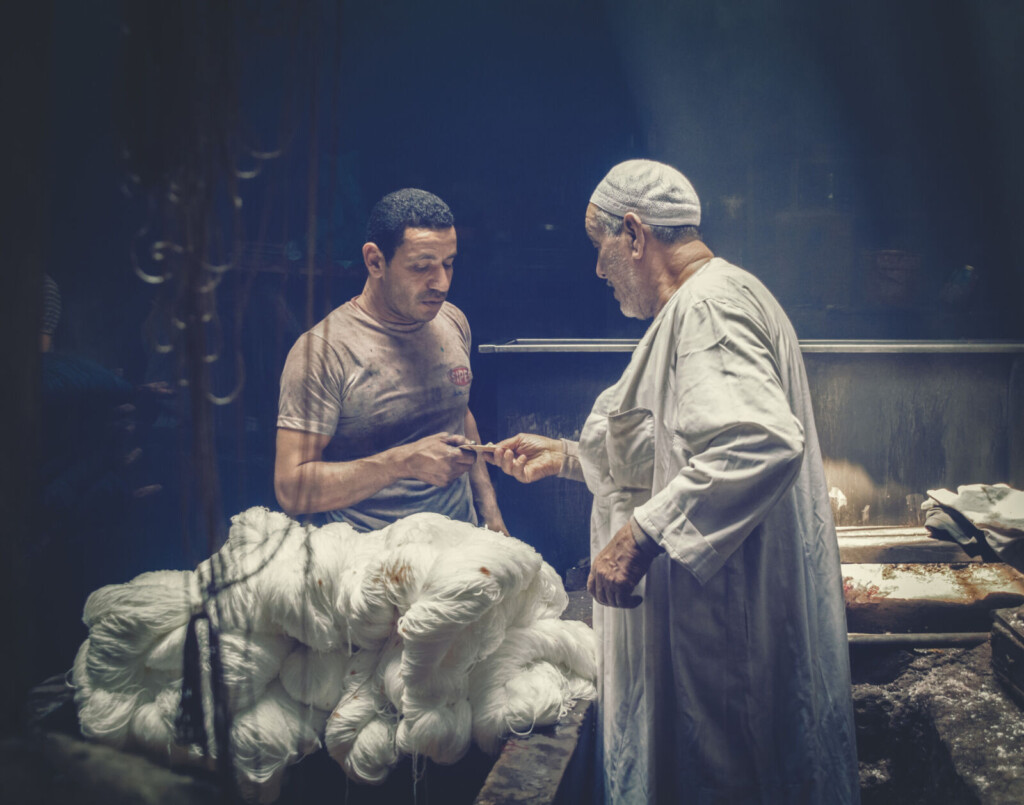
Sigmund Freud gave that stirring a name in 1900, inside the dense architecture of “The Interpretation of Dreams,” and in doing so he did something far more consequential than describe a psychological phenomenon. He legislated one. The Oedipus complex, as Freud constructed it, proposed that the son’s developmental path required a symbolic murder of the father — that identity was forged in rivalry, that desire and competition were inseparable, that to become a man was to overcome a man. The framework was presented as an excavation of universal human psychology, but it was in fact a portrait of a very particular late-Victorian bourgeois household dressed in the costume of myth. Freud’s father, Jakob, was a wool merchant who had fallen into financial ruin, a gentle and somewhat diminished figure whom Freud simultaneously pitied and struggled to escape. The theory of primal patricidal aggression emerged from that specific domestic atmosphere and then traveled outward into the world as though it were the skeleton beneath all fatherhood.
What happens when a culture receives a map of its own behavior and begins using that map to navigate? The anthropologist Gregory Bateson called this a “deutero-learning” effect — the process by which learning to behave in certain ways becomes learning that those ways are natural, inevitable, fixed. By the mid-twentieth century, Freud’s framework had migrated from clinical case studies into pediatric manuals, literary criticism, advertising psychology, and the structuring assumptions of postwar American masculinity. Boys were told, in the soft language of developmental stages, that friction with their fathers was not only normal but necessary. Therapists encouraged men to identify their “unresolved Oedipal conflicts.” Popular culture absorbed the vocabulary and reproduced it as entertainment, as drama, as the baseline tension in almost every story about men. The rivalry was no longer something Freud had observed — it was something the culture had manufactured a delivery system for.
The self-fulfilling quality of this script is measurable. Sociologist Michael Kimmel, in “Manhood in America” published in 1996, documented how twentieth-century American fathers and sons increasingly organized their relationship around performance and evaluation rather than intimacy — fathers who assessed and sons who auditioned. This wasn’t simply the result of industrialization or absent fathers working long hours, though those forces were real. It was also the consequence of a theoretical inheritance that told both parties what they were supposed to want from each other, which turned out to be, above all, supremacy. A father who believed his son needed to defeat him in order to grow withdrew his own emotional availability as a kind of gift. A son who believed he was engaged in a zero-sum contest stopped looking at his father as a person with an interior life and started reading him as an obstacle with a face.
What gets lost in the Oedipal architecture is so obvious it almost hurts to name: the possibility that a son might want something from his father that has nothing to do with surpassing him. Not submission, not victory — something closer to recognition that doesn’t require a winner. Jacques Lacan, refining Freud’s topology in his 1953 seminars, introduced the figure of the symbolic father — the Name-of-the-Father — as a function rather than a flesh-and-blood person, the structural position of authority and law rather than any particular man. This was philosophically sophisticated, but it pushed the actual father further from view, made him less legible as someone who was also lost, also improvising, also inheriting scripts he hadn’t written.
What Industrialization Stole Without Asking
You watch your father leave in the dark and return in the dark, and somewhere between those two absences you are supposed to learn how to become him.
For most of recorded human history, that gap did not exist. A boy learned what his father knew by standing next to him while he knew it — at the forge, in the field, behind the counter of the workshop. The transmission was not instructional but atmospheric: you absorbed the pace of a man’s hands, the way he negotiated failure, the specific silence he kept when the work was hard. There was no curriculum. There was only proximity, and proximity was enough, because it was everything. The anthropologist David Gilmore, writing in Manhood in the Making in 1990, documented how across dozens of cultures the initiation of boys into adult masculinity was almost never abstract — it was always tied to shared labor, shared risk, shared physical space. The father did not explain manhood. He performed it, daily, in front of a witness.
The industrial revolution ended that arrangement without announcing it was doing so. Between roughly 1760 and 1850, the economic logic of the factory extracted fathers from the domestic and agrarian world and deposited them in buildings their sons could not enter. This was not experienced, at the time, as a loss of something precious — it was experienced as progress, as wages, as the future arriving on schedule. But the structural consequence was profound and irreversible: for the first time in human history, the primary economic unit ceased to be the family working together and became the individual laborer selling time to an employer. The father disappeared from the field of vision, and what he left behind was money.
What money cannot do is show a child how a man moves through difficulty. It cannot demonstrate patience under physical strain, or the particular dignity of a craftsman who refuses shoddy work even when no one is watching. The wage arrived at the end of the week as an abstraction — proof that the father existed somewhere and was doing something, but stripped entirely of texture, of method, of visible struggle. The historian John Tosh, in A Man’s Place: Masculinity and the Middle-Class Home in Victorian England published in 1999, traces how Victorian fathers began retreating not only physically but psychologically, investing their masculine identity in the public realm of work and treating the home as a place of rest from significance rather than a site of transmission. The father became a figure who provided without being present, and provision without presence created a new emotional grammar that children were supposed to accept as love.
What emerged was a symbolic economy of fatherhood that ran almost entirely on implication. The father’s absence was supposed to be understood as sacrifice. The sacrifice was supposed to be understood as devotion. The devotion was supposed to be understood as a form of closeness that required no actual closeness. Each generation inherited this translation table without questioning why it required so many steps, without asking what was lost in each conversion. By the time Talcott Parsons formalized it sociologically in the 1950s — describing the father’s role as “instrumental” rather than “expressive,” the breadwinner as the structurally appropriate model — what had begun as an industrial accident had become a theory of healthy family function.
The cruelest part is that the sons who grew up under these absent fathers then raised their own sons the same way, not because they were indifferent but because they had no alternative model stored in the body. You cannot pass on what was never given to you in the first place, and what the factory system stole was precisely the kind of knowledge that lives in the hands, in the rhythm of shared mornings, in the unremarkable dailiness of watching someone you love do ordinary things with full attention.
The Wound That Gets Passed Off as Strength
You are sitting across from your father at a table you have shared for decades, and you realize with a slow, nauseating clarity that you have never once seen him ask for help. Not from a doctor, not from a neighbor, not from you. The silence between you is not comfortable. It is load-bearing.
Raewyn Connell’s 1995 work Masculinities introduced a concept that should have dismantled the way we talk about fatherhood but largely didn’t: hegemonic masculinity, the idea that there is not simply one way of being a man but a dominant configuration that organizes all others into hierarchy and subordination. What Connell exposed was not a natural order but a political one, maintained through institutions, through labor arrangements, through the small daily theater of how men carry themselves in front of other men. The father who does not flinch, does not ask, does not admit confusion is not demonstrating character. He is performing compliance with a structure that benefits from his silence.
Michael Kimmel’s research, particularly his 2013 book Guyland, traced the origins of male shame with a precision that is difficult to argue with: shame is not a byproduct of masculine socialization, it is its engine. Boys are not taught what to be so much as they are taught what they cannot be, and the list is long and merciless. They cannot be soft. They cannot be uncertain. They cannot need. By the time a boy becomes a father, this negative architecture is so deeply installed that its original construction is invisible. He does not experience himself as constrained. He experiences himself as formed.
This is the generational trap that is hardest to name because it does not look like failure from the inside. A man who endured emotional coldness from his own father and survived it, who built something, who provided, who did not break — he has evidence. The evidence is himself. And so when he raises a son with the same emotional distance, he is not neglecting the child. He is, by his own logic, preparing him. He is transmitting the tool that worked. What neither man pauses to examine is what the tool cost, what it quietly amputated in order to function.
Sociologists who study intergenerational transmission of behavior note a particularly durable pattern: children do not simply inherit their parents’ actions, they inherit their parents’ adaptations to pain. The father who learned to suppress grief because grief was dangerous in his household of origin does not consciously choose to model suppression. He simply cannot access another register. His nervous system learned a specific grammar of emotion under duress, and that grammar is what his children receive, not as pathology but as normalcy, as the texture of what fathers are.
The word toughening is worth interrogating. It implies that something is being added — resilience, capacity, endurance. But what is actually happening in the pedagogies Connell and Kimmel describe is subtraction. Feeling is removed. Dependency is removed. Vulnerability is removed. The result is not a stronger self but a more defended one, which is not the same thing. A defended self can absorb impact. It cannot, however, receive intimacy, register tenderness, or recognize the moment when the person across the table needs something that cannot be provided through mere presence and stoic competence.
What is most devastating about this inheritance is that it carries its own justification embedded within it. The father who was hardened believes hardness is love expressed in its most durable form. He is not wrong that he loves his son. He is catastrophically wrong about what love requires him to do with that feeling — whether to armor it or to speak it, whether to demonstrate it through endurance or through the far more terrifying act of being known.
A vision curated by a filmmaker, not an algorithm
In this video I explain our vision
Mythologies of Reconciliation

You rehearse the speech for years. Not consciously — you don’t sit down with paper — but somewhere in the background processing of your life, you are composing it. What you will say to him when the moment finally arrives. What he will say back. How the air in the room will change.
The deathbed reconciliation is one of the most durable fictions Western culture produces about fathers and sons, and its durability should disturb us far more than it does. It functions not as a description of how repair actually works between men, but as a permission structure for indefinite deferral. If the account can always be settled at the end, then there is no urgency to settle it now. The narrative of the final conversation — cathartic, tearful, arriving just in time — does not reflect emotional reality. It reflects emotional convenience, dressed in the language of grace.
Anthropologists studying grief rituals across cultures have noted that deathbed reconciliation scenes carry enormous social weight precisely because they compress decades of relational failure into a single legible moment. The compression is the point. It transforms a chronic condition into an acute event, which means it can have a resolution, a before and after, a story arc. Ernest Becker argued in The Denial of Death, published in 1973, that human beings construct elaborate symbolic systems to manage the terror of mortality — and among the most elaborate of these is the fiction that death itself can serve as a corrective, that the approach of extinction softens what decades of ordinary living could not. The dying father who finally says what needed to be said is not a figure of psychological truth. He is a figure of psychological necessity, invented to make the unbearable retrospectively meaningful.
What actually happens in those rooms is considerably less legible. Men who have spent forty years in a particular relational grammar do not abandon it in the presence of medical equipment. The same evasions appear, wearing different clothes. The dying man speaks about practical things — the house, a debt, a name he wants remembered — because the practical has always been the only channel available to him for emotional transmission. The son receives it in the same register it was sent, decoding obligation as love, instruction as apology, because that is the only translation available after four decades of the same language. This is not reconciliation. It is the relationship continuing in its established form until it cannot continue at all.
The cultural insistence on the redemptive finale also performs a specific social function: it protects the surrounding community from the discomfort of unresolved grief. A son who walks out of a hospital room having made peace with his father is a manageable figure. A son who walks out carrying the same wound he walked in with, now permanent and sealed, is a figure that social scripts do not easily accommodate. The mythology of reconciliation is partly produced for the witnesses — the other family members, the friends, anyone who might otherwise be required to sit with the reality that some damage simply does not get undone.
Philippe Ariès, in his landmark historical study The Hour of Our Death published in 1981, traced how Western modernity progressively relocated death from the communal and public into the medicalized and private — and in doing so, transformed dying from a witnessed social act into a managed personal event. That privatization created the conditions for the reconciliation fantasy to flourish. When death becomes a scene with a small cast, it becomes available for theatrical reimagining, for the script in which everyone finally says the true thing. The hospital room becomes a stage. The morphine drip becomes a prop.
And the son who believed the performance was the relationship has no language left for what the silence feels like after.
The Son Who Becomes the Father He Refused
You swore you would never be that man. Not the silence at the dinner table, not the way criticism arrived dressed as concern, not the particular exhaustion in his eyes that said the world had long since stopped being interesting. You catalogued his failures with the precision of someone building a legal case, and you carried that case with you into every room you entered as an adult, certain that consciousness of the pattern was equivalent to freedom from it.
Daniel Stern spent decades watching what happens in the first eighteen months of a human life, cataloguing in his 1985 work The Interpersonal World of the Infant the micro-exchanges between caregivers and infants that form what he called representations of interactions that have been generalized — RIGs, in his clinical shorthand. These are not memories in any conventional sense. They are not stored as narratives that can be reviewed and revised. They are stored as procedural knowledge, the way the body knows how to ride a bicycle without consulting the mind. They are the felt grammar of relationship: how proximity gets negotiated, how rupture gets repaired or does not, how emotion is received or quietly extinguished. A child does not learn these patterns the way they learn a language. They absorb them the way tissue absorbs pressure — through repetition, through the body, through ten thousand small moments that leave no individual trace but collectively constitute a person’s entire intuition about what intimacy is and how it behaves.
The tragedy is structural, not personal. When a son defines himself in opposition to his father, he is making a conscious, linguistic, narrative choice. He is operating in the register of autobiography. But the relational templates installed by those early years operate in a register that autobiography cannot reach. What the body learned about how love feels, about when to go cold and when to pursue, about the precise emotional distance that constitutes safety — none of that is revised by the decision to be different. John Bowlby, developing attachment theory across his three-volume Attachment and Loss beginning in 1969, described internal working models that function like cognitive maps of relationship, maps that are not just beliefs about others but expectations so deeply embedded they feel indistinguishable from reality itself. The man who tells himself he is nothing like his father is often running on a map drawn entirely by his father.
What replicates is never the surface behavior. A son who watched his father use cold withdrawal as punishment may become a man who shouts instead, and spend years reassured by the difference. But the underlying emotional logic — that love is conditional, that it can be revoked as leverage, that the child must calibrate himself to the caregiver’s emotional state rather than the reverse — that logic moves through the behavioral translation intact, like a sentence that reads differently in two languages but carries the same grammatical violence. The child he raises learns the same thing his father’s child learned, through a different medium.
What makes this so difficult to see is that the repetition requires no intention and often involves genuine love. The father who replicates the emotional unavailability he grew up inside is frequently a man who loves his children with a ferocity that would surprise anyone who accused him of harm. The problem is not absence of love but the architecture through which love is delivered — the unconscious choreography of presence and withdrawal, recognition and deflection, that was installed long before he had any say in the matter and that operates continuously beneath the floor of his best intentions.
Somewhere between the man he swore not to become and the man he actually is, there is a gap he cannot see because he is standing inside it.
The Question That Has No Comfortable Receiver

You are sitting across from him at a table you have sat at a thousand times, and for a single unguarded second you see him not as your father but as a man — a specific, aging, limited man who happened to be present at a biological event that neither of you chose and neither of you could have refused — and the love you feel does not disappear in that moment, but it becomes suddenly strange to you, like a word you have repeated so many times it loses its shape in your mouth.
The entire cultural architecture surrounding fatherhood depends on the suppression of exactly that moment. Societies have always needed the father-son bond to feel inevitable, because if it is arbitrary, then the authority it generates is arbitrary too, and authority that knows itself to be arbitrary tends to collapse. This is why Claude Lévi-Strauss, tracing kinship structures across dozens of cultures in his 1949 work “The Elementary Structures of Kinship,” found that every society elaborates biological relation into obligation, myth, and moral weight — not because nature demands it, but because social order cannot function on biology alone. The blood is never enough. It always needs the story.
What is peculiar is how thoroughly that story has been internalized by the very people it organizes. Most sons do not experience their love for their fathers as a social construction — they experience it as something prior to thought, something that was there before language arrived to name it. Donald Winnicott, writing in 1960 on the development of the sense of self, argued that the earliest relational experiences do not feel like experiences at all — they feel like the texture of reality itself. This is the trap: the bond formed before the self had enough coherence to consent to anything becomes indistinguishable from selfhood, and questioning it feels like self-destruction rather than inquiry.
But men do question it. Quietly, in the specific silence that follows a funeral, or in therapy sessions where something is finally said aloud for the first time after forty years of being thought in private. The philosopher Charles Taylor, in “Sources of the Self” published in 1989, described what he called moral frameworks as the background against which human agency makes sense — structures so foundational we cannot step outside them to evaluate them. The father-son relationship functions exactly like one of these frameworks: it is not a value among other values. It is the ground on which other values are weighed.
Which means that the man who finds himself unable to love his father — or unable to grieve him properly, or unable to forgive him, or unable to stop grieving a version of him that never existed — is not simply dealing with a family problem. He is experiencing the collapse of a primary ontological structure, the disappearance of the frame through which he understood what obligation, care, and inheritance were supposed to mean. The clinical literature on paternal absence, from the longitudinal studies conducted by Michael Lamb through the 1970s and 1980s, consistently found not depression as the primary result but disorientation — a difficulty locating oneself in relation to other people, as if a coordinate had gone missing.
What nobody says plainly is that the relationship between a father and a son is, at its core, a relationship between two strangers who were never given the option of remaining strangers. Everything built on top of that — the tenderness, the resentment, the imitation, the revolt, the reconciliation — is real, genuinely real, but it is built on a foundation that neither party fully examined because examining it would have required admitting that the most formative love of their lives began as pure accident, and that they chose each other only in retrospect, slowly, imperfectly, and never quite completely.
🧭 Sons, Fathers, and the Wounds We Inherit
The bond between father and son is one of the most ancient and complex relationships in human experience. It carries the weight of expectation, silence, legacy, and longing — often becoming the invisible architecture of who we are.
Grief in Childhood: When Children Lose Their Parents
When a child loses a parent, the world loses its gravitational center. This profound article explores grief in childhood and how the absence of a father figure leaves invisible scars that shape identity, attachment, and the capacity to trust throughout an entire lifetime.
GO TO THE SELECTION: Grief in Childhood: When Children Lose Their Parents
Regression in Psychology: When the Mind Returns to Childhood
Regression in psychology describes the mind’s tendency to return to earlier emotional states under stress — a phenomenon deeply connected to unresolved father-son dynamics. This article illuminates how unprocessed childhood wounds with paternal figures can pull adults backward into patterns of helplessness, defiance, or desperate approval-seeking.
GO TO THE SELECTION: Regression in Psychology: When the Mind Returns to Childhood
Homer and the Odyssey: Nostos and the Archetype of Return
Homer’s Odyssey is not only a tale of a hero’s return — it is the story of a son, Telemachus, who must become a man in his father’s absence. This article examines the archetype of the missing father and the son’s journey toward selfhood, a myth that resonates with extraordinary force across every culture and generation.
GO TO THE SELECTION: Homer and the Odyssey: Nostos and the Archetype of Return
Hermann Hesse: Life and Works
Hermann Hesse devoted much of his literary life to exploring the painful distance between fathers and sons, between tradition and liberation. This article traces how his novels map the son’s need to break free from paternal authority while secretly longing for reconciliation, making his work an enduring psychological portrait of that impossible love.
GO TO THE SELECTION: Hermann Hesse: Life and Works
Discover More on Indiecinema
The father-son relationship has inspired some of the most intimate and devastating films in independent cinema. On Indiecinema, you’ll find a curated selection of works that explore this theme with rare honesty and depth — films that dare to look at what fathers and sons cannot say to each other. Start exploring now and let independent cinema take you somewhere true.
👉 EXPLORE THE CATALOG: Watch Indie Films in Streaming
A vision curated by a filmmaker, not an algorithm
In this video I explain our vision

