
The Tantrum at the Airport Gate
You are standing at the gate when the agent looks up and tells you the door is closed. Not delayed. Not rescheduled. Closed. The plane is physically still there, visible through the floor-to-ceiling glass, engines idling, a jetway still pressed against its hull like a hand against a shoulder. You can see it. You point at it. Your voice does something you did not authorize it to do — it climbs, tightens, takes on a register you last heard from yourself sometime around age seven when you were told the amusement park was closing and you still had one ride left. You tell the agent this is unacceptable. You use that word specifically, unacceptable, as though the universe owes you an accounting. Your hands do something at your sides, a kind of helpless flapping motion you will not remember making. The people behind you in line study their phones with the focused intensity of people who are absolutely listening to every word.

What happens next is the part nobody talks about afterward. Not the argument itself, not the supervisor who is called, not the rebooked ticket printed with the mechanical indifference of someone who has witnessed this exact scene four hundred times this year alone. What nobody talks about is the strange internal weather that moves through you during those minutes — the hot flooding sensation behind the eyes, the tightening in the throat that is not quite grief but is grief’s embarrassing cousin, the sudden absolute certainty that this is the worst thing that has ever happened, that the unfairness of it is cosmically particular to you, that no one in the history of missed flights has been as wronged as you are being wronged right now. You are not performing distress. The distress is entirely real. That is the thing that stays with you later, when you are sitting at the bar near the gate eating a twelve-dollar sandwich you don’t taste, turning over the memory with the detached curiosity of someone examining a bruise they don’t remember getting.
The adult mind under sufficient pressure does not simply become less rational. It travels. It goes somewhere specific, somewhere with a geography and a population and a set of rules that were laid down before you had language precise enough to question them. Developmental psychologists have long observed that stress does not merely impair higher cognitive function — it can actively reinstall earlier ones, pulling behavior back through the layers of acquired maturity like a hand reaching down through sediment. The particular textures of what gets reinstalled — the helplessness, the sense of absolute injustice, the appeal to an external authority figure to fix what feels unfixable — are not random. They are archival. They come from somewhere that remembers being small in a world controlled entirely by other people’s decisions.
Anna Freud, writing in The Ego and the Mechanisms of Defense in 1936, gave formal architecture to what most people recognize only in retrospect and in others. Regression, in her account, is not breakdown — it is strategy, or at least the shadow of one. The ego, encountering anxiety it cannot metabolize through its adult tools, retreats to a developmental position where it once, however unsuccessfully, managed to survive. The retreat is not chosen the way a chess move is chosen. It is reached for the way a drowning person reaches for something that was once solid, without evaluating whether it still floats.
What makes this worth sitting with is not that it happens — everyone already knows, at some level, that it happens — but that the experience from the inside feels nothing like retreat. It feels like clarity. It feels like finally responding to something with the full force it actually deserves.
Spider Baby
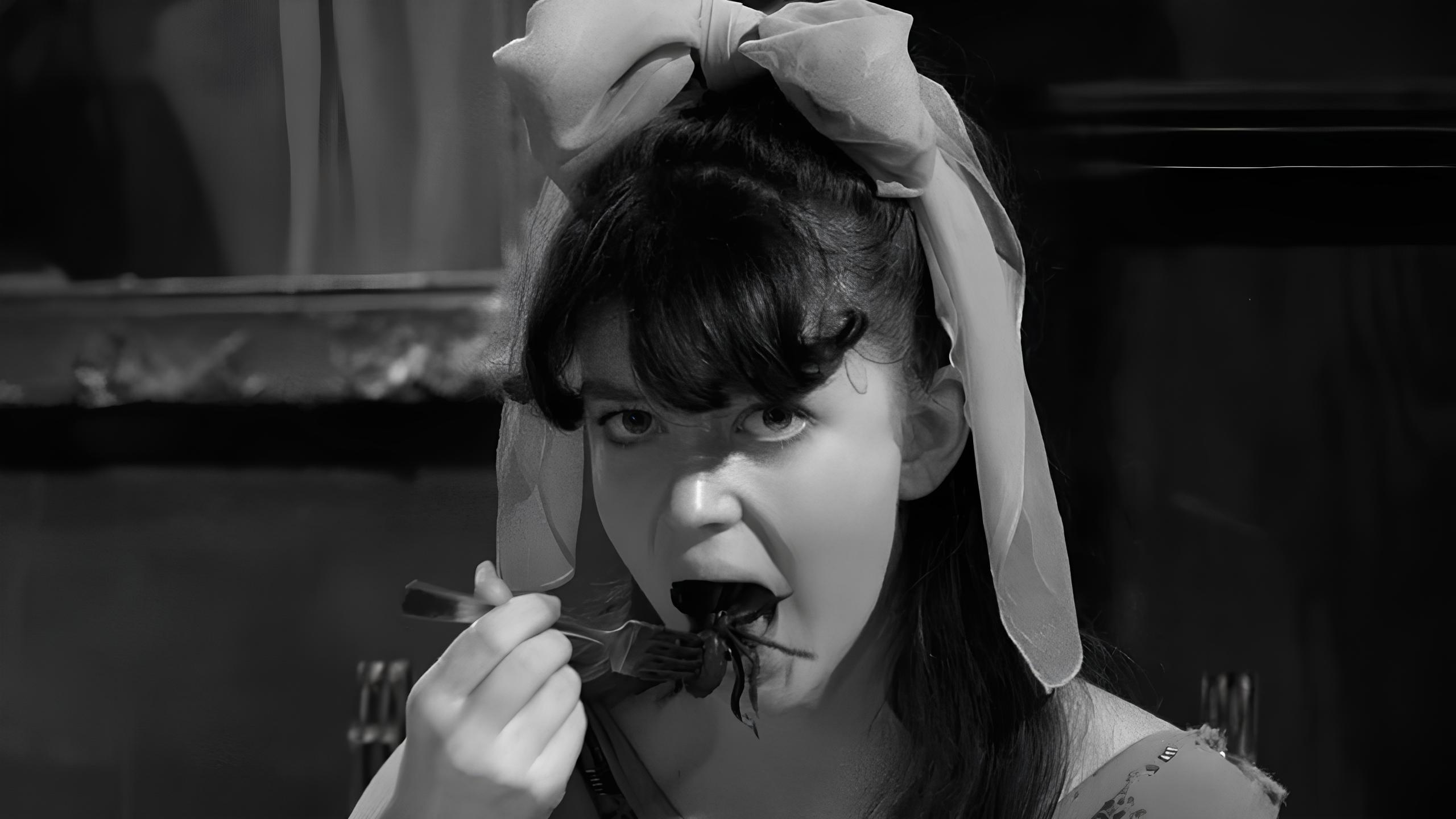
Horror, comedy, by Jack Hill, United States, 1967.
Spider Baby is a grotesque cult horror film that tells the story of the Merrye family, affected by a genetic disease that causes mental regression and feral behavior as they grow older. In an isolated house live Baby, her sisters, and the affectionate caretaker Bruno (Lon Chaney Jr.), who tries to contain their madness when unsuspecting guests arrive. The film mixes a gothic atmosphere, dark humor, and surreal tones, creating a disturbing yet almost fairy-tale world, a bizarre blend between classic horror and morbid comedy. Chaney delivers a surprisingly touching performance, and the direction manages to turn a tiny budget into a unique experience.
Spider Baby is an important cornerstone of American independent cinema: ironic, macabre, melancholic, and unconventional. Spider Baby is an experience that does not rely solely on fear, but plays with the theme of the “monstrous family” to talk about isolation, diversity, and decay, becoming over time a beloved cult title for those who seek a different kind of horror — deformed, grotesque, and unsettling at the same time.
LANGUAGE: English
SUBTITLES: Spanish, French, German, Portuguese
Freud's Uncomfortable Map
You have done something recently that you cannot explain to yourself cleanly — snapped at someone who deserved nothing from you, curled into a silence so complete it frightened the people around you, or found yourself needing, with a desperation that embarrassed you, to be told that everything was going to be fine. The event that triggered it was minor. A missed deadline, a sharp word, a cancellation. And yet the feeling that arrived was not proportionate to any of that. It was older than the incident. It arrived already furnished, already lived-in, as though it had been waiting in a room you had long ago sealed shut.
Sigmund Freud, writing in 1905 in Three Essays on the Theory of Sexuality, introduced the concept of regression not as a dramatic psychological collapse but as something far more mundane and therefore far more disturbing: the libido, under sufficient pressure, retreats. It moves backward along the path of its own development, settling into earlier fixation points — places where, at some stage of childhood, desire became stuck because satisfaction was either too complete or too catastrophically denied. What he described was not madness. It was the ordinary architecture of suffering.
The fixation point is the key element that most popular readings of Freud have smoothed away. A fixation is not a trauma, not necessarily a wound in the dramatic sense. It is simply a place where psychic energy became concentrated because the developmental passage through it was never fully completed. The child who was fed on demand and then abruptly weaned carries something at the oral stage that does not fully dissolve; the adult who reaches for food, alcohol, speech, or reassurance under stress is not making a metaphor — they are enacting a literal return. The direction is always backwards, but the person living it experiences it as an urgent forward motion, as the only thing that could possibly help right now.
What makes Freud’s map uncomfortable is not its darkness but its precision. In 1905 Europe was still producing the idea of the rational adult self as the culmination of civilization — the autonomous individual who had, through reason and culture, transcended the animal substrate. Freud’s clinical observation across hundreds of cases at Bergasse 19 in Vienna kept producing the same inconvenient picture: the adult self is not a replacement for the child self. It is a structure built on top of it, and structurally dependent on it, and capable of being dragged back through it under load. The sophistication of the adult personality is real, but it is contingent. It holds only under conditions that do not exceed certain thresholds — and those thresholds are set not by the present but by the past.
This is what makes certain failures feel ancient and pre-verbal. When regression occurs, the person is not responding to what is actually in front of them. They are responding to an earlier scene, one that shares enough formal similarity with the present event to activate the old fixation. The current boss who criticizes with a particular edge, the partner who withdraws at a specific moment, the institution that fails without explanation — these are not experienced as new data. They arrive pre-interpreted, already weighted with a meaning formed before language was stable enough to question it. The disproportionate reaction is not irrational. It is perfectly rational — but it is rational with respect to a situation that no longer exists.
What Freud named in 1905 remained systematically underestimated because it implied that the adult mind is not the sovereign it believes itself to be. The ego, as he would elaborate in later decades, is not the house. It is a tenant who has convinced itself it owns the building, and who discovers, during any serious storm, exactly how provisional that conviction always was.

The Civilization That Manufactures Children
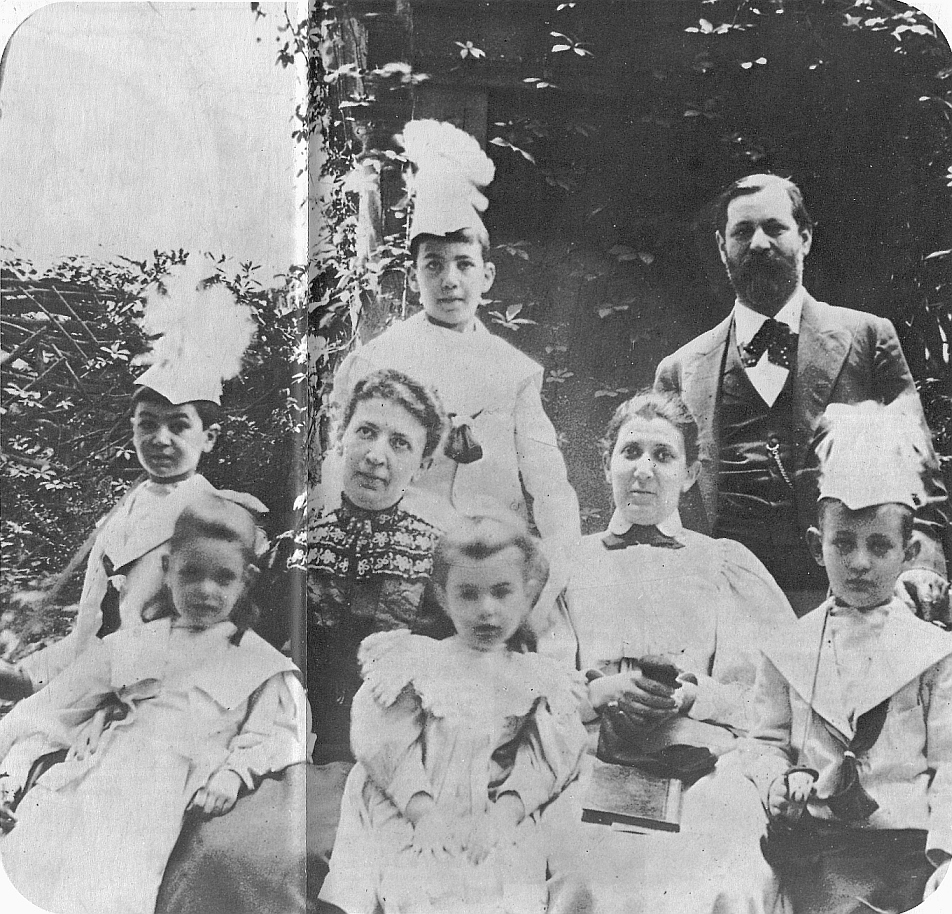
You are standing in a supermarket at 11 p.m., fluorescent light humming above you, and you reach for the cereal box with the cartoon animal on the front. You are thirty-four years old. You are not buying it for a child.
The industry that surrounds that moment did not happen accidentally. Ernest Dichter, the Viennese psychologist who migrated to Madison Avenue in the 1930s and essentially invented motivational research as a commercial discipline, understood before almost anyone else that the adult consumer was not a rational agent making deliberate choices but a creature saturated with unresolved emotional material. His 1964 book “Handbook of Consumer Motivations” argued systematically that purchasing behavior is governed by the same oral and dependency drives that Freud had located in infancy — the need to be held, to be soothed, to receive something from an outside source without effort. Dichter did not lament this. He monetized it. He advised brands to position themselves as warm, reliable presences rather than product manufacturers, and American advertising has faithfully followed that prescription ever since, producing a cultural landscape in which corporations speak to their customers in the register of a patient and endlessly forgiving parent.
What Dichter mapped in theory, behavioral economists quantified in practice decades later. The average American adult in 2023 checks their smartphone approximately ninety-six times per day, a rhythm that is not a habit in the ordinary sense but a conditioned response loop engineered with precision. B.J. Fogg at Stanford and Nir Eyal in his 2014 work “Hooked” both described the architecture of variable reward — the unpredictable delivery of small gratifications — as the central mechanism binding users to digital products. This is not metaphorically similar to the neurological signature of early attachment behavior; it is functionally identical to it. The infant reaches, receives, does not receive, reaches again, and the irregularity of the response is precisely what deepens the bond. Silicon Valley did not discover this principle. It inherited it from developmental psychology and stripped out the developmental part.
The philosopher Herbert Marcuse, writing in “One-Dimensional Man” in 1964, argued that advanced industrial society produced what he called “repressive desublimation” — a process by which genuine critical thought and mature desire are replaced with immediate, manageable satisfactions that leave the underlying structure of power untouched. His language was dense but his observation was surgical: a population busy with its small pleasures is not a population that develops the sustained interior complexity required to contest anything. The regression is not a side effect. It is a feature of the system’s self-preservation.
Comfort architecture extends well beyond screens and packaged food. The entire design philosophy of contemporary consumer spaces — soft lighting calibrated to reduce cortical arousal, background music engineered to suppress analytical processing, the elimination of friction from every purchasing decision — operates as a kind of environmental sedative. Retail psychologist Paco Underhill documented in “Why We Buy,” published in 1999, that shoppers slow down, relax their critical faculties, and spend more when sensory environments mimic the low-stimulus warmth of domestic interiors. The store becomes the home becomes the womb, and the cash register is positioned at the point of deepest surrender.
None of this produces happiness in any durable sense, and the industry is aware of that. A satisfied consumer who has genuinely resolved their need is a consumer who stops purchasing. The profitability of the model depends on maintaining the neediness without resolving it, keeping the emotional register perpetually slightly hungry, slightly unfinished, slightly reaching for the next thing. Winnicott’s concept of the transitional object — the blanket, the stuffed animal that mediates between the infant’s interior world and external reality — has been industrially replicated at scale, with the crucial difference that the transitional object was meant to be outgrown, and these are designed never to be.
Irene
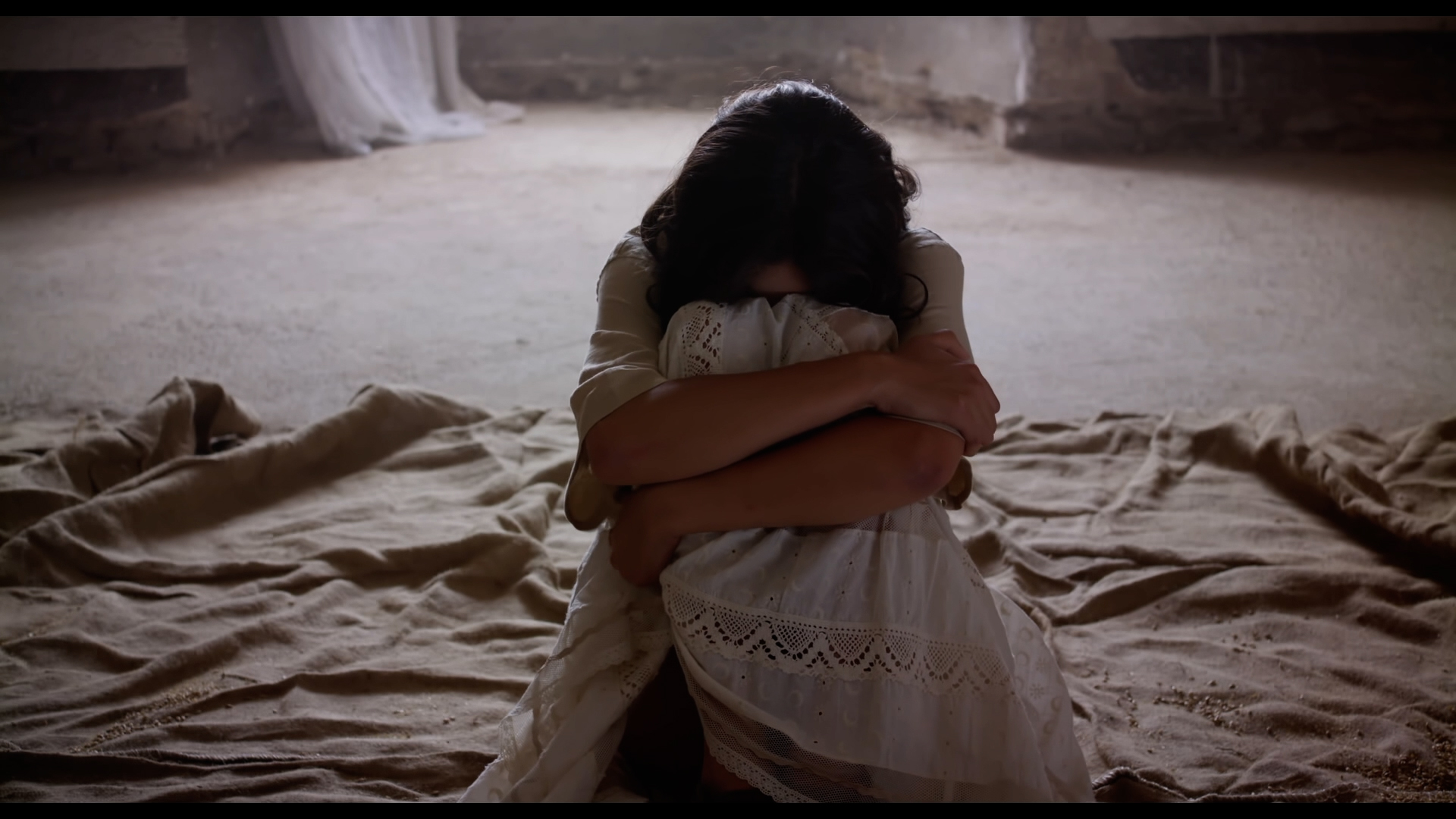
Drama, by Valerio Pampaglini, Italy, 2023.
Irene is trapped within her own unconscious, empty and ruined like an abandoned house. Through broken glass and shady figures dressed in black, a song awakens something long forgotten inside her. The film, written and directed by Valerio Pampaglini, is supported by the Rome Film Academy. It was shot in the summer of 2022 in the province of Perugia, in the municipality of Todi and at the Montenero castle.
LANGUAGE: Italian
SUBTITLES: English
Anna Freud and the Armor We Mistake for Maturity
You have been in that meeting before — the one where a colleague receives public criticism and something shifts behind their eyes, a contraction, a stillness that is not calm but calcification, and they speak afterward in clipped, over-precise sentences, performing a composure so total it becomes its own kind of theater. You watched it and thought: that person is handling this well. You were wrong about almost everything you thought you saw.
Anna Freud, working in the shadow and alongside the theoretical framework her father had built, published The Ego and the Mechanisms of Defense in 1936 and did something that remains underappreciated even now: she systematized what the ego does when reality becomes too costly to metabolize directly. Regression appears in her taxonomy not as a failure or a breakdown but as a strategy, a functional retreat to earlier modes of functioning that once provided relief or control. The child who loses bladder control after a sibling is born is not malfunctioning; the ego is running a script that previously worked. The adult in the meeting who goes silent and rigid is doing something structurally identical, just with better costume design.
What her work makes uncomfortably clear is that the developmental stages Freud had mapped were never truly left behind by most people. They were overlaid. Adulthood, in this framework, is less a destination than a veneer — and the thickness of that veneer varies enormously depending on what was resolved, what was bypassed, and what was simply buried under the pressure of having to function in the world. The psychological literature on developmental arrest, extended significantly by Margaret Mahler’s work in the 1970s on the separation-individuation process, suggests that enormous numbers of people are operating from ego structures that were essentially completed under conditions of stress, insecurity, or premature demand for self-sufficiency. The architecture holds until load is applied.
This is where culture becomes complicit in the confusion. Western modernity has a profound investment in treating composed behavior as evidence of interior maturity. The person who does not cry at the funeral, who negotiates without visible affect, who absorbs professional setbacks without visible disturbance — these people are read as developed, integrated, emotionally sophisticated. Anna Freud’s framework suggests the possibility that what is being observed is not integration at all but successful suppression, a high-functioning regression to a defended ego state that has learned to perform stability rather than inhabit it. Suppression and regression are not identical mechanisms in her taxonomy, but they often operate in tandem: the retreat to an earlier mode of self-protection is precisely what allows the controlled surface to hold.
The cruelty buried in this misreading is that the system rewards the performance and punishes the genuine. Someone who regresses visibly — who cries, who becomes demanding or petulant or clinging under pressure — is marked as immature, unprofessional, psychologically unfit. Someone who regresses invisibly, who hardens, who over-controls, who channels anxiety into rigidity or obsessive competence, is promoted. Organizations fill their leadership layers with people whose defenses are simply more socially legible as strength, which means the criterion for advancement often selects for the most elaborately armored rather than the most genuinely integrated.
Erik Erikson, whose 1950 Childhood and Society gave the developmental stage model its most culturally influential articulation, understood that unresolved crises do not disappear but compound — that a person who did not achieve genuine autonomy in the second or third year of life will encounter the residue of that failure in every subsequent stage, each new demand for independence landing on an unstable foundation. The adult who collapses under the specific texture of abandonment, or who becomes punitive when authority is questioned, is not responding to the present situation. They are responding to a situation that ended decades ago and was never formally closed.
Bowlby's Wound and the Spreadsheet at 2 A.M.
You are sitting alone at your desk at two in the morning, the blue light of a spreadsheet washing over your face, and you are not doing work. You are managing terror. The columns and rows, the formulas that calculate nothing you actually need to know right now, are a ritual, a way of holding shape when something inside has gone liquid and formless. To anyone watching — a partner half-awake in the doorway, a colleague who emails you at midnight and gets an instant response — you look like a dedicated professional. What you are, in the most precise clinical sense, is a child who learned very early that competence was the price of safety.
John Bowlby published the first volume of his Attachment trilogy in 1969, and what he described was not a theory of childhood so much as a theory of the nervous system’s deepest architecture. His central argument, built from years of observing infants and their caregivers, was that human beings arrive in the world biologically primed to seek proximity to a protective figure, and that the quality of that figure’s responsiveness does not merely shape behavior — it inscribes itself into the organism as an operational model of what relationships are. He called these internal working models, and what makes them so consequential is precisely their invisibility. They are not beliefs you hold consciously. They are assumptions the body makes before thought arrives, scripts running below language, encoded during a period when you had no words to examine or contest them.
The insecurely attached child — the one whose caregiver was intermittently available, emotionally unpredictable, or subtly punishing of need — does not grow up into an insecure adult in any obvious way. Bowlby’s later collaborator Mary Ainsworth documented this with devastating clarity in her Strange Situation experiments during the 1970s: children who had learned that distress brings withdrawal rather than comfort did not become visibly distressed. They became compulsively self-sufficient. They suppressed the outward signal of need so thoroughly that the suppression itself became their personality. Decades later, that child is the person in the boardroom who cannot admit confusion, the partner who goes cold precisely when closeness becomes available, the high-functioning professional who interprets every request for help as an announcement of inadequacy.
What regression does in these cases is paradoxical and therefore easy to miss. The person is not behaving immaturely in any recognizable sense — they are not throwing a tantrum, not weeping, not retreating into obvious helplessness. They are doing the opposite: they are over-performing, over-controlling, collapsing into productivity the way a drowning person collapses into anything solid. The two-in-the-morning spreadsheet is not ambition. It is the original coping strategy, replayed in an adult context with adult tools. The regression is to the logic of a pre-verbal architecture that said: if you are useful enough, if you produce enough evidence of your own value, the threat will pass.
The particular loneliness this creates has almost no language in ordinary life. It is not the loneliness of isolation — these people are often surrounded by colleagues, partners, friends who admire them. It is the loneliness of a performance that has run so long the performer can no longer find the exit. Mario Mikulincer and Phillip Shaver, synthesizing decades of attachment research in their 2007 volume Attachment in Adulthood, found that dismissive-avoidant individuals under stress showed elevated cortisol responses that their self-reports completely denied — their bodies registering alarm while their minds reported calm. The gap between physiological reality and conscious narrative is not deception. It is the distance between what the internal working model permits you to know and what it has decided, long before you had any say in the matter, is too dangerous to feel.
The spreadsheet will still be there in the morning, and so will the original wound that made it necessary.
A vision curated by a filmmaker, not an algorithm
In this video I explain our vision
The Historical Myth of the Stable Adult Self

You are sitting in a meeting — professional, composed, the kind of person who uses words like “deliverables” and “bandwidth” — and someone cuts you off mid-sentence, dismisses your idea without looking up, and something in your chest tightens in a way that has nothing to do with the agenda on the table. The feeling is not frustration exactly. It is older than that. It lands somewhere in the body that stopped developing its vocabulary around age eight.
The Enlightenment handed Western civilization a story about itself, and that story required a protagonist: the rational autonomous individual, coherent across time, sovereign over impulse, capable of separating reason from emotion the way a surgeon separates tissue from bone. John Locke built a philosophy of personhood on this figure. Immanuel Kant made it the engine of moral life. The entire architecture of liberal democratic governance rests on the premise that the adult human being is a stable, continuous self — accountable precisely because it is unified, capable of consent precisely because it is not fragmented. This is not a description of how people actually are. It is a legal and political fiction that gradually colonized psychology, then medicine, then everyday self-understanding, until people began to feel ashamed when the fiction failed to describe them.
Philippe Ariès, writing in 1960 in Centuries of Childhood, produced one of the most quietly devastating arguments in twentieth-century historiography: childhood, as a distinct psychological and social category deserving special protection, special emotional treatment, and special developmental consideration, did not exist in medieval Europe. Children were treated as small adults, depicted in paintings as miniature men and women, integrated into labor and sexuality and death without the buffer of a protected developmental stage. The category of childhood — innocent, fragile, requiring cultivation — was an invention of modernity, constructed across the sixteenth and seventeenth centuries as bourgeois family life reorganized itself around the idea of the child as a project rather than a worker. Ariès was not romanticizing the medieval world. He was exposing how the adult-child boundary that feels so natural, so obvious, so psychologically real, was in fact assembled by specific historical forces at a specific moment, for specific economic and ideological reasons.
Once you see that, the concept of regression shifts its moral register entirely. If childhood is a modern construction, then the psychological territory it names — dependency, emotional flooding, magical thinking, the desperate need to be seen and held — was never cleanly sealed off from adult life. It was simply reclassified, stigmatized, and driven underground. Freud’s concept of regression, introduced formally in The Interpretation of Dreams in 1900 and elaborated in his later metapsychological papers, describes a return to earlier modes of psychic functioning. But Freud was working inside the same cultural premise he was supposedly analyzing: that there is a mature psychic state to regress from, that development moves in a single direction, that going back is inherently a failure. The architecture of his model depends on the Enlightenment protagonist holding together at the top of the developmental staircase.
What Ariès’s evidence suggests is that this staircase was built on invented ground. The adult who regresses is not falling from a natural state of achieved selfhood — they are touching a layer of experience that the culture declared finished but never actually resolved, because the category it was supposed to leave behind was constructed for administrative purposes rather than psychological ones. Medieval peasants did not have the luxury of a protected childhood, and they did not have the corresponding luxury of believing they had grown past it. The brittleness of the modern adult self — its tendency to crack precisely at the points where it was supposed to be most solid — may be less a symptom of individual pathology than a structural consequence of asking people to permanently perform a developmental completion that the historical record suggests was never more than a social agreement dressed as biology.
When Regression Becomes the Only Available Language
You are sitting across from someone you love, and the argument has dissolved into something unrecognizable — they are no longer speaking in sentences, just sounds, just the wet heaving of a person who has lost the architecture of language entirely. You feel the discomfort of witnessing it, the urge to fix or flee, and underneath that urge is a cultural reflex so automatic you barely notice it: the belief that whatever is happening right now is a failure, a breakdown, a regression into something that should be outgrown. What if that belief is the actual error.
D.W. Winnicott, working through decades of clinical practice in mid-twentieth-century London, arrived at a formulation that still disturbs people who encounter it without preparation: the idea that the capacity to fall apart depends entirely on the quality of the environment surrounding the falling. His concept of the “holding environment,” developed across works including “The Maturational Processes and the Facilitating Environment” published in 1965, was not a metaphor about warmth or kindness. It was a structural claim — that certain psychological material can only become speakable once the body has first spoken it, and that the body speaks in the grammar of early childhood precisely because that is where the original wound lives, sealed in a pre-verbal layer that adult language was never built to reach.
The paradox embedded here is almost unbearable in its precision: the more sophisticated a person’s verbal intelligence, the more efficiently they can avoid the information stored below it. Therapy with highly articulate patients sometimes moves slower than therapy with people who have fewer words, because the articulate ones can construct elaborate, elegant, internally consistent accounts of their suffering that function as beautiful prisons. The weeping that cannot be explained, the rage that seems disproportionate, the sudden withdrawal into silence that frightens a partner — these carry content. They are not malfunctions interrupting communication. They are the communication itself, arriving in the only form that bypasses the censor.
There is a distinction clinicians sometimes draw, quietly, between a breakdown and what gets called a “breakthrough disguised as collapse.” The psychiatrist and psychoanalyst R.D. Laing, whose 1960 work “The Divided Self” reframed psychotic episodes as intelligible responses to impossible relational conditions, was pointing at something adjacent: that the mind reaches for regression not out of weakness but out of a kind of desperate accuracy. When no available adult script fits the actual experience — when the grief is too old, the shame too foundational, the loneliness too structural — the psyche reaches backward into the only repertoire it has for total, unmediated expression. A tantrum in a forty-year-old is not evidence of immaturity. It is evidence that something is happening that the forty-year-old has no other instrument to measure.
What makes this unbearable to witness is not the regression itself but the demand it places on whoever is present. Winnicott understood that the holding environment is always a relational structure — it cannot be generated alone, which is precisely why so many people have never experienced their own regression as anything but shameful. If the people around you during early collapses responded with withdrawal, punishment, or their own panic, the lesson you absorbed was not that regression is dangerous. The lesson was that you are dangerous when you need. That equation gets written into the nervous system before any word exists to contest it, and it runs silently beneath every subsequent relationship, every moment of vulnerability converted at the last second into composure.
The information carried in adult regression is therefore double: it communicates the original unmet need, and it simultaneously tests whether the present environment is finally different enough to hold what the past could not. Every time someone falls apart in front of another person, something old is being offered again at tremendous risk, and the answer they receive writes another line into what they believe is permanently true about whether they are lovable, whether need is safe, and whether the world contains anyone capable of staying.
The Unseen Direction of the Clock
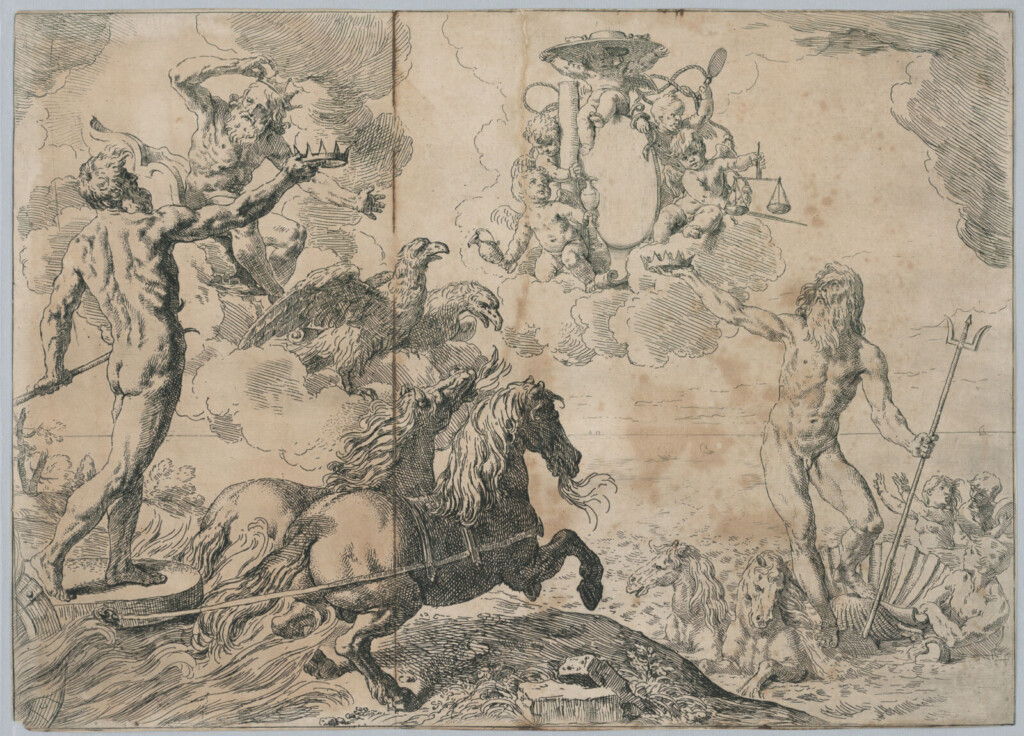
You are sitting in a room you have not visited in twenty years, and without warning the smell of the wallpaper does something to the muscles in your chest that no amount of adult reasoning can undo. The body has arrived somewhere. The mind follows, or perhaps it was already there, waiting.
Jean Piaget spent decades constructing what remains the most influential map of how human minds grow — sensorimotor, preoperational, concrete operational, formal operational — four stages marching forward like soldiers, each one superseding the last, each one rendering its predecessor obsolete. His 1952 work “The Origins of Intelligence in Children” rests on an assumption so deeply embedded it is almost invisible: that psychological time moves in one direction, that what is earlier is also what is lower, and that maturity is measured by how far you have traveled from the beginning. This is not merely a scientific claim. It is a theology dressed in empirical clothing, and like most theologies, it tells you more about the culture that produced it than about the thing it claims to describe.
Western modernity is architecturally committed to the idea of progress — not as a hope but as a structural feature of reality itself. The Enlightenment did not only change what people believed; it changed how people understood the shape of time. Linear, accumulative, irreversible. And developmental psychology, born inside that cultural atmosphere, inhaled its assumptions before it had the language to question them. When a clinician observes a patient retreating to earlier behavioral patterns under stress, the word chosen — regression — already contains the verdict. The patient has moved in the wrong direction. The clock has run backward. Something has failed.
But the clock metaphor only works if you accept that psychological experience is a sequence rather than a terrain. What if the stages Piaget described are not steps on a staircase but regions on a map, and the mind does not advance through them so much as inhabit different ones at different moments, sometimes several simultaneously? The neuroscientist Antonio Damasio, in “Descartes’ Error” published in 1994, demonstrated that rational adult cognition does not replace emotional and somatic processing — it is built on top of it, dependent on it, perpetually entangled with it. Remove the emotional substrate and the formal operational mind does not become purer; it collapses entirely, loses the capacity to make decisions, to assign value, to act in the world. The earlier is not behind the later. It is underneath it, holding it up.
This reframes what happens in a moment of so-called regression not as a failure of development but as a shift in which region of the psyche is bearing the most weight at a given moment. Trauma research has shown consistently — through the work of Bessel van der Kolk, through the longitudinal studies emerging from the Adverse Childhood Experiences project begun in 1995, through decades of body-centered clinical observation — that the nervous system does not file the past away. It stores it in the present tense, ready to discharge, ready to re-enter. The past is not behind the person. It is coexistent with them, layered beneath the surface of every moment like geological strata, and under sufficient pressure any layer can rise.
What this means is that the psyche may not be a developmental project at all in the sense that modernity imagined — a construction moving toward completion. It may be something closer to a palimpsest, a document written over itself repeatedly, where earlier scripts are never fully erased but only obscured, ready to show through when the ink above them fades. The return to childhood, then, is not a malfunction of the adult mind but the adult mind suddenly becoming legible to itself, revealing the layers it had learned to conceal beneath the performance of linear growth. What we call regression may be the only moment when the psyche stops pretending that time has done what we were told it would do.
🧠 When the Psyche Retreats Into Its Own Past
Regression is not simply a step backward — it is the mind’s attempt to find safety in familiar emotional territory. The articles below explore the deep psychological, philosophical, and literary roots of this retreat into earlier selves, tracing how identity, memory, desire, and the unconscious conspire to pull us back toward what we once were.
The Unconscious and its Relationship With Cinema
Cinema has long served as one of the most powerful windows into the unconscious mind, staging regression, repression, and buried desires on screen with visceral immediacy. This article explores how filmmakers have translated Freudian and Jungian concepts into moving images, revealing the invisible architecture beneath human behavior. Understanding the unconscious through cinema offers a uniquely embodied way to grasp why the mind sometimes chooses to retreat rather than advance.
GO TO THE SELECTION: The Unconscious and its Relationship With Cinema
Affective Manipulation in Psychology
Affective manipulation exploits precisely the psychological vulnerabilities that regression creates — when we regress emotionally, we become more susceptible to control, dependency, and distorted relational dynamics. This article examines the mechanisms by which manipulators identify and target regressed emotional states, turning childlike needs for approval and security into instruments of power. Recognizing these patterns is the first step toward reclaiming psychological autonomy and mature emotional functioning.
GO TO THE SELECTION: Affective Manipulation in Psychology
Jacques Lacan and the Mirror Stage
Jacques Lacan‘s theory of the mirror stage describes the foundational moment in which the infant first encounters a unified image of itself — a moment of both recognition and alienation that never fully resolves. This primal scene underlies much of adult psychological life, including the regressive pull toward narcissistic self-reflection and idealized self-images formed in childhood. Lacan’s framework helps explain why regression so often involves a return not just to a younger self, but to a self that was always already a fiction.
GO TO THE SELECTION: Jacques Lacan and the Mirror Stage
Jung’s Red Book: Analysis
Jung's Red Book is a staggering document of deliberate psychological descent — a voluntary regression into the deepest layers of the unconscious undertaken in search of renewal and individuation. Jung himself understood that the return to archaic, childlike, even mythological states of mind was not pathology but a necessary confrontation with the psyche’s forgotten depths. Reading this work alongside any study of regression reveals how the boundary between breakdown and breakthrough is far thinner than clinical language tends to suggest.
GO TO THE SELECTION: Jung’s Red Book: Analysis
Explore the Inner Mind Through Independent Cinema
If these reflections on the hidden depths of the psyche have stirred something in you, Indiecinema is the streaming platform where cinema becomes a tool for genuine self-exploration. Discover independent, arthouse, and documentary films that dare to look inward — streaming now, exclusively on Indiecinema.
👉 EXPLORE THE CATALOG: Watch Indie Films in Streaming
A vision curated by a filmmaker, not an algorithm
In this video I explain our vision

