
The Invention of the Life Cycle
You are handed a map at birth. Not literally — no one places a document in your newborn hands — but the culture you enter is already holding it for you, folded and waiting, and by the time you are old enough to ask where you are going, you have already been reading it for years without knowing. The map has stages. It has arrows. It tells you that the person you become at forty was prepared by the person you were at twenty, and that the person you will be at seventy depends entirely on how well you resolved what was asked of you at fifty. It feels like nature. It feels like the body’s own logic. It is, in fact, a story one man told in 1950, in a book written in a country that was not his, in a language he had adopted as an adult, about a self he had spent his entire life trying to locate.

Erik Erikson was born in Frankfurt in 1902 to a Danish mother and an absent Danish father whose identity was concealed from him for most of his childhood. His surname at birth was Homburger, taken from his stepfather, a Jewish physician who married his mother after the fact and raised him with quiet care. Erikson was tall, blue-eyed, fair — visibly unlike the Jewish community he grew up in, and equally unlike the German nationalist world that surrounded it. He trained as an artist, wandered through Europe, and eventually ended up in Vienna, where he taught at a small school attended by the children of patients in psychoanalytic treatment. Anna Freud noticed him. He became an analyst without ever completing a university degree. When the Nazis made Europe uninhabitable for anyone connected to psychoanalysis, he emigrated to the United States, changed his surname to Erikson — a name he invented, effectively declaring himself his own origin — and began building a career at Harvard, Yale, and Berkeley. A man who belonged nowhere constructed the twentieth century’s most influential theory of how people belong to their own lives.
Childhood and Society, published in 1950, introduced what Erikson called the eight stages of psychosocial development. Each stage presented a central conflict: trust versus mistrust in infancy, autonomy versus shame in toddlerhood, and so on through adolescence, young adulthood, middle age, and finally old age, where the terminal struggle was between ego integrity and despair. The theory absorbed the Freudian framework of psychosexual stages but stretched it across the entire lifespan, which was itself a radical move — Freud had largely lost interest in the human being after childhood. Erikson was insisting that development did not stop. The person at seventy-five was still in the middle of something.
The framework arrived in postwar America with the authority of science and the readability of wisdom literature, and it spread accordingly. By the 1970s it was standard curriculum in psychology, education, nursing, and social work programs across the English-speaking world. Millions of people learned to understand their own suffering through its vocabulary — the identity crisis of adolescence, the generativity of midlife, the integrity of old age — without ever reading the book itself. The concepts had migrated into common speech, which is what happens when a theory is both genuinely illuminating and culturally convenient.
What made it culturally convenient is worth pausing on. The eight stages assume that development is sequential and cumulative, that failure at one stage complicates passage through the next, that there is a correct direction and a correct destination. This is not a neutral observation about human experience. It is a model borrowed from Protestant notions of moral progress, from industrial capitalism’s faith in linear productivity, and from a specifically Western, specifically postwar belief that the self is a project to be completed rather than a condition to be inhabited.
Integrity Versus Despair: The Eighth Stage as Cultural Verdict
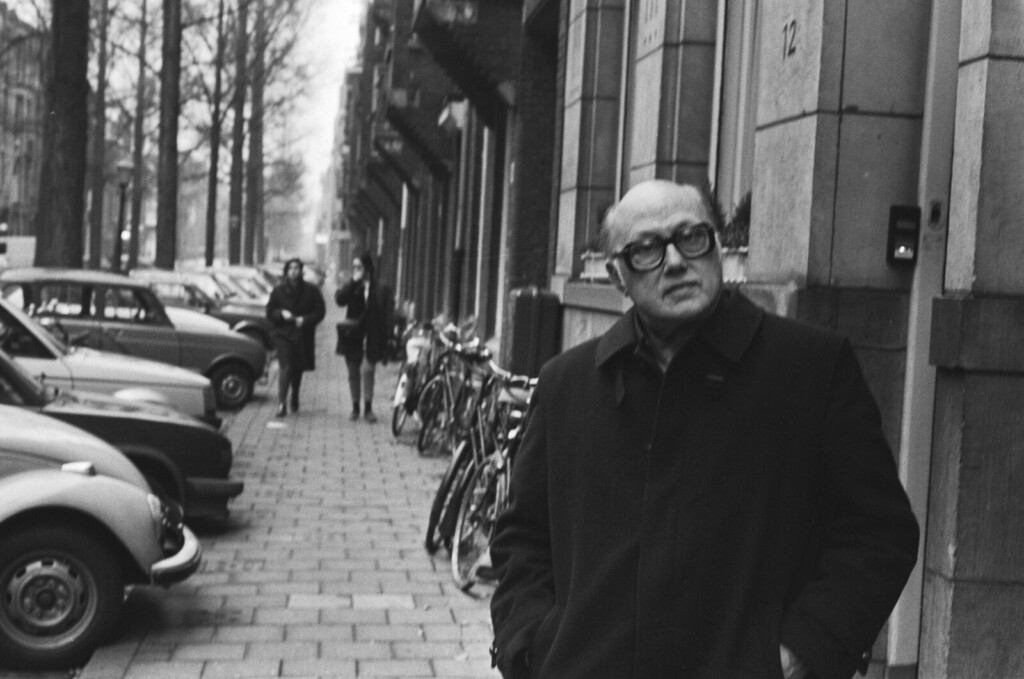
You are sitting across from your father, or perhaps your grandmother, watching them try to answer a question that was never asked out loud but has somehow filled the room: was it worth it? The silence around that unspoken question is not peaceful. It has weight. And somewhere inside the clinical architecture of twentieth-century developmental psychology, that silence was given a name, a stage number, and a verdict.
Erik Erikson placed what he called integrity versus despair at the culminating position of his eight-stage model of psychosocial development, published in Childhood and Society in 1950 and elaborated across decades of subsequent work with Joan Erikson. The logic is seductive in its apparent compassion: the person who can look back on their life and accept it as their own, as something coherent and irreplaceable, achieves what Erikson called ego integrity — and from that integration, wisdom emerges naturally, like a final harvest. The person who cannot achieve this retrospective coherence falls into despair, characterized by the fear of death and the bitter sense that time has run out before the self could be properly assembled. This is presented as a psychological description. It functions as a moral sentence.
What the framework conceals is the enormous cultural machinery required before a life can be narrated as meaningful in the way Erikson’s model demands. The coherent life story — the sense that one’s choices were authentically one’s own, that they added up to something, that sacrifice eventually yielded growth — is not a psychological universal. It is a historically situated genre. The literary scholar Paul John Eakin, in How Our Lives Become Stories published in 1999, demonstrated that autobiographical self-narration is not a spontaneous human capacity but a learned cultural practice, shaped by specific traditions of confessional literature, Protestant introspection, and Enlightenment notions of the sovereign individual. To possess ego integrity in Erikson’s sense, one must first have been formed inside a culture that teaches people to experience their lives as authored — as something they wrote, rather than something that happened to them.
The seventy-year-old woman who spent her life in collective obligation, in care that was never recorded, in loyalty to a family or a community that did not preserve her name, has no narrative to integrate in the required form. Her life was not meaningless. It was simply structured around a different grammar — one in which the self is not the protagonist but the medium through which connection was sustained. Erikson’s model cannot read this grammar. It can only register the absence of what it was looking for and classify that absence as despair, as failure, as developmental incompletion. The woman is not assessed by her own culture’s standards of a life well-lived. She is assessed by standards she was never invited to negotiate.
This becomes sharper when examined against the sociological data on who, in Western clinical settings, is most frequently assessed as exhibiting the markers of despair in late life. Studies in gerontological psychology from the 1980s onward consistently found higher rates of what researchers called life-review distress among populations with interrupted careers, economic precarity, and limited access to the autobiographical resources — diaries, therapy, education, leisure — that allow for the kind of reflective self-narration Erikson’s model rewards. Despair, in this reading, correlates powerfully with structural deprivation. Yet the diagnostic framework treats it as an interior event, a failure of ego development, rather than as the entirely rational response of someone who has been given very few materials with which to construct the self the model demands they present.
The word wisdom itself carries the same problem in a more concentrated form. Erikson used it to name the specific virtue that emerges from successful resolution of the eighth stage — a detached, serene acceptance of one’s life and of death that recalls the Stoic ideal of the sage, the Protestant saint’s assured account of a life shaped by God’s design, the Romantic figure of the elder who sees clearly because he no longer desires.

What the Body Knows That the Stage Does Not
You are sitting across from your mother, and she is describing a vacation she took in 1987 with a precision that astonishes you — the color of the hotel curtains, the exact price of a meal, the name of a waiter she found charming. Then she asks you, for the fourth time in twenty minutes, whether you have eaten lunch. The curtains are vivid. Your name is not.
What Erikson built was a model of psychosocial development that depended, structurally and without acknowledgment, on a functioning neurological substrate. His eighth stage — the confrontation between ego integrity and despair, the supposed crucible in which wisdom either crystallizes or fails to — presupposes a self capable of narrating itself across time, of holding its contradictions in sustained reflection, of tolerating the weight of a life reviewed. This is not a minor assumption. It is the entire architecture. And it collapses the moment you introduce the body as a historical actor rather than a passive backdrop.
The World Health Organization estimated in 2023 that more than 55 million people globally live with dementia, a number projected to nearly triple by 2050. Alzheimer’s disease alone accounts for between 60 and 70 percent of those cases. These are not edge statistics. They describe a neurological reality so common that virtually every extended family on earth is currently inside it or recently through it. And what dementia does, among its many devastations, is precisely dismantle the cognitive operations that Erikson’s model treats as the universal medium of late-life development. Autobiographical coherence — the ability to say: this is what I lived, this is what it cost, this is what it produced — is not a luxury of psychological health. It is the operating condition of the entire eighth stage, and it is the first thing systematic neurodegeneration takes.
Chronic pain performs a quieter version of the same erasure. Research published in the Journal of Pain in 2019 estimated that between 25 and 50 percent of community-dwelling older adults experience persistent pain, with rates rising sharply in care facilities. Pain does not prevent thought, but it reorganizes the entire economy of attention. When the body demands constant negotiation — when getting through the hour is itself the cognitive project — the reflective distance that Erikson imagined as the achievement of age becomes structurally unavailable. Not because the person has failed development, but because the model never accounted for a body that does not go quietly into the background so that the psyche can do its philosophical work.
There is a class dimension here that developmental psychology has historically preferred not to name directly. Wisdom, in Erikson’s framing, is something that accrues — something built over decades of integration, of relationships navigated with increasing sophistication, of crises metabolized rather than merely survived. But that kind of accumulation requires a life with enough structural stability to permit reflection rather than just reaction. The Baltimore Longitudinal Study of Aging, running since 1958, has produced decades of data showing that cognitive reserve — the neurological resilience that delays or buffers the effects of decline — correlates strongly with education and socioeconomic status across a lifetime. Which means the people most likely to reach Erikson’s eighth stage with the cognitive infrastructure to perform it are the people who had access to education, healthcare, and the relative luxury of a life not spent entirely in survival mode.
The stage model does not say this out loud. It presents itself as a map of human universals, a sequence available to anyone who lives long enough. What it actually describes is a developmental trajectory that requires resources — neurological, economic, social — that are distributed with profound inequality, and then presents the outcome of that distribution as a matter of psychological achievement.
The Longevity Myth and the Market for Meaning

You are handed a retirement gift — a gold watch, or maybe a Fitbit now — and the ceremony lasts eleven minutes, and then you are outside on the pavement with decades left to fill, and somewhere in the architecture of your discomfort is the suspicion that you have just been dismissed from a role you confused with a self.
Erikson published the eighth and final stage of his developmental schema in “Childhood and Society” in 1950, long before the wellness industrial complex existed as a category, but he handed that complex its most useful raw material: the idea that old age is not a waiting room but an examination. His concept of generativity — the seventh stage’s central tension, the demand to generate something beyond the self, to contribute, to mentor, to leave a mark — was designed as a description of middle adulthood’s psychological stakes. It became, with remarkable speed, a prescription. The distance between “this is what people who age well tend to do” and “this is what you must do to age correctly” is the distance between observation and ideology, and that distance collapsed somewhere in the late twentieth century without anyone announcing the collapse.
The American productivity ethic did not need Erikson’s explicit permission. It needed only his vocabulary. By the 1980s, concepts derived from his framework had migrated into corporate leadership seminars, into self-help literature selling in airport bookstores alongside diet guides, into the nascent field of positive psychology that Martin Seligman would crystallize in his 1998 American Psychological Association presidential address — a field that, whatever its legitimate insights, arrived on the cultural scene at precisely the moment when pharmaceutical companies, fitness brands, and life-coaching platforms needed a scientific veneer for the proposition that suffering is a personal failure of optimization. Generativity became a product feature. Legacy became a deliverable.
What this machinery consumed was the genuine philosophical weight of Erikson’s eighth stage — the confrontation with ego integrity versus despair, the possibility that a life honestly examined might produce, in the end, not wisdom but something closer to grief. Erikson, shaped by his own illegitimacy and his adoption of an identity he partly invented — he gave himself his own surname, Erikson, son of Erik, a self-fathering act of startling psychological transparency — understood that the final reckoning was not guaranteed to go well. The honest reading of his framework allows for the possibility that despair is not a pathology to be treated but a legitimate verdict on a particular life. The contemporary wellness industry cannot sell that reading. It sells retreats, purpose workshops, legacy journals, and what one 2019 study in “The Gerontologist” described as a burgeoning market in “meaning-based interventions” for adults over sixty-five — a market that grew in correlation not with rising rates of actual psychological integration but with rising rates of longevity anxiety among the baby boom cohort as they crossed into late adulthood.
Longevity itself became the distorting variable. When Erikson formulated his stages, life expectancy in the United States was sixty-eight years. The average American now lives to seventy-nine, and in that eleven-year gap lives an entire cultural crisis about what those years are for. The pharmaceutical and wellness industries answer the crisis with the same gesture: make yourself useful, keep producing, remain visible. The seventy-year-old who launches a nonprofit, who mentors, who writes a memoir and sells it as proof of examined living, is celebrated not because they have achieved psychological integration but because they have remained legible to a system that cannot process stillness. The terror underneath this celebration — the terror of the person sitting alone at sixty-eight wondering if they wasted it, if the choices compounded into something they cannot name — is precisely what Erikson meant by despair, and it is precisely what the market repackages as a problem with a purchasable solution.
The wisdom Erikson actually described was not productive. It was the capacity to hold the life as it was, not as it might have been renegotiated.
Unfinished Lives and the Refusal of Resolution
You are sixty-three years old and you catch your reflection in a shop window without expecting it, and for a fraction of a second you do not recognize the person looking back. Not because of the gray or the lines, but because the face carries an expression of mild bewilderment — as if it, too, were waiting for something to arrive that has not yet arrived.
Simone de Beauvoir published La Vieillesse in 1970 after years of watching French society treat its elderly as an embarrassment to be managed, and what she argued was not that old age brings diminishment but that it arrives as a verdict handed down by others. The aged person does not become old from the inside out; they are made old by the way the world stops addressing them as a subject and begins treating them as a condition. This is not a philosophical abstraction — it is the precise mechanism by which a human being is stripped of futurity, because once society stops expecting anything from you, you are quietly relieved of the burden of becoming, and that relief is indistinguishable from erasure.
The hunger for a final stage that delivers resolution — call it wisdom, call it integration, call it ego integrity — may have less to do with what late life actually offers and more to do with what the young and middle-aged cannot bear to leave unresolved. A developmental framework that culminates in wisdom is not only a theory of aging; it is also a story the non-old tell themselves about where all this is heading, a promissory note issued against the terror of living inside a self that never quite settles into coherence. If wisdom is waiting at the end, then the current incoherence is merely a stage, merely transit, and the discomfort of not knowing who you are becomes temporary by definition.
William James had already noticed in 1890, in The Principles of Psychology, that the self is not a stable object but a process of selective attention — we become whoever we most consistently choose to notice. What this means in practice is that the self is not something that ripens but something that is perpetually constructed and reconstructed under social pressure, personal loss, and biological change. There is no final version being slowly revealed. There is only the next version, assembled from what remains available, which is exactly what makes late life not the delivery of an answer but the confrontation with a question that the earlier decades kept postponing.
Maurice Merleau-Ponty’s work on embodiment, particularly in Phenomenology of Perception published in 1945, insists that we do not have bodies the way we have possessions — we are our bodies, and their alteration is not something that happens to a stable inner self but a transformation of the very medium through which experience is possible. When that body slows, aches, loses capacities it once held unconsciously, the person does not observe the change from a protected interior position. They change with it, and the self that was supposed to accumulate wisdom is itself part of what is shifting, which makes the idea of a wise observer standing above the wreckage of the aging body a rather convenient fiction.
What remains when the developmental scaffolding is quietly set aside is not despair but something more unnerving: the possibility that a life can end genuinely open, without having produced the resolution it was promised, and that this openness is not a failure of the person who lived it but an accurate report on the nature of living itself — a nature that no stage theory has ever fully had the courage to name.
A vision curated by a filmmaker, not an algorithm
In this video I explain our vision
🌱 The Long Road: Identity, Age, and Inner Growth
Erik Erikson mapped the human lifespan as a series of existential challenges, each stage demanding a new form of courage and self-knowledge. The articles gathered here explore the psychological, philosophical, and emotional terrain that surrounds his vision of development — from unresolved wounds to the quiet wisdom that only time can forge.
Grief and the Processing of Loss
Grief and loss are not interruptions of life but, for Erikson, defining passages that reshape identity at every stage. Processing what we lose — people, roles, illusions — is inseparable from the developmental work of growing older. This article explores how mourning functions as a necessary threshold in the psychology of the self.
GO TO THE SELECTION: Grief and the Processing of Loss
The Emotional Legacy of Parents: How the Past Shapes Us
Erikson believed that the emotional inheritance passed down through generations quietly shapes every stage of our development. The legacies our parents leave — conscious or not — become the invisible scaffolding around which we construct our own identity. This article examines how the past lives on in us and what it means to finally recognize its weight.
GO TO THE SELECTION: The Emotional Legacy of Parents: How the Past Shapes Us
Viktor Frankl: Life and Logotherapy
Viktor Frankl, like Erikson, understood that the search for meaning is not a luxury but a psychological necessity at every phase of life. His logotherapy offers a compelling companion to Erikson’s model, especially in confronting the later stages where integrity and despair stand in tension. Together, their frameworks suggest that wisdom is born not from certainty but from the courage to face the unknown.
GO TO THE SELECTION: Viktor Frankl: Life and Logotherapy
Existential Emptiness: When Life Loses Meaning
Existential emptiness — the sensation that life has lost its direction or purpose — often surfaces precisely at the crossroads Erikson identified as critical junctures of development. When the expected answers no longer hold and a new stage has not yet crystallized, the self hovers in a disorienting void. This article traces the philosophical and psychological roots of that emptiness and the paths that lead beyond it.
GO TO THE SELECTION: Existential Emptiness: When Life Loses Meaning
Discover the Cinema That Asks the Questions That Matter
If these reflections on the stages of life have stirred something in you, Indiecinema is the streaming platform where cinema becomes a mirror for the deepest questions of existence. Explore independent and auteur films that dare to look at aging, identity, and wisdom with honesty and beauty — because some stories can only be told outside the mainstream.
👉 EXPLORE THE CATALOG: Watch Indie Films in Streaming
A vision curated by a filmmaker, not an algorithm
In this video I explain our vision

