
The Sestiere That Tourism Forgot to Colonize
You take the wrong bridge — not by accident but because every bridge in this city looks equally inevitable — and suddenly the souvenir stalls are gone, the selfie-stick vendors have evaporated, and you are standing on a fondamenta where a woman is hanging laundry between two buildings whose plaster has been peeling since approximately 1987, and no one has decided that is charming enough to photograph. This is Santa Croce. Not the Santa Croce that appears in the fold-out maps distributed at the train station, reduced to a pale polygon on the western edge of the city, but the actual place — the one that smells of low tide and diesel from the delivery barges and, occasionally, of something being fried in an apartment above you that you will never be invited into.

Santa Croce occupies the northwestern shoulder of Venice, pressed between the Grand Canal to the south and the Cannaregio border to the north, with the Piazzale Roma — the city’s brutal concrete gateway for buses and cars — anchoring its western flank. That proximity to the parking structure is not incidental. It is the wound that kept the neighborhood alive. When mass tourism began reengineering Venice into an open-air museum in the late twentieth century, Santa Croce sat too close to the functional, unglamorous infrastructure of actual transit to be fully aestheticized. The tourists passed through it on their way to somewhere more legible. The sestiere became, by geographic accident, a holding zone between the modern world and the Renaissance stage set that Venice sells to approximately thirty million visitors per year — a figure that by 2019 had reduced the city’s resident population to roughly fifty thousand people, the lowest since the medieval plague years.
What that demographic collapse means at street level is a kind of slow evacuation that Santa Croce has resisted more stubbornly than its neighbors. San Marco emptied first, its residents priced and atmosphered out by the hotel conversion of palazzi that once held families across generations. Dorsoduro followed as the university population thinned and the art crowd arrived with renovation budgets. Santa Croce retained its pharmacies, its hardware shops, its neighborhood bars where a spritz costs two euros and nobody is performing the act of drinking a spritz for an audience. This is not because its residents are more virtuous or its administrators more enlightened. It is because the calculus of desirability that drives gentrification — the formula of picturesque plus accessible plus not-yet-priced — never fully resolved in Santa Croce’s favor. The working-class persistence here is not a cultural achievement. It is the residue of being undervalued long enough that displacement became economically inefficient.
That political history reaches further back than the tourist economy. Venice was governed by the Most Serene Republic for over a thousand years, and its internal geography was never neutral. The sestieri were administrative units imposed over social realities that the Republic managed with extraordinary deliberateness — controlling which communities lived where, which trades operated in which parishes, which populations were contained and which were permitted to circulate. The Jews were confined to the Ghetto, in Cannaregio, from 1516 onward, in what scholars of urban history now recognize as one of the earliest engineered segregation systems in European urban planning. Santa Croce, by contrast, was the territory of guilds, of the Arsenal workers who spilled westward, of the boat-builders and rope-makers whose labor was too essential to be aestheticized but too unglamorous to be commemorated. The neighborhood was always the city’s working hand rather than its face, and that functional subordination calcified into an identity that tourism’s appetite for the picturesque never quite knew how to consume.
What you are walking through, then, is not a gap in the tourist economy. It is a record of every decision — economic, political, architectural — that Venice made about which of its parts were worth displaying and which were worth using.
Studio 2091
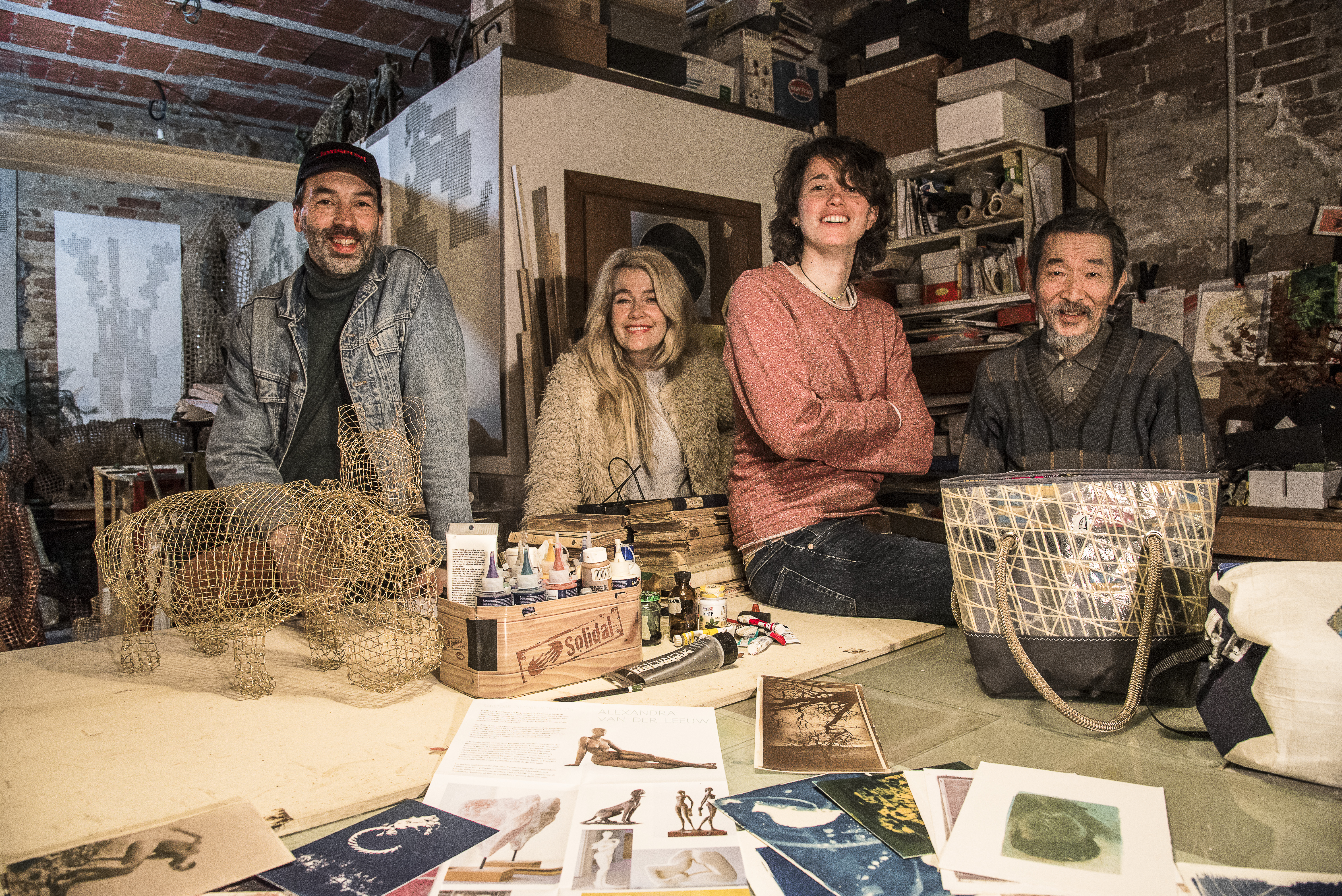
Documentary, by Naù Germoglio, Italy, 2020
In a former warehouse on the ground floor of the civic number "2091", in the district of “Santa Croce” in Venice, two sculptors, a craftswoman and an alchemist-photographer work together. It is a 65 square meters space with two windows overlooking a small canal. It is called "STUDIO2091" and it is a unique example of creative co-working space where there is no wifi connection, the cellphones work very bad, there are no tables for meetings, nor computers.
His "tenants" carry out only manual activities related to art and crafts. Each of them has a different reason to live in Venice, a beautiful and unique city, yet expensive, problematic, overrun by mass tourism and high tide. The photographer-alchemist Andrea Buffolo, who was born in Switzerland,is the only one who has spent almost all his life in the historical center of Venice. Japanese sculptor Masaru Kashiwagi chose to live in Venice 35 years ago, because he considers it the only city in the world perfect for an artist; the craftswoman Camilla Morelli was born and raised in Valtellina ( a valley in the Lombardy region of northern Italy), and although she grew up in the mountains, she chose to live in Venice to enjoy the proximity to the sea; the Dutch painter and sculptor Alexandra Van der Leeuw lives on the island half of the year carrying on a family tradition. The four protagonists of the documentary film chose to live in Venice because here,and only here, they succeed in being themselves, realizing themselves and feeling free.
SUBTITLES: English, Spanish, French, German, Portuguese
Palimpsest of Jurisdiction: Byzantine Roots and the Parish as Power Unit
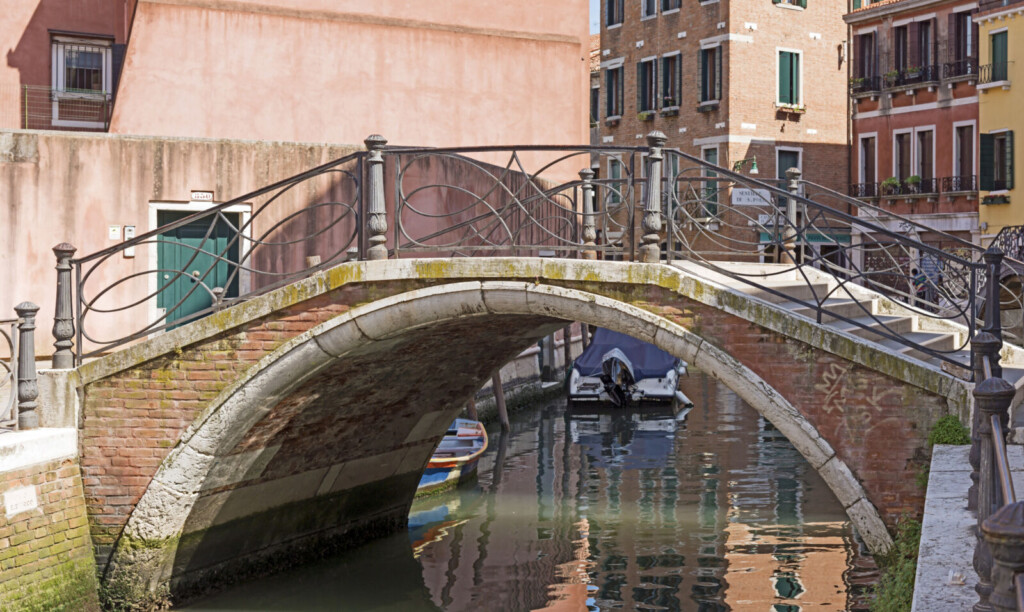
You are standing at a threshold that has been redrawn so many times the stone itself has forgotten its original allegiance. The calle narrows, the sotoportego swallows you, and somewhere above the lintel a carved lion holds a book whose pages have been smoothed by seven centuries of salt air — but the boundary you have just crossed is not architectural. It is jurisdictional, and it has been so since before the Republic knew what to call itself.
Medieval Venice did not govern through abstraction. It governed through the parish, a unit so dense with overlapping authority that Frederic Lane, writing in Venice: A Maritime Republic in 1973, described the sestiere system not as a map of the city but as a map of obligation — layered, contested, and stubbornly local. The parish was simultaneously a sacramental community, a fiscal district, a military recruitment zone, and the primary theatre in which reputation was built, lost, and inherited. To be of Santa Croce was not a postal designation. It was a declaration of which confraternity would bury you, which guild could claim your labor, and which noble family’s gravitational pull you lived inside.
The Byzantine inheritance underneath this structure is almost never acknowledged in the tourist literature, which prefers a Venice that sprang fully formed from the lagoon as a Renaissance merchant republic. But the earliest administrative partitions of the city followed the logic of the Byzantine exarchate of Ravenna, whose collapse in 751 sent waves of institutional memory westward into the lagoon settlements. The tribuni, the early magistrates of the nascent Venetian communities, organized territory the way Constantinople organized territory — not by natural geography but by the reach of a church and its priest, who was also, in practical terms, a census-taker, a dispute arbiter, and a node in a surveillance network that the Doge’s palace would later formalize but never truly replace.
What Lane’s research makes viscerally clear is that the scuole — the great confraternities like the Scuola Grande di San Rocco, but also the dozens of smaller scuole piccole scattered through Santa Croce — were not charities bolted onto the side of civic life. They were the load-bearing wall. By the fifteenth century, membership in a scuola in Santa Croce could determine access to credit, to apprenticeship in the arsenale trades, to the informal arbitration that kept commercial disputes from reaching the magistrates at all. The boundary of the sestiere encoded these relationships spatially, so that crossing from Santa Croce into San Polo was not merely crossing a canal but crossing into a different web of obligation, a different set of men who would or would not vouch for you.
Guild territory reinforced this. The traghetto stations, the wool-workers, the glassworkers who had not yet been fully expelled to Murano, the boatbuilders who serviced the western approach to the Rialto — all of them clustered in ways that were simultaneously economic and devotional, because the guild’s patron saint was also the parish’s anchor, and the annual procession was also a territorial assertion. When a guild marched through Santa Croce on its feast day, it was not celebrating history. It was renewing a claim.
The Republic’s formal institutions — the Great Council, the Senate, the Council of Ten — sat at the apex of a structure whose real foundation was this capillary system of parish loyalty and confraternal debt. The Doge could not simply decree behavior in Santa Croce; he had to negotiate it through priors, through gastaldi, through the slow hydraulics of a city that had learned, in its earliest decades of survival in a hostile lagoon, that the smallest unit of governance was also the most resilient, and that resilience, in Venice, was always the first political virtue.

The Scuole, the Guilds, and the Economy of Solidarity That Was Never Solidarity
You are standing in front of a painting you cannot afford to have restored, in a building your grandfather helped maintain, in a district that has commemorated your family’s trade for five centuries and never once let anyone from your family sit at the table where decisions were made. This is not a paradox. It is the operating system.
The scuole of Venice — those fraternal organizations that historians have long described as expressions of collective piety and mutual protection — numbered over two hundred by the sixteenth century, spanning from the six great scuole grandi down to the minor confraternities organized around every conceivable craft: glassblowers, furriers, comb-makers, boatmen. Richard Mackenney, in his meticulous 1987 study Tradesmen and Traders: The World of the Guilds in Venice and Europe, 1250-1650, documents how these institutions provided genuine material support — dowries for daughters of deceased members, burial costs, care for the sick — while simultaneously functioning as vertical hierarchies in which the wealthiest citizen members, the so-called banca, controlled access to resources, managed the books, and determined who qualified as sufficiently respectable to receive aid. The mercy was real. The architecture of who dispensed it was never neutral.
What makes this arrangement so resistant to simple condemnation is that it did not operate through obvious coercion. No one was forced to join a scuola. The coercion was subtler: in a city where the state provided almost no welfare infrastructure and where illness or a bad season on the water could erase a family’s margin for survival within weeks, membership was not optional in any meaningful sense. The choice to join was the choice between two forms of dependency — informal destitution or institutionalized clientage — and the scuole made certain that every act of charity arrived wrapped in gratitude, obligation, and a tacit acknowledgment of the benefactor’s moral superiority. Michel Foucault would recognize the architecture immediately: power operating not through prohibition but through the administration of care.
Santa Croce sits at the gravitational edge of this system’s most visible monument. The Basilica dei Frari — technically just outside the sestiere’s border but impossible to discuss without it, given the organizational networks that bled across those administrative lines — was funded in significant part by guild donations and scuola patronage across the fourteenth and fifteenth centuries. The Franciscans who built it accepted money from the very commercial networks that their theology was supposed to critique. Chapels inside the Frari were purchased by wool merchants, furriers, and the Scuola Grande di San Giovanni Evangelista. The building is therefore not simply a monument to faith. It is a ledger in stone: a record of which guilds had accumulated enough surplus capital to buy immortality in marble, and which had not. The caulkers who waterproofed the boats that made Venetian trade possible left no chapel. They left a confraternity record mentioning that their dues were sometimes in arrears.
This is the specific texture of how solidarity calcifies into hierarchy over time — not through betrayal but through institutionalization. The scuola begins as neighbors pooling against catastrophe and ends as a bureaucracy with gatekeepers, dress codes for processions, and an unspoken ranking of whose grief deserves the larger candle. By the time Carpaccio was painting the cycles commissioned by the Scuola di San Giorgio degli Schiavoni in the early sixteenth century, the confraternities had become sophisticated cultural patrons whose appetite for self-representation had outgrown any original impulse toward mutual protection. The art that now fills museum catalogs was purchased with dues extracted from members who would never see the finished rooms.
What the district preserved, then, was not community. It preserved the image of community — maintained at collective expense, for the private edification of those who had already arrived.
Carnival, Liminality, and the State's Investment in Transgression

You put on the mask and you believe, for a moment, that you have disappeared. The bauta covers your jaw, distorts your voice, erases the line of your chin — and suddenly the calle feels different, the night feels wider, the rules feel optional. This is exactly what the Council of Ten intended.
Venice’s Carnival lasted eighteen days in its regulated form, running from the day after Christmas until Shrove Tuesday, though by the sixteenth century the festivities had crept outward, colonizing weeks on either side of the official calendar. The bauta was not merely a costume tradition — it was a legally recognized instrument of anonymity. A citizen wearing one could enter a casino, place a bet, proposition a stranger, and conduct business without the social consequences that would otherwise follow. The mask was freedom on loan, issued by the same authority that tracked, surveilled, and punished the unmasked population throughout the rest of the year. The Council of Ten, Venice’s executive surveillance body, understood something that most modern states still pretend not to know: that controlled transgression stabilizes power more reliably than prohibition.
Victor Turner, working through decades of fieldwork and consolidating his framework in “The Ritual Process” in 1969, described liminality as the threshold condition — the moment between social states when the ordinary rules dissolve and the individual exists outside their assigned identity. Turner saw genuine transformative potential in this dissolution, a space where hierarchy could be questioned and new social configurations could emerge. What Venice engineered was structurally identical to Turner’s description and functionally its opposite. The threshold was not an opening in the wall — it was a door that the authorities held open and then closed on schedule. Carnival’s transgression was permitted precisely because it was temporary, bounded, and ultimately self-exhausting. The man who spent three weeks in disguise returned to his guild, his class, his legal identity, and his debts, slightly lighter in the chest but not one inch freer in the social structure.
Sumptuary laws, which regulated what fabrics, colors, and jewelry different classes could wear, were formally suspended during Carnival. A fisherman from the Giudecca could dress as a Procurator of Saint Mark without legal penalty. What looked like the erasure of class was actually a performance of it — the disguise only worked because everyone understood exactly what was being disguised. The joke of the fisherman-as-noble was legible only in a society that enforced the distinction with brutal clarity for the other three hundred and forty-seven days of the year. The suspension did not weaken the hierarchy; it dramatized it, made it visible and theatrical, and in doing so reinforced the sense that the hierarchy was natural rather than constructed, since it could be mocked without being dismantled.
Santa Croce in the Carnival season was something specific and historically traceable. The district’s position — stretching from the rail terminus to the inner curve of the Grand Canal, dense with workers, warehouses, and the residual population that the tourist economy later scraped away — meant that its Carnival was not the noble entertainment of San Marco’s piazzas. It was rougher, more materially desperate, the liminality less philosophical and more immediate. And yet even here the architecture of managed transgression held. The fires were allowed in designated campi. The noise ordinances were relaxed within known boundaries. The disorder had a shape, and the shape had been drawn by someone sitting at a desk.
Turner’s liminal subject emerges from the threshold changed. The Venetian Carnival subject emerged from it tired — which served the same administrative purpose with considerably less risk.
Modern Venice as Its Own Museum: Depopulation, UNESCO, and the Archaeology of the Living
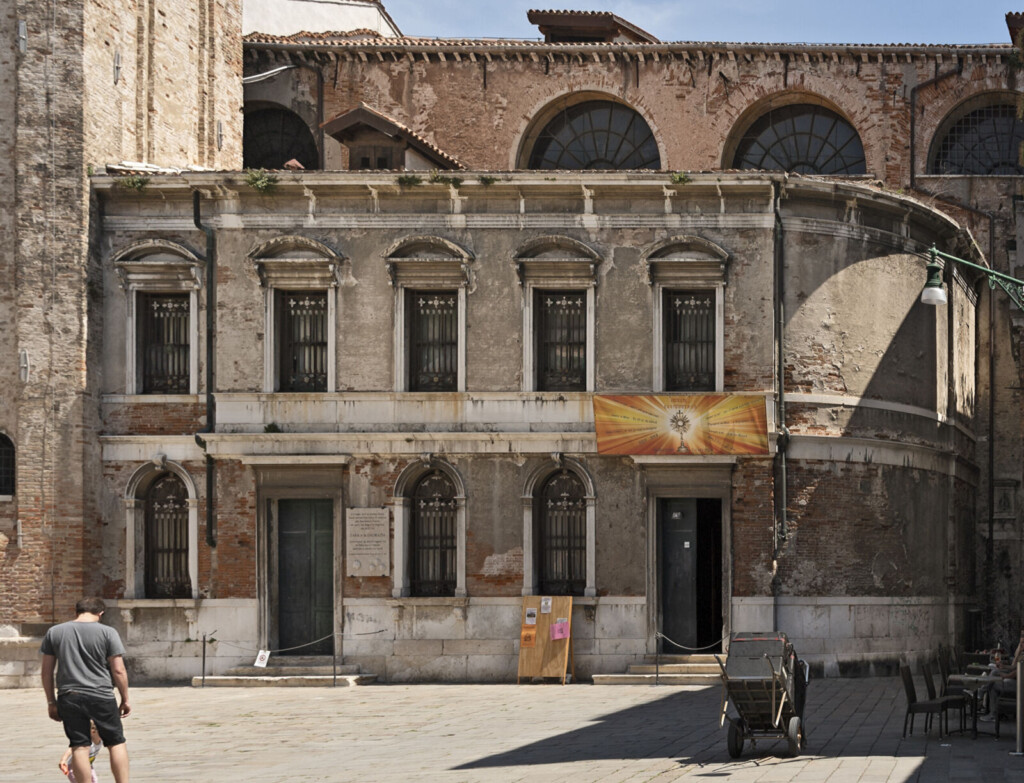
You walk through the Fondamenta del Gaffaro on a Tuesday morning in November and the silence is not peaceful — it is the silence of a body that has stopped metabolizing. A few women hang laundry from iron brackets. A hardware store displays rubber boots and plumbing fittings with the stubborn dignity of a business that has not yet admitted defeat. This is Santa Croce in its residual vitality, and what strikes you is not beauty but the effort required to sustain ordinary life in a place that the world has collectively decided should remain extraordinary.
The numbers are not metaphorical. Venice held approximately 175,000 residents within its lagoon boundaries in 1950. By 2024, the historic city proper counted fewer than 50,000, a demographic hemorrhage of such scale that demographers began treating it less as urban migration and more as a case study in civic extinction. Santa Croce has shed population at roughly the same rate as the other sestieri but retains something the tourist-saturated zones around San Marco have largely surrendered: a non-performative daily life, grocery runs, schoolchildren, arguments about parking for boats, the accumulation of banal choices that constitutes culture at its most irreducible.
Salvatore Settis, the classical archaeologist and art historian whose 2014 work Se Venezia muore argued with surgical precision that the city was being consumed by its own symbolic weight, used the term museification not as a lament but as a diagnosis. His argument was that when a city’s primary function becomes the exhibition of itself, the feedback loop of preservation destroys the very conditions that made it worth preserving. Buildings survive; the social tissue that gave those buildings meaning, the trades, the dialects, the neighborhood obligations, the slow accumulation of private memory layered onto public space, does not. What remains is an extremely well-maintained ruin inhabited by the ghosts of people who could no longer afford to stay.
The UNESCO designation of 1987, which inscribed Venice and its lagoon as a World Heritage Site, formalized a dynamic that had been operational for decades: the transformation of a living city into a category. Categories require maintenance, not habitation. The Italian state, the regional authority, and the international bodies tasked with protecting Venice have poured enormous resources into sustaining its physical fabric while doing almost nothing to arrest the social evacuation that makes that fabric inert. The MOSE flood barrier, a project debated since the 1980s and only declared operational in 2020 after billions of euros and a corruption scandal of operatic proportions, was designed to save buildings from water. No equivalent mechanism was ever seriously designed to save residents from prices, from the structural impossibility of conducting a working life in a city reconfigured entirely around tourism revenue.
What gets lost in the museification debate is a subtler casualty: the capacity for cultural production that requires friction, density, conflict, the irritating proximity of people who do not share your aesthetic preferences. The great Venetian artistic explosions — the workshop culture of the Bellini family in the fifteenth century, the radical chromatic experiments of Titian and Tintoretto, the architectural arguments conducted in stone between Sansovino and Palladio — were not produced by a curated environment. They emerged from a city crowded with competing interests, guild politics, economic anxiety, and the generative pressure of people who needed to work and had no interest in being picturesque.
A city that performs its own past for foreign consumption operates on the logic of a museum, and museums, whatever their value, do not generate new thought — they organize existing thought for legibility. Santa Croce, with its fraying edges and its improbable persistence of the quotidian, may be the last place in Venice where the distinction between those two modes of existence has not yet fully collapsed, which is precisely why its slow disappearance deserves to be understood not as urban decline but as a civilizational question about what cities are ultimately for.
A vision curated by a filmmaker, not an algorithm
In this video I explain our vision
🏛️ Stones, Canals, and the Memory of Venice
The Santa Croce district is one of Venice’s most intimate and layered quarters, where history, myth, and everyday life intertwine along narrow calli and silent canals. To fully understand its character, one must explore the broader cultural and literary universe that Venice has inspired across centuries.
Venice in Literature: History and Imagination
Venice has long served as one of literature’s most fertile imaginative spaces, drawing writers from Henry James to Thomas Mann with its paradoxical beauty of decay and splendor. The city’s labyrinthine streets, its play of light on water, and its atmosphere of melancholy grandeur have made it a symbol of both timeless culture and inevitable dissolution. This article traces the rich tradition of literary Venice and the myths it continues to generate.
GO TO THE SELECTION: Venice in Literature: History and Imagination
Ruskin’s The Stones of Venice: Analysis
John Ruskin‘s monumental work on Venice remains one of the most passionate and rigorous defenses of Gothic architecture and medieval craftsmanship ever written. His detailed analysis of Venetian stones, facades, and decorative motifs reveals a deep philosophy of beauty inseparable from moral and spiritual meaning. Reading Ruskin is essential for anyone wishing to understand the architectural soul of districts like Santa Croce.
GO TO THE SELECTION: Ruskin’s The Stones of Venice: Analysis
Venetian Legends and Ghosts of the Lagoon
Beneath the surface of Venice’s celebrated history lies a darker current of legend, ghost stories, and supernatural folklore rooted in the lagoon’s unique geography and centuries of isolation. The Venetian imagination has populated its bridges, palaces, and waterways with spectral presences that blur the boundary between history and myth. This article explores the uncanny dimension of a city that has always lived between land and sea, past and present.
GO TO THE SELECTION: Venetian Legends and Ghosts of the Lagoon
Hugo von Hofmannsthal and Venice
Hugo von Hofmannsthal‘s relationship with Venice offers a fascinating lens through which to read the city as a place of aesthetic dissolution and inner transformation. The Viennese poet and playwright saw in Venice a mirror of fin-de-siècle Europe’s crisis of identity and the fragility of beauty. His writings illuminate how the city’s very stones seem to speak a language of loss and transcendence.
GO TO THE SELECTION: Hugo von Hofmannsthal and Venice
Discover Independent Cinema on Indiecinema
If these cultural and historical depths have stirred your curiosity, Indiecinema streaming is the ideal place to continue the journey through films that explore cities, memory, and the layered beauty of European culture. Our curated selection of independent and art-house cinema brings these themes to life with the same passion and rigor. Come discover stories that the mainstream would never dare to tell.
👉 EXPLORE THE CATALOG: Watch Indie Films in Streaming
A vision curated by a filmmaker, not an algorithm
In this video I explain our vision

