
The Ritual You Perform Without Knowing Why
You set the table the same way your mother did, and her mother before her, placing the bread to the left even though no one in your family has ever been able to explain why, and when your daughter asks you about it, you say something vague about tradition, about respect, about how things are simply done this way — and you both accept this, and move on, and the bread stays to the left.

There is a particular kind of knowledge that lives in the hands before it reaches the mind. The anthropologist Marcel Mauss named it in 1934 in his lecture “Les Techniques du corps,” delivered to the Société de Psychologie in Paris: the idea that bodies carry cultural information in posture, in gesture, in the choreography of daily life, transmitted without language, sometimes without any conscious act of teaching at all. A French child learns to walk differently from a British child not because of physiology but because of imitation operating below the threshold of intention. The body is a kind of archive, and what it stores is rarely accessed by deliberate retrieval. It surfaces only when something threatens to interrupt the pattern — a foreign country, a new generation, a screen that offers an alternative gesture to replace the one inherited.
What makes this uncomfortable is that the interruption has arrived at a scale we have never before navigated. The digital transition is not simply a change in medium, the way the printing press changed the medium for text while leaving the reader’s body largely undisturbed. It is a reorganization of the environments in which embodied transmission occurs. The family kitchen where a grandmother demonstrated, without speaking, how to press dough with the heel of the hand, has been supplemented and in many households replaced by a video tutorial that shows the same motion from a camera angle optimized for visibility rather than for imitation. The tutorial is clearer. The tutorial is also severed from every other thing that was in the room: the smell, the specific quality of impatience in an elderly woman who has done this ten thousand times, the social stakes of getting it right in front of someone who loves you and expects competence.
The philosopher Michael Polanyi argued in “The Tacit Dimension” in 1966 that we always know more than we can tell — that explicit knowledge is only the visible tip of a practice that depends on a vast substrate of tacit understanding accumulated through doing, through proximity, through failure in a context that cares. This is not nostalgia for the predigital. Polanyi was making a structural claim about the nature of skill and meaning. When you learn to ride a bicycle from a manual alone, you do not learn to ride a bicycle. The gap between instruction and competence is bridged only by the body’s willingness to absorb correction through experience, and that experience has a social and spatial texture that cannot be collapsed into data.
Cultural traditions are not simply collections of practices. They are ecosystems of tacit knowledge organized around repetition, around shared presence, around the particular kind of attention that a community directs toward an event it has decided matters. The Japanese tea ceremony, codified by Sen no Rikyu in the sixteenth century and still practiced today across thousands of schools, takes between forty-five minutes and four hours depending on the style — an expenditure of time that is, by any rational productivity metric, catastrophic. Its value is inseparable from its duration, from the inconvenience it imposes, from the fact that it cannot be watched at double speed without destroying what it is. The act of slowing down in a world organized around acceleration is not incidental to the ceremony’s meaning. The slowness is the meaning.
The question of what happens to that meaning when the surrounding world changes its default speed is not a nostalgic question.
Ancestral
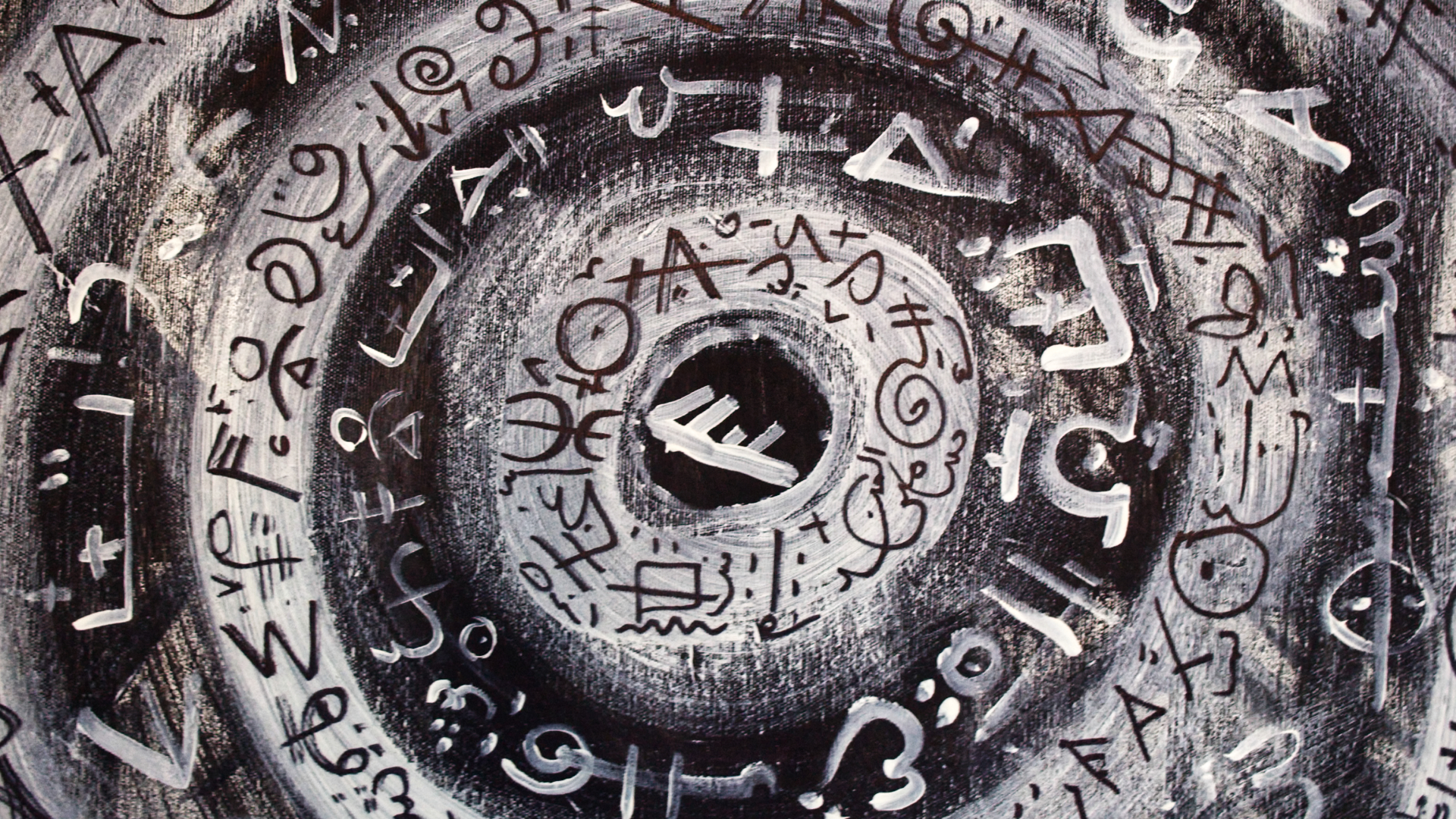
Documentary, by Lumar Brothers, Italy, 2023.
“Ancestral: Life and Art of Massinissa Askeur” is a documentary that explores the life and art of Algerian painter Massinissa Askeur. The film follows Askeur on his creative journey, showing his artistic process and his commitment to the preservation of Berber culture and tradition. Through interviews with Askeur, his family, friends and testimonies from people who knew him on a personal, professional and artistic level, the documentary tells the story of his past and his deep connection to his Berber roots. Askeur displays his art, from canvases to sculptures, which are inspired by the shapes and symbols of Berber culture, representing his search for a connection between the past and the present.
The documentary also explores the challenges Askeur faced throughout his life, including racial discrimination, poverty and the difficulty of making his art known outside of Algeria. However, despite these difficulties, Askeur continues to create and promote his art as a form of cultural resistance and celebration of his ancestral heritage. A vision far from art as a commercial product and very close, instead, to the exploration of the depths of one's own soul and the soul of the world. Massinissa's mission is to leave a testimony of his time to future generations.
LANGUAGE: Italian
SUBTITLES: English, Spanish, French, German, Portuguese
Digitization as Taxonomic Violence
You walk into a museum — not the grand colonial kind with marble floors and hushed reverence, but a digital one, accessible from your phone at 2 a.m. — and you are given a dropdown menu. Choose a region. Choose a tradition. Choose a date range. The interface is clean, generous even, and somewhere in its architecture is the implicit promise that nothing has been lost, that everything is here, organized and waiting.
Walter Ong understood something about this kind of promise before the internet existed to make it. In his 1982 work Orality and Literacy, he argued that writing does not simply record thought — it restructures it. The act of inscription imposes on fluid, contextual, performance-based knowledge a set of spatial assumptions: that meaning can be fixed, extracted from its moment of utterance, stored outside the body, and retrieved by a stranger without remainder. When a Homeric oral tradition gets written down, Ong observed, it does not merely change medium — it changes ontology. The words become objects. And objects can be owned, categorized, and misread without consequence.
Digital archiving accelerates this process to the point of violence, though the violence arrives wearing the face of preservation. UNESCO’s Intangible Cultural Heritage database, launched formally after the 2003 Convention, contains over 700 elements — rituals, music forms, craft techniques, oral traditions — each described through a standardized metadata schema: country of origin, associated community, threats to viability, proposed safeguarding measures. The schema is not neutral. It was designed by committees fluent in the administrative logic of international governance, not in the epistemic logic of the traditions being classified. A healing ritual from the Andean highlands that exists as a conversation between a practitioner and a specific landscape on a specific day is rendered, in the database, as a “social practice associated with nature and the universe,” filed under Peru, tagged as endangered. The living grammar of the thing — its refusal to be separable from weather, from grief, from the particular person performing it — disappears entirely, because there is no metadata field for disappearance.
Google Arts and Culture went further in democratizing this violence, presenting itself as a radical act of access. By 2023 the platform had partnered with over 2,000 institutions across 80 countries, digitizing millions of objects and making them navigable through visual search, street-view walkthroughs, and algorithmically curated “stories.” The word “stories” is doing enormous work there, covering what is actually happening: the imposition of a narrative arc, a beginning and an end, onto materials that were never designed to be consumed sequentially by an individual sitting alone. A Yoruba ceremonial mask photographed in high resolution and placed inside a “collection” about West African art has been removed from the only context in which its meaning was operative — the specific social choreography of its use — and inserted into a context where it means whatever the viewer brings to it, which is usually very little.
The ethnographic tradition thought it had solved this problem with the concept of thick description, Clifford Geertz’s method from his 1973 The Interpretation of Cultures, which insisted that cultural facts could only be understood inside dense layers of contextual annotation. But digital interfaces structurally resist thickness. Every additional layer of context competes with legibility, with searchability, with the frictionless scroll. The platform incentivizes the thin, the visually arresting, the extractable unit. Depth becomes a bug masquerading as a feature — technically available, almost never accessed.
What gets filed, in the end, is the corpse of a tradition dressed in its living clothes. The filing gives institutions the sensation of having done something ethical, even urgent. The communities whose traditions have been filed often have no administrative access to correct the record, no mechanism to flag when the categorization is wrong, no way to say: this is not what this is, this is not what we meant, this was never meant to outlast the moment it inhabited.

The Acceleration Trap and the Manufactured Nostalgia Economy
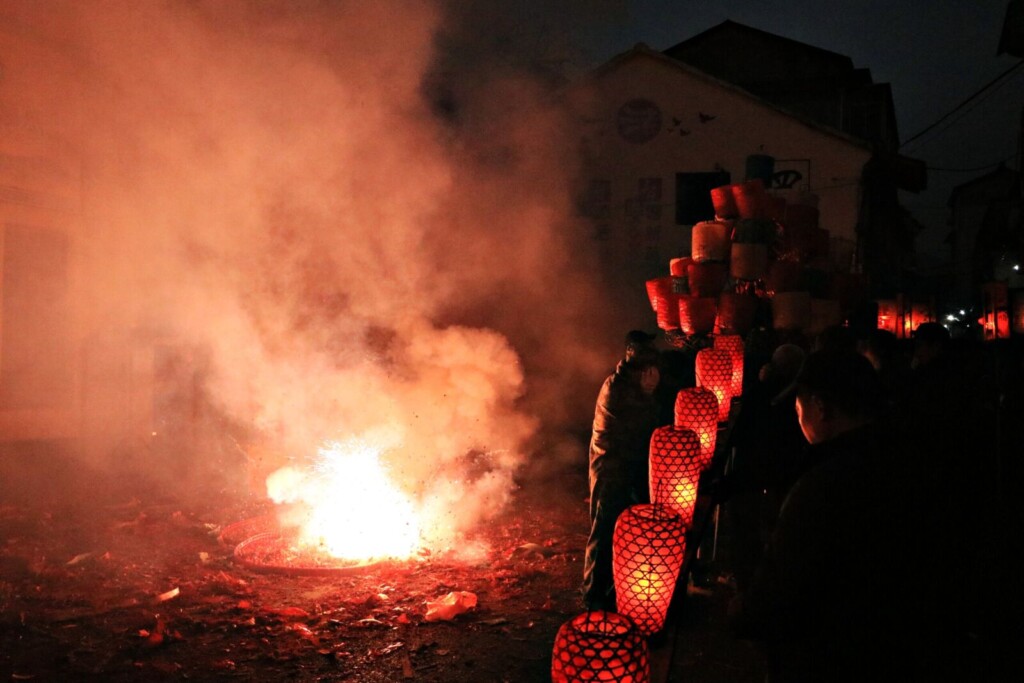
You have probably scrolled past it without stopping — a thirty-second clip of a weaver in Oaxaca threading a loom with the mechanical precision of someone who has done it ten thousand times, scored to ambient music, captioned with the phrase “slow living” and hashtagged into an algorithm that serves it between a protein powder advertisement and a celebrity’s morning routine. The clip has four hundred thousand views. The weaver has not been paid.
Hartmut Rosa, in his 2013 work “Social Acceleration: A New Theory of Modernity,” describes a civilizational condition in which the pace of technological innovation, social change, and daily life has exceeded the human capacity to orient oneself within time. His argument is not simply that things move faster — it is that acceleration dissolves the structures through which people locate meaning, community, and continuity. What Rosa did not fully anticipate was that the market would respond to this disorientation not by slowing down, but by selling the image of slowness at full speed.
The heritage tourism industry was valued at approximately $1.2 trillion globally as of 2023, a figure that has grown in near-perfect inverse proportion to the actual survival rates of the practices it markets. UNESCO estimates that roughly half of the world’s intangible cultural heritage — oral traditions, ritual ceremonies, artisanal techniques — is under severe threat of disappearance, often within a single generation. The industry does not rescue these forms; it photographs them at the moment of their maximum fragility, then sells the photograph as evidence of a living world that is, in most cases, already functionally over. What the tourist purchases is not access to a tradition but access to its theatrical echo, staged for consumption by communities who have learned that performance is more economically viable than continuation.
This is not a new dynamic in its structure. Walter Benjamin, writing in 1935 in “The Work of Art in the Age of Mechanical Reproduction,” observed that technical reproduction strips an artwork of its “aura” — that quality of singular presence embedded in a specific place, moment, and history. What digital platforms have accomplished is something Benjamin could not have fully modeled: the reproduction of aura itself as a sellable feature. The algorithm does not merely copy the weaving; it generates, around the copy, the feeling of encountering something rare, authentic, and irreplaceable. The manufactured sensation of witnessing the real is now the primary product, and it is far more profitable than the real ever was.
The term “nostalgia” was coined in 1688 by Swiss physician Johannes Hofer to describe a medical condition — a debilitating longing experienced by Swiss mercenaries stationed far from home, producing physical symptoms including heart palpitations, fever, and in some recorded cases, death. For Hofer, the illness was territorial: a body refusing to accept displacement. Three centuries later, the same emotional architecture has been industrialized into a content category. Platforms that algorithmically surface “traditional” content are not preserving collective memory; they are harvesting the neurological response to perceived loss and converting it into engagement metrics. The grief is real. The product built around it is synthetic.
What accelerates in Rosa’s framework is not only technology but the obsolescence cycle itself — the speed at which any given cultural form moves from living practice to archived artifact to nostalgic commodity. A craft tradition that once took three generations to decline now completes that arc within a decade, compressed by the same digital infrastructure that then monetizes its disappearance. The platforms are not neutral observers of this compression; they are among its primary engines, because scarcity — even manufactured, even accelerated — drives the emotional urgency that keeps users scrolling and clicking and feeling, briefly and expensively, that they are touching something that matters.
The question this raises is not whether digital platforms can preserve culture, but whether preservation was ever what they were designed to do.
What Anthropologists Got Wrong About Survival
You are standing in a museum of ethnography — not a metaphor, an actual building — and behind glass you see a carved wooden mask, a weaving loom, a set of ritual stones arranged in a particular pattern that once determined when a community planted its crops. The label reads “traditional artifact, origin circa 1880,” and the word “traditional” does its quiet work, making the object feel like something preserved rather than something interrupted.
Edward Burnett Tylor, writing in his 1871 Primitive Culture, coined the term “survivals” to describe cultural practices that persisted into modernity like fossils embedded in living rock — traces of older mental stages that had somehow outlasted their original context. The framework was not malicious; it was evolutionary, which in 1871 meant it felt scientific. Practices that seemed irrational to the Victorian observer were explained as residue, the dead weight of earlier civilizations dragging forward through time. James George Frazer extended this logic across twelve volumes of The Golden Bough between 1890 and 1915, cataloguing rituals from dozens of cultures as evidence of a universal primitive mentality gradually being superseded by rational thought. The problem with this architecture was not its ambition but its foundational assumption: that a tradition, at some earlier and purer moment, had been stable. That somewhere upstream there existed an original form from which all subsequent versions were deviations or degradations.
No such moment ever existed. Folklorist Albert Lord demonstrated in The Singer of Tales in 1960, through his fieldwork with oral poets in Yugoslavia, that epic poems were not memorized and transmitted but reconstructed at every performance, each telling a unique compositional event shaped by the audience present, the singer’s fatigue, the political mood of the village that week. What looked like preservation was actually perpetual generation. The tradition was not a container being passed forward; it was a verb, not a noun, an ongoing act of making that used inherited materials the way a river uses its banks — to give shape to motion, not to stop it.
This destabilizes something the survivalist framework could not afford to acknowledge: that the communities practicing these rituals already knew they were negotiating. The Balinese calendar system, the Andean reciprocity networks studied by John Murra in the 1950s and 60s, the West African griot traditions — none of these operated as fixed transmissions. They were systems of controlled improvisation, with mechanisms built in for adaptation, for absorbing contact with outside forces, for deciding what to perform differently without announcing a rupture. The rupture was always happening. It was managed, not avoided.
What the digital transition has done, then, is not introduce instability into previously stable cultural forms. It has made visible an instability that was always the operating condition of those forms. A ritual that shifted gradually across three generations, its alterations absorbed into the communal body without trauma, now shifts in three years, and the acceleration makes the process legible in a way it never was before. The mechanism is exposed. And because it is now visible, it is suddenly experienced as a crisis, when in fact it is only the familiar process running at a speed that removes the anesthesia of gradual time.
The sociologist Anthony Giddens, in The Consequences of Modernity published in 1990, argued that modernity does not destroy tradition so much as it forces tradition to justify itself — to become reflexive, to explain its reasons rather than simply assert its authority. What the digital environment does is weaponize this reflexivity, flooding every practice with competing alternatives, comparative data, the permanent awareness that others do it differently. A harvest ceremony does not disappear because someone posted a video of a different harvest ceremony; but the person performing it now performs it while knowing that comparison exists, and that knowledge changes the quality of the act from the inside, not because the form has changed but because the consciousness carrying the form has.
Memory as Infrastructure, Not Inheritance
You are standing at a festival you have attended every year since childhood, and something is wrong in a way you cannot name. The ritual is intact — the same sequence, the same objects, the same faces — but the weight has gone out of it. You are performing a memory rather than inhabiting one, and the difference registers somewhere below language, in the body’s refusal to be fully convinced.
Jan Assmann, writing with Aleida Assmann in the 1980s before expanding the framework in “Cultural Memory and Early Civilization” in 2011, drew a line that most people feel without knowing they feel it. Communicative memory is the living mesh of shared recollection that binds a group across roughly three generations — eighty to a hundred years of oral transmission, carried in the voices of people who were there or who heard it from someone who was. Cultural memory is the longer archive, the formalized and institutionalized body of meaning that reaches back centuries and is maintained through ritual, text, monument, and the deliberate labor of specialists. The distinction is not merely academic. It describes two entirely different mechanisms of social cohesion, and the second only functions when the first has already done its work.
What this means, concretely, is that tradition is not a container of content. It is a load-bearing structure — something that distributes weight across a community and holds shapes in place over time. The anthropologist Paul Connerton, in “How Societies Remember” from 1989, pushed this further by demonstrating that bodily practices — the posture of a ceremony, the muscle memory of a craft, the physical proximity of people gathered in the same room — are not decorative supplements to transmitted knowledge but the actual mechanism by which that knowledge is renewed. Strip the body out of the transmission and you do not have a lighter, more portable version of the same thing. You have a photograph of a bridge where the bridge used to be.
Digital platforms reproduce the photograph with extraordinary fidelity. The visual surface of tradition — its iconography, its timestamps, its named participants — migrates online with no apparent loss. A ceremony can be live-streamed to ten thousand people simultaneously, its images archived indefinitely, its symbolic vocabulary preserved in high resolution. And yet the infrastructure is gone, because infrastructure is not what a thing looks like but what it does to the people who are physically inside it. The load-bearing function of ritual depends on co-presence, on the shared exposure to duration, on the minor discomforts and negotiations of bodies occupying the same space — all of which are precisely what digital mediation optimizes away.
This is not nostalgia and it is not technophobia. It is an engineering observation. When you migrate a weight-bearing wall into a digital floor plan, you retain every visual dimension of the wall but you lose the one property that made it structurally necessary. Sociologist Émile Durkheim identified collective effervescence in 1912 in “The Elementary Forms of Religious Life” as the emotional charge generated by physical co-presence during ritual — a charge he considered the actual source of social solidarity, not its byproduct. A century later, the psychologist Nicholas Epley and his colleagues at the University of Chicago began documenting in controlled studies how the subjective sense of connection between strangers drops measurably when communication shifts from in-person to text-mediated exchange, even when the content of the communication is identical. The content was never the point. The medium was the infrastructure, and the infrastructure was always the real transmission.
What survives the migration is what Assmann would call the floating gap — the zone between living communicative memory and formal cultural archive where meaning is not yet institutionalized but is still warm with use. Digital platforms do not bridge that gap. They freeze it at the moment of capture, preserving the surface temperature of a tradition while the thermal exchange underneath it stops entirely, and what you are left with is an image that looks exactly like memory but performs none of its social work, circulating at scale through a network that has no idea what it was supposed to hold.
A vision curated by a filmmaker, not an algorithm
In this video I explain our vision
The Body the Algorithm Cannot Index

She has been making the same gesture for forty years. Not the same category of gesture — the same gesture, the precise muscular sequence that begins in the lower back, travels through the shoulder, and releases through the wrist at an angle no protractor has ever been asked to measure. The women who taught her did not describe it. They stood behind her and moved her arm. She resisted, relaxed, resisted again, and somewhere in the third year of that resistance something gave way and the gesture arrived, not as information received but as a physical fact accomplished. Today she transmits it identically: standing behind, moving the arm.
No camera positioned in that room, however high its resolution, captures what is actually being transferred. The image records the surface — the arc of the wrist, the tilt of the torso — but the image is a corpse of the event. What the camera cannot touch is the pressure of the teacher’s hand calibrating in real time against the student’s resistance, the micro-adjustments made in response to a particular body’s particular tension on a particular morning. The knowledge lives in the gap between two nervous systems in contact, and that gap is precisely what digital reproduction collapses into nothing.
Michael Polanyi named this with surgical precision in 1966, in “The Tacit Dimension,” when he argued that “we can know more than we can tell.” His insight was not romantic or mystical — it was epistemological and devastating. He was pointing at a structural feature of human knowledge: that a vast portion of what practitioners know is held in the body, in trained perception, in the fingertips of the surgeon who can feel the difference between healthy and compromised tissue before any scan confirms it. This knowledge cannot be made explicit without being falsified, because the act of translation into language or image strips away the very conditions — contact, duration, feedback, physical co-presence — that constitute it. Polanyi estimated that tacit knowledge underlies all explicit knowledge, that every formula we write rests on a foundation of things we learned to do before we learned to say.
What digital archiving does to cultural practices built on this foundation is not preservation. It is taxidermy. The recorded master class, the uploaded tutorial, the high-definition documentation of an endangered craft — these are skins without organisms inside. They can instruct the already initiated, can remind the body of something it has already partly learned, but they cannot generate the first transmission. They are parasitic on a living tradition that must already exist somewhere, in some room, in some pair of hands still willing to stand behind another pair of hands for three years.
The deeper danger is that the archive creates the illusion of having saved something. An institution documents a healing practice in four hundred hours of footage, publishes a monograph, builds a digital repository accessible in thirty languages, and the practitioners die without having transmitted to anyone who has undergone the physical initiation the tradition requires. The footage remains. The practice is gone. And the footage, by existing, becomes the alibi for its disappearance — evidence offered in the defense of a negligence already committed.
This is not a marginal problem affecting exotic or geographically remote traditions. Embodied transmission is the substrate of everything from surgical training to jazz improvisation to the calibration of a master glassblower’s breath against the resistance of molten material at precisely 1,050 degrees Celsius. When David Sudnow spent years relearning jazz piano from scratch after being trained classically, what he documented in “Ways of the Hand” in 1978 was that the music lived in the hands’ geography of the keyboard, not in any notation — and that this geography had to be inhabited, not read.
The tradition that cannot be filmed without being falsified is not primitive or irrational.
Identity Platforms and the Collapse of Cultural Ambiguity
You scroll past a video of a woman in elaborate ceremonial dress performing a harvest ritual, the caption reading “my culture is not your aesthetic,” and you feel something — solidarity, maybe, or the vague warmth of witnessing someone claim their inheritance publicly. What you do not feel, because the platform has already done the work of preventing it, is the discomfort of not knowing what you are looking at. The ambiguity has been edited out before you arrived.
Stuart Hall argued in his 1980 encoding/decoding model that cultural meaning is never simply transmitted from sender to receiver — it is produced at both ends, in conditions that are never identical, generating gaps, misreadings, and oppositional interpretations that are not failures of communication but its very substance. A tradition encoded by a community carries within it the accumulated tensions of that community: who was excluded from the ritual, which version of the story was suppressed, whose body was considered eligible to perform the sacred act. These tensions are not incidental to the tradition. They are the tradition’s engine, the mechanism by which it negotiated survival across hostile centuries. What social media demands, structurally, is that this internal complexity be resolved before posting — that a single, stable, photogenic version be selected and presented as the authentic whole.
The political economy of digital attention does not punish complexity gently. It punishes it through invisibility. An image that requires contextual knowledge to decode correctly, a ritual whose meaning shifts depending on which lineage you belong to, a song whose lyrics contain a deliberate double register — these things do not perform well in the first three seconds that determine whether an algorithm promotes or buries a piece of content. Legibility is not a stylistic preference on these platforms; it is a survival condition. And legibility, when imposed on cultures that historically operated through layered meaning and strategic opacity, functions as a kind of forced confession: declare yourself plainly, make yourself readable, or cease to exist in the only public space that currently scales.
The communities most harmed by this dynamic are precisely those whose traditions were built on illegibility as protection. Enslaved populations in the Americas encoded survival knowledge inside spiritual practice, dietary custom, and music specifically because opacity was the only available shield against annihilation. Indigenous communities maintained ceremonial knowledge through restriction and gradation, releasing meaning only to those who had earned the right to receive it. When these traditions migrate onto platforms designed for maximum transparency and shareability, the protective architecture collapses not through malice but through the simple incompatibility of two logics — one built for concealment, one built for exposure.
What replaces the contested, internally divided tradition is what might be called a cultural trademark: a stable, ownable, exportable symbol that functions as identity proof in a global marketplace of self-presentation. The process resembles what happens when a living language gets reduced to a logo for a regional tourism board. The sign remains; the argument inside the sign disappears. And because the trademark version circulates further and faster than any nuanced internal debate ever could, it begins to feel, even to members of the originating community, like the authoritative version — the real one, because it is the visible one.
This is where Hall’s model becomes genuinely alarming rather than merely descriptive, because the decoding that now shapes how a tradition is received and subsequently reproduced is increasingly performed not by human audiences with their own social positions and resistant readings, but by recommendation systems trained on engagement metrics. The algorithm is not a neutral conduit. It has a theory of culture: cultures are content, content has genres, genres have audiences, audiences can be targeted. Inside that theory, there is no room for a tradition that contradicts itself, that contains a faction which disputes its own origin myth, that holds its most important meaning in exactly the place it refuses to show.
The Untranslatable as a Form of Resistance
You know the word before you can explain it. Not the definition — the weight of it, the specific gravity it has when someone who belongs to the same world uses it at exactly the right moment. The Portuguese saudade has been translated a thousand times, loaded into apps, offered as a cultural curiosity, a linguistic souvenir. Each translation makes it smaller. The word does not describe longing; it performs a particular relationship between self and absence that has no equivalent architecture in English or Mandarin or code. When a platform encodes it as a tag, a mood category, an emoji cluster, something is not lost in translation — something is actively refused by the structure of translation itself.
Barbara Cassin’s 2004 Vocabulaire européen des philosophies, which she called a dictionary of untranslatables, assembled over a hundred terms across European languages that cannot cross linguistic borders without hemorrhaging meaning. Her argument was not nostalgic. It was structural: certain words are not difficult to translate because we lack vocabulary, but because they carry within them entire systems of thought, entire configurations of what it means to be a subject in time and in relation to others. The untranslatable is not a gap in the dictionary. It is a map of where human meaning-making has pushed beyond the generic. The digital transition does not merely encounter these words with difficulty. It encounters them as a category error.
What platforms require is interoperability. Data must move between systems, between users, between monetization layers, without friction. A gesture, a silence, a communal ritual that means something only inside its specific human context is friction. The Balinese concept of lek — a complex social affect combining shame, self-consciousness, and the awareness of being seen as violating cosmic order — does not become a marketing category or a wellness trend because it cannot be stripped of its relational and cosmological embedding. Clifford Geertz spent years in fieldwork trying to articulate it in The Interpretation of Cultures in 1973, and his best approximation still left the word standing outside every English sentence he built around it. The concept resisted not because Geertz lacked skill but because the resistance was intrinsic to the phenomenon itself.
This is not an argument for cultural purity or the preservation of traditions under glass. Many traditions have been violent, exclusionary, built on hierarchies that silenced the people they claimed to represent. The untranslatable is not automatically good because it is irreducible. But there is a difference between critiquing a practice and flattening it into a data point. When an indigenous naming ceremony in the Pacific Northwest is documented for digital archiving without the consent of the community’s own knowledge keepers, the violence is not in the recording — it is in the assumption that the recording captures what the ceremony is. The meaning lives in the who and the when and the why, in the particular social body gathered in a particular obligation to the dead and the unborn. Outside that structure, the archive holds a shape with no substance inside it.
Simone Weil wrote in The Need for Roots in 1949 that uprootedness is by far the most dangerous malady of the modern world, but she was careful to separate rootedness from fixity. A living tradition is not a tradition that never changes — it is one that changes on its own terms, from pressure internal to the community rather than from the external demand to become legible to systems that were never designed with it in mind. What digital platforms cannot absorb, they tend to either ignore or simulate, and the simulation is always offered as preservation. The question is not whether untranslatable things will survive the current transition, but whether the communities that carry them will retain enough structural autonomy to decide, on their own, what gets translated, what gets held back, and what remains, deliberately and irreducibly, a secret.
🌍 Tradition, Memory and the Digital Crossroads
Cultural traditions are not mere relics of the past — they are living architectures of identity, meaning, and collective memory. In an age of digital acceleration, their value is both challenged and rediscovered. These articles explore the philosophical, sociological, and anthropological dimensions of what we risk losing, and what we might still preserve.
Jan Assmann and Cultural Memory
Jan Assmann’s concept of cultural memory offers a powerful lens through which to examine what societies choose to remember, transmit, and codify across generations. As digital platforms reshape the very infrastructure of collective memory, Assmann’s work becomes urgently relevant. Understanding how cultures encode their past is the first step toward protecting it in an era of algorithmic flux.
GO TO THE SELECTION: Jan Assmann and Cultural Memory
Intergenerational Transmission: What We Leave to Our Children
Intergenerational transmission explores the invisible threads that connect one generation to the next — values, rituals, stories, and ways of being in the world. The digital transition introduces unprecedented ruptures in this chain, as screens and platforms replace the oral and embodied practices through which culture has always been passed down. This article investigates what is truly at stake when the medium of transmission changes so radically.
GO TO THE SELECTION: Intergenerational Transmission: What We Leave to Our Children
Craftsmanship as Art Form: History and Philosophy
Craftsmanship as an art form represents one of the most tangible expressions of living cultural tradition — knowledge embedded in hands, tools, and materials over centuries. In a digitized economy that privileges speed and replication, the artisan stands as a quiet form of resistance and memory. This piece examines how manual knowledge carries cultural identity in ways no digital archive can fully replicate.
GO TO THE SELECTION: Craftsmanship as Art Form: History and Philosophy
UNESCO Cultural Heritage: History and Meaning
UNESCO’s framework for cultural heritage raises fundamental questions about which traditions deserve institutional protection and why. As digitization simultaneously threatens and promises to preserve endangered cultural practices, the debate over what counts as heritage has never been more contested. This article traces the history and evolving meaning of cultural heritage in a rapidly transforming global landscape.
GO TO THE SELECTION: UNESCO Cultural Heritage: History and Meaning
Discover Cinema That Explores Culture, Memory and Identity
If these themes resonate with you, Indiecinema is the streaming platform where independent cinema gives voice to the stories that mainstream culture forgets. Explore films that question digital modernity, celebrate living traditions, and dare to imagine other ways of being — because some truths can only be told through the freedom of independent filmmaking.
👉 EXPLORE THE CATALOG: Watch Indie Films in Streaming
A vision curated by a filmmaker, not an algorithm
In this video I explain our vision

