
The Ritualized Emptiness of the Shopping Cart
You are standing in the aisle and your hand is already moving. You have not decided anything. The decision, if it ever existed, happened somewhere behind you, in a version of yourself you cannot locate. The object is in your hand now — a jar, a package, something in a color that caught a part of your nervous system you were not supervising — and you are reading the label with the focused attention of someone who is not reading at all. You are simply present in the gesture, and the gesture is enough to feel like intention.

There is something almost liturgical about this. The fluorescent light, the temperature controlled to the exact degree that keeps you slightly uncomfortable but not uncomfortable enough to leave, the soft acoustic ceiling of music that exists only to prevent silence — all of it constitutes a ritual environment in the strict anthropological sense. Not metaphorically. Victor Turner, writing in 1969 in The Ritual Process, described ritual as a structured liminal space where ordinary identity is suspended and participants enter a state of becoming, neither what they were nor what they will be. The supermarket engineers this suspension with scientific precision. You are in a threshold state between desire and its object, and the genius of the architecture is that you never quite arrive.
What reaches you in that aisle is not exactly pleasure and not exactly boredom. It is something closer to what the psychologist Mihaly Csikszentmihalyi spent thirty years trying to name — not flow, its opposite. The condition he documented in Beyond Boredom and Anxiety in 1975 was one where the self cannot attach itself to any activity with sufficient force to feel real. Consumer space is engineered to exploit this gap. It offers constant low-intensity stimulation precisely calibrated to prevent the kind of sustained attention that might produce an actual preference. You can spend forty minutes in a store and leave genuinely unsure whether you wanted anything.
The philosopher Guy Debord, in 1967, called the society of the spectacle a social relation between people mediated by images. The supermarket extends this: it is a social relation between people mediated by objects that are themselves already images of objects, representations of needs that were constructed before you entered the building. The need for this particular yogurt did not precede the yogurt’s placement at eye level. The marketing literature is explicit about this — planograms, the technical term for shelf-arrangement maps, are designed to produce purchase rates, not to respond to them. You were steered before you arrived.
And yet to call this manipulation is already to miss something more disturbing. Manipulation implies a manipulator and a victim, an outside force acting on an inside resistance. What the consumer environment accomplishes is the prior erasure of the inside. The French sociologist Jean Baudrillard, in The Consumer Society published in 1970, argued that consumer culture does not sell you objects but signs — and that the purchase is always an act of social positioning, a way of telling yourself who you are or who you are trying to become. The jar in your hand is a statement about yourself that you are making to yourself in a language you did not choose and cannot fully read.
This is the uncanny familiarity the scene carries. Not that you are being deceived, but that you are participating fully and freely in something that requires your interiority to be at least partially offline. The gesture of reaching is real. The hand is yours. But the desire the gesture is supposed to express exists somewhere in a distributed system of images, logistics, behavioral data, and shelf science — and the most unsettling thing is not that this is hidden from you, but that you already knew it, in a way that has never quite made it to the surface of a full thought.
Ancestral
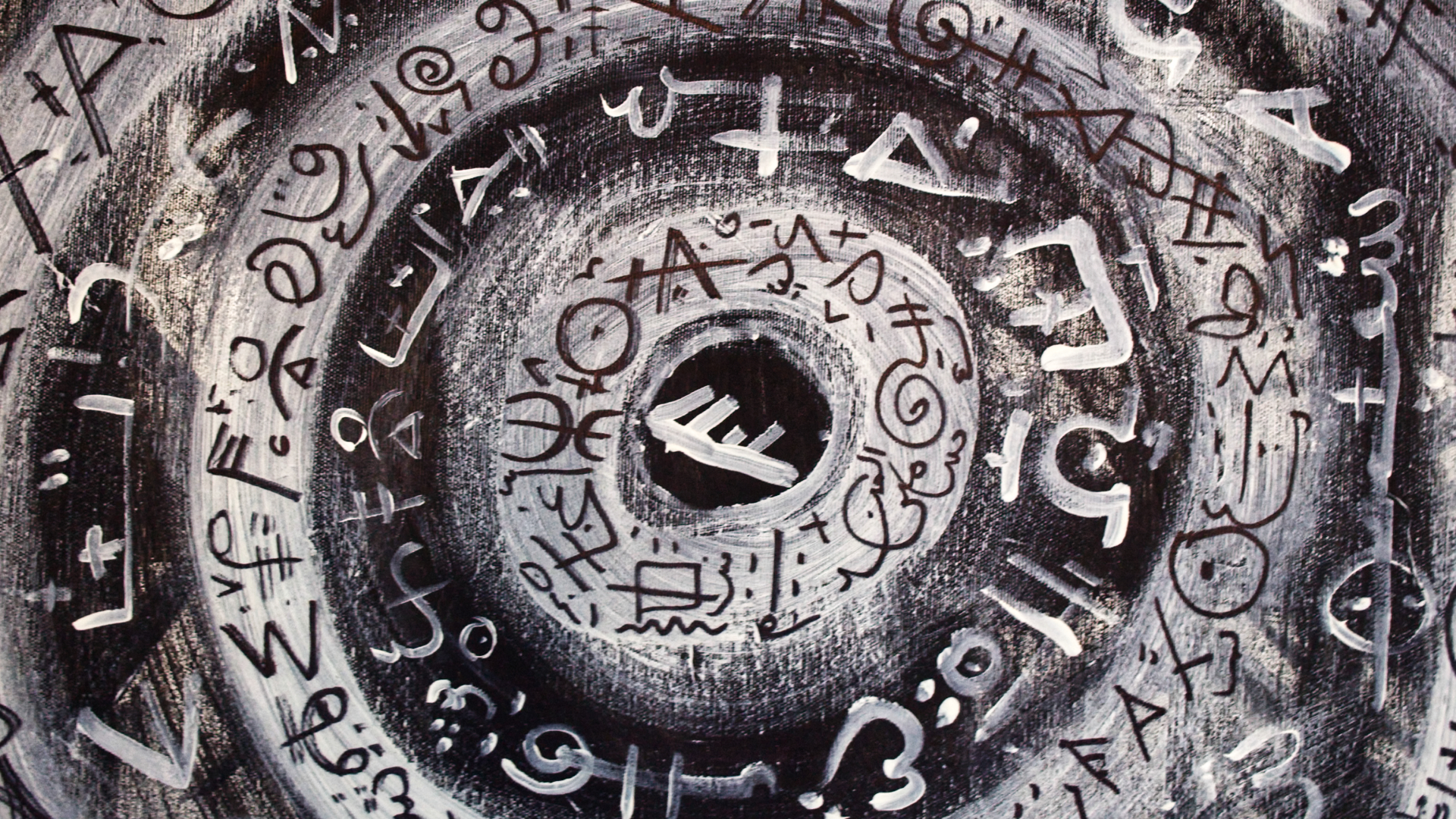
Documentary, by Lumar Brothers, Italy, 2023.
“Ancestral: Life and Art of Massinissa Askeur” is a documentary that explores the life and art of Algerian painter Massinissa Askeur. The film follows Askeur on his creative journey, showing his artistic process and his commitment to the preservation of Berber culture and tradition. Through interviews with Askeur, his family, friends and testimonies from people who knew him on a personal, professional and artistic level, the documentary tells the story of his past and his deep connection to his Berber roots. Askeur displays his art, from canvases to sculptures, which are inspired by the shapes and symbols of Berber culture, representing his search for a connection between the past and the present.
The documentary also explores the challenges Askeur faced throughout his life, including racial discrimination, poverty and the difficulty of making his art known outside of Algeria. However, despite these difficulties, Askeur continues to create and promote his art as a form of cultural resistance and celebration of his ancestral heritage. A vision far from art as a commercial product and very close, instead, to the exploration of the depths of one's own soul and the soul of the world. Massinissa's mission is to leave a testimony of his time to future generations.
LANGUAGE: Italian
SUBTITLES: English, Spanish, French, German, Portuguese
How Interiority Became a Market Liability
You are sitting in a waiting room with nothing to do, and within forty seconds you reach for your phone. Not because anything has happened. Not because anyone needs you. Because the silence itself has become unbearable, and you do not know exactly when that happened.
Blaise Pascal wrote in his Pensées, sometime around 1660, that all of humanity’s problems stem from the inability of a man to sit quietly in a room alone. He was not making a point about distraction. He was making a point about terror — the specific, sourceless dread that rises when a person is left with no external object to pursue and must therefore confront the interior. Pascal understood that the self, unoccupied, becomes its own most threatening encounter. What he could not have anticipated was that three centuries later, an entire industrial apparatus would be constructed precisely to ensure that encounter never takes place.
The postwar American economy did not accidentally produce a culture of consumption. It engineered one, with deliberate and documented intent. By 1955, retail analyst Victor Lebow had already articulated the logic explicitly in the Journal of Retailing: the American economy required that consumption become a way of life, that the buying and use of goods be turned into rituals, that spiritual satisfaction and ego satisfaction be sought through consumption. Lebow was not describing a social pathology. He was writing a prescription. And the prescription worked because it targeted something real — the human need for meaning, for continuity, for a sense that one’s existence is coherent — and rerouted that need away from interiority and toward the market.
The critical move was not to suppress the inner life directly. You cannot sell someone a product by telling them their depths are worthless. The move was subtler: to make the inner life feel insufficient, incomplete, and above all slow. Contemplation produces nothing visible. Solitude offers no feedback. Boredom — which the philosopher Albert O. Hirschman once linked to the generative restlessness that precedes genuine creative thought — was reclassified not as a condition to be endured and mined but as a problem to be solved, and immediately. The consumer economy did not destroy interiority through force. It made it feel like failure.
What followed was a restructuring of time itself. The sociologist Hartmut Rosa, in his 2013 work Social Acceleration, documents how the compression of temporal experience under modern capitalism is not merely a byproduct of technological efficiency but a structural requirement: an accelerated society cannot tolerate the rhythms on which inner life depends. Grief takes months. Genuine understanding takes years. The kind of attention required to notice one’s own contradictions cannot be compressed into an optimized schedule. When consumer logic colonizes time, it does not simply fill the hours — it renders the slow, unremarkable textures of interiority economically illegible, and therefore culturally invisible.
There is a particular cruelty in the way this disappearance was packaged as liberation. The postwar consumer boom was narrated as freedom — freedom from scarcity, from constraint, from the austere disciplines of previous generations. And there was real relief in it, for many people, for a while. But freedom from scarcity is not the same as freedom toward depth, and the conflation of those two things produced something that looked like abundance and functioned like evacuation. People were given more objects, more options, more surfaces to engage with, precisely as the architecture of their inner lives was quietly being dismantled.
What no market can afford is a person who is genuinely sufficient to themselves — who can sit in silence and not experience it as a deficit, who can encounter their own boredom and find it interesting rather than intolerable, who does not need the next thing to feel real.

The Manufacture of Desire: Bernays and the Psychic Economy
You are standing in a department store in 1929, and you believe, with complete sincerity, that the coat you are reaching for says something true about who you are. Nobody forced you there. Nobody threatened you. You walked through the door of your own volition, drawn by something that felt unmistakably like personal taste, like the quiet authority of your own desire. That feeling — sovereign, intimate, yours — was engineered.
Edward Bernays understood something about human psychology that most of his contemporaries preferred not to articulate: people do not buy objects, they buy mirrors. His 1928 book Propaganda, written without apology and with a clarity that still reads as faintly scandalous, laid out the architecture of what he called the “invisible government” — the small number of minds capable of shaping the mental life of millions by appealing not to reason but to unconscious drives. Bernays was Sigmund Freud’s nephew, and he took from his uncle’s work not the therapeutic ambition but the diagnostic precision: that beneath the rational consumer was a creature of appetite, anxiety, and identification, a being far more interested in who it appeared to be than in what it actually needed.
His genius was not manipulation in the crude sense of deception. It was something more structurally insidious: he made the consumer feel seen. When Bernays convinced the American Tobacco Company in 1929 to market cigarettes to women as “torches of freedom” — linking the act of smoking publicly to the suffragette movement, to bodily autonomy, to the refusal of male authority — he did not lie to women. He offered them a symbol, and the symbol genuinely resonated with something real in their experience of constraint. The product became a vehicle for authentic feeling. That is precisely what made the trap so airtight: the emotion was real, the need was real, only the solution was fabricated.
What Bernays formalized was a psychic economy in which interiority becomes the raw material of commerce. The self — its longings, its wounds, its aspirations — is not left alone to develop quietly toward some privately negotiated version of meaning. It is intercepted at the moment of formation and redirected. By the mid-twentieth century, the advertising industry in the United States was spending what would amount today to hundreds of billions of dollars annually not to inform consumers but to colonize the imaginative space in which identity is assembled. Stuart Ewen, in his 1976 study Captains of Consciousness, traced how the language of self-expression entered the marketplace precisely as the conditions for genuine self-determination were being systematically narrowed. The vocabulary of freedom migrated into the catalog.
What makes this process philosophically devastating rather than merely cynical is the double bind it creates. The person who resists consumer identity is still operating inside the field it generates — their refusal is legible as a style, their asceticism becomes a brand, their critique is absorbed and resold as countercultural authenticity. Naomi Klein documented this with forensic patience in No Logo in 1999, showing how the rebellion of the 1960s was recaptured wholesale by the 1990s as a marketing aesthetic: the ripped jeans, the anti-corporate slogan on a corporate T-shirt, the feeling of standing outside the system purchased from inside it. The escape route and the trap share the same door.
Bernays himself, late in life, expressed something close to unease about what he had unleashed, though even that unease arrived too neatly packaged to be entirely trusted. The system he helped build does not require a villain at its center. It requires only the ordinary human hunger to be recognized, to be reflected back to oneself as significant — and the structural genius of modern consumer culture is that it offers exactly this recognition, at scale, on demand, in exchange for something so gradual you do not notice its disappearance until the interior room where it used to live is already empty and the lights are on in the store.
Stimulation as a Substitute for Experience
You have been entertained every waking hour of the day for years, and you could not tell anyone what you actually felt during most of it.
Not because your memory is faulty. Because there was nothing there to remember — only the next frame arriving before the previous one had been processed, the next alert before the last one had landed, the feed scrolling past at a velocity that made digestion structurally impossible. What you consumed was real in the narrow sense that it occurred, that photons reached your retina and sound waves entered your ear canal, but nothing in the chain required you to be present as a subject. The stimulation happened to you the way weather happens to a building.
Guy Debord understood in 1967, with a precision that still reads as diagnostic rather than historical, that modern societies had undergone a fundamental inversion: life itself had become a collection of spectacles, accumulated images standing in for accumulated experience. His argument in “La Société du spectacle” was not that the image was false and reality was true — a distinction that would have been too easy and too comforting — but that the spectacle was a social relation between people mediated by images, and that this mediation had become so total it was no longer perceived as mediation at all. You did not watch the spectacle from outside. You lived inside it and called it living.
What makes this machinery so difficult to identify from within is that it produces something that feels exactly like experience — a sensation of fullness, of having been somewhere, of having witnessed something significant. The emotional register is activated. You feel moved, outraged, amused, aroused, informed. The bodily markers of experience are all present. What is absent is what phenomenologists would call the work of retention — the way genuine experience reverberates inward, demands integration, leaves residue. Walter Benjamin, writing on the storyteller in 1936, already traced the difference between Erfahrung, the deep experience that accumulates and transforms, and Erlebnis, the isolated shock-event that merely stimulates and passes. Consumer capitalism did not invent Erlebnis, but it built an entire civilization around its mass production and distribution.
The substitution is almost never noticed because it is designed not to be. The gap between stimulation and experience has no phenomenological marker — you cannot feel the absence of depth the way you feel the absence of warmth. What you feel instead is a faint restlessness after the screen goes dark, a mild irritability that has no specific object, an impulse to return immediately to the source of stimulation not because it satisfied you but because it did not. Psychologists studying what they call hedonic adaptation have documented since the 1970s how quickly any pleasure source loses its capacity to produce pleasure and begins to function instead as a baseline, below which you feel deficit. The consumer economy does not merely exploit this mechanism — it requires it. A population that found genuine satisfaction would be a catastrophe for markets predicated on permanent dissatisfaction.
There is a man sitting in front of a screen somewhere right now — he has been there for four hours — who would describe his evening as relaxing, even good, and would mean it, because the alternative would require him to name something he does not yet have a word for: the sensation of having spent four hours in the company of one’s own absence. The content he consumed was not irrelevant to his life, but it was consumed at a speed and in a format that made relevance impossible to establish. Each piece was interesting in the way a bright object is interesting to a person moving past it on a train — real, visible, gone.
Debord wrote that the spectacle is not a supplement to the real world — it is the heart of the unrealism of real society. What that sentence requires you to sit with is the possibility that the fullness you feel is not evidence that something happened, but evidence that the substitution was successful.
The Quantified Self and the Disappearance of the Unwitnessed Moment
You open the fitness app before you have fully woken up. The night’s sleep has already been scored, ranked, compared against a baseline you never set consciously, and the first thing your nervous system receives is not the quality of your own rest but a number’s verdict on it. The morning has not yet happened and you are already behind.
What this ritual enacts is not merely a habit of convenience. It is the completion of an architectural project that took decades to build. Shoshana Zuboff, in her 2019 work “The Age of Surveillance Capitalism,” names the mechanism with forensic precision: human experience has been converted into raw material, harvested not for the benefit of the person living it but for the predictive models of entities whose revenue depends on behavioral modification at scale. The self-tracking app is not a mirror. It is an extraction site. The data flowing out of your sleeping body is worth more to its collectors than any insight it offers you, and the insight it offers you is precisely calibrated to keep you generating data tomorrow.
By 2019, the average adult in the United States was spending roughly eleven hours per day interacting with screens, according to Nielsen’s Total Audience Report. That figure, absorbed abstractly, sounds manageable until you subtract sleep and realize it exceeds most people’s waking hours — meaning the interface is not a portion of life but the dominant medium through which life is experienced. The interior moment, the unwitnessed pause between stimuli, the thought that arrives without being summoned and dissolves without being captured, has no place inside that arithmetic. It produces nothing indexable. It cannot be liked, shared, or converted into engagement data, which means that within the logic of the system, it does not quite exist.
The philosophical stakes here extend far beyond screen time as a health concern. Georg Simmel, writing in 1903 in “The Metropolis and Mental Life,” observed that the urban individual develops a blasé attitude as a psychic defense against the relentless overstimulation of modern city life — a kind of protective numbness that allows the nervous system to function without being perpetually overwhelmed. Simmel was describing gas lamps and tram schedules. The contemporary version of that overstimulation is not spatial but temporal and attentional: it arrives not from the street but from within the pocket, at a frequency Simmel could not have anticipated, and the blasé attitude it produces is no longer merely social detachment but a structural incapacity for interiority itself.
Personal branding completes what self-tracking begins. The logic of the optimized online profile does not simply encourage self-presentation; it reframes the self as a product whose value is determined by external metrics — follower counts, engagement rates, the velocity at which content spreads. Guy Debord, in “The Society of the Spectacle” published in 1967, described a world in which lived experience had been replaced by its representation, in which being had ceded ground to appearing. What he could not have predicted was the degree to which individuals would internalize that replacement voluntarily, enthusiastically, and at their own expense, monetizing their personalities while believing they were expressing them.
The unwitnessed moment — the walk taken without a podcast, the meal eaten without documentation, the grief felt without posting — has become not merely uncelebrated but faintly suspicious. People report feeling vaguely guilty for experiences they have not archived, as though living without recording constitutes a failure of attention or a waste of material. This guilt is not accidental. It is the affective residue of a system that has successfully colonized the category of value, so that what cannot be measured begins to feel, from the inside, like what cannot be real. The self that exists only in the untracked interval between data points — private, unproductive, not yet legible to any algorithm — may be the last domain of experience that the system cannot yet monetize, and its survival may depend on whether we can remember how to value what cannot be counted.
A vision curated by a filmmaker, not an algorithm
In this video I explain our vision
Slowness as Contraband

You sit across from someone at dinner who has decided, for one week, to do nothing. Not meditation retreats, not digital detox programs with branded journals and guided breathing — simply nothing. No phone, no podcast bleeding into the kitchen, no background noise engineered to feel like silence. By the third day she describes something she cannot name at first: a crawling sensation behind the sternum, a restlessness that locates itself in the body before it reaches the mind, as though her nervous system were filing a complaint no one had authorized.
What she is experiencing has a clinical structure. Neuroscientist Kent Berridge, working out of the University of Michigan through the late 1990s and into the 2000s, drew a distinction that most people intuitively resist because it collapses the story they tell about pleasure: the difference between wanting and liking. The dopamine system, he demonstrated, governs wanting — the anticipatory lunge toward a stimulus — not the satisfaction of receiving it. Liking is a separate circuit, quieter, neurochemically distinct. Consumer society has engineered itself almost exclusively around the wanting loop, which means it has built an entire civilization on a mechanism that structurally cannot deliver what it promises, because the reward is never the point — the next reach is.
This is not metaphor. The average smartphone user unlocks their device 96 times per day, according to research conducted by app analytics firm Asurion in 2019. Each unlock is not a moment of consumption — it is a gesture of anticipation, a micro-activation of the wanting circuit that delivers just enough signal to demand another. The loop does not build toward satiation; it trains the nervous system to experience the absence of stimulation as threat. Which is why the woman sitting across from you at dinner is not being dramatic when she says her hands feel wrong. She is describing withdrawal from a system she never agreed to enter.
The philosophical tradition has a long argument with idleness, and it runs in two incompatible directions. Pascal wrote in the Pensées that all of humanity’s problems stem from the inability to sit quietly in a room alone — and he wrote this in the 1660s, before electricity, before the attention economy, before the infrastructure of permanent stimulation existed to turn that inability into an industrial product. What Pascal diagnosed as moral weakness was, in his century, still a failure of will. What it has become since is something closer to a designed condition, a feature rather than a flaw in the architecture of the self that consumer capitalism requires.
Slowness, then, is not a lifestyle preference. It operates today the way samizdat literature operated in Soviet bloc countries — as contraband, circulated against the grain of a system that cannot afford its existence. The Soviet state feared unauthorized thought; the attention economy fears unauthorized stillness because stillness is the only condition under which a person might notice that the wanting loop has been running on their behalf without their consent, generating appetite for objects and experiences that were never theirs to begin with. Genuine interiority — not the curated introspection of the wellness industry, not journaling for an audience of one who still imagines the audience — is structurally incompatible with the economy of perpetual stimulation because it produces nothing, encodes nothing, signals nothing to any external system.
Byung-Chul Han, in The Burnout Society published in German in 2010, argues that the achievement subject of late capitalism is not oppressed from outside but collapses from inside, exhausted by the compulsion to perform productivity upon the self. What he does not say explicitly, though the argument implies it, is that the exhaustion arrives precisely because the interior has been colonized so thoroughly that rest itself has been converted into a form of labor — recovery as optimization, stillness as investment in future output.
The Philosophical Tradition Consumer Culture Had to Neutralize
You are sitting across from someone you love, and you are not there. Your eyes are open, your body is warm, your hand may even be resting on theirs — but some fraction of you is calculating, scrolling internally, rehearsing a response to something that happened three days ago or three hours from now. This is not distraction in the old sense, the kind that a walk or a night’s sleep could dissolve. This is a structural condition, a trained incapacity, and it did not arrive by accident.
Simone Weil spent much of her intellectual life, particularly in the notebooks collected posthumously in “Gravity and Grace” and developed more rigorously in “Waiting for God,” arguing that attention — real attention, not concentration, not effort, but a kind of radical receptivity — was the highest moral faculty available to a human being. Not willpower. Not discipline. Attention. The capacity to let what is real about another person actually land on you, to receive their existence without immediately filtering it through your own needs, your own narrative, your own appetite for resolution. Weil called this the foundation of love and the precondition of justice, and she was careful to distinguish it from intellectual focus, which she considered a lesser and often violent act — the mind seizing rather than opening. What she described was a posture of self-suspension that the entire architecture of modern consumption has been engineered to make impossible.
The market does not merely distract you from this kind of attention. It makes it feel like a deficit. Stillness gets rebranded as stagnation. Receptivity gets coded as passivity. The person who sits quietly with another human being, not producing, not optimizing, not consuming the interaction as an experience to be later recounted — that person has become culturally illegible. Consumer logic cannot assign them a category. And what cannot be categorized by the market tends, over time, to feel vaguely shameful to the person doing it.
Martin Heidegger in “The Question Concerning Technology,” published in 1954, gave this process its most precise philosophical name. He called it Gestell — enframing — the mode of revealing that modernity imposes on all things, in which beings appear not as what they are but as what they can yield. A river is revealed as a potential power source. A forest is revealed as timber standing in reserve. A human being is revealed as labor capacity, or as a consumer profile, or as an audience segment. Gestell is not a particular technology or a particular ideology; it is a way of encountering the world in which nothing is allowed to simply be, in which the first question asked of anything is what it can be made to produce. Heidegger’s deepest concern was not efficiency or pollution or even alienation in the Marxist sense — it was that this enframing had begun to close off other modes of encountering things entirely, that the capacity to let a thing presence itself on its own terms was being systematically abolished, not by force but by a kind of ontological forgetting so thorough that people would eventually not notice what had been lost.
What consumer culture neutralized was not leisure. Leisure, in various hollowed-out forms, it provides abundantly — the holiday, the playlist, the curated evening. What it neutralized was the specific human capacity that both Weil and Heidegger, from entirely different philosophical traditions and with entirely different vocabularies, were pointing toward: the ability to be genuinely present to something that is not performing for you, not rewarding you, not optimizing itself for your attention — to encounter what is real precisely because it resists your categories. A stone. A silence. A face that is asking nothing of you but nonetheless asks everything simply by existing in front of you and waiting, without agenda, to be seen.
Identity Without Remainder

You are standing in front of a mirror that shows you exactly what you want to see, and the terror is not that it lies — the terror is that it doesn’t. The reflection is accurate. The clothes fit. The profile photo is current. The bio is punchy and true. And yet something refuses to be captured, something recedes each time you lean closer, as though the self were not a thing to be seen but a pressure felt from behind the eyes, a weight that no camera angle can locate.
Consumer culture did not simply colonize our desires. It proposed an answer to a metaphysical problem — who are you? — and made the answer shoppable. The genius of this operation is that it feels like freedom. You choose your aesthetic, your tribe, your values-as-brand. The market offers not products but identities, and the identities are modular, interchangeable, upgradable. What it cannot tolerate, what it has no SKU for, is the part of you that does not choose, the part that is simply there: the residue, the shadow, the thing you did not decide to be and cannot decide to stop being.
Christopher Lasch saw this clearly in 1979, when The Culture of Narcissism diagnosed not vanity but its clinical opposite — a self so porous, so dependent on external reflection, that it had lost the capacity to sustain an interior life independent of audience. Lasch was not lamenting self-love. He was describing self-absence. The narcissist in his analysis is not someone who thinks too highly of themselves but someone who cannot think of themselves at all without a mirror present. The psychological interior had not been inflated; it had been evacuated and replaced with performance. What looked like confidence was structural dependency on approval, and what looked like self-expression was, beneath the surface, a frantic search for a self that kept failing to cohere.
The architecture of contemporary platforms has since perfected what Lasch could only diagnose in its early form. Engagement metrics are not incidental features — they are ontological feedback systems. They tell you whether you exist and at what intensity. A post with no response does not feel like silence; it feels like disappearance. The self is confirmed or disconfirmed in real time, at scale, by strangers who share only the accident of an algorithm. This is not community. It is the simulacrum of witness, and it produces a particular kind of hunger that cannot be satisfied because it is not hunger for something — it is hunger as a permanent condition, the metabolic state of a self that has outsourced its own coherence.
The French sociologist Alain Ehrenberg, writing in The Weariness of the Self in 1998, traced the rise of clinical depression not to repression — Freud’s century — but to the collapse of prohibition into injunction. You are no longer forbidden; you are commanded to become. The imperative to construct yourself, to curate, to optimize, to perform authenticity on demand, produces a peculiar exhaustion that looks like laziness but is actually the fatigue of a self that has been running since birth and has nowhere to arrive. The finish line keeps moving because the finish line is the product being sold.
What no market can package is precisely what makes a self worth inhabiting: the unchosen, the unresolved, the grief that does not resolve into a lesson, the desire that does not translate into a purchase, the silence in which nothing is being produced or projected or affirmed. These are not deficits. They are the texture of an interior life — the remainder that consumer culture cannot process because it cannot be sold, and cannot be sold because it is not, finally, a surface at all, but the irreducible pressure of being someone that no mirror, however accurate, has ever been able to show.
🕳️ The Void Within: Consumer Society and the Erosion of the Self
Consumer society does not merely fill our homes with objects — it colonizes the inner life, replacing genuine interiority with the noise of desire and spectacle. The trap is invisible precisely because it presents itself as freedom, choice, and identity. These articles explore the philosophical, sociological, and psychological dimensions of this modern labyrinth.
Herbert Marcuse and the One-Dimensional Man
Herbert Marcuse diagnosed consumer society as a machinery that produces ‘one-dimensional’ human beings, stripped of the capacity for critical negation. By absorbing dissent into commodified culture, the system erases the inner depth from which genuine resistance and self-knowledge could emerge. His thought remains one of the sharpest tools for understanding how interiority is colonized by consumer logic.
GO TO THE SELECTION: Herbert Marcuse and the One-Dimensional Man
Jean Baudrillard and the Digital Simulacrum
Jean Baudrillard argued that in the age of simulation, the real is replaced by signs that refer only to other signs, leaving the subject adrift in a hyperreal landscape with no authentic interior ground. Consumer objects no longer satisfy needs but generate an endless loop of simulated desire, making genuine selfhood nearly impossible to locate. His analysis reveals how the trap of consumption is ultimately a trap of the imagination.
GO TO THE SELECTION: Jean Baudrillard and the Digital Simulacrum
The Obsession with Success in Contemporary Culture
The obsession with success in contemporary culture functions as one of the most insidious mechanisms through which interiority is surrendered to external validation. When a life is measured exclusively by performance metrics and social recognition, the inner world shrinks to the point of disappearance. This article traces the cultural roots of that obsession and its psychological cost.
GO TO THE SELECTION: The Obsession with Success in Contemporary Culture
Walter Benjamin and Capitalism as Religion
Walter Benjamin’s reading of capitalism as a religion — one that offers no redemption, only endless guilt — illuminates why consumer society leaves its subjects perpetually empty yet perpetually consuming. The sacred has not disappeared; it has been displaced onto commodities, trapping the individual in a liturgy of purchase with no path to transcendence. Benjamin’s fragments offer a haunting diagnosis of the spiritual impoverishment at the heart of modern life.
GO TO THE SELECTION: Walter Benjamin and Capitalism as Religion
Rediscover the Cinema That Looks Inward
If these ideas resonate with you, independent cinema offers some of the most courageous explorations of interiority and resistance to the consumer spectacle. On Indiecinema, you will find films that refuse the easy answer and dare to look beneath the surface of modern life — discover them now and reclaim your gaze.
👉 EXPLORE THE CATALOG: Watch Indie Films in Streaming
A vision curated by a filmmaker, not an algorithm
In this video I explain our vision

