
The Sunday Morning Ritual
You walk in through the glass doors and something shifts in your body before your mind catches up. The air is different — controlled, neither warm nor cold, a temperature that belongs to no season and no geography. The floors are pale and reflective, and your footsteps make a sound that feels slightly more purposeful than they do anywhere else, as though the architecture itself is conferring meaning on your movement. You did not plan to buy anything in particular. You told yourself this on the drive over. You are just looking.

The mall on a Sunday morning has a specific quality of light — diffuse, sourceless, falling equally on everything so that nothing casts a shadow. The storefronts are arranged with a care that took months of psychological research to perfect: the sight lines calculated, the threshold placements tested, the colors chosen through processes that involved neuroscientists and consumer behavior analysts whose names appear in no advertisement. You pass a window display and slow down. You were not aware of slowing down. Your feet made that decision somewhere below the level of language.
There is a couple ahead of you, moving at the same unhurried pace, and a woman alone who stops at a perfume counter and lifts a bottle with both hands, turning it slowly, the way you might hold something that belongs to a ritual. She does not spray it immediately. She reads the name first. The name is printed in a font designed to suggest either antiquity or futurity depending on which anxiety you carry — the fear of being rootless or the fear of being left behind. She closes her eyes when the mist touches her wrist. This gesture, this pause, this moment of private interior stillness in the middle of a public commercial space, is not performance. That is the thing. It is entirely sincere.
You find yourself at the checkout line holding something you picked up without a precise memory of deciding to. It might be something small — a candle, a notebook, a lip balm in packaging that feels considered and serious, as though it were made by people who cared about you specifically. The person behind the register greets you with a warmth that is both scripted and genuine, a combination that would seem paradoxical if you thought about it, but you do not think about it because the transaction is already moving forward, your hand already extending, the small ceremony already completing itself. You leave with a bag. The bag has a logo. The logo is beautiful, and you know this, and knowing it changes nothing about the way you feel carrying it.
Outside, back in the actual weather, back under a sky that has a specific time of day and a specific season and light that comes from a single identifiable source, something in your body settles back to its ordinary register. The controlled temperature releases you. But you carry the bag, and the bag is not nothing — it is a token, a material residue of an hour that had its own rhythm, its own sequence of approach and threshold and offering and receipt, its own particular form of attention. You spent money, yes, but money was not the only thing moving in that exchange. Something else was circulating, something that functions like meaning, like the temporary resolution of an unnamed pressure you arrived with and no longer quite feel.
No one told you to go. No one forced the gesture at the perfume counter, or the slowing at the window, or the way your breathing changed inside those doors. This is the part that is hardest to sit with — not that the system manipulates you, because you already know that, but that within the manipulation you were genuinely present, genuinely moved, genuinely reaching for something real.
Crazy World

Drama, thriller, by Fabio Del Greco, Italy, 2010.
Luca is poor and works, precariously, as a waiter. He lives a problematic relationship with his girlfriend, and his life is full of doubts. One day Luca meets Chiara, a friend who had studied philosophy with him at university. She has realized her dream of opening a night and is now well-off. Luca leaves everything behind and starts a relationship with Chiara. He manages the nightclub with her and, thanks to the cocaine and call girls sold to politicians, he gets out of his hard economic situation. But Chiara does not manage to obtain the contract for an old furnace, so she blackmails Saverio, a member of the Parliament. Chiara owns a video in which Saverio has sexual intercourse with a transsexual.
LANGUAGE: Italian
SUBTITLES: English, French, Spanish, German, Dutch, Portuguese.
Benjamin’s Fragment and the Unfinished Accusation
You find a scrap of paper in a dead man’s drawer. It has no title on the cover, no conclusion at the bottom, and the handwriting stops mid-thought as though the writer was interrupted — by what, no one knows. What you hold is not a finished argument. It is an accusation frozen at the moment of its most dangerous utterance.
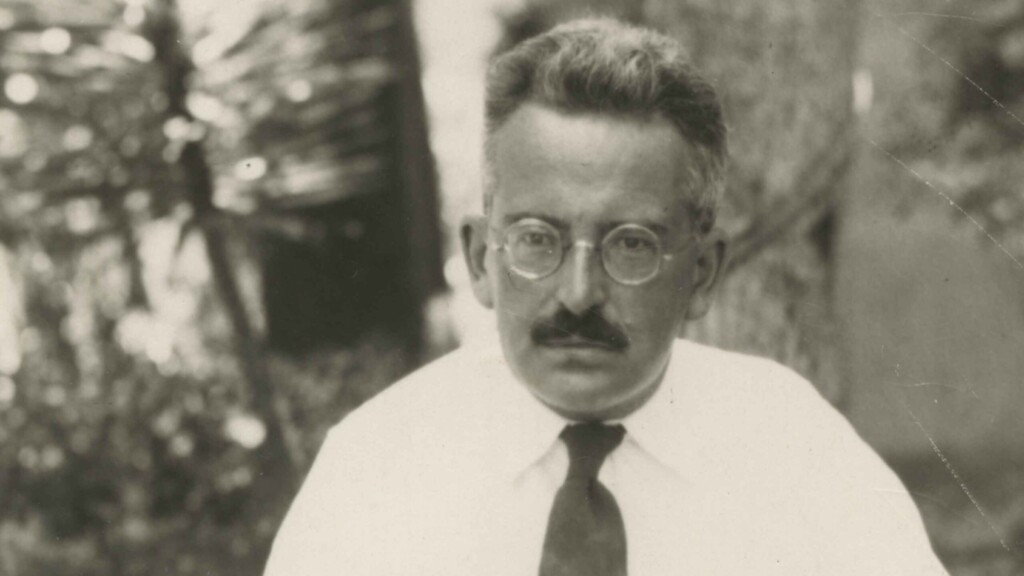
Walter Benjamin wrote what we now call “Capitalism as Religion” in 1921, and he never published it. The fragment — barely four pages in most editions, sometimes translated as fewer than a thousand words — was found among his papers after his death in 1940, when he took his own life at the Spanish border fleeing the Gestapo. It circulated in German academic circles for decades before Rolf Tiedemann included it in the collected works, and even then it occupied an uncomfortable position: too short to be a treatise, too dense to be a note, too specific to be dismissed as a draft. Scholars did not know what to do with it. Some read it as a commentary on Max Weber‘s The Protestant Ethic and the Spirit of Capitalism, published in 1905, which had argued that modern capitalism emerged from the ascetic discipline of Calvinist theology. Benjamin read Weber and then went somewhere Weber refused to go.
Weber’s argument was essentially historical and morphological: religion shaped the psychological conditions that made capitalism possible, then gradually receded as the rational machinery took over, leaving what he called an “iron cage” of pure instrumentality. The sacred origin was preserved as origin, archived, academically acknowledged, and thereby neutralized. Benjamin refused this comfortable sequencing. His claim was not that capitalism had religious roots. His claim was that capitalism is a religion — present tense, structurally, in operation right now — and that it never needed theology because it replaced theology’s function entirely.
He identifies three features that define capitalism as a cult in the precise theological sense. The first is that it is a purely cultic religion, one that knows no special dogma and no theology — only the practice, the ritual, the uninterrupted performance. There is no day of rest in this cult; Benjamin specifies that the capitalist calendar has no weekday, no pause, no sabbath. Every day is a feast day, meaning every day is an obligation. The second feature is the permanent and total nature of guilt — what Benjamin calls Verschuldung, a word that in German carries simultaneously the meanings of debt and guilt, a linguistic fact that is not incidental but structural. To be in debt is to be guilty. To owe money is to owe moral reckoning. The market does not distinguish between the two because it was built on the premise that they were always the same thing. The third feature is the one that tears the whole architecture of Western consolation apart: this cult offers no redemption. Traditional religion, even at its most punishing, promised resolution — confession, absolution, grace, the end of guilt in some final accounting. Capitalism accumulates guilt without offering any mechanism for its discharge. Debt is never fully paid. The interest compounds. The moral ledger is never closed.
This is what makes the fragment so difficult to sit with, even a century after it was written. It is not describing a pathology or a deviation from capitalism’s true nature. It is describing the mechanism accurately. The system does not malfunction when people remain in debt, when guilt proliferates without resolution, when no redemption arrives. That is the system working as designed. Benjamin was not writing a critique in the conventional sense — he was writing a diagnosis, and the diagnosis contained no prescription because he understood, at some level, that you cannot cure a religion with policy. You cannot legislate your way out of a cultic structure that has colonized the interior life as thoroughly as this one has.
The fragment ends without ending. There is a final sentence that trails toward a comparison with Nietzsche, a gesture toward something larger that Benjamin never completed. The incompleteness is not a flaw in the text. It may be the most honest thing about it.

A Cult Without Dogma
You check your portfolio before breakfast. Not because anything urgent has happened, not because a decision needs to be made — but because the ritual requires it. The numbers are the altar. The refresh button is the genuflection. Nothing is being decided in these moments; something is being performed, and the performance is the point.
Walter Benjamin, in a fragment written around 1921 and published posthumously as “Capitalism as Religion,” identified something that most sociologists of religion had missed entirely: that capitalism does not merely resemble a religion in its fervor or its social function, but satisfies the precise formal criteria of one. He listed three features. The first was that capitalism constitutes a pure cult — a religion of pure practice with no doctrine, no theology, no creed that could be articulated and therefore examined. Max Weber, writing two decades earlier in “The Protestant Ethic and the Spirit of Capitalism,” had traced the spiritual genealogy of economic accumulation back to Calvinist anxiety about predestination. Benjamin went further and argued that the umbilical cord had been cut: the descendant had outlived the ancestor, and the theology had been quietly dropped while the compulsive behavior it had generated continued running, empty and autonomous. What remained was ritual without belief, observance without a confessor, sacred action without any object that could be named as sacred.
This is why no one can explain, when pressed, what the worship is actually for. Ask someone why they need the promotion rather than simply the salary it brings, why the net worth must increase even when it already exceeds any conceivable need, why the market position must be defended against competitors who pose no real threat to survival — and you will receive either a tautology or a silence. The cult has no catechism because a catechism would introduce the possibility of heresy, and heresy would introduce the possibility of exit. The absence of dogma is not an accident of ideology; it is a structural feature that makes the system immune to internal critique.
Benjamin’s second feature was temporal: capitalism, unlike every other religion in human history, admits of no sabbath. Every faith tradition that preceded it built interruption into its architecture — a day, a season, a pilgrimage, a fast — during which the ordinary logic of accumulation and exchange was formally suspended, and something else was declared to be real. Capitalism abolished this structure entirely. The market does not close on Sunday in any meaningful spiritual sense; the anxious mind does not stop producing its calculations on vacation. In 1967, Guy Debord documented in “The Society of the Spectacle” how leisure had already been colonized — transformed from genuine interruption into a commodity consumed so that productivity could resume. The weekend is not rest; it is recovery time billed to the religion rather than to the worker. Every moment of apparent non-worship is already the worship of recuperation.
The third feature is where Benjamin’s fragment becomes genuinely unbearable to sit with. He identified guilt — Schuld, in German, the word that carries both “debt” and “guilt” as a single concept — not as a byproduct of capitalism’s failures but as its central product. The system does not generate guilt because it fails to deliver salvation; it generates guilt structurally, as its primary output, and the guilt cannot be atoned because the cult has no mechanism of absolution. There is no priest, no ritual purification, no year of jubilee in which debts are cancelled and accounts reset. The debt compounds. The guilt deepens. And crucially, the response to guilt is not reformation or repentance but increased participation — more productivity, more consumption, more performance of devotion to the numbers, because the only available response to the feeling of insufficient worship is more worship. The person who feels they have not done enough reaches for the phone before sleep, reads the figures one more time, and the altar accepts the offering without ever indicating that anything has been paid.
Weber’s Shadow and the Protestant Detour
You are standing in a church that hasn’t held a service in forty years. The pews are intact, the vaulted ceiling still carries the geometry of aspiration, but the collection plate has been replaced by a donation terminal that accepts contactless payment. Nobody finds this strange. The building was deconsecrated so gradually that the congregation never noticed the moment it happened — and that imperceptibility is precisely the point.
Max Weber, writing in 1905, constructed one of the most seductive intellectual architectures of the modern era: the argument that the Protestant work ethic, particularly in its Calvinist form, generated the psychological infrastructure that capitalism required. The anxiety of election — the unbearable uncertainty about whether one belonged among the saved — found its secular resolution in disciplined labor, accumulation, and the visible signs of worldly success. Profit became proof. The ledger became a theology. Weber’s genius was to trace the genealogy of an economic spirit back through a religious womb, showing how ascetic Protestantism disenchanted the world systematically, expelled magic, and left behind a rational cage whose bars were made of numbers.
Benjamin read this and found it insufficient — not wrong, exactly, but stopped at the threshold of the more disturbing argument. Weber’s capitalism inherits religion, transforms it, and then stands apart from it as a distinct historical formation. The sacred and the economic maintain their difference even as one produces the other. For Benjamin, this separation is precisely what capitalism refuses to enact. It does not emerge from religion and then depart. It stays. It occupies the structure, rewires the circuitry, and keeps the lights on — but the light is different now, and nobody has been told.
The theological vocabulary that Weber treated as a historical residue — guilt, vocation, sacrifice, redemption — Benjamin recognized as an operational vocabulary, still active, still doing work, but now entirely in service of market logic. When a person speaks of being “in debt” in contemporary life, they are not using a financial metaphor. They are using a moral one that has been so thoroughly financialized that the moral dimension has become invisible. The German word Schuld carries both meanings simultaneously: guilt and debt. This linguistic fact is not coincidental. It is the compressed signature of a transformation so total that the language itself cannot separate what the culture has merged.
Weber’s detour — religion shaping capitalism and then receding — implies that capitalism eventually stands on secular ground, that the disenchantment he diagnosed produces a world stripped of the sacred and running on pure rationality. This is the famous iron cage: cold, purposeless, efficient. But Benjamin’s fragment from 1921, never published in his lifetime and only a few hundred words long, insists on something Weber could not accommodate: capitalism is not the death of the sacred but its mutation. The guilt that Calvinism generated as a theological problem — how do I know I am saved? — capitalism converts into a structural condition from which there is no salvation, only deferral. The debt is never retired. The system has no Jubilee.
This distinction matters in ways that alter how you read the entire twentieth century. Weber’s framework predicts secularization as capitalism’s long-term cultural product — a gradual emptying of transcendence from public life. And for a while the data seemed to confirm it. Church attendance declined across Western Europe through the postwar decades. But what filled the space was not rational disenchantment. It was fervor of a different type: brand loyalty with the texture of devotion, consumer choice experienced as identity formation, market participation felt as something closer to belonging than to transaction. The iron cage turned out to have stained glass windows that nobody had noticed because everyone was too busy calculating the interest rate on the mortgage required to live inside it.
Weber described the departure of the gods. Benjamin was watching something stranger — the gods refusing to leave, repainting themselves in currencies, in debt schedules, in the sacramental language of quarterly returns.
Debt as Damnation
You wake one morning and realize, with the particular dread that belongs not to nightmares but to paperwork, that you owe more than you did yesterday — not because you bought anything, not because you made a single choice in the night, but simply because time passed. The number grew while you slept. This is not metaphor. This is compound interest, and it has been the structural backbone of Western finance since at least the Florentine banking houses of the thirteenth century, when the Church officially condemned usury and the merchants quietly practiced it anyway, filing the profits under different names.
Walter Benjamin noticed something in the German language that most German speakers had long since stopped noticing. The word Schuld carries two meanings simultaneously: guilt and debt. A single syllable that binds moral failure to financial obligation as though the two were always the same thing, as though owing money and being a bad person were cognate conditions, different faces of a single interior wound. This is not coincidence, and it is not merely etymology. It is the fossil record of a civilization’s deepest conviction: that to be in arrears is to be, in some essential way, tainted.
David Graeber spent years assembling the anthropological evidence that demolishes the foundational myth of economic theory — the story, told since Adam Smith and recycled through every introductory economics course since, that money emerged from barter, that human beings once traded arrows for grain until someone invented coinage to make things easier. Graeber’s research across five thousand years of recorded economic history, published in 2011, found no evidence that this sequence ever occurred anywhere. What came first, almost universally, was debt. Credit systems preceded currency. Obligation preceded exchange. The moral entanglement came before the coin.
What this means is that the experience of owing — the low-grade existential shame of being in someone’s ledger, of having consumed something not yet paid for — is not a modern financial inconvenience. It is the original social relation. Societies were organized around it before they had markets in any recognizable sense. Debt was how you were held inside the community, and the inability to repay was how you were expelled from it, sold into bondage, stripped of name and standing. The financial and the theological ran through the same channel from the beginning.
Original sin operates by precisely this logic. You are born into a condition of owing, into an account already overdrawn before you drew your first breath. No one explains to you the terms of the contract, no one presents you with the original invoice, and yet the debt is real — it shapes your behavior, your prayers, your sense of worthiness, your relationship to authority. Augustine formalized this architecture in the fifth century, but the architecture itself is older, and what capitalism did was not invent it but inherit it, secularize it, and run it through different institutions. The church became the bank. The confessor became the creditor. The sinner became the debtor, still kneeling, still performing rituals of contrition, still hoping that sufficient discipline and sufficient payment might eventually bring the account to zero — a zero that structurally cannot arrive, because the interest compounds faster than any human life can earn.
This is the trap that Schuld names without explaining: the fusion of financial and moral categories so total that people speak of being “crushed by debt” using the same vocabulary they use to describe shame, failure, unworthiness. A person who declares bankruptcy in the United States in 2024 does not merely lose assets — they carry a social stigma that the law itself encodes, barring them from certain employment, certain housing, certain futures, as though they had committed an act of moral turpitude rather than an act of arithmetic. The numbers didn’t work. But Schuld says the numbers never were just numbers — they were always also a verdict on who you are, delivered by a court whose authority you never agreed to recognize and whose founding judgment you cannot even locate in time.
A vision curated by a filmmaker, not an algorithm
In this video I explain our vision
The God That Cannot Be Named

You are standing in a shopping mall on a Tuesday afternoon, and there is no reason to be there. You did not come to buy anything specific. You came because the alternative was to sit still, and sitting still lately has started to feel like something close to dread. The light is even and warm and calibrated to produce no shadows. The music is not music — it is the memory of music, processed until it provokes nothing. And yet you walk, and you look, and something in you settles, slightly, just slightly, as if proximity to all these objects is itself a form of participation in something larger than yourself.
The genius of capitalism as a cultic structure is that it requires no confession of faith. Every historical religion that preceded it demanded at minimum a declaration — a shahada, a baptism, a bar mitzvah, some moment at which the self acknowledged its subordination to a power beyond it. Capitalism demands nothing of the sort. It asks only that you continue. Continue spending, continue desiring, continue producing the anxiety that makes spending feel like relief. Benjamin understood in 1921 that this was not a failure of religion but its most sophisticated evolution: a system that generates guilt without the theological apparatus that would make guilt intelligible, and therefore never offers the absolution that would dissolve it. The worshipper remains permanently indebted to a creditor who has no face and no address.
What Guy Debord mapped in 1967 in “The Society of the Spectacle” was the logical completion of this structure — the moment when the commodity ceased to be merely an object and became an image, and when the image became the primary substance of social life itself. Debord’s central proposition, that all that was once directly lived has retreated into representation, is not a lament about superficiality. It is a precise diagnosis of how a cultic system sustains itself without acknowledging its own nature. The sacred object in traditional religion was never purely functional — it was charged, luminous, set apart from ordinary exchange. The commodity in late capitalism replicates this charge exactly, but projects it through screens and storefronts rather than altars, and categorically refuses the vocabulary that would make the resemblance visible. It cannot be called sacred because to name it sacred would be to imply that something else is profane, and that distinction would immediately raise the question of what lies outside the system.
This is the mechanism of concealment that has no parallel in prior history: a theology that survives by denying it is theology. Every previous god, however abstract, however contested, was at minimum nameable. The god of capitalism cannot be named because naming it would require standing outside it, and the system has colonized every position from which such an outside could be surveyed. When Marx wrote in the first volume of “Capital” in 1867 about the fetish character of the commodity — the way a social relation between human beings takes on the appearance of a relation between things — he was describing a form of enchantment. But enchantment in the classical sense still presupposes a moment of disenchantment, a possible awakening. What Debord added was the recognition that the spectacle had preemptively absorbed the category of awakening itself, repackaged it as a lifestyle, a rebrand, a personal transformation available for purchase.
No afterlife is promised, which is precisely the point. Afterlife requires finitude, and finitude implies that the system of accumulation has an outside, an end, a horizon at which its authority expires. The cultic logic of capitalism requires infinite duration — not eternity in the theological sense, which is a fullness beyond time, but an endless prolongation of the present, a now that is always slightly insufficient, always pointing toward the next acquisition as the moment when sufficiency will finally arrive. The believer never apostatizes because there is no doctrine to formally reject, no clergy to turn away from, no sacred text to burn.
Nietzsche’s Corpse and the Empty Altar
You are sitting in a shopping mall on a Tuesday afternoon, the kind of Tuesday that belongs to no one, that carries no liturgical weight, no civic occasion. The atrium is vaulted, lit from above by diffused skylights that mimic the effect of cathedral clerestories without the theology. Around you, strangers move with the particular purposefulness of pilgrims who have forgotten why they came but cannot stop walking. You are not here for anything specific. Neither are they. And yet here you all are, gathered, oriented, facing the same general direction.
Friedrich Nietzsche announced in 1882, through the mouth of a madman in The Gay Science, that God was dead and that we had killed him. The announcement is almost always misread as triumphant, as the clearing of a horizon. But the madman arrives with a lantern in broad daylight, which is precisely the point — he is searching for something in conditions that make searching ridiculous, and he is terrified. What Nietzsche was diagnosing was not the liberation of the human spirit from metaphysical constraint. He was identifying a structural catastrophe: the removal of the load-bearing wall of Western civilization. Every system of value, every hierarchy of meaning, every distinction between the sacred and the profane had been suspended from that single axis. When it collapsed, the question was never whether human beings would stop needing transcendence. The question was what would absorb the demand.
Nietzsche understood, with a precision that his celebrants have largely ignored, that the void left by the death of God would be filled by something, because human consciousness does not tolerate formlessness. It reaches instinctively for structure, for hierarchy, for a story about what matters more. He feared the arrival of nihilism not as a final condition but as a transitional one — a dangerous passage in which, before new values could be created, old machinery would be repurposed by whoever had the means to operate it. He did not name capitalism as the inheritor. He died in 1900, before the 20th century could confirm his worst suspicions. But the architecture he described — the empty altar, the stunned congregation, the desperate search for a replacement absolute — maps with eerie precision onto what followed.
The consumer boom that reshaped the industrialized world between 1945 and 1975 was not simply an economic phenomenon. It was a theological reconstruction project. In the United States alone, household consumption expenditure rose by over 60 percent in real terms between 1950 and 1960. Shopping centers, which barely existed before the war, numbered over 4,000 by 1960 and exceeded 30,000 by the end of the century. These were not conveniences. They were architecturally coded spaces of orientation, aspiration, and communal gathering — built to the same psychological specifications as the institutions they were quietly replacing. The goods on offer were never merely goods. They were propositions about who you could become, what completion might feel like, what you were owed by existence itself. Marketing did not create desire from nothing. It colonized a desire that was already ancient, already structural, and had recently been dispossessed of its traditional object.
What Nietzsche could not have anticipated was the smoothness of the transfer. He expected a crisis, a reckoning, a period of visible anguish in which humanity confronted its own groundlessness. Instead, the transition was administered quietly, almost tenderly, through advertising and installment credit and the proliferation of branded identity. The congregation never had to mourn. They were handed a new hymnal before they realized the old one had been taken. The madman with his lantern arrived too early, before the replacement altar had been built, and so he was laughed at. Had he arrived fifty years later, he would have found something far more unsettling than laughter: he would have found no one who understood what he was looking for, because the vacancy he was mourning had been so thoroughly furnished that it no longer looked like a vacancy at all.
The Worshipper Who Cannot Leave the Temple
She does not stop working at the end of the day because there is more to do. She stops, eventually, because her body simply refuses the next hour. The laptop stays open on the nightstand. The unread notifications accumulate in the dark. She wakes at three in the morning with a completed sentence in her head, a solution to a problem no one asked her to solve yet, and she types it into her phone before it dissolves. When friends ask if she enjoys what she does, she pauses in a way that lasts slightly too long, and then she says yes, because the alternative — saying that she cannot tell the difference between enjoyment and compulsion — would require a kind of vocabulary she was never given.
What she was given instead was a theology of output. Not a doctrine anyone wrote down and handed her, but a structure of feeling so thoroughly embedded in the rhythms of her days that dismantling it would feel identical to dismantling herself. This is precisely what Georges Bataille understood when he argued, in The Accursed Share published in 1949, that capitalist society channels the totality of human energy into production and accumulation, leaving no legitimate space for expenditure without return. The guilt she feels when idle is not a personality flaw. It is the correct functioning of a system that has made rest into a problem requiring justification, and work into the only answer that never has to explain itself.
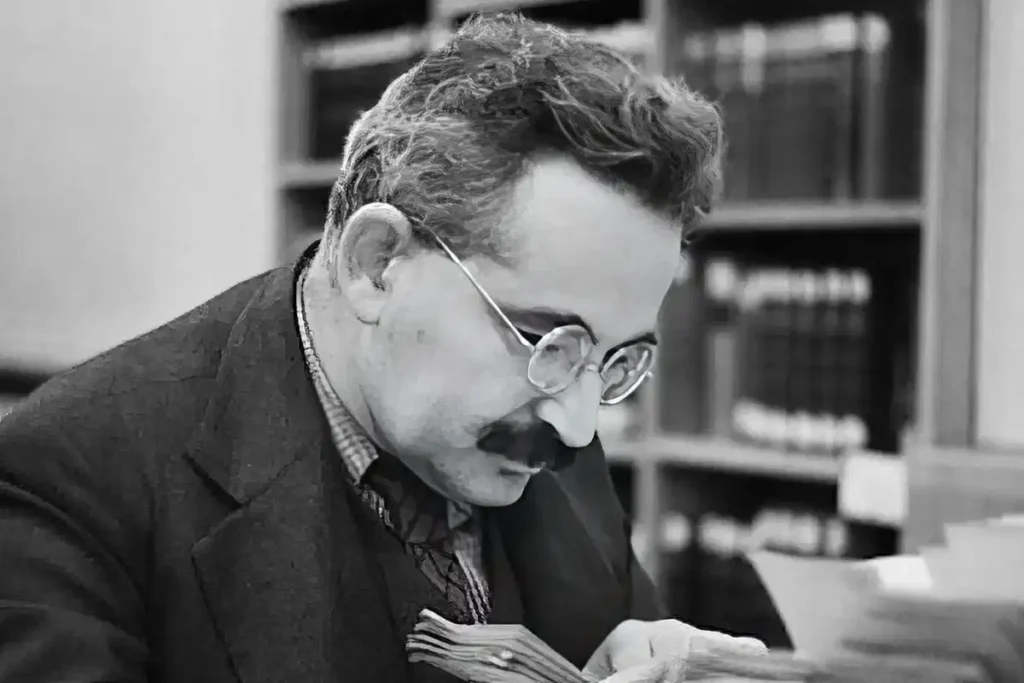
Walter Benjamin‘s unfinished manuscript, the Capitalism as Religion fragment dated around 1921, identifies guilt — Schuld, carrying in German the double meaning of debt — as the engine rather than the byproduct of the cult. Most religious systems offer the worshipper a moment of absolution, a ritual clearing of the ledger. What Benjamin observed, with a precision that reads now like prophecy, is that capitalist religion does not offer absolution at all. It deepens the debt with every act of devotion. Each purchase that was supposed to satisfy generates the anxiety of the next inadequate purchase. Each achievement at work that was supposed to prove sufficiency raises the threshold for what sufficiency means. The cult does not promise salvation at the end. It promises only the continuation of worship as the sole available form of existence.
The sociologist Max Weber traced the roots of this structure back to Calvinist predestination in The Protestant Ethic and the Spirit of Capitalism, published in 1905, noting how the impossibility of knowing whether one was saved transformed work into a perpetual signal sent toward an unreachable confirmation. But Weber believed the spirit could be separated from the cage, that the irrational religious core might eventually hollow out and leave only rational economic behavior behind. What Benjamin grasped, and what the woman awake at three in the morning demonstrates without knowing it, is that the irrationality never left. It migrated inward. The anxiety of election became the anxiety of relevance, of productivity metrics, of inbox zero, of LinkedIn profiles updated with the quiet desperation of someone maintaining an altar.
The question of exit is not a question of willpower or awareness. Numerous people understand the mechanism completely and remain inside it. Fredric Jameson, writing in Postmodernism, or, the Cultural Logic of Late Capitalism in 1991, observed that it is easier to imagine the end of the world than the end of capitalism — and he meant this not as a rhetorical flourish but as a structural diagnosis. The imaginary outside does not exist. Every gesture toward withdrawal is reabsorbed: the sabbath becomes a wellness practice, contemplation becomes mindfulness optimization, refusal becomes a brand. Even the exhaustion she feels is already a market, already a product category, already a sermon delivered by someone who monetized their own burnout into a course on sustainable productivity.
The temple has no exits because the architecture was designed so that every door, when you open it, leads back to the nave.
💰 Capital, Faith, and the Modern Labyrinth
Walter Benjamin‘s fragment ‘Capitalism as Religion’ opens a vertiginous corridor between theology and economy, revealing how the market has assumed the full structure of a cult — with its rituals, its guilt, and its permanent feast days. The articles below trace the ideological, sociological, and philosophical corridors that branch outward from this central insight, mapping the invisible architecture of modern belief.
Weber’s The Protestant Ethic: Analysis
Max Weber‘s landmark study on the Protestant ethic laid the historical and sociological groundwork that Benjamin would later radicalize into his fragment on capitalism as religion. Weber traced how Calvinist notions of predestination and vocational duty quietly transformed the spirit of acquisition into a sacred obligation, sanctifying profit as a sign of divine election. Reading Weber alongside Benjamin reveals how deeply theological the grammar of modern capitalism has always been.
GO TO THE SELECTION: Weber’s The Protestant Ethic: Analysis
Karl Marx and Alienation: Economic and Philosophical Manuscripts
Marx’s Economic and Philosophical Manuscripts introduced the concept of alienation as the defining wound of capitalist labor — the estrangement of the worker from the product of their own hands, from other human beings, and ultimately from their own humanity. Benjamin’s religious reading of capitalism deepens this diagnosis, suggesting that alienation is not merely an economic condition but a spiritual one, a permanent state of guilt without the possibility of redemption. Together, Marx and Benjamin form one of the most devastating critiques of modernity ever articulated.
GO TO THE SELECTION: Karl Marx and Alienation: Economic and Philosophical Manuscripts
Veblen’s The Theory of the Leisure Class: Analysis
Thorstein Veblen‘s theory of conspicuous consumption exposed the ritualistic dimension of economic behavior long before Benjamin formalized the connection between capitalism and cult practice. For Veblen, the leisure class performed its wealth through ostentatious display, a form of devotion to status that mimics the logic of religious ceremony. Benjamin would recognize in Veblen’s observations the same permanent festivity — the unceasing celebration with no atoning sabbath — that defines capitalism as a cultic system.
GO TO THE SELECTION: Veblen’s The Theory of the Leisure Class: Analysis
Kafka and Bureaucracy: The Trial and The Castle
Kafka’s bureaucratic nightmares in The Trial and The Castle gave literary form to the guilt-structure that Benjamin identified as capitalism’s theological core — a guilt that is pervasive, unspeakable, and structurally impossible to discharge. The protagonist of The Trial is condemned without ever learning the charge, trapped in a system whose authority is absolute yet entirely opaque, a perfect secular icon of Benjamin’s indebted believer with no path to atonement. Kafka and Benjamin, contemporaries and spiritual kin, diagnosed the same sacred terror at the heart of modern institutional life.
GO TO THE SELECTION: Kafka and Bureaucracy: The Trial and The Castle
Explore the Invisible on Indiecinema
The films on Indiecinema streaming pursue precisely these questions — the hidden religions of everyday life, the rituals of money and power, the labyrinths that modernity builds around its most faithful prisoners. If these articles have opened a door, independent cinema can take you through it: discover on Indiecinema the works that dare to film what critical theory can only describe.
👉 EXPLORE THE CATALOG: Watch Indie Films in Streaming
A vision curated by a filmmaker, not an algorithm
In this video I explain our vision

