
The Inherited Wound: What Generations Actually Pass Down
You are sitting at a table you have sat at a thousand times, and someone changes the subject. Not rudely — almost tenderly, the way you redirect a child from a hot stove. The question you asked was simple: what happened to your grandfather before he came here? And the answer is a new topic, a refilled glass, a sudden and efficient interest in the weather. You are old enough to know this is not forgetfulness. You are young enough to still feel the specific temperature of that silence, which is not empty at all but densely packed, pressurized, a room sealed from the inside.

What gets passed between generations is rarely what anyone intended to pass. The conscious transmission — the stories told at dinner tables, the warnings issued, the values announced with some solemnity — these are the surface layer, the curated archive. Beneath it moves something that has no spokesperson, no moment of deliberate handoff. It travels in the way a mother’s body tightens when a certain kind of man raises his voice in a room. It travels in a son’s inexplicable nausea at bureaucratic forms, at uniforms, at checkpoints he has never personally had reason to fear. The body keeps a history the mind was never given access to, and it does not wait for permission to act on that history.
Marianne Hirsch, developing her thinking most fully in The Generation of Postmemory: Writing and Visual Culture After the Holocaust, gave a name to the structure through which traumatic historical experience is transmitted to those who came after — not as memory, because these inheritors were not present, but as something that functions with the intensity and intrusiveness of memory without possessing its firsthand authority. Postmemory is not metaphor. It is a description of a documented psychological mechanism, and it was grounded in empirical work that began accumulating in the 1980s through research on the children of Holocaust survivors. Studies conducted by clinicians including Yael Danieli, whose work with survivor families throughout the 1980s produced some of the first systematic accounts of what she called the conspiracy of silence, found that the second generation — people who had never been in a camp, never fled a border, never hidden in a basement — were presenting with anxiety profiles, hypervigilance patterns, and intrusive imagery that resembled, structurally, those of their parents. Not because trauma is genetic in any simple sense, but because it reshapes the emotional environment so completely that the child grows inside it the way a tree grows around a fence, the fence eventually invisible but the wood forever bent.
By the 1990s, research teams were documenting something more specific: the transmission was most powerful precisely where speech was absent. The families that had talked about what happened — however haltingly, however incompletely — produced children with more coherent, if painful, psychological narratives. The families that had sealed the past behind that efficient tenderness produced children who carried the weight without the map. They felt the dread but did not know its address. They flinched from things they could not name. They sometimes built their entire adult lives as elaborate unconscious responses to events they had technically never witnessed, organizing careers, relationships, geographies around the gravitational pull of an undisclosed history.
The wound, then, is not only what happened. The wound is the decision — sometimes compassionate, sometimes cowardly, always consequential — not to speak of what happened. Silence does not protect the next generation from the past. It simply removes their ability to recognize it when it arrives, wearing their own face in the mirror.
Ancestral
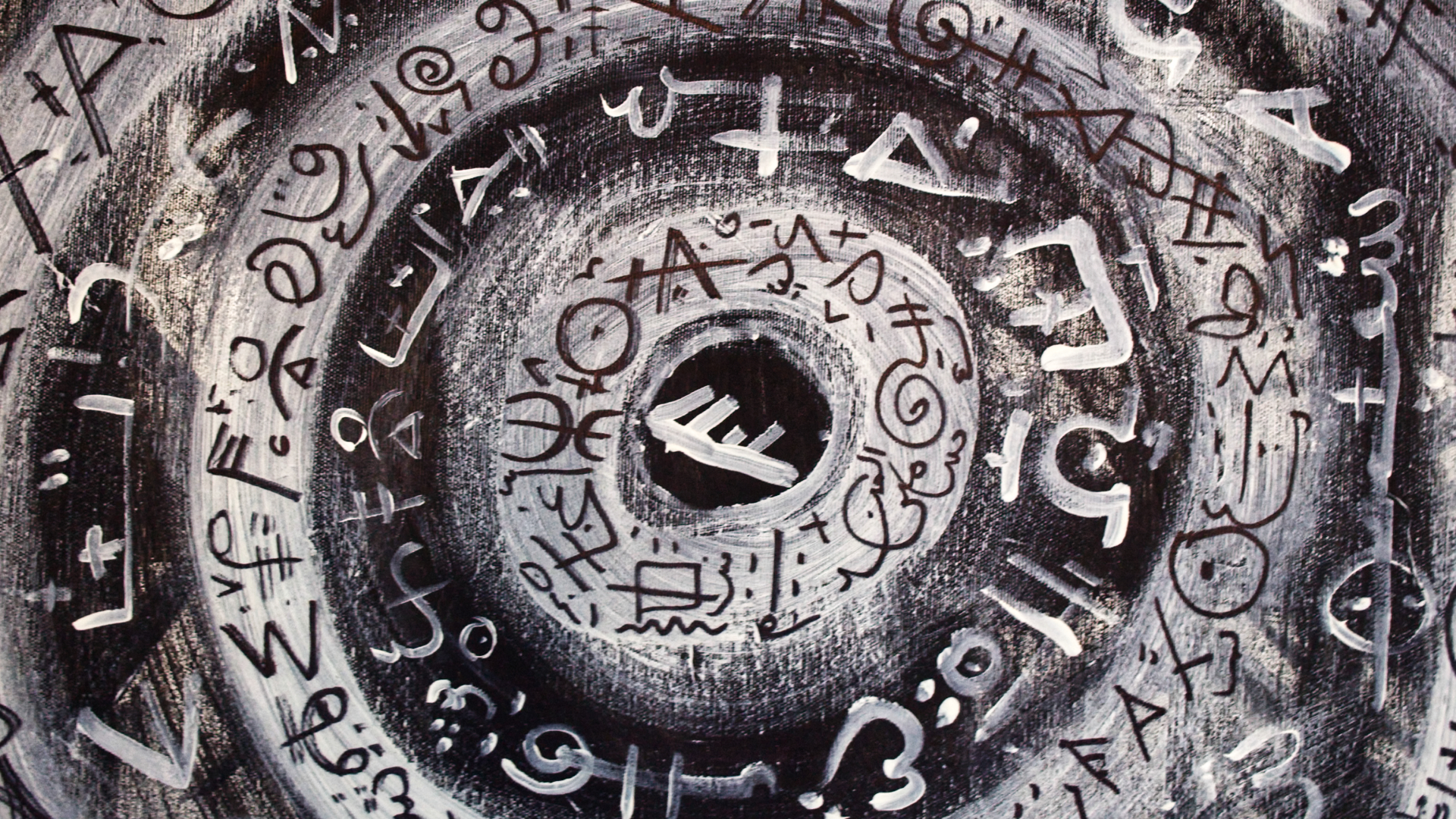
Documentary, by Lumar Brothers, Italy, 2023.
“Ancestral: Life and Art of Massinissa Askeur” is a documentary that explores the life and art of Algerian painter Massinissa Askeur. The film follows Askeur on his creative journey, showing his artistic process and his commitment to the preservation of Berber culture and tradition. Through interviews with Askeur, his family, friends and testimonies from people who knew him on a personal, professional and artistic level, the documentary tells the story of his past and his deep connection to his Berber roots. Askeur displays his art, from canvases to sculptures, which are inspired by the shapes and symbols of Berber culture, representing his search for a connection between the past and the present.
The documentary also explores the challenges Askeur faced throughout his life, including racial discrimination, poverty and the difficulty of making his art known outside of Algeria. However, despite these difficulties, Askeur continues to create and promote his art as a form of cultural resistance and celebration of his ancestral heritage. A vision far from art as a commercial product and very close, instead, to the exploration of the depths of one's own soul and the soul of the world. Massinissa's mission is to leave a testimony of his time to future generations.
LANGUAGE: Italian
SUBTITLES: English, Spanish, French, German, Portuguese
Witnessing as Obligation: The Ethics of Not Looking Away
You are sitting across from someone who survived something you did not, and you notice — before they have said a single word — that you are already calculating how much of it you can bear to hear. That small flinch, that pre-emptive rationing of attention, is not a failure of empathy. It is something far more structural: it is the evidence that witnessing is not instinctive but demanded, that it requires an architecture of obligation before it becomes possible at all.
The assumption that human beings naturally turn toward suffering, that testimony finds its audience the way water finds its level, belongs to a sentimentality that history has repeatedly destroyed. Bystanders at the deportation ramps of occupied Europe did not look away because they were monsters. They looked away because looking requires a prior moral construction that tells you looking is owed. Without that construction, the eye slides off horror the way it slides off anything that offers no immediate survival information. Bearing witness is not a reflex. It is a discipline, and like all disciplines, it has a history, a set of founders, and a moment of invention.
Primo Levi understood this more precisely than almost anyone who came after him. In his 1986 work The Drowned and the Saved, written forty years after his liberation from Auschwitz and completed just before his death, he articulated what remains the most corrosive insight in the entire literature of testimony: the complete witnesses, the ones who descended to the absolute bottom of the destruction and saw everything there was to see, are precisely those who did not come back to speak. The men he called the Muselmänner — those who had lost the capacity for response, who had passed beyond suffering into a state of absolute submission — they were the true archive. And they were silent. What survived was not testimony. What survived was a partial record carried by people who, by definition, had retained enough to survive, which means they had not seen the worst. Every witness, Levi argued, is already a proxy for an absence that cannot be filled.
This is not a philosophical curiosity. It is a structural condition that contaminates every act of bearing witness ever performed. The survivor who speaks is not delivering the event. The survivor is delivering the margin of the event, the outer edge that happened to coincide with the possibility of survival. The center — the place where the full weight of the catastrophe was actually experienced — has no representative. It sends no dispatches. The ethical demand to witness is therefore always a demand to speak in the name of something that will permanently exceed what you are able to say, and to do so anyway, knowing the gap will never close.
What this produces is not humility but a specific form of vertigo. The witness must hold simultaneously the obligation to speak and the knowledge that speaking is an approximation, that the act of putting language around the experience is already a domestication of it. Giorgio Agamben, engaging with Levi’s paradox in Remnants of Auschwitz in 1999, pushed the logic further: testimony is the very place where language touches its own limit, where the human subject encounters something that occurred to them but that cannot be fully owned by their subjectivity. The witness does not master the event by narrating it. The event passes through the witness and leaves something behind that the witness spends the rest of their life trying to account for without ever quite reaching.
And the obligation does not diminish when the generation of direct survivors closes. It transfers, mutates, and arrives in the hands of those who were not there at all — which raises the question of what, exactly, is being transmitted when the last living witness is gone and the rest of us are left holding a story that no longer has a body attached to it.

The Trap of Curated Memory: When Legacy Becomes Performance
You stand at a memorial on a Tuesday morning in November, your coat collar turned up, watching a politician lower a wreath onto cold stone. The cameras are there. The children from the local school are there, holding small flags. Everyone knows their position. Everyone knows when to bow their head. And in that choreography, something that was once raw and ungovernable — grief, fury, the specific weight of specific deaths — gets folded into a ceremony so precisely managed that it no longer threatens anyone.
Paul Connerton, in his 1989 work How Societies Remember, drew a distinction that most institutions would prefer you never encounter: the difference between commemorative ceremony, which is performative and embodied but socially scripted, and genuine cognitive incorporation, where memory actually restructures how a community understands itself and acts. The first is easy to fund, easy to schedule, easy to photograph. The second is dangerous, because it produces people who cannot simply return to their routines afterward. Connerton observed that societies do not primarily remember through archives or books but through habitual bodily practices — the posture of mourning, the rhythm of a procession, the rehearsed silence of a designated minute. The body learns a memory that the mind never has to confront. This is not a failure of ritual; it is precisely its social function.
What happens in the gap between these two modes is not neutral. When Germany inaugurated the Memorial to the Murdered Jews of Europe in Berlin in 2005, covering 19,000 square meters of the city center with 2,711 concrete stelae, critics and historians were already warning that monumental architecture could perform conscience without producing it. The philosopher Andreas Huyssen had argued in his 2003 work Present Pasts that the obsessive proliferation of memorials in the late twentieth century represented not a deepening engagement with historical trauma but a way of discharging it — an exteriorization that allows the guilt to be located in stone rather than in living political choices. A nation that has built enough monuments can feel, without any logical basis for the feeling, that it has done enough. The memorial becomes the alibi.
Families do this with equal efficiency and far less self-awareness. The annual recounting of a grandparent’s wartime experience at a holiday table, repeated for decades with the same phrases, the same pauses, the same moral, gradually stops being an act of transmission and becomes a ritual that signals belonging. The children who grew up hearing the story can recite its structure without having absorbed its cost. They know when to nod. They know which detail makes the older generation emotional. What they do not know — what the repetition has actively prevented them from knowing — is what it would mean to carry that history as a living demand on their present behavior, rather than as an inheritance that qualifies them as people of a certain kind.
This transformation from reckoning into credential is not accidental. The sociologist Barry Schwartz spent decades studying collective memory in the United States and documented, particularly in his 2000 work Abraham Lincoln and the Forge of National Memory, how even genuinely disruptive historical figures get smoothed into usable symbols. Lincoln, who provoked a civil war and suspended habeas corpus and understood slavery as a moral catastrophe demanding radical political surgery, becomes a logo for bipartisanship. The disruption is the first thing extracted. What remains is a face on currency, a name on schools, a monument where tourists eat sandwiches. The memory is not suppressed — suppression would be too obvious, too contestable. It is preserved with surgical care while being drained of everything that made it unbearable.
The ritual does not silence the past. It teaches the past to speak in a register that cannot disturb the present.
The Violence of Continuity: What We Protect When We Claim Heritage

You are standing at a grave that does not belong to you, holding flowers someone else chose, repeating words you were handed before you were old enough to question them. The emotion is real. That is the trap.
The instinct to preserve what came before us is so deeply coded into social life that questioning it feels like a kind of vandalism. But preservation is never neutral. Every act of transmission is also an act of selection, and every selection is an act of power — power over what descendants are permitted to feel, what they are required to mourn, which wounds they must carry forward as identity and which they must politely forget. The family that insists on its suffering as legacy is not simply keeping memory alive. It is conscripting the living into a narrative they did not author and cannot escape without the guilt of betrayal.
Orlando Figes, in his 2007 study of private life under Stalin, excavated something that official historiography had no language for: the way Soviet families systematically trained their children to perform amnesia. Parents who had survived the purges taught their sons and daughters not what had happened, but how to speak about it, which was to say, how not to speak about it. Memory became a survival technology rather than a form of truth. Then 1956 arrived — Khrushchev’s secret speech, the partial admission of Stalinist terror — and suddenly families were asked to reverse the very architecture of silence they had spent decades constructing. What Figes found was not liberation but rupture. Children who had been protected by not-knowing were now confronted with a legacy their parents had decided, unilaterally, to withhold. The transmission had been a form of control even when it was loving, even when it was frightened, even when it was genuinely trying to protect. The duty to bear witness, when imposed from above within a family structure, is indistinguishable in its mechanics from the duty to remain silent.
Alexis de Tocqueville noticed something structurally similar in the opposite direction, in societies that had too little past rather than too much. Writing about American democracy in the 1830s, he observed that democratic citizens, unmoored from aristocratic lineage and the deep temporal roots it provides, become peculiarly vulnerable to a manufactured sense of historical continuity. They need the past to feel real, so they invent thickness where there is none, drape themselves in founding myths, treat the documents of sixty years ago as sacred scripture. The shallowness of the roots produces a compulsive overinvestment in whatever roots exist. What looks like reverence for heritage is often closer to anxiety about its absence — a society gripping its own origin story the way a man grips the edge of a table in a dark room.
These two dynamics, the Soviet family burying its past to survive and the democratic citizen inflating his past to feel grounded, are not opposites. They are variations of the same underlying architecture: the use of historical narrative to stabilize an identity that would otherwise feel dangerously contingent. The claim to legacy — whether of suffering or of glory — is always partly a claim to permanence, a refusal of the vertigo that comes with acknowledging that what we are is largely accidental, assembled from forces that did not consult us and would not have chosen us as their carriers had they been able to choose.
What no one names openly is that the children most devoted to the family legacy are often the ones the family most successfully colonized — their grief the most managed, their pride the most curated, their sense of self the most dependent on a story that was finished before they were born.
The Unwitnessable Present: What This Generation Cannot Yet See About Itself
You are sitting with your phone in your hand, scrolling through something that will leave no trace in your memory by tomorrow morning, and you could not tell anyone — not precisely, not honestly — what this era feels like from the inside. Not because you lack the words, but because the words available to you were built for experiences that have already been processed, already survived, already made into something a culture agreed to call meaningful. The present tense resists that. It is too wet, too unset, too much still becoming itself to hold a shape you could hand to someone else and say: here, this is what we were living through.
The retrospective frame — the idea that generations are defined by what they eventually name about themselves — breaks down entirely when you apply it to a moment still in progress. Trauma theory, as Cathy Caruth argued in her 1995 work Trauma: Explorations in Memory, insists that the event and its comprehension are structurally separated in time; you do not live through something and simultaneously understand it. The understanding arrives later, displaced, often in the body before it arrives in language. This is not a psychological weakness. It is the basic architecture of how experience becomes meaning. Which means that anyone alive right now, inside whatever this is, is operating at a constitutive deficit — not of intelligence or sensitivity, but of temporal position.
W.G. Sebald spent his career embedding exactly this problem into prose. In The Rings of Saturn, published in 1995, and in Austerlitz, published in 2001, he constructed a method of historical witness that is never direct, never present-tense, always filtered through layers of documentation, digression, and material evidence — photographs, architectural ruins, archival fragments. His narrators do not witness events; they witness the traces events left behind, and the gap between those traces and the original experience is precisely where Sebald locates his ethical and literary project. What he discovered — or rather, what his formal choices reveal — is that witnessing may not be a capacity at all. It may be a position, one that cannot be occupied simultaneously with living.
Somewhere right now a person in their late twenties is experiencing something they cannot categorize. Not a crisis they can name, not a loss that fits existing grief frameworks, but a low-frequency distortion in their sense of what is real, what is owed, what is coming. They do not post about it because there is no discourse that holds it yet. They do not speak about it because language has not yet arrived at the phenomenon they are inside. They are not unusual. They are simply contemporary — living at the exact point where experience precedes the cultural infrastructure that would allow it to be witnessed, let alone transmitted.
The question this raises is not whether the present generation will eventually be remembered or whether future historians will name what is happening now with the clarity that distance provides. That is almost certainly true and almost completely beside the point. The real question is whether bearing witness is something that can be done to one’s own present, or whether the very structure of witness — its requirement of aftermath, its dependence on survival, its insistence on the distance between the one who lived and the one who speaks — makes real-time testimony a grammatical impossibility, a sentence the language of experience simply cannot complete until the moment it describes has already become the past.
A vision curated by a filmmaker, not an algorithm
In this video I explain our vision
🕯️ Memory, Witness, and the Weight of Generations
Some stories are not ours alone to carry — they belong to those who came before and those who will follow. The duty of bearing witness and the transmission of generational legacy are among the deepest imperatives of human culture, binding memory to identity and silence to complicity.
Intergenerational Transmission: What We Leave to Our Children
What we pass down to our children is rarely just material inheritance — it is a web of silences, traumas, values, and unspoken histories. This article explores the psychology and sociology of intergenerational transmission, examining how the emotional and cultural residue of one generation shapes the inner life of the next. Understanding this process is essential for anyone grappling with the meaning of legacy and the responsibility of memory.
GO TO THE SELECTION: Intergenerational Transmission: What We Leave to Our Children
Jan Assmann and Cultural Memory
Jan Assmann’s theory of cultural memory offers a rigorous framework for understanding how societies construct shared identity through the ritualized remembrance of the past. His work distinguishes between communicative memory — the living recollections exchanged between generations — and the deeper, more formalized structures of cultural memory that endure across centuries. Bearing witness, in Assmann’s view, is not merely a personal act but a civilizational duty.
GO TO THE SELECTION: Jan Assmann and Cultural Memory
Pierre Nora and the Sites of Memory
Pierre Nora’s landmark concept of ‘lieux de mémoire’ — sites of memory — transformed how historians and cultural theorists think about the preservation and loss of collective heritage. He argued that as living memory fades, societies create monuments, archives, and rituals to anchor what would otherwise dissolve into forgetting. His thought challenges us to ask who gets to define which memories are enshrined and which are allowed to disappear.
GO TO THE SELECTION: Pierre Nora and the Sites of Memory
Ernaux’s The Years: Analysis
Annie Ernaux’s ‘The Years’ is one of contemporary literature’s most powerful meditations on collective memory, generational continuity, and the witness’s obligation to record. Written in an impersonal ‘we’ that dissolves the boundary between private life and historical time, the book transforms the act of remembering into a form of political and ethical testimony. Ernaux shows that bearing witness to one’s own era is itself a form of resistance against the erasure of ordinary lives.
GO TO THE SELECTION: Ernaux’s The Years: Analysis
Discover Cinema That Remembers
On Indiecinema streaming you will find independent films that dare to carry memory forward — stories that honor the weight of generations, the voices of witnesses, and the human need to transmit what must not be forgotten. Explore our catalog and let these films speak to what history tries to silence.
👉 EXPLORE THE CATALOG: Watch Indie Films in Streaming
A vision curated by a filmmaker, not an algorithm
In this video I explain our vision

