
The Invisible Architecture of Exclusion
You walk into the room and something happens that you cannot name in the moment but will recognize for days afterward. Not a refusal. Not a confrontation. Something quieter and more precise: the slight recalibration of posture in the person behind the counter, the eyes that move to you and then move away without completing the gesture that eyes are supposed to complete when they meet a human being. The conversation that was already in motion continues as though the air you displaced by entering carries no particular weight. You have not been insulted. You have been processed through a mechanism so old and so well-oiled that it leaves no fingerprints.

This is how marginalization actually works, and the gap between how it works and how it is discussed in public life is itself a form of protection — for the mechanism, not the person. The political imagination tends to locate exclusion in the dramatic: the slur, the closed door with a sign on it, the law written to name you as lesser. These events are real, but they are also, in a perverse way, legible. They can be photographed, litigated, condemned. What cannot be easily condemned is the ecosystem of micro-signals that does the same structural work without ever producing a document. The sociologist Erving Goffman spent years cataloguing the interaction rituals through which societies confer or withhold what he called “face” — the basic acknowledgment that a person is a full participant in the social exchange. His 1967 collection “Interaction Ritual” was not a dramatic book. It was a close-reading of the mundane, and its conclusion was devastating: personhood is not a given. It is performed, confirmed, or revoked in the granular texture of daily encounter.
When a form is handed to the person standing next to you but not to you, nothing illegal has occurred. When your name is mispronounced and then mispronounced again after the correction, and then quietly abandoned in favor of a nickname that was not offered, nothing that would register as violence in any official taxonomy has taken place. But the philosopher Charles Taylor, in his 1994 essay “The Politics of Recognition,” argued that identity itself is formed dialogically — that a person becomes, in a meaningful sense, who they are through the recognitions extended or withheld by others. This means that systematic misrecognition is not merely impolite. It is a form of injury that operates at the level of ontology, reshaping what a person understands themselves to be permitted to be.
The insidious precision of this architecture is that it distributes its weight across thousands of ordinary moments so that no single moment bears enough pressure to justify the word “harm.” Each incident arrives wrapped in plausible deniability. The cumulative effect — which the legal theorist Mari Matsuda and her colleagues documented in the 1993 volume “Words That Wound” — is something closer to a sustained alteration of the self, a training in smallness that is administered without any single trainer taking responsibility. The body learns. It adjusts its posture before entering certain rooms. It prepares its voice to be disbelieved. It develops what W.E.B. Du Bois in 1903 called a “double consciousness” — the exhausting practice of perceiving yourself simultaneously through your own interior and through the cold external eye of a society that has already decided what you represent.
What makes this architecture invisible is not that people fail to notice it. It is that the language available to describe it has been calibrated to require a higher burden of proof than the experience itself ever demands.
Ancestral
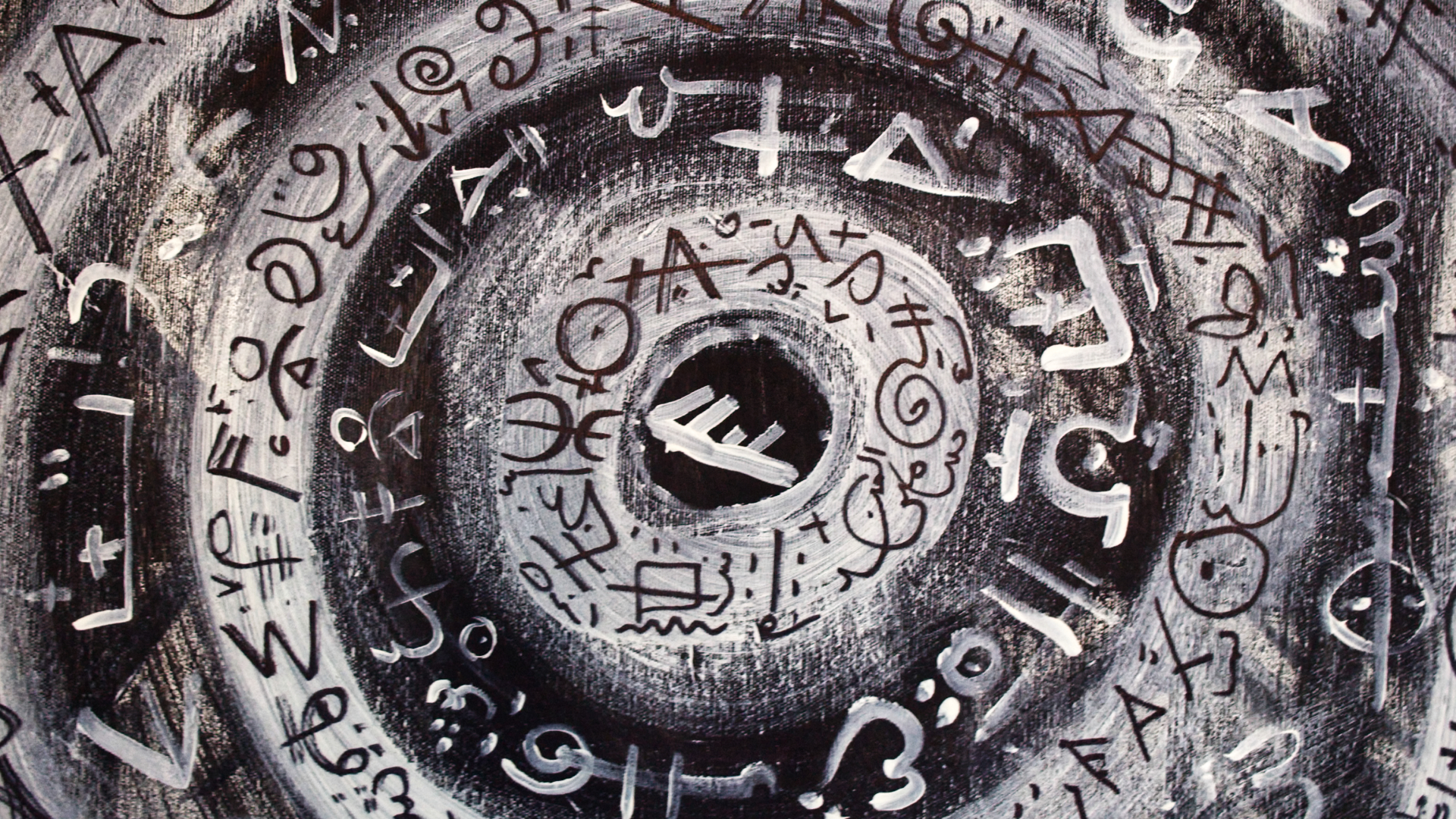
Documentary, by Lumar Brothers, Italy, 2023.
“Ancestral: Life and Art of Massinissa Askeur” is a documentary that explores the life and art of Algerian painter Massinissa Askeur. The film follows Askeur on his creative journey, showing his artistic process and his commitment to the preservation of Berber culture and tradition. Through interviews with Askeur, his family, friends and testimonies from people who knew him on a personal, professional and artistic level, the documentary tells the story of his past and his deep connection to his Berber roots. Askeur displays his art, from canvases to sculptures, which are inspired by the shapes and symbols of Berber culture, representing his search for a connection between the past and the present.
The documentary also explores the challenges Askeur faced throughout his life, including racial discrimination, poverty and the difficulty of making his art known outside of Algeria. However, despite these difficulties, Askeur continues to create and promote his art as a form of cultural resistance and celebration of his ancestral heritage. A vision far from art as a commercial product and very close, instead, to the exploration of the depths of one's own soul and the soul of the world. Massinissa's mission is to leave a testimony of his time to future generations.
LANGUAGE: Italian
SUBTITLES: English, Spanish, French, German, Portuguese
Dignity as a Political Construction, Not a Natural Given
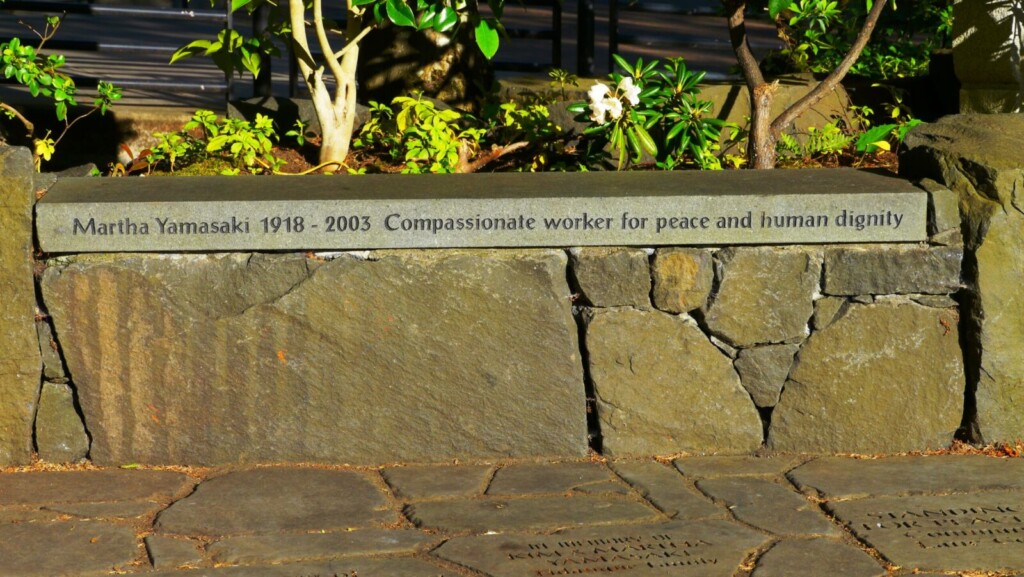
You have probably never questioned the sentence that opens the Universal Declaration of Human Rights — “All human beings are born free and equal in dignity and rights” — because it sounds like something that was always true, like gravity or the rotation of the earth. It sounds discovered, not invented. That feeling is the first trap.
Immanuel Kant built the philosophical architecture that makes dignity feel self-evident. In the Groundwork of the Metaphysics of Morals, published in 1785, he argued that rational beings possess an absolute inner worth — Würde — that cannot be traded, priced, or substituted. The argument is elegant and seductive: dignity is not a social agreement but a metaphysical fact, inscribed in the structure of rational agency itself. What Kant did not account for, and what the following two centuries would make brutally visible, is that metaphysical facts require enforcers. A principle that nobody defends in practice is indistinguishable from no principle at all. The Kantian framework handed philosophers a vocabulary but handed the dispossessed nothing they could hold.
The 1948 Universal Declaration did not discover dignity — it manufactured it under specific geopolitical conditions, after specific catastrophes, by specific people sitting in rooms in Paris with competing national agendas. Eleanor Roosevelt chaired the drafting committee. The Soviet bloc pushed for economic and social rights; Western delegations resisted. The final text is not a revelation; it is a diplomatic compromise, and the thirty articles it contains have never been accompanied by a binding enforcement mechanism. When René Cassin received the Nobel Peace Prize in 1968 for his contributions to the Declaration, the document was already being systematically violated by signatories on every continent. The Declaration did not grant dignity to the colonized peoples still under French and British rule in 1948 — their dignity was simply not the subject of the room.
Hannah Arendt saw the structural contradiction with terrifying precision. Writing in The Origins of Totalitarianism in 1951, she observed that stateless persons — refugees stripped of citizenship by Nazi Germany and Stalinist purges — had technically retained all their abstract human rights while losing every concrete protection those rights were supposed to guarantee. When a human being is expelled from political community, Arendt wrote, they discover that “the Rights of Man” amount to nothing, because rights in practice belong not to humans as such but to citizens of functioning states. The refugee standing outside the legal order does not experience the universality of human dignity — they experience its absolute conditionality. What the declaration calls inherent turns out to require an address, a passport, a government willing to answer for you.
This is not a historical curiosity. The architecture Arendt described in 1951 operates identically today in every detention facility built to hold people whose nationality no state will claim. Dignity is not revoked by violence alone — it is revoked administratively, through the cancellation of documents, the expiration of visas, the bureaucratic reclassification of a person from citizen to alien to irregular to removable. Each step is a legal act, processed by officials following procedure, generating paperwork that can be filed and archived. The machinery of marginalisation does not announce itself as a violation of dignity; it presents itself as the orderly management of categories.
What that means is that every time dignity is described as natural, innate, or self-evident, something political is being concealed — specifically, the question of who controls the institutions that make the description real or hollow. The body itself carries nothing. A human being alone, outside of all political structure, possesses dignity the way a word possesses meaning outside of any language: theoretically, and to no practical effect whatsoever.

The Social Grammar of Worthlessness
You already know which counter to go to. Not because anyone told you directly, but because the architecture of the room made it obvious — the shorter line, the newer chairs, the staff who make eye contact before you have finished approaching. The other counter has a number dispenser, fluorescent light that flickers at 11 Hz, and a plastic barrier scratched opaque by years of proximity to people who were not supposed to feel comfortable there. No rule was written. No sign declared the hierarchy. The room simply encoded it in materials, in distance, in the differential speed of a smile.
Erving Goffman spent years cataloguing exactly this grammar. His 1963 study Stigma: Notes on the Management of Spoiled Identity demonstrated that social disqualification is not primarily an act of violence or even of explicit discrimination — it operates through the quiet, relentless transmission of information about who belongs and who is being processed. The stigmatized individual, Goffman observed, is not simply excluded from a space; they are taught, through micro-interactions accumulated over years, to read themselves as a disruption in a scene that was not designed for them. What appears to outsiders as social friction is experienced from within as a continuous, low-frequency confirmation: you are the problem this system is managing, not the person it exists to serve.
Language does the same work at higher velocity. When bureaucratic procedure names a human being a “case,” a “file,” a “claimant,” or a “beneficiary,” it does not merely describe a relationship — it institutes one. The vocabulary of welfare states, immigration systems, and penal administration worldwide shares a structural feature that predates any individual policy: it transforms subjects into objects of intervention, people into problems requiring resolution. This is not incidental phrasing. The sociologist Pierre Bourdieu documented in The Weight of the World, published in 1993, the physical and psychological toll produced by institutional language that systematically strips agency from the person it names — a toll he compared to a slow form of symbolic violence, one that leaves no visible mark and produces no actionable complaint.
Axel Honneth, working from Hegel’s early philosophy and refracting it through clinical psychology, argued in The Struggle for Recognition in 1992 that human identity is not self-generated but intersubjectively constituted — we become legible to ourselves through the quality of recognition we receive from others and from institutions. Crucially, Honneth identified three spheres in which recognition can be systematically withheld: love, legal rights, and social esteem. The third sphere is the one most invisible and most corrosive. To be denied social esteem — to occupy a position in which one’s contribution, one’s existence, one’s particular form of life is treated as negligible — produces not merely a political grievance but an ontological wound. The person does not simply feel disrespected; they begin to experience their own existence as superfluous.
What makes this mechanism so durable is that it does not require perpetrators. The spatial arrangements, the bureaucratic vocabularies, the differential speeds of institutional attention — these persist across administrations, across reforms, across stated intentions, because they are embedded in infrastructure that outlasts the people who designed it. A waiting room built in 1974 still speaks. A form that demands twelve proofs of address from someone who has no fixed address still communicates, in each box left unfilled, that the system was not imagined with this person’s existence as a possibility. The second wound Honneth describes is therefore not inflicted by cruelty — it is inflicted by the discovery that one was never included in the original blueprint, that the grammar of the institution has no pronoun adequate to what you are, and that this absence was not an oversight but a structural feature that will survive every individual act of goodwill directed your way.
When Helping Becomes Another Form of Erasure

You are sitting across a desk from someone who holds a clipboard, and everything about the geometry of that room — the chair you were handed, the form you must fill before being seen as a person, the fluorescent light that flattens your face into a case number — communicates something that no policy document will ever admit: you are here because you failed, and we are here because we succeeded, and the distance between those two facts is the entire architecture of this encounter.
Didier Fassin spent years documenting what he called humanitarian reason — the moral economy through which wealthy societies manage the suffering of those they have already excluded. His 2011 work of that title is not a polemic against charity. It is something more precise and more damaging: a demonstration that the humanitarian gesture requires a particular kind of subject to sustain itself. The beneficiary must be legible as a victim. The victim must remain coherent, passive, and perpetually in need. The moment the person across the desk begins to assert complexity — contradicts themselves, refuses gratitude, expresses anger — the system registers it as dysfunction rather than humanity. The help on offer was never designed for a full human being. It was designed for a wound that stays open long enough to justify the institution tending it.
The numbers confirm what the geometry already implies. Studies conducted across European reintegration programs between 2005 and 2019 consistently show recidivism rates — whether measuring return to homelessness, re-incarceration, or relapse into dependency — hovering between 55 and 70 percent within the first two years of program completion. Social services bureaucracies routinely cite these figures as evidence of the difficulty of the problem. What they rarely ask is whether their own structural incentives are woven into that difficulty. Funding cycles reward programs that demonstrate ongoing need. Institutional survival depends on a continuous population of the vulnerable. A program that genuinely resolved the conditions producing marginalization would dissolve its own reason for existing.
Georg Simmel noted in 1908, in his essay on poverty, that the poor person exists within the social body not as a subject with political standing but as an object of administrative concern — the moment assistance is rendered, poverty ceases to be a social relation and becomes an individual attribute. The state does not address the conditions that produced poverty; it addresses the poor person, isolating them as a unit requiring management. This inversion has never been corrected. It has been professionalized, certified, and expanded into entire ministries.
What gets called social reintegration is frequently a process of teaching the marginalized person to perform legibility for institutions that were not built to receive them. Housing applications require stable addresses to obtain stable housing. Employment programs demand CVs from people whose employment gaps are evidence of the very crisis the program claims to address. The bureaucratic loop is not an accident of poor design. It functions as a filter, and the filter has a purpose: to select those already close enough to normative thresholds to cross them with minimal assistance, producing visible success rates, while the rest are recycled through the system at intervals that justify its continued funding.
The rescue narrative does something particular to the person being rescued. It installs in them a self-understanding organized around deficit. Erving Goffman’s work on stigma, published in 1963, described how institutional labels attach to the body and reorganize the way a person moves through every subsequent social encounter. The welfare recipient does not leave their designation at the door of the agency. They carry it into job interviews, into family dinners, into the interior monologue that runs beneath every decision about whether to ask for what they need or to perform the self-sufficiency they cannot yet afford.
The Fracture Between Recognition and Transformation
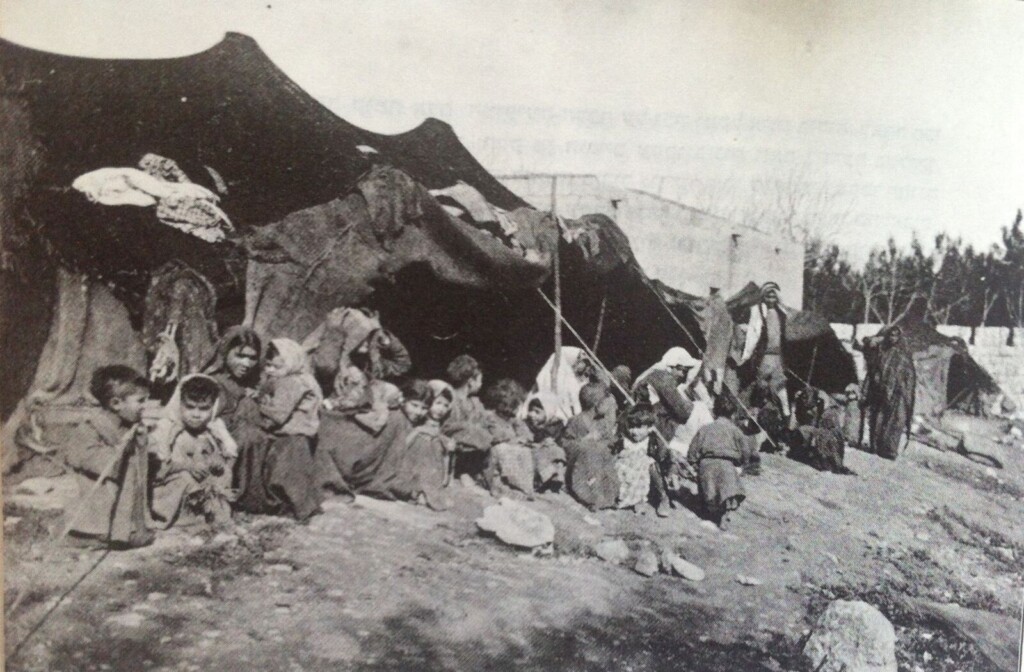
You have seen your face on a billboard. Not your literal face — but something close enough: your demographic, your approximate story, your approximate suffering, rendered in high resolution and placed at the intersection of two major roads where people in cars can feel, briefly, that the world has made room for you. The campaign cost more to produce than your annual rent.
Frantz Fanon understood something about this mechanism with a precision that has never been surpassed. Writing in “The Wretched of the Earth” in 1961, he argued that colonial structures do not dissolve when the colonized are given a seat at the table — they reconstitute themselves in the language of inclusion. The symbolic elevation of the marginalized, without touching the economic architecture that marginalizes them, is not progress. It is a more sophisticated form of containment. What Fanon saw in the postcolonial moment — the native bourgeoisie absorbing the rhetoric of liberation while leaving land distribution, labor conditions, and access to capital entirely intact — is now the operating logic of corporate diversity programs, municipal representation campaigns, and the entire genre of institutional apology.
In the United States, the period between 2013 and 2020 saw an extraordinary proliferation of visibility initiatives across media, advertising, and public institutions — precisely as the racial wealth gap widened. By 2019, the median white family held roughly eight times the wealth of the median Black family, a ratio that had not meaningfully shifted since the 1960s. The visibility had increased. The gap had not moved. These two facts are not in contradiction — they are in coordination. Representation, deployed without redistribution, functions as a pressure valve: it absorbs the legitimate anger of those who want to be seen, converts it into a metric of cultural progress, and leaves the underlying machinery of exclusion running without interruption.
The philosopher Axel Honneth built an entire theory around the idea that recognition — being seen, acknowledged, respected — is a fundamental human need, and that its denial constitutes a form of injustice. His work “The Struggle for Recognition,” published in 1992, gave philosophical dignity to what social movements had been articulating through protest for decades. But Honneth’s framework, powerful as it is, sits on a fault line: recognition and material transformation do not automatically produce each other. A state can formally recognize the dignity of its unhoused citizens in its constitutional language while simultaneously criminalizing the act of sleeping in public. France did exactly this — enshrining human dignity in its legal code in 1994 while enforcing vagrancy regulations that penalized homeless people for existing in visible space. The law and the street operate on different frequencies.
Housing is perhaps the most honest register in which to measure this fracture. In 2023, across major European cities, the number of people sleeping rough had risen by double digits compared to pre-pandemic levels, while diversity statements in the real estate sector reached an all-time high in corporate communications. The people producing those statements and the people sleeping beneath their office windows inhabited different versions of the same city — one defined by the language of dignity, the other by its material negation. To acknowledge someone’s humanity in a document while the structure you operate within systematically excludes them from shelter is not a partial gesture. It is a complete one — complete in its service to the system, complete in its uselessness to the person it names.
The violence of symbolic recognition is not that it is cynical — many of its practitioners are entirely sincere. The violence is that sincerity is permitted to substitute for structural change, that feeling seen is offered as a replacement for being housed, employed, or protected from the compounding disadvantages that Esping-Andersen’s welfare state typologies showed, as early as 1990, reproduce themselves across generations with near-mechanical fidelity. Dignity without the material conditions to sustain it is not dignity at all — it is a word used to close a conversation that should never have been allowed to end.
A vision curated by a filmmaker, not an algorithm
In this video I explain our vision
🧩 When the System Excludes: Dignity and Resistance
Social marginalization operates through invisible mechanisms that strip individuals of recognition, voice, and belonging. These articles trace the philosophical, sociological, and cultural roots of exclusion — and the human forces that push back against it.
The American Freak Show: History and Culture of the Marginalized
The American Freak Show placed human beings on display as spectacles of otherness, turning difference into entertainment for the consuming gaze of the majority. This history reveals how social marginalization is institutionalized through spectacle, stripping individuals of dignity under the guise of curiosity. Understanding this practice exposes the deeper cultural logic that still underlies the exclusion of those deemed outside the norm.
GO TO THE SELECTION: The American Freak Show: History and Culture of the Marginalized
Guy Standing’s The Precariat: Analysis
Guy Standing’s concept of the Precariat names a new social class defined by instability, insecurity, and the erosion of identity that comes from being denied stable work and social belonging. This analysis examines how economic systems manufacture marginalization at a structural level, rendering millions invisible to institutions built for others. Precarity is not accidental — it is a condition produced and sustained by deliberate political and economic choices.
GO TO THE SELECTION: Guy Standing’s The Precariat: Analysis
Eribon’s Returning to Reims: Analysis
Didier Eribon’s Returning to Reims is a searing autobiographical account of class shame, social exclusion, and the violence of being born into a world that marks you as lesser. Eribon explores how working-class identities are systematically devalued by cultural and educational institutions that speak a language of universal dignity while practicing subtle but devastating hierarchies. His work demands that we confront the ways social origin becomes a silent sentence carried through an entire life.
GO TO THE SELECTION: Eribon’s Returning to Reims: Analysis
Mass Social Homologation Today
Mass social homologation is one of the subtlest forms of marginalization, punishing those who deviate from dominant cultural codes with invisibility, ridicule, or exclusion. This essay examines how conformity functions not only as social pressure but as a mechanism of control that silences alternative modes of being and belonging. Protecting human dignity requires recognizing and resisting the slow erasure of difference that homologation performs every day.
GO TO THE SELECTION: Mass Social Homologation Today
Discover Cinema That Speaks the Truth About Exclusion
On Indiecinema you will find independent films that refuse to look away from the margins — stories of those rendered invisible by systems of power, told with the courage and intimacy that only independent cinema can offer. Explore our catalog and let the screen become a space for recognition, empathy, and resistance.
👉 EXPLORE THE CATALOG: Watch Indie Films in Streaming
A vision curated by a filmmaker, not an algorithm
In this video I explain our vision

