
The Visceral Trigger Before the Thought
You are standing at a crosswalk when the car runs the light. You do not decide to jump back. You are already on the pavement, heart detonating, breath seized somewhere between your sternum and your throat, before the word “danger” has even assembled itself in your mind. Your body has moved without consulting you. This is not a metaphor for something. This is the entire problem.

What happened in that fraction of a second precedes language, precedes identity, precedes everything you believe yourself to be. The neuroscientist Joseph LeDoux spent decades mapping what he called the low road of fear — a subcortical pathway that shoots sensory information directly to the amygdala before the cortex has received a single update. His 1996 work The Emotional Brain made the architecture plain: the brain does not wait for you to understand a threat before it responds to one. The signal bypasses the regions responsible for judgment, context, and narrative. By the time you have formed the sentence “that car almost hit me,” your adrenal glands have already flooded your bloodstream with epinephrine, your pupils have dilated, your digestion has paused, your muscles have tensed for impact or flight. The self, as you experience it, arrived late to an emergency that the body had already resolved.
This gap — between the organism’s response and the person’s awareness of it — is where the entire psychology of survivalism lives. Not in bunkers, not in prepper forums, not in the aesthetics of military surplus gear. It lives in the half-second delay between stimulus and consciousness, in the brutal fact that your survival architecture was not designed to serve you. It was designed to keep the genome moving forward through time, indifferent to your comfort, your dignity, your carefully constructed sense of who you are.
Walter Cannon identified the fight-or-flight response in 1915, watching cats react to threat under laboratory conditions, and what he described was not a psychological event but a physiological takeover. The sympathetic nervous system does not ask for your participation. It commandeers. And here is what the century since Cannon has revealed that he could not yet articulate: the same system that saves your life in genuine emergencies activates with identical force in response to a dismissive email, a social rejection, a perceived slight in a meeting. The body cannot distinguish between a predator and a performance review. The mechanism is identical; only the context has changed, and the context is the one thing the mechanism ignores.
This is where the conversation about survivalism almost always goes wrong. People discuss it as though it were a philosophy, a choice, a set of practices adopted by a particular personality type. They locate it in the extreme — in the man building underground shelters against civilizational collapse, in the woman stockpiling antibiotics against pandemic. And those figures are real. But they are only the visible exaggeration of something universal, the amplified frequency of a signal that runs through every human nervous system alive. The instinct for self-preservation is not a trait. It is the substrate beneath every trait.
Hans Selye, the endocrinologist who in 1936 introduced the concept of biological stress as a systemic response, watched rats deteriorate under prolonged exposure to threatening conditions and documented what he called general adaptation syndrome — the body’s three-stage negotiation with threat: alarm, resistance, exhaustion. What Selye observed in rats under controlled laboratory conditions, millions of people are living in slow motion across decades, never identifying the mechanism because it feels indistinguishable from ordinary life. The alarm never fully ends. The resistance becomes the personality. The exhaustion is renamed adulthood.
You stepped back from that car without deciding to. The question that the rest of this inquiry presses on is what happens to a person — to a culture — when the stepping back never stops.
The Sands
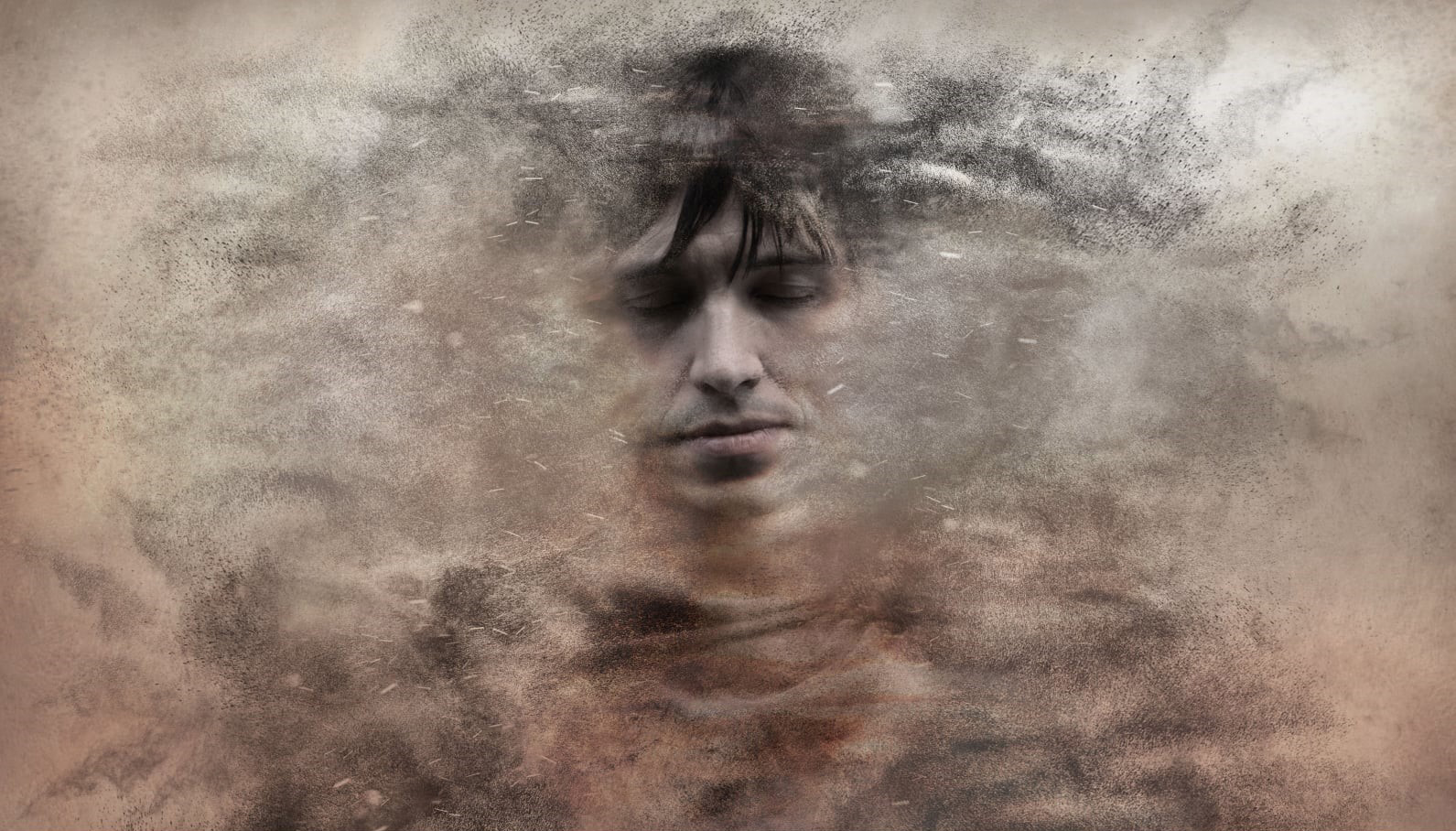
Science fiction, by Noah Paganotto, Argentina, 2022.
In an undetermined location on planet Earth, in an unknown time, Zoilo lives with his family in a wasteland surrounded by ruins. They live uprooted, without mothers, knowing that pregnancy for women is synonymous with death. For them there is only one collective routine; keep the fire alive. Only Zoilo escapes this logic, observing, intrigued, details that others do not see and therefore do not appreciate. Zoilo's personal search for answers will increase the differences with his relatives, increasingly revealing an empty world of interiority.
Avant-garde film that burns slowly in the first part and then reveals in the second the profound conflicts of a family prisoner of archaic beliefs. It is a dystopian and visionary work, with wonderful photography and images of rare power that allow us to grasp the depth of the story and its poetic potential. The faces of the actors, especially the protagonist boy, are perfect. The Sands metaphorically represents the world we live in: an alienated society, where what keeps us alive is demonized and blamed for death. In opposition to the fast pace of the typical mainstream film, The Sands is a meditative journey into the depths of images. The film was shot in natural environments in the city of Necochea, Buenos Aires province, Argentina.
LANGUAGE: Spanish
SUBTITLES: English, Spanish, French, German, Portuguese
Survival as Biological Inheritance and Cultural Distortion
You are sitting in a meeting that has already lasted forty minutes longer than it should, and something in your chest has been tightening since the third slide. Not dramatically — no clutching, no gasping — just a low, persistent constriction, the kind your body produces when it has decided, below the threshold of your awareness, that something here threatens your survival. Your palms are slightly damp. Your jaw is set. You are, by every measurable physiological standard, preparing to either fight or run from a PowerPoint presentation.
Walter Cannon named this mechanism in 1915, working with cats he subjected to threat stimuli at Harvard, watching their adrenal glands flood cortisol and epinephrine into blood that was simultaneously being redirected away from digestion and toward muscle. He called it the fight-or-flight response, and what he was documenting was extraordinarily old — a cascade of reactions refined across roughly 500 million years of vertebrate evolution, designed with remarkable precision for one specific operating condition: a physical threat that would resolve within minutes, either through escape or confrontation, after which the body would return to baseline. The system is not subtle. It does not distinguish between magnitudes. It responds to the presence of threat, not to its nature.
This is where the inheritance becomes a distortion. The human nervous system is running paleolithic software on a problem it was never architected to process — not because the problems of modern life are smaller, but because they are structurally incompatible with the response they trigger. A predator is a bounded event. A mortgage is not. Chronic job insecurity does not arrive, get fought or fled, and then leave. Social humiliation is not resolved by sprinting. The nervous system nonetheless initiates the full cascade — cortisol rising, immune function suppressing, cardiovascular load increasing — and then has nowhere to send the energy it has mobilized, because the threat cannot be physically engaged. Hans Selye, whose 1950 work on the physiology of stress built directly on Cannon’s foundations, showed that this state of prolonged activation — what he called General Adaptation Syndrome — does not leave the body neutral. It depletes it. The resources marshaled for a short emergency, held in readiness week after week for a symbolic danger, produce measurable damage: elevated inflammatory markers, suppressed immune response, accelerated cellular aging. Robert Sapolsky’s research with baboons in the Serengeti, accumulated over decades and synthesized in Why Zebras Don’t Get Ulcers in 1994, made the same point from the opposite direction — the animals that suffered chronic stress were not those facing the most predators, but those lowest in social hierarchies, whose bodies were perpetually activated by status threat rather than physical danger.
Culture does not acknowledge any of this. It inherits the biological urgency and then constructs an entire architecture of meaning around it — productivity, ambition, competitive self-presentation — that keeps the nervous system in precisely the state Cannon was studying in his laboratory cats, with no equivalent of the escape that resolved the cats’ distress. The ideology of achievement actively requires this activation. It reframes chronic sympathetic arousal as drive, as passion, as the distinguishing quality of those who deserve success. Burnout, when it eventually arrives, is treated as a failure of individual resilience rather than as the predictable outcome of a nervous system that finally exhausted its reserves. The diagnosis pathologizes the body’s honest accounting.
What makes this particularly difficult to examine is that the distortion feels like clarity. When the stress response is running, the world genuinely does sharpen — attentional narrowing is part of the mechanism, designed to eliminate irrelevant stimuli and focus entirely on the threat. People in chronic activation frequently report feeling most themselves when under pressure, most alive, most purposeful. They are not wrong about the phenomenology. They are simply mistaking the fire alarm for the architecture of the building.

The Survivalist as Social Archetype
You find a photograph from 1961 — a suburban family in Arizona, smiling at the camera from inside a freshly poured concrete chamber stocked with canned goods, board games, and a hand-cranked radio. The father is wearing a short-sleeve button-down. The mother holds a casserole dish as though company is expected. Nobody in the image looks frightened, and that is precisely what makes it unbearable to look at.
The Cold War bunker did not emerge from pure military logic. It was a cultural product, manufactured partly by civil defense campaigns that the Federal Civil Defense Administration launched aggressively after 1950, distributing over sixty million copies of the pamphlet “Survival Under Atomic Attack” to American households. Historians of that period, including Guy Oakes in his 1994 study “The Imaginary War,” have argued that this apparatus was less about actual survival probability — physicists privately calculated that residential shelters would be functionally useless against a direct strike — and more about managing civilian morale by converting existential terror into domestic behavior. Anxiety was given a task list. The shelter was not a refuge; it was a sedative in concrete form.
What Robert Lifton identified in his work on survivors of Hiroshima and later in his broader theorization of nuclear psychology was a mechanism he called psychic numbing — the mind’s capacity to sever emotional connection from information it cannot metabolize. When the scale of a threat exceeds the nervous system’s capacity to respond proportionally, the psyche does not collapse; it bureaucratizes. It creates routines, inventories, protocols. The feeling of doing something becomes the substitute for the feeling of being terrified, and the substitution is so effective that most people never notice the exchange has occurred. The bunker family smiles because they have converted dread into project management, and project management feels, neurologically, like competence.
Contemporary prepper culture operates on the same substitution at a dramatically expanded scale. What began appearing in mainstream American media around 2008 — coinciding not accidentally with financial collapse, two ongoing wars, and a swine flu outbreak — has since become a market sector. By 2021, the emergency preparedness industry in the United States was generating revenues estimated above eleven billion dollars annually, selling freeze-dried food with twenty-five-year shelf lives, electromagnetic pulse-proof Faraday cages, and off-grid water filtration systems to people who hold mortgages, coach youth soccer, and work in insurance. The survivalist is no longer a fringe figure hoarding ammunition in a rural compound. He is your neighbor. She is your coworker. They are remarkably ordinary, which is the most diagnostically interesting thing about them.
Sociologists studying risk perception, particularly Ulrich Beck in his 1986 “Risk Society,” described a civilization increasingly aware that the dangers it faces are systemic and institutional — produced not by nature but by the same industrial, financial, and governmental systems that are supposed to provide safety. This creates an epistemological vertigo that is genuinely novel: the threat is not a predator you can name or a disease you can vaccinate against, but the entire organizational structure of modernity itself. Against that scale of adversary, no individual preparation is logically adequate. The prepper knows this, somewhere below conscious articulation. The Faraday cage does not protect against systemic collapse; it performs protection against systemic collapse, which is a different operation entirely.
What the survivalist archetype reveals, then, is not irrationality but a specific form of social grammar — the grammar of a culture that has privatized its collective fear. When public institutions lose the credibility required to absorb mass anxiety, that anxiety does not dissolve; it migrates inward, into the individual body, the household, the bunker. The figure of the survivalist is the walking proof that a society has stopped believing it can survive together, and has begun the terrible, lonely work of trying to survive instead.
Self-Preservation Against the Self
You have survived every bad decision you ever made, and somehow that feels like proof you were right to make them.
There is a particular kind of person who describes their life as a series of narrow escapes. They tell the stories with a glint of pride that they mistake for hard-won wisdom. What they rarely notice is the structural repetition underneath the narrative — the same financial disaster arriving in a different coat, the same rupture with intimacy wearing a new face, the same moment of self-sabotage that occurred at precisely the point where safety became available. The escapes are real. The threat they were escaping from is worth examining more carefully.
Sigmund Freud spent years building a psychology organized around the pleasure principle — the idea that the organism moves away from pain and toward gratification in a more or less coherent arc. Then the veterans of the First World War began flooding his consulting rooms, and the theory broke open. These men were not repressing their trauma. They were returning to it, night after night, in dreams that held no wish, no disguised gratification, nothing that resembled the pleasure principle at work. In “Beyond the Pleasure Principle,” published in 1920, Freud named what he was watching: a compulsion to repeat that operated independently of any desire for resolution. He called the deeper force behind it Todestrieb, the death drive, and the concept has been misread ever since as a romantic flirtation with annihilation. What Freud was actually describing was far more mundane and far more devastating — the organism’s tendency to rehearse its own wound, not to heal it, but because the wound has become the most familiar thing it knows.
Familiarity is the mechanism that makes this so difficult to see from the inside. The nervous system does not organize experience around what is good or bad in any ethical sense. It organizes experience around what is known. A child who grows up in an environment of unpredictable threat does not develop a craving for stability in adulthood. It develops a finely calibrated sensitivity to the particular texture of that early danger, and it finds that texture everywhere, and it calls that finding reality. The psychologist Peter Levine, working outside the Freudian framework entirely in his 1997 “Waking the Tiger,” documented how traumatic arousal becomes self-perpetuating not because the person wants to suffer but because the incomplete survival response — the freeze, the flight that was blocked — loops and loops in the body, generating threat signals in the absence of any actual threat. The instinct for self-preservation, in other words, begins producing its own emergencies when real ones are no longer available.
This is where the paradox sharpens into something almost geometric. The behaviors that feel most protective are frequently the ones doing the most damage. The man who keeps his emotional distance from everyone he loves because closeness once preceded catastrophic loss is not protecting his life. He is administering a slow, perfectly controlled version of the original catastrophe. The woman who works until her body issues ultimatums she finally cannot ignore is not surviving capitalism. She is enacting a private cosmology in which worthiness must be earned daily or revoked. The instinct says: stay ready. What it means is: stay in the condition that first required readiness. There is no neutrality in this. The system tasked with keeping you alive has learned a particular shape of danger, and it will recreate that shape with whatever materials the present offers.
What makes this so structurally resistant to ordinary self-reflection is that the compulsion presents itself as competence. You are good in a crisis because you have never stopped being in one. The adrenaline reads as capability. The hypervigilance reads as intelligence. The inability to rest reads as discipline, and discipline is a virtue, and virtues are not things you question.
The Social Contract as Survival Mechanism Turned Trap
You signed the contract before you could read. Not metaphorically — structurally. The moment you were issued a birth certificate, enrolled in a school district, assigned a social security number, you became a signatory to an arrangement you never negotiated, whose terms you were never shown, and whose exit clauses were written by the same party that benefits from your compliance. This is not conspiracy. This is Hobbes made administrative.
Thomas Hobbes published Leviathan in 1651, and the argument he constructed was elegant in the way that traps are elegant: simple, airtight, and designed to close behind you. The natural condition of humanity, he insisted, was a war of all against all — a life solitary, poor, nasty, brutish, and short. Civilization, in his framework, was the rescue operation. The sovereign was the price of survival, and a fair price at that, because the alternative was mutual annihilation. What Hobbes gave Western political thought was not merely a theory of governance but a neurological permission slip: surrender your autonomy, and your nervous system can finally rest. The self-preservation instinct, properly understood, demanded submission to authority. Safety and freedom were incompatible, and safety won.
The historical reception of this argument is more revealing than the argument itself. Leviathan was not embraced because it was philosophically unassailable — it wasn’t, and its critics were immediate and formidable. It was embraced because it mapped perfectly onto what institutions needed populations to feel. The seventeenth century state required obedient subjects the way the twenty-first century corporation requires compliant employees, and both discovered the same lever: convince people that the danger is outside, that the structure protecting them is the only thing standing between them and chaos, and the instinct for survival will do the rest. You do not need guards when the inmates have internalized the walls.
What makes this psychologically precise rather than merely politically convenient is that the instinct itself becomes the instrument of its own suppression. Evolutionary biology is not subtle on this point: the survival drive activates threat detection systems in the limbic brain that are fundamentally reactive, not analytical. When an institution frames disobedience as existential risk — you will lose your job, your standing, your community, your identity — the amygdala cannot distinguish this from a predator. The cortisol response is identical. The compliance that follows is not weakness or cowardice; it is the nervous system doing exactly what it was built to do, in a landscape it was never built to navigate.
By 1950, when Stanley Milgram was still a graduate student and the experiments that would horrify a generation had not yet been designed, the pattern was already visible in rubble across two continents. Ordinary people had administered extraordinary harm not because they were monsters but because the institutional structure had successfully reframed obedience as survival. Hannah Arendt, watching the Eichmann trial in Jerusalem in 1961 and publishing her account two years later, named this the banality of evil — and the phrase became famous precisely because it indicted not exceptional cruelty but ordinary self-preservation operating inside a system that had corrupted its own terms.
The trap is not that civilization failed to protect people. In measurable ways — infant mortality rates, life expectancy, the statistical reduction of interpersonal violence that Steven Pinker would later controversially document in The Better Angels of Our Nature — it succeeded. The trap is that the protection was real enough to be credible and comprehensive enough to be total. A cage that also feeds you is still a cage, but you will defend it with the same ferocity you would defend your life, because somewhere in the architecture of your instincts, the distinction between the two has been quietly, professionally, and irrevocably erased.
A vision curated by a filmmaker, not an algorithm
In this video I explain our vision
Terror Management and the Denial Architecture

You have probably never sat down and thought, with full deliberate attention, that you are going to die. Not in the abstract way the sentence just landed — but the real version, the one with your name on it, the one that does not negotiate. Most people spend a fraction of a second near that thought before something redirects them: a notification, a craving, a sudden need to reorganize a drawer. This is not weakness or distraction. It is architecture.
In 1986, Jeff Greenberg, Sheldon Solomon, and Tom Pyszczynski published the first empirical framework for what they called Terror Management Theory, drawing from the anthropologist Ernest Becker’s 1973 argument in The Denial of Death that human civilization is, at its core, an elaborate response to the awareness of mortality. What the three psychologists added to Becker’s philosophical provocation was experimental rigor: they could demonstrate, under controlled conditions, that when people are reminded of their own death — even subliminally, even for milliseconds — they become measurably more hostile toward those who hold different beliefs, more generous toward those who share their worldview, and more punitive toward anyone who violates their cultural norms. The reminder of death does not make people reflective. It makes them tribal.
The mechanism works because cultural worldviews offer something that no amount of rational argument can provide: a story in which individual death is not the end of meaning. A nation that will outlast you, a God who registers your existence, a legacy your children will carry, an ideology whose victory will vindicate your sacrifices — these are not merely comfort. They are, in the language of the research, mortality buffers. They convert the biological fact of extinction into a narrative of continuation. The extraordinary cost of this conversion is that the buffer only works if the story remains intact. And the story only remains intact if the people who contradict it are wrong, misguided, or threatening.
This is the precise moment where self-preservation and aggression become chemically identical. A person defending their religious tradition from criticism is not, in any conscious sense, managing the fear of death. They experience themselves as defending truth, community, decency. But Greenberg and his colleagues ran the numbers across more than five hundred studies over three decades, and the pattern held across cultures, ages, and political affiliations: mortality salience, the technical term for death-awareness brought briefly to the surface, reliably amplifies in-group favoritism and out-group derogation. The fortress does not look like a fortress from the inside. It looks like home.
What makes this particularly difficult to escape is that the cultural worldview does not simply suppress death anxiety — it requires maintenance. It must be continuously validated by others who share it, continuously defended against those who do not, and continuously reinforced through ritual, consumption, political allegiance, and social performance. The individual who stops attending the rituals, who questions the founding myths, who refuses the performance, is not merely being eccentric. They are structurally destabilizing everyone else’s buffer. This is why apostasy, across almost every tradition, has historically been treated with a severity wildly disproportionate to any practical threat the apostate poses. They are not threatening a belief. They are threatening a survival mechanism.
Solomon, in his 2015 book The Worm at the Core, written with his colleagues, traces the political consequences of this dynamic with a precision that should be uncomfortable to anyone who has ever felt their certainty about their own side deepen during a moment of collective fear. War, charismatic nationalism, the public humiliation of moral deviants — these are not failures of civilization. They are civilization doing exactly what it was partly designed to do: transform the unbearable fact of personal annihilation into something that can be survived by merging the self with something that feels permanent. The flag does not just represent the nation. It absorbs the fear that has nowhere else to go.
The Second Scene: Survival Without a Threat
You are in your apartment. The door is locked, the refrigerator is full, your salary arrived this morning. There is no predator, no scarcity, no rival tribe massing at the border. And yet something in you is scanning — monitoring the news feed with a kind of low-grade vigilance that mimics hunger, rehearsing arguments in your head for conflicts that have not yet materialized, calculating the social cost of a message you sent three hours ago and have not yet received a reply to. Your nervous system is doing its job with tremendous precision. The problem is that the job no longer exists.
This is the central pathology of the modern survival apparatus, and it operates most destructively not in crisis but in comfort. The amygdala, that almond-shaped structure deep in the temporal lobe that Joseph LeDoux mapped so precisely in The Emotional Brain in 1996, does not distinguish between a rustling in the savanna grass and an unanswered email. It fires the same alert, floods the same cortisol, initiates the same cascade of physiological preparation for a threat that never arrives. What this produces is not courage or readiness but a chronic state of mobilization that consumes the organism from within — what Hans Selye, in his 1956 work The Stress of Life, called the exhaustion phase of the general adaptation syndrome, the point at which the body’s emergency systems, having run without interruption, begin to cannibalize the very structures they were designed to protect.
The philosopher Peter Sloterdijk, in his Spheres trilogy, argues that human beings are fundamentally creatures of enclosure — that we build psychological and architectural bubbles not merely for comfort but as a primary ontological strategy, a way of managing the terror of exposure. What he did not sufficiently emphasize, perhaps because it was not his immediate concern, is that the bubble does not pacify the alarm systems inside it. The enclosure becomes a kind of sensory deprivation tank in which the survival machinery, starved of real signals, begins generating phantom ones. The threat migrates inward. It becomes interpersonal, abstract, anticipatory. We do not fear the wolf; we fear the possibility of eventually fearing the wolf. The imagination, which was always survival’s most powerful tool, becomes its most insidious liability.
This is why periods of genuine material security in Western societies have not produced corresponding declines in anxiety. The data are unambiguous on this point: the American Psychological Association’s annual Stress in America surveys, running continuously since 2007, have consistently shown that self-reported stress levels remained elevated or increased even during years of economic expansion and falling unemployment. Security, statistically, does not translate into felt safety. The organism adapted over hundreds of thousands of years to an environment of actual scarcity cannot simply be informed that the scarcity is over and stand down. It requires a threat to justify its own activation, and if none is available, it manufactures one with impressive creativity.
What survives in the absence of danger is not the person — it is the architecture of survival itself, running idle, burning fuel, shaping perception. The individual convinced they are being strategic, prudent, realistic, is often simply an organism in permanent low-grade emergency, mistaking its own alarm system for intelligence. René Girard identified in Violence and the Sacred the way that desire and rivalry require a sacrificial structure to remain coherent — that without an external enemy, communities turn the mechanism against themselves. The same logic operates at the level of the individual psyche: without an external threat to organize around, the survival instinct finds its object in the self, in relationships, in the future, in the body’s own signals, transforming ordinary sensations into symptoms and ordinary uncertainty into evidence of impending catastrophe.
The mechanism does not require reality to remain operational.
When Preservation Becomes Repetition
You have survived so many things that you have forgotten how to be in them. Not the dramatic survivals — the accidents narrowly avoided, the diagnoses that turned out benign — but the quiet, administrative ones: the conversation you steered away from its dangerous edge, the opportunity you assessed for risk before you assessed it for meaning, the relationship you kept at a distance that felt, at the time, like emotional intelligence.
Irvin Yalom spent decades in a consulting room watching people do this with extraordinary precision. His 1980 work Existential Psychotherapy documents, with clinical patience, how the awareness of death does not simply frighten people into paralysis — it organizes their entire personality around avoidance. Patients constructed elaborate lives that looked full from the outside: careers, families, routines, opinions. What Yalom kept noticing was the hollow center, the unlived experiences they had systematically excluded not because they lacked courage but because the self-preservation mechanism had become so efficient it no longer needed a conscious threat to activate. It ran on its own, flagging anything unfamiliar as dangerous, sorting every new experience through the question of whether it could be survived rather than whether it could be inhabited.
The biological logic of this is impeccable. Organisms that over-index on threat detection survive longer than those that do not. But the human animal has a complication no other species contends with at this scale: we are the only creature that can be bored to death by its own safety. The neurological literature on this is uncomfortable. Studies in the early 2000s on what neuroscientist Jaak Panksepp called the SEEKING system — one of the primary emotional circuits in the mammalian brain — showed that suppressing this drive produces not tranquility but a specific kind of despair. The system is designed for reaching, for novelty, for the metabolism of the unknown. When you inoculate yourself against the unknown thoroughly enough, you do not achieve peace. You achieve a flattening that is physiologically indistinguishable from depression.
What makes this trap so difficult to name is that it wears the face of maturity. The person who no longer takes emotional risks is described as stable. The person who has stopped questioning their circumstances is called settled. The person who has foreclosed transformation is admired for consistency. These are not social accidents — they are the vocabulary of a culture that has elevated preservation as the terminal goal of a human life, as though the point of staying alive were simply to keep staying alive, indefinitely, without alteration.
Transformation requires the willingness to temporarily not know who you are. Every genuine change — of belief, of relationship, of vocation, of self-understanding — passes through a corridor where the old identity has dissolved and the new one has not yet cohered. That corridor is intolerable to the chronically self-preserving mind. It resembles, too closely, the annihilation it has spent years guarding against. So the person turns back. They reaffirm the existing structure, restore the familiar coordinates, and call it groundedness. Yalom’s clinical records are dense with this particular grief — patients in their sixties and seventies who wept not for the losses they had suffered but for the risks they had declined, the openings they had sealed, the versions of themselves they had never permitted to exist because existence, in its fullest form, had looked too much like exposure.
The deepest irony of an existence organized around self-preservation is that it tends to produce, in the long run, a self that is barely worth preserving — not because the person lacks value, but because the defended self is always a reduced self, a self that has been repeatedly trimmed to fit the dimensions of what feels survivable rather than allowed to grow into the shape of what is actually possible.
🧠 Surviving the Self: Psychology, Fear & Resilience
The instinct for self-preservation reaches far beyond mere physical survival — it shapes our psychology, our choices, and the hidden mechanisms that drive us to endure. These articles explore the psychological architecture beneath fear, trauma, resilience, and the will to persist against overwhelming odds.
Psychological Resilience: How to Turn Hardship into Strength
Psychological resilience is the invisible armor that allows individuals to transform adversity into a source of strength rather than defeat. This article explores the psychological mechanisms behind resilience, examining how hardship can paradoxically become the foundation for a more authentic and enduring sense of self.
GO TO THE SELECTION: Psychological Resilience: How to Turn Hardship into Strength
Overcoming trauma to live the present
Surviving a traumatic event is only the first step — the real challenge lies in learning to inhabit the present without being consumed by the past. This piece investigates the psychological journey of trauma recovery, exploring how individuals gradually reclaim agency over their own narrative and inner life.
GO TO THE SELECTION: Overcoming trauma to live the present
Viktor Frankl: Life and Logotherapy
Viktor Frankl’s logotherapy emerged directly from his experience in Nazi concentration camps, offering a radical theory of survival rooted in the search for meaning rather than the avoidance of pain. His life and work stand as a towering testament to the human capacity to endure even the most extreme forms of suffering.
GO TO THE SELECTION: Viktor Frankl: Life and Logotherapy
The weight of the psychological past and the process of trauma liberation
The psychological weight of the past can become an invisible prison, trapping individuals in cycles of fear, guilt, and unresolved grief that undermine their capacity for self-preservation. This article examines the process of trauma liberation, asking how we can disentangle our survival instincts from the wounds that shaped them.
GO TO THE SELECTION: The weight of the psychological past and the process of trauma liberation
Discover the Cinema of Human Endurance on Indiecinema
If these themes of survival, resilience, and the psychology of endurance resonate with you, Indiecinema’s streaming platform offers a curated selection of independent films that explore the deepest layers of the human condition — stories that commercial cinema rarely dares to tell. Dive into our catalog and find the film that speaks to your own instinct for survival.
👉 EXPLORE THE CATALOG: Watch Indie Films in Streaming
A vision curated by a filmmaker, not an algorithm
In this video I explain our vision

