
The Body as Archive: How Trauma Encodes Itself Below Consciousness
You are standing in a supermarket, somewhere between the cereal aisle and the frozen goods, when a smell — industrial cleaning fluid, faintly chemical, almost medical — moves through you before you have named it, and your chest compresses, your hands go cold, your eyes begin scanning exits you do not consciously know you are looking for. Nothing is happening. The supermarket is entirely benign. And yet something in you has already decided that you are in danger, has already begun redistributing blood away from your prefrontal cortex and toward your legs, has already initiated a crisis response to a crisis that exists nowhere in the present room.

Pierre Janet, writing in Paris in the 1880s and 1890s, was the first to understand this phenomenon with clinical precision, long before the vocabulary of neuroscience existed to describe it. In his work on psychological automatisms and what he termed “fixed ideas,” Janet identified that certain experiences do not integrate into the normal flow of autobiographical memory — they do not become stories with beginnings, middles, and the narrative resolution that allows the past to be past. Instead they persist as autonomous fragments, sensorimotor and affective, triggering automatic responses that hijack the present from the inside. He called this dissociation not as a dramatic splitting of identity but as a failure of synthesis, a failure of the nervous system to metabolize an experience into something that can be remembered from a distance rather than continually relived from within.
What Janet described phenomenologically, Bessel van der Kolk mapped onto the architecture of the brain nearly a century later, most accessibly in his 2014 synthesis “The Body Keeps the Score.” The title is not a metaphor. Neuroimaging studies conducted through the 1990s and early 2000s showed that when traumatized individuals were asked to recall their worst experiences, the speech center of the brain — Broca’s area, the region responsible for translating experience into sequential language — went dark. Simultaneously, the right hemisphere, which processes sensory impressions, emotion, and physical sensation, lit up with the intensity of a present-tense event. The implication was structurally devastating: trauma is not a memory of something that happened. It is an ongoing event that has never been assigned a past tense.
This distinction carries consequences that most therapeutic models have historically been unwilling to absorb. The dominant tradition of Western psychology inherited from the Enlightenment a foundational faith in the talking cure, in the redemptive power of narrative, in the belief that understanding why you are damaged will undo the damage. It will not. Or rather, it will only in the cases where the damage was never stored below the level at which language operates. For a significant category of traumatic experience — early childhood trauma, chronic relational trauma, trauma stored before language was even acquired — asking someone to narrate their wound is like asking someone to describe a room they have never entered from the front. The body knows the room. The body has been locked inside it for years. But the verbal mind has no map.
The anthropologist Paul Connerton, in his 1989 study “How Societies Remember,” argued that social memory is not primarily stored in texts or monuments but in bodily practices — in posture, gesture, ritual, the habituated choreography of the body moving through space. He was writing about collective memory, but the parallel to individual traumatic encoding is exact rather than approximate. The body does not archive experience the way a library archives books, with retrieval systems and catalog numbers. It archives experience the way a landscape archives weather — invisibly, structurally, in the altered density of everything that grows there afterward.
Ancestral
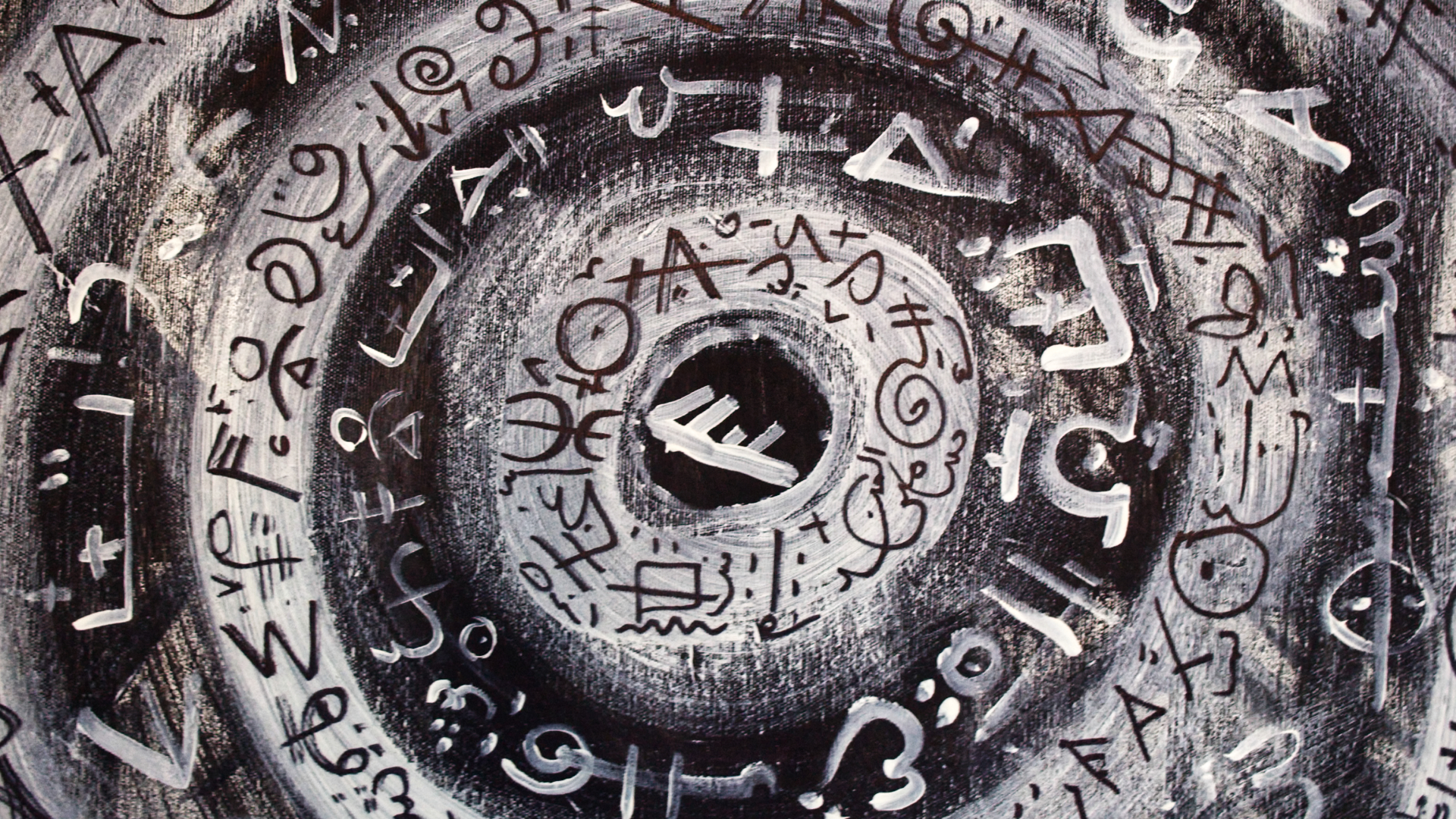
Documentary, by Lumar Brothers, Italy, 2023.
“Ancestral: Life and Art of Massinissa Askeur” is a documentary that explores the life and art of Algerian painter Massinissa Askeur. The film follows Askeur on his creative journey, showing his artistic process and his commitment to the preservation of Berber culture and tradition. Through interviews with Askeur, his family, friends and testimonies from people who knew him on a personal, professional and artistic level, the documentary tells the story of his past and his deep connection to his Berber roots. Askeur displays his art, from canvases to sculptures, which are inspired by the shapes and symbols of Berber culture, representing his search for a connection between the past and the present.
The documentary also explores the challenges Askeur faced throughout his life, including racial discrimination, poverty and the difficulty of making his art known outside of Algeria. However, despite these difficulties, Askeur continues to create and promote his art as a form of cultural resistance and celebration of his ancestral heritage. A vision far from art as a commercial product and very close, instead, to the exploration of the depths of one's own soul and the soul of the world. Massinissa's mission is to leave a testimony of his time to future generations.
LANGUAGE: Italian
SUBTITLES: English, Spanish, French, German, Portuguese
The Cultural Mythology of Resilience and Its Hidden Cost
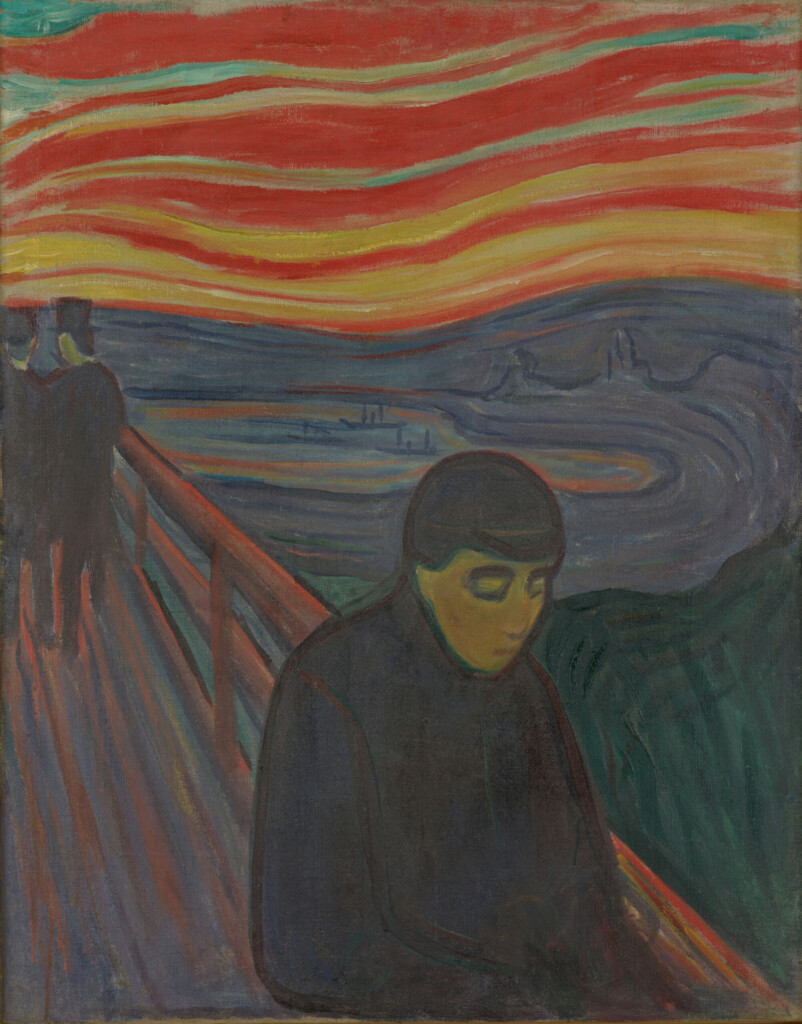
You have heard it your entire life, in slightly different registers but always the same pitch: you need to move on. Someone you trusted said it kindly. A self-help book said it with statistics. A therapist said it wrapped in clinical language about “adaptive functioning.” The message is so pervasive that most people have long stopped noticing it is a message at all — they have begun to experience it as gravity, as simple fact, as the natural direction of a healthy human life.
But recovery as a social imperative has a history, and it is not a neutral one. The industrial West constructed its dominant psychological vocabulary during a specific and telling period: the late nineteenth and early twentieth centuries, precisely when labor productivity was being reorganized around the human body as an instrument of output. When Pierre Janet was mapping dissociation in Paris in the 1880s, the patients who fascinated clinicians most were not the ones who stayed broken — they were the ones who returned to function. The cultural script was being written in parallel with the factory floor: a body that could not recover was a body that could not produce, and a body that could not produce was a burden, a failure, a problem to be solved rather than a person to be witnessed.
This is not merely historical background. It became the architecture of how ordinary people understand their own suffering. By the time the American Psychiatric Association published the third edition of the Diagnostic and Statistical Manual in 1980 — introducing Post-Traumatic Stress Disorder as a formal category — the disorder was defined almost entirely by what it prevented: normal functioning, forward movement, the resumption of a productive life. The wound was named, but it was named as an obstacle. Grief that lingered past a culturally acceptable window was reclassified as pathology, and pathology demanded treatment, and treatment meant restoration to baseline. The baseline was always the same: someone who could go back to work.
What this architecture concealed is something Boris Cyrulnik noticed in his decades of work with survivors of severe early trauma — that resilience, the concept Western popular psychology elevated to a virtue, is not a psychological state at all. It is a relational and narrative phenomenon. In his 2003 work “Le murmure des fantômes,” Cyrulnik demonstrated that what looks like recovery is almost always the construction of a protective story, a way of organizing unbearable experience into something that can be carried rather than cured. The person who appears to have moved on has not erased the wound; they have built a scaffold around it. The scaffold is real and valuable, but it is not the same as healing, and mistaking the two produces a specific and devastating form of shame in the people for whom no scaffold is forthcoming.
That shame is the hidden cost, and it operates with extraordinary efficiency precisely because it is invisible. When someone cannot stop grieving, cannot perform recovery on schedule, cannot absorb the loss and return to legible functioning, the culture does not ask what the wound required — it asks what is wrong with the person. The inability to move on becomes evidence of weakness, of poor character, of a failure of will that the sufferer is now obligated to overcome. The wound doubles: first the original harm, then the verdict that enduring it too visibly is itself a kind of moral failure.
Judith Herman, in her 1992 “Trauma and Recovery,” identified something the clinical establishment spent decades refusing to metabolize: that the social conditions surrounding an injury determine whether recovery is even possible, and that a culture organized around silence and productivity actively reproduces the conditions of the original harm.

Memory, Power, and the Politics of Who Gets to Forget
You did not inherit your anxiety from nowhere. The particular way your body braces before authority, the instinct to make yourself smaller in rooms where decisions are made about you — these are not personality quirks. They are transmissions. Marianne Hirsch, writing in The Generation of Postmemory in 2012, named what many children of survivors had already felt in their bodies without language for it: a haunting by events that predated them, images and affects so deeply absorbed through the culture of a household that they functioned as memories without ever having been experienced. The child does not remember the catastrophe. The child is the catastrophe’s echo, still reverberating.
What Hirsch identified in Holocaust survivor families has since been mapped onto bodies across entirely different geographies of rupture. The research of Rachel Yehuda at Mount Sinai — her landmark studies on epigenetic inheritance published across the 2000s and culminating in her 2016 paper on maternal exposure and offspring cortisol levels — demonstrated that stress responses can be biologically transmitted across generations through modifications in gene expression. Not metaphor. Not symbolic inheritance. Measurable changes in glucocorticoid receptor programming, documented in the children and grandchildren of those who survived extreme trauma. The body keeps a ledger that skips no generation.
But here is the politics buried inside the biology: certain bodies are permitted to carry their inherited weight publicly, to name it, to build memorials and receive reparations and construct a vocabulary of intergenerational wound. Other bodies are told they are simply prone to dysfunction, prone to poverty, prone to failure — as if the dysfunction arrived from inside rather than from the systematic destruction of everything that preceded them. The colonial archive is not silent. It is loudly missing. The deliberate erasure of records, the burning of administrative documents by retreating empires — Britain’s Operation Legacy, which destroyed thousands of files across its former colonies between 1961 and 1963 — was not bureaucratic housekeeping. It was the engineering of collective amnesia on an industrial scale.
When institutional memory is curated by the powerful, trauma does not disappear from the bodies of the dispossessed. It goes underground, becomes pathologized, gets reclassified as a cultural or biological deficiency. A community that cannot name what was done to it cannot organize a coherent response to the residue. The silence does not protect. It reproduces the original injury in each generation, now stripped of its historical cause, now appearing to be simply the way those people are. This is one of the most efficient mechanisms of ongoing domination ever devised: you do not need to continue the violence once the silence has been institutionalized.
Consider what it means that the Diagnostic and Statistical Manual of Mental Disorders did not include Complex PTSD as a distinct diagnosis until the ICD-11 in 2018, and still does not formally recognize it in the DSM-5-TR. The clinical apparatus, for decades, had no official container for the particular damage of repeated, inescapable, relational trauma — the kind generated not by a single event but by prolonged subjugation. What accumulated over lifetimes and lineages remained diagnostically invisible, forcing experiences forged in conditions of captivity, poverty, or colonial subjection into frameworks built from the study of combat veterans returning to stable societies. The wrong template was applied with institutional confidence, and millions of people spent years in treatment that addressed symptoms while the architecture underneath went unnamed.
Forgetting, then, is never neutral. The question of who is permitted to remember, who is encouraged to grieve, whose trauma becomes historical record and whose becomes personal pathology — this is a question of power so fundamental that it shapes what kinds of healing are even considered possible.
Walk Cheerfully
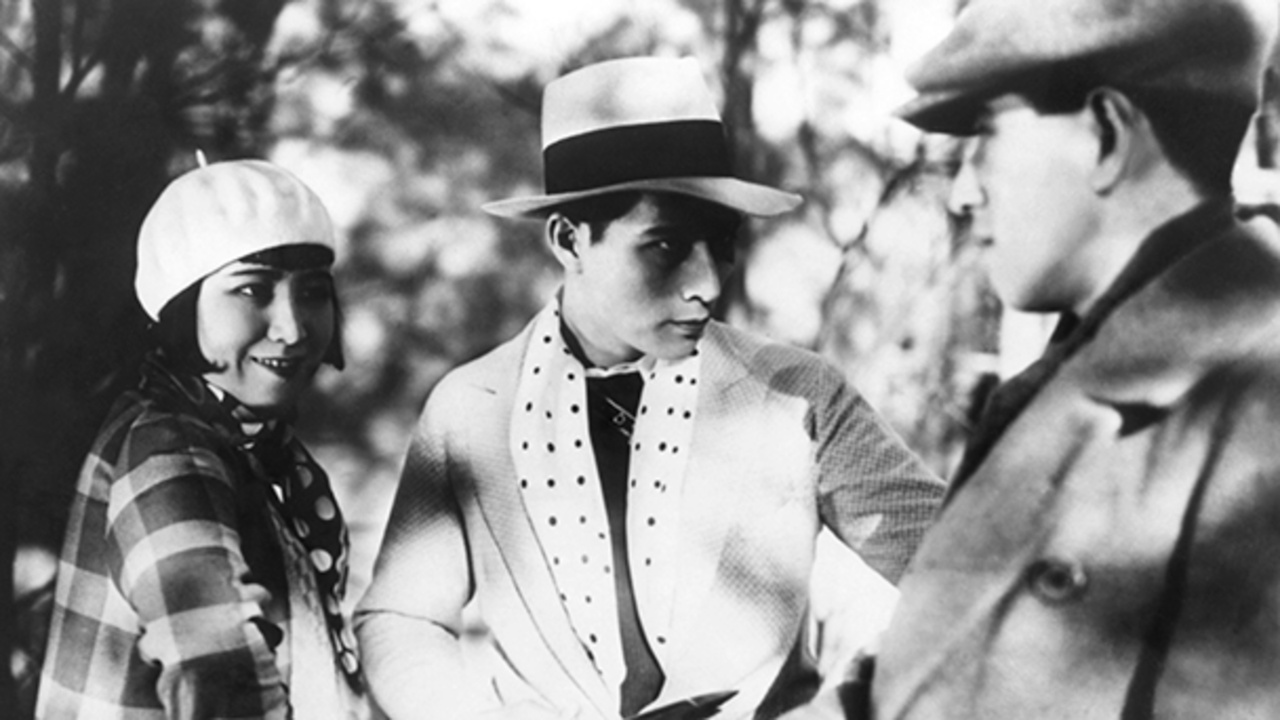
Drama, crime, by Yasujirō Ozu, Japan, 1930.
The plot of the film follows the story of Kenji, a low-ranking gangster, who decides to give up his life of crime and settle down. He falls in love with Yasue, a young car mechanic, and the two plan to get married. However, Kenji's past catches up with him when his former gang mates try to get him involved in a new criminal business. "Walk Cheerfully!" explore themes of redemption, love, and the struggle to break free from a life of crime. Like many of Ozu's works, the film delves into the complexities of human relationships and social norms.
It is a film that enchants the viewer with its emotional depth and visual elegance, through the winding roads of redemption and love, in a subtle ballet between past and future. Ozu's direction is masterful: through the skilful use of the characters' facial expressions and the dynamics of relationships, he captures the viewer's heart. Visual storytelling is a symphony of emotions and meanings that speaks directly to the viewer's soul without the need for words. "Walk Cheerfully!" it is a work that transcends time, as it explores universal themes such as the desire for redemption, the power of love and the struggle against one's past. Ozu reminds us that each of us has a chance to change and find happiness, even when it seems that fate has already written the script for us.
LANGUAGE: Japanese
SUBTITLES: English, Spanish, French, German, Portuguese
The Trap of Narrative: When Telling the Story Becomes the Cage

You have been asked to tell the story so many times that you have forgotten you are not the story. The therapist leans forward, the support group holds its breath, the memoir editor marks margins in red — and all of them are asking for the same thing: coherence. Make it make sense. Give it a beginning, a middle, a wound that explains the person sitting in the chair. What no one mentions is that this request, however gently delivered, is a structural demand that the past become a container rather than a force.
Judith Herman’s 1992 Trauma and Recovery introduced the concept of narrative reconstruction as a central stage in healing, and the book’s influence on clinical psychology over the following three decades is difficult to overstate. Herman argued that trauma fragments memory and that therapeutic work involves reassembling those fragments into a story the survivor can own. The logic is elegant and not wrong, but it carries a shadow that the field was slow to name. When narrative becomes the destination rather than one possible passage, the patient learns to mistake the map for the territory. They produce an increasingly polished account of what happened, and that account begins to function less like liberation and more like a monument — fixed, visitable, demanding tribute.
The confession culture that accelerated through the 1990s and early 2000s, turbocharged by memoir publishing and then by social media, made this monument-building not just therapeutic but public and rewarded. Frank McCourt won the Pulitzer in 1997 for a childhood rendered as beautiful devastation. The genre multiplied. To suffer legibly became a form of cultural currency, and legibility required exactly the kind of narrative arc Herman had described in a clinical context — except now the audience was not a therapist but an anonymous readership that needed your pain to be emotionally satisfying, which is to say, resolved. What the market for trauma memoir actually selects for is not truth but closure, and closure is precisely the fiction that keeps the wound from doing what it needs to do, which is stay open long enough to be genuinely metabolized.
The philosopher Paul Ricoeur spent much of his career examining narrative identity — the idea, developed across his three-volume Time and Narrative published between 1984 and 1988, that the self is constituted through the stories it tells about itself. This is a profound observation, but it contains a trap that Ricoeur himself identified and that his readers frequently ignore: narrative identity is always retrospective, always a stabilization, always a small violence done to the chaos of lived experience. To narrate the self is to impose on it a grammar it did not originally have. For the traumatized person, this grammar often arrives before the body has finished speaking — the story gets told while the nervous system is still mid-sentence.
What neuroscience has added to this picture is not comforting. Bessel van der Kolk’s work, particularly his 2014 synthesis of decades of clinical research, demonstrated that traumatic memory is stored subcortically, in regions of the brain that predate language entirely — the amygdala, the hippocampus under stress, the body’s own proprioceptive archive. Talking about what happened engages the prefrontal cortex, the narrator, the part of you that constructs the polished account. But the stored charge of the trauma lives somewhere language cannot easily reach. The act of narration can therefore become a way of managing the surface while the depths remain undisturbed, a kind of elaborate housekeeping that leaves the foundation untouched. The person exits therapy with a story they can tell at dinner parties, fluent and even moving, while the original disruption continues its work in the dark — shaping choices, collapsing intimacy, surfacing as a tightness in the chest in rooms that feel inexplicably wrong.
Liberation Without Arrival: What It Actually Means to Carry the Past Forward
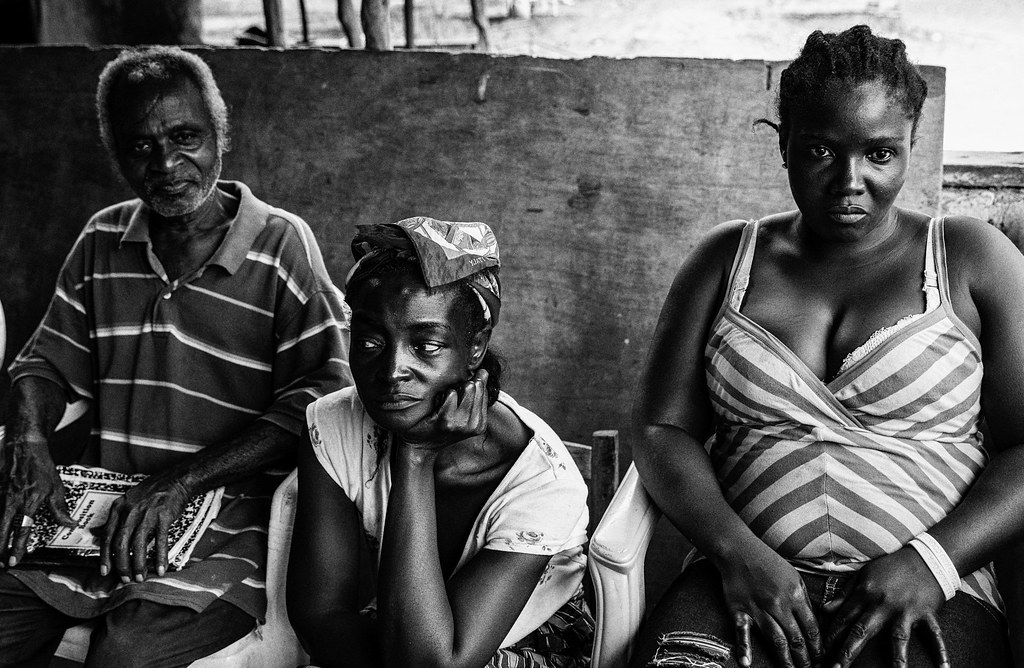
You are sitting across from someone who has done years of work — therapy, bodywork, journaling, silence — and they tell you, quietly, that they still feel it. Not as crisis. Not as collapse. But as weather, as a low pressure system that moves through without destroying anything, and you realize in that moment that this is not failure. This is the actual destination nobody advertised.
The fantasy embedded in most therapeutic culture is a destination called healed, a state in which the past no longer exerts pressure, in which the nervous system has been recalibrated to factory settings, in which the person who was hurt has been replaced by someone clean and unencumbered. Spinoza, writing in the Ethics in 1677, would have recognized this fantasy as a misunderstanding of what a body fundamentally is. His concept of conatus — the drive of every existing thing to persist in its own being — is not a drive toward purity or resolution. It is a drive toward continuation, which means carrying everything that has constituted you into the next moment, including damage, including alteration, including the specific gravity that suffering imparts to a self. There is no version of persistence that starts from zero.
What somatic therapies developed across the late twentieth century genuinely discovered — and what figures like Bessel van der Kolk documented in clinical detail by 2014 — is that trauma lives below the level of narrative. It is not a story the mind tells. It is a pattern the body rehearses. The limit of that discovery, though, is that treating the body as a storage site that can be cleared implies a model of liberation as emptying, as discharge, as return to a prior state. But there is no prior state. The body that existed before the formative wound is not waiting somewhere to be recovered. It was replaced, cellular memory by cellular memory, reflex by reflex, and the work is not excavation toward an original self but negotiation with the self that actually exists now.
What changes in genuine transformation is not the presence of the past but its jurisdiction. A wound that once governed every decision, every relationship, every reading of a room does not vanish — it is demoted. It loses executive authority. It becomes one input among many rather than the only signal the system trusts. This is a structural shift, not an emotional one, and it is almost invisible from the outside, which is precisely why it is so poorly celebrated and so rarely recognized as the profound alteration it represents.
There is something almost political in this reframe. Cultures that valorize resilience as bouncing back, as restoration of prior function, are cultures that cannot account for what actually survives catastrophe. The people who come through devastating loss or sustained violence are not restored versions of their former selves. They are different organisms with different thresholds, different knowledge, different relationships to risk and trust and time. To call this healing requires a definition of the word that does not mean return. It means forward motion with altered architecture.
The wound does not disappear. The question that remains — and it is genuinely open, not rhetorical — is whether the self that forms around a wound, that incorporates it rather than erasing it, is lesser than the self that never sustained that damage, or whether it is simply a different kind of structure, one that knows something about pressure and survival that the undamaged self, by definition, cannot.
A vision curated by a filmmaker, not an algorithm
In this video I explain our vision
🧠 When the Past Holds the Present Captive
The weight of psychological trauma rarely announces itself with clarity — it lives in the body, in recurring patterns, in the quiet sabotage of everyday life. These articles explore the many faces of that weight and the difficult, necessary work of liberation. Understanding how the past shapes us is the first step toward reclaiming who we truly are.
Unresolved Conflicts: When Resentment Becomes a Prison
Unresolved emotional wounds do not simply fade with time — they calcify into resentment, silently reshaping our relationships and self-perception. This article examines how buried conflicts become invisible prisons, and what psychology tells us about the courage required to finally confront them. Recognizing the pattern is already an act of freedom.
GO TO THE SELECTION: Unresolved Conflicts: When Resentment Becomes a Prison
Forgotten Memory: When the Past Resurfaces
Memory is not a passive archive — it erupts, resurfaces, and reorders reality without warning, often in the most unexpected moments. This piece explores the psychological phenomenon of forgotten memory breaking through the surface, and what it means for the process of healing. Understanding why the past returns is essential to understanding how to let it go.
GO TO THE SELECTION: Forgotten Memory: When the Past Resurfaces
Dissociation in Psychology: When the Mind Divides
Dissociation is one of the mind’s most profound defense mechanisms, allowing survival at the cost of inner fragmentation and disconnection from self. This article traces the history and clinical understanding of dissociative states, from trauma response to the long journey back toward integration. It offers a compassionate lens through which to read the hidden architecture of suffering.
GO TO THE SELECTION: Dissociation in Psychology: When the Mind Divides
Psychological Resilience: How to Turn Hardship into Strength
Psychological resilience is not the absence of pain but the capacity to move through it and emerge transformed rather than destroyed. This article explores how adversity, when met with the right tools and support, can become the raw material for genuine inner growth. It offers both scientific grounding and human stories that illuminate the path from wound to strength.
GO TO THE SELECTION: Psychological Resilience: How to Turn Hardship into Strength
Explore the Cinema That Dares to Go Deeper
If these themes resonate with you, independent cinema has long been one of the most powerful spaces for exploring trauma, memory, and psychological transformation with honesty and depth. On Indiecinema you will find films that refuse easy answers and instead accompany you into the most human territories of loss, healing, and rebirth — films that feel like a hand extended in the dark.
👉 EXPLORE THE CATALOG: Watch Indie Films in Streaming
A vision curated by a filmmaker, not an algorithm
In this video I explain our vision

