
The Mythology of Bouncing Back
You are sitting on the edge of your bed at 2 a.m., and the word that keeps arriving is not grief, not anger, not fear — it is the word “after.” You are trying to locate the future version of yourself, the one who will have processed this, metabolized it, emerged with something earned and legible. You have been told, in a thousand small ways across your entire life, that this is how it works: you go through something hard, and you come out the other side changed for the better, sturdier, wiser, more fully human. The story is so pervasive that it feels less like a cultural narrative and more like a law of physics. Suffering in, strength out. And sitting there in the dark, what disturbs you most is not the pain itself — it is the suspicion, arriving quietly and without permission, that the equation might be false.

The word resilience entered clinical psychology in the 1970s through developmental research on children raised in high-risk environments, most notably the longitudinal study conducted by Emmy Werner and Ruth Smith on the Hawaiian island of Kauai beginning in 1955. Werner and Smith tracked 698 children born into poverty, family dysfunction, and instability, and found that roughly a third of those exposed to significant adversity developed into, by conventional measures, competent and caring adults. This was a genuinely surprising finding, and a valuable one. What happened next was not their fault. The finding was extracted from its context — the specific, structural, materially supported conditions under which some children managed — and transformed into an ideology. Resilience stopped being a phenomenon observed in particular circumstances and became a prescription, a moral imperative, a personality trait you were supposed to already possess or urgently develop. The science was real. What was built on top of it was mythology.
What that mythology required, and still requires, was a specific theory of suffering: that hardship is essentially temporary, that it passes through you and leaves behind a residue called growth, that the self which exists on the far side of difficulty is a more complete version of the self that entered it. This is the narrative architecture of the hero’s journey as described by Joseph Campbell in 1949, and it is deeply satisfying precisely because it makes suffering meaningful in advance. You are not simply being broken. You are being forged. The problem is that this framework was derived primarily from mythology and literature — from stories designed to be emotionally coherent and symbolically satisfying — and then reverse-engineered onto actual human lives, which are neither emotionally coherent nor symbolically satisfying, and which frequently do not resolve.
Bessel van der Kolk spent decades documenting what happens when the body absorbs trauma without the possibility of resolution, publishing his findings in 2014 in a work that demonstrated with considerable clinical specificity that traumatic experience does not simply alter psychology — it alters neurobiology, the architecture of the nervous system, the baseline capacity for regulation and presence. Some of what is changed is not retrievable. Not because the person has failed to be resilient enough, but because that is what severe adversity actually does to a human organism. Acknowledging this is not pessimism. It is precision.
The cultural insistence on the growth narrative serves a function that has almost nothing to do with the people suffering and almost everything to do with the people watching. A society that believes hardship always produces strength is a society that can remain comfortable with the existence of hardship. If difficulty is a forge, then the forge does not need to be dismantled — it needs to be endured, privately, by the individual standing inside it, who will thank the heat eventually. The mythology of bouncing back is not primarily a story about survivors. It is a story told by and for those who have not yet had to find out whether it is true.
Self Defence

Documentary, by Olaf de Fleur, Iceland, 2025.
Self-Defence follows the story of Imma Helga, a self-defence instructor in Iceland who turned her teenage struggles with prejudice, homophobia, and depression into a mission of empowerment. Together with her brother Jón Viðar, she teaches a practical, real-world approach to self-defence, helping women feel more aware, capable, and confident. Through classes, testimonies, and their social media presence with over a million followers, the film shows how self-defence is not a heroic act but a basic, accessible skill: a way to protect oneself, reclaim space, and affirm presence. By weaving together teaching moments and Imma’s personal journey, Self-Defence explores the connection between inner growth and physical protection, revealing how learning to stand your ground also means regaining strength, self-respect, and freedom.
LANGUAGE: Icelandic
SUBTITLES: English, Spanish, French, German, Portuguese
What Trauma Actually Does to a Self
You have lived through something and come out the other side, and everyone around you calls that survival. What they mean, though they never say it plainly, is that you should now return to being the person you were before — as if the experience were a detour, a temporary rerouting, and the original road is still there waiting. It is not. The road has been demolished at the cellular level.
Bessel van der Kolk spent decades working with trauma survivors and published his findings in “The Body Keeps the Score” in 2014, a book that spent years on bestseller lists precisely because it told people something their doctors had been quietly refusing to confirm: that what happened to them had reorganized their nervous system, their hormonal architecture, their capacity to read safety in a room. The brain regions involved in processing threat — the amygdala, the anterior cingulate, the prefrontal cortex — do not simply calm down once the danger passes. They are recalibrated. A person who has experienced overwhelming helplessness often loses access to Broca’s area, the region responsible for translating experience into language, which is why trauma survivors frequently cannot narrate what happened to them and are not being evasive when they say they don’t know how to explain it. The story is literally unavailable in the form of speech. It lives somewhere else, in the body, as tension that won’t release, as a startle response at sounds that mean nothing to anyone else in the room.
Peter Levine, drawing on observations of animals in the wild, noticed something that psychiatric frameworks had largely ignored: prey animals that escape predators do not carry their trauma forward. They shake. Literally. The nervous system discharges the mobilized energy of the threat response through trembling, through involuntary movement, through a full-body reset that humans, in the interest of appearing composed and functional, almost universally suppress. In his work on Somatic Experiencing, developed over several decades and detailed in “Waking the Tiger” in 1997, Levine argued that the freeze response — the biological shutdown that occurs when neither fight nor flight is possible — remains incomplete in most human survivors because culture immediately intervenes. You are told to hold yourself together. You are handed a sedative or a diagnosis. The discharge never happens, and the body remains, at some subcortical level, still in the middle of the event.
This is where most popular frameworks on resilience commit their central dishonesty. They speak of psychological reframing, of finding meaning, of post-traumatic growth — Carol Ryff’s model of psychological well-being, the work of Richard Tedeschi and Lawrence Calhoun on growth following crisis — as if these were paths back to a continuous self that simply needs reconfiguring. But the self is not a software program that can be updated while the hardware remains intact. The hardware has changed. New neural pathways have formed. Old ones have been pruned or overwhelmed. The person who reads Viktor Frankl‘s “Man's Search for Meaning” and draws inspiration from it is not the same neurological entity who, before the hardship, would have read the same sentences and felt nothing particular. Meaning-making after devastation is not a return journey. It is something built by a different organism than the one that began.
What survives hardship is therefore a stranger to the self that entered it, and there is no framework, clinical or philosophical, that can make this fact comfortable without also making it false. The body that has been through overwhelming experience is running different software on different hardware in a different building than the one that originally housed the person you think of as yourself, and the work of what people call resilience begins only when you stop trying to recover the original tenant and start negotiating with whoever has moved in instead.

Stoicism Misread, Misused, and Sold
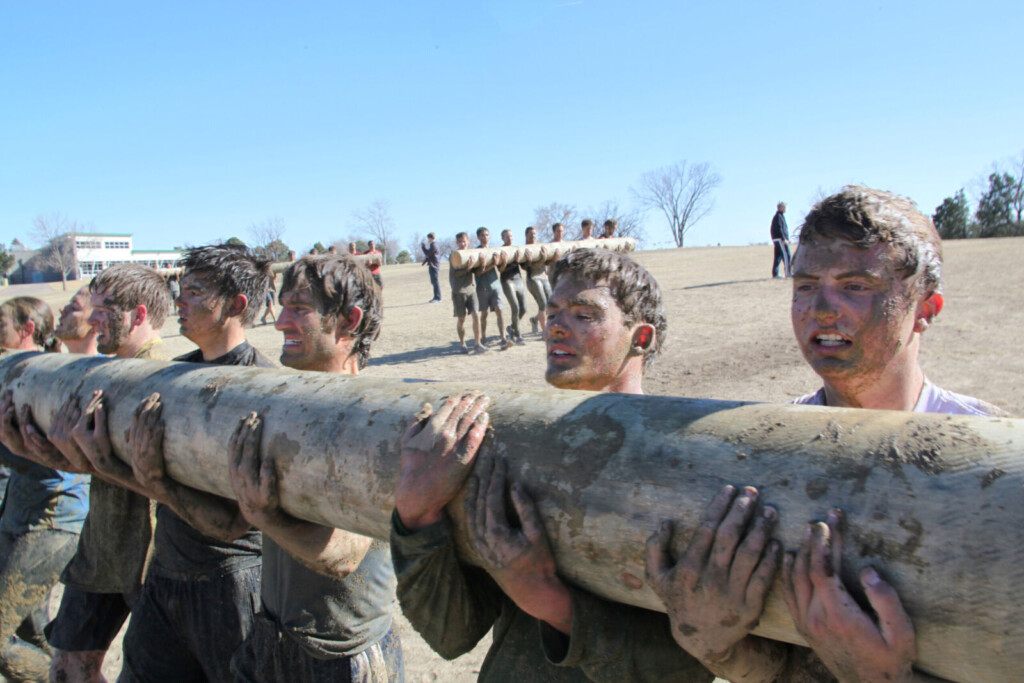
You have probably read a quote from Marcus Aurelius this week without knowing it — printed on a phone case, dropped into a LinkedIn post between two metrics, stitched onto the lining of a self-help book that costs forty dollars and promises to rewire your nervous system in thirty days. The quote was almost certainly about resilience. It was almost certainly misquoted.
What Marcus Aurelius actually wrote, in private Greek notes never intended for publication, was not a blueprint for high performance. The Meditations, composed somewhere between 161 and 180 CE during military campaigns he found tedious and brutal, are the records of a man failing to accept his own powerlessness — not a man who had mastered it. He wrote the same lessons to himself repeatedly, across twelve books, because they hadn’t taken. He was not a motivational speaker. He was a ruler who found rule hollow, writing to himself in the dark about how little any of it mattered, including his own efforts to make it matter.
Epictetus cuts even deeper than that, because his biography makes the misreading almost obscene. Born into slavery in Hierapolis sometime around 50 CE, he built his entire philosophical architecture on a single distinction: what is “up to us” and what is not. The Enchiridion, transcribed by his student Arrian, opens with this dichotomy and never really leaves it. Epictetus was not teaching people how to become more effective agents in the world. He was teaching people how to survive a world in which they had been stripped of agency by force. The original Stoic project was a philosophy of divestment — letting go of outcomes, bodies, reputations, futures — not because strength would follow, but because nothing else would be left once you stopped pretending you controlled those things.
The contemporary appropriation reverses this entirely. What gets sold under the Stoic brand is a technology of inner optimization: control your reactions so you can perform better, so your productivity compounds, so your emotional regulation becomes a competitive advantage. Ryan Holiday’s The Obstacle Is the Way, published in 2014 and consumed by NFL coaches and Silicon Valley founders alike, explicitly frames ancient Stoic texts as tools for achievement. The obstacle is not meant to stop you; it is meant to make you stronger. This is not Stoicism. This is Nietzsche wearing a toga, and it doesn’t even get Nietzsche right.
What this reversal produces in practice is a person who uses the language of acceptance to disguise the refusal to accept. “I control my response” becomes a way of asserting sovereignty over the self precisely when the self is being pressured to acknowledge it has none. The Stoic vocabulary of equanimity gets recruited into a project of self-hardening that the original Stoics would have recognized immediately as the anxiety it actually is — the anxiety of someone who cannot afford to stop performing composure long enough to notice it is costing them everything.
Sociologist Arlie Hochschild identified something adjacent to this in 1983 in The Managed Heart, her study of emotional labor among flight attendants and bill collectors — the systematic requirement to feel the right things on command, to treat the inner life as a resource to be managed for external purposes. What she described as a feature of certain working conditions has since become a general cultural ideal. The person who has “done the inner work” is the person who no longer visibly suffers under pressure. They have not resolved the pressure. They have just made their distress invisible, to others and eventually to themselves.
Epictetus wrote for people whose suffering was visible and undeniable and public because they were property. The fact that his words now circulate as advice for people trying to appear unaffected at quarterly reviews is not a minor irony of intellectual history.
Ancestral
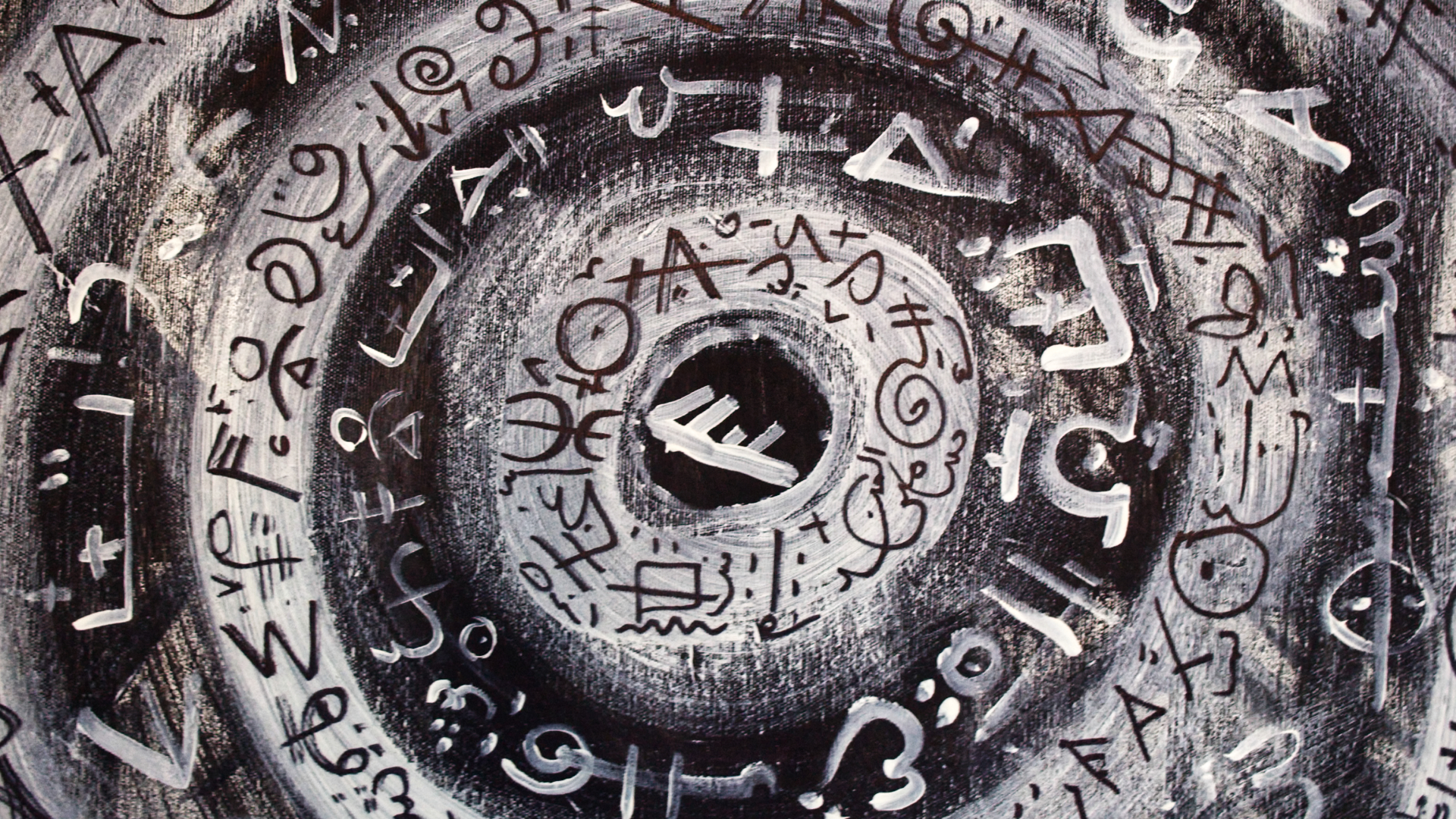
Documentary, by Lumar Brothers, Italy, 2023.
“Ancestral: Life and Art of Massinissa Askeur” is a documentary that explores the life and art of Algerian painter Massinissa Askeur. The film follows Askeur on his creative journey, showing his artistic process and his commitment to the preservation of Berber culture and tradition. Through interviews with Askeur, his family, friends and testimonies from people who knew him on a personal, professional and artistic level, the documentary tells the story of his past and his deep connection to his Berber roots. Askeur displays his art, from canvases to sculptures, which are inspired by the shapes and symbols of Berber culture, representing his search for a connection between the past and the present.
The documentary also explores the challenges Askeur faced throughout his life, including racial discrimination, poverty and the difficulty of making his art known outside of Algeria. However, despite these difficulties, Askeur continues to create and promote his art as a form of cultural resistance and celebration of his ancestral heritage. A vision far from art as a commercial product and very close, instead, to the exploration of the depths of one's own soul and the soul of the world. Massinissa's mission is to leave a testimony of his time to future generations.
LANGUAGE: Italian
SUBTITLES: English, Spanish, French, German, Portuguese
The Social Utility of the Resilient Subject
You have been told, at some point in your life, that what doesn’t kill you makes you stronger — and you nodded, because the alternative was to admit that some things break you quietly and leave no visible wound. The phrase moves through culture like a disinfectant, cleaning up the mess of systemic damage before anyone can trace it back to its source.
Mark Neocleous, writing in 2013 in his essay “Resisting Resilience” published in Radical Philosophy, made an argument that should have detonated the self-help industry but instead remained largely confined to academic circles: resilience, as promoted by governments, corporations, and institutions, is not a gift offered to citizens — it is a demand placed on them. The United Kingdom’s National Security Strategy of 2010 used the word “resilience” dozens of times to describe what the population should develop in order to absorb the consequences of austerity, terrorism, and climate disruption. Not prevent. Not protest. Absorb. The resilient citizen is the citizen who does not require the state to function well, because she has already internalized the capacity to survive its failures.
There is a particular architecture to this logic that becomes visible only when you stop admiring it. When a hospital closes in a rural community and the response is a public health campaign encouraging residents to take better care of themselves, the closure has been converted — silently, without debate — from a political decision into a personal inadequacy. The systemic cause evaporates; what remains is the individual’s relationship to her own health behaviors. This is not metaphor. Between 2010 and 2019, the United Kingdom closed or downgraded more than a hundred emergency departments, while simultaneously funding resilience programs designed to help communities “cope with disruption.” The disruption being funded was the disruption being caused.
What neoliberal governance discovered, sometime in the late twentieth century, is that the most cost-effective form of social control is not repression but adaptation. Michel Foucault‘s lectures at the Collège de France in 1978 and 1979, published as The Birth of Biopolitics, traced how liberal governance ceased to prohibit and began instead to manage — to produce subjects capable of regulating themselves in alignment with market logic. Resilience is that project carried to its emotional conclusion: the self-managing subject who not only survives instability but narrates that survival as personal growth, who converts precarity into a portfolio of demonstrated strengths, who emerges from each crisis more grateful, more flexible, more productive, and crucially, less likely to ask who designed the conditions that produced the crisis.
Corporations understood this utility with remarkable speed. By the early 2000s, resilience training had become a standard feature of human resources departments across Fortune 500 companies, framed as employee wellbeing but functioning as a buffer against burnout litigation, union grievance, and turnover costs. The American Psychological Association’s resilience framework, widely adopted in corporate wellness programs, teaches workers to reframe adversity, find meaning in difficulty, and maintain emotional flexibility under pressure — all of which are genuinely useful capacities and all of which transfer the cost of an unsustainable work environment entirely onto the nervous system of the person enduring it. A 2017 Gallup study found that 67 percent of workers experienced burnout at some point, a figure that did not prompt structural redesign of workplaces so much as an explosion of mindfulness apps and resilience workshops offered by the same companies producing the burnout.
The genius of this arrangement is that it feels like care. The workshop is warm. The facilitator is kind. The language is drawn from genuine psychology, from real research on trauma and recovery, from Salvatore Maddi’s work on hardiness or George Bonanno’s studies on natural resilience in bereaved populations. None of that research was designed to serve institutional immunity from accountability — but once institutional language absorbs a concept, the concept begins doing institutional work whether its originators intended it or not.
Post-Traumatic Growth and Its Hidden Conditions
You are sitting across from someone who has survived something you cannot name — a loss, a collapse, a violation — and they are calm. Unnervingly calm. They speak about it the way a geologist speaks about erosion: here is what happened, here is the shape it left, here is what grew in the gap. You leave the conversation feeling strangely inferior, as though your ordinary difficulties have no right to exist. What you witnessed felt like proof that human beings can metabolize catastrophe into wisdom. What you may not have seen is whether that metabolization was real.
Richard Tedeschi and Lawrence Calhoun introduced the concept of post-traumatic growth in 1996, publishing their framework in the journal Clinical Psychology Review and later expanding it into the book Trauma and Transformation. Their claim was precise: certain survivors of severe adversity — bereavement, cancer diagnosis, assault, natural disaster — reported not merely returning to baseline functioning but developing in domains they had not previously accessed. These domains were specific: greater personal strength, new possibilities, relating to others more deeply, appreciation for life, and what they called spiritual or existential change. The data was real. The phenomenon was observable. But Tedeschi and Calhoun were themselves careful about something that most people who cite their work quietly suppress: growth in their model is not correlated with the severity of the trauma, and it is not universal. Their own research showed that growth was more likely in individuals who possessed what they called cognitive processing capacity — the ability to ruminate productively, to hold disrupted assumptions about the world without immediately resolving them, to tolerate what they called seismic challenges to the assumptive world. The people who grew were not simply the ones who suffered most. They were the ones with a specific psychological infrastructure that had very little to do with suffering itself.
The question this raises is not comforting. If post-traumatic growth requires a pre-existing cognitive and relational architecture — the capacity to process rather than suppress, a social environment that permits expression of distress, access to time and language and sometimes clinical support — then the framework is describing a population-specific phenomenon being sold as a universal promise. The rhetoric of growth quietly punishes those for whom the infrastructure was never available: the person who had to return to work three days after the funeral, the child who had no adult witness to their distress, the person whose community required stoicism as proof of virtue.
A man in his mid-forties explains to a group of colleagues how a professional catastrophe — a public failure, a dismissal — remade him. He speaks with precision about what he lost and what he gained. He has developed a new venture. He mentors younger people. He appears to have processed the event completely, sealed it into meaning, moved forward. But in private, years later, he cannot tolerate any situation in which his competence is in question. He avoids feedback. He interprets ambiguous communications as hostile. He has built a life architecturally designed to prevent recurrence — not to transcend the wound but to wall it off with achievement. The narrative of growth was not false, exactly. It was a structure he built over a place he could not enter.
Psychologists studying what is sometimes called illusory resilience — scholars like George Bonanno, whose 2004 work in American Psychologist challenged grief stage models with actual longitudinal data — have noted that coping can be outwardly indistinguishable from genuine integration. The body continues. The work continues. The story continues. What does not continue is the encounter with the original rupture, which sits beneath the productivity like a structural crack beneath fresh plaster. The difference between transformation and sophisticated avoidance is not visible in behavior. It is only detectable in what a person cannot allow themselves to approach.
A vision curated by a filmmaker, not an algorithm
In this video I explain our vision
The Historical Manufacture of Hardship as Virtue

You are sitting in a school assembly, perhaps nine or ten years old, and someone in authority is telling you that struggle builds character. You do not question it. It arrives pre-validated, wrapped in the same institutional gravity as the pledge of allegiance or the multiplication table, and so it enters you not as an argument but as atmosphere.
The idea that suffering produces virtue did not emerge from moral philosophy or spiritual insight. It was manufactured, with considerable deliberateness, at specific historical junctures where compliance was economically necessary and coercion was politically inconvenient. Victorian industrial capitalism required bodies that would endure fourteen-hour shifts in textile mills without organizing into collective refusal, and it required a moral framework that would make that endurance feel like personal achievement rather than exploitation. The ideology it produced was elegant in its efficiency: suffering was not something done to you by a system of ownership and labor extraction — it was something you did to yourself, voluntarily, as proof of your inner worth. Samuel Smiles published Self-Help in 1859, the same year Darwin released On the Origin of Species, and the timing is not accidental. Both texts were immediately recruited into a social Darwinism that the factory owners found extraordinarily convenient: those who endured were fit; those who collapsed were weak; the mill was simply the terrain on which natural selection sorted the worthy from the unworthy.
William Davies, in The Happiness Industry, traces how the measurement and management of psychological states became instruments of economic governance. Pain and its threshold were not left to private experience — they were systematically calibrated to determine how much a worker could absorb before productivity declined rather than before dignity was violated. The distinction is not semantic. When the boundary of acceptable suffering is drawn by productivity metrics rather than by human welfare, the entire moral vocabulary around resilience shifts its allegiance without announcing it has done so.
Wartime Britain between 1939 and 1945 produced perhaps the most effective rebranding of deprivation in modern Western history. Austerity was nationalized as identity. To go without was not merely necessary — it was proof of a specifically British character, stoic, dry, quietly magnificent. The Ministry of Information produced material that explicitly moralized scarcity, and the psychological residue of that campaign outlasted the war by generations, surfacing again in Thatcher-era rhetoric about self-reliance and again in post-2008 austerity discourse, where cutting public services was framed as a return to national virtue rather than a transfer of economic risk onto the most exposed bodies in the country.
Depression-era America ran a parallel operation. Between 1929 and 1939, the cultural production around hardship — the photography of Dorothea Lange conscripted into New Deal mythology, the literature of endurance that culminated in Steinbeck’s insistence on dignity-through-suffering — created a vernacular in which the poor were admirable precisely because they did not demand systemic change but demonstrated individual persistence. The moral grammar here is precise: the admirable poor endure; the dangerous poor organize. Resilience, framed as the higher response to hardship, is in structural opposition to collective action. You cannot simultaneously celebrate a person’s capacity to absorb suffering as a virtue and support their decision to refuse the conditions producing that suffering. The two positions are logically incompatible, which is exactly why the first one is so relentlessly promoted.
What gets erased in every iteration of this historical pattern is the question of origin. Hardship does not arrive from neutral territory. It arrives from specific arrangements of power, property, and policy, and the moment you are invited to transform it into personal strength, you have already accepted a framework in which those arrangements are treated as natural rather than chosen, inevitable rather than reversible — as the weather, rather than as someone’s deliberate decision about who bears the cost of whose prosperity.
What Remains When the Narrative Is Stripped Away
You are sitting with something that will not resolve. Not grief exactly, not confusion — something older, something that arrived before language did and has been waiting ever since for you to name it. And the naming, you have been told, is how you survive it.
Viktor Frankl watched people die in Auschwitz and came out in 1946 with Man's Search for Meaning, a document of approximately 200 pages that would go on to sell over 16 million copies across 50 languages. His central argument was not that suffering is good, but that suffering without orientation destroys the organism faster than the suffering itself. Logotherapy — the clinical system he built from that observation — proposes that the human nervous system is not primarily a pleasure-seeking engine but a meaning-seeking one, and that when meaning collapses, the person collapses with it. The data from his own survival seemed to confirm it. But here is what the argument quietly assumes: that meaning is available, that it is findable, that there is something in the structure of experience that can be reached and held.
Ernest Becker stood that assumption against a wall. In The Denial of Death, published in 1973 and awarded the Pulitzer Prize the following year, he argued that the human animal is the only creature aware of its own annihilation, and that virtually every structure we call civilization — religion, ambition, legacy, romantic love — is a defense mechanism erected against that knowledge. Meaning, in Becker’s architecture, is not discovered in hardship. It is manufactured from terror. What we call purpose is, at its metabolic root, the frantic construction of something that feels larger than the body’s inevitable decay. That changes the question. It does not ask whether suffering has meaning. It asks what psychological work the belief in meaning is doing, and who profits from the belief being preserved.
The honest answer is uncomfortable: the narrative of meaning-made-from-pain is extraordinarily useful to systems that need people to continue functioning inside unbearable conditions. A worker who frames chronic overwork as personal growth is less likely to organize. A patient who finds spiritual purpose in illness is easier to discharge. This is not a conspiracy — it is a structural convenience, and it operates most effectively precisely when the person experiencing it believes the meaning they have constructed was already there, waiting to be found rather than assembled under duress.
What psychological research has actually demonstrated is more granular and less uplifting than either the logotherapeutic or the existentialist narrative. Studies on post-traumatic growth, beginning seriously with the work of Richard Tedeschi and Lawrence Calhoun in the mid-1990s, found that many survivors of acute trauma do report lasting positive change — deeper relationships, revised priorities, an expanded sense of personal capacity. But the same research revealed something their popular reception consistently omits: growth and distress coexist. They are not sequential stages where one replaces the other. The person who has rebuilt meaning after catastrophe is not on the other side of the pain. They are carrying both simultaneously, and the architecture of meaning they inhabit is always, at some level, known to be constructed.
That knowledge — the quiet, background awareness that the story you are telling yourself is a story — is where the real psychological work lives, and it is almost never discussed in frameworks oriented toward resilience. To know that your meaning is assembled rather than given does not make it less functional. But it does make it honest. And honesty of that kind carries its own specific weight: the weight of holding a structure you built yourself, with the full knowledge that you built it because the alternative was something you could not look at directly, and that the structure itself will one day need to be taken apart and rebuilt again from what remains when the last story you told yourself no longer holds.
The Fracture Lines That Strength Cannot Close
You have been sitting with this idea for a while now — that the right framework, the right practice, the right quality of attention paid to your own suffering might alchemize it into something useful, something that justifies the cost of having gone through it. The self-help industry depends on this belief with the same ferocity that a religion depends on its afterlife. Suffering must mean something. It must be redeemable. Otherwise the ledger of a human life becomes too frightening to read.
But Judith Herman, writing in Trauma and Recovery in 1992, introduced a category of experience that does not fit inside the transformation narrative: complex trauma, the kind that is not a single violent rupture but a prolonged, repeated exposure to conditions of helplessness — domestic captivity, childhood abuse sustained across years, political imprisonment where the perpetrator is not a stranger but a structure. What Herman documented, drawing on clinical work that the psychiatric establishment had spent decades refusing to take seriously, is that this kind of trauma does not leave a wound that heals with a scar. It reorganizes the person. It rewires the relationship between self and time, between self and other people, between self and the very sensation of being safe inside a body. The personality does not emerge from it stronger. It emerges from it different, in ways that are not chosen and not fully reversible.
The resilience literature, in its most honest versions, acknowledges this at the margins — a footnote, a caveat, a careful phrase about how “severe trauma may require professional support.” What it cannot do is sit inside the implication of Herman’s work without dismantling its own foundation. Because if certain adversities do not build strength but instead alter the architecture of a person’s interior life permanently, then the entire project of extracting meaning and growth from hardship applies only to a certain range of difficulty — the range that leaves the self structurally intact enough to do the extracting. Below that threshold, the framework is not wrong. It is simply inapplicable, the way a map of streets is inapplicable when the city has been razed.
There is a particular cruelty in offering growth narratives to people whose nervous systems have been reshaped by chronic adversity, because those narratives carry an implicit accusation. If suffering can be turned into strength and you have not managed to turn it into strength, then the failure is located inside you — in your insufficient will, your incomplete processing, your refusal to fully commit to healing. Herman’s patients were not failing to be resilient. They were living with the logical consequences of what had been done to them across years, by people who had power over them, in conditions where escape was not a psychological choice but a physical impossibility. Resilience, in that context, is not a skill that was absent. It was often the only reason they survived at all — but it was a resilience that looked nothing like growth. It looked like dissociation, like hypervigilance, like an immune system that cannot stop firing because the threat was never singular and was never truly over.
The philosopher Gillian Rose, dying of cancer in 1995, wrote about the necessity of living in what she called “the broken middle” — not resolving contradictions into synthesis, not transcending pain into wisdom, but remaining present inside irresolution. It is a different posture than resilience. It does not promise that the fracture will close or that standing inside it will make you more capable of standing. It asks only whether you can remain honest about what you are carrying without demanding that it transform into something that vindicates the carrying.
And that may be the question that no resilience framework has ever been willing to answer directly: what do you owe yourself when the weight you bear will not become strength, and the carrying itself is simply the shape your life has taken?
🧠 Forging the Self: Resilience, Meaning & Inner Strength
Psychological resilience is never built in isolation — it emerges from the collision between suffering and meaning, between the wound and the will to understand it. These articles explore the philosophical, psychological, and existential dimensions of hardship, offering diverse lenses through which transformation becomes possible.
Viktor Frankl: Life and Logotherapy
Viktor Frankl survived the Nazi concentration camps and emerged with one of the most powerful psychological frameworks ever conceived: the idea that meaning itself is the ultimate human survival tool. His logotherapy teaches that even in irreducible suffering, the freedom to choose one’s attitude remains intact. This article explores his life, his ideas, and why his work remains essential for anyone navigating profound adversity.
GO TO THE SELECTION: Viktor Frankl: Life and Logotherapy
Camus’s Myth of Sisyphus: The Absurd Explained
Albert Camus‘s Myth of Sisyphus confronts the absurd head-on — the human need for meaning crashing against a universe that offers none — and dares to call Sisyphus happy. Rather than collapsing into nihilism, Camus finds in rebellion itself a form of resilience and dignity. This analysis unpacks how embracing the absurd can paradoxically become one of the most defiant acts of psychological strength.
GO TO THE SELECTION: Camus’s Myth of Sisyphus: The Absurd Explained
Existential Emptiness: When Life Loses Meaning
Existential emptiness — the hollow sensation that life has lost its direction or purpose — is one of the most disorienting forms of psychological pain a person can endure. This article examines the philosophical and psychological roots of that void, drawing on existentialist thought to understand why meaninglessness arises and how it can become the starting point for radical self-reconstruction. Far from being a dead end, the encounter with emptiness may be the most honest beginning of genuine resilience.
GO TO THE SELECTION: Existential Emptiness: When Life Loses Meaning
Illness as Awakening: When the Body Says Enough
Sometimes it takes a physical breakdown for the deeper layers of the psyche to finally speak. This article explores the phenomenon of illness as a threshold experience — a moment when the body, exhausted by years of suppression, forces a confrontation with what has been denied. In doing so, it reframes sickness not merely as misfortune but as a potential catalyst for profound personal transformation and lasting inner strength.
GO TO THE SELECTION: Illness as Awakening: When the Body Says Enough
Discover the Cinema That Transforms Darkness Into Light
If these themes of resilience, meaning, and inner transformation resonate with you, Indiecinema’s streaming catalog offers a curated selection of independent films that explore the human capacity to endure, reinvent, and flourish. From intimate character studies to philosophical journeys, these are the stories that remind us why cinema, at its best, is itself an act of resilience. Explore them now on Indiecinema.
👉 EXPLORE THE CATALOG: Watch Indie Films in Streaming
A vision curated by a filmmaker, not an algorithm
In this video I explain our vision

