
The Visible Child and the Weight of the Room
You walk into the classroom on the first day and the teacher smiles at you — genuinely, warmly — and yet something in the next four seconds recalibrates the entire year. She gestures you toward a desk near the window, not the center cluster where the louder kids are already pulling chairs together, and you sit where you are pointed because you are new, or young, or uncertain, or all three. No one has been unkind. No rule has been broken. The room has simply arranged itself around a center of gravity you were not told about, and you are now orbiting it from a distance that will prove, across the coming months, to be exactly the distance between belonging and observation.

This is not the story of bullying. It is something quieter and more structurally durable than that. Sociologists who study classroom interaction have a term for what happens in those first invisible minutes — the ecology of the classroom — and what it describes is the way physical space, teacher attention, and peer grouping cohere into a system that rewards certain children with visibility and assigns others to a kind of productive invisibility that the institution can live with. Ray Rist, in his landmark 1970 study published in the Harvard Educational Review, documented how a kindergarten teacher in St. Louis sorted children into table groups within eight days of school starting — not based on academic assessment, which was impossible at that stage, but on hygiene, clothing, manner of speech, and family background. The children placed at the table closest to the teacher received more instructional time, more questions directed at them, more praise. By the time those children reached second grade, three years later, the groupings had barely shifted. The architecture of expectation had already closed around them like a mold.
What makes this mechanism so resistant to ordinary moral critique is that it does not require malice. It requires only habit, familiarity, and the cognitive ease of mirroring back what already feels legible. A teacher who calls on children who raise their hands confidently is not discriminating — she is responding to a social signal. A teacher who groups children by reading level is not prejudging futures — she is managing a classroom with thirty bodies and one pair of hands. The individual decisions are defensible. The aggregate pattern is a verdict.
Children read this verdict before they can name it. Research in developmental psychology, particularly work emerging from Claude Steele’s investigations into what he called stereotype threat — documented in his 2010 book Whistling Vivaldi — demonstrates that awareness of being perceived through a categorical lens degrades cognitive performance measurably, not because the child lacks ability, but because part of their working memory is now occupied with monitoring how they appear. The child who suspects she is being watched differently is not paranoid. She is correct. And that correctness costs her something she cannot get back in the hour of the test.
The school, as an institution, was architecturally designed for a child who did not need to negotiate her own visibility. The model student of nineteenth-century European public education was implicitly white, male, native-speaking, physically normative, and from a household structured around the industrial work calendar. Every deviation from that template has since been treated as a problem to be accommodated rather than evidence that the template was always a fiction. Accommodation is not inclusion. Accommodation says: the structure is correct, and we will make space at its edges for those who do not fit. Inclusion would require admitting that the structure was always partial, always authored, always a set of choices disguised as defaults.
The child near the window does not need you to understand the history of compulsory education to feel its weight.
The Girl from the Back Desk

Drama, by Matteo Piacenti, Corrado Bonicelli, Italy, 2020.
Viola is a lonely teenager who feels out of place in the world around her, inadequate and imperfect. The comfort and support of her parents and friends are of no use. Art is the only way she has to express herself: like a colorful mosaic, Viola represents her own world and her way of seeing reality, one drawing at a time. Then she meets Giacomo, her new deskmate. From the relationship between the two, something opens up in the shell that imprisons Viola in loneliness and social isolation. A new path opens up for her in this difficult adolescent phase, which leads her to realize something more about herself and the reality around her.
This is a film made by very young boys and girls who share a passion for films, theater, and art. The film explores the sensitivity of young people, encourages them to reflect on their own self-perception in relation to society, with a positive message and attitude towards themselves and the community. "The Girl from the Back Desk" highlights the values that adolescents believe are essential for a healthy society: respect, generosity, kindness, trust in others, courage in defending their ideals, and participation.
LANGUAGE: Italian
SUBTITLES: English, Spanish, French, German, Portuguese
Inclusion as Institutional Grammar
You are handed a worksheet on the first day and told to write your name in the top right corner, your grade level below it, your student identification number below that. Nobody explains why. Nobody needs to. The form already knows what kind of entity you are.
Schools do not begin with discrimination. They begin with grammar — the procedural language of enrollment forms, seating charts, ability groupings, and behavioral rubrics that establish, before a single teacher opens their mouth, who counts as the legible subject of education and who arrives as a problem to be accommodated. Erving Goffman’s 1963 work Stigma: Notes on the Management of Spoiled Identity identified a mechanism that most people prefer to locate in individual cruelty rather than institutional architecture: the spoiled identity is not produced by the bigot in the room but by the categories the room itself was built to receive. A classroom designed around a single reading pace, a single behavioral register, a single native language, does not need a prejudiced teacher to exclude. It excludes structurally, quietly, before the bell rings.
Goffman’s parallel concept of the total institution — developed in Asylums the previous year — describes environments that regulate identity not through overt coercion but through the relentless management of time, space, and presentation of self. Schools are not prisons, but they share the grammar of total institutions more than their administrators tend to acknowledge. The synchronized schedule, the uniform expectations for bodily conduct, the merit systems that reward compliance coded as intelligence — these are not neutral organizational tools. They constitute a specific image of the normal child, and every child who enters the building is measured against that image before anyone has bothered to ask them anything.
The standardized curriculum is where this normalization becomes most legible, because it is where the institution makes its assumptions explicit in print. The history textbook that narrates the nation as a singular subject with a coherent destiny is not merely incomplete — it is a belonging test. Students whose family histories fall outside that narrative are not excluded from knowledge; they are excluded from the position of the implied reader. James Banks, whose 1989 framework for multicultural education distinguished between a contributions approach and a transformative approach, showed that adding a chapter on civil rights or indigenous culture without restructuring the underlying epistemological frame produces what he called additive multiculturalism — a form of inclusion that never disturbs the center. The invited guest is still a guest.
Seating arrangements carry their own syntax. Research on classroom ecology, including studies conducted by educational psychologist David W. Johnson throughout the 1970s and 1980s on cooperative versus competitive learning structures, demonstrated that physical organization is not decorative — it distributes status. The student placed at the back of a row facing a teacher’s back is not in the same room as the student seated at a table where all directions are equally valued. When schools adopt tracking systems that route students by perceived ability into different physical and curricular spaces, they do not merely sort academic performance; they sort social futures, and they do so with the legitimizing language of merit, which makes the arrangement appear chosen rather than imposed.
Behavioral norms are the final layer of this grammar, and the most intimate, because they reach into gesture, volume, eye contact, and emotional expression. What reads as confidence in one cultural register reads as insubordination in another. What one community trains as respectful deference — lowering the eyes before an elder — is interpreted by another as evasiveness or passivity. The behavioral rubric does not say “be white” or “be middle-class.” It says “be professional,” “be focused,” “be on task” — and those phrases carry an unmarked cultural body inside them that most students either already inhabit or spend years learning to perform at the cost of something they cannot name but will eventually miss.

The Myth of the Neutral Classroom

You walk into a classroom and nothing overtly cruel happens. No one is turned away at the door. The textbooks are distributed equally. The teacher calls on students by turn. And yet, by the end of the year, the children whose parents read them poetry at bedtime, who spent summers in museums, who grew up hearing dinner-table arguments about history and politics, will have moved further ahead than those who did not — not because they are more intelligent, but because the classroom was already theirs before they entered it.
Pierre Bourdieu and Jean-Claude Passeron named this mechanism with surgical precision in their 1970 study, arguing that education does not simply transmit knowledge — it legitimizes particular forms of knowledge while treating others as if they do not exist. Cultural capital, in their framework, is not neutral intellectual currency. It is accumulated through specific domestic environments, specific linguistic registers, specific aesthetic dispositions, and when the school rewards it, the institution presents that reward as merit. The child who arrives already fluent in the school’s unstated cultural language is told she earned her grade. The child who arrived speaking a different kind of intelligence is told, through a hundred small silences, that his way of knowing does not count here.
What makes this especially difficult to see is that the classroom does not need to say anything discriminatory to function as a discriminatory machine. Absence is enough. When a curriculum moves from ancient Greece to the European Enlightenment to the Industrial Revolution without pausing to ask who built the ships or who was legally excluded from the academies, it is not presenting history — it is curating it. The selection itself is an argument, and the argument is that some human experiences produced knowledge worth keeping, while others produced only labor worth forgetting. Students from the erased traditions sit inside that argument every day and are expected to learn neutrally from it.
Bourdieu observed that the school’s greatest sleight of hand is converting social inheritance into individual achievement. By 1970, French secondary school data already showed that working-class students who reached university did so against dramatically steeper odds than their bourgeois peers — not because the university had denied them entry on paper, but because the entire preceding structure had been calibrated to exhaust them. The school appeared open. The school was not open. The appearance of openness is precisely what makes the exclusion so durable, because it relocates the cause of failure from the system to the student. He didn’t apply himself. She wasn’t motivated. They just didn’t take advantage of what was offered.
The student who internalizes that explanation carries it forward as a private wound rather than a structural diagnosis. This is not accidental. A system that succeeds in making its own violence invisible to its victims is a system that will perpetuate itself across generations without requiring enforcement. No one has to stand at the classroom door. The door is already inside the student.
Consider what it means to be asked, at fourteen, to write a personal essay in a register that your household has never used — formal, distanced, structured around an argument that assumes the writer’s individual perspective is worth defending. For a child raised in an oral tradition where knowledge is communal, provisional, and relational, that assignment is not a neutral exercise in expression. It is an initiation test into a foreign epistemology, graded as if the epistemology were simply human. Failing it does not mean failing to write. It means failing to be the kind of person the institution recognizes as educated.
What the neutral classroom actually produces is not equality but a very specific kind of invisibility — one that feels, from the inside, exactly like fairness.
What Diversity Policies Actually Measure
You fill out the form — ethnicity, first language spoken at home, whether your parents completed secondary education — and somewhere in a district office, your existence becomes a data point. The form doesn’t ask whether you felt invisible in third period, or whether the teacher called on you three times in a semester, or whether the word “articulate” was used as a compliment in a way that made your stomach drop. It asks for boxes you can tick. And when enough boxes are ticked in the right proportions, the school earns a designation: diverse, inclusive, progressing.
The measurement problem is not incidental to diversity policy — it is its architecture. When Gary Orfield and his colleagues at the Civil Rights Project at UCLA began tracking American school demographics through the 1990s and into the 2000s, the data revealed something that official progress narratives had carefully obscured: U.S. schools were becoming more racially segregated than they had been at any point since the early 1970s. The landmark 1988 peak of desegregation — the moment at which Black students attended more integrated schools than at any point before or since — was followed by a decades-long reversal that accelerated after the Supreme Court’s 1991 Board of Education of Oklahoma City v. Dowell decision, which allowed districts to be released from desegregation orders even when structural inequalities persisted. By 2011, Orfield’s research showed that the average Black student attended a school where 48 percent of peers lived in poverty. The statistics were not hidden. They were simply surrounded by other statistics — diversity indices, anti-bullying incident reports, participation rates in multicultural events — that gave administrators something more comfortable to cite.
What quantification does, with a particular and underappreciated efficiency, is convert a political problem into a technical one. Once you can measure something, you can manage it without changing it. The sociologist William Bruce Cameron noted in 1963 that not everything that counts can be counted, and not everything that can be counted counts — a formulation so widely quoted that it has been smoothed into a kind of motivational wisdom, stripped of its original critical edge. Applied to institutional diversity work, it means that the metrics chosen are never neutral choices: they are decisions about what the institution is willing to be held accountable for. Representation percentages are legible and defensible in board meetings. The experience of a student who is always cast as the cultural explainer for their entire ethnic background is not.
There is a specific cruelty in anti-bullying metrics that deserves examination on its own terms. Incidents are recorded when they are reported, investigated, and classified — a chain of institutional steps that filters out the vast majority of what actually happens between students. Research published in the Journal of School Psychology has repeatedly confirmed that the gap between experienced harassment and reported harassment is widest for students from minority groups, who anticipate disbelief, retaliation, or consequences that fall on them rather than their aggressors. The metric, therefore, captures an inverted image: schools where minority students feel least safe often report fewer incidents, because their students have learned that reporting costs more than silence.
This is the structural sleight of hand that diversity policy, in its current dominant form, has never resolved. You can celebrate demographic balance in enrollment while classrooms remain tracked by race and income through the mechanism of honors and AP course placement — a pattern documented by sociologist Jeannie Oakes in Keeping Track as far back as 1985, whose findings have been reproduced in study after study without producing the systemic disruption they logically demand. The tracked classroom doesn’t violate any diversity index. It simply organizes the same bodies, already counted and certified as evidence of inclusion, into hierarchies that reproduce with quiet precision everything the counting was supposed to undo.
The Second Scene: Recognition Without Belonging
She stands at the front of the classroom holding a dish her grandmother made, steam still rising from the container, and the other children lean forward with the specific curiosity reserved for things that are exotic but safe. The teacher smiles encouragingly. Someone asks if it is spicy. The room fills with the kind of warmth that feels, from the outside, like acceptance, and she smiles back because she has learned that this is what is required of her in this moment — to be a gracious ambassador of her own otherness, to translate herself into something digestible, to make the distance between her world and theirs feel like an adventure rather than a chasm.
What this scene performs is not inclusion. It is the management of difference through controlled visibility. The anthropologist Mary Douglas, writing in Purity and Danger in 1966, argued that cultures manage what threatens their coherence by assigning anomalies a designated ritual space — acknowledging them just enough to neutralize their disruptive potential. The multicultural food day, the heritage month bulletin board, the invited presentation on a faraway tradition, operate according to precisely this logic. The child is seen, celebrated even, but only within a frame the institution has constructed and controls. Outside that frame, on an ordinary Tuesday with no ceremonial container in hand, she is still the one whose name gets mispronounced, whose family’s references fall into silence, whose belonging remains conditional.
Sociologists have a name for the position this creates. Claude Steele’s research on stereotype threat, developed across studies published throughout the 1990s and consolidated in his 2010 book Whistling Vivaldi, demonstrated that when individuals are made aware — even subtly, even positively — that they are being perceived as representatives of a group rather than as persons, their cognitive performance degrades and their psychological cost of participation rises. Being celebrated as the cultural emissary of your difference is not a neutral act. It installs in the child a particular kind of hypervigilance: the awareness that she is always being read as a specimen, that her presence in the room carries an explanatory burden that her classmates do not share.
There is a structural deception embedded in the language institutions use to describe these practices. Words like visibility, representation, and recognition carry an implicit promise of belonging, but recognition and belonging are not the same threshold. Recognition is something granted by others, contingent on their willingness to look. Belonging is structural — it means the institution was built with you already inside it, that your ways of knowing and speaking and organizing experience are present in the curriculum not as exotic additions but as unremarkable defaults. When a school celebrates Diwali once a year but teaches the entire canon of Western literature as universal and the rest as elective context, it has granted visibility while withholding the deeper thing.
The philosopher Axel Honneth, in The Struggle for Recognition published in 1992, distinguished between three registers of recognition: love, legal respect, and social esteem. What tokenized multiculturalism offers lands in a corrupted version of the third — esteem granted not for individual contribution but for the performance of cultural difference on demand. This is not esteem freely given; it is a transaction. And children, who are exquisitely sensitive to the architecture of social exchange, understand the transaction even when they cannot name it. They understand that the warmth in the room on food day does not mean they will be called first when hands go up on any other day, that their grandmother’s recipe will be praised and then forgotten, that the distance being bridged ceremonially is not actually being closed.
The institution mistakes the gesture for the structure, the event for the environment, and the child who has been celebrated walks back to her seat carrying something heavier than she brought to the front of the room.
A vision curated by a filmmaker, not an algorithm
In this video I explain our vision
Identity as Curriculum Problem
![What is diversity? [Diversity for kids]](https://blog.indiecinema.co/wp-content/plugins/wp-youtube-lyte/lyteCache.php?origThumbUrl=https%3A%2F%2Fi.ytimg.com%2Fvi%2FSyaLcfMeeEM%2F0.jpg)
You are sitting in a classroom where every story on the shelf has a hero who does not look like you, where every historical turning point is narrated from a position you were never meant to occupy, where the language of intelligence itself — analytical, detached, Socratic — was calibrated against a model of mind that excluded yours by design. You do not yet have the vocabulary to name what is happening. You only know that learning feels, somehow, like disappearing.
Frantz Fanon diagnosed this disappearance with forensic precision in 1952. In “Black Skin, White Masks,” he described the experience of the colonized subject encountering the colonizer’s language and culture not as a neutral acquisition of tools, but as a violent restructuring of the self. To learn the master’s language fluently, Fanon observed, was to begin measuring one’s own worth against the master’s standards — and to find oneself perpetually short. The curriculum, in this reading, is never innocent. It is always a proposition about who counts as a knowing subject and who counts as an object of knowledge.
What makes this proposition so durable is precisely its invisibility. A child does not experience a Eurocentric history syllabus as ideology; they experience it as reality, as the natural shape of the world. When every scientific breakthrough attributed to ancient Greece ignores the prior mathematical traditions of Egypt and Mesopotamia — documented by scholars like Martin Bernal in “Black Athena” (1987) — the omission registers not as theft but as fact. Absence becomes the texture of normalcy. And the child who belongs to the absent tradition learns, without anyone saying so directly, that her ancestors were waiting in the dark until someone else lit the lamp.
The psychological toll of this arrangement is not metaphorical. Claude Steele’s research on stereotype threat, developed across a series of experiments in the 1990s and consolidated in his 2010 book “Whistling Vivaldi,” demonstrated measurably that when students are made aware of a negative stereotype about their group before a test, their performance declines — not because of ability, but because part of their cognitive load is now occupied by the effort of disproving the stereotype rather than solving the problem. The curriculum need not announce its hierarchies. It only needs to sustain an environment in which certain children perpetually feel they are entering as defendants rather than participants.
The assimilation demanded of these children is rarely named as a cost. It is framed as opportunity, as access, as the generous extension of standards. But assimilation at the level of identity — learning to think of your own history as marginal, your own aesthetic traditions as informal, your own epistemological frameworks as pre-scientific — is not a neutral transaction. It is closer to what the sociologist W.E.B. Du Bois described in 1903 as “double consciousness”: the exhausting act of seeing yourself always through the eyes of a world that regards you with contempt or condescension, of measuring your soul by the tape of a system that was never calibrated for you.
Curriculum reform movements have attempted to address this, with varying degrees of seriousness. Multicultural education frameworks, from James Banks’ foundational work in the 1970s onward, proposed moving beyond the additive model — the annual month-long acknowledgment of marginalized contributions grafted onto an otherwise unchanged canon — toward transformation of the conceptual framework itself. Not adding new figures to an old story, but questioning whose epistemology the story was built to protect. That distinction matters enormously because the additive model leaves the hierarchy of knowledge intact; it simply decorates it. A child who learns that one great mathematician happened to be Indian has not been given a different picture of whose mind counts as a source of civilization.
What a genuinely transformed curriculum would require is not just new content but a different distribution of epistemic authority — the acknowledgment that knowledge has always been produced from multiple, simultaneous, and sometimes irreconcilable positions, and that the classroom which pretends otherwise is not teaching universal truth but a very particular one.
The Teacher as Unreliable Architect
You already decided, before the child opened their mouth, that you knew what kind of student they were going to be. You did not know you decided this. That is precisely the problem.
In 1968, Robert Rosenthal and Lenore Jacobson published findings from an experiment conducted in a San Francisco elementary school that should have permanently altered how teachers understand their own role. They told educators that a randomly selected group of students had been identified through testing as likely to experience significant intellectual growth in the coming year. Those students were chosen arbitrarily. The tests were invented. Yet by the end of the year, the designated students had measurably higher IQ scores than their peers. The teachers had not tutored them differently in any way they could consciously report. They had simply believed something, and belief, it turns out, is an architectural force.
What Rosenthal and Jacobson captured was not a teaching failure but a structural condition. The expectation does not travel as an explicit message; it travels through microgestures — the fraction of a second longer a teacher waits for a response from a student they trust to arrive at the answer, the warmth embedded in corrective feedback versus the flatness of a dismissal that does not even bother to correct. Claude Steele’s research on stereotype threat, developed through studies in the 1990s and formalized in his 2010 book Whistling Vivaldi, demonstrated that students from stigmatized groups perform worse when the relevance of their group identity to the task is made salient — even when made salient only through ambient social cues, not explicit statement. The classroom does not need to say anything aloud. It speaks constantly through its silences.
The discomfort here is not abstract. Teachers who score highest on measures of egalitarian values and explicit commitment to equity often show the strongest implicit biases on the Implicit Association Test, a tool developed by Greenwald, McGhee, and Schwartz in 1998. The gap between consciously held belief and behavioral output is not a moral failing that willpower can close; it is a neurological feature of how pattern-recognition systems operate at a speed that precedes deliberate cognition. Good intentions do not reach far enough down into the architecture of response to interrupt what happens in the 200 milliseconds between seeing a face and forming an expectation.
This is why professional development sessions built around declarations of commitment — the workshop, the pledge, the values statement pinned to the staffroom wall — tend to produce no measurable change in student outcomes across racial or socioeconomic lines. A 2019 meta-analysis by Forscher and colleagues, reviewing 492 studies on implicit bias interventions, found that while techniques could reduce measured bias on tests, there was no reliable evidence that reduced test scores translated into changed behavior in complex real-world settings. The institution mistakes changing an attitude for changing a structure, and these are not the same operation.
What structural change actually requires is not self-reflection but external architecture — feedback loops that make differential behavior visible, not to shame the teacher but to interrupt the automaticity. In practice this means tracking which students a teacher calls on by name over a given week, which student work receives elaborated feedback and which receives a grade alone, which behavioral infractions trigger a formal response and which are absorbed informally. The data almost always surprises the teacher, because the teacher was not lying when they said they treated everyone the same. They genuinely did not see what they were doing.
A child sitting in the fourth row near the window absorbs all of this without a framework to interpret it. They do not think: I am experiencing the downstream effects of unconscious expectation calibrated by racial and class heuristics. They think: I am not the kind of person who is good at this. And once that thought has been thought often enough, with enough institutional authority behind it, it stops feeling like a conclusion and starts feeling like a fact about the world.
Strategies That Destabilize Rather Than Decorate
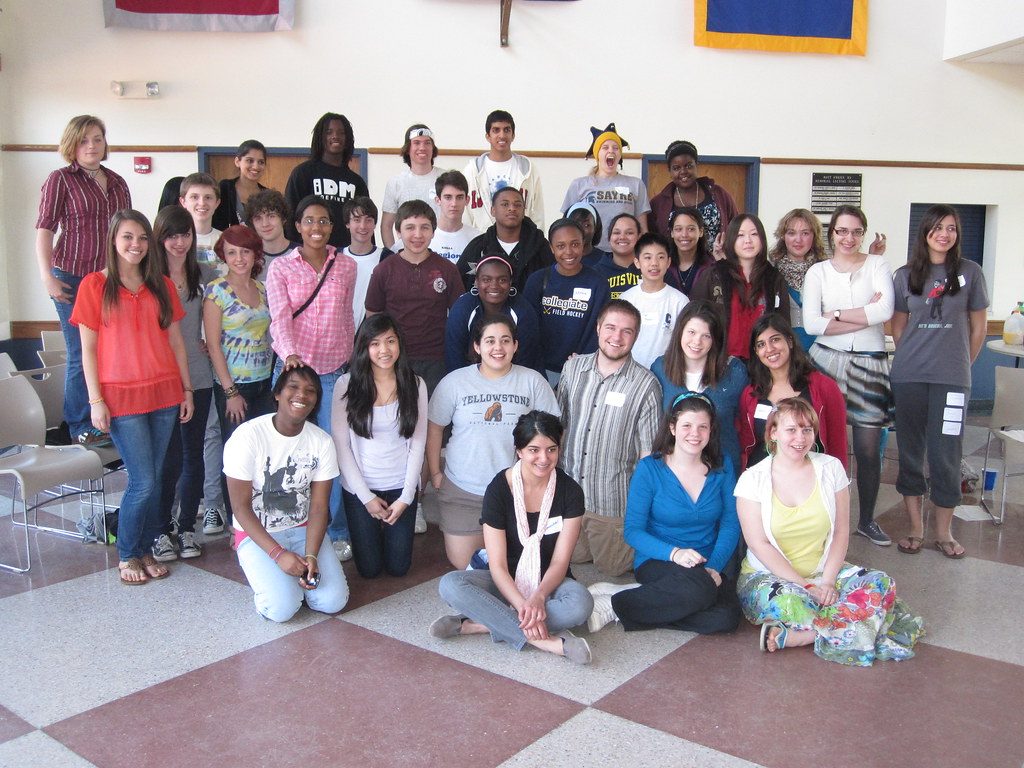
You are standing in a classroom where the seating chart has just been redesigned — not by accident, not by a well-meaning poster campaign, but by a deliberate protocol that forces students of different academic tracks, linguistic backgrounds, and social hierarchies to solve the same problem together, with no exit routes. Nobody is comfortable. That discomfort is not a failure of the intervention. It is the intervention.
Heterogeneous cooperative learning, when practiced with structural rigor rather than decorative intent, does something that no diversity assembly ever manages: it creates conditions of genuine interdependence. Elizabeth Cohen’s research at Stanford in the 1980s and 1990s, developed through her Complex Instruction program, demonstrated that status hierarchies inside classrooms — who speaks, who defers, who is treated as intellectually competent — do not dissolve through goodwill. They dissolve only when tasks are designed to require genuinely multiple competencies, so that no single student can dominate by default. The redistribution of academic status is not a moral outcome. It is an engineered one, and it requires that educators actively name and interrupt the status plays they observe in real time. Most schools are entirely unprepared to do this, because it demands that teachers become fluent in a kind of sociological diagnosis they were never trained to perform.
The curriculum itself carries a burden that few institutions are willing to acknowledge directly. When James Loewen published Lies My Teacher Told Me in 1995, he documented the systematic omission and distortion of American history across twelve commonly used high school textbooks — the sanitization of Reconstruction, the erasure of labor movements, the hagiographic treatment of figures whose complexity would complicate the national mythology. What he was describing was not a collection of errors. It was a structural preference for a particular kind of forgetting. Counter-narrative curriculum design does not simply add missing voices as supplementary material, the way a school might schedule a Black History Month assembly and then return to the standard textbook on the first of March. It reorganizes the epistemic center of what counts as knowledge worth transmitting, which means it inevitably produces conflict — with parents, with administrators, with students who experience the revision of familiar stories as a personal assault on their identity.
Restorative justice models, imported into school discipline from criminal justice reform movements in the 1990s, operate on a similarly uncomfortable premise: that harm is not primarily an offense against a rule but a rupture in a relationship, and that the institution itself is always implicated in the conditions that produced the rupture. A restorative circle does not ask whether the student broke the rule. It asks what needs were unmet, what community norms failed, and what the school owes the people involved. This is categorically incompatible with the zero-tolerance disciplinary architectures that have dominated American public education since the Gun-Free Schools Act of 1994, which triggered a nationwide expansion of punitive exclusion that fell, with grotesque statistical consistency, on Black and Latino students. Introducing restorative practices into a system still organized around exclusion does not resolve that contradiction. It makes the contradiction visible, which is precisely what institutions most resist.
What connects these three interventions is not their optimism but their capacity to generate productive institutional crisis. They do not ask the school to become more welcoming. They ask it to become less coherent — to hold open the fractures between what it claims to value and what its structures actually enforce. The school that runs a cooperative learning protocol honestly, that teaches history without the comfort of a triumphant arc, that sits in restorative circles with students it has chronically failed, is not a school at peace with itself. It is a school in the difficult and necessary process of discovering what it actually is, and that discovery, however painful for the institution, is the only ground on which something genuinely different can eventually be built.
🌍 Voices at the Margins: Identity, Inclusion, and Belonging
Diversity and inclusion in schools reflect broader social tensions that shape how individuals construct identity, navigate difference, and resist exclusion. These themes resonate across psychology, sociology, and cultural history, offering essential lenses for understanding the everyday dynamics of educational environments. The articles below trace the intellectual roots of inclusion, prejudice, and resilience across multiple disciplines.
The roots of social prejudice and the mechanisms of exclusion
Understanding how prejudice takes root is essential to dismantling the invisible hierarchies that persist inside classrooms and institutions. This article examines the psychological and sociological mechanisms that transform difference into stigma, offering a rigorous framework for educators and students alike. It reveals how exclusion is rarely spontaneous but instead the product of deeply structured social learning.
GO TO THE SELECTION: The roots of social prejudice and the mechanisms of exclusion
The impact of racial discrimination on contemporary social dynamics
Racial discrimination continues to shape access to education, peer recognition, and institutional belonging in ways that are often invisible to those who do not experience them directly. This article maps the contemporary landscape of racial bias, connecting historical structures to the everyday microaggressions that students from minority backgrounds encounter. It provides an indispensable perspective for schools committed to creating genuinely equitable learning environments.
GO TO THE SELECTION: The impact of racial discrimination on contemporary social dynamics
Tribalism and group identity: social psychology
The psychology of group identity explains much of what happens when students cluster, exclude, and define themselves against others within the school environment. This article draws on social psychology to illuminate how in-group loyalty and out-group hostility emerge naturally from human cognition, yet can be consciously redirected toward solidarity and inclusion. Understanding tribalism is the first step toward designing educational spaces where belonging is universal rather than earned through conformity.
GO TO THE SELECTION: Tribalism and group identity: social psychology
Discover the Human Stories Behind the Screen
If these themes resonate with you, Indiecinema offers a curated streaming selection of independent films that explore identity, belonging, and social justice with rare honesty and cinematic depth. Step beyond the mainstream and discover the voices that independent cinema refuses to silence.
👉 EXPLORE THE CATALOG: Watch Indie Films in Streaming
A vision curated by a filmmaker, not an algorithm
In this video I explain our vision

