
The Sociology of the Threshold
You walk into a room where everyone already knows each other, and something shifts before you open your mouth. Not a word is exchanged, not a gesture made. Yet the air rearranges itself around your presence in a way that tells you, with surgical precision, that you do not belong here. The conversations do not stop — they simply bend away from you, like water redirecting around a stone. You stand at the edge of an invisible perimeter, and the cruelest part is that no one has drawn it consciously. They are not even aware they have drawn it at all.

This is what Erving Goffman mapped with devastating clarity in his 1963 work Stigma: Notes on the Management of Spoiled Identity. What he described was not the spectacular violence of open discrimination — the slur, the door slammed, the legal exclusion. He was after something quieter and far more durable: the moment in which a human being is reduced, in the perception of others, from a whole person to a contaminated one. A “spoiled identity,” in Goffman’s framework, is not an insult. It is a structural condition. It precedes interaction. It is already operating before the stigmatized person has performed a single act, uttered a single sentence, demonstrated a single quality. The stigma attaches to the carrier the way a shadow attaches to a body — not because of anything the body does, but simply because of how light falls.
What makes this mechanism so difficult to name and therefore so difficult to resist is that it functions through the most ordinary social materials. A surname that signals a particular ethnicity. An accent that places you three social rungs below the person listening. A visible physical difference that the observer’s eye cannot stop cataloguing. These are not exotic triggers. They are the daily vocabulary of exclusion, spoken fluently by people who would never describe themselves as prejudiced — people who genuinely believe they are responding to something real rather than to a cultural script they have been rehearsing since childhood. The body, Goffman noted, becomes a text before it becomes a person, and social perception is the act of reading that text through a lens already smeared with inherited assumptions.
The threshold, then, is not a metaphor. It is a neurological and sociological event. Research in social cognition — particularly the work on implicit bias developed by Mahzarin Banaji and Anthony Greenwald through the Implicit Association Test in the late 1990s — demonstrated that categorical judgments about race, gender, and class operate in the brain at a latency of under 150 milliseconds, far beneath the level of conscious deliberation. You have already been sorted before the person across from you has decided to sort you. The decision has been made in a layer of cognition that precedes language, which means it also precedes accountability.
What this produces is a peculiar social amnesia. The person who excludes you has no memory of excluding you, because no conscious act of exclusion took place. The person who was excluded carries the full weight of an event that, from the other side of the threshold, simply did not happen. This asymmetry is not incidental to how prejudice functions — it is the engine of its persistence. Systems of exclusion survive not because they are defended by convinced ideologues but because they are maintained by ordinary people who experience themselves as neutral, as merely responding to what is in front of them, as making reasonable assessments based on available information. The available information was poisoned upstream, at a point so distant in time and culture that no one living can be assigned individual blame, which means no one living feels compelled to do the work of repair.
Ancestral
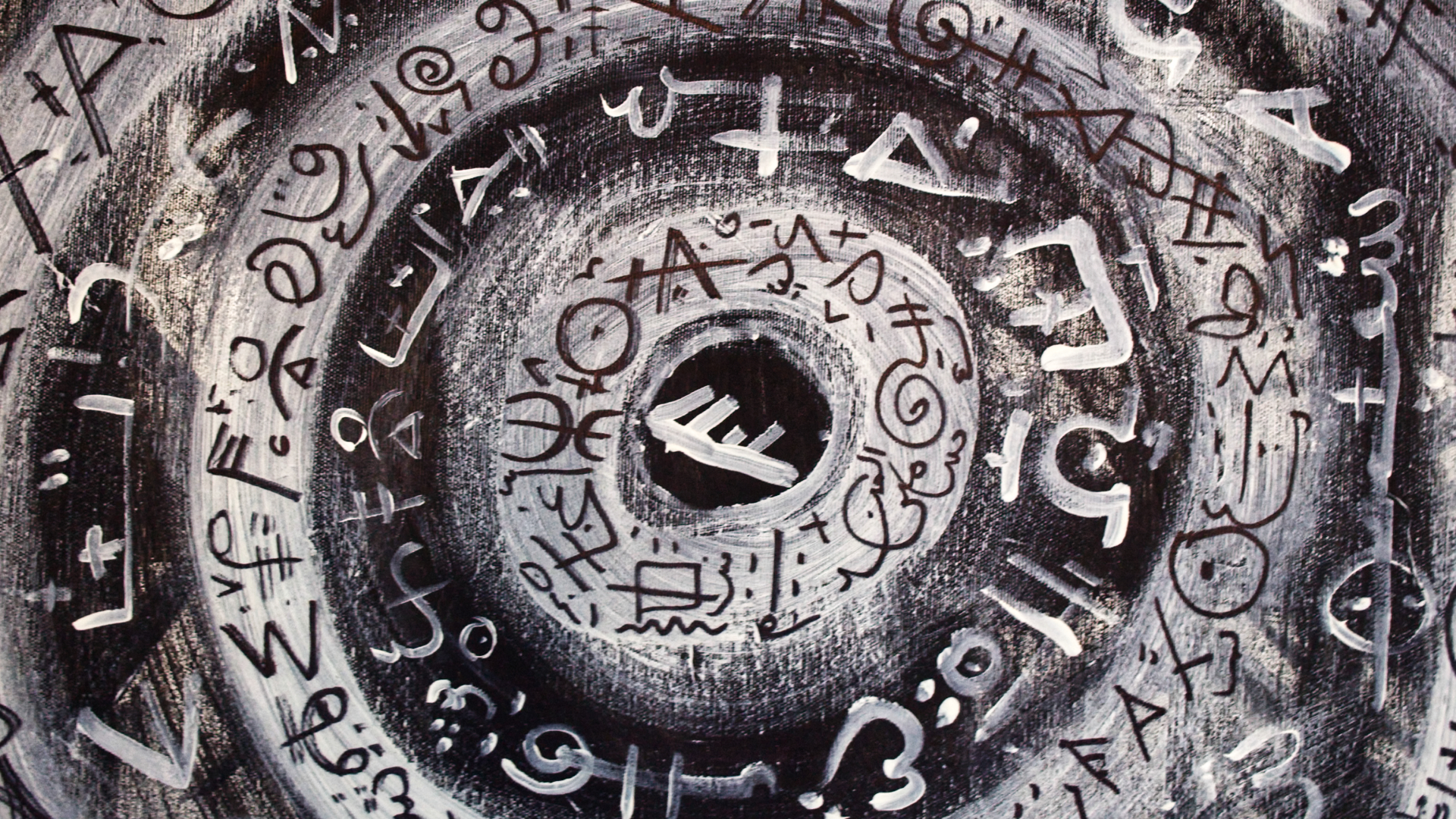
Documentary, by Lumar Brothers, Italy, 2023.
“Ancestral: Life and Art of Massinissa Askeur” is a documentary that explores the life and art of Algerian painter Massinissa Askeur. The film follows Askeur on his creative journey, showing his artistic process and his commitment to the preservation of Berber culture and tradition. Through interviews with Askeur, his family, friends and testimonies from people who knew him on a personal, professional and artistic level, the documentary tells the story of his past and his deep connection to his Berber roots. Askeur displays his art, from canvases to sculptures, which are inspired by the shapes and symbols of Berber culture, representing his search for a connection between the past and the present.
The documentary also explores the challenges Askeur faced throughout his life, including racial discrimination, poverty and the difficulty of making his art known outside of Algeria. However, despite these difficulties, Askeur continues to create and promote his art as a form of cultural resistance and celebration of his ancestral heritage. A vision far from art as a commercial product and very close, instead, to the exploration of the depths of one's own soul and the soul of the world. Massinissa's mission is to leave a testimony of his time to future generations.
LANGUAGE: Italian
SUBTITLES: English, Spanish, French, German, Portuguese
Prejudice as Cognitive Infrastructure
You already know the person you decided not to hire before they finished their first sentence. You felt it as recognition — something clicked, or failed to click, the way a key either fits a lock or doesn’t. What you almost certainly did not feel was the operation running underneath that sensation: the systematic compression of a human being into a retrievable file, tagged, sorted, and cross-referenced against a library you built without ever choosing to build it.
Gordon Allport, writing in 1954 in The Nature of Prejudice, identified something that the moral frameworks of his era were structurally unable to accommodate: that prejudice is not primarily a failure of ethics but a feature of cognition. The mind, confronted with approximately eleven million bits of sensory data per second while consciously processing perhaps forty, must simplify or collapse entirely. Categorization is not laziness. It is survival architecture. When Allport traced the psychology of ethnic and racial hostility through hundreds of empirical studies, what he found beneath the ideological scaffolding was something far more unsettling than hatred — he found efficiency. The brain groups, labels, and ranks because the alternative is paralysis.
The trap concealed inside this efficiency is that the categories themselves are never neutral. They arrive pre-loaded, inherited from the social environment with the same invisibility as grammar. A child does not choose to acquire the syntactic rules of their native language, and they do not choose to acquire the cognitive hierarchies embedded in the culture that surrounds them. By the age of three, research in developmental psychology consistently shows, children have already internalized racial distinctions; by five, those distinctions carry valence — better, worse, cleaner, more dangerous. This is not ignorance. It is learning operating exactly as designed.
What Allport called the “least effort principle” in cognitive economy produces an irony that his successors in social psychology spent decades unpacking: the more cognitively burdened a person is — under time pressure, stress, or information overload — the more heavily they rely on categorical shortcuts, which means discrimination intensifies precisely in the moments when people believe they are being most purely rational. The executive making rapid decisions. The emergency room physician triaging patients. The judge sentencing defendants at the end of a long afternoon, a pattern documented in a 2011 study published in the Proceedings of the National Academy of Sciences showing that judicial parole decisions dropped from roughly sixty-five percent favorable early in the session to nearly zero before breaks, then reset. The fatigue does not produce conscious malice. It produces the substitution of the category for the individual, which is functionally identical in its effects.
Henri Tajfel‘s work in the 1970s, building on and quietly destabilizing Allport’s framework, demonstrated in a series of experiments that the mere act of being assigned to a group — even a meaningless one, divided by coin flip or arbitrary aesthetic preference — was sufficient to generate in-group favoritism and out-group derogation within minutes. The groups had no history, no shared culture, no competing interests. They had only a label. Tajfel called this the minimal group paradigm, and what it revealed was that the content of prejudice is almost incidental to its structure — the container precedes and shapes whatever gets poured into it. This means that dismantling specific prejudices without addressing the categorical architecture itself is roughly equivalent to emptying a mold while leaving the mold intact.
The architecture does not announce itself as architecture. It announces itself as perception, as common sense, as the simple recognition of what is obvious to anyone paying attention. This is its most durable feature — not that it distorts reality, but that it presents distortion as clarity, making the person who questions it feel not more accurate but somehow less perceptive than those around them who see what everyone already knows.

The Historical Engineering of Otherness
You are handed a form. It asks for your race. The year is 1924, and the state of Virginia has just passed the Racial Integrity Act, which requires every citizen to be classified at birth as either white or colored — no gradations, no ambiguity, no mercy for the in-between. The law does not reflect an existing social reality so much as it manufactures one, drawing a clean bureaucratic line through the messy biological and social fabric of human mixing that had been accumulating for three centuries. The prejudice does not precede the paperwork. The paperwork produces the prejudice, and then convinces everyone that it was always already there.
This is the mechanism that historians of race and law have most consistently underestimated: the degree to which hatred requires administration. The Nuremberg Laws of September 1935 did not emerge from a spontaneous eruption of popular antisemitism — they emerged from committees, legal drafting sessions, and classificatory debates among jurists who spent weeks arguing over how many Jewish grandparents constituted Jewishness. Hannah Arendt, in The Origins of Totalitarianism published in 1951, identified the bureaucratization of persecution as one of its defining and most terrifying features: the transformation of moral violence into procedural normalcy, where every individual clerk, registrar, and census-taker becomes an instrument of exclusion without ever feeling like a perpetrator. The desk is the weapon, and it is never charged with anything.
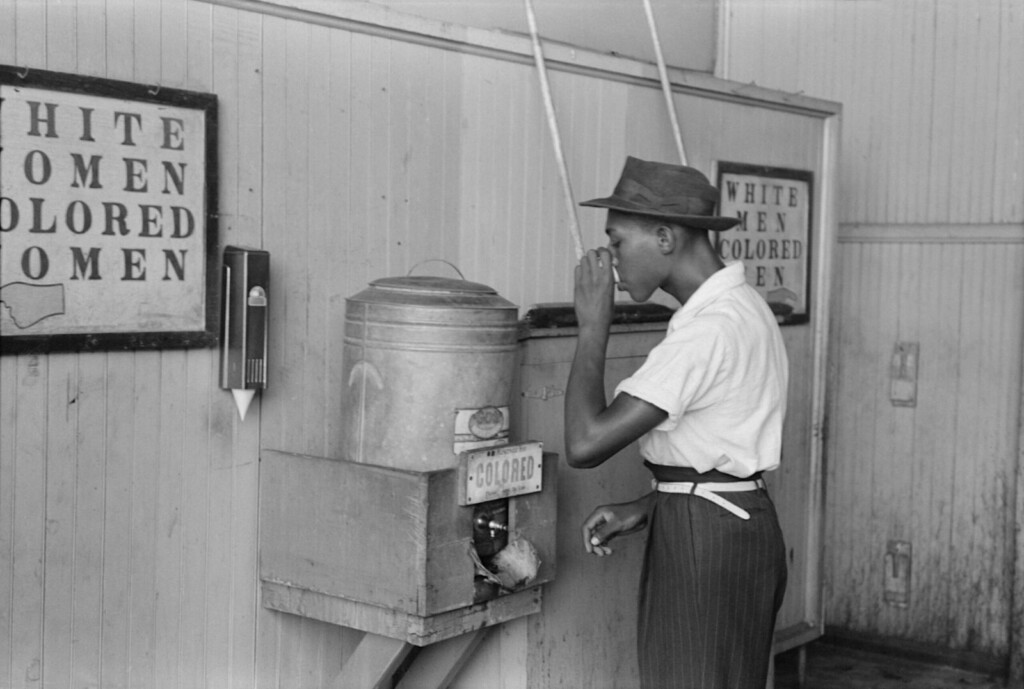
What made the Jim Crow system in the American South so durable between the 1870s and the 1960s was not primarily the violence of the Klan — spectacular and real as that was — but the quiet, grinding totality of its legal architecture. Separate railroad cars were mandated by Louisiana’s Separate Car Act of 1890. Separate schools, separate water fountains, separate Bibles in courtrooms for oath-taking: each of these was a statute, a municipal ordinance, an administrative regulation. W.E.B. Du Bois wrote in Black Reconstruction in America in 1935 that the psychological wage of whiteness — the social premium paid to poor white workers in the form of racial superiority — was itself a deliberate economic engineering project, designed to prevent class solidarity across racial lines. The law did not merely reflect white supremacy; it paid it out like a dividend.
Colonial India offers a structurally parallel case, though its mechanisms carry a different texture. The British administration, through the Criminal Tribes Act of 1871 and subsequent census operations, codified caste in ways that transformed what had been a fluid and regionally varied social hierarchy into a rigid, enumerable, legally enforced system. Nicholas Dirks, in Castes of Mind published in 2001, demonstrates that the British did not simply describe Indian society — they crystallized it, fixing identities that had previously been subject to negotiation and mobility into permanent administrative categories. An entire population’s social fate was encoded into a column on a colonial form, and then that encoding was presented back to them as ancient tradition, as something they had always been.
The deepest trick in the engineering of otherness is this retroactive naturalization — the way institutions, once they have manufactured a division, immediately begin generating the cultural memory that makes the division feel prehistoric. Within a generation, the invented boundary acquires the gravity of the inevitable. People defend their cage because they have been told it is their home, and the telling has been going on long enough that no living person remembers the construction. The form you were handed at birth already existed before you did, and it named you before you could speak, and by the time you learned to speak you used its vocabulary without knowing it was ever invented.
Belonging as a Scarcity Economy

You are handed a name tag at the door and told to find your table. The room is full of strangers, but within four minutes you have already decided which ones are your people and which ones are not, and you have made that decision based on almost nothing — a shared color, a number assigned at random, a preference between two painters you barely know. You are not being tribal. You are being human, which turns out to be the same thing.
Henri Tajfel understood this with a precision that made it uncomfortable to dismiss. In 1971, working with schoolboys in Bristol, he designed what became known as the minimal group paradigm — experiments in which participants were sorted into groups based on criteria so arbitrary they bordered on absurd: whether they preferred Klee or Kandinsky, whether they overestimated or underestimated the number of dots on a screen. No interaction was permitted between group members. No history existed. No shared interest was at stake. And yet, with a consistency that bordered on the mechanical, participants allocated more resources to their own group and less to the other — even when doing so meant their own group received a smaller absolute reward, as long as the gap favored them over the outgroup. The finding was not that people are selfish. It was far more disquieting: people are comparative. The point was never to win. The point was to win more than them.
What Tajfel had identified in a laboratory, René Girard had been mapping through literature, anthropology, and theology for decades. His theory of mimetic desire, developed across works including Deceit, Desire, and the Novel in 1961 and Violence and the Sacred in 1972, begins from a deceptively simple observation: human desire is not spontaneous but imitative. We do not want things because we need them. We want things because someone else wants them, and that convergence of desire on the same object generates rivalry, tension, and the constant threat of collective violence. Societies, Girard argued, have historically resolved this threat not by eliminating the rivalry but by redirecting it — by selecting a victim, a scapegoat, whose expulsion or destruction temporarily unifies the community in shared condemnation. The scapegoat is never chosen for actual guilt. The scapegoat is chosen for difference, for marginality, for being close enough to the group to be legible but different enough to be expendable.
The mechanism does not require malice. It does not require ideology, at least not initially. It requires only a community under pressure and a body available for blame. Medieval Jews during plague outbreaks, women labeled witches during periods of social rupture, immigrants during economic contractions — the historical pattern is consistent enough to constitute something closer to a law than a coincidence. The sociologist Émile Durkheim had glimpsed something similar in his 1897 study of suicide, where he found that social cohesion operated not through warmth but through boundary enforcement, through the collective recognition of what the group was not. But Girard went further: he suggested that the boundaries themselves are produced by the crisis, not prior to it. The outsider is not discovered. The outsider is manufactured at the moment the group needs one.
This is the architecture beneath the social surface that most political language refuses to name. Belonging has never been distributed as abundance. It has been rationed, and its scarcity is not accidental — scarcity is what gives it value. To include requires an outside against which the inside can be measured, and that outside must be kept populated, kept threatening, kept just legible enough to function as a mirror in which the group sees its own coherence reflected.
The Invisible Consensus That Sustains Exclusion
You watch it happen in the middle of an ordinary Tuesday. A colleague presents an idea in a meeting, speaks clearly, uses the right vocabulary, and is met with a polite silence that lasts just a beat too long before someone else in the room restates the same idea in slightly different words and the room suddenly nods, suddenly engages, suddenly writes things down. No one raises their voice. No one is cruel. The original speaker smiles faintly and looks at their hands, having learned once again something they already knew but cannot prove.
Pierre Bourdieu spent decades trying to name what that smile costs. In his 1979 work La Distinction and later in the lectures collected as Sur l’État, he developed the concept of doxa to describe the set of assumptions so thoroughly absorbed by a social field that they no longer appear as assumptions at all. Doxa is not ideology in the sense of a conscious program. It is the sediment of power that has become invisible precisely because it succeeded. The room did not decide to dismiss that speaker. The room enacted a consensus so old it felt like instinct, like taste, like simply knowing whose voice carries weight and whose does not.
Symbolic violence, as Bourdieu formulated it, is the particular cruelty of this arrangement: the dominated frequently participate in their own domination because the categories through which they interpret reality are the very categories that were shaped to exclude them. The person who smiled and looked at their hands was not weak. They were rational. They had accurately read the room, absorbed the lesson, and stored it somewhere below language. This is not false consciousness in the Marxist sense, which still imagines a true consciousness waiting to be recovered. It is something more total — a calibration of self against a standard one never agreed to but cannot refuse to internalize.
The sociologist Charles Tilly, writing in Durable Inequality in 1998, showed that the most persistent forms of exclusion are not maintained by continuous acts of aggression but by categorical pairs — insider/outsider, credentialed/uncredentialed, native speaker/foreign accent — that get attached to organizational routines and then simply run on their own momentum. A hiring committee does not need to harbor conscious prejudice to systematically reproduce the same demographic profile year after year. The form does the work. The checklist does the work. The notion of “cultural fit,” which appears nowhere in law and everywhere in practice, does the work with extraordinary efficiency and no fingerprints.
What makes this machinery so resistant is that it operates through the consent of those who benefit from not examining it. Silence in that meeting was not neutral. Every person who heard the idea dismissed and said nothing, who moved on to the next agenda item, who privately agreed with the original speaker but calculated that the moment had already passed — each of them cast a vote. Not for cruelty. For continuity. The philosopher Iris Marion Young argued in Justice and the Politics of Difference in 1990 that oppression in contemporary societies is largely structural, carried not by individual villains but by ordinary people following institutional rules, pursuing reasonable goals, and acting from assumptions they have never been asked to examine. The system does not need bad actors. It only needs enough people who find it marginally more comfortable to look away.
And comfort, it turns out, is one of the most durable political forces in human history — not the comfort of the excluded, who are never consulted, but the comfort of those whose position depends on the world remaining exactly as legible, exactly as navigable, exactly as quietly sorted as it has always been.
A vision curated by a filmmaker, not an algorithm
In this video I explain our vision
🧱 Walls Invisible: Power, Exclusion, and Belonging
Social prejudice does not emerge in a vacuum — it is built, maintained, and reproduced through mechanisms that often remain invisible to those who enforce them. From class hierarchies to stigmatized identities, exclusion operates as a structural force shaping who belongs and who is cast out. These articles trace the roots of that force across sociology, literature, and lived experience.
Eribon’s Returning to Reims: Analysis
Didier Eribon‘s memoir-essay ‘Returning to Reims’ is a landmark work on how class shame and social stigma are internalized from childhood, shaping identity in ways that take decades to unravel. Eribon traces the mechanisms by which working-class bodies are marked, disciplined, and excluded from cultural and intellectual life. His analysis reveals how prejudice is not merely attitudinal but deeply structural, embedded in the very institutions that claim to offer liberation.
GO TO THE SELECTION: Eribon’s Returning to Reims: Analysis
Social Hypocrisy: The Double Face of Respectability
Social hypocrisy operates as a double standard that protects the powerful while punishing the vulnerable, presenting a respectable façade over systems of deep injustice. This article examines how respectability politics have historically been wielded to exclude those who deviate from dominant norms of class, gender, caste, or sexuality. Understanding this double face is essential to dismantling the subtle architecture of social prejudice.
GO TO THE SELECTION: Social Hypocrisy: The Double Face of Respectability
Bourdieu’s Distinction: Taste and Social Class
Pierre Bourdieu‘s ‘Distinction’ is one of the most rigorous sociological analyses ever written of how taste functions as a weapon of exclusion, sorting individuals into hierarchies that masquerade as natural or meritocratic. Bourdieu demonstrates that cultural preferences are not innocent — they are shaped by class position and then used to justify and reproduce that very position. His work exposes the invisible violence at the heart of aesthetic judgment and social belonging.
GO TO THE SELECTION: Bourdieu’s Distinction: Taste and Social Class
The American Freak Show: History and Culture of the Marginalized
The American Freak Show represents one of the most explicit historical instances of exclusion institutionalized as spectacle, turning bodily difference into a site of shame, curiosity, and profit. This article explores how marginalized bodies were displayed and classified, naturalizing hierarchies of normalcy that reflected broader social anxieties about race, gender, and disability. The Freak Show is not merely a historical curiosity — it is a mirror of the mechanisms by which societies define who belongs inside the circle of humanity.
GO TO THE SELECTION: The American Freak Show: History and Culture of the Marginalized
Discover Films That Challenge Every Border
If these themes stir something in you, independent cinema offers some of the most courageous explorations of prejudice, identity, and exclusion ever put on screen. On Indiecinema, you’ll find films that dare to look where mainstream culture looks away — stories of those pushed to the margins, told with honesty and artistic depth. Join us and discover a cinema that believes in the transformative power of seeing the world differently.
👉 EXPLORE THE CATALOG: Watch Indie Films in Streaming
A vision curated by a filmmaker, not an algorithm
In this video I explain our vision

