
The Weight of the Unheard Score
You are sitting in the dark and something is happening to your chest. Not the images — the images you can describe later, you can recount the plot, you can name the actors. But there is a current running beneath all of it, a pressure that builds before the scene gives you any reason to feel pressure, a warmth that arrives three seconds before the character you have been watching for ninety minutes finally breaks. You did not notice when it began. You will not remember it tomorrow. And yet it did more work on you tonight than any line of dialogue, any close-up, any cut.

Film music is one of the most effective psychological instruments ever deployed at scale against a willing population, and almost no one has ever consciously listened to it. This is not an accident. It is a design principle rooted in something the composer Max Steiner understood when he scored King Kong in 1933 — the first feature film to receive a fully synchronized orchestral score written specifically for it — and what he understood was that music heard without being listened to bypasses the critical faculties entirely. The ear processes it. The brain assigns it emotional weight. The body responds. None of this requires consent or even awareness. By the time you have noticed the strings swelling, they have already done their work.
The philosopher Theodor Adorno, writing with Hanns Eisler in their 1947 study Composing for the Films, identified this as a form of structural deception: the viewer is made to feel that their emotional response originates from within, as a spontaneous reaction to the drama, when in fact it has been engineered note by note from outside. Adorno, who despised the Hollywood apparatus with a ferocity bordering on the pathological, was not wrong about the mechanism even when he was wrong about its consequences. What he could not account for — and what a composer like Elmer Bernstein would spend decades demonstrating — is that the instrument can be turned toward something other than manipulation. That the same bypass can carry genuine feeling. That manufactured emotion is not, by definition, false emotion.
Bernstein arrived in Hollywood in the early 1950s, a trained classical musician and jazz enthusiast who had studied with Stefan Wolpe and Roger Sessions, two of the most rigorous musical minds in mid-century America. He was not supposed to write cowboy music. He was not supposed to be the man who made the American West sound like a place where consequence was real. But in 1960, when he sat down to score The Magnificent Seven, he composed a main theme that entered the cultural bloodstream so completely that it was later used to sell trucks, which is either a tragedy or a testament to its primal effectiveness, depending on your tolerance for irony. The theme is structurally simple: an ascending brass figure, syncopated, driving, with a rhythmic energy that borrows from Aaron Copland‘s open-prairie voicings while pushing them somewhere more urgent, more mortal. You know it. You knew it before you knew his name. That gap — between the ubiquity of the work and the invisibility of the worker — is where the entire problem of film music lives.
There is a peculiar social contract embedded in the cinematic experience, one that asks the audience to surrender their emotional autonomy to a darkness in which they cannot see the hands moving. The lighting designer, the editor, the sound mixer — all invisible, all shaping perception — but the composer operates at a depth the others cannot reach, because music does not represent feeling the way an image does. It does not show you a face and invite you to interpret it. It produces the feeling directly, in the body, before interpretation is possible. The score arrives before the thought.
Hollywood’s Industrial Apprenticeship and the Blacklist Shadow
You arrive in New York in 1950 with a concert pianist’s hands and a composer’s ambitions that have nothing to do with Hollywood. You have studied with Stefan Wolpe and Roger Sessions, men who believed music was a serious argument with the universe, not a service industry. The film world is, at best, a curiosity from a distance, something that happens to other people who need the money more urgently than you do.
The money becomes urgent. Bernstein arrived in Los Angeles in the early 1950s and entered the studio system at exactly the moment it was consuming itself from within. The major studios still operated on the principles Max Steiner had codified in the 1930s: wall-to-wall orchestration, leitmotifs telegraphing every emotional beat, music that functioned less as composition than as emotional subtitling for audiences presumed incapable of feeling without instruction. Contract composers worked under music directors who reported to producers who reported to executives, and the chain of command existed specifically to prevent anything genuinely surprising from reaching the screen. Bernstein understood this architecture before he had fully entered it, and what happened next is one of the stranger ironies in the history of American art.
His name appeared on a Red Channels publication in 1950, that notorious pamphlet that listed 151 entertainment industry figures suspected of Communist sympathies. The accusation was essentially baseless in Bernstein’s case, rooted in a single radio broadcast he had conducted for a progressive organization, but baselessness was never the point of McCarthyism. The point was atmospheric contamination. Once named, you became professionally radioactive to the major studios and their advertisers, which meant that the very institutional machinery that would have absorbed him, shaped him, and gradually smoothed away his stranger instincts was suddenly unavailable. He could not get the respectable assignments. He got the others.
This is the mechanism that Elia Kazan‘s biographers and the broader scholarship of the period consistently underestimate: persecution does not only destroy, it redirects. The sociologist Howard Becker, in his 1982 study of how art worlds function, argues that the rules of any creative field are maintained not through explicit censorship but through the distributed judgments of gatekeepers who collectively define what counts as acceptable work. Blacklisting removed Bernstein from the jurisdiction of those gatekeepers entirely, which meant the aesthetic rules they enforced no longer applied to him. The low-budget productions, the B-pictures, the science fiction cheapies that no serious Hollywood composer wanted — these became his laboratory precisely because no one important was watching.
The scores he produced in this period between 1951 and 1954 show a composer testing limits that his contemporaries at the major studios were never permitted to approach. Jazz harmonies appeared in contexts where they had no business appearing. Rhythmic structures borrowed from the concert music of Bartók and Stravinsky surfaced in genre films that would otherwise have received the most formulaic accompaniment available. The critics who have written about this period, including Royal S. Brown in his essential 1994 study Overtones and Undertones, tend to treat this as a sign of Bernstein’s exceptional talent. The talent was real, but the structural condition enabling its expression was the blacklist itself. Adversity here was not metaphorical fuel; it was a literal reorganization of his professional constraints.
What political persecution does to artistic identity is not simply toughen it or deepen it through suffering, which is the romantic narrative, and the false one. It amputates the available identities, the sanctioned versions of the self that institutions keep on offer for those willing to be absorbed. Bernstein could not become the next Alfred Newman or Dimitri Tiomkin, those cathedral-builders of the studio sound, because those positions required institutional trust he could no longer access. He was forced to become something for which there was no existing template, and that vacancy became the only space in which genuinely original work could begin to take shape.

The Brass Revolution Against Lush Strings
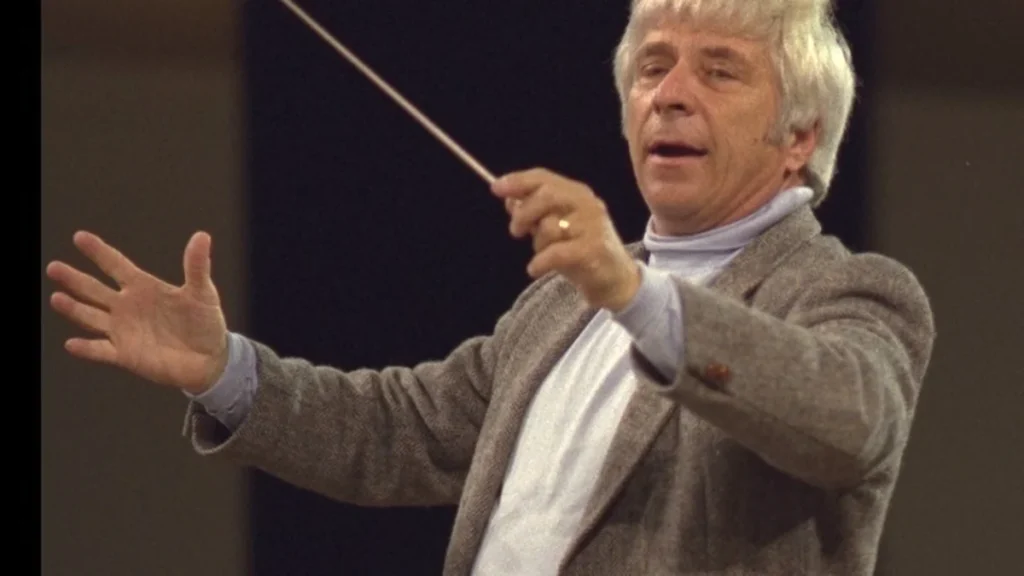
You are sitting in a darkened theater in 1955, and something is hitting you in the chest before you can name what it is. It is not the melody exactly, and it is not the rhythm, though both are doing something unfamiliar. It is the brass — insistent, low, urban, slightly dangerous — and the fact that nobody told the orchestra to behave.
What Elmer Bernstein did with The Man with the Golden Arm was not simply write a score. He committed an act of cultural surgery, cutting away the dominant tissue of Hollywood orchestration that had governed film music since the mid-1930s. That tissue was European, specifically the late-Romantic inheritance of composers like Erich Wolfgang Korngold and Max Steiner, whose lush string writing carried within it an entire ideology: the belief that emotional grandeur was a European birthright, that sweeping violins were the natural language of cinematic feeling, and that American vernacular sound — jazz, blues, the grunt of a trumpet in a Chicago back room — was local color at best, noise at worst. Korngold’s score for Kings Row in 1942 could have been composed in Vienna without a single detail changed. That was not incidental. It was the point.
The postwar years had cracked the foundation of that assumption without yet demolishing it. Between 1945 and 1955, something had shifted in the larger cultural atmosphere that film music had not yet registered: the authority of European high culture was no longer self-evident. The devastation of the war had done something to the credibility of the civilizations that produced it, and American intellectuals, artists, and audiences were beginning — haltingly, with tremendous resistance — to trust their own inherited forms. The sociologist C. Wright Mills, writing The Power Elite in 1956, was mapping a new American self-consciousness that had no interest in deferring to transatlantic legitimacy. The abstract expressionists had already made the argument in paint: that raw, physical, ungoverned energy was not a failure of refinement but a different and valid answer to the same questions.
Bernstein heard all of this and wrote it in brass. The jazz inflections in his 1955 score were not decoration applied to a conventional orchestral base — they were structural. The rhythmic language came from Count Basie‘s band and from the specific physicality of Chicago jazz, where the beat was never ornamental but always load-bearing. What this meant harmonically was that tension no longer required the Wagnerian slow accumulation of string dissonance. It could arrive instantly, percussively, in the attack of a single note. Adorno had argued in Philosophy of New Music, published in 1949, that popular music and serious music had split into irreconcilable territories, that jazz represented the commodification of spontaneity. Bernstein’s score was, among other things, a practical refusal of that argument, embedding jazz syntax inside a fully orchestrated compositional architecture without either domesticating the jazz or academicizing it into irrelevance.
The industry resistance was real and documented. Studio executives and established composers read the score as a provocation, which it was. The assumption underlying their discomfort was not merely aesthetic but economic and social: European-style orchestration had been used to confer prestige on the entire enterprise of Hollywood filmmaking, to signal that this industrial art form was continuous with legitimate culture. Abandoning the strings meant abandoning a claim to cultural seriousness that the industry had worked for two decades to construct. What Bernstein was proposing, whether consciously or not, was that seriousness could be made from different materials entirely — that an alto saxophone could carry as much moral weight as a cello section, that American urban sound was not an imitation of something more real happening elsewhere.
The question this opened, and that the industry would spend the next decade half-answering, was whether the audience had ever actually needed the European frame to feel what the music was supposed to make them feel, or whether they had simply been told they did.
Masculinity, Violence, and the Myth of the Frontier
You are sitting in the dark, and before a single word of dialogue has been spoken, before a face has appeared on screen, you already know what kind of man this story is about. The brass has told you. Not described him — constructed him, installed him somewhere between your sternum and your spine, a physical conviction that this particular combination of open space and mortal consequence is not just acceptable but noble.
Richard Slotkin spent three volumes and the better part of his scholarly life documenting what he called regenerative violence — the distinctly American idea, traceable from the first Puritan captivity narratives through the dime novel and into the twentieth century, that a man becomes himself through killing, that the frontier is not a place but a moral permission structure. His 1992 “Gunfighter Nation” arrived at the conclusion that postwar popular culture had industrialized this mythology, mass-producing the psychic infrastructure of manifest destiny through every available medium. What Slotkin could map in narrative terms, Bernstein was doing in frequency and tempo — and the body receives frequency before the intellect receives argument.
The score for “The Magnificent Seven” in 1960 is the clearest case, not because it is subtle but because it is not. That main theme, constructed around an ascending brass figure with a rhythmic drive that suggests both inevitability and appetite, entered the American nervous system so completely that it was still being used to sell trucks in television commercials forty years later. This is not a metaphor. The Marlboro Man campaign adopted it, which means the sonic grammar of frontier masculinity was literally sold alongside cigarettes to a generation that understood the association as natural. No ideology announces itself as ideology; it arrives as feeling, as the sense that something is simply right.
Bernstein understood orchestration as argument. The choice to foreground brass over strings, to let percussion function as landscape rather than merely rhythm, to allow silence to accumulate tension rather than release it — these are compositional decisions with philosophical weight. The musicologist Royal S. Brown, in his 1994 “Overtones and Undertones: Reading Film Music,” observed that the relationship between a score and its image is never merely illustrative but always interpretive, and that interpretation shapes what the viewer believes they are seeing. Violence underscored by soaring melody is not violence witnessed but violence sanctified. The body feels triumph where the mind, unscored, might register horror.
By the time Bernstein returned to westerns across the 1960s, the grammar had calcified into convention, which is precisely when convention becomes most dangerous — when it stops being recognizable as construction and begins to feel like truth. The wide interval leaps in his western themes mimic physical expansiveness, the sensation of space without boundary, which translates psychically into freedom without limit, which translates politically into action without accountability. This is the sonic architecture of American exceptionalism: the feeling, produced in the listening body, that certain men in certain landscapes operate outside the ordinary moral mathematics of cause and consequence.
There is something worth pausing on in the gendering of this entire apparatus. The orchestral western is almost constitutively masculine in its instrumentation — brass dominates, strings soften or disappear, the piano when present functions percussively rather than melodically. Susan McClary, in her 1991 “Feminine Endings: Music, Gender, and Sexuality,” argued that musical discourse has historically encoded gender through formal convention, that the harmonic and structural choices available to composers carry social meanings that precede any individual composer’s intention. Bernstein did not invent the association between brass and masculine authority, but he deployed it at a cultural moment when American masculinity was under genuine pressure — the late 1950s and early 1960s saw the first serious academic literature on conformity and domestication as threats to male identity — and the music answered that anxiety not with analysis but with sensation.
The frontier, in other words, was never simply a place on a map. It was a psychic territory that needed constant musical maintenance to remain inhabitable.
Comedy, Irony, and the Sabotage of Easy Emotion
You are watching a man in a three-piece suit walk with absolute dignity into a glass door, and the orchestra beneath him refuses to laugh. Not a single pizzicato sting, no tuba belch, no descending glissando to confirm the humiliation — just a score that keeps moving with the same measured gravity it would lend a statesman entering a negotiation room. The joke, stripped of its musical permission slip, lands differently. You laugh, then feel briefly ashamed of laughing, and in that gap of half a second Elmer Bernstein has shown you something the image alone could never have managed.
His work in comedic and satirical cinema during the 1960s and 1970s represents a discipline almost entirely invisible in accounts of his career, overshadowed by the grandeur of his dramatic scores, yet it operates by a logic more sophisticated than anything the dramatic work requires. When Bernstein wrote for comedy, he did not write comic music. This is not a trivial distinction. The conventional grammar of film comedy depends on the score functioning as a laugh track encoded in orchestral form — each gag anticipated, underscored, and affirmed by instrumental punctuation that tells the audience how to feel before they have decided for themselves. Bernstein refused this almost entirely. His score for The Great Escape in 1963 had already demonstrated his understanding of rhythm as a form of emotional argument, but it was in work like his collaboration with John Landis and his celebrated score for Airplane! in 1980 that the logic reached its most exposed form.
Airplane! is a useful case because the film itself is built from borrowed wreckage — a near shot-for-shot parody of disaster films whose humor depends on the audience’s memory of the original genre’s emotional conventions. Bernstein scored it straight. Not satirically straight, not knowingly straight, but with the full sincerity of a composer who had written genuine dramatic scores for genuine dramatic situations. The result is a permanent instability in the viewer’s relationship to both the joke and the feeling the joke is parodying. You cannot quite release the emotion the music is constructing because the music will not acknowledge that it has been placed in an absurd context. The laughter and the swelling orchestral line coexist without resolving, which is precisely the condition the film needs but which almost no composer would have the restraint to provide.
What Bernstein was doing, whether consciously or through the accumulation of craft, corresponds to something Mikhail Bakhtin described in 1965 in his analysis of the carnivalesque — the condition in which two registers occupy the same space simultaneously without either canceling the other, producing not confusion but a sharpened awareness that both registers are constructions in the first place. The dramatic score beneath the absurd image does not undermine the music; it reveals that the music was always an argument, always a form of instruction. The manipulation was never hidden in the dramatic films. It was simply accepted, as one accepts a social contract by not examining its terms.
There is a specific kind of courage required to write music that withholds its cue, that refuses to tell the audience when the transaction is complete. Bernard Herrmann was capable of a similar refusal in his own idiom, but his method was to escalate tension into regions where no resolution was possible. Bernstein’s method in comedy was stranger and less acknowledged — to provide resolution so earnest, so architecturally complete, that it became legible as a kind of irony only by contrast with what surrounded it. The score was never winking. The score was simply doing its job with full professional integrity in a room where everyone else had agreed to pretend the building wasn’t on fire, and Bernstein kept playing as though the building were entirely real, which is the most unsettling thing a musician can do inside a joke.
A vision curated by a filmmaker, not an algorithm
In this video I explain our vision
The Sacred and the Secular in Bernstein’s Late Orchestration

You are sitting in a darkened theater sometime in the early 1960s, and something is happening to you that the ticket stub did not prepare you for. The music rising from beneath the screen carries the weight of something older than the film itself, older than Hollywood, older than the republic whose myths the film is busy celebrating. It does not sound like accompaniment. It sounds like accusation.
Elmer Bernstein spent years inside a tension that most listeners never consciously registered: the tension between a sacred musical inheritance and the profane commercial machinery that paid him to deploy it. His formal education had been unusually rigorous for someone who ended up scoring westerns and comedies. Stefan Wolpe, the Berlin-born composer who fled Nazi Germany in 1933 and eventually settled in New York, taught Bernstein counterpoint with a ferocity rooted in the belief that musical structure was a form of moral resistance. Nadia Boulanger, with whom Bernstein also studied, had by the mid-twentieth century shaped more American composers than any other single pedagogue, insisting that harmonic logic was not ornamental but constitutional, that what a piece of music did structurally was inseparable from what it meant. These were not lessons that prepared a young man for the economics of the studio system. They were lessons that left permanent marks on how he heard human experience.
What emerged from that formation was a compositional habit that critics sometimes praised as grandeur and sometimes dismissed as excess, without recognizing what was actually producing it. Bernstein’s mature orchestrations frequently embedded what can only be described as liturgical architecture inside ostensibly secular dramatic frameworks. The wide intervallic leaps in his brass writing, the antiphonal call-and-response patterns distributed across orchestral sections, the way his choral textures in larger works moved not toward resolution but toward a kind of suspended reckoning — these were not decorative choices. They were structural inheritances from a tradition in which music was never merely aesthetic but always also covenantal, always also addressed to something beyond the room.
Jewish liturgical music operates on a principle that Western European tonal harmony tends to resist: the idea that dissonance is not a problem to be solved but a condition to be inhabited. The augmented second that appears so persistently in modes like Ahavah Rabbah does not resolve in the conventional tonal sense; it holds its position like a question the universe has not yet answered. When Bernstein reached for harmonic tension in his dramatic scores, he was drawing on a melodic vocabulary whose emotional logic had been shaped over centuries of communal worship in which suffering was not a narrative complication but a theological given. His audience felt the weight without knowing its source.
By the time Bernstein was scoring major productions in the late 1960s and through the 1970s, the American entertainment industry had begun its long renegotiation with irony, and orchestral film music found itself increasingly out of cultural step. What had been heard as epic began to be heard as naive. Yet Bernstein refused the smaller emotional register that the moment seemed to demand. This stubbornness was not nostalgia and it was not commercial miscalculation. It was a coherent position: that the function of music in the presence of human drama was not to reflect the audience’s existing emotional temperature but to raise it toward something the audience had not yet consented to feel. Boulanger had said, with characteristic compression, that music’s job was to make time audible. Bernstein appears to have understood this as a near-religious obligation rather than a pedagogical metaphor.
The secular entertainment framework he ostensibly served was, in this light, a kind of cover story. The films gave him permission to stand in front of large orchestras and do something that concert halls in the postmodern moment were growing increasingly suspicious of: address the listener as though the listener’s inner life were a serious and non-ironic matter requiring the full weight of Western and non-Western harmonic inheritance to meet it honestly.
The Score as Historical Document, Not Ornament
You hear the brass enter before you understand why your chest tightens, and for a moment the question of whether the film is good becomes irrelevant, because something older and less negotiable has already answered on your behalf.
Theodor Adorno and Hanns Eisler argued in their 1947 study that film music was not decoration appended to image but a structural technology for managing psychological anxiety — specifically, the anxiety that silent moving images provoked in audiences still neurologically calibrated to interpret motion without sound as a sign of death or hallucination. What they exposed was the degree to which the scoring of a film is less an artistic choice than a social contract: the composer agrees to tell the audience how to feel so that the audience does not have to negotiate that territory alone. The implication, which neither Adorno nor Eisler fully pursued but which their framework makes inevitable, is that every score becomes an unintentional confession — a document of what a given culture needed to be told at a particular moment in order to keep functioning.
Elmer Bernstein’s catalog from roughly 1955 through the late 1960s constitutes one of the densest such confessions in American cultural history. The brass-driven masculine assertion of his 1960 western score was not simply a composer finding an appropriate register for landscape and gunfighters. It was an entire civilization encoding its preferred myth of autonomous male agency at precisely the historical moment when that agency was becoming statistically and economically fictitious for most American men — unionized, suburbanized, mortgaged, middle-managed. The music was not reflecting reality; it was compensating for its absence, and the compensation was so effective that millions of people experienced the compensation as reality.
This is what distinguishes a score functioning as historical evidence from one functioning as craft. The neurologist Antonio Damasio demonstrated in his 1994 research on patients with damage to the ventromedial prefrontal cortex that emotional response precedes and shapes rational assessment rather than following from it — which means that a film’s music reaches its audience’s interpretive faculty before the narrative does, preloading the categories through which plot and character will subsequently be understood. Bernstein understood this intuitively and applied it with a consistency that no purely aesthetic reading of his work can account for. His orchestral choices were arguments about what kind of emotions were available, which ones were legitimate, which ones required suppression.
The 1962 score he composed for a film about a Confederate soldier navigating the aftermath of a battle exists almost entirely in the register of dignified melancholy — a sound world that forecloses grief, forecloses rage, and forecloses political complexity in a single sustained tonal decision. Mid-century American culture could not afford to score the Civil War as tragedy without implicating structures still very much in operation, so it scored it as elegy, which is tragedy with the politics removed. The music did not do this because Bernstein was complicit in a calculated ideological project. It did it because the emotional vocabulary available to a Hollywood composer in 1962 was itself a political artifact, and using it unreflectively reproduced its assumptions with the full persuasive force of orchestral sound.
What makes this historically significant rather than merely interesting is the timeline. Between 1955 and 1968, American cinema produced an archive of scored emotions that a culture was simultaneously living inside, and that archive now functions as a kind of emotional stratigraphy — layers of assumption, repression, and compensatory fantasy that can be read the way a geologist reads sediment. The particular frequencies Bernstein favored, the specific moments at which his scores chose resolution over dissonance, the systematic underscoring of female interiority relative to male action — these are not aesthetic preferences. They are data about what mid-century American psychological culture could bear to hear about itself, and more revealingly, what it required music to drown out.
What the Audience Was Never Supposed to Notice
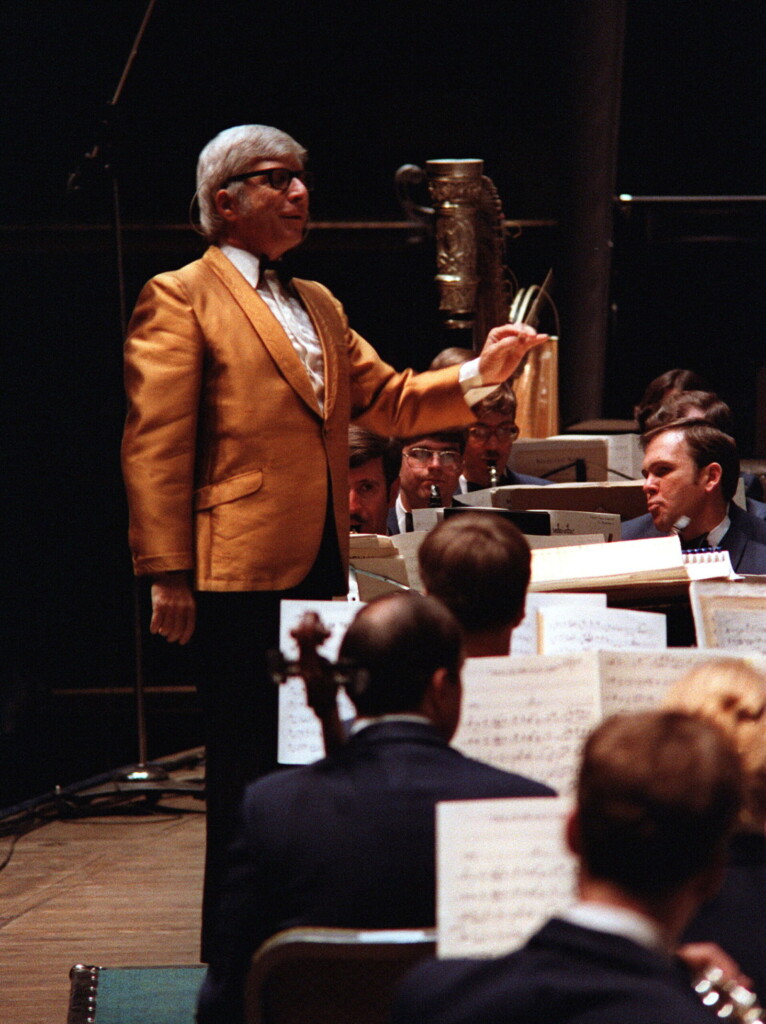
You are sitting in the dark, and something is happening to you that you did not agree to.
The strings have begun their slow ascent before the scene has given you any reason to feel anything. The character on screen has not yet spoken, has not yet turned, and yet your chest has already made its decision. You will call this, later, a powerful moment in the film. You will mean it. You will be wrong about what caused it.
Elmer Bernstein spent decades working inside this gap between perception and attribution, and he understood it with the precision of a craftsman who has no interest in being thanked. The technique most invisible in his work is what theorists of film music would eventually describe as harmonic anticipation — the practice of resolving a chord progression a half-beat before the emotional content of the image justifies the resolution. The ear receives the emotional signal marginally ahead of the eye, and the brain, always hungry to impose causality, assigns the feeling to the story. The music has already done its work by the time the drama claims credit for it.
His leitmotif writing rarely operated the way Wagner intended leitmotifs to operate — as recognizable signatures that accrued meaning through repetition. Bernstein compressed that process. In a score like the one he built for a film about a group of condemned men riding toward a violent and uncertain freedom in 1960, he introduced motivic fragments so briefly in the first act that conscious listeners could not have named them. But the nervous system is not a conscious listener. By the time those fragments returned, transformed and fully orchestrated, the audience experienced not recognition but confirmation — a feeling of inevitability that seemed to belong to the narrative when it had been planted neurologically, weeks of cinema history before the payoff arrived on screen.
This is not manipulation in the pejorative sense, or rather, it is exactly manipulation in the pejorative sense, and the distinction stops mattering the moment you realize that every emotional architecture you inhabit — the apartment you grew up in, the school that shaped your values, the language you think in — was also constructed without your consent. Bernstein was simply more honest about the mechanism by working entirely within it. The musicologist Royal S. Brown, writing in Overtones and Undertones in 1994, argued that film music operates in a register that bypasses the critical faculties precisely because it arrives through the ear while attention is directed through the eye. The listener is, by design, looking the wrong way.
Rhythmic entrainment is the most physiological of these techniques, and Bernstein deployed it with a bluntness that his more chamber-minded contemporaries avoided. The body synchronizes its internal rhythms to external rhythmic stimuli — this is not metaphor, it is documented biology, studied under the name neural entrainment and measurable in brainwave activity. A galloping ostinato in the brass does not remind you of excitement. It produces it, chemically, in the blood. When Bernstein wrote percussion-forward action sequences with asymmetric rhythmic cells that prevented the body from settling into passive reception, he was not scoring what the audience saw. He was overriding the audience’s ability to watch passively at all.
The unsettling consequence of all this is not that great film scores are manipulative. The unsettling consequence is that what you remember as the emotional truth of certain films — the moment that stayed with you, the scene that confirmed something you believed about loyalty or loss or courage — may have been manufactured sixty feet away from the screen, in the hands of players following notation on stands they would fold up and carry home before the film ever opened. The story you have been carrying inside you all these years was scored.
🎼 When Music Shapes the Soul of Cinema
Elmer Bernstein’s genius was inseparable from the grand traditions of Hollywood storytelling, where music, image, and narrative fused into something timeless. To truly understand his legacy, one must explore the broader landscapes of film history, cinematic language, and the composers and directors who defined an era. These articles open doors into the worlds that shaped and surrounded Bernstein’s extraordinary career.
Cinematography as a narrative language
Cinematography is not merely a technical craft but a full narrative language capable of expressing emotion, theme, and character without a single word of dialogue. Just as Bernstein’s scores underlined and elevated what appeared on screen, the visual grammar of cinema evolved in parallel dialogue with its musical counterpart. Understanding how light, framing, and movement communicate meaning illuminates why composers like Bernstein were so essential to the filmmaking process.
GO TO THE SELECTION: Cinematography as a narrative language
Edward G. Robinson and classic American cinema
Edward G. Robinson was one of the defining faces of classic Hollywood, an actor whose presence demanded equally powerful cinematic accompaniment. His career intersected with the era in which film music was becoming a fully realized art form, with composers like Bernstein crafting scores that matched the moral complexity of American genre cinema. Exploring Robinson’s work offers a vivid portrait of the studio system that nurtured and challenged the composers who worked within it.
GO TO THE SELECTION: Edward G. Robinson and classic American cinema
Delmer Daves and the cinema of American guilt
Delmer Daves was a filmmaker deeply concerned with the psychological and moral dimensions of American identity, creating films that required music of genuine emotional intelligence. His collaborations with Hollywood composers of the postwar era placed him squarely in the tradition Bernstein also inhabited, where the score was not mere decoration but a moral voice. Examining Daves’s cinema reveals the creative demands placed on composers who worked in genres straddling action, romance, and ethical inquiry.
GO TO THE SELECTION: Delmer Daves and the cinema of American guilt
John Huston and the art of irregular cinema
John Huston was one of Hollywood’s most unpredictable and artistically ambitious directors, a filmmaker who consistently attracted composers capable of matching his unconventional sensibility. His films ranged across genres and tones, requiring scores that could shift between irony, tragedy, and grandeur with equal conviction. Studying Huston’s body of work provides essential context for understanding the collaborative relationship between director and composer that defined the golden age of Hollywood film music.
GO TO THE SELECTION: John Huston and the art of irregular cinema
Discover the Art of Cinema on Indiecinema
If these explorations into film music and cinematic history have sparked your curiosity, Indiecinema streaming is where that passion finds its true home. Discover independent and auteur films that push the boundaries of storytelling, where music, image, and vision combine in ways that mainstream cinema rarely dares. Join us and let independent cinema surprise you.
👉 EXPLORE THE CATALOG: Watch Indie Films in Streaming
A vision curated by a filmmaker, not an algorithm
In this video I explain our vision

