
The Closing of the Country and the Architecture of Control
You are standing on the deck of a Portuguese carrack anchored at Nagasaki in the summer of 1639, watching Japanese officials read a proclamation that will never be rescinded in your lifetime, and the strange thing is how bureaucratic the whole scene feels, how devoid of the fury you expected. No mobs, no burning effigies, just clerks with ledgers confirming manifests one final time before the harbor closes to you and everyone who looks like you, forever, or so it seems from where you stand. This is not a scene of hatred. It is a scene of paperwork finishing an argument that had already been settled elsewhere, in castles and council chambers, decades before your ship ever caught the wind toward Kyushu.

The edict of 1639 gets remembered, when it gets remembered at all, as an act of fear, a civilization flinching from the outside world and slamming a door that would not creak open again until Commodore Perry’s black ships forced the issue in 1853. But this reading flatters modern anxieties more than it explains seventeenth century Japan. The Tokugawa shogunate, established by Ieyasu in 1603 after his decisive victory at Sekigahara three years earlier, was not a government trembling before foreign sailors. It was a government that had just finished a century and a half of civil war, the Sengoku period, in which regional lords called daimyo had fought each other with a ferocity that left the archipelago fractured into dozens of competing military fiefdoms. Ieyasu and his successors, Hidetada and Iemitsu, were not primarily worried about Portuguese merchants. They were worried about their own vassals.
Christianity mattered here, but not as theology. It mattered as a network. By the 1630s an estimated three hundred thousand Japanese had converted, many of them in Kyushu under daimyo like the Arima and Konishi families, and conversion came bundled with trade relationships, weapons access, and loyalties that ran through Manila and Macau rather than through Edo. Iemitsu’s government, watching the Shimabara Rebellion erupt in 1637 and 1638, an uprising of tens of thousands of peasants and ronin under the banner of a teenage Christian leader named Amakusa Shiro, saw something more dangerous than heresy. They saw an alternative axis of allegiance, a channel through which a rebellious domain could arm itself and answer to something other than the shogunate. The rebellion was crushed at Hara Castle with a death toll estimated near thirty-seven thousand, and within a year the Portuguese were expelled entirely, their decades-old trading post at Dejima repurposed for the Dutch, who had proven usefully indifferent to proselytizing.
What replaced open contact was not silence but a filtration system, precise and deliberately narrow. The Dutch East India Company retained a single trading post on the artificial island of Dejima in Nagasaki harbor, a few hundred square meters of reclaimed land connected to the mainland by one guarded bridge. Chinese merchants operated under similarly restricted terms. Korea maintained relations through the Tsushima domain, the Ryukyu Kingdom through Satsuma. This was sakoku, the chained country, though the term itself was coined later, by the scholar Shizuki Tadao in 1801, translating a phrase from Engelbert Kaempfer’s writings. The policy was never total isolation. It was total control over who touched Japanese soil and under what terms, which is a different and more calculating ambition.
Consider what this architecture actually protected. Not purity, not some imagined cultural essence uncontaminated by foreignness, but the fragile settlement among daimyo who had spent generations killing each other’s fathers and now owed alternating residence in Edo under the sankin-kōtai system, hostages in silk. Foreign trade routes, foreign weapons, foreign religious authority, all represented potential leverage a discontented lord might exploit against the center. Seal every external door except the ones the shogunate itself controlled, and you remove the last variables from an equation that had taken Ieyasu’s entire adult life to solve.
Tokugawa Ieyasu and the Engineering of Peace
On the morning of October 21, 1600, roughly one hundred and sixty thousand men faced each other across the fog-covered plain of Sekigahara, and by early afternoon Tokugawa Ieyasu had rearranged the entire political architecture of Japan through the simple, brutal arithmetic of who remained standing. The battle lasted only a few hours, decided in part by the defection of Kobayakawa Hideaki, whose troops switched sides mid-combat after Ieyasu, in a gesture that tells you everything about his temperament, ordered his own arquebusiers to fire on Kobayakawa’s hesitating ranks to force the decision. This was not a man interested in leaving outcomes to chance or to the loyalty of others. Three years later, in 1603, the emperor granted him the title of shogun, and he established his administrative seat at Edo, a fishing village he had been developing since 1590, transforming it within a century into what may have been the largest city on earth, exceeding a million inhabitants by the early 1700s while London still struggled past half that number.
What Ieyasu understood, and what his predecessors Oda Nobunaga and Toyotomi Hideyoshi had only partially grasped, was that military victory dissolves the moment armies disband, but administrative structures compound themselves year after year without requiring a single sword to be drawn. He had watched Hideyoshi attempt to control the daimyo through hostage-taking and shifting land grants, methods that worked until they didn’t, until death exposed the fragility of personal loyalty as a governing principle. Ieyasu wanted something that would outlive him, and what he built was not a system of walls or garrisons but a system of exhaustion.
The mechanism his successors formalized in 1635, under the third shogun Tokugawa Iemitsu, was called sankin-kotai, alternate attendance, and on its surface it looked like nothing more than a courtesy ritual: the roughly two hundred and seventy daimyo lords of Japan were required to spend alternating years in Edo, attending the shogun’s court, and then return to their home domains, leaving their wives and heirs permanently behind in the capital as residents in all but name. Framed this way it sounds almost hospitable, an invitation, a tradition of paying respects. But strip away the vocabulary of etiquette and what remains is a logistics operation designed to bankrupt the very class it flattered.
A daimyo traveling from a distant domain like Satsuma in the far south might march with a procession of several thousand retainers, porters, and armed escorts, a spectacle that could consume a significant fraction of his domain’s annual revenue in road expenses, lodging, and the sheer theater of visible status, because arriving with a modest retinue was itself a form of political humiliation no lord could afford. The Confucian scholar Ogyu Sorai, writing in the early eighteenth century, observed with some bitterness that the daimyo had become permanent travelers in their own country, uprooted from the agricultural base of their power and converted into consumers of Edo’s economy rather than producers within their own. Their wives and children, held in the capital year-round, functioned as collateral in a system nobody needed to describe as hostage-taking because the word attendance did all the necessary softening.
The genius of the arrangement was that it required no secret police, no explicit threat, no visible coercion of the kind that breeds martyrs and rebellions. A lord who wished to raise an army against Edo would first have to fund a war chest already depleted by biennial processions, then abandon his family in the shogun’s city as he did so. Surveillance here did not watch from towers; it moved through calendars, through the compulsory rhythm of departure and return, through the sheer arithmetic exhaustion of maintaining two households and two identities. Michel Foucault, writing centuries later and an ocean away, described power that operates through the organization of space and time rather than through direct violence, and the sankin-kotai system had already solved that problem in practice two hundred years before he gave it a vocabulary.

The Four-Tier Fiction of Social Order
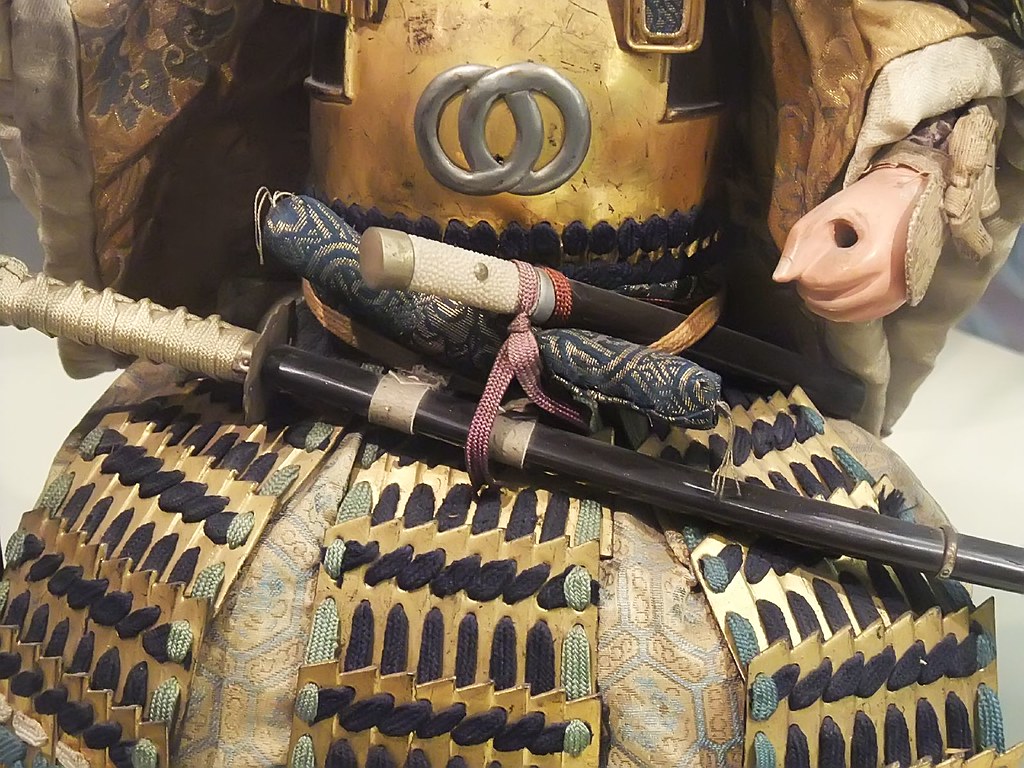
You are told, as a child in most Japanese schools even now, about a tidy pyramid: the samurai at the top, holding the sword and the moral authority to use it, then the farmers beneath them, sustaining the whole edifice with rice, then the artisans who shaped wood and metal into use, and at the very bottom, beneath even the humblest tenant farmer, the merchant, who made nothing and was therefore worth nothing. This is shi-no-ko-sho, the four-tier order the Tokugawa shogunate borrowed from Chinese Confucian statecraft and imposed on Japan after 1603, and it is one of the more successful pieces of political theater in early modern history, because it convinced later generations that it described reality rather than aspiration.
The logic behind the hierarchy was not arbitrary cruelty toward commerce. Confucian scholars like Zhu Xi, whose eleventh and twelfth-century writings the Tokugawa ideologues adapted wholesale, argued that value derived from productive contribution to the social body. A farmer grew the rice that fed the nation; an artisan built the tools and structures that let farming and warfare continue; a samurai, at least in theory, provided order and protection. A merchant simply moved goods from one hand to another, skimming value without creating it. Neo-Confucian scholar Hayashi Razan, who served as advisor to the first three Tokugawa shoguns, helped codify this reasoning into policy, giving Ieyasu’s regime a moral vocabulary for freezing the population into hereditary castes that determined dress, housing, marriage, even the width of the streets one was permitted to walk.
But rice, unlike silver or copper coin, cannot pay a standing army’s wages in a cash economy, and by the mid-seventeenth century Japan’s economy was unmistakably a cash economy. Daimyo lords, obligated by the sankin-kotai system to maintain lavish residences in Edo and travel there in alternating years with enormous retinues, found themselves perpetually short of liquid currency. Their solution was to sell surplus rice through merchant intermediaries in Osaka, and those intermediaries, over the span of a few generations, transformed from mere brokers into the actual bankers of the realm. The Osaka rice exchange at Dojima, formalized in 1730, functioned as one of the world’s first organized futures markets, decades before anything comparable existed in London or Amsterdam, and it was run entirely by the class the state had officially designated as parasitic.
By the eighteenth century, families like the Mitsui, who had begun as sake brewers and pawnbrokers before founding what became a draper’s shop in 1673 that eventually diversified into currency exchange, held debts owed to them by daimyo households that dwarfed the annual revenue of mid-sized domains. The samurai who legally outranked these merchants by an entire tier of the social order were, in a great many documented cases, financially dependent on them, borrowing against future rice harvests years in advance, pawning family armor, arranging marriages between impoverished samurai sons and merchant daughters purely to access dowry capital. Sumptuary laws multiplied in direct proportion to merchant wealth, restricting the fabrics they could wear, the size of their homes, the number of dolls their daughters could own for the Hinamatsuri festival, precisely because visible prosperity among the officially bottom tier had become impossible to ignore and dangerous to legitimize.
What the hierarchy actually accomplished was not economic suppression but a strange psychological arrangement in which everyone agreed to misdescribe reality in exchange for stability. The merchant received no legal status, no right to bear arms, no claim to honor in the samurai sense, but he received something the samurai increasingly lacked: liquidity, mobility of wealth, and a growing cultural sphere, the ukiyo of Kabuki theater and Yoshiwara pleasure quarters, where his money bought a kind of unofficial aristocracy of taste. The samurai kept the sword and the fiction of supremacy. The merchant kept the ledger and the substance underneath it. Neither side found it useful to say this plainly, and so the four tiers remained on paper until the entire structure, along with the shogunate itself, was swept away in 1868 by men who had spent a century watching the arithmetic fail to add up.
Edo as Metropolis and the Psychology of Density
You walk through Nihonbashi at dawn in 1720 and the smell reaches you before the noise does: fish oil, cedar smoke, night soil being carted toward the farms beyond the city limits, the sweetish rot of a canal that has not moved in days. A million people, perhaps more, are waking in a space that no European city of the era could match for sheer density of bodies per acre, and none of them are surprised by it. This is simply what Edo is. The crush is not a symptom of crisis. It is the ordinary texture of being alive here.
The historian William Coaldrake, writing on the architectural culture of the period, notes that Edo’s population had already surpassed that of London and Paris combined by some estimates before the eighteenth century was half finished, a fact that sits oddly against the popular image of Japan as a closed, sleepy archipelago. The shogunate’s own policy manufactured this density. The system of alternate attendance, sankin kotai, compelled some two hundred and sixty daimyo to maintain permanent residences in the city and to reside there in person every other year, dragging with them retinues that could number in the thousands. A single procession might involve two thousand retainers moving from a domain in Kyushu, an animal caravan of status displayed and consumed on the road, all of it converging on a city built originally around a fishing village and a fortress. The mathematics of this arrangement produced a permanent floating population layered atop a permanent resident one, and both had to be housed, fed, entertained, and, eventually, buried, in a geography that had not expanded to accommodate them.
The result was not a city of streets in the European sense but a city of blocks, chō, tightly bounded units of a few hundred residents governed by collective responsibility, where a single household’s failure to pay taxes or a single household’s crime could bring punishment down on neighbors who shared no blood tie but shared a wall. The sociologist and urban historian Gary Hausman, examining the machi bureaucratic registers, has argued that this structure produced a peculiarly intense form of surveillance disguised as neighborliness, where privacy as a modern reader would recognize it barely existed for the majority of the merchant and artisan classes crammed into these blocks. You knew your neighbor’s debts, his wife’s temper, the sound of his children coughing through the thin wooden partition, because the partition was thin by design and by necessity, wood and paper being cheaper and faster to raise than anything more solid.
And this is where the fires enter, not as accident but as structural inevitability. Edo burned constantly, and it burned because it was built to burn: densely packed wooden structures with paper screens, narrow lanes that fire could leap in seconds, a climate of dry winter winds funneling flame down corridors of housing built shoulder to shoulder. The Meireki fire of 1657 killed somewhere between one hundred thousand and one hundred and eight thousand people, by different tallies, and destroyed the greater part of the city including the castle’s main keep, which was never rebuilt to its original height, a decision the shogunate made deliberately, as if acknowledging that some forms of permanence were no longer worth pursuing. Smaller fires, the kind residents called the flowers of Edo with a black humor that only makes sense once you understand how routine they were, occurred with a regularity that firefighting brigades, the machi hikeshi, organized not around prevention but around demolition, tearing down buildings ahead of the flame path to starve it, since there was no realistic hope of extinguishing a blaze once it had momentum in that fuel.
This produced something the anthropologist and Japan scholar H.D. Harootunian has gestured toward without quite naming it outright: a population conditioned to build without attachment to permanence, to furnish a home knowing it might be ash within the decade, to develop an aesthetic sensibility around transience not as abstract Buddhist doctrine imported from temple teaching but as lived, repeated, bodily fact. The word for this, mujo, impermanence, existed in scripture long before Edo existed at all, but the city gave it a pulse, a civic rhythm, turning a philosophical concept into something closer to a weather pattern everyone had personally survived at least once.
The Floating World and the Economy of Pleasure
You pay the toll at the single bridge that crosses the moat, and already the shogunate has your name. Yoshiwara sits behind water on purpose, an island of licensed appetite ringed by a black-toothed canal, and to enter you surrender your sword at the gate the way other men surrender their names at a monastery. Inside, the streets are named like a garden catalog, and the women who sit behind latticed windows on display, ranked and priced with the exactness of a rice exchange, are performing a hierarchy that mirrors, mockingly, the one outside. This is not an accident of urban planning. This is policy dressed as vice.
The Tokugawa authorities did not tolerate Yoshiwara despite themselves; they built it, relocated it after the fires of 1657 to a more distant and more manageable location, and licensed it the way a modern state licenses a casino, understanding that desire denied an outlet becomes desire that overturns outlets of a different kind. Containment was the entire genius of the arrangement. A samurai class stripped of war after Sekigahara in 1600 needed somewhere to spend its restlessness that was not a battlefield and was not a conspiracy, and the merchant class flush with a currency the samurai despised needed somewhere to spend money that could not buy them the rank they actually wanted. Yoshiwara solved both problems by selling the illusion of rank to the moneyed and the illusion of romance to both. Nobody left with status. Everybody left poorer, which was, from the perspective of the men who ran the country, precisely the point.
Kabuki grew up in the same soil, and it too began as something closer to disorder before it became something closer to spectacle. The earliest performances, credited to a shrine dancer named Izumo no Okuni around 1603, were erotic enough and socially mixed enough that the authorities banned women from the stage in 1629, then banned young men in 1652 after the audiences proved just as unruly over boys as they had been over women. What remained was an all-male theater of onnagata, actors who spent their entire lives learning to perform femininity so convincingly that treatises were written on how an onnagata should behave off stage in order not to break the spell, should eat behind a screen, should speak in falsetto even to a servant. The theater did not simply depict the floating world. It trained the body to become an artifact of it, a living demonstration that identity in Edo Japan was already understood as something performed rather than something owned.
The word ukiyo itself carries the trick inside its own etymology. It once meant the sorrowful world, a Buddhist term for the realm of suffering and impermanence that a serious person was supposed to transcend. Writers of the seventeenth century, Asai Ryoi among them in his 1661 Ukiyo Monogatari, flipped the homophone so that the same sound now meant the floating world, a place to be enjoyed precisely because it does not last, a philosophy of pleasure built out of the wreckage of a philosophy of renunciation. This was not blasphemy so much as repurposing, and the state let the repurposing stand because a population absorbed in the beauty of transience is a population not especially inclined to plot revolution.
The woodblock prints that came out of this world, ukiyo-e, made permanent what was supposed to be fleeting, which is its own irony worth sitting inside. Artists like Kitagawa Utamaro built entire careers portraying Yoshiwara courtesans with the same reverence other cultures reserved for saints, and these prints circulated as advertisements, as pin-ups, as gossip columns with a brush. A courtesan named Takao or a print by Utamaro could make a woman famous across the whole archipelago while she remained, contractually, a possession bought and sold inside a walled district she was rarely permitted to leave. Fame without freedom, beauty without exit, an entire aesthetic built on the tension between the two, and nobody in power seemed troubled by the contradiction, because the contradiction was doing exactly what contradictions are sometimes built to do, which is hold a society together by giving its pressure somewhere sanctioned to go.
A vision curated by a filmmaker, not an algorithm
In this video I explain our vision
Woodblock Prints and the Manufacture of Desire

You hand over a few coins, no more than the price of a bowl of noodles, and receive in return an image of a courtesan whose sidelong glance has been calibrated by an artist you will never meet to make you feel that you alone have been noticed. This is not a museum object at the moment of its making. It is a commodity, cut from a cherry block, inked, pressed, and produced in editions of hundreds or thousands, cheap enough that a shop clerk in Edo could pin one to the wall of a rented room and dream on a budget. The mechanism deserves more attention than the reverence usually paid to Hokusai’s wave or Utamaro’s necks, because what these prints actually did, at scale, was manufacture longing for people that most of their buyers would never touch and places most of them would never go.
Utamaro built a career, through the 1790s especially, on the close-up female face, a format almost nobody had exploited so relentlessly before him, isolating the head and upper torso of a beauty against a blank or mica-dusted ground so that she seemed to exist for the viewer alone, unbothered by context, class, or consequence. This was portraiture as pure address. The women were often named, sometimes real geisha or courtesans from the Yoshiwara pleasure quarter whose reputations the prints themselves helped inflate, creating a feedback loop in which fame generated image and image generated more fame, not unlike the way a face becomes a face precisely by being reproduced past the point of scarcity. A courtesan’s beauty was, in this sense, already a media construction before any camera existed to do the job more efficiently.
The pleasure quarters themselves, walled districts like the Yoshiwara in Edo, operated on an economy of stratified fantasy, where courtesans were ranked, costumed, and displayed behind lattices for the browsing gaze of men who mostly could not afford the top tier and instead bought the image of it. Ukiyo-e, translated loosely as pictures of the floating world, did not merely depict this economy, it extended it outward into households that had no access to the quarter at all, letting the fantasy circulate beyond the gate. A print cost less than an evening with any actual woman inside that district, and this price gap is the entire business model of desire as mass media: sell the echo cheaply once the original has been made unaffordable or unreachable.
Hokusai worked a different vein of the same appetite. His Thirty-Six Views of Mount Fuji, produced in the 1830s when he was already past seventy, sold escape rather than eroticism, offering an urban population, increasingly confined by the shogunate’s restrictions on travel, a mountain most of them would only ever see printed. The Great Wave off Kanagawa is technically a labor image, fishermen dwarfed by water, Fuji small and calm in the distance, but its real commodity was the sensation of vastness delivered to someone who lived in a wooden row house on an unpaved lane. Sakoku, the closed-country policy that restricted foreign travel and tightly regulated domestic movement, did not just control bodies, it created a hunger for elsewhere that print culture was perfectly positioned to feed, cheaply, repeatedly, without anyone needing to leave the city.
None of this happened by accident of technique. The woodblock method itself, refined through the collaboration of publisher, designer, carver, and printer, was an industrial process disguised as an artisanal one, closer in structure to a modern publishing house than to a lone painter’s studio. A single design by an artist like Utamaro might require a separate carved block for each color, registered with obsessive precision, then run off in batches calibrated to demand the way any print run is calibrated. The publisher, not the artist, usually held commercial control, deciding which faces, which actors, which mountains would flood the market next, which means that the fantasies circulating through Edo’s streets were curated by men thinking about margins as much as by men thinking about beauty.
The Merchant Class and the Ethics of Accumulation
You hand over a paper note in Osaka in 1730 and receive, in exchange, a claim on rice that does not yet exist, harvested from fields that have not yet been cut, sold at a price fixed months before anyone knows what the weather will do. Nobody in the transaction finds this strange. The clerk stamps the ledger, the note changes hands again before nightfall, and somewhere a farmer who has never seen Osaka is already committed to a yield he hopes his soil will honor. This is the Dōjima Rice Exchange, and it is, by most serious accounts, the first organized futures market in recorded history, predating the Chicago Board of Trade by more than a hundred years. Japan’s merchants built it not out of theoretical elegance but out of necessity, because rice was currency, tax, and gamble all at once, and someone had to absorb the uncertainty that samurai stipends and shogunal reserves could not.
The official ideology of the period had no room for this kind of ingenuity. Neo-Confucian orthodoxy, imported and adapted from Chinese models by scholars like Hayashi Razan, ranked society into four classes with unambiguous moral weight: the samurai at the top for their discipline and service, then farmers for producing the nation’s sustenance, then artisans for their honest craft, and at the very bottom, merchants, condemned for creating nothing and merely shuffling the wealth others had made. Commerce was tolerated the way a hangover is tolerated, as an unfortunate consequence of appetite rather than a virtue in itself. And yet by the eighteenth century, the merchants occupying the lowest rung were, in practical terms, running the machinery that kept the entire hierarchy solvent.
Consider the House of Mitsui, founded in the 1670s by Mitsui Takatoshi, who opened a dry goods store in Edo with a business model that seems unremarkable now precisely because it became the template for retail everywhere: fixed prices instead of haggling, cash payment instead of the seasonal credit that had bankrupted so many samurai households, and small margins compensated by volume. The shop was called Echigoya, and it grew into a financial empire that extended loans to the shogunate itself, meaning that the government which legally despised merchants was, in practice, borrowing from them to stay afloat. Mitsui’s descendants would later become one of the foundation stones of the zaibatsu conglomerates that shaped Japan’s twentieth-century economy, but the seed of that empire was planted in a business philosophy that had nothing to do with samurai virtue and everything to do with liquidity, reputation, and the compounding patience of ledger books kept meticulously across generations.
The tension this created was not merely economic but psychological, a fracture running through the identity of anyone born into a merchant house. Ihara Saikaku, writing in the 1680s in works like The Japanese Family Storehouse, captured this double consciousness with a clarity that no official chronicle could match: his merchant characters chase profit with an almost erotic intensity, calculating interest and hoarding gold, while simultaneously performing the ritual humility their social rank demanded, bowing lower than their actual power warranted, dressing plainly to avoid the sumptuary laws that literally dictated what fabrics a merchant could wear. The law could forbid a merchant from wearing silk, but it could not forbid him from owning the debts of the very samurai who wore it.
What emerges from this contradiction is a strange inversion of the stated hierarchy, one that never appeared in any official edict but was understood by everyone living inside it: prestige flowed one direction while capital flowed the other. A domain lord might refuse to acknowledge a merchant socially while depending entirely on that same merchant’s credit network to move his rice to market, pay his retainers, and survive a bad harvest. The moral architecture insisted that trade was parasitic, yet the state’s own fiscal survival depended on instruments merchants had invented to manage risks the state itself had created by paying its retainers in a commodity subject to weather, blight, and the arithmetic of compound interest running quietly beneath every transaction.
The Silent Pressure of the Meiji Rupture
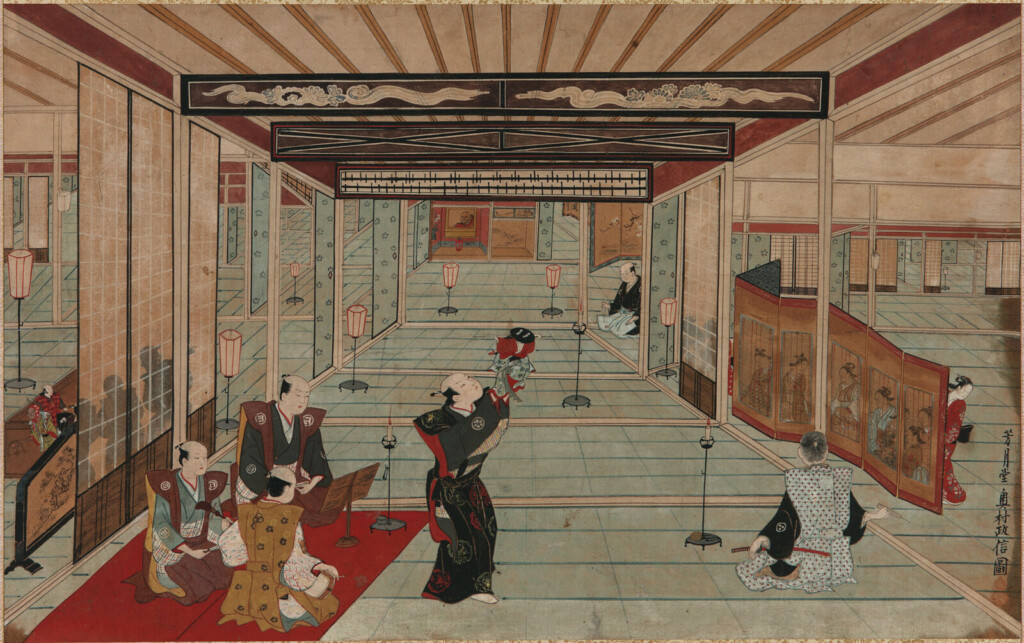
You are a rice broker’s clerk in Osaka in 1841, and you have just been told that the price you may charge, the quantity you may store, and the manner in which you may transport your goods have all been fixed by decree, again, for the third time in your working life, because the shogunate has decided that merchant wealth itself is a kind of insult to the order of things. You do not protest. You adjust your ledgers, you smile at the inspector, you find the gap in the wall through which money still moves, because this is what two centuries of a closed and graded world have taught every clerk, every farmer, every low-ranking samurai to do: absorb the shock, bend without breaking, and wait.
That waiting had a cost that compounded quietly, like interest on a debt no one was permitted to name. The Tokugawa settlement, built after 1603 on the fiction that four fixed classes, warrior, farmer, artisan, merchant, could hold still forever, had by the early nineteenth century become a structure straining against its own arithmetic. Samurai stipends, paid in rice, lost value as commercial economies built by the very merchants ranked beneath them grew richer and more indispensable. Domains like Chōshū and Satsuma, nominally subordinate, had spent decades quietly building their own fiscal reforms, their own arsenals, their own grievances against a center that taxed their loyalty without earning it. The scholar Herbert Norman, writing in Japan’s Emergence as a Modern State in 1940, described this as a feudal shell hardening precisely as the substance inside it rotted, and the image is exact: the forms of Edo order, the processions, the sword privileges, the sumptuary laws dictating who could wear silk, persisted with theatrical precision even as the economic logic beneath them had already shifted toward something the shogunate had no vocabulary to describe.
Then came four black ships, low and smokeless in appearance to eyes that had never seen steam power, anchored in Edo Bay in July 1853 under the command of Commodore Matthew Perry, carrying a letter from President Fillmore and, more eloquently than any letter, cannon that did not require sails. The technical humiliation was total. Japanese coastal defense, designed around the assumption that any threat would arrive by wind and be visible for days, had no answer for vessels that arrived on schedule regardless of weather. Perry returned in 1854 with eight ships and left with the Convention of Kanagawa signed, and within four years the Harris Treaty of 1858 had pried open ports and fixed tariffs without Japanese consent, the kind of unequal arrangement that Qing China had already been forced into after the Opium War, a precedent every literate samurai in Edo knew and feared repeating.
What collapsed after 1853 was not merely a foreign policy but a psychological arrangement that had let an entire population outsource its anxiety about change to a government that promised, in exchange for obedience, permanence. The sonnō jōi movement, revere the emperor, expel the barbarians, that gathered force through the 1860s was not simply xenophobic reflex; it was the sound of a society trying to name a fear it had never needed words for, because stability had always been supplied from above, automatically, like weather. When the shogunate finally surrendered power in the Meiji Restoration of 1868, the new government moved with a speed that only makes sense as overcorrection: abolition of the domains in 1871, conscription in 1873, a Western calendar adopted the same year, the samurai stipends themselves converted to bonds and effectively extinguished by 1876, provoking the Satsuma Rebellion under Saigō Takamori in 1877, the last violent gasp of a warrior class legislated out of existence in less than a decade.
The velocity was the point and the wound simultaneously. A population trained for two hundred fifty years to associate order with stillness was asked, within one generation, to industrialize, conscript, urbanize, and reinvent its entire cosmology of rank, and the speed with which Japan complied, however brutal internally, cannot be separated from the discipline the Edo peace had drilled into it, the very obedience that made the shogunate’s fall possible now making the nation’s reinvention terrifyingly efficient.
⛩️ Journeys into Japan's Timeless Spirit
The Edo period shaped much of what we recognize today as traditional Japanese culture, but its roots and echoes stretch both backward into feudal chaos and forward into modern cinema and belief. These related articles explore the historical, cinematic, and spiritual threads that connect Edo Japan to the broader tapestry of Japanese identity.
The Sengoku Period: History and Culture of Feudal Japan
Before the relative peace of the Edo period, Japan was torn apart by the Sengoku era’s constant warfare among rival daimyo. Understanding this turbulent feudal age offers crucial context for appreciating how the Tokugawa shogunate finally imposed lasting order and cultural flourishing. It’s an essential prelude to the Edo story.
GO TO THE SELECTION: The Sengoku Period: History and Culture of Feudal Japan
Jidaigeki: history of Japanese period cinema
Jidaigeki, Japan’s beloved period film genre, draws heavily from Edo-era settings, samurai codes, and social hierarchies to craft its enduring narratives. This cinematic tradition has shaped global perceptions of feudal Japan, blending historical detail with dramatic storytelling. Exploring jidaigeki reveals how the Edo period continues to live on through the moving image.
GO TO THE SELECTION: Jidaigeki: history of Japanese period cinema
The yakuza in Japanese cinema: history and representations
The yakuza’s origins trace back to outcast groups and gamblers of the Edo period, whose codes of loyalty and honor would evolve into modern organized crime mythology. Japanese cinema has long mined this history for compelling stories of brotherhood, betrayal, and shifting social order. This connection illuminates how Edo-era social structures still resonate in contemporary storytelling.
GO TO THE SELECTION: The yakuza in Japanese cinema: history and representations
Shintoism: History and Beliefs
Shintoism, deeply woven into Edo-period daily life and governance, offers a window into the spiritual worldview that shaped shogunate-era Japan. Its beliefs about kami, purity, and nature influenced art, festivals, and social customs throughout the period. Understanding Shinto is key to grasping the cultural fabric that defined Edo society.
GO TO THE SELECTION: Shintoism: History and Beliefs
🎬 Discover More on Indiecinema
If these historical and cultural journeys have piqued your curiosity, Indiecinema offers a curated selection of independent films exploring Japan’s rich heritage and beyond. Dive into our streaming library for stories that illuminate history, identity, and the human spirit through bold, authentic filmmaking.
👉 EXPLORE THE CATALOG: Watch Indie Films in Streaming
A vision curated by a filmmaker, not an algorithm
In this video I explain our vision

