
The Origins of Apocalyptic and Catastrophe Movies
Apocalyptic movies have their roots in the story of Noah and his ark. Noah is given the task of building the ark and conserving life forms so as to restore a new post-flood world. The biblical story of the destruction of Sodom and Gomorrah also has post-apocalyptic aspects. Lot’s daughters, who think that the disaster has engulfed the whole world think that in such a scenario it is justified to make love to their dad to ensure the survival of humanity. Such scenarios and problems play out in modern post-apocalyptic fiction and apocalyptic movies.

The Epic of Gilgamesh, from 2000 – 1500 BC, tells a story in which the gods send floods to injure mankind, however the ancient hero Utnapishtim and his family are saved through the intervention of the god Ea. A story comparable to the flood story of Genesis is in the 71st chapter of the Quran. In the Hindu Dharmasastra, the apocalyptic flood also plays an important role. According to the Matsya Purana, Lord Vishnu’s Matsya avatar warned King Manu of a destructive flood that was soon to come. The king was encouraged to build a large boat that housed his family, 9 kinds of seeds, groups of all animals and the Saptarishi to repopulate the Earth, after the flood was over and the seas and oceans diminished. Variations of this story also appear in Buddhist and Jain bibles. The apocalypse offers an angelic vision of Judgment Day, expounding God’s guarantee for redemption from suffering and strife through Heaven and a new Earth.

When we think of the end of the world, our minds inevitably run to the roar of blockbusters. It is the collective imagination of Armageddon, Independence Day, or 2012: collapsing cities, spectacular catastrophes, and humanity fighting for survival. These epic works have defined the genre, turning the apocalypse into a grand spectacle. But the catastrophe is also a mirror. Far from the spectacle, a more intimate and unsettling gaze exists, one that asks what happens after the collapse. It is no longer the collapse of monuments, but of souls. It is a cinema that uses the apocalypse as a magnifying glass on the cracks of our society and the frailties of the human psyche, asking what it means to remain human when all else is gone.
This guide is a journey across the entire spectrum. It is a path that unites the great masterpieces of the genre with the boldest visions of independent cinema. From the meteor to the virus, from nuclear war to the philosophical experiment, we will explore the works that show us not so much how the world might end, but what remains of us at the end.
🌍 The End Is Just the Beginning: New Apocalyptic Movies

Civil War (2024)

In a frighteningly realistic near-future, the United States has collapsed into a violent civil war. The authoritarian federal government clashes with the secessionist “Western Forces” (Texas and California). In Civil War, we follow a group of war journalists, led by veteran Lee (Kirsten Dunst), on a suicidal journey from New York to Washington D.C. to interview the President before the capital falls. Crossing a burning America, they document the horror of a nation devouring itself.
Alex Garland (Ex Machina) creates the most political and disturbing film of the year, without ever explaining the ideological causes of the conflict. It is an apocalyptic road movie that avoids rhetoric to focus on the pure sensory experience of war: the deafening sound of gunfire, the silence of bodies, the cynicism needed to take a photo while someone dies. A brutal warning about the fragility of democracy, shot with blood-curdling documentary coldness.
The End (2024/2025)

A wealthy family (played by Tilda Swinton, Michael Shannon, and George MacKay) has lived locked away for twenty years in a luxurious underground bunker built in a salt mine, after contributing to the environmental apocalypse that destroyed the outside world. In The End, their gilded survival, made of art and elegant dinners, begins to crumble when their son, born in the bunker, starts questioning his parents’ lies about the outside reality and their guilt.
Joshua Oppenheimer, famous for shocking documentaries like The Act of Killing, makes his fiction debut with a mad and brilliant work: a post-apocalyptic musical. The characters sing their delusions and denials in Golden Age Hollywood style, creating a grotesque contrast with the end of humanity. It is a radical auteur film about the human capacity to lie to oneself to live with the horror of one’s actions.
Flow (2024)

The world is about to be submerged by a great flood. A solitary and distrustful black cat finds refuge on a drifting boat along with an unlikely group of animals: a placid capybara, a kleptomaniac lemur, a secretary bird, and a dog. In Flow, without a single word of dialogue, the film follows the survival journey of this improvised ark through submerged cities and breathtaking landscapes, where the cat must learn to overcome his fear of water and, above all, his fear of others.
Presented at Cannes, this Latvian animated film directed by Gints Zilbalodis is a visual masterpiece redefining the genre. It is not a “kids’ movie” in the classic sense, but an immersive and sensory experience on resilience and cooperation. The fluid animation and the virtual camera moving like a nature documentary make the ecological apocalypse heartbreakingly beautiful. A work of pure art that speaks to the heart without needing words.
A vision curated by a filmmaker, not an algorithm
In this video I explain our vision
Concrete Utopia (2023)

A devastating earthquake levels Seoul, turning it into a wasteland of rubble. Only one apartment complex, the “Hwang Gung Apartments,” remains miraculously standing. The residents, led by elected representative Young-tak (Lee Byung-hun), organize to survive, driving out “outsiders” and creating a small utopian society with strict rules. But in Concrete Utopia, scarcity of resources and paranoia soon turn the shelter into a fascist dictatorship, where dehumanizing others becomes the only way to protect one’s privileges.
South Korean cinema proves itself a master at mixing genres and social criticism. More than a disaster movie, it is a psychological thriller reminiscent of Lord of the Flies or Parasite with a post-apocalyptic twist. The film explores the selfish nature of human beings and how fear turns ordinary people into monsters. Claustrophobic, tense, and morally ambiguous, it asks an uncomfortable question: what would you be willing to do to keep your “spot” in the warmth while the world outside dies?
Night of the living dead
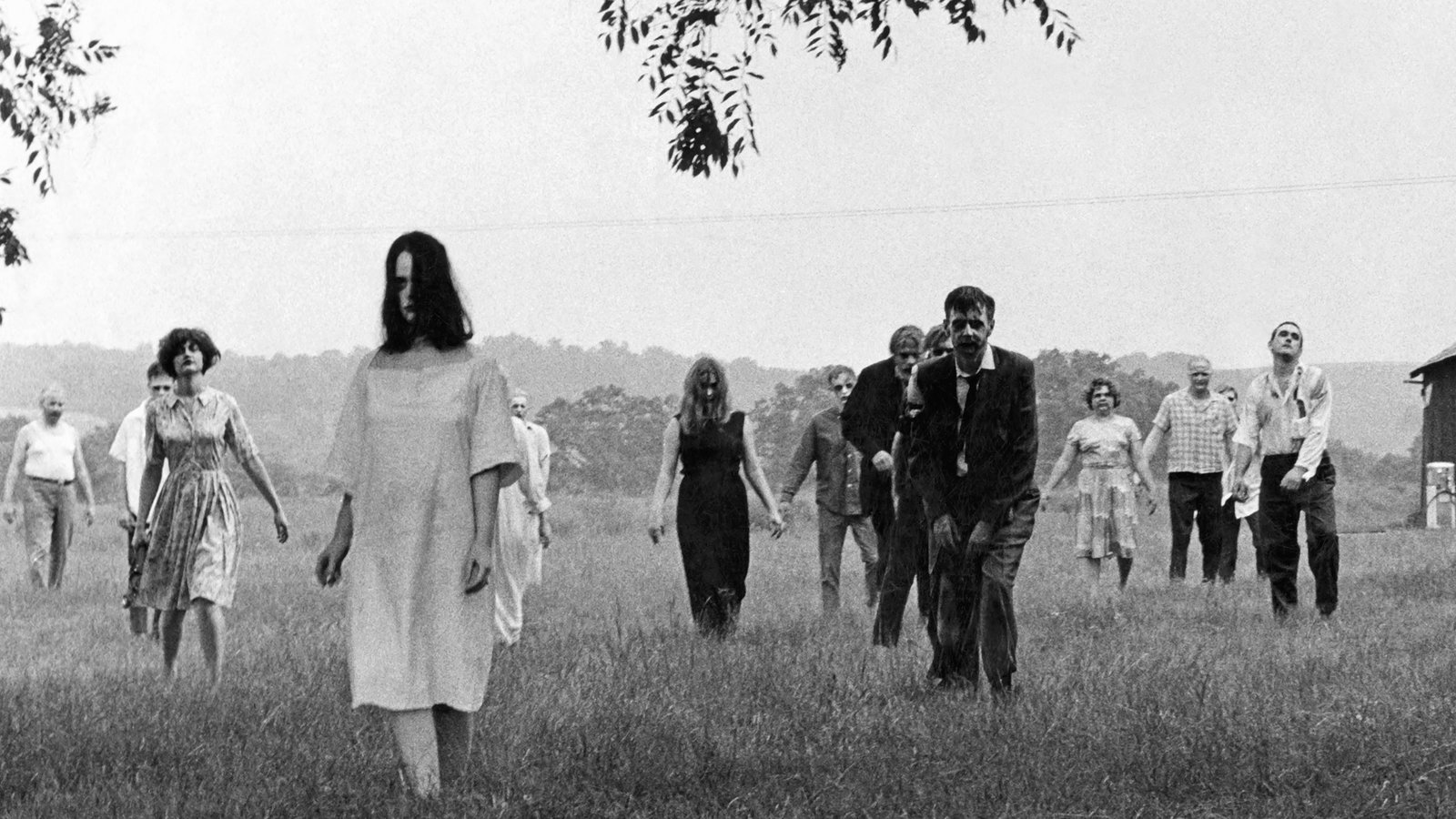
Horror, di George Romero, Stati Uniti, 1968.
One of the most profitable independent films of all time, it grossed around 250 times its budget. Inspired like other cult horror films by Richard Matheson's 1954 novel "I Am Legend". Shot as a "guerrilla film" with a cast and crew of friends and family and a budget of just $ 114,000, the film is the forerunner of the inexhaustible "zombie movie" genre.
LANGUAGE: english
The End We Start From (2023)

Torrential rain submerges London just as a woman (Jodie Comer) is giving birth to her first child. Forced to flee with the newborn in a United Kingdom collapsed into chaos, she seeks refuge up north. In The End We Start From, the apocalypse is not told through grand scenes of destruction, but through the intimacy of the mother-child bond. The protagonist must navigate a world returned to a primitive state, where kindness is as rare as food, trying to protect not only the child’s life but her own humanity.
Based on Megan Hunter’s novel, it is a feminist and poetic survival film. Jodie Comer delivers an extraordinary physical and emotional performance. Unlike the usual post-apocalyptic films dominated by armed men and violence, here the focus is on care, waiting, and silent resilience. It is a realistic and terrifying portrait of how the climate crisis could erase civilization in a few days, seen through the eyes of someone who must build the future (a newborn) on the ruins of the present.
☢️ Surviving the End: Choose Your Scenario
The end of the world in cinema has a thousand faces. Sometimes it comes with an explosion, other times with a deafening silence. It can be a technological nightmare, a pandemic awakening the dead, or a slow ecological agony. If you want to explore the different variations of catastrophe, here are our essential guides to the genres that tell the story of civilization’s collapse from other perspectives.
Independent Movies
Without the budgets to destroy skyscrapers, indie cinema focuses on the human being. Here you will find the rawest, most realistic, and psychological survival stories, where the real threat is not the catastrophe, but the despair and loneliness of those who remain.
👉 BROWSE THE CATALOG: Stream Sci-Fi Movies
Sci-Fi Movies
Often the apocalypse comes from the future or the stars. Whether it’s an alien invasion, artificial intelligence out of control, or time travel to prevent disaster, Sci-Fi is the beating heart of stories about the end of humanity.
👉 GO TO THE LIST: Sci-Fi Movies
Horror Movies
When society collapses, fear begins. If your idea of the end of the world includes zombies, lethal viruses, or monsters hunting the last survivors, this is the category where survival becomes pure visceral terror.
👉 GO TO THE LIST: Horror Movies
Cult Movies
From Mad Max to Blade Runner, there are visions of the future that defined the aesthetic of decay. Discover the masterpieces that invented the post-apocalyptic wasteland and the dystopias that marked the collective imagination.
👉 GO TO THE LIST: Cult Movies
☢️ Visions of the End: Classic Apocalyptic Cinema (1960-2000)
Fear of the Bomb, Cold War anxiety, and early ecological concerns. Before CGI turned catastrophe into a pyrotechnic spectacle, cinema imagined the end of the world as a human, dirty, and desperate drama. From black-and-white fallout shelters to the violent, desert wastelands of the 80s, here are the films that shaped our collective nightmares about the “aftermath,” defining the aesthetic of survival.
Five (1951)

Following a nuclear holocaust that has wiped out humanity, only five people remain alive: a pregnant woman and four men of differing social backgrounds and characters. The group finds refuge in an isolated house on the California coast (actor Arch Oboler’s actual Frank Lloyd Wright-designed home), attempting to establish civil coexistence. In Five, the tension stems not from external monsters, but from the psychological, racial, and sexual dynamics exploding among the survivors in a now empty and silent world.
Written, produced, and directed by Arch Oboler, it is considered the first film to seriously tackle the theme of radioactive fallout and post-atomic survival. Despite the shoestring budget, it is a remarkably atmospheric and bleak work. Oboler uses simple methods to produce a ghostly sense of isolation, focusing on the characters’ despair rather than special effects, making the film a pioneer of the “end-of-the-world drama” genre.
The last man on earth
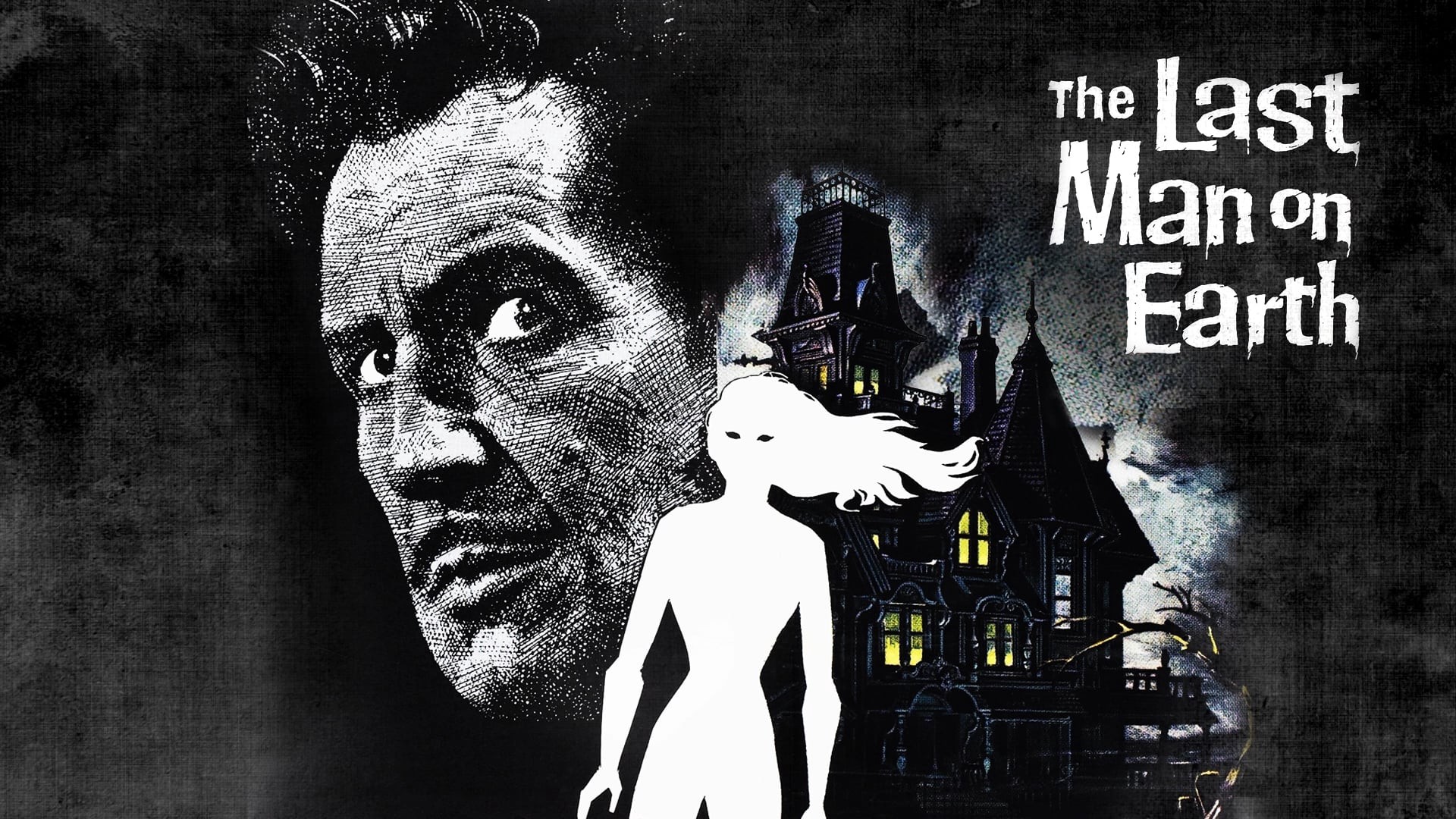
Horror, sci-fi, by Ubaldo Ragona, Sidney Salkow, United States / Italy, 1964.
Unnoticed at the time of its release and considered today a masterpiece, it is the first and best film adaptation of Richard Matheson's book of the same name, released in 1954. Shot back in 1964, in Rome, with an Italian-American co-production, this film is the progenitor of the zombie film genre, and precedes the following and more famous "Night of the Living Dead". Robert Morgan (Vincent Price) is a scientist, the sole survivor of a global pandemic that has exterminated all of humanity. He is alone in the world and has seen all his loved ones die, including his wife and daughter. But the virus doesn't just kill: it transmorms undead vampires. At night, zombies come out of their shelters and roam the city in search of human flesh.
LANGUAGE: english
SUBTITLES: italian, spanish, german, portuguese
Day the World Ended (1955)

Human civilization has been almost completely destroyed by an atomic war. A motley group of seven survivors—including a geologist, a gangster, and a dancer—finds shelter in a valley protected from radiation, where they build a makeshift refuge. Forced coexistence is threatened not only by dwindling food supplies and internal tensions but by the presence of a mutant creature roaming the surrounding woods. In Day the World Ended, the real danger is represented by radioactive contamination turning nature into a nightmare.
Directed by the legendary Roger Corman, this film is a classic 1950s B-grade sci-fi. Although the monster is created with low-budget costumes (which later became cult items), the film effectively addresses Cold War-era fears. Corman skillfully mixes the nuclear threat with psychological thriller dynamics, using the creature as a metaphor for the monstrous consequences of man’s abuse of science.
The Lost Missile (1958)

A mysterious missile of unknown origin (presumably alien) enters Earth’s atmosphere and begins orbiting at hypersonic speed at low altitude, incinerating everything it flies over with its heat, including cities like Ottawa and New York. As panic spreads and nations try in vain to intercept it, a scientist (Robert Loggia) works against the clock to find a way to destroy the device before it annihilates all of humanity. In The Lost Missile, the arms race and technology become the only hope for salvation.
Started by director William Berke (who died during filming) and completed by his son Lester Wm. Berke, it is a tense and minimalist apocalyptic thriller. The film, featuring one of Robert Loggia’s first appearances, uses extensive military stock footage to make up for the limited budget, yet still manages to convey the anxiety of the Atomic Age. More than pure sci-fi, the film focuses on the importance of sacrifice and collaboration between science and the military to protect the nation from sudden external threats.
Teenage Caveman (1958)

A tribe of primitives lives in a barren and rocky land, following ironclad laws strictly forbidding crossing the river, where a God is said to live who kills anyone daring to touch the lush green lands on the other side. A young tribe member (Robert Vaughn) decides to challenge the elders’ taboos to discover the truth and improve his people’s conditions. In Teenage Caveman, the protagonist’s journey leads to a shocking revelation about the true nature of their world and the identity of the mysterious “God.”
Another title signed by Roger Corman, the film is famous for its final plot twist relocating it from the prehistoric genre to the post-apocalyptic one (the “God” is actually a survivor in a radiation suit). Although Robert Vaughn considered it the worst film ever made, the movie has gained cult status for its bold political message: behind the B-movie façade with monsters and cavemen lies a bitter critique of humanity’s tendency toward cyclical self-destruction.
On the Beach (1959)

After a global nuclear war has wiped out the northern hemisphere, Australia is humanity’s last refuge, but the radioactive cloud is slowly moving south. An American submarine, led by Commander Towers (Gregory Peck), docks in Melbourne. In On the Beach, there are no monsters or battles for resources, only the dignified and melancholic wait for the inevitable end. The characters try to live out their final months with normality, loving, drinking, and racing suicide cars, while the government distributes suicide pills.
Stanley Kramer directs the saddest and noblest apocalyptic film ever made. It is a powerful drama rejecting sensationalism to focus on the psychology of resignation. The final scene, with the deserted streets of Melbourne and the banner “There is still time… Brother” flapping in the radioactive wind, is a chilling pacifist warning that hits much harder than any explosion.
The Last Woman on Earth (1960)

Harold Gern, a powerful and corrupt New York businessman, is on vacation in Puerto Rico with his wife Evelyn and his lawyer Martin Joyce. During a scuba dive, the group runs out of air in their tanks and surfaces, only to discover that their boat crew has died of asphyxiation. In The Last Woman on Earth, the three soon discover that a mysterious atmospheric event has deprived the air of oxygen, killing every form of animal life on the planet. They survived thanks to their tanks and can now only breathe inside the jungle, where plants continue to produce oxygen.
Directed by the prolific Roger Corman and written by the legendary Robert Towne (who also stars as Martin), the film is a chamber drama masquerading as sci-fi. The tension stems not from alien monsters, but from the love and power triangle establishing itself among the survivors. Harold tries to maintain his status as “boss” even in a finished world, while the dynamic between the two men for the only remaining woman turns the tropical paradise into a suffocating psychological prison.
The Creation of the Humanoids (1962)

In a post-atomic future where 92% of humanity has been wiped out, society is rebuilt with the help of robots called “Clickers,” recognizable by their blue skin and silver eyes. Despite their help, human resentment towards machines grows, led by the “Order of Flesh and Blood” organization. In The Creation of the Humanoids, a visionary scientist begins secretly creating “R-Units,” replicants indistinguishable from humans, endowed with memories and emotions, to preserve the spirit of humanity before it goes extinct entirely.
Often cited as a thematic precursor to Blade Runner and loved by Andy Warhol, the film is a cult classic of low-budget philosophical sci-fi. Although static and theatrical in its staging, it addresses deep issues like racism, identity, and what defines the soul. The final revelation about the main characters completely flips the viewer’s perspective on the difference between man and machine.
This Is Not a Test (1962)

Late night on a secluded mountain road. A deputy sheriff receives orders to block traffic: a nuclear attack against the United States is imminent. He stops a motley group of travelers, including a vacationing family and a trucker, forcing them to wait for the inevitable with no escape route. In This Is Not a Test, the time separating them from the missile impact becomes a psychological ordeal, where fear crumbles social masks and triggers group hysteria, leading civilians to clash violently with each other even before the bombs fall.
Directed by Fredric Gadette, this film is a chilling snapshot of Cold War paranoia, made (as the title suggests) almost like a realistic simulation. With a shoestring budget, the film foregoes special effects to focus on psychological disintegration. It plays like an extended and cruel The Twilight Zone episode, showing how the real enemy is not the atom, but the fragility of human nature under pressure.
La Jetée (1962)

Paris is destroyed by World War III, and survivors live in the undergrounds of the Palais de Chaillot, controlled by scientists trying to save the present by exploiting time travel. They choose a prisoner for their experiments because he is obsessed with a vivid childhood memory: a woman’s face and the death of a man on the jetty of Orly airport. In La Jetée, the man travels to the past, weaving an impossible relationship with the woman from his memory, until he realizes that the tragic event he witnessed as a child was his own future death.
Chris Marker’s masterpiece is unique in cinema history: a 28-minute “photo-novel” composed almost entirely of black-and-white still images, with a hypnotic voiceover. It is a poignant meditation on memory, time, and the impossibility of escaping one’s destiny. It directly inspired Terry Gilliam’s 12 Monkeys and is considered one of the pinnacles of world auteur cinema for its poetic and evocative power.
Ladybug Ladybug (1963)

In a quiet rural elementary school, the Civil Defense alarm system suddenly sounds. The code signals this is not a drill: a nuclear attack is underway. Teachers, led by Mrs. Andrews, must walk the children home or to shelters, trekking through the seemingly serene countryside. In Ladybug Ladybug, uncertainty about the alarm’s veracity and mounting terror turn the walk into a waking nightmare, where children’s innocence clashes with the adults’ terminal anguish.
Directed by Frank Perry, the film takes its title from the nursery rhyme “Ladybug, ladybug, fly away home / Your house is on fire, your children are gone.” It is a psychological docudrama exploring the emotional impact of the Cuban Missile Crisis on ordinary people. Without showing a single explosion, the film builds unbearable tension, culminating in an ambiguous and bleak ending that leaves the viewer wondering if the end really arrived or if fear did worse damage than the bomb.
Dr. Strangelove (1964)

A paranoid American general, convinced that communists are poisoning the “precious bodily fluids” of Americans, orders an unauthorized nuclear attack against the Soviet Union. While the B-52 bombers are airborne without recall capability, in the Pentagon’s “War Room,” the U.S. President, his generals, and the Soviet ambassador desperately try to stop the apocalypse, with the help of former Nazi scientist Dr. Strangelove. In Dr. Strangelove, the inevitable end of the world unfolds amidst absurd phone calls and mad military logic.
Stanley Kubrick creates the definitive film on the Cold War, turning the nuclear apocalypse into the greatest black comedy of all time. It is a ruthless analysis of the incompetence of power: the end of the world comes not from hatred, but from bureaucracy and human fallibility. Peter Sellers, in three different roles, is brilliant, and the final image of Major Kong riding the bomb like a rodeo bull is the perfect icon of humanity’s self-destructive madness.
In the Year 2889 (1969)

In a post-atomic future, a handful of survivors take refuge in an isolated villa protected from radiation, while mutant creatures threaten their existence outside. Captain John Ramsey tries to maintain order among those present, but forced coexistence brings out tensions, jealousy, and madness. In In the Year 2889, what was supposed to be a safe haven turns into a psychological pressure cooker, where the real enemy might not be the monster knocking at the door, but human nature itself.
Directed by Larry Buchanan, a known author of “Z-movies,” this film is actually a low-budget (and color) TV remake of Roger Corman’s classic Day the World Ended (1955). Despite the misleading title (borrowed from Jules Verne but unrelated to the plot) and rudimentary special effects, the film has undeniable camp charm. It is a perfect example of 1960s “drive-in” sci-fi, where the lack of means is compensated by melodramatic dialogue and an atmosphere of bizarre desolation.
The Seed of Man (1969)

A mysterious plague has wiped out most of humanity. Cino and Dora, a young couple, survive isolated in a seaside house serving as a museum of lost civilization. Cino is obsessed with procreating to give the species a future, while Dora categorically refuses to bring a child into a dead world. In The Seed of Man (Il seme dell’uomo), the conflict between the will to rebuild and nihilistic resignation leads to a grotesque escalation, where objects of the past (culture) become useless and oppressive fetishes.
Marco Ferreri signs a radical and provocative apocalyptic work, light years away from American genre cinema. There are no zombies or explosions, but a philosophical horror on the end of consumer society. The film is a solar and pop nightmare, dense with symbolism, reflecting on the death of God, history, and ethics. The shocking and explosive (literally) ending is one of the most powerful indictments of anthropocentric selfishness ever filmed.
Zardoz (1974)

Year 2293. Earth is divided into two castes: the “Eternals,” an immortal intellectual elite living in the technological luxury of the “Vortex,” and the “Brutals,” slaves living in wastelands worshiping a giant flying stone head called Zardoz. Zed (Sean Connery), a Brutal Exterminator, manages to infiltrate the Vortex, discovering the truth behind the stone deity. In Zardoz, the barbarian’s arrival among the bored and sterile immortals triggers a revolution aiming to return humanity’s most precious gift: death.
John Boorman realizes one of the most eccentric and visually bold films in sci-fi history. Famous for the image of Sean Connery in a skimpy red “diaper,” the film is much more than a meme: it is a psychedelic satire on social classes, religion, and the boredom of immortality. Between mirrors, crystals, and Nietzschean reflections, it is a baroque and imperfect work, yet absolutely fascinating for its unbridled ambition and unique aesthetic.
A Boy and His Dog (1975)

In 2024, after World War IV lasted only five days, young Vic (Don Johnson) wanders the violent desert wastelands of America with Blood, a telepathic dog much more cultured and intelligent than he is. Their pact is simple: the dog finds women for Vic, and Vic finds food for the dog. Their cynical routine is interrupted when Vic follows a girl into an underground society called “Topeka.” In A Boy and His Dog, Vic discovers that the underground utopia is a repressive nightmare needing him only as a biological “donor.”
Based on Harlan Ellison’s novella, this cult classic is a politically incorrect, misogynistic post-nuclear satire steeped in pitch-black humor. The film flips the man-animal friendship archetype, presenting the dog as the true voice of reason in a world gone mad. The ending is legendary for its ironic cruelty (“She had marvelous taste”), offering a vision of survival devoid of any sentimental moralism.
Dawn of the Dead (1978)
![Dawn of the Dead (1978) | Original Trailer [HD] | Coolidge Corner Theatre](https://blog.indiecinema.co/wp-content/plugins/wp-youtube-lyte/lyteCache.php?origThumbUrl=https%3A%2F%2Fi.ytimg.com%2Fvi%2FY_EviQj5tvA%2F0.jpg)
As the world collapses under an invasion of flesh-eating living dead, four survivors (two SWAT members and a reporter couple) steal a helicopter and find refuge in an abandoned shopping mall. After clearing the structure and blocking the entrances, they create a small consumerist utopia amidst the apocalypse. But in Dawn of the Dead (Zombi), their artificial paradise is threatened not only by the constant siege of the undead outside but by the arrival of a biker gang of looters breaking the defenses, unleashing a massacre.
George A. Romero signs his absolute masterpiece, a film transcending horror to become a fierce social critique of American consumerism (zombies return to the mall out of instinct because it was an important place in their lives). The European version, edited by Dario Argento (who co-produced the film) and titled simply Zombi, is faster-paced and marked by Goblin’s pounding soundtrack. Gruesome, satirical, and visceral, it forever defined the aesthetic of the urban apocalypse.
Mad Max (1979)

In a dystopian Australia “a few years from now,” society is crumbling, and the roads are the domain of psychopathic motorcycle gangs. Max Rockatansky (Mel Gibson) is an officer of the MFP (Main Force Patrol), the last line of defense for the law, driving powerful V8 interceptors. When the sadistic Toecutter’s gang brutally kills his partner and then his family, in Mad Max, something breaks forever in the policeman’s soul. Max abandons his badge, steals the department’s fastest car, and embarks on a mechanical and ruthless revenge.
George Miller’s debut is a raw, violent, and kinetic film, made on a ridiculous budget that Miller recouped working as an emergency room doctor (where he saw the accident injuries that inspired the film). We are not yet in the total desert of the sequels, but in a decaying world where civilization is dying with a whimper. The chase scenes, filmed without digital effects and at insane speeds, remain among the most impressive ever shot, marking the birth of an action cinema icon.
Stalker (1979)
![Andrej Tarkovskij | Stalker trailer [HD] 1979](https://blog.indiecinema.co/wp-content/plugins/wp-youtube-lyte/lyteCache.php?origThumbUrl=https%3A%2F%2Fi.ytimg.com%2Fvi%2F0wAd3crUuTw%2F0.jpg)
In an unspecified future, there is a mysterious place fenced off and guarded by the military called “The Zone,” where the laws of physics are altered following a meteorite impact (or perhaps an alien arrival). An illegal guide, called a “Stalker,” escorts two clients, a cynical Writer and a rational Professor, into the heart of the Zone. Their goal is to reach “The Room,” a place rumored to grant the deepest and most secret desires of those who enter. In Stalker, the physical journey through ruined industrial landscapes becomes a spiritual exploration of human fears and hopes.
Based on the novel Roadside Picnic by the Strugatsky brothers, Andrei Tarkovsky’s film is a monument of metaphysical sci-fi. Slow, hypnotic, and visually sublime, it abandons action for philosophical reflection. The Zone is not a place of monsters, but a mirror of the soul punishing those without faith or with impure desires. A dense and complex work of art that influenced everything from video games to films like Annihilation, remaining the most poetic apocalypse in cinema history.
Threads (1984)
![Threads (1984) ORIGINAL TRAILER [HD 1080p]](https://blog.indiecinema.co/wp-content/plugins/wp-youtube-lyte/lyteCache.php?origThumbUrl=https%3A%2F%2Fi.ytimg.com%2Fvi%2FvgT4Y30DkaA%2F0.jpg)
This BBC docu-drama follows two working-class families in Sheffield, England, as Cold War tensions escalate into a nuclear attack. The film depicts with clinical and terrifying realism the attack, its immediate aftermath, and the slow, inexorable collapse of civilization in the following decades.
Threads is perhaps the most terrifying film ever made about nuclear war, precisely because of its almost documentary-like approach and its total absence of hope. The film does not focus on heroes or survival stories, but on the “threads” that hold society together and how they are severed one by one: government, healthcare, agriculture, language. It is a methodical descent into hell, showing not only death, but the slow agony of the survivors in a nuclear winter, amidst disease, famine, and the loss of all knowledge. The ending is one of the most desolate and unforgettable in the history of cinema.
The Quiet Earth (1985)

It is a 1985 New Zealand post-apocalyptic science fiction film directed by Geoff Murphy and starring Bruno Lawrence, Alison Routledge and Peter Smith as 3 survivors to a catastrophic catastrophe. It is loosely based on Craig Harrison’s 1981 science fiction book of the same name. Other sources of inspiration have been cited: the 1954 original I Am Legend, Dawn of the Dead, and especially the 1959 film The World, the Flesh and the Devil, of which it has effectively been called a loose remake.
One of New Zealand’s leading directors, Geoff Murphy took a tale of a lonely man and spun it in an imaginatively impactful way into The Quiet Earth, which ended up as a cult film, among the best NZ films ever made.
Miracle Mile (1988)
![Miracle Mile (1988) ORIGINAL TRAILER [HD 1080p]](https://blog.indiecinema.co/wp-content/plugins/wp-youtube-lyte/lyteCache.php?origThumbUrl=https%3A%2F%2Fi.ytimg.com%2Fvi%2FRNXZX8JRb6o%2F0.jpg)
Harry, a Los Angeles musician, meets the girl of his dreams, Julie, and sets a date with her. But due to a mishap, he arrives late and accidentally answers a ringing payphone outside a diner. A frantic voice on the other end, believing he is talking to a politician, reveals that nuclear missiles have been launched and will hit L.A. in 70 minutes. In Miracle Mile, Harry has little more than an hour to find Julie and reach a helicopter to escape, while the city slips into chaos and total panic as the news spreads.
A forgotten 80s cult classic, unique in its genre. It starts as a sweet and quirky romantic comedy only to suddenly veer into a real-time nightmare. The film perfectly captures the era’s atomic anxiety, immersed in a surreal neon aesthetic (featuring a Tangerine Dream soundtrack). It is a distressing thriller about the inevitability of the end and love as the only possible refuge when there is no future left.
Akira (1988)

In 2019, Neo-Tokyo is a cyberpunk megalopolis risen from the ashes of old Tokyo, destroyed by a mysterious explosion thirty years prior. Kaneda, the leader of a biker gang, tries to save his friend Tetsuo, who has developed uncontrollable telekinetic powers after an accident. In Akira, Tetsuo is taken into custody by the military who want to exploit his power, similar to the one that caused the first apocalypse, while the boy progressively loses his humanity, transforming into a destructive deity threatening to erase the city once again.
Katsuhiro Ōtomo’s animated masterpiece opened the doors of anime to the Western world. It is a visionary and incredibly violent film fusing Japanese atomic trauma with youth rebellion and body horror. The fluid animation of neon lights and the tribal soundtrack create a unique atmosphere. Akira is not just a film about destruction, but about the painful rebirth of a corrupt society that must die in order to evolve.
Delicatessen (1991)

In a post-apocalyptic and starving France, a butcher who is also the landlord of an apartment building has an ingenious way to supply his tenants with meat: he hires handymen and then butchers them. The arrival of a former clown in love with the butcher’s daughter threatens to break this macabre balance.
Jean-Pierre Jeunet and Marc Caro create a surreal and visually stunning black comedy. The apartment building is a microcosm of a society that has accepted cannibalism as the norm, but the film also explores the possibility of resistance, represented by the “Troglodytes,” a group of vegetarians living in the sewers. With its unique style, halfway between Terry Gilliam and French poetic realism, Delicatessen is a grotesque and unforgettable fable about love, rebellion, and music in desperate times.
12 Monkeys (1995)

In 2035, the human population has been decimated by a lethal virus, and survivors live underground. Convict James Cole (Bruce Willis) is sent back in time to 1996 to find the origin of the virus and gather information to help future scientists create a cure. In 12 Monkeys, Cole is mistaken for a madman and locked in an asylum, where he meets Jeffrey Goines (Brad Pitt), a crazy eco-terrorist who seems to be the key to the impending apocalypse.
Terry Gilliam reworks the short film La Jetée (already on your list), transforming it into a baroque and feverish nightmare. It is a complex film about memory, madness, and the inescapability of fate (the “Cassandra Paradox”). Bruce Willis offers one of his most vulnerable performances, while the distorted direction and industrial set designs create a world where the future is dirty and the past is a dream from which it is impossible to wake up.
Last Night (1998)

Everyone knows the world will end at midnight. This Canadian film follows a group of characters in Toronto during their last six hours. Without explaining the cause of the apocalypse, it explores how different people choose to face the end: alone, with family, with strangers, seeking sex, forgiveness, or simply peace.
Don McKellar’s Last Night is an intimate and bittersweet apocalypse that focuses on human reactions rather than the event itself. Faced with the certainty of the end, the deepest desires and unresolved issues emerge. The film is a black comedy full of moments of touching humanity, like Sandra’s request to Patrick: “Tell me something to make me fall in love with you.” It is a reflection on what it means to be human when there is no tomorrow, suggesting that dignity and connection are the only things that matter in the final hour.
Perfect Sense (2011)

Susan, an epidemiologist, and Michael, a chef, begin a romance just as a strange epidemic breaks out worldwide. People start losing their senses, one by one, preceded by uncontrollable emotional waves (desperate crying before losing smell, furious rage before losing hearing). In Perfect Sense, as humanity adapts to each new deprivation, the couple tries to hold onto their love and connection while the world around them literally becomes dark and silent.
David Mackenzie directs an intimate, sensory, and poignant apocalypse, far removed from action blockbusters. It is a powerful metaphor for what makes us human: not technology or civilization, but the ability to feel, taste, and touch one another. Ewan McGregor and Eva Green are extraordinary in portraying the despair and tenderness of two lovers trying to “feel” each other while they still can. A poetic and devastating film.
28 Days Later (2002)

A group of activists frees infected chimpanzees from a research lab, unleashing the “Rage” virus. 28 days later, courier Jim wakes from a coma in a deserted London hospital. Stepping out into the street, he finds the city completely empty and silent, littered with trash and old newspapers announcing the end. In 28 Days Later, Jim soon discovers that the survivors are not alone: the infected are not slow zombies, but incredibly fast and ferocious creatures driven by pure aggression, and the remaining healthy humans might be even more dangerous.
Danny Boyle reinvents the zombie genre for the new millennium. Shot on digital (MiniDV) to give a sense of urgency and dirty realism, the film introduced the concept of “runners” (fast zombies), changing horror rules forever. But beyond the adrenaline, it is a political work on social collapse and the violence intrinsic to human nature, with a ghostly London remaining one of the most haunting set pieces in cinema history.
Time of the Wolf (Le Temps du Loup) (2003)

Following an unspecified disaster, a Parisian family flees to their country house, only to find it occupied by strangers. Driven out and deprived of everything, they join a group of other survivors at a train station, where civilization has dissolved into a fragile and brutal struggle for resources and power.
Michael Haneke offers his typical ruthless and realistic vision of social collapse. The film is not interested in the cause of the disaster, but in its immediate consequences on human morality. The “law of the jungle” takes over, and social conventions are revealed to be just a thin layer of varnish. Time of the Wolf is a fierce critique of the middle class’s presumption of being safe from catastrophes, showing how, deprived of comfort and security, humanist values quickly give way to a primordial selfishness. Yet, in the end, Haneke leaves a glimmer of hope, suggesting that the reconstruction of community, however difficult and painful, is the only way out.
Right at Your Door (2006)

In Los Angeles, a series of dirty bombs triggers panic. On the advice of the authorities, Brad barricades himself in his house, sealing doors and windows with duct tape. Shortly after, his wife Lexi, who was out during the attack, returns home, visibly contaminated. Brad faces an impossible choice: save her or save himself.
This film is a tense and claustrophobic parable about paranoia in the post-9/11 era of terrorism. The real threat is not the bomb itself, but the misinformation and fear it generates. The radio, the only and unreliable source of news, broadcasts contradictory instructions, turning the home from a refuge into a prison and the husband into a jailer. The film explores the collapse of trust in institutions and the terrible morality of “protocol,” where love and instinct are sacrificed on the altar of an uncertain security dictated from above. The front door becomes the physical and moral boundary between love and survival, a heart-wrenching dilemma that offers no easy or comforting answers.
Children of Men (2006)

In 2027, the world has plunged into chaos after eighteen years of human infertility. Great Britain is a police state that brutally represses refugees. A disillusioned bureaucrat, Theo, is tasked with protecting Kee, a young refugee who is miraculously pregnant, and escorting her to a mythical sanctuary known as the “Human Project.
Alfonso Cuarón’s masterpiece uses its science fiction premise to explore themes of hope and faith in a world without a future. Global infertility is a powerful metaphor for the desperation and spiritual stagnation of a society that has lost the ability to imagine a tomorrow. Kee’s pregnancy is not just a biological miracle, but a disruptive religious and political symbol. The immersive direction, with its famous and virtuosic long takes, drags us into a world of terrifying plausibility. Hope, in the film, is not an ideology or a political plan, but a sound: the cry of a newborn that, for a moment, stops a battle. It is a work that finds transcendence in chaos, suggesting that a future is possible only if one is willing to protect it with one’s life.
The Last Winter (2006)

At a remote arctic base in Alaska, an oil company prepares to drill. But global warming is thawing the permafrost, releasing something ancient and hostile. As the team is isolated by an unnatural winter, paranoia and a mysterious force of nature threaten to destroy them.
Larry Fessenden directs a powerful eco-horror that transforms climate change into a tangible and spectral threat. The film stages the conflict between corporate interests and ecological consciousness. Here, nature is not a passive victim, but an organism defending itself from an infection: humanity. The apocalypse is not a sudden event, but a slow and inexorable process, a revenge of the Earth that manifests through madness, isolation, and the awakening of ancestral ghosts linked to oil, the “corpses” of the planet.
Pontypool (2008)

Grant Mazzy, a former “shock jock” radio host, broadcasts from a small station in the basement of a church in Pontypool, Ontario. During a snowstorm, strange and violent news reports begin to come in. Soon, Mazzy and his staff realize that a deadly virus is spreading through language, turning words into lethal weapons.
Pontypool is a semiotic apocalypse, an intellectual horror that takes the concept of “a word that kills” to its literal and terrifying conclusion. The film is a powerful critique of the role of mass media in spreading panic and toxic ideas. The radio station, from a supposed source of information and connection, becomes the epicenter of the contagion. The film explores the fragility of meaning and how communication itself can become a weapon of mass destruction. To survive, the characters must deconstruct language, stripping words of their power, in a desperate attempt to resist an apocalypse that attacks not the body, but the mind and the very ability to understand the world.
The Road (2009)

In a post-apocalyptic world reduced to ashes, a father and his son travel towards the coast, pushing a shopping cart with their few belongings. They face the cold, hunger, and the few, desperate survivors, some of whom have become cannibals. The father struggles to keep his son alive and to preserve his innocence.
Based on Cormac McCarthy’s masterpiece, The Road is perhaps the most desolate and yet poetic representation of the post-apocalypse. The world is dead, nature is extinguished, and the only thing that matters is “carrying the fire”: a symbol of hope, morality, and civilization. The father is willing to do anything to physically protect his son, but his real, exhausting battle is against despair, to teach the boy to remain one of the “good guys” in a world where goodness seems like suicidal madness. It is a film that explores hope not as the expectation of a better future, but as a moral duty to be performed in the present, a legacy to be left burning in the heart of a child.
Carriers (2009)

Four young friends try to escape a deadly viral pandemic by traveling to an isolated beach they hope is a safe haven. They have established a set of strict rules to survive: avoid the infected at all costs. But when their rules are put to the test, their humanity begins to crumble.
Carriers is a post-pandemic road movie that explores the psychological cost of survival. The film focuses on the moral conflict dictated by the rules the group has imposed on themselves. The mantra “the sick are already dead” is a ruthless survival logic that forces them to make inhuman choices, eroding their very souls. The film is an allegory of how, in the face of a global crisis, society can fragment into small, selfish groups, where the fear of contagion (physical or moral) leads to the abandonment of all forms of solidarity. The real disease the film describes is not the virus, but the loss of humanity it causes.
Stake Land (2010)

America is a desolate and lost land, devastated by a vampirism epidemic. A veteran vampire hunter, “Mister,” takes a young orphan, Martin, under his wing. Together, they travel north, in search of a supposed refuge called “New Eden,” facing not only vampires but also a cult of religious fundamentalists.
Stake Land blends vampire horror with the post-apocalyptic road movie, creating an effective allegory of heartland America. The vampires, ferocious and bestial, are less terrifying than the film’s true antagonist: the “Brotherhood,” an extremist Christian cult that sees the plague as a divine punishment and uses it as a pretext to impose its own dominion. The film explores the dichotomy between authentic faith (represented by a nun who joins the group) and religious fanaticism, suggesting that in times of crisis, extreme ideologies can be more destructive and inhuman than any monster.
Monsters (2010)

Six years after a NASA probe crashed in Mexico, half of the country is a quarantined “Infected Zone,” inhabited by giant alien creatures. An American photojournalist agrees to escort his boss’s daughter through the dangerous zone to bring her safely back to the United States, on a journey that reveals a complex reality.
Gareth Edwards‘ directorial debut is a brilliant subversion of the monster movie genre, turning it into a powerful political allegory. The “monsters” are a clear metaphor for the fear of immigration and the consequences of American foreign policy. The “Infected Zone” blatantly alludes to the US-Mexico border and conflict zones like Iraq. The film constantly asks the question “who are the real monsters?”, suggesting that the answer might be the disproportionate military reaction rather than the creatures themselves, which appear more like animals in their natural habitat than inherently malevolent threats.
The Rover (2011)

It is a dramatic dystopian film and western 2014 Australian David Michôd and based on a story by Michôd and Joel Edgerton. It is a modern western that takes place in the Australian wilderness, 10 years after an international financial meltdown. The film stars Guy Pearce and Robert Pattinson and includes Scoot McNairy, David Field, Anthony Hayes, Gillian Jones and Susan Prior.
10 years after an international financial crash that wreaked havoc around the world, Australia’s wilderness is a lawless wasteland and military units patrol the wilderness trying to preserve what little order is left. After a botched burglary, Archie, Caleb and Henry escape, abandoning Henry’s injured brother Reynolds. As they escape Archie taunts Reynolds and Henry attacks him, causing an accident. They can no longer use the truck and abandon it and Archie steal the car of the strange and lonely Eric. Eric manages to recover the truck and follows them. After a quick chase, Archie stops and Eric confronts them.
The Rover is a relentless and tense, blood-curdling film and Pearce’s ferocity as Eric is remarkable, while Pattinson’s work is a revelation, a performance that, regardless of the character’s restrictions, ends up being more fascinating as the film progresses. Constantly in the film’s focus is Pearce, who, with a taciturn demeanor, provides all the cold ruthlessness of a traditional Western or film noir who refuses to die before exacting vengeance for an unforgivable crime.
Take Shelter (2011)

Curtis, an Ohio construction worker with a wife and a deaf daughter, is tormented by apocalyptic visions of a devastating storm. Unsure whether they are premonitions or the first signs of an inherited mental illness, he begins to obsessively build a tornado shelter, risking his job, his family, and his sanity.
Take Shelter is a masterpiece of ambiguity that blends family drama with apocalyptic horror. Jeff Nichols‘ film is a profound exploration of contemporary anxieties: economic, environmental, and psychological. The storm can be read as a metaphor for the financial crisis, climate change, or, more intimately, a father’s primal fear of not being able to protect his family. Curtis’s apocalypse is first and foremost internal: it is the fear that his world, his mind, is collapsing. The magnificently suspended ending suggests that true salvation lies not in an underground shelter, but in the ability to share one’s fear and vulnerability with those you love.
Melancholia (2011)

The film is divided into two parts, focusing on two sisters. The first, “Justine,” follows her disastrous wedding reception as she sinks into a severe depression. The second, “Claire,” sees the pragmatic sister terrified by the approach of a rogue planet, Melancholia, which threatens to collide with Earth, while Justine finds a strange calm.
Lars von Trier creates an existential apocalypse, a work of art about depression and the end of the world. Inspired by his own experience, von Trier explores the idea that depressed people face disasters more calmly because they always expect the worst. The planet Melancholia is not just a physical threat, but a metaphor for depression itself: a dark celestial body that consumes all light. For Justine, the end of the world is not a tragedy, but a validation of her inner state, a liberation. It is a film of shocking beauty and profound nihilism, which suggests that life on Earth is “evil” and its end is almost a return to order.
Another Earth (2011)

Rhoda, a bright young astrophysics student, causes a car accident on the night a “duplicate Earth” is discovered in the solar system, killing a family. After years in prison, she seeks redemption by approaching the sole survivor, a composer whose life she destroyed, while the possibility of traveling to the other Earth offers a hope of escape and a new beginning.
Another Earth is an intimate and melancholic science fiction film that uses the concept of a mirror planet as a powerful metaphor for regret, guilt, and the search for a second chance. “Earth 2” is not so much a physical destination as a psychological space where the characters project their hopes for redemption. The film questions whether it is possible to forgive oneself and whether a better version of us can exist elsewhere, or if we must face our demons here, on our Earth. The enigmatic and powerful ending leaves these questions open in an unforgettable way.
Sound of My Voice (2011)

Two documentary filmmakers infiltrate a San Fernando Valley cult led by an enigmatic woman named Maggie, who claims to be from the year 2054 to prepare a group of chosen ones for a war-torn future. As the two try to expose her as a fraud, their objectivity and certainties begin to waver.
Written by Brit Marling and Zal Batmanglij, Sound of My Voice is a psychological thriller that explores themes of faith, manipulation, and the human need to believe in something. The apocalypse here is a promise, a narrative that may be true or false. The film masterfully maintains ambiguity about Maggie’s true identity, forcing the viewer, along with the protagonist, to confront the fine line between skepticism and faith. It is a work that suggests that the most powerful of apocalypses can be the one that creeps into the mind, through the sound of a voice.
Seeking a Friend for the End of the World (2012)

2012 romantic comedy movie written and directed by Lorene Scafaria in her directorial debut. The film stars Steve Carell and Keira Knightley as 2 strangers who form an unexpected bond as they help each other find meaning in their lives before an asteroid wipes out all life on the world.
The film was a box office failure, earning $9.6 million out of a $10 million spending plan. The plight of the plot is a matter of life that concerns everyone, it is a sobering film and has excellent editing, even if it is a bit slow at times.
The Battery (2012)

Two former baseball players with opposing personalities, the pragmatic Ben and the dreamer Mickey, travel through the New England countryside after a zombie apocalypse. Their relationship, forced by the need to survive, is tested by loneliness, boredom, and the different ways they cope with a world that is now empty.
The Battery is a micro-budget zombie film that intelligently focuses more on the psychology of survival than on action. The real horror is not the living dead, who appear rarely, but the crushing loneliness and the tension of having to depend on someone you can barely stand. The film explores the boredom of the apocalypse, an aspect rarely considered by the genre, and the human need for connection, symbolized by Mickey’s headphones, a desperate attempt to cling to a lost normality. The claustrophobic and brutal ending is a powerful metaphor for how, even at the end of the world, you cannot escape your own demons and, above all, those of others.
Coherence (2013)

During a dinner party among friends, the passage of a comet causes a strange blackout and a fracture in reality. Soon, the group discovers the existence of houses identical to theirs, inhabited by alternate versions of themselves. The evening turns into a labyrinth of paranoia and distrust, where identity and loyalty become dangerously fluid concepts.
With a shoestring budget and a single setting, Coherence builds a quantum and intellectual apocalypse. The cosmic event is a pretext to explore the fragility of human relationships and the instability of the self. The comet does not destroy the world, but shatters the perception we have of ourselves and the trust we place in others. The pre-existing tensions and secrets within the group are amplified to the breaking point, demonstrating how a crisis does not create conflicts, but reveals them. The film suggests that our identity is a precarious construct and that, faced with the possibility of “choosing” a better reality, morality becomes a relative concept, as shown by the protagonist’s terrifying final choice.
Snowpiercer (2013)

In a future where a failed experiment to stop global warming has frozen the Earth, the last survivors of humanity live on a perpetually moving train, the Snowpiercer. Inside, a rigid class division prevails: the poor crowded in the tail and the elite enjoying luxury at the front. A man, Curtis, leads a revolt.
Bong Joon-ho creates one of the most powerful and direct social allegories in recent cinema. The train is a microcosm of capitalist society, with its ruthless class struggle, resource control, and ideological manipulation. The film’s genius lies in revealing that the revolution itself is an integral part of the system, a population control mechanism orchestrated by the elite to maintain balance. Snowpiercer is a fierce critique of the idea that an inherently unjust system can be reformed from within, suggesting that the only true revolution is to break the system itself, even at the cost of self-destruction.
How I Live Now (2013)

Daisy, a sullen American teenager, is sent to spend the summer in the English countryside with her cousins. There, in a rural idyll, she falls in love. But their perfect summer is abruptly interrupted by the outbreak of a Third World War, which separates them and forces them to fight for survival in an occupied country.
Kevin Macdonald’s film blends teenage drama with the brutality of modern warfare. The war is not a spectacular backdrop, but a catalyst for the protagonist’s inner growth. Her personal struggles and anxiety are put into perspective by the real fight for survival. The war forces her to transform her willpower, previously used for “stupid things” like eating disorders, into a tool to protect others. It is an atypical and touching coming-of-age story, where the external apocalypse forces one to come to terms with the internal one.
The Rover (2014)

Ten years after a global economic collapse, the Australian outback is a desolate and lawless land. A lonely and hardened man, Eric, has his only possession stolen: his car. In his ruthless hunt to recover it, he allies with Rey, the naive and wounded brother of one of the thieves, who was abandoned by his own.
The Rover is a dystopian western that, in the vein of works like The Road, focuses on the human condition after the collapse of civilization. The economic apocalypse has drained not only material resources but also every form of empathy and compassion. Eric is not a hero; he is a man from whom everything has been taken, and his violence is the only language left in a world that has forgotten how to communicate. His obsession with the car is not materialism, but a desperate attempt to cling to the last fragment of a past identity. The relationship with Rey becomes an exploration of the possibility of trust in a world devoid of it, an unlikely bond between two men from whom everything has been stolen, whether it’s a car or brotherly love.
The Survivalist (2015)

In a future where civilization has collapsed due to resource depletion, a man lives alone in a small cabin, cultivating a plot of land. His solitary and paranoid existence is interrupted by the arrival of a woman and her daughter, who offer sex in exchange for food and shelter, creating a fragile and tense balance.
The Survivalist is a minimal and incredibly tense post-apocalyptic drama that explores the primary instincts of survival. The film depicts a Hobbesian world where “man is a wolf to man.” Trust is a non-existent commodity, and hospitality is always veiled in hostility and suspicion. However, the film suggests a possible evolution beyond pure individualism. The protagonist’s final act, sacrificing himself for the woman and the unborn child, represents a powerful critique of selfishness and an affirmation of the need to think about the survival of the species. The seed, the film’s most precious asset, becomes a dual metaphor for the fertility of the land and the hope for humanity’s future.
Z for Zachariah (2015)

After a nuclear catastrophe, a young religious woman, Ann, believes she is the sole survivor, living in her family’s protected valley. Her solitude is interrupted by the arrival of a scientist, Loomis. Their fragile alliance to rebuild is complicated by the arrival of a third survivor, Caleb, triggering a tense love triangle.
Z for Zachariah is a contained and reflective post-apocalyptic drama that explores themes of faith versus science, jealousy, and the difficulties of rebuilding society from scratch. The film uses the love triangle to stage a conflict of worldviews: Ann’s faith, Loomis’s rationalism, and Caleb’s ambiguous pragmatism. In this new “Garden of Eden,” the sins of the old world – distrust, paranoia, desire – quickly re-emerge, suggesting that human nature, not radiation, is the greatest obstacle to creating a better world.
The Girl with All the Gifts (2016)

In a dystopian future, humanity has been decimated by a fungal infection that turns people into carnivorous “hungries.” At a military base, a group of hybrid children, who retain the ability to think despite craving human flesh, are studied to find a cure. One of them, Melanie, proves to be special and could represent the future.
This film offers a unique and intelligent perspective on the zombie genre, exploring themes of identity, otherness, and the concept of evolution. The story is a journey of Melanie’s acceptance of her own “monstrous” identity. The film radically questions the very definition of “human,” suggesting that the new generation of “hungries” is not a plague to be eradicated, but the next, inevitable step of evolution. The real apocalypse, therefore, is not the end of humanity, but the end of our dominion, a painful but perhaps necessary transition for life on the planet.
It Comes at Night (2017)

In a world decimated by a mysterious plague, a family has taken refuge in an isolated house in the woods. Their precarious routine is shattered by the arrival of another family seeking shelter. Mutual distrust soon turns the refuge into a psychological trap, where the fear of the unknown becomes more lethal than the disease itself.
It Comes at Night is the archetype of the psychological apocalyptic thriller. Director Trey Edward Shults deliberately denies the viewer any explanation about the nature of the threat, forcing them to experience the same claustrophobic uncertainty as the characters. The house, a universal symbol of security, becomes a microcosm of social collapse, where the iron rules imposed by the patriarch Paul only accelerate the disintegration of trust. The real apocalypse is not the pandemic, but the moment one chooses to sacrifice empathy in the name of survival, proving that our humanity is the first, and perhaps only, victim of every catastrophe.
Aniara (2018)

A gigantic spaceship, the Aniara, is transporting colonists from a devastated Earth to Mars. An accident throws it off course, condemning it to wander forever in space. The film follows the passengers over decades, as hope fades and the small society on board slowly disintegrates into despair and madness.
Based on a Swedish epic poem, Aniara is an existential apocalypse in deep space, one of the bleakest ever brought to the screen. The film focuses on “cosmic anxiety”: the fear and despair that come from the awareness of one’s own insignificance in the infinite void. The ship becomes a metaphor for human civilization: a fragile and aimless bubble, trying to distract itself from its doom with consumerism, sex, and religious cults. It is a film that warns that there is no planetary “lifeboat” and that, once we lose our world, we are condemned to an eternal existential drift.
Light of My Life (2019)

A decade after a pandemic wiped out almost the entire female population, a father and his 11-year-old daughter, Rag, live on the fringes of society. Disguised as a boy to protect her, the father tries to teach her to survive and maintain her morality in a world where her existence is a constant threat.
Written, directed by, and starring Casey Affleck, Light of My Life is an intimate and touching meditation on parenthood in a collapsed world. The film focuses on the father-daughter bond and the specifically gendered nature of the post-apocalyptic threat. The narrative explores the difficult transition from protecting a child to preparing them to protect themselves. The stories the father tells Rag are not just a pastime, but an essential tool for transmitting values, courage, and a sense of normality. It is a work that, like The Road, emphasizes the transmission of morality as the last, desperate act of hope in an uncertain future.
Vesper (2022)

After the collapse of Earth’s ecosystem, 13-year-old Vesper struggles to survive in a desolate world, caring for her paralyzed father. When she meets a mysterious woman from the “Citadels” – enclaves where the elite live in luxury thanks to biotechnology – Vesper sees a chance to change her future and that of the planet.
Vesper is a visually lavish science fiction fairy tale that offers a powerful social critique. The Citadels represent an elite that monopolizes technology (in this case, biotechnology) to maintain their power, leaving the rest of the world to starve. Vesper, with her innate bio-hacking ability, represents the hope for a democratization of knowledge and resources. The film is a clear allegory of our era, where the technology that could save the planet is often controlled by corporate interests that perpetuate inequality and exploitation.
A vision curated by a filmmaker, not an algorithm
In this video I explain our vision

