
The Body in the Karst: Materiality of a Mass Atrocity
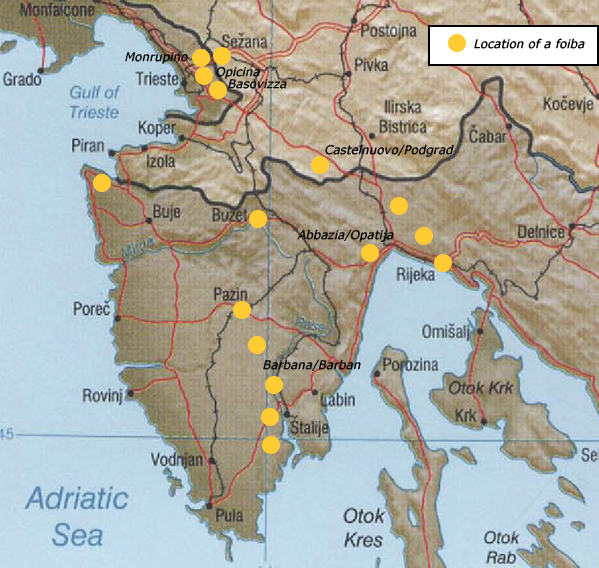
You are standing at the edge of a hole in the ground, and the ground itself is trying to swallow you. The karst plateau of Istria does not announce itself the way mountains do — it does not rise to meet the eye. It subsides. It opens. The limestone beneath your feet has been dissolving for millennia, honeycombed by underground rivers that carved chambers and shafts and vertical wells into the rock, some dropping thirty meters, some sixty, some deeper than any instrument bothered to measure at the time. The locals called them foibe, from the Latin fovea, pit. For most of human history they were simply a feature of the landscape, the way a ravine is a feature, or a coastline. Then, in the autumn of 1943, they became something else entirely.

What happened in those shafts between 1943 and 1945 belongs to a category of violence that resists the clinical vocabulary historians reach for when they need to maintain distance. Yugoslav Partisan units, operating first in the chaos following Italy’s armistice with the Allies in September 1943 and then again in the final months of the war and its immediate aftermath, systematically executed thousands of people — Italians, but also anti-communist Slovenes and Croats, members of the Italian fascist administration, local police collaborators, and, critically, a vast number of civilians whose only crime was their ethnicity or their class position as perceived by a revolutionary apparatus consolidating territorial and ideological control over a disputed borderland. The bodies were thrown into the foibe, sometimes bound at the wrists with wire, sometimes in groups connected by the same wire, so that one shot could drag several people into the dark. The geology was weaponized. The earth was made complicit.
Estimates remain contested, as they do whenever mass atrocities intersect with postwar political agendas, but the scholarly consensus that emerged after the opening of Yugoslav and Italian archives in the 1990s places the total number of victims across the entire territory — Istria, the Kvarner Gulf, Venezia Giulia, Dalmatia — between ten thousand and fifteen thousand dead in the foibe themselves, with broader figures for the entire wave of violence, including executions carried out elsewhere and deaths during forced marches to Yugoslav camps, reaching toward thirty thousand. The Commission established by the Italian and Slovenian governments in 2000, after years of bilateral negotiation, confirmed that the violence was systematic rather than episodic, ideologically motivated rather than simply retaliatory, and directed at the physical and cultural elimination of Italian presence from territories that Tito’s Yugoslavia intended to absorb permanently.
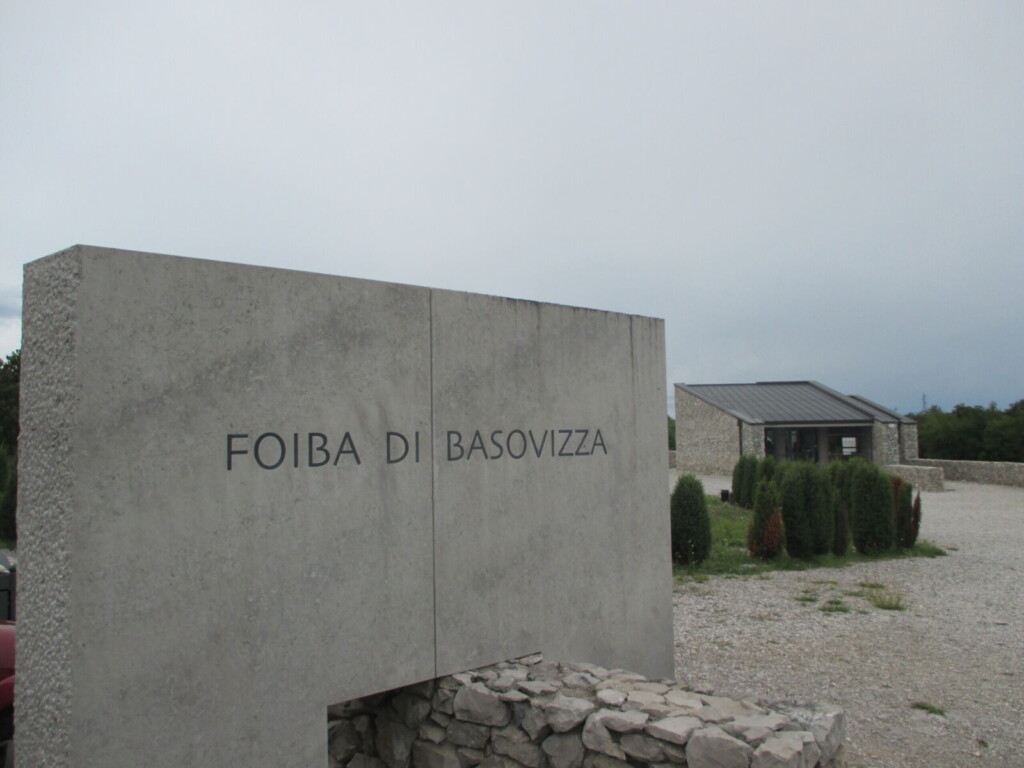
The physical evidence is still emerging. Forensic investigations of individual foibe sites began in earnest only after 1991, when the political geography of the region dissolved along with Yugoslavia itself. At the Foiba di Basovizza, now a national monument near Trieste, excavations in the 1990s recovered human remains, fragments of clothing, personal objects, military equipment. The site had been partially blocked with rubble by Yugoslav authorities after the war, a geological erasure layered on top of a human one. Other sites remain unexplored, some because the terrain makes systematic excavation technically prohibitive, some because the political will to open them has never quite outweighed the discomfort of what would be confirmed.
There is something about the material specificity of the karst that refuses abstraction. The limestone is porous, which means it does not preserve the way clay soil does — it percolates, it fragments, it disperses. Bodies decomposed in ways that made individual identification, decades later, nearly impossible. The foibe did not merely conceal the dead. They transformed them, molecularly, into the landscape itself. Which may be why the argument about this history has always been fought not only in archives and parliaments but over the status of physical remains — over whether they count as evidence, over who has the right to claim them, over what a bone fragment in a karst shaft is allowed to mean.
The Architecture of Forgetting: Cold War Memory Politics
You open a history textbook printed in Italy in 1962 and look for the word “foibe.” It is not there. You check the index under “Istria,” under “Venezia Giulia,” under “postwar violence.” Nothing. The absence is so clean, so total, that it does not feel like an oversight. It feels like a decision made in a room by people who understood exactly what they were doing.
Collective memory does not simply fade. It is managed. Paul Connerton, in his 2008 essay “Seven Types of Forgetting” published in Memory Studies, drew a clinical distinction between forgetting as loss and forgetting as prescription — the deliberate institutional erasure of events whose acknowledgment would destabilize a governing narrative. The foibe fell into the second category with a precision that is almost architectural. The silence was not built from ignorance but from calculation, and the calculation had at least two distinct authors working toward the same result from opposite political positions.
The Italian Communist Party emerged from the Resistance with a legitimacy that translated directly into cultural authority. By 1948, the PCI commanded nearly a third of the national vote and dominated the intellectual infrastructure of the Italian left — publishing houses, film criticism, historical journals, the networks through which antifascism became the organizing mythology of republican identity. That mythology required clarity: there were victims, and there were perpetrators, and the moral geography could not be complicated by acknowledging that Yugoslav Partisans — fraternal comrades in the same transnational struggle against fascism — had executed tens of thousands of Italians and thrown their bodies into karst sinkholes. The political cost of that acknowledgment was prohibitive. It would have fractured the antifascist narrative at its structural core, handed the Christian Democrats a weapon, and strained a relationship with Tito that carried genuine strategic value in the Cold War calculus.
Tito’s Yugoslavia, after its rupture with Stalin in 1948, became something Western governments needed almost as desperately as they needed to look away from what had happened in the sinkholes. The Trieste question, already resolved uncomfortably by the 1954 London Memorandum which split the Free Territory between Italy and Yugoslavia, had cost both governments enough diplomatic energy that reopening any adjacent wound was unthinkable. The United States, Britain, and Italy all shared a common interest in presenting Tito as a stabilizing, relatively moderate force in southeastern Europe. Documenting Yugoslav atrocities against Italian civilians was incompatible with that framing. The silence, then, was not merely Italian — it was NATO-adjacent, underwritten by the same strategic logic that made the West willing to fund a communist state because it sat usefully between the Soviet sphere and the Adriatic.
What makes this particular forgetting so structurally elegant is the way it required no conspiracy in the classical sense — no single directive, no coordinated censorship bureau. It operated through incentive and disincentive alone. Historians who pursued the subject found their work marginalized. Survivors who testified found themselves reclassified, quietly, as fascist sympathizers or irredentist provocateurs. The approximately 350,000 Istrians, Fiumians, and Dalmatians who fled Yugoslav-administered territories between 1945 and 1956 arrived in Italy to find a state that processed their displacement bureaucratically while refusing to absorb its meaning publicly. They were given refugee camps — some, humiliatingly, the same internment camps that had held colonial subjects and political prisoners under Mussolini — and they were handed a silence as their inheritance.
Giorgio Agamben, writing in Remnants of Auschwitz in 1999, argued that the truest testimony is always that which cannot be fully heard by the society receiving it — not because the words are unavailable, but because the political grammar of the moment has no syntactic space for them. The esuli, the exiles, spoke. Italy, for thirty years, had no grammar for what they were saying.

Ethnic Cleansing and Class Terror: Disentangling the Twin Logics
You are standing in a queue outside a government office in Trieste, May 1945, and the man beside you has disappeared by the following morning. Not arrested — disappeared. No charge, no paperwork, no witness willing to speak about it afterward. His name was Italian, his profession was civil servant, and those two facts alone were enough to constitute a verdict in a tribunal that never convened.
The temptation, when confronting this, is to reach immediately for the cleanest explanation available. Either the Yugoslav Partisans were eliminating Italians because they were Italian — ethnic persecution, a campaign of national annihilation — or they were liquidating fascists, collaborators, and class enemies in the revolutionary logic of a communist liberation movement. The historical record refuses this either/or with a stubbornness that has cost several careers among ideologically committed historians. Raoul Pupo, whose decades of archival research produced some of the most rigorously documented scholarship on the foibe and the subsequent exodus, has been explicit on this point: the two logics were not sequential, not mutually exclusive, and not cleanly separable. They operated simultaneously, feeding each other, sometimes indistinguishable at the level of the individual killing.
The documented deportations from Trieste during the forty days of Yugoslav occupation in May 1945 make the entanglement visceral. Among those taken were confirmed fascist functionaries and active collaborators with the Nazi occupation — people against whom charges of wartime violence could be substantiated. But the lists also included Italian workers who had never held party membership, Slovene anti-communists who had fought against German forces, Croatian nationalists whose crime was loyalty to the wrong ideology, and priests whose Catholicism marked them as structurally hostile to the new order regardless of what they had or had not done during the war. The ethnic and the political criteria did not produce separate lists. They collapsed into a single administrative logic of elimination.
What this means historically is that the category of victim cannot be stabilized. If ethnicity alone had driven the killings, the Slovene victims — and there were Slovene victims — become theoretically impossible. If class ideology alone had driven them, the systematic targeting of Italian-speaking communities in Istria as communities, the burning of entire villages, the deliberate destruction of Italian cultural infrastructure, becomes impossible to explain. The historian Tone Ferenc, working from Yugoslav archival sources before their full opening, already noted in the 1970s that operational orders from Partisan command distinguished between political enemies and ethnic ones in bureaucratic language while executing them through identical methods and in identical locations. The pit was ideologically neutral in its appetite.
There is something in the human need for a single explanatory frame that itself deserves examination. A genocide can be mourned and commemorated in ways that a revolutionary terror cannot — the former assigns pure innocence to victims, the latter contaminates them with political proximity to whichever side the narrative favors. A class massacre, conversely, can be absorbed into a progressive historical teleology in ways that an ethnic cleansing cannot — the former implies a future vindication, the latter only a wound. Forcing either frame onto the foibe serves a present need rather than a historical one. The Italian political right wanted martyrs of national identity; the Italian and Yugoslav left wanted either silence or the language of anti-fascist necessity. Both needs shaped the decades of institutional forgetting that followed, and both distorted the archive by determining which documents were sought, which witnesses were invited to speak, and which deaths were given names.
What the actual evidence from the killing sites suggests — the geology of bones, the recovered personal documents, the cross-referenced survivor testimonies compiled by Italian and Slovenian researchers working jointly in the 1990s — is that the foibe constituted a form of violence in which ethnicity and politics became a single targeting mechanism, each amplifying the other’s reach until the distinction between them had no operational meaning for the men doing the killing or for the institutions ordering it.
The Esodo and the Epistemology of Victimhood
You arrive at the port with a single suitcase and the address of a cousin in Turin written on a folded piece of paper, and the Italy you land in looks at you as though you are the problem.
Between 1945 and 1954, somewhere between 250,000 and 350,000 people — Italians who had lived for generations along the Istrian coast, in Dalmatia, in Fiume — boarded ships, loaded carts, and walked away from everything they had built, owned, and named. Historians use the word esodo, exodus, which carries a biblical weight that obscures the bureaucratic coldness of what actually happened: a population transfer rationalized by treaty, the Treaty of Paris in 1947, which handed territories to Yugoslavia and left their inhabitants to choose between a new citizenship and departure. Most departed. And most of them, upon arriving in Italy, were met not with the grief that might have held them but with a silence so deliberate it functioned as erasure.
The Italian Communist Party, which commanded enormous cultural authority in the postwar decades, had powerful ideological reasons to minimize what had happened in Tito’s Yugoslavia. To acknowledge the mass killings and the forced displacement too loudly would have been to acknowledge that the partisan victory on the eastern front had produced something that did not resemble liberation. The result was a strange double bind imposed on the esuli: they were expected to be grateful for the Italy they had reached while being subtly accused of embarrassing the Italy that had received them. Displaced persons’ camps — the former barracks at Padriciano, the converted structures at Laterina and Fossoli, the very same Fossoli that had held Jewish deportees — housed these families for years, sometimes decades, while official discourse treated their presence as a temporary administrative inconvenience rather than a human catastrophe.
Axel Honneth’s work in The Struggle for Recognition, published in 1992, builds on Hegel’s early Jena writings to argue that identity itself is not self-generated but constructed through the recognition of others — that to be systematically misrecognized or ignored is not merely an insult but a form of ontological damage. The esuli were not simply ignored. They were actively repositioned in public memory as figures associated with fascism, as though their displacement were a consequence they had earned rather than a violence they had survived. This repositioning performed a secondary dispossession: the first had taken their homes, the second took their right to grieve those homes in public.
What makes this dynamic so precise as a mechanism is that it does not require explicit lies. It operates through omission, through the strategic arrangement of what is discussed and what is passed over. For thirty years, February 10 — the date the Peace Treaty was signed — was not marked in Italian public life. Schools did not teach it. Television did not commemorate it. The esuli held their own ceremonies, in rented halls, among themselves, while the country around them debated other wounds. It was only in 2004, with Law 92, that the Italian Republic established a national Day of Remembrance, a recognition that arrived so late that many of those who had survived the crossing were already dead.
The philosopher Paul Ricoeur, in Memory, History, Forgetting published in 2000, distinguished between what he called abused memory and blocked memory — the former deployed too insistently, the latter suppressed by institutional or psychological refusal. The Italian esuli suffered the second, and then watched as the political rehabilitation of their memory in the early 2000s risked tipping into the first, their suffering recruited by a right-wing political culture eager to use historical grievance as a weapon against the left’s monopoly on antifascist identity. Being finally seen, it turned out, did not guarantee being seen accurately.
February 10 and the Nationalization of Grief
You are handed a date and told it belongs to you. February 10, 2004: the Italian parliament voted with near-unanimity to establish the Giorno del Ricordo, a national day of remembrance for the foibe massacres and the Istrian exodus. The law passed with 556 votes in favor and 6 against. What the arithmetic concealed was the asymmetry between the gesture and its timing: fifty-nine years after the events it claimed to honor, the Italian state was not recovering a memory — it was manufacturing one, selecting it from a warehouse of suppressed histories and dressing it for public ceremony.
Jan Assmann, in his 1992 work Das kulturelle Gedächtnis, drew a distinction that cuts directly into this problem. Communicative memory is living, embodied, fragile — it exists in the testimony of survivors, in the discomfort of dinner-table stories, in the way a grandmother’s voice changes when she reaches a certain year. Cultural memory is something else entirely: it is institutionalized, codified, ritually repeated, detached from the biological carriers who once bled for it. The Giorno del Ricordo performs precisely this transformation. It takes what was, for decades, a painful and contested communicative memory circulating among the exiled Istrian community and converts it into a fixed cultural artifact, authorized by the state, stabilized into annual ceremony, and therefore made available for political use.
The danger in that conversion is not hypothetical. Within months of the law’s passage, right-wing parties in Italy — most prominently Alleanza Nazionale, whose genealogy ran directly back to the Movimento Sociale Italiano, itself an inheritor of fascist structures — were publicly positioning themselves as the natural custodians of the foibe memory. The historical irony was grotesque and entirely unremarked upon in mainstream political commentary: the political descendants of the regime whose occupation of Yugoslavia had generated much of the context for the postwar killings were now presenting themselves as the avengers of Italian victims. Grief, once nationalized, becomes available as currency, and currency has no memory of where it came from.
This is not an accusation of cynicism leveled only at one political family. The Italian left’s decades-long silence on the foibe — a silence motivated partly by Cold War solidarity with Tito’s Yugoslavia, partly by the uncomfortable fact that the killers were Communist partisans — had already corrupted the field before the right arrived to exploit it. What 2004 produced was not a resolution of that corruption but a new layer over it: a state ceremony that resolved nothing, clarified nothing, and instead created a ritual placeholder where honest historical reckoning might otherwise have been demanded.
Commemoration as a substitute for understanding is one of the quieter catastrophes of political culture. The sociologist Paul Connerton, writing in How Societies Remember in 1989, argued that ceremonial enactment is one of the primary ways collective identity is maintained — not through argument, but through repetition of bodily and symbolic acts. What this means, practically, is that once a trauma is wired into annual ceremony, its content becomes less important than its function. The foibe, on February 10 of any given year, are not being examined — they are being performed. The candle lit, the wreath laid, the minute of silence observed: these acts consolidate identity without requiring the discomfort of genuine historical confrontation.
The Istrian exile community, which spent half a century being ignored or actively belittled by Italian public institutions, had legitimate grievances that deserved acknowledgment. But acknowledgment and instrumentalization are not the same thing, and the speed with which the Giorno del Ricordo was absorbed into the partisan arithmetic of Italian politics suggests that what the state offered was less a reparation than a recruitment — the dead pressed into service for arguments they never consented to join.
A vision curated by a filmmaker, not an algorithm
In this video I explain our vision
The Fascist Prehistory and the Problem of Moral Sequencing

You already know where the story begins when someone tells it to you in a particular way. It begins in 1943, with the German occupation of Yugoslavia, with Tito’s partisans descending from the mountains, with Italian bodies disappearing into the karst. That starting point feels like neutrality because starting points always do. But 1943 is not a neutral year pulled from the geological record of human time — it is a chosen year, and the choice does its work quietly, before you have had time to ask any questions.
The Italian state annexed Istria, Trieste, Zara, and parts of Dalmatia after 1918 through the Treaty of Rapallo and subsequent agreements, absorbing roughly half a million Slavic-speaking people who had never been asked whether they wished to become Italian. What followed was not benign assimilation. Under Fascism — formalized through the laws of 1926 and then systematically extended through the 1930s — the Slovenian and Croatian languages were banned from schools, courts, churches, and public life. Slavic surnames were Italianized by administrative decree. Cultural organizations were dissolved. The Narodni dom, the Slovenian community hall in Trieste, was burned to the ground in 1920 by a Fascist militia, three years before Mussolini even took power, which tells you something about how eagerly the violence preceded its own official ideology. By the time the racial laws of 1938 were codified, the region’s non-Italian populations had already been subjected to nearly two decades of deliberate ethnic erasure backed by state force.
Hannah Arendt, writing in The Origins of Totalitarianism in 1951, observed that statelessness — the condition of being stripped of a community that guarantees your rights — is not a product of individual misfortune but of political systems that define humanity narrowly enough to exclude specific bodies. The Slovenian teacher in Trieste in 1930 who could no longer teach in his language, whose children’s names were altered in the civil registry, whose newspaper had been shuttered — he was not stateless in the technical sense, but he inhabited a version of that condition: present in the territory, absent from its civic life, legible to the state only as a problem to be managed or eliminated.
This matters for how the foibe killings are remembered because moral weight is not distributed evenly across a timeline — it accumulates differently depending on where you begin reading. If the story opens in 1943, the Slavic partisan violence arrives as originary and inexplicable, a darkness that came from somewhere outside history. If it opens in 1918, or more honestly in 1920 with that burning building in Trieste, the violence exists inside a longer sequence of cause and response that does not excuse any specific killing but profoundly complicates who is permitted to inhabit the category of victim without qualification. The point is not that Italian deaths matter less. It is that the architecture of the narrative — which year you select as your foundation stone — determines which suffering achieves full visibility and which remains structurally suppressed.
Historians of memory, particularly Aleida Assmann in her 2006 work Der lange Schatten der Vergangenheit, have argued that collective memory is not simply selective — it is constitutively competitive, meaning that the elevation of one group’s victimhood within a shared political space almost always requires the partial occlusion of another’s. The Italian Remembrance Day for the foibe, established by law in 2004 and observed each February 10th, has never been accompanied by a symmetric national day of acknowledgment for the Fascist suppression of Slavic cultures in the same territories. This asymmetry is not accidental. It is the operational definition of a morally sequenced memory — one that begins its accounting at precisely the moment that best serves the identity it wishes to construct, and closes it before the ledger becomes inconvenient.
Silence as Complicity: The Intellectual Left's Deferred Accountability
You are handed the testimony and you set it down on the desk and you do not print it. This is not a metaphor. In the late 1940s and through the 1950s, editors at several major Italian left-wing publications received firsthand accounts from Istrian refugees describing executions, mass graves, and the systematic disappearance of civilians into Yugoslav territory. The accounts were credible, sourced, often corroborated. The decision not to publish them was not a failure of verification. It was a failure of will dressed as editorial judgment.
Hannah Arendt argued in The Origins of Totalitarianism, published in 1951, that one of the most catastrophic effects of ideological commitment is what she called the dissolution of the factual sense — the slow erosion of the capacity to treat a witnessed event as more real than the theory that contradicts it. She was writing about Stalinist fellow travelers in Western Europe, intellectuals who had seen enough to know and still chose the framework over the fact. The foibe offered a precise and painful test case for this phenomenon on Italian soil. Tito’s Yugoslavia was, for the Italian Communist Party and its cultural satellites, a revolutionary state — imperfect perhaps, but structurally allied with the project of historical emancipation. To report the massacres honestly was not merely to damage an ally. It was to hand ammunition to the Christian Democrats, to the Americans, to the Atlantic bloc. The political calculus produced a kind of epistemic verdict: these deaths were inconvenient, therefore they were uncertain.
What this meant in practice was that thousands of survivors who had escaped — who had watched family members led away at gunpoint, who had themselves been interrogated and released by chance — arrived in Italy speaking into a silence that was organized and maintained by people with printing presses and university chairs. The historian Raoul Pupo, whose research through the 1990s and 2000s did more than almost any other scholarly project to reconstruct the actual documentary record, estimated that between ten thousand and twelve thousand people were killed in the foibe and in Yugoslav detention between 1943 and 1945. These were not unknown figures floating in an archival void. Partial evidence existed throughout the postwar decades. The silence was not ignorance; it was selection.
There is a particular cruelty in being disbelieved not because your account is implausible but because it is politically inconvenient for the people listening. The survivors of the foibe experienced something that compounds the original trauma — a second erasure, performed not by the perpetrators but by the intellectuals of their own country who had appointed themselves the custodians of antifascist memory. Because the victims were often Italian, and because Italian nationalism had been weaponized by fascism, the deaths could be reframed as the regrettable but comprehensible aftermath of occupation and collaboration. This logic required treating the murdered as guilty by national association — which is precisely the collective punishment logic that antifascism claimed to oppose.
The Italian Communist Party’s official line, maintained with varying degrees of rigidity until the late 1980s, held that reports of Yugoslav atrocities were substantially fabricated or grossly exaggerated by reactionary and irredentist forces. Even after Khrushchev’s 1956 denunciations cracked the ideological architecture for many European leftists, the specific question of the foibe remained largely unaddressed within Italian progressive culture. The revisionary work came slowly, partially, and often from outside the traditional left — which meant that when the political right eventually claimed the memory of the foibe as its exclusive property in the 1990s, the left had almost no credible ground from which to contest that appropriation. The silence had not only failed the dead. It had forfeited the possibility of a reckoning that belonged to everyone.
The Uninheritable Memory: Third-Generation Testimony and Its Limits
You are twelve years old and your grandmother is crying again at the kitchen table, and you do not yet have the words for what she is mourning, only the image of her hands flat against the wood as if steadying something that keeps threatening to slide away. You absorb the grief before you understand its object. That absorption — wordless, bodily, transmitted through atmosphere rather than archive — is precisely what Marianne Hirsch called postmemory, a term she developed in the context of Holocaust descendants in “The Generation of Postmemory” (2012) to describe the relationship between the children of survivors and the experiences that preceded their birth, experiences so defining they constitute a kind of inherited wound that functions with the force of actual memory without ever having been lived.
Among the grandchildren of the esuli — the Istrian, Dalmatian, and Fiume Italians expelled between 1943 and 1956, a displacement affecting between 250,000 and 350,000 people — postmemory has taken on a particular and troubled shape. The original generation carried loss that was not only unacknowledged but actively suppressed by the Italian state, which for decades preferred geopolitical convenience with Yugoslavia over the discomfort of its own refugees. The second generation inherited both the wound and the silence, developing a kind of double consciousness: knowing something monstrous had occurred, lacking the social permission to speak it. The third generation has arrived into a political landscape that has reversed this suppression with surprising completeness — February 10th became Italy’s National Day of Remembrance for the foibe victims in 2004 — and yet the reversal has introduced distortions of its own that postmemory alone cannot metabolize.
The problem with politically institutionalized grief is that it transforms a phenomenological reality into a rhetorical instrument. Giorgio Agamben’s work on the witness in “Remnants of Auschwitz” (1999) illuminates something essential here: the true witness, the one who lived the unsurvivable, can never fully speak, and what gets spoken in their name is always already a translation that carries the interests of the translator. When the Italian right appropriated the foibe in the 1990s and 2000s as a counter-narrative to partisan resistance — positioning Yugoslav communist atrocity against Italian fascist atrocity in a kind of moral algebra — they did not liberate the memory. They conscripted it. And the descendants, who had waited decades for recognition, found themselves suddenly visible but in a mirror held at an angle that served someone else’s reflection.
This creates a particular anguish in third-generation testimony that researchers in traumatic inheritance are only beginning to map. The desire for recognition — legitimate, human, rooted in genuine suffering — carries within it a demand that no archive can ultimately satisfy, because what is truly being sought is not historical acknowledgment but the retroactive restoration of dignity to people who died without witnesses, in unmarked karst pits, in the specific silence of those whom history preferred not to see. Paul Ricoeur, in “Memory, History, Forgetting” (2004), distinguished between memory’s claim to faithfulness and history’s claim to truth, arguing that justice owed to the dead requires both without collapsing one into the other. The foibe have been remembered with increasing intensity and remembered badly — instrumentalized before they could be properly mourned — and the third generation inherits not a completed grief but a grief that has been interrupted at each stage by political metabolism.
What no institution can give back is the specific texture of what was lost: not just lives but a world, the particular Italian-speaking civilization of the eastern Adriatic coast, its dialects, its architecture, its layered Venetian and Austro-Hungarian and Slavic cultural sediment, gone so completely that most Italians today could not locate Pola or Zara on a map. That erasure is the real inheritance of the esuli’s grandchildren — not trauma in the clinical sense, but the stranger grief of mourning a country that no longer exists to return to, carrying a memory of a place that has become, in all the ways that matter to the living, entirely and irrevocably imaginary.
🕯️ Memory, Tragedy, and the Weight of History
The foibe tragedy is a wound in Italian collective memory that intersects with broader themes of historical violence, the politics of remembrance, and the struggle of communities to bear witness across generations. These related articles explore the forces — ideological, cultural, and psychological — that shape how societies confront their darkest chapters and the human cost of denial or distortion.
The indissoluble link between historical memory and collective consciousness
Historical memory is never a neutral archive: it is a living force that shapes collective identity and determines how communities understand themselves in relation to past trauma. This article explores how shared memory binds societies together while simultaneously becoming a battlefield for competing narratives. Understanding this dynamic is essential to grasping why tragedies like the foibe remain contested and painful long after the events themselves.
GO TO THE SELECTION: The indissoluble link between historical memory and collective consciousness
The concept of generational legacy and the duty of bearing witness
Every generation inherits the unresolved silences and unspoken traumas of those who came before, and with them a moral obligation to keep memory alive. This article examines how the duty of testimony functions across time, transforming personal grief into collective historical conscience. The foibe survivors and their descendants embody precisely this agonizing responsibility of carrying forward what official history long tried to suppress.
GO TO THE SELECTION: The concept of generational legacy and the duty of bearing witness
Jan Assmann and Cultural Memory
Jan Assmann’s theory of cultural memory provides one of the most rigorous intellectual frameworks for understanding how societies encode, transmit, and sometimes deliberately erase traumatic historical events. His distinction between communicative and cultural memory illuminates why certain tragedies take decades to enter official commemorative culture. Applied to the foibe, Assmann’s thought helps explain both the long silence and the eventual, fraught emergence of public recognition in Italy.
GO TO THE SELECTION: Jan Assmann and Cultural Memory
Racial violence worldwide: Emblematic cases of recent history
The foibe massacres were embedded in a broader context of ethnic hatred, wartime revenge, and ideological extremism that echoes across other episodes of mass violence in modern history. This article surveys emblematic cases of racial and political violence around the world, tracing the common mechanisms of dehumanization that precede atrocity. Placing the foibe within this wider comparative lens reveals the universal patterns that enable ordinary people to commit extraordinary acts of cruelty.
GO TO THE SELECTION: Racial violence worldwide: Emblematic cases of recent history
Discover Cinema That Confronts History on Indiecinema
If these stories of memory, violence, and historical reckoning move you, Indiecinema’s streaming platform offers a curated selection of independent films that confront exactly these themes — works that mainstream cinema too often leaves in the dark. Explore documentaries and auteur films that give voice to forgotten tragedies and bear witness with courage and artistic depth.
👉 EXPLORE THE CATALOG: Watch Indie Films in Streaming
A vision curated by a filmmaker, not an algorithm
In this video I explain our vision

