
The Weight of What You Cannot Forget
You are sitting at the table and someone says it — casually, between the bread and the second course — the name of something that happened before you were born. A sacrifice, a slight, a piece of land, a promise made by people who are now photographs on the wall. The tone is not nostalgic. It is judicial. The past arrives at the table not as a story but as a summons. You are expected to carry something you never chose to pick up. You are expected to feel the weight of it in your chest as if it were your own wound, your own debt, your own glory. And the strange part — the part that no one mentions — is that you do. You feel it. The machinery works perfectly.

This is how history enters the body. Not through books, not through dates, not through the careful arguments of scholars, but through the dinner table, through the tone of voice that says: this still matters, this is still unfinished, you are still implicated. The past is not over. The past is a living creditor, and you owe.
We have been told, in a thousand different registers, that this is a virtue. That to remember is to honor. That to carry the weight of history is to be serious, responsible, morally awake. Forgetting, by contrast, has been constructed as a kind of violence — a second erasure, an abandonment of the dead, a betrayal of everything that was endured so that you could sit comfortably where you now sit. The architecture of this belief is so complete that to question it feels like sacrilege. To say: perhaps we are being crushed by this — is to risk being accused of precisely the lightness, the callousness, the historical blindness that the whole edifice was designed to prevent.
Friedrich Nietzsche, in 1874, wrote a short and explosive text that almost no one reads carefully enough. In the second of his Untimely Meditations — “On the Uses and Disadvantages of History for Life” — he made an argument that still lands like a slap because it refuses the comfortable position. He did not say history is unimportant. He said history can become a disease. He called it historical fever, historische Krankheit — a condition in which the accumulated past becomes so heavy, so total, so omnipresent, that the present loses its capacity to act, to will, to begin anything genuinely new. The person afflicted, and the culture afflicted, can only look backward. Every forward movement is immediately colonized by precedent, by archive, by the paralyzing awareness of everything that has already been tried and failed and been forgotten and tried again.
What Nietzsche diagnosed in the intellectual culture of nineteenth-century Germany — that intoxication with historical erudition, that belief that to know more history was to be more alive — was not merely a scholarly pathology. It was a template for a far deeper human trap. Because the same mechanism operates at every scale. It operates at the dinner table. It operates in the therapy room where someone spends years rehearsing a childhood that will not yield. It operates in political discourse where the invocation of historical grievance functions not as analysis but as paralysis — as a way of preventing the present from having any authority over the past.
The question Nietzsche was asking — and it is a question, not a comfort — is not whether the past matters. Of course it matters. The question is: who does it serve, this insistence that you can never put it down? When memory becomes obligation, when remembering becomes the price of belonging, when history is handed to you as a verdict rather than a tool, something has gone wrong. Something is being done to you, not for you.
Return to Planet Underground
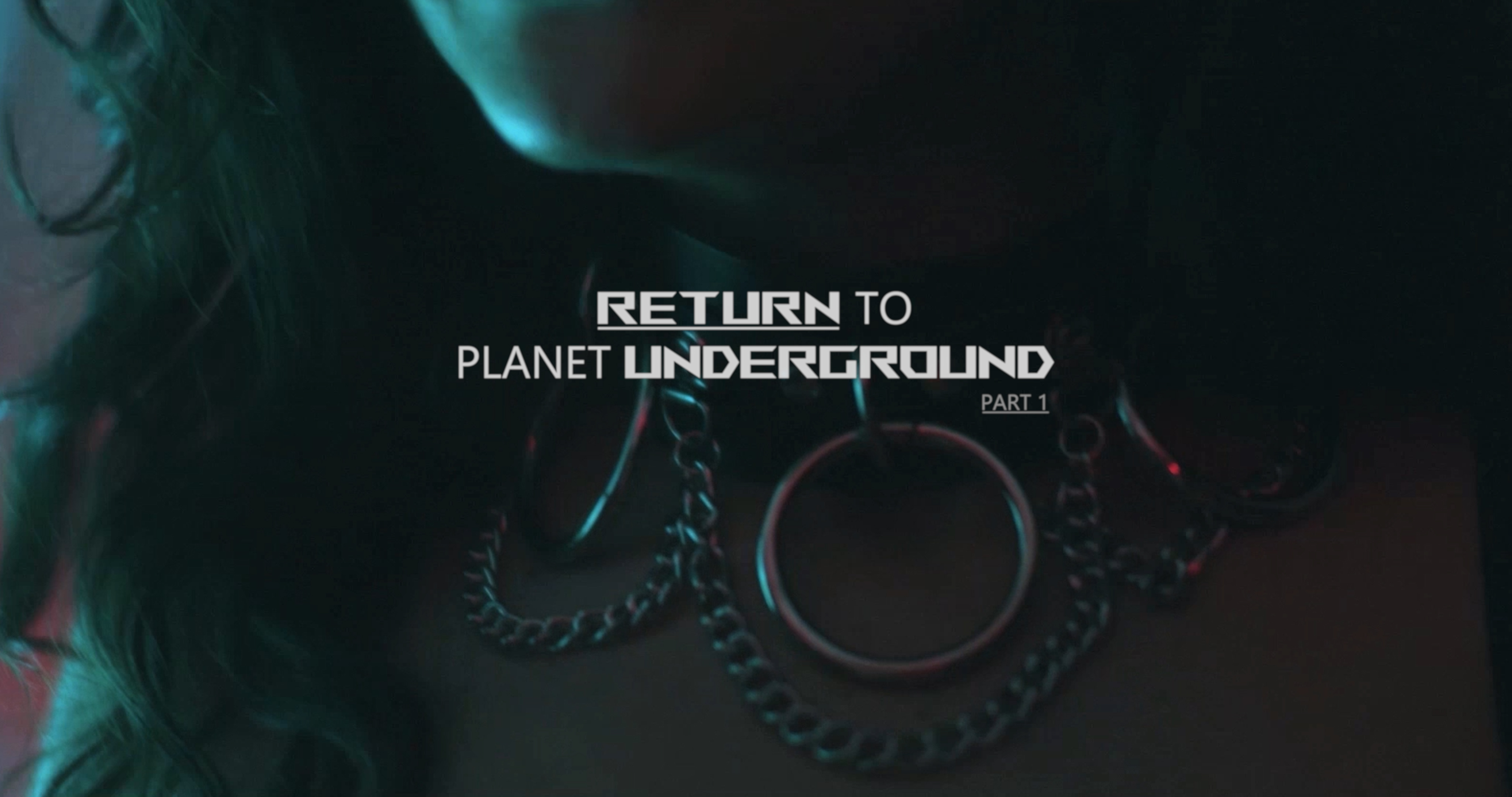
Drama, Thriller, by Gideon Homes, Netherlands, 2025.
A former underground techno DJ working in a large and famous law firm delves into the dark side of society. With one eye on the past and one on the future, he stirs up the ashes of the true underground. The demand of society to function superficially and deliver top performance increasingly clashes with the protagonist's questioning of his own life reality and the values of his past. After being employed for almost six years and being a respected employee, Tyrel falls ill. On top of that, he witnesses a fraud within the company and asks to leave. But the illness creates a complex situation in which his employer starts playing a game of chess with Tyrel.
In "Return To Planet Underground", director Gideon Homes gives the audience a gripping insight into the Dutch underground techno scene, offering a gripping drama set in a dark world, full of intense moments and touching human tragedies. This film is not just a visual feast; it is a gripping exploration that immerses viewers in the lives of its protagonists. Set to a backdrop of thumping techno beats, "Return To Planet Underground" takes audiences on a rollercoaster ride through the highs and lows of human desires, drug-fueled escapades, societal pressures and the pursuit of perfectionism. Drawing inspiration from iconic films such as Trainspotting, Berlin Calling and Human Traffic, Gideon Homes' work stands out for its unique stylistic devices and unconventional storylines. Based on real events and personal experiences, "Return To Planet Underground" faced numerous lawsuits before finally conquering audiences around the world. Prepare yourself for an immersive dive into a world where music, morality and the human spirit collide.
LANGUAGE: English, Dutch
SUBTITLES: Spanish, French, German, Portuguese
Nietzsche’s Diagnosis, Written in Peacetime and Read in Crisis
He was twenty-nine years old and already burning with something that looked less like ambition than like alarm. The text he produced in 1874 — the second of his Untimely Meditations — reads less like philosophy and more like a temperature reading taken from a patient who does not yet know he is ill. Not a treatise. A fever chart. And the fever it measured was not his own.
Germany had just won. The Franco-Prussian War ended in 1871 with a humiliation so total for France that the echoes would reverberate for decades, eventually becoming one of the underground pressures that detonated 1914. But in the immediate aftermath, the newly unified German state was drunk on itself — drunk on its flags, its dates, its battles, its Bismarck, its suddenly legible national narrative. Everywhere Nietzsche looked, he saw a culture mistaking the accumulation of the past for the vitality of the present. Universities catalogued. Institutions commemorated. Citizens learned to recite history as though recitation were the same as living.
What he diagnosed was not ignorance. That would have been simpler to treat. What he diagnosed was the opposite of ignorance — a surfeit, a glut, a civilization so thoroughly upholstered in its own historical self-knowledge that it had lost the capacity to act, to err, to begin. He called it historical sickness, and he was precise about its symptoms: the inability to finish anything, the compulsion to contextualize every present impulse before allowing it to breathe, the creeping paralysis that descends when every action feels already interpreted, already judged, already placed within a narrative so large that the individual gesture seems both inevitable and irrelevant.
You recognize this. You have sat down to begin something — a project, a conversation, a life — and felt the weight of everything that has already been said about it press down before you have written the first word. That pressure has a name, and Nietzsche named it in 1874 with a precision that should embarrass every subsequent century.
He distinguished, with the careful brutality of a surgeon who is also the patient, between three modes of relating to history: the monumental, which worships the great moments of the past and uses them to crush the mediocrity of the present; the antiquarian, which preserves everything indiscriminately, smothering the living under the weight of what merely preceded them; and the critical, which drags the past before a tribunal and judges it — though he warned even here that the judges are themselves products of what they condemn. None of these modes is simply good or simply bad. Each becomes pathological when it metastasizes, when it ceases to serve life and begins instead to devour it.
The phrase he used — “in the service of life” — is the axis on which the entire argument turns. History, he insisted, is only ever justified when it helps something grow, when it provides root system for a living organism rather than becoming the organism itself. The moment a culture begins treating its historical self-consciousness as an achievement rather than a tool, it has crossed a threshold from which return is difficult and rarely voluntary.
He was writing in peacetime. That is the detail that lodges like a splinter. He was not writing from rubble or exile or the immediate aftermath of catastrophe. He was writing from within a triumphant moment, watching celebration harden into the earliest stages of paralysis, watching pride calcify into the inability to imagine anything genuinely new. The diagnosis was made precisely when the patient felt most healthy, most vindicated, most historically confirmed.
This is what makes the text so strange and so durable — not that it describes collapse, but that it describes the condition that makes collapse, eventually, the only remaining form of forward motion.

Three Modes of History, Three Traps
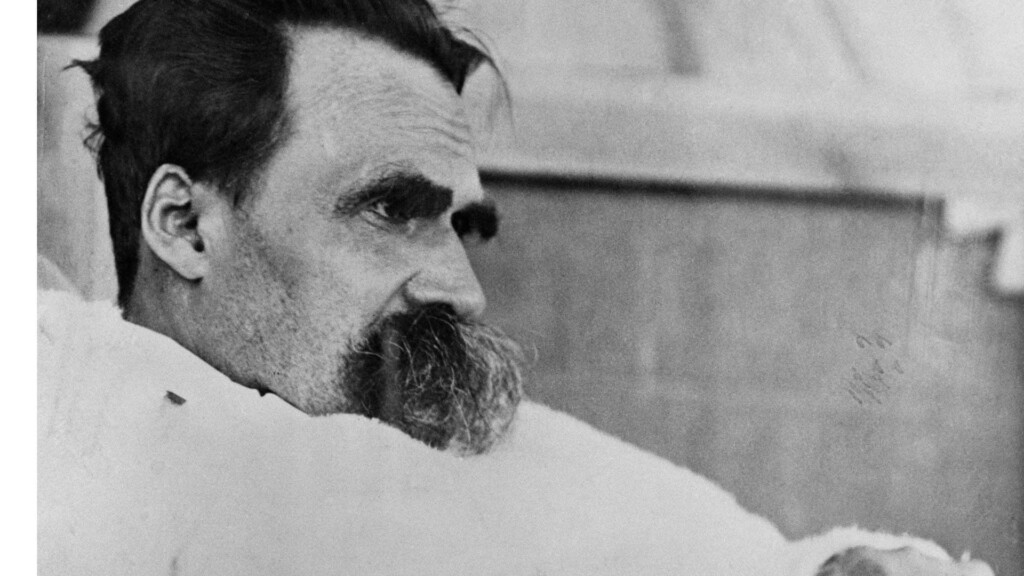
There is a particular kind of paralysis that looks, from the outside, exactly like pride. You have heard someone invoke the greatness of what came before — a family name, a national golden age, a revolutionary tradition — with a solemnity that functions as a shield. The invocation is never quite about the past. It is about the present’s unbearable inadequacy, dressed in borrowed armor. Nietzsche called this monumental history, and he understood it with a precision that should make anyone uncomfortable: the greatness of the dead is summoned not to inspire but to excuse. If your ancestors were titans, your own smallness becomes cosmically ordained. You are not failing — you are waiting, custodian of a flame too large for ordinary hands.
But there is a second trap, quieter and more insidious, that belongs not to the person who gestures at monuments but to the one who cannot throw anything away. Think of a man who returns to the house where he grew up, perhaps after a death in the family, perhaps after a long absence, and finds himself unable to move a single object from its place. The chipped coffee cup. The faded curtain. The particular angle of a door that has always stuck. He tells himself he is preserving something real, something that would be violated by change. But what he is actually preserving is himself — a version of himself that no longer exists except in these objects, which have become, without his noticing, a prosthetic identity. The present terrifies him. Not because it is dangerous but because it is open, undetermined, requiring him to be someone he has not yet rehearsed. So he becomes a curator of his own childhood, moving through those rooms with the reverence of an archivist, touching things he will not use, keeping things he does not need, because the alternative is to step outside into a life that has no museum.
This is what Nietzsche meant by antiquarian history: the love of the past that begins as rootedness and ends as suffocation. The antiquarian, he wrote in the 1874 essay, “gives to the things of the past a blind, frenetic, and devotional care.” What starts as fidelity becomes fossilization. The past ceases to be a source and becomes a destination — a place you move into permanently because the future requires courage you have not gathered.
And then there is the third figure, the one who has gathered that courage, or something that resembles it. The one who cuts. Who dismantles. Who arrives at the conviction that everything inherited is contaminated, that the only honest posture toward tradition is demolition. Nietzsche called this critical history, and he was not entirely against it — there are moments when it is necessary, when the weight of the past has become genuinely pathological. But he watched it closely, because he understood its shadow. The person who destroys everything and then stands in the rubble wondering why they feel empty is not a revolutionary who has succeeded. They are a person who confused liberation with erasure. Because you are not free of what you refuse to remember. You are only free of what you have understood. Repudiation is not the same as integration. The revolutionary who scorns all inheritance does not escape it — they perform their escape compulsively, which is another way of being owned.
What Nietzsche identified in these three modes was not a taxonomy of historical approaches. He identified three emotional postures, three ways of avoiding the present by misusing the past. The monument that crushes. The archive that embalms. The bonfire that leaves you cold. Each of them offers a story about who you are. None of them requires you to find out.
The Animal That Cannot Forget
You watch a dog sleep in the afternoon sun. Its legs twitch, a small sound escapes its throat, and then it is still again. Whatever just moved through its nervous system — fear, pursuit, the phantom of some chase — it is already gone. The animal wakes, stretches, and looks at you with eyes that hold no yesterday. There is something in that gaze that you cannot quite name, something that is not stupidity but a kind of radical availability to the moment that you, standing there with your coffee cooling in your hand and last Tuesday’s argument still rehearsing itself in your chest, have never once possessed.
Nietzsche saw this and was honest enough to call it what it was: an enviable condition. He wrote in 1874, in what remains one of the most unsettling diagnoses of modern consciousness ever composed, that the human being watches the animal with wonder and with melancholy, because the animal does not know what it means to be bound. The beast, he said, lives unhistorically — and is therefore, in a specific and non-trivial sense, happy. Not because its life is easier or longer or safer, but because it does not drag the accumulated weight of everything that has already occurred into every moment that arrives. It does not carry the grave with it.
The human being, by contrast, is the animal that cannot forget. And here Nietzsche is not speaking metaphorically or loosely. He means something precise and physiological in its consequences: we are creatures constituted by temporal accumulation, and this constitution is both our power and our wound. The past does not recede for us. It sediments. It hardens into identity, into grievance, into the subtle architecture of expectation that makes us see every new situation through the lens of every old one. You do not enter a room. You enter a room plus every room you have entered before it. You do not meet a person. You meet a person plus every person who has ever reminded you of something you once needed or feared.
Antonio Damasio spent years mapping the neurological infrastructure of exactly this problem. His work on somatic markers — the body’s stored record of emotional outcomes, the way the nervous system tags past experiences with physiological signatures that then bias future decisions before conscious thought even begins — describes in biological terms what Nietzsche diagnosed philosophically. The past is not a library you visit. It is a current running through your body, shaping what you reach toward and what you recoil from before you have had time to think about it at all. You believe you are reasoning. You are, in part, remembering.
But here is where something more disturbing enters. Paul Ricoeur, in his monumental late work published in 2004 after decades of wrestling with time, narrative, and human identity, made an argument that cuts beneath even this. Memory, he insisted, is not a passive archive. It is not even a reliable recording. It is an active reconstruction, selective and shapeshifting, and it is shot through with what he called the violence of interpretation. Every time you retrieve a memory you alter it. Every time you tell yourself the story of what happened — who wronged you, who loved you, what you lost — you are not replaying a recording. You are rewriting a manuscript, and the version you produce is always, in some way, shaped by who you need to have been and who you need the other person to have been in order for your present life to make the sense it currently makes.
The past you carry is never the past as it was. It is the past as your present self requires it to have been. Which means that the chain binding you is not made of iron but of narrative, and narrative is something that human beings have been constructing and revising since long before they knew they were doing it.
Nations Built on Curated Amnesia
What happens to a man when the story that made him turns out to be a story? Not a lie, precisely — something more unsettling than a lie. A myth. A necessary myth. He finds a box of letters in his father’s attic, or he sits across from an elderly uncle at a funeral, and the uncle says something offhand, something he assumes everyone already knows, and the floor tilts. The father was not in the resistance. The father was somewhere else entirely, doing something that does not fit the story, something that the family had quietly agreed, across generations, never to name. The son sits there and the heroism he inherited — the heroism that taught him what courage meant, that gave him his spine — dissolves not into villainy but into ordinariness. Which is somehow worse.
This is not a private catastrophe. It is the structure of every nation that has ever existed.
Ernest Renan stood before an audience at the Sorbonne in 1882 and said something that should have been scandalous and was instead largely ignored in its radicalism: that forgetting, and even historical error, is an essential factor in the creation of a nation. He was precise about this. He did not say forgetting was unfortunate or inevitable. He said it was constitutive. The unity of France, he argued, required Frenchmen to have forgotten the Saint Bartholomew’s Day massacres, to have forgotten the massacres in the south in the thirteenth century. The nation is not built on memory. It is built on the management of memory, which means, above all, the management of forgetting.
Benedict Anderson arrived at this same architecture from a different angle when he published Imagined Communities in 1983. A nation, he wrote, is an imagined political community — imagined because the members of even the smallest nation will never know most of their fellow-members, yet in the minds of each lives the image of their communion. What Anderson understood, and what makes his formulation still corrosive forty years later, is that this imagining is not delusional or shameful. It is the very mechanism by which collective life becomes possible. But it requires a narrative, and every narrative requires an editor, and every editor requires criteria for what stays and what goes.
What goes is almost always the part that doesn’t fit. The collaboration. The profiteering. The neighbors who watched and said nothing. What stays is the resistance fighter, the sacrificial mother, the founding myth of a people who chose freedom over submission. Nietzsche saw this clearly in his 1874 essay, when he warned that history becomes dangerous the moment it is placed exclusively in the service of life — because life, at the national scale, does not want truth. It wants legitimacy. It wants a story that makes the present feel inevitable and the people who hold power feel deserving.
The son in the attic does not only discover something about his father. He discovers something about how identity is manufactured — at every scale, from the family to the empire. He discovers that what he called his values were partly an inheritance from a fiction, and that this does not make them worthless, but it does make them different. They are no longer received. They must now be chosen, or not chosen, consciously, with the full knowledge that their origin was constructed.
This is almost unbearable. It is also, Nietzsche might say, the beginning of something honest.
Because the alternative — the curated amnesia that nations run on, the edited archive that families call tradition — does not protect you from history. It only delays the moment when you have to sit with what actually happened, in an attic, holding letters that were never meant to be read.
A vision curated by a filmmaker, not an algorithm
In this video I explain our vision
The Living Buried Under the Dead

There is a moment you recognize immediately, even if you have never worked inside a ministry or a hospital administration or a university committee. You walk into a room where a decision needs to be made, urgently, about something that is happening right now, and you watch the room fill instead with precedent. Someone pulls out a document from 1987. Someone else mentions what was decided in 1994. A third person cites the founding statutes, the original charter, the tradition of the institution, as if the tradition were a living organism that could be offended by haste. The present emergency sits in the corner of the room like an uninvited guest, growing paler by the hour, while the institution performs its devotion to everything that has already happened.
This is precisely what Nietzsche saw coming. In the second of his Untimely Meditations, written in 1874, he described the condition of a culture so saturated with its own history that it loses the capacity to act. Not because it lacks intelligence or goodwill, but because it has accumulated too much. The weight of what has been done, recorded, archived, and commemorated eventually exceeds what any present moment can carry. The living, he wrote, are buried under the dead. They cannot move because moving would mean leaving something behind, and the institution has made leaving things behind into a form of sacrilege.
Walter Benjamin understood this image with a depth that only comes from standing at the absolute edge of catastrophe. In the autumn of 1940, weeks before his death on the Spanish border while trying to flee Nazi-occupied Europe, he wrote a series of theses on the philosophy of history that remain among the strangest and most devastating documents of the twentieth century. In the ninth thesis, he described an angel whose face is turned toward the past. What the angel sees is not a sequence of events but a single catastrophe, accumulating wreckage upon wreckage, piling the debris sky-high. The angel would like to stay, to awaken the dead, to make whole what has been smashed. But a storm blows from Paradise and propels the angel irresistibly into the future, to which its back is turned. That storm, Benjamin wrote, is what we call progress.
The image does not comfort. It was not meant to. Benjamin was not describing nostalgia or the beauty of the past. He was describing the structural inability to turn and face what is coming, because the wreckage behind you demands your total attention. The institution in that room, with its documents and its precedents and its founding charters, is the angel. It cannot turn. It is too busy cataloguing the debris.
There is a scene that lives in the memory with unusual persistence. An old man sits in a vast bureaucratic building, moving papers from one side of his desk to the other with the methodical solemnity of a religious rite. Around him, everything is dying. The organization he serves has become a hollow architecture of itself, a shell maintaining the form of function while the substance has long since evacuated. He does not see this. Or rather, he sees it and continues anyway, because the continuation is the only thing that still makes sense. The papers must move. The procedures must be followed. The history of the institution is the institution now. There is nothing else.
Nietzsche’s warning was not about individuals who love the past too much. It was about structures. Bureaucracies. Canons. Academic disciplines. Museums. Religions. Any human organization that begins by serving life and ends by demanding that life serve it. The point at which conservation becomes the primary function is the point at which generation stops. Not suddenly. Gradually. The way a river silts up, almost imperceptibly, until one day you realize the water is no longer moving.
Forgetting as an Act of Power
There is a kind of person you have met — perhaps you have envied them without fully understanding why — who moves through the world without the particular drag that history exerts on most people. They are not stupid. They are not shallow in any obvious way. But something in them does not accumulate. Grievances dissolve. Betrayals, once processed, leave no sediment. You watch them at a dinner table, laughing at something that would have cost you three nights of insomnia, and you feel simultaneously drawn toward them and faintly disturbed, as though their lightness were achieved at a price you cannot quite calculate.
Nietzsche saw this quality not as a defect but as a mark of genuine vitality. In the second of his Untimely Meditations, published in 1874, he is already arguing that the capacity to forget actively — not passively, not through stupidity, but through a kind of sovereign metabolism of experience — is what allows a living creature to remain present, to act, to create rather than merely catalogue. The animal grazing in the field, he writes, does not know what yesterday was. This is not its poverty. This is its happiness. And he asks, with characteristic provocation, whether the human inability to forget is not sometimes less a sign of depth than a sign of disease.
By 1887, in the Genealogy of Morality, the argument has sharpened into something more precise and more unsettling. Active forgetting is there described as a genuine faculty — not the absence of memory but its counterforce, a positive inhibitory power that prevents experience from being perpetually re-digested, that keeps the psyche from drowning in its own sediment. He calls it a doorkeeper of psychic order, a preserver of the present against the tyranny of the past. Without it, there is no action, only reaction. Without it, ressentiment — that slow poison of accumulated grievance — becomes the dominant mode of existence.
Then Freud arrives to complicate everything, as Freud always does. In his 1915 paper on repression, and across the broader architecture of his metapsychology, he insists that what is forgotten is never truly gone. It is displaced, transformed, encrypted into the body, into compulsive behavior, into the repetitions that structure a life without the person ever naming their source. The return of the repressed is precisely the failure of that doorkeeper Nietzsche celebrated — or rather, its corruption. What looks like lightness may be the heaviest thing of all, simply carried below the threshold of consciousness.
The distinction between Nietzsche’s active forgetting and Freud’s repression is not academic. It is the difference between digestion and a locked room. One transforms what enters it; the other merely hides what cannot be processed. And the terrifying truth is that from the outside, from your vantage point at that dinner table, the two are almost indistinguishable. The person who has genuinely metabolized their past and the person who has simply buried it intact may produce the same social surface: the same easy laughter, the same apparent freedom from grievance. The difference announces itself only in time, and usually catastrophically.
Think of a man who has returned from something — war, loss, a violence that reshapes the structure of the possible — and who functions, who performs normalcy with such conviction that even he believes the performance. He builds a life on top of the silence. He loves people with a genuine warmth that coexists, somehow, with an absolute absence at his center. He is not lying. He simply cannot find the entrance to what happened. And watching him, you do not know whether to call this survival or its most elegant disguise. His lightness is real and it is borrowed. His forgetting works — until the moment, always arriving eventually, when it reveals what it was always protecting against.
What History Does to the Body
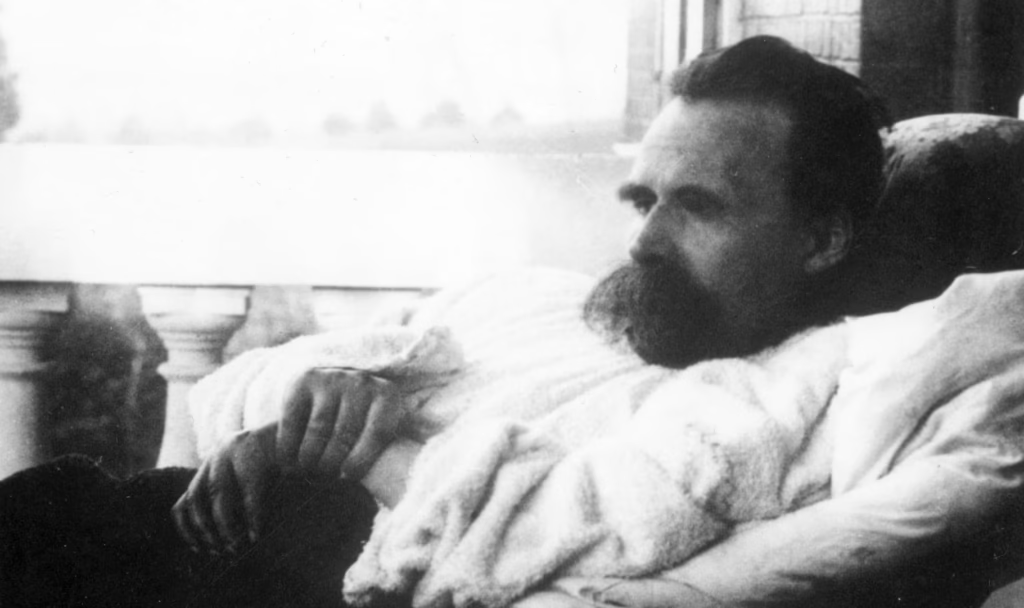
There is a particular way people hold their shoulders when they talk about what cannot be changed. You have seen it. You may do it yourself. A slight forward collapse, a rounding inward, as though the body has already conceded the argument before the mouth has finished making it. It is not weakness, exactly. It is something older than weakness. It is the posture of someone who has been told, across enough generations and with enough consistency, that the architecture of the world is fixed, that the walls are load-bearing, that to push against them is not courage but delusion.
Nietzsche saw this happening in the nineteenth century and named it as a cultural disease, but he could not have known then what researchers would begin to document a hundred years later: that the disease is not merely ideological. It lives in the body. It is passed through the body. Rachel Yehuda’s work, developed across the 1990s and into the 2000s at Mount Sinai School of Medicine, demonstrated that descendants of Holocaust survivors showed measurably altered cortisol levels and stress hormone regulation — biological signatures of trauma they had not personally experienced. The epigenome, unlike the genome, is not fixed. It responds to environment, to terror, to prolonged helplessness, and it transmits those responses across generations as surely as eye color or bone structure. History, in other words, is not metaphor. It is biochemistry. It is the tension in your jaw when authority enters the room. It is the sleep you lose before a confrontation that should feel manageable. It is the voice that drops, involuntarily, when you are about to say something true in the wrong company.
This is what makes the Nietzschean critique of monumental and antiquarian history so much more radical than it first appears. He was not making an epistemological complaint about how we narrate the past. He was diagnosing a somatic condition. When a civilization saturates itself in inherited narratives of defeat, martyrdom, grudge, and glory — when children are handed the emotional weight of events that ended before their grandparents were born — the result is not just a distorted understanding of history. It is a distorted capacity to inhabit the present. The body learns its limits from stories it never chose. It internalizes the ceiling before it ever stands up straight.
And yet. The alternative is not forgetting. Nietzsche never argued for amnesia. What he argued for, in that strange and urgent text of 1874, was selectivity — the capacity to use the past rather than be used by it, to metabolize rather than be metabolized. But that is precisely what collective historical saturation makes nearly impossible. When the past is everywhere — in monuments, in school curricula, in family silences that are themselves a form of speech — it is not a resource you draw on. It is a medium you move through, like water, which means you cannot see it clearly enough to choose.
Someone is standing in a doorway. Behind them, a room full of accumulated objects, photographs, furniture that belonged to people who are no longer alive, the particular smell of a house that has held the same grief for decades. Ahead of them, a corridor that leads outside, toward something not yet shaped, not yet named. They are not paralyzed, exactly. Their hand is on the frame. They could move. The body, however, carries its full inheritance in this moment — every story about what happened last time someone in this family tried to leave, every biological trace of every fear that was never metabolized but only transmitted forward. Whether the capacity to step through — truly through, not just geographically but historically, somatically, in the deepest registers of what it means to begin — is something that can still be recovered is the question that history, for all its density and weight, has never once stopped asking.
🌀 Time, Memory, and the Weight of History
Nietzsche’s meditation on history raises urgent questions about how the past shapes identity, culture, and the possibility of living fully in the present. These related articles explore the philosophy of memory, the politics of commemoration, and the theorists who have grappled with history’s double-edged power.
Paul Ricœur: Life and Philosophy of Memory
Paul Ricœur dedicated much of his philosophical life to understanding how memory, history, and forgetting intertwine to form human identity. His work echoes Nietzsche’s concern that an excess of historical consciousness can paralyze rather than liberate, and he sought to articulate a just and living relationship with the past. Reading Ricœur alongside Nietzsche reveals how the question of memory remains one of philosophy’s most urgent unresolved tensions.
GO TO THE SELECTION: Paul Ricœur: Life and Philosophy of Memory
Pierre Nora and the Sites of Memory
Pierre Nora‘s concept of ‘sites of memory’ examines how modern societies construct monuments, archives, and rituals to compensate for the loss of living memory. This project resonates deeply with Nietzsche’s critique of the antiquarian and monumental uses of history, which risk turning the past into a museum rather than a force for renewal. Nora’s work invites us to ask which memories are preserved, which are silenced, and who decides.
GO TO THE SELECTION: Pierre Nora and the Sites of Memory
Jan Assmann and Cultural Memory
Jan Assmann developed the concept of cultural memory to explain how societies encode their collective identity across generations through texts, rituals, and symbols. His framework directly confronts Nietzsche’s suspicion that cultures can be suffocated by the weight of inherited tradition, transforming memory from a living resource into a dead archive. Assmann’s distinction between communicative and cultural memory offers a nuanced counterpoint to Nietzsche’s radical call for forgetting.
GO TO THE SELECTION: Jan Assmann and Cultural Memory
Eliade’s The Myth of the Eternal Return: Analysis
Mircea Eliade‘s analysis of the myth of the eternal return explores how archaic cultures sought to escape the burden of historical time by cyclically returning to sacred origins. This mythological approach to time stands in fascinating tension with Nietzsche’s vision of history as a force that must be actively mastered or consciously forgotten. Together, Eliade and Nietzsche illuminate the deep human need to navigate between memory and renewal.
GO TO THE SELECTION: Eliade’s The Myth of the Eternal Return: Analysis
Discover Cinema That Thinks Beyond Time
If these philosophical reflections on memory, history, and identity have stirred something in you, Indiecinema is the place to continue the journey. Our streaming platform curates independent and art-house films that dare to ask the same questions Nietzsche posed — films that challenge, provoke, and illuminate. Explore our catalog and find cinema that remembers differently.
👉 EXPLORE THE CATALOG: Watch Indie Films in Streaming
A vision curated by a filmmaker, not an algorithm
In this video I explain our vision

