
The Calendar on the Wall
There is a date circled on the calendar in red marker, and you already know which one. Not because I told you, but because you have one too. Maybe it is the day someone died, or the day something ended that should have lasted longer, or the day something began that you still cannot believe actually happened to you. The circle is not decorative. It is not a reminder in any practical sense — you do not need reminding. The circle is an act, a small and private ceremony of insistence, as if by marking the date you are doing something to time itself, holding it accountable, refusing to let it simply pass the way Tuesday passes into Wednesday without consequence.

When that date arrives each year, you do something. Perhaps you visit a grave, or you cook a specific meal, or you sit in a particular chair and let yourself feel what you have spent eleven months carefully not feeling. Perhaps you call someone you rarely call, or you go somewhere you only go on this one day. You are precise about it in ways that would embarrass you if anyone watched too closely. The precision is the point. The repetition is the point. Something in you believes, without quite believing it as a stated proposition, that doing this thing again in this way reconnects you to something real, something truer than the ordinary Tuesday you just came from.
Notice what you are actually doing in that moment. You are not commemorating. Commemoration is what institutions do, with speeches and plaques and organized forgetting dressed as organized memory. What you are doing is closer to what a priest does at an altar, or what a child does when they insist on the same bedtime story told in exactly the same words, with no improvisation permitted. You are attempting to collapse the distance between now and then. You are trying to stand, if only for a moment, in two times simultaneously.
This is not nostalgia, or not merely nostalgia. Nostalgia is a mood, a kind of sweet ache for what is gone. What you do with that circled date is something more structurally radical. It is an argument made against linear time, an argument made with your body and your behavior rather than with words. Linear time says that moment is gone, sealed behind you in the past, inaccessible except as memory. Your ritual says otherwise. Your ritual says that moment is still happening somewhere, that it has not finished, that you can return to it not as remembrance but as re-entry.
Every culture that has ever existed has organized itself around something like this. The ancient Babylonian New Year festival, the Akitu, lasted twelve days and ritually re-enacted the creation of the world. The participants were not celebrating history. They were making creation happen again, renewing the cosmos by repeating its first gesture. The Christian liturgical year does not merely commemorate the birth, death, and resurrection of Christ — it re-actualizes them, makes them present again for the faithful who enter the ritual correctly. The Vedic sacrifice was understood not as a symbol of the original cosmogonic act but as its literal repetition, a performance that sustained the order of reality itself. Across cultures separated by oceans and millennia and entirely different cosmologies, the same compulsion appears: humans do not only want to remember the sacred time of origin, they want to return to it, to touch it, to live inside it again however briefly.
You do this on a smaller scale, privately, with your red marker and your annual precision. But the impulse is the same impulse that built temples and organized calendars and sent priests to altars before dawn. The scale differs. The structure does not.
Venetian Arcanum
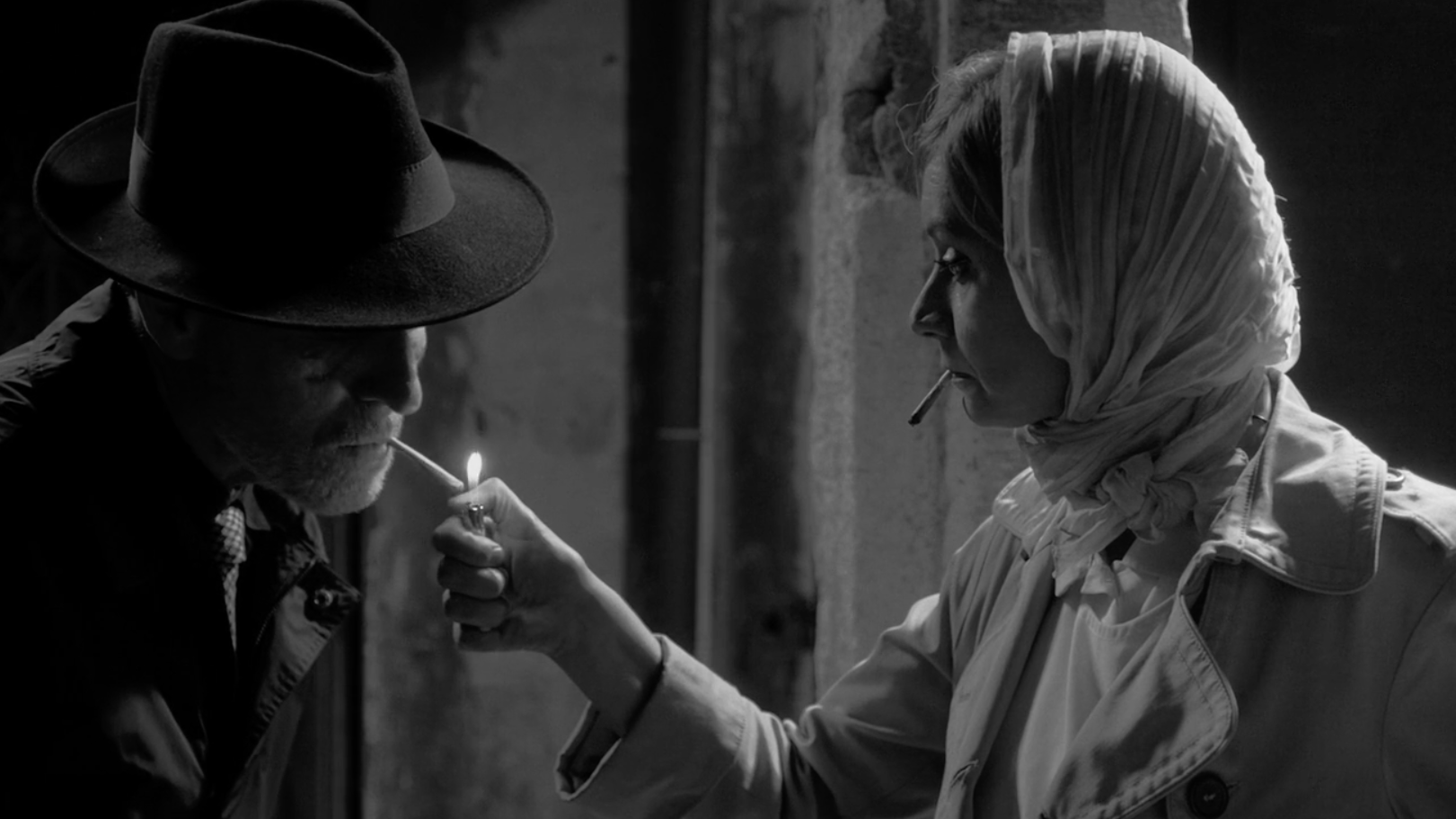
Thriller, by Serge Turgeon, Italy, 2025.
In Venice, a mysterious presence appears once every century or two, haunting the canals and hidden corners of the city. Driven by a sense of destiny, a woman decides to search for it. Following its elusive traces, she is drawn deeper and deeper into the city’s arcane secrets. Reality and myth begin to blur, and Venice itself transforms into a labyrinth of dangers.
LANGUAGE: Italian
SUBTITLES: English
Eliade’s Central Argument: The Architecture of Sacred Time
There is a moment, somewhere in the middle of performing a gesture you have performed a hundred times before, when time does something strange. You are lighting a candle at a table set the same way it has been set every year, or you are folding your hands in a gesture your grandmother’s hands once made, and for a split second the present dissolves. You are not remembering the past. You are inside it, or rather, it is inside you, running through the action like a current through a wire. Mircea Eliade published “The Myth of the Eternal Return” in French in 1949, four years after the war had finished dismantling every European certainty about progress and history and the forward march of civilization. The timing was not incidental. The ruins were still visible. The question of what human beings do with time, with suffering, with the intolerable weight of events that simply happen to them without meaning, had never been more urgent or more stripped of its comfortable answers.
Eliade’s central argument is deceptively simple and structurally radical. Archaic man, by which Eliade means pre-modern humanity in the broadest anthropological sense, did not experience time as a linear sequence of unique, unrepeatable events accumulating toward a destination. He experienced time as cyclical, or more precisely, as a field in which the real and the meaningful were always located somewhere other than the present moment. The present moment, the profane now, was the least real thing there was. What was real was the archetype, the primordial act performed by a god or an ancestor at the beginning, in illo tempore, in that time which Eliade identifies as sacred time. Everything that mattered was a repetition of that original gesture. To build a house was to repeat the cosmogony. To plant a seed was to reenact the divine act of creation. To marry was to perform again the sacred union from which the world itself sprang. The profane event had no ontological weight of its own. It borrowed its reality, its very existence as a meaningful act, from the archetype it imitated.
This is not merely a religious observation. It is a claim about the architecture of consciousness itself, about the way the human mind has structured its relationship to suffering and impermanence for most of recorded history. Carl Jung, whose correspondence with Eliade’s ideas runs deeper than either man fully acknowledged, had located something similar in the collective unconscious, in the archetypal patterns that surface in dreams and myths across cultures. But Eliade goes further and more specifically. He is not talking about psychological residue. He is talking about an ontology, a theory of what is real, in which repetition is not nostalgia or trauma but the primary technology for defeating the terror of history.
The terror of history is Eliade’s phrase, and it lands with the weight of something observed rather than coined. History, understood as the linear sequence of events that have no transcendent meaning, that simply occur and accumulate and kill people and collapse civilizations without reference to any divine pattern, is genuinely terrifying. It is the experience of pure contingency. The archaic solution was not denial but displacement: to refuse the event its autonomous existence, to absorb it immediately into a pattern that predated it and would outlast it, to say this has happened before and will happen again and therefore it belongs to something larger than the moment in which it is breaking your life apart. A man performs a ritual at the grave of his father, and his hands move in the same configuration his father’s hands moved, and his father’s father’s before that, and somewhere in that chain of gesture the singular grief of now gets folded into something that does not end, has never ended, and the unbearable becomes, if not bearable, at least located within a structure large enough to hold it.

The Man Who Cannot Stop Replaying
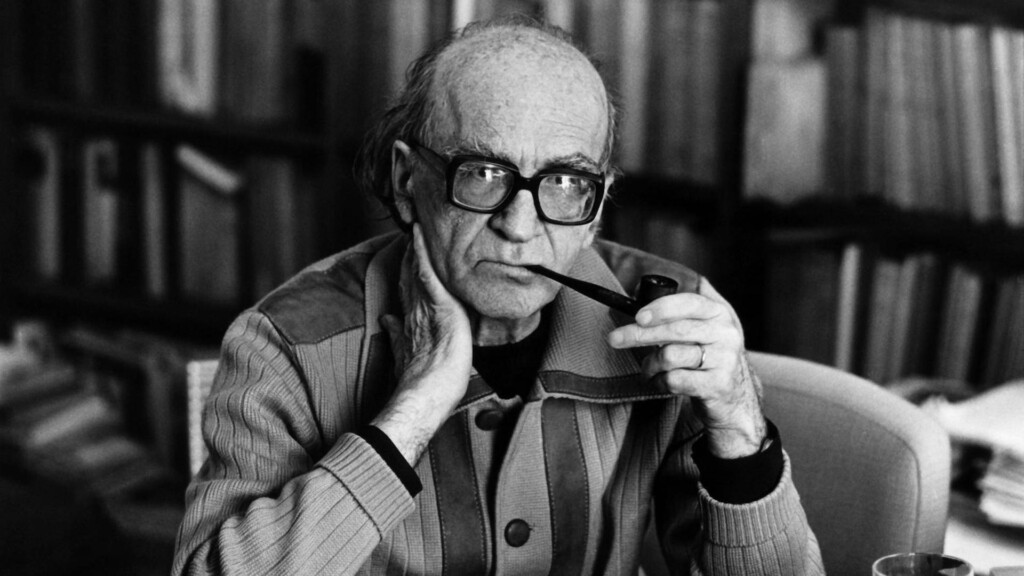
There is a man who keeps going back to the same room. Not literally — he is not standing in front of a door with a key in his hand. But every decision he makes, every relationship he enters, every project he launches with trembling hands carries the same architecture as something that happened before he could name it. He reconstructs the furniture. He finds people who fit the right roles. He stages, with extraordinary precision and zero awareness, the original scene. And when it collapses, as it always does, he experiences genuine surprise.
This is not neurosis in the clinical sense, though clinicians have mapped it with sufficient precision. This is something older. Mircea Eliade would recognize it immediately as a vestige of archaic consciousness operating inside a modern skull — the compulsion to return to illud tempus, that sacred primordial moment in which things were first instituted, in which reality crystallized into its essential form. In “The Myth of the Eternal Return,” published in 1949, Eliade argues that traditional man did not experience time as a forward-moving current but as a series of participations in founding events. Every ritual, every gesture repeated at the right season, was an attempt to collapse the distance between now and then — to step back into the first time, when a god or hero or ancestor performed the act that made it real.
The tragedy of the contemporary figure who cannot stop replaying is that he performs this same collapse without the ritual container that would give it meaning. He has no ceremony, no community, no cosmological grammar. He has only the raw compulsion, dressed in the ordinary clothes of adult life. You have seen this person. You may have been this person. He does not return because he is weak. He returns because some part of his nervous system has classified that founding moment as the only real one — the one against which all subsequent experience is measured and found thin.
There is a woman who keeps her wedding dress preserved in yellowed tissue, the clocks stopped at the exact minute of her abandonment, the rotting wedding cake on the table. She is extreme, grotesque even, and that extremity is precisely what makes her useful as a figure — she has simply made visible what most people perform invisibly. The stopping of time is not metaphor in her case. It is architecture. She has built a room around illud tempus and lives inside it like a shrine keeper. The difference between her and the man who unconsciously reconstructs the same relationship five times is not qualitative. It is a matter of legibility.
Eliade distinguishes between the terror of history — the unbearable weight of unrepeatable, meaningless events — and the relief offered by cyclical time, which renders every moment an echo of something sacred. The modern secular person, stripped of that cosmological scaffolding, still carries the terror. He simply has no framework for the return journey except compulsion. Freud, working from a completely different tradition, arrived at something adjacent with his 1920 essay “Beyond the Pleasure Principle” — the repetition compulsion, which he found so persistent and so irrational that he was forced to posit a death drive to explain it. Two thinkers from entirely different intellectual continents found the same strange gravity pulling human behavior backward toward an origin.
What neither framework fully captures is the phenomenology of that founding moment from the inside — the way illud tempus does not feel like the past. It feels like the real. Everything else feels like a copy, a rehearsal, a diminished version of something that once had full weight. The man in the reconstructed room is not deluded about the copy. He is faithful to the original in the only way available to him. His obsession is, in its own broken way, an act of devotion. The question is only: devoted to what, exactly, and at what cost to everything that comes after.
I Am Nothing
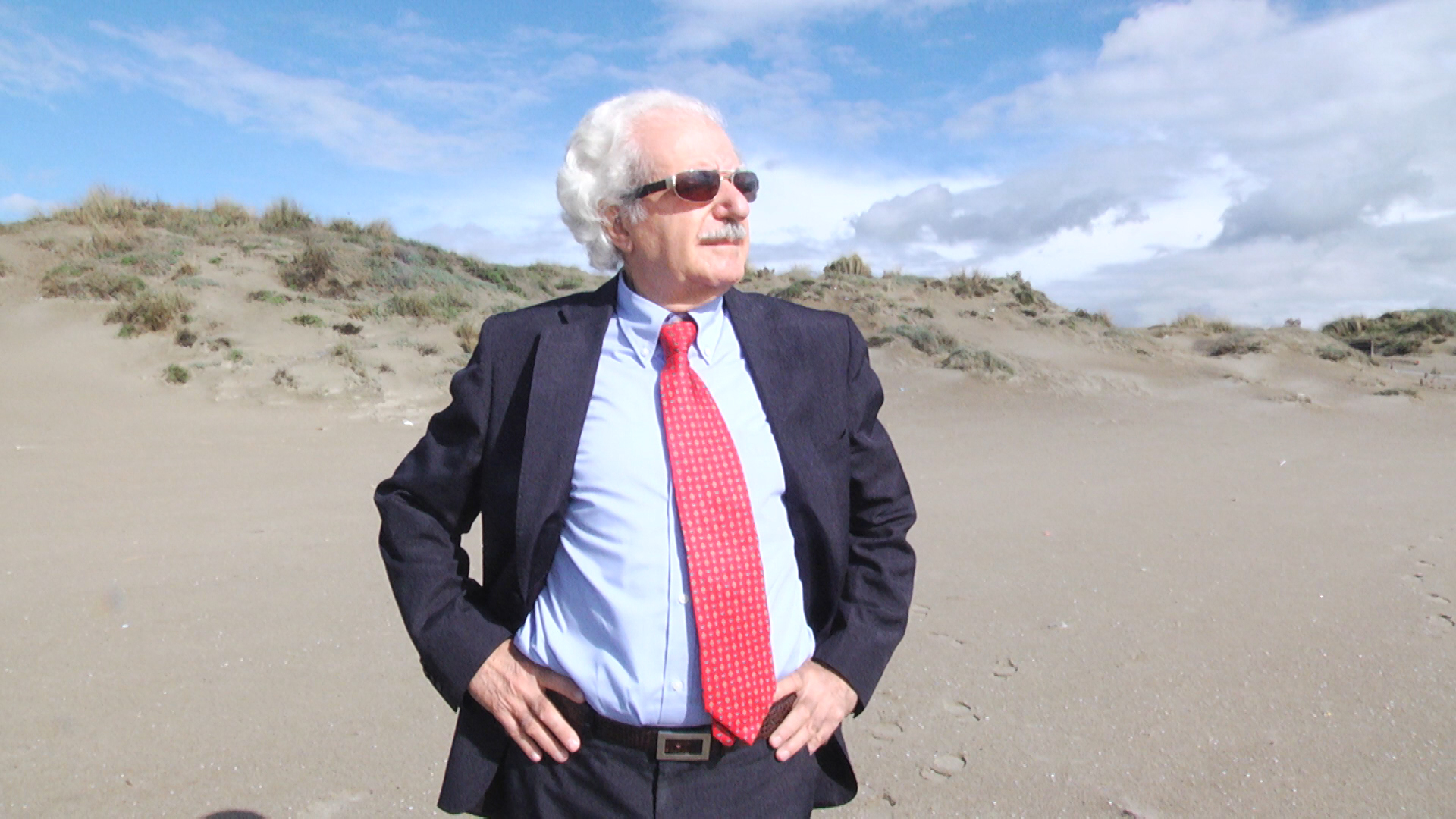
Drama, thriller, by Fabio Del Greco, Italy, 2015.
The story revolves around Vasco, a Roman builder who, at the age of 74, enjoys a life of absolute comfort. His human parable takes a dramatic turn when a mysterious encounter leads him to an ambush. Having survived, but marked by a long coma, Vasco wakes up with a new sensitivity, developing an intimate and poetic bond with nature. This new relationship with the world around him leads him to deeply explore himself, in an internal and external journey. through Italy, the United States and India, in search of a higher meaning and a cure. In parallel, the threat of a planetary cataclysm adds an epic dimension to the story.
I Am Nothing explores universal themes such as time, memory, oblivion and the connection with nature. Fabio Del Greco creates an existential drama full of food for thought. The director skillfully combines different visual materials, mixing archive images with nature photographs and dreamlike visions. This visual experimentation translates into an editing that captures the viewer's attention, guiding him through a cycle of creation and destruction. The sequences that alternate the buildings, Vasco's pride, with Indian landfills and natural landscapes create a hypnotic rhythm, underlining the beauty and fragility of life. Vasco's existential journey is a hymn to transformation and rebirth. The evolution of the protagonist, from unbridled luxury to the rediscovery of purity, represents a powerful metaphor on the meaning of life and the need to reconnect with authentic values. Io sono nulla stands out for its ability to combine introspection and visual experimentation, offering a suggestive and engaging narration. It is a film that invites us to reflect on the human condition, on our relationship with power and nature, and on the possibility of finding ourselves through change. A work that leaves its mark and lends itself to multiple readings.
LANGUAGE: Italian
SUBTITLES: English, Spanish, French, German, Portuguese
Archetypes and the Violence of the Exemplary Model
There is a particular kind of shame that arrives when you make something genuinely new and find yourself unable to explain it. Not because the thing is obscure, but because the available language for justifying it reaches only backward. You describe what it resembles, what it echoes, which tradition it extends. The newness itself — the part that cost you most, the part that is irreducibly yours — goes unnamed, and in going unnamed, goes somehow unsanctioned.
Eliade would say this anxiety is older than modernity. In “The Myth of the Eternal Return,” published in 1949, he argues that archaic humanity operated under a cosmological principle so deep it barely registered as a belief: nothing is real, nothing is legitimate, nothing truly exists unless it participates in a celestial archetype. A territory becomes habitable only when it ritually reenacts the primordial act of creation. A marriage is valid only insofar as it reproduces the sacred union between divine figures. A harvest, a war, a building — each must find its prototype in illo tempore, in that mythical time before time when the gods first performed these acts and established their eternal models. The human gesture that cannot point to a divine original is not simply unusual. It is, in the strictest ontological sense, unreal.
This is the violence hidden inside the beautiful. Because what Eliade is describing is a system in which originality is structurally impossible — and if attempted, structurally illegitimate. The new act has no archetype. It cannot be folded back into the sacred. It floats in a profane void, stripped of meaning, stripped of being. You watch a man return home from years of imprisonment, stand in the doorway of the house he built with his own hands, and find that nothing in it belongs to him anymore — not because others have taken it, but because he can no longer locate himself inside the story the house was supposed to tell. The prototype has dissolved. The exemplary model no longer holds. And without it, the walls are just walls.
Carl Jung, writing in “The Archetypes and the Collective Unconscious” in 1959, reached toward something adjacent when he argued that the psyche is not a blank slate but a landscape already populated, structured by inherited patterns — the shadow, the anima, the Self — which precede individual experience and shape it from below. Jung’s archetypes are not celestial models in Eliade’s cosmological sense, but they perform a similar function: they grant meaning by connecting the personal to the transpersonal. The individual dream resonates because it vibrates at the frequency of something ancient and shared. Without that resonance, Jung implied, the psyche cannot fully integrate its own experience. Significance requires echo.
Nietzsche, approaching the same terrain from the opposite direction, made the problem unbearable in its clarity. The doctrine of eternal recurrence — first articulated in “The Gay Science” in 1882 and carried through “Thus Spoke Zarathustra” — was not, for Nietzsche, a cosmological claim but a psychological hammer. If this life, exactly as it is, must be lived again infinitely, then every moment of cowardice, every act of conformity, every surrender to the exemplary model rather than the genuine impulse, will recur without end. The archetype, in Nietzsche’s universe, is not a source of legitimacy. It is a trap. The eternal return demands that you live as if originality were the only currency that survives repetition.
Yet the tension between Eliade and Nietzsche does not resolve into a winner. It exposes something structural in the human relationship to meaning: that we simultaneously require models and are destroyed by them. The archetype stabilizes and suffocates. The prototype gives you a story to inhabit and punishes you for inhabiting it too faithfully — because a copy of a sacred act is still a copy, and somewhere in the body, you know it.
History as Nightmare, Repetition as Escape
There is a man who wakes up every morning in the same apartment, makes the same coffee, walks the same route to a job that stopped meaning anything years ago, and calls this stability. He does not experience it as repetition. He experiences it as safety. The distinction matters more than it appears, because what he is actually doing — without knowing it, without having read a single page of religious history — is performing the archaic gesture that Eliade described as the abolition of time. He is refusing to let the unrepeatable accumulate. He is keeping history at bay.
Eliade’s central provocation in his 1949 work is not subtle once you see it: archaic man did not fail to understand history. He understood it perfectly, and he was horrified by it. The linear, unrepeatable event — the thing that happens once and leaves a scar that cannot be mythologized, cannot be folded back into a cosmic pattern, cannot be redeemed by recurrence — this was not experienced as progress or destiny. It was experienced as pure terror. What modernity calls historical consciousness, the sense that events are singular and cumulative and march toward something, was not a discovery. It was an affliction that most of human civilization spent enormous ritual energy trying to prevent.
A woman sits in a room she has not left in years. Not because she cannot. Because everything outside that room has the texture of the irreversible. She arranges the furniture the same way. She replays the same conversations in her mind, not to torture herself but to master them, to inhabit them until they lose their contingency, until they feel like something that was always going to happen rather than something that simply did. The clocks in her house have stopped. This is not madness. It is, in Eliade’s terms, a coherent metaphysical position: if time does not move, nothing can be lost to it.
Walter Benjamin‘s angel of history stares into this same abyss from the opposite direction. In his 1940 theses on the philosophy of history, Benjamin describes a figure whose face is turned toward the past, watching the wreckage of event after event pile up at its feet, unable to look away, unable to intervene, blown backward into the future by a storm that will not stop. Benjamin called that storm progress. What he saw in it was not salvation but accumulation — debris, catastrophe, the dead who cannot be redeemed by forward movement alone. The angel does not celebrate history. It mourns it. And in that mourning, something of the archaic terror Eliade described becomes legible again: the past is not a foundation. It is a wound that keeps reopening.
Paul Ricoeur, working across the three volumes of Time and Narrative published between 1983 and 1985, tries to hold both positions without collapsing either. Narrative, for Ricoeur, is the human technology for making time bearable — not by escaping it, as archaic ritual attempted, and not by simply enduring it, as Benjamin’s angel is forced to do, but by configuring it into something that has shape, direction, recognizable form. The emplotment of a life, the act of turning lived time into told time, is how human beings metabolize the irreversible. But Ricoeur never pretends this is painless or complete. The gap between lived experience and its narration remains. Some things resist being made into story. Some events stay raw.
The man with his morning coffee is not wrong to want the protection that repetition offers. He is enacting something very old, something that entire civilizations built temples around. The question Eliade forces you to hold — not answer, hold — is whether the escape from history is ever truly an escape, or whether it is simply history wearing the costume of the eternal, moving through you quietly while you stand still.
A vision curated by a filmmaker, not an algorithm
In this video I explain our vision
The Trap Hidden Inside the Sacred

There is a moment in the archive of the twentieth century that should arrest anyone who reads Eliade with uncomplicated admiration. A young Romanian intellectual, brilliant and restless, writes in the 1930s that he feels a mystical bond with the soil of his homeland, that Romania’s peasant culture contains something primordial and unrepeatable, that the nation must return to its sacred origins before the corruptions of modernity swallow it whole. This is not a marginal figure. This is Mircea Eliade himself, writing with genuine conviction in a period when the Iron Guard — Romania’s fascist movement with Orthodox mystical overtones — was translating exactly this kind of sacred-origins language into political terror.
The point is not simply biographical. The point is structural. When you build a philosophy around the idea that profane historical time is fallen time, that the only meaningful act is a return to the archetypal moment of beginnings, you have created an intellectual instrument that can be picked up by anyone who claims to know where the true origin lies. And in the twentieth century, those claimants were rarely benign.
Bruce Lincoln, in his 1999 work Theorizing Myth, traced with meticulous care how the discourse of sacred origins functions politically. Myth, Lincoln argued, is never ideologically innocent. When a community narrates itself as the bearers of primordial truth — whether that community is a nation, an ethnicity, or a religious lineage — it simultaneously constructs everyone outside that narrative as belonging to mere history, to the profane, to the expendable drift of time. The eternal return, in Lincoln’s reading, is precisely the rhetorical structure that makes this move feel transcendent rather than coercive. You are not expelled or erased. You simply do not belong to the sacred time that matters.
Wendy Doniger, who worked alongside Eliade at the University of Chicago and later became one of his most searching critics, identified something more intimate and more damaging: Eliade’s method of comparative mythology systematically stripped myths from their historical and social contexts, universalizing them in ways that conveniently obscured whose power those myths served. When you declare that a ritual of cosmic renewal is essentially the same across Babylon, India, and pre-Columbian Mesoamerica, you have not illuminated these cultures — you have dissolved them into a single timeless essence that happens to look a great deal like what a mid-century European religious philosopher finds spiritually meaningful. The violence of this abstraction is quiet but real.
Think of what it means to be a people whose actual history — of conquest, dispossession, forced migration — is reframed as merely profane accident, while the sacred core of your culture is lifted out, declared universal, and placed in a comparative museum where it loses its wounds. The eternal return, in this application, does not heal historical trauma. It anaesthetizes it. It makes the suffering contingent and the archetype essential, which is precisely what those in power have always preferred.
Historians of Romanian fascism have documented how the Legion of the Archangel Michael and its paramilitary wing drew heavily on imagery of Orthodox Christian renewal, peasant rootedness, and cyclical national regeneration. The language of return to origins — to the pure, the sacred, the ante-historical — was not metaphor for these movements. It was justification for violence against those deemed irredeemably historical, irredeemably other: Jews, communists, cosmopolitans, the impure.
Eliade’s relationship to this milieu remains contested and, in some quarters, deliberately obscured. What cannot be contested is the theoretical compatibility. A framework that devalues historical time, that locates meaning exclusively in return to sacred origins, that treats the profane as ontologically inferior — this framework does not cause fascism, but it speaks its language with unsettling fluency. The myth of eternal return is not neutral ground. It never was.
Modern Secular Rituals and the Disguised Myth
You do it every January. Not because you believe in anything, necessarily — not in gods, not in cosmic cycles, not in the power of a date on a calendar. You do it because something in you insists that the turning of the year is a threshold, that what happens on the other side of midnight is structurally different from what came before, that the slate can be wiped and the self reborn. You call it a resolution. Eliade would call it a cosmogony.
This is not a metaphor. It is a precise structural identification. The New Year’s ritual — the countdown, the collective breath, the symbolic destruction of the old year in fireworks and noise, the promises made in its ashes — reproduces with extraordinary fidelity what Eliade documented across dozens of archaic cultures in “The Myth of the Eternal Return,” published in 1949. The abolition of profane time, the return to the mythical moment of origin, the regeneration of the self through a symbolic death and rebirth: the only thing missing is the sacred vocabulary. The structure remains intact, migrated into secular containers that feel modern precisely because they have forgotten their ancestry.
Watch what happens in a certain kind of film — a man wakes each morning to the same day repeating, the same street, the same faces, the same light. At first he treats it as catastrophe. Then as opportunity for manipulation. Then, finally, as something stranger: a spiritual exercise he did not choose but cannot escape. Each iteration he strips away another layer of ego, another performed identity, until what remains is something closer to genuine presence. He does not know he is enacting a purification ritual older than any religion he has ever practiced. He thinks he is trapped. He is, in Eliade’s framework, being returned to the sacred time before his own corruption — forced into the eternal return not by faith but by structure itself. The myth does not require belief. It operates regardless.
This is what modernity consistently misunderstands about itself. It believes that when the sacred vocabulary was abandoned, the sacred structure went with it. It did not. Émile Durkheim had already sensed this in 1912, when “The Elementary Forms of Religious Life” argued that collective ritual serves social cohesion functions that persist even when their theological content evaporates. What Durkheim could not fully articulate, Eliade’s framework completes: the function persists because the psychological and ontological need it answers is not theological at all. It is temporal. It is the unbearable weight of linear time, of a self accumulating its own failures without any mechanism of erasure.
Brand mythology operates on precisely this mechanism. Apple does not sell you a product. It sells you a return to the moment before you were compromised by inferior tools, by systems that did not understand you, by a world not yet designed to your measure. Political slogans about returning to greatness are structurally indistinguishable from what Eliade found in the rituals of Mesopotamian kings who, during the New Year festival, symbolically re-enacted the primordial victory over chaos — Marduk defeating Tiamat — to restore the world’s legitimacy for another cycle. The political candidate who promises restoration is performing a cosmogony. His audience participates in it not as citizens analyzing policy but as initiates re-entering sacred time.
The self-help industry has built an empire on this architecture. Each book, each program, each retreat promises not improvement but return — to your authentic self, your original potential, the person you were before the world got to you. The language of recovery is always retrospective, always mythological in Eliade’s sense: there was a pristine origin, there was a fall, there is a ritual path back. The twelve steps of any recovery program follow this pattern with a precision that would have fascinated Eliade, who understood that the myth of eternal return does not announce itself.
It simply arrives, wearing whatever clothes the century has left out.
What Repetition Actually Costs
There is a moment — you have felt it, even if you have never named it — when the ritual fails to close. You perform the gesture, you speak the words, you return to the place that has always absorbed the wound before, and nothing happens. The calendar insists it is the same day it has always been. The structure holds. But you are standing slightly outside it, watching it from a distance you did not choose, and the meaning does not descend.
This is not liberation. This is the first symptom of something far more vertiginous.
Gilles Deleuze, writing in 1968 in what remains one of the most demanding and generative works of twentieth-century philosophy, argued that repetition is never truly the repetition of the same. Difference and Repetition dismantles the comfortable illusion at the center of all cyclical thinking: that what returns is what was. For Deleuze, repetition always carries difference within it, not as a flaw or a deviation, but as its very engine. The second time is never the first time wearing a mask. It is something genuinely new dressed in familiar clothes, and the terror lies precisely in not being able to tell which is which until it is too late.
Eliade knew the comfort side of this equation with extraordinary depth. The archetype, the eternal return, the sacred time that annuls the profane — all of it rests on the premise that difference can be neutralized, that the new event can always be translated back into a prior model and thereby made bearable. A flood is not this flood. It is the flood, the primordial one, the one the gods enacted at the beginning. Your suffering is not your suffering. It is the suffering of the hero, the god, the ancestor who endured and was reborn. The model absorbs the instance. The circle closes.
But Deleuze’s insight cuts underneath Eliade’s architecture and asks what is actually lost in that closing. A man walks away from the village where every stone knows his name. He does not walk toward another version of the same pattern. He walks into something his inherited symbols cannot metabolize. For a time — weeks, perhaps months — he continues to apply the old templates. He reads his displacement as exile, a sacred category with precedents and meanings. He reads his loneliness as initiation, as the necessary descent before ascent. The archetypes are extraordinarily patient. They will wait a long time before admitting they do not fit.
And then one morning they admit it. The event refuses its translation. What happened to him happened only once, to him, in a specific configuration of contingencies that no myth anticipated and no ritual can retrospectively sanctify. He is standing in what Eliade would call profane time — raw, unsupported, without the scaffolding of recurrence — and there is no instruction for how to stand there.
The vertigo is real. It is not metaphorical. Friedrich Nietzsche, who understood the eternal return as a thought experiment designed precisely to test whether you could bear the full weight of your own existence without the relief of escape, never promised that the bearing would feel like freedom. It might feel like falling. The question Eliade’s entire system quietly suppresses is whether the genuinely unrepeatable event — the rupture that arrives without a prior model, the wound that does not correspond to any sacred wound in the archive — is a catastrophe to be overcome or the only place where something truly irreducible about a life actually lives.
What the archetype costs is the singular. What the eternal return costs is the moment that will not come again and cannot mean anything beyond itself. Whether the human animal can tolerate a time that does not loop back, does not confirm, does not redeem — a time that simply continues forward into what has never existed before — is perhaps the one question that no myth, however ancient, has yet answered on our behalf.
🌀 Cycles, Myth, and the Sacred in Human Thought
Mircea Eliade‘s The Myth of the Eternal Return sits at the crossroads of religion, philosophy, and anthropology, exploring how archaic humanity experienced time as cyclical and sacred. The articles below illuminate the deeper intellectual landscape surrounding Eliade’s vision of myth, memory, cosmos, and the longing to transcend historical existence.
Jan Assmann and Cultural Memory
Jan Assmann‘s theory of cultural memory explores how communities preserve and transmit identity across generations through symbolic and ritual structures. His work resonates deeply with Eliade’s notion that mythical archetypes function as collective frameworks that anchor human communities in a sacred, repeatable past. Both thinkers reveal how memory is never merely personal but cosmically and culturally inscribed.
GO TO THE SELECTION: Jan Assmann and Cultural Memory
Pierre Nora and the Sites of Memory
Pierre Nora‘s concept of ‘sites of memory’ investigates how modern societies compensate for the loss of living, organic memory by constructing commemorative monuments and archives. This tension between living myth and fossilized memory echoes Eliade’s argument that modernity has severed the human connection to cyclical, sacred time. Together, Nora and Eliade map the spiritual crisis that emerges when history replaces myth.
GO TO THE SELECTION: Pierre Nora and the Sites of Memory
Mexican Religious Syncretism: History and Meaning
Mexican religious syncretism offers a vivid, living example of what Eliade theorized: the survival of archaic sacred structures beneath layers of historical transformation. The blending of indigenous cosmologies with Catholic ritual demonstrates how mythical time and eternal return are not abolished but reincarnated in new symbolic forms. This article provides a rich ethnographic counterpart to Eliade’s philosophical framework.
GO TO THE SELECTION: Mexican Religious Syncretism: History and Meaning
Medieval Mysticism: History and Main Figures
Medieval mysticism, with its emphasis on the soul’s return to a divine origin, represents a Christian expression of the eternal return Eliade identified across world religions. Figures like Meister Eckhart and Hildegard of Bingen sought to collapse historical time into a timeless union with the sacred ground of being. Reading their works alongside Eliade reveals the universal human hunger to escape profane time and touch eternity.
GO TO THE SELECTION: Medieval Mysticism: History and Main Figures
Discover Films That Breathe with Myth and Eternity
If Eliade’s vision of cyclical time and sacred myth speaks to something deep within you, Indiecinema’s streaming catalog holds films that dare to explore those same eternal questions through the language of independent and visionary cinema. Step beyond the ordinary flow of time and let these films take you to places where myth is still alive.
👉 EXPLORE THE CATALOG: Watch Indie Films in Streaming
A vision curated by a filmmaker, not an algorithm
In this video I explain our vision

